
Life

Those Seekers

Short Feature

#NoWar
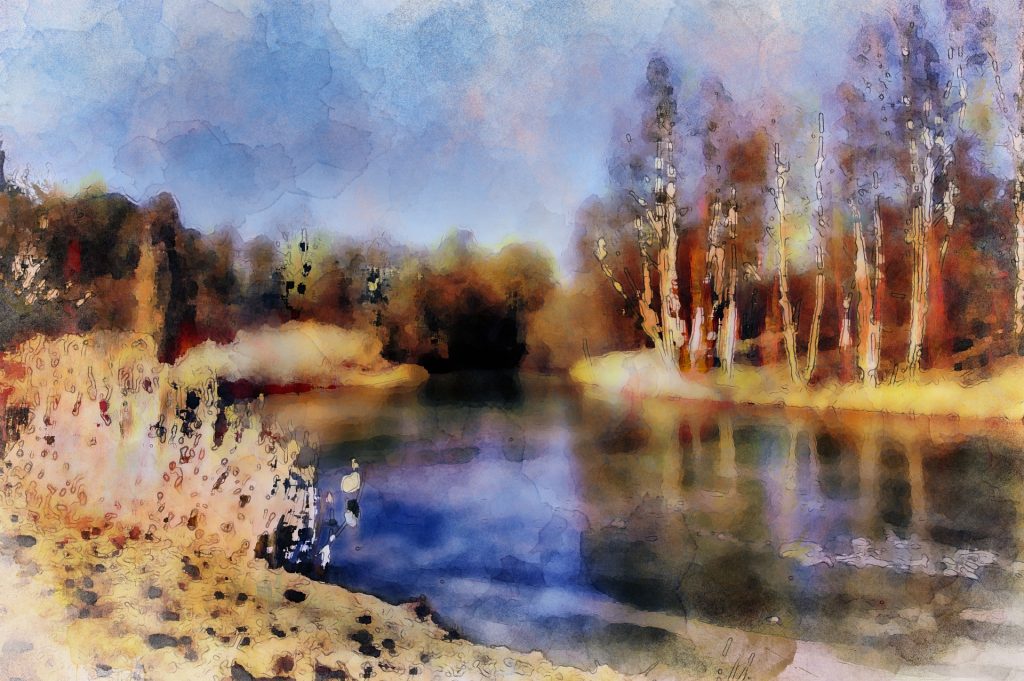
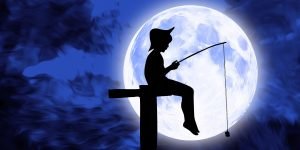
[Image by Alexandra_Koch from Pixabay]

How powerful is a melody! A melody struck in the past, struck so beautifully that it broke free.

Timeless! A timeless piece of music rings true always; ten times truer in those moments when the courageous stand tall.

A single spark then is enough to change the narration. The narration that once appeared fixed and firm now burns and melts, making a new path, creating a new reality.

How powerful is a spark! A spark… perishable and yet unfading, tiny celebratory moments in embers, collected often by those seekers.

Those seekers who can also create a timeless melody… a timeless melody that even if buried under rubbles, surrounded by war cries, awaits the moment to be struck and break free once again.


Inspired by and dedicated to Irina Maniukina and all the wonderful seekers in Ukraine.

#NoWarPlease #standwithukraine #StopWarInUkraine


Weekly Newsletter

A weekly dose of stories! Get the posts from the Chiming Stories in your inbox and read it when you can. Subscribe now, it is free!

This field is required.

Recent Posts


Ancient Dusky Rivers

Coverage
The river… sketching its way ahead…
[Source – Pixabay]
The Negro Speaks of Rivers

by Langston Hughes

*

I’ve known rivers:

I’ve known rivers ancient as the world and older than the flow of human blood in human veins.

My soul has grown deep like the rivers.

*

I bathed in the Euphrates when dawns were young.

I built my hut near the Congo and it lulled me to sleep.

I looked upon the Nile and raised the pyramids above it.

I heard the singing of the Mississippi when Abe Lincoln went down to New Orleans, and I’ve seen its muddy bosom turn all golden in the sunset.

*

I’ve known rivers:

Ancient, dusky rivers.

My soul has grown deep like the rivers.


Rivers – streams, creeks, brooks or rivulets – love to flow; flowing towards a sea, lake, an ocean or another river, and at times also drying out. Rivers love to flow just like life.

Most of the earlier civilisations prospered when they settled around rivers, channelizing the same love when drinking its fresh water.

And when mankind sat in a circle around the fire and created stories – of the sun, the moon, the thunder and the wind – they fostered their imaginations and decided to pass on the love running in their blood to a lovely supreme one.

Different supreme ones took the centre stage at different places and myriad dramas unfolded that the rivers watched quietly, flowing, gushing with joy every moment.

Resisting neither the rocks nor filth, accepting the dead and plastic bottles alike, it continues to flow… for now.


Still like a mirror, moving like a reflection…
[Source – Pixabay]

Langston Hughes in his poem The Negro Speaks of Rivers connects the human soul with the world’s ancient rivers; the hands that cupped to drink water, the feet that crossed the river, whatever race it belonged to, felt the same damp calmness every single time they drank water and crossed the river.

Written during the early twentieth century when African Americans struggled to achieve equality and justice, Hughes, presenting a powerful historical perspective in this poem, emphasises the link between his ancestors, the ancient rivers and the rest of the human civilisation.

The Euphrates, often believed to be the birthplace of human civilisation, the Congo, powerful and mysterious, that saw the rise of many great African kingdoms, the magical Nile that carries with poise the secrets of the great Egyptian pyramids, the folklorist Mississippi that shared here the tales of Abraham Lincoln and American slavery – shows how rivers carry the past in its depth, carrying it always with love.

And the one who sees with love can sense the connection between rivers and souls, between them and us; we all started this journey together, the rivers are a testimony.


“I’ve known rivers:

Ancient, dusky rivers.

My soul has grown deep like the rivers.”

Experience and history, though often oppressive, have not extinguished but rather emboldened the development of a soul, the birth of an immortal self, the proud ‘I’ that now speaks to all who will listen.

Christopher C. De Santis

Weekly Newsletter

A weekly dose of stories! Get the posts from the Chiming Stories in your inbox and read it when you can. Subscribe now, it is free!

This field is required.

Recent Posts

Regina Spektor’s Musical World, the Random Wise Talk and Creativity – Part V

Coverage

In earnest, at random…
[Source – Pixabay]

At random, randomly, in quiet randomness, a wise thought meets the mind, very gently like a leaf aiming for the pond, to talk without pretence and reveal something true – maybe a different not so obvious stand-alone truth among the other established ones – to pass on a message.

This message – shining like a silver lining – may usher you to creativity; towards a painting like van Gogh’s, an algorithm like Newton’s, a discovery like Herschel’s, a poem like Angelou’s, a song like Spektor’s, a choice made by you.

One could very well ignore this message but don’t worry, the message almost without fail knocks again, it reaches out, shinning like a silvery figment you think is weak but is actually feisty, stretching a hand towards you, promising or faking nothing, just there to randomly have a discussion with you and maybe show you your creative side.


See how Regina Spektor creatively turned these random discussions into gold for herself and all of us.

*

Listen to Folding Chair before reading further –

*

Come and open up your folding chair next to me
My feet are buried in the sand
And there’s a breeze
There’s a shadow
You can’t see my eyes
And the sea is just a wetter version of the skies…

Regina Spektor

Sigh, sigh, sigh… after boarding nine jet flights psychologically and/or emotionally, after abandoning, condemning, loving some of these when you open up your eyes and let out a sigh, you’re slightly a different person.

You then understand yourself a little better and the world a little less for your focal point shifts that too, most of the time, without informing or making news out of it. And you carry on living, sitting on a folding chair.

But there is nothing wrong with it says Regina Spektor and rightly so. That is life, realisations, ignorance, lies and truths, pass like clouds on a breezy day. Sit back and sing the dolphin song as you wait.

Now I’m sitting here alone
Dreaming of the dolphin song

Oo-oo-oo, oo-oo-oo, oo-oo-oo, oo
Oo-oo-oo, oo

Regina Spektor

Listen to Laughing With

*

God could be funny
When told he’ll give you money
If you just pray the right way
And when presented like a genie
Who does magic like Houdini
Or grants wishes like Jiminy Cricket
And Santa Claus
God could be so hilarious…

Regina Spektor

A believer or non-believer most likely laughs; most likely laughs less at the others and laughs more with the others; most likely believes or believes in not-believing; this makes our lonely planet a colourful place.

So the chances are high that if an alien pays us a visit we will laugh with that alien and bond well. Ha ha ha!


Listen to Bleeding Heart

*

How long must I wait till you learn that it’s not too late
How long must I cry till you know that you really tried
How long must I try till you learn that dreaming’s hard
How long must I dream till you heal your bleeding heart
Never mind your bleeding heart

Regina Spektor

Pick up an old family photo album i.e. after you pay a visit to your old house and the old souls inhabiting it, turn the pages and look at how foolish you look, allow the world to swirl, laugh and cry, let your heart bleed, don’t panic, it knows how to heal, no need to doubt the heart.


Listen to Older and Taller

*

I remembered you older and taller
But you’re younger and smaller
So who’s gonna call her and say
That you’re here at last?
And all the days, they were longer
And the drinks, they were stronger
The words, we sang wrong
But the songs were remembered
And time just passed…

Regina Spektor

Memories, if, make you falter, then just smile, for that is the job of memories; to confuse, upset and revive you; it is a full-time job, so smile, that is how time passes and if you learn to smile, it passes well.


Bonus song – Raindrops


The tour of Regina Spektor’s musical world ends here, but only on this blog, listen to her music whenever wherever you can. Check out the first song ‘Becoming All Alone’ from her latest album Home, before and after (2022) now.

*

*

 Keep visiting Chiming Stories for more such posts.


Weekly Newsletter

A weekly dose of stories! Get the posts from the Chiming Stories in your inbox and read it when you can. Subscribe now, it is free!

This field is required.

Recent Posts


Regina Spektor’s Musical World and Addressing the Hero – Part IV

Coverage

Hero calling hero!
[Source – Pixabay]

The hero is in hiding, asleep, has forgotten or has been brainwashed because only that could explain the hero’s silence; the dead silence is complementing the darkness ostentatiously.

And no surprise, right? This darkness is overwhelming, too huge, so vast, damn cruel, heartless/soulless, steady and conniving that the heroes have all locked themselves up in the epics, legends and myths.

Dejected and weak they have turned their backs, criticising the critics, they hopelessly work to earn a living, measuring their quiet success every fiscal year, waiting for the golden retirement when they will finally wake up… or maybe they will not.


Regina Spektor is calling out to all the heroes to wake up, rise and fight, to accept the responsibilities of actions they so unconsciously take, to wage a war against inequality one little step at a time.

*

Listen to Apres Moi before reading further –

*

I (uh) must go on standing
You can’t break that which isn’t yours
I (uh) must go on standing
I’m not my own, it’s not my choice

Be afraid of the lame, they’ll inherit your legs
Be afraid of the old, they’ll inherit your souls
Be afraid of the cold, they’ll inherit your blood
Apres moi le deluge, after me comes the flood…

Regina Spektor

Revolutions, the downfall of monarchies, totalitarian leaders, genocides… mankind’s history is a presence in the absence, it is ever-looming, reminding us of the foundation on which we are now building smart castles (with Alexa or Google Nest Hub or the gadget you prefer).

Apres moi le deluge is a French phrase that means ‘after me, the flood’ and is attributed to Louis XV of France; one of the explanations suggest its nihilistic connotation that says, ‘Ruin, if you like, when we are dead and gone’ and the other links it with Halley’s comet and the impending French Revolution of 1789.

Here, Regina Spektor talks about the far-reaching presence of history and how we cannot ignore it for long.

She sings a few lines of a Russian poem when reaching the crescendo; it is a poem by Nobel laureate Boris Pasternak, titled ‘February’ –

Black spring! Pick up your pen, and weeping,
Of February, in sobs and ink,
Write poems, while the slush in thunder
Is burning in the black of spring.

Translated by Lydia Pasternak Slater, Boris’s sister

An intense song that resonates across and holds your thoughts, it seems as if the song is urging us folks to stand up against the odds without delay, asking us folks not to mellow down.


Listen to Us

*

They made a statue of us
The tourists come and stare at us
The sculptor’s mama sends regards
They made a statue of us
Our noses have begun to rust

We’re living in a den of thieves
Rummaging for answers in the pages
We’re living in a den of thieves
And it’s contagious
And it’s contagious…

Regina Spektor

Thieves are untied clandestinely, inconspicuously, invincibly, heartily like no other group on this planet, working religiously, solely for their profit.

The one charismatic, luring fact, among other things, is the freedom they give to every individual thief, showing no concern for each other, but keeping a check and standing in solidarity if the deal is profitable.

Regina Spektor rightly diagnosed this behaviour as contagious; the song is giving a warning, it is a reminder. Wake up dear heroes, at least to rub off the rust on your noses.


Listen to Small Bills

*

His destiny was just too big to spend
So he broke it into smaller bills and change
By the time he’d try to buy the things he needed
He had spent it all on Lucy’s and weed and
He had spent it all on chips and Coca-Cola
He had spent it all on chocolate and vanilla
He had spent it all and didn’t even feel it…

Regina Spektor

May the heroes win the peculiar, surreal, boorish individual battles that they are fighting again and again and again.


Listen to Hero

*

Hey, open wide, here comes
Original sin
(Vrrr)
Hey, open wide, here comes
Original sin

It’s alright, it’s alright
It’s alright, it’s alright…

I’m the hero of the story
Don’t need to be saved…

Regina Spektor

Listen to this song when the sky is orange-pink, dimly twinkling, armouring up for the dark night; listen to this song when the sky is whitish-blue, brightly warm, breathing lightly, gently healing the hero.


Read more –

Alex Millar’s translation of the poem February.

Lessons in Creativity I Learned from Regina Spektor by Caitlin Cowan.

R


Weekly Newsletter

A weekly dose of stories! Get the posts from the Chiming Stories in your inbox and read it when you can. Subscribe now, it is free!

This field is required.

Recent Posts

Regina Spektor’s Musical World and Perceiving the Emotion Called Love – Part III

Coverage

Love is the key.
[Source – Pixabay]

Love, the key to living a fulfilling life, the path that leads to the real you, this emotion called love is universal and free.

An enigmatic thing, love is everywhere – in and around you and me, in our blue planet’s core, it is the main component of every heavenly body and the equally mysterious dark matter. Why else must the dark matter be dark if not for love?

Love – the power that knows the art of giving only too well, that takes pleasure in calmness, that patiently and leisurely creates, that also manoeuvres without light, that is fathomless – humbly colours the dark matter dark.

Who ventures in the unknown, hoping to pierce through the darkness like a sharp arrow, in a speed that surpasses the twang of its bow?

One who is courageous enough to Love.


Landing back on earth, let us see how Regina Spektor has perceived Love and what rhythm has she given to her definitions of Love.

*

Listen to ‘Blue Lips’

*

He stumbled into faith and thought
“God, this is all
There is”
The pictures in his mind arose
And began
To breathe
And all the gods in all the worlds
Began colliding on a backdrop of blue

Blue lips
Blue veins

He took a step
But then felt tired
He said, “I’ll rest
A little while”
But when he tried
To walk again
He wasn’t
A child
And all the people hurried past
Real fast and no one ever smiled

Blue lips
Blue veins
Blue, the color of our planet from far, far away…

Regina Spektor

No one said that it will not hurt, that there will not be any sacrifices, that we will not forget and misconstrue, no one said Loving is easy and so we failed, repeatedly we failed.

But why lament when we can try again?

As humans, all we need to fully revel in Love is our ability to breathe and our home planet that looks blue from far, far away.

Regina Spektor believes in Love and Loves our beautiful blue planet; it is evident in her songs.


Listen to ‘Eet’

*

It’s like forgetting
The words to your favorite song
You can’t believe it
You were always singing along
It was so easy
And the words so sweet
You can’t remember
You try to feel a beat eeet eeeet eeet…

Regina Spektor

‘Eet’ is a backspace key that you find on typewriters that allows you to type over the previous letter if you make a mistake.

Mistakes and life, life and mistakes, go well together if you are truly in love (no matter with whom/what). Even if you stumble, forget or lose, you will still try, sooner or later, for love will not allow you to rest.

It is strangely powerful, this emotion; it attacks with a strong gust of memories and then waits, it tickles with happy thoughts and then waits… waiting as if it knows it will win in the end.

If you ever think of using the ‘eet’ key, do try the Regina Spektor way of editing – turn the mistakes into musical notes.


Listen to ‘Better’

*

If I kiss you where it’s sore
Will you feel better, better, better?
Will you feel anything at all?

Born like sisters to this world
In a town blood ties are only blood
If you never say your name out loud to anyone
They can never ever call you by it

If I kiss you where it’s sore
Will you feel better, better, better?
Will you feel anything at all?

Regina Spektor

Just like opening an old album, with slightly tattered and folded edges, we are greeted with some golden memories – happy and sweet and sad; sad because we cannot travel back to meet the ones we have lost.

And yet we go on, asking hypothetical questions, somehow reliving the moment mentally, grasping the answer that we know will work, at least for now.

Just like opening an old album, ‘Better’ by Regina Spektor gives us such a feeling.


Listen to ‘How’

*

Time can come and wash away the pain
But I just want my mind to stay the same
To hear your voice
To see your face
There’s not one moment I’d erase
You are a guest here now

So baby, how
Can I forget your love?
How can I never see you again?

Regina Spektor

One always remembers sad endings and unanswered questions, but why?

So that one keeps walking, searching and living more sensitively… maybe.


Coming soon – Regina Spektor’s Musical World and Addressing the Hero – Part IV

*


Weekly Newsletter

A weekly dose of stories! Get the posts from the Chiming Stories in your inbox and read it when you can. Subscribe now, it is free!

This field is required.

Recent Posts


Regina Spektor’s Musical World and the Assured Presence of the Antiquity – Part II

Coverage

Peh-peh-peh… a patina trumpeter plays for you.
[Source – Pixabay]

Our shadowy past lives, though hidden in the fog, it lives, and we live off it.

Ancient cities now archaeological sites, history books, paintings, literature, music and ideas remind us of the assured presence of antiquity, our link with what was the truth back then.

Like the tail of a shooting star, our past/ the antiquity makes an equally good show in the darkness, at times even a grand show.

Like a terrific shaman, the past predicts when approached with a true question and predicts without any regret.

Come, let us see, what it predicted when Regina Spektor approached it with some melodious queries.

*

Listen to “All The Rowboats” before reading further –

*

…First there’s lights out, then there’s lock-up
Masterpieces serving maximum sentences
It’s their own fault for being timeless
There’s a price to pay and a consequence
All the galleries, the museums
Here’s your ticket, welcome to the tombs
They’re just public mausoleums
The living dead fill every room

But the most special are the most lonely
God, I pity the violins
In glass coffins they keep coughing
They’ve forgotten, forgotten how to sing…

Regina Spektor

It seems the antiquity, through this song, shared a message for all those who are listening, which is that the past is not static, so no point in decorating and forgetting it; no point in generalising it and awarding it with a damp stamp.

Feel free to interpret it; relive the change.


Listen to “Samson”

*

Samson went back to bed
Not much hair left on his head
He ate a slice of Wonder Bread
And went right back to bed
And the history books forgot about us
And the Bible didn’t mention us
And the Bible didn’t mention us, not even once

You are my sweetest downfall…

Regina Spektor

Delilah, Samson’s lover, actually a spy, had his long hair cut one night, making him powerless; the Philistines captured Samson and tortured him brutally. Samson, blind and weak, still destroyed his enemies by magically regaining his strength. He died along with his enemies after he collapsed the temple of Dagon.

This biblical account doesn’t mention the infinite voices that made Samson, Samson and Delilah, Delilah. Culturally nourished biases have always restricted so many voices and the history books have often conveniently ignored it… until someone dares and explores and talks about the sweetest downfall.


Listen to “While My Guitar Gently Weeps” –

*

…I look at you all, see the love there that’s sleeping
While my guitar gently weeps
I look at the floor and I see it needs sweeping
Still my guitar gently weeps

I don’t know why nobody told you
How to unfold your love
I don’t know how someone controlled you
They bought and sold you

I look at the world and I notice it’s turning
While my guitar gently weeps
With every mistake we must surely be learning
Still my guitar gently weeps…

George Harrison

Regina Spektor covered this “Beatles” song for the film Kubo and the Two Strings (a must watch), magnifying the song’s impact so wonderfully. The antiquity becomes fully alive here; it reassures and promises the unfolding of another epic. It is pure magic!


Return in some time dear readers, and continue the tour of Regina Spektor’s musical world here at Chiming Stories.


Weekly Newsletter

A weekly dose of stories! Get the posts from the Chiming Stories in your inbox and read it when you can. Subscribe now, it is free!

This field is required.

Recent Posts


Regina Spektor’s Musical World and the Ephemeral Moments of Joy – Part I

Coverage
Delicate dance anthem…
[Source – Pixabay]

Walking down the street with old heavy memories, frozen and hazy, not bothering for a while and the unknown liveliness of the fresh sounds greeting us from all around – the dripping thaw, the golden sunny warmth, the tiny twittering birds, the ‘oh my god’ honking of a dashing car’s ghost that passes by, the hearty smiles and laughter – we blush with hope teasing us, giving us bright ideas, gleaming as we experience our quiet, still mind-pond.

These ephemeral moments of joy, so true and innocent, are hard to capture, harder to sustain, probably that is what makes it so special for and loved by all.


Regina Spektor, the star singer, songwriter, musician, the starry-eyed star, the star magician, knows how to hold such moments very well. She doesn’t capture it, na-na, she only knits a pretty, sweet and soothing melody and then soaks it into such warm moments, letting the melody take this ephemeral colour.

To this colour, she adds free-play, emotions and her pianist-self and, voila, a Regina Spektor song wave is ready.

Listen to “Ne Me Quitte Pas (Don’t Leave Me)” before reading further –

*

…And down on Lexington they’re wearing
New shoes stuck to aging feet
And close their eyes and open
And they’ll recognize the aging street
And think about how things were right
When they were young and veins were tight
And if you are the ghost of Christmas Past
Then wont you stay the night?

Ne Me Quitte Pas, Mon Chere
Ne Me Quitte Pas…

Regina Spektor

She amalgamates it all so well, life’s experiences, cut both ways and so gently she allows herself to smile an honest smile. How beautifully this song captures time and lets it go.

And she loves Paris, especially when it rains there and so do we all (at least the rasiks* do).

Listen now to “Dance Anthem of the 80’s” –

*

…I’m walking through the city
Like a drunk, but not
With my slip showing a little
Like a drunk, but not
And I am one of your people
But the cars don’t stop…

Regina Spektor

This is nothing but a memory, cold, harsh, but funny in retrospect; one that glares until you glare back at it, acceptingly. And Regina Spektor handles this mixed emotion so peacefully and at the same very eagerly, probably eager for it to evolve.


Also, listen to the live performance of “Dance Anthem of the 80’s”, how sweetly she thanks her audience.

*

Here, at Chiming Stories, the blogger will be covering Regina Spektor’s musical world in the coming posts, trying to live and relish her songs in your company, so dear readers ‘ne me quitte pas mon chere’ (don’t leave me, my dear).


*A rasik, in Hindi language, is a passionate and thoughtful being.


Check out the full series here –

Regina Spektor’s Musical World and the Assured Presence of the Antiquity – Part II

Regina Spektor’s Musical World and Perceiving the Emotion Called Love – Part III

Regina Spektor’s Musical World and Addressing the Hero – Part IV

Regina Spektor’s Musical World, the Random Wise Talk and Creativity – Part V.

*


Weekly Newsletter

A weekly dose of stories! Get the posts from the Chiming Stories in your inbox and read it when you can. Subscribe now, it is free!

This field is required.

Recent Posts


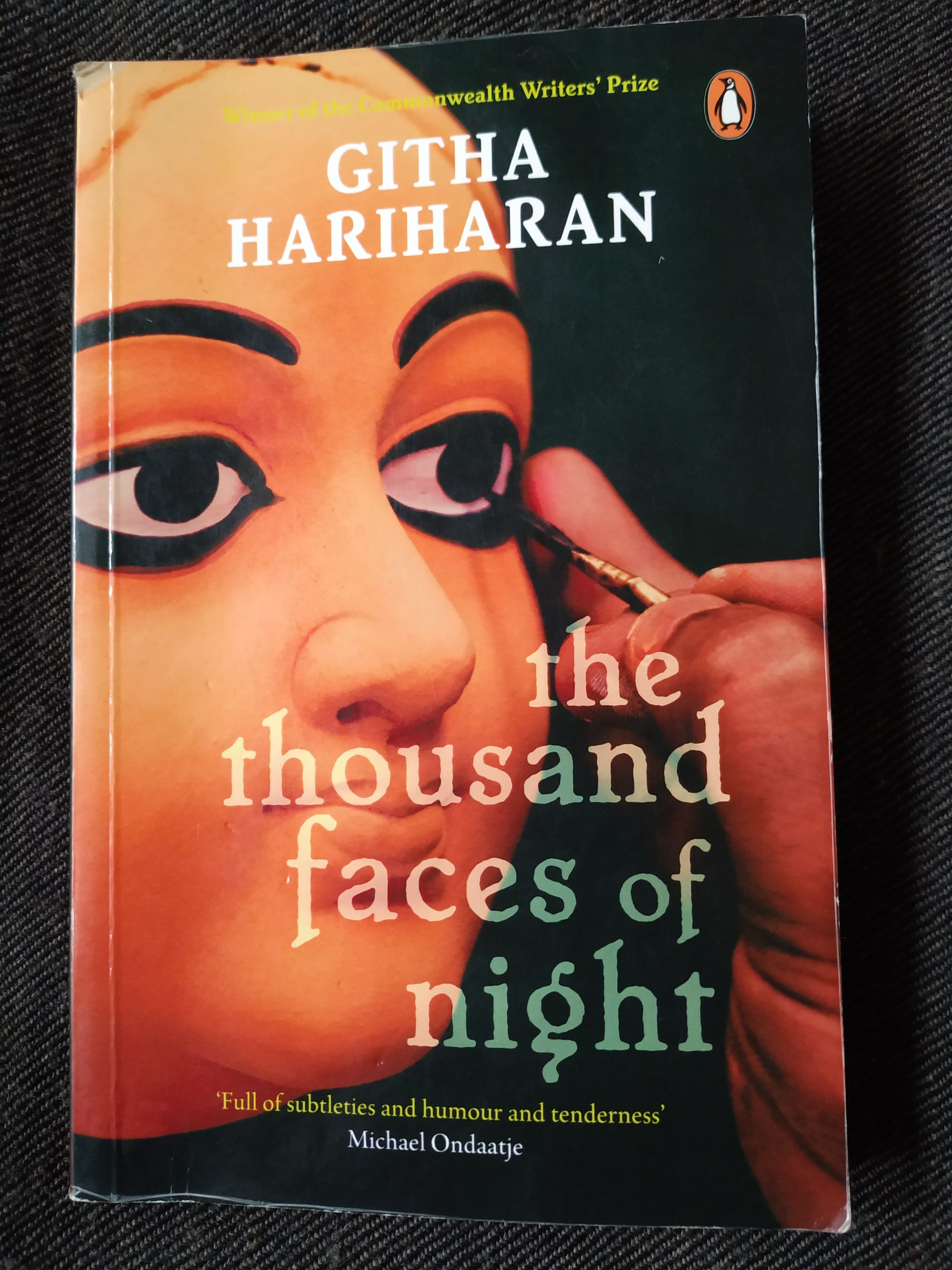
The Thousand Faces of Night – A Charcoal-Inked Raga

Book Review

The certainty of it being the night promises us of the erubescent dawn. It is an inky night, it has been for aeons and aeons… and, mind you, she uses charcoal-ink… for the stove is still burning, she never forgets to collect woods.

And so, with her inky fingers she writes messages, anecdotes, dead secrets and stolen dreams on the walls in the kitchen.

A custom followed since antiquity, now the charcoal-ink smells of these quiet cursive messages. It talks about the dark night and the breaking of the dawn.

Her inky fingers will turn red with the dawn.


But Sita needed all the strength she could muster to face the big trial awaiting her. After that, it was one straight path to a single goal, wifehood. The veena was a singularly jealous lover.

Then one morning, abruptly, without an inkling that the choice that was to change her life lurked so near, Sita gave up her love. She tore the strings off the wooden base, and let the blood dry on her fingers, to remind herself of her chosen path on the first difficult days of abstinence.

Githa Hariharan (Part Three; Chapter 1)

*

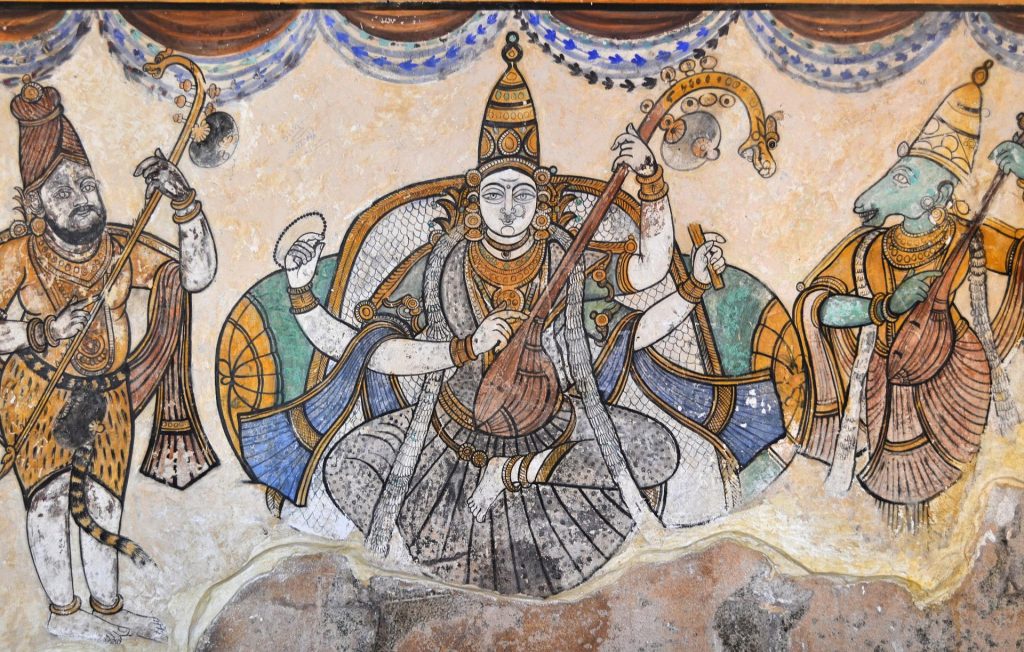
Painting of the Goddess Saraswati by Raja Ravi Varma.
[Source – Wikimedia Commons]

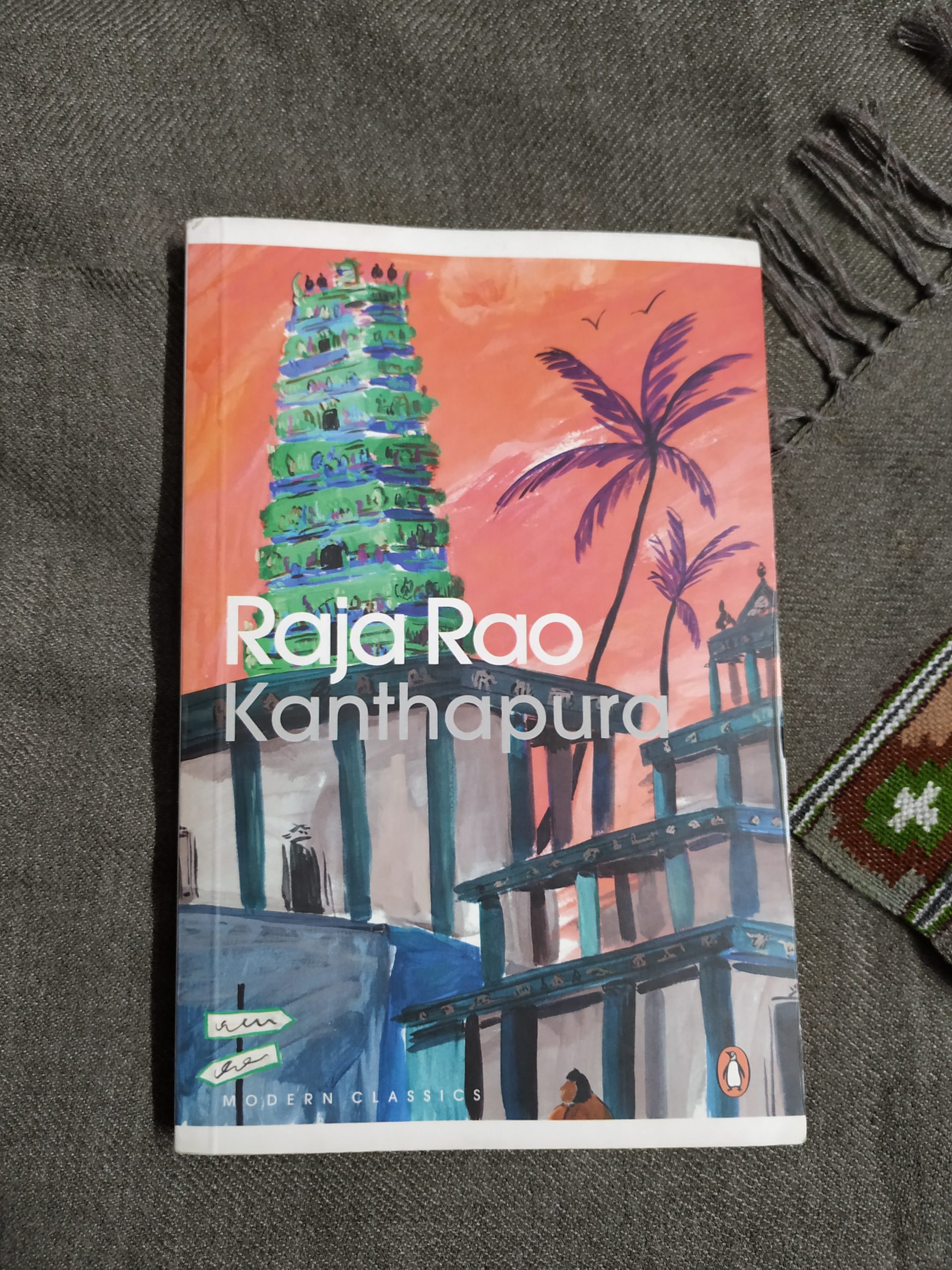
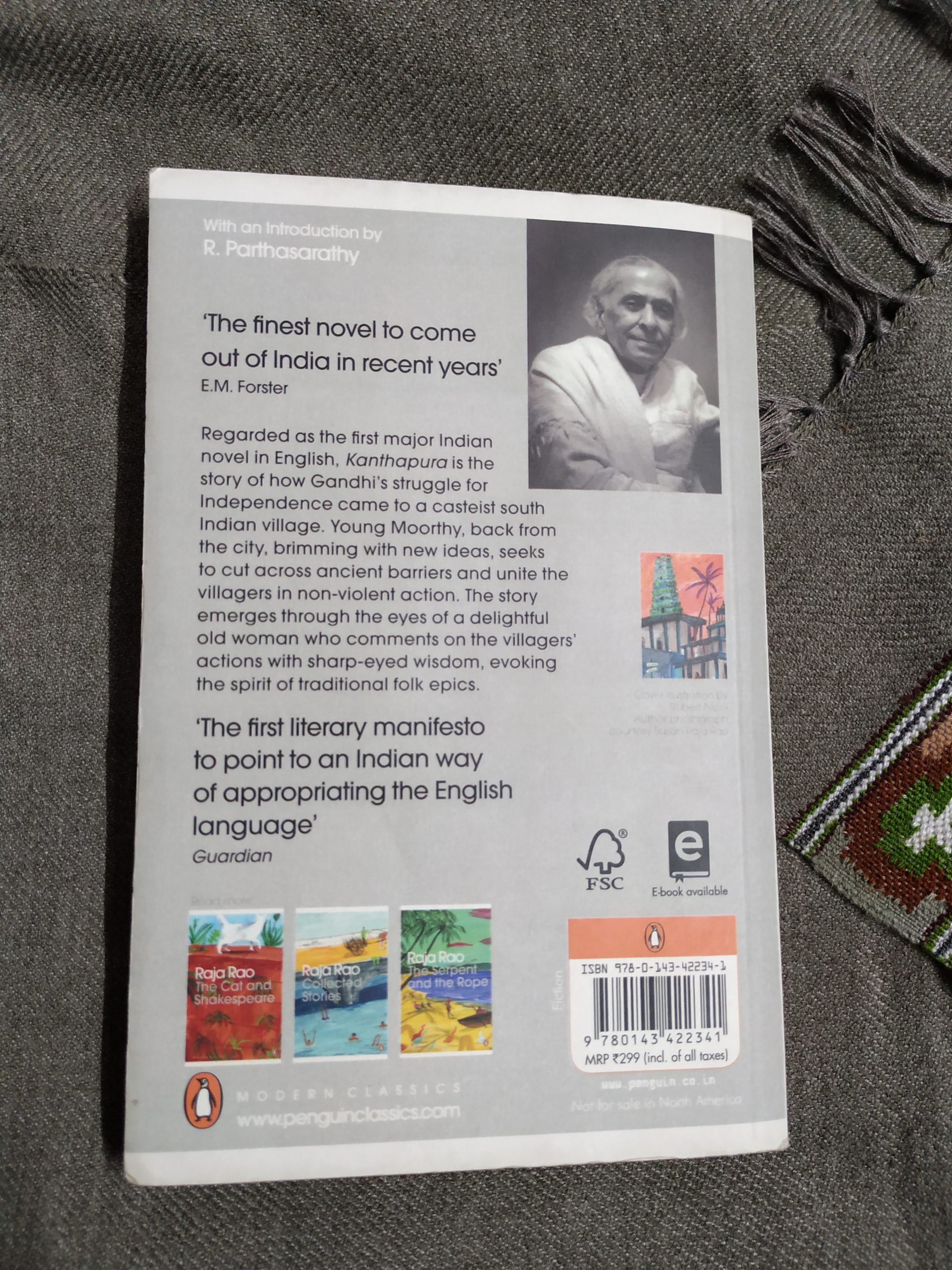
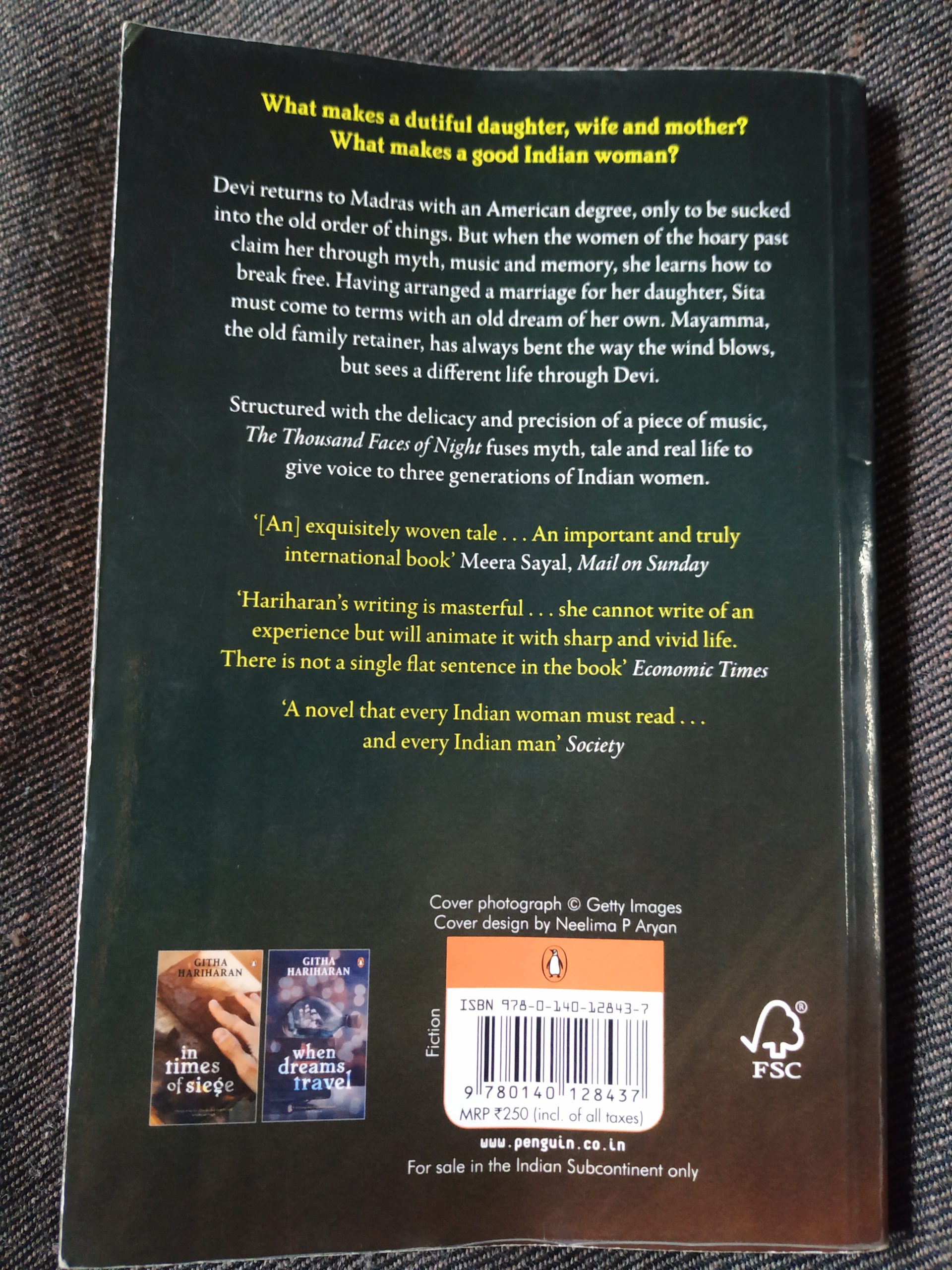
The Thousand Faces of Night (1992) is written by the astounding Githa Hariharan. The novel is a melody sung and composed at night that captures the thousand faces of the moonless, starless night.

It narrates the many tales of Indian women – the celebrated mythical ones and the limited editions – with such excellence that the novel takes the shape of a woman carrying a heavy potli bag full of tales.

The tales, entangled badly, still echo well and dramatise their essence. The tales are spicy and heart wrenching and true.

*

Earthenware… they hold intact their stories, cultures for centuries.
[Source – Pixabay]

Devi, Sita, Mayamma – daughter, mother, maid – kindle fire that burns time, others and themselves. And so powerful is this fire that life gathers around it to get some inspiration.

Delicate like earthenware, painted beautifully, allegedly breakable, they hold intact their stories, cultures for centuries; you must have seen the pieces of such earthenware dug out from archaeological sites, displayed in a museum safely.

Their resilience never fails them even if it means to walk alone, against the tide, the familiar sunshine. Devi, the present, dares to break away, in her agility, eager to explore, moving away from Mayamma and Sita, the past.

Posing in front of the patriarch, they contribute to his legacy/magnificence. After foolishly spending a long time and suffering from backaches, Sita straightens up and Devi dodges the mockery, while Mayamma continues.

The patriarch sees Mayamma and smiles, Mayamma bows and cusses silently. She prays for Devi.

*

The new raga.
[Source – Pixabay]

After etching their charcoal-inked messages on the kitchen walls, the three ladies change the notation of their melody slightly, making the raga, still sung at night, fresher.

*

I must have, as I grew older, begun to see the fine cracks in the bridge my grandmother built between the stories I loved, and the less self-contained, more sordid stories I saw unfolding around me. The cracks I now see are no longer fine, they gape as if the glue that held them together was counterfeit in the first place. But the gap I now see is also a debt: I have to repair it to vindicate my beloved storyteller.

Githa Hariharan (Part One; Chapter 3)

Weekly Newsletter

A weekly dose of stories! Get the posts from the Chiming Stories in your inbox and read it when you can. Subscribe now, it is free!

This field is required.

Recent Posts


Avicenna and the Turning Wheel

Spinning starry time wheel. [Image from Pixabay]

Thinking… the activity of using our mind to consider something; the process of using our mind to understand matters, make judgments and solve problems… that is what the dictionary says and says more and then sites many lovely examples:

“I had to do some quick thinking.”

“She explained the thinking behind the campaign.”

“Thinking, for me, is hard work!”

Our mind, coloured by a plethora of this and that, happy and sad, a sea of information, thinks in isolation, yet always a part of the collective unconscious. And how wonderful is it that this tinted mind, nevertheless, is fully capable to create something novel.

The thinking mind turns the wheel, knitting the society tighter. The juggernaut of sociocultural norms, in turn, fabricates the yarn for such a mind.


Avicenna or Ibn Sina (980 AD – 1037) was a physician, philosopher, astronomer, theologian, poet – a polymath – who greatly contributed to the Islamic Golden age. His book Al Qanun fi al Tibb or The Canon of Medicine, a medical encyclopedia, was studied as a textbook for medical education in many universities, also in Europe, up till the 17th Century.

*

1950 “Avicenna” stamp of Iran. [Source – Wikimedia Commons]

Philosophical encyclopedias like Kitab al Shifa or The Book Healing and Kitab al-Isharat wa al Tanbihat or The Book of Directive and Remarks presented Avicenna’s take on the Aristotelian and Platonian philosophy through the lens of an Islamic theologian.

*

Avicenna’s The Canon of Medicine, Latin translation, dated 1484 CE. [Source – Wikimedia Commons]

A well-known physician, Avicenna got support from most of the rulers of his time – some made him a vizir or an advisor in their court – and the opportunity to access the royal library. Highly influenced by Aristotle, Avicenna also disagreed with the Greek polymath on many points.

That the soul is not just ‘body’s form’ (Aristotle says that a soul is the actuality of a body that has life) but it has an existence, he came up with a thought experiment, famously known as the floating/ flying man thought experiment. He argues –

One of us must suppose that he was just created at a stroke, fully developed and perfectly formed but with his vision shrouded from perceiving all external objects – created floating in the air or in the space, not buffeted by any perceptible current of the air that supports him, his limbs separated and kept out of contact with one another, so that they do not feel each other. Then let the subject consider whether he would affirm the existence of his self. There is no doubt that he would affirm his own existence, although not affirming the reality of any of his limbs or inner organs, his bowels, or heart or brain or any external thing. Indeed he would affirm the existence of this self of his while not affirming that it had any length, breadth or depth. And if it were possible for him in such a state to imagine a hand or any other organ, he would not imagine it to be a part of himself or a condition of his existence.

Avicenna

While this blogger will definitely take a lot of time to grasp these theories in entirety, she would like to appreciate the art of thinking that moulds the world in such a steady and grandiose manner.

The art of thinking, in which we participate daily and, most importantly, in the times of despair, is running the show as we then stand face to face our true being and raise questions, refute the botched theory and create a new one.

Avicenna wrote the floating/ flying man argument when imprisoned for around four months as a result of a political debacle – an argument that was later termed weak by the other thinkers.

But this is how the thinking mind works, it continues to question, argue and turn the wheel.


Weekly Newsletter

A weekly dose of stories! Get the posts from the Chiming Stories in your inbox and read it when you can. Subscribe now, it is free!

This field is required.

Recent Posts

Shakespeare’s Sonnet 107 and Timelessness

Coverage

*

Not mine own fears, nor the prophetic soul
Of the wide world dreaming on things to come,
Can yet the lease of my true love control,
Suppos’d as forfeit to a confin’d doom.
The mortal moon hath her eclipse endur’d,
And the sad augurs mock their own presage;
Incertainties now crown themselves assur’d,
And peace proclaims olives of endless age.
Now with the drops of this most balmy time
My love looks fresh, and Death to me subscribes,
Since, spite of him, I’ll live in this poor rime,
While he insults o’er dull and speechless tribes:
And thou in this shalt find thy monument,
When tyrants’ crests and tombs of brass are spent.


The idea of timelessness, eternity, immortality must be true as we wish, look and aim for it in some way or the other. Imagining living continuously, building and creating happy ways of life, chiselling and shaping the continuous source of happiness, we forgetfully live with the idea of forever.

The decisive time gone by, the melting present and the secret future, though definite, knows the indefinite. And one is lured, naturally, to know and identify with the indefinite. Why? For the indefinite is the absolute. So? The absolute appears to be complete, eternal, beyond the cyclic drama and free. Then? We may be a part of it or we too may want to be complete. And so? I don’t know, I am living forgetfully with the idea of forever, remember.

Shakespeare, the greatest and most famous playwright ever, via his works, attained immortality and this is what he celebrated in Sonnet 107. Full of creative splendour, he announced his lead on rusty cenotaphs and statues of the rulers.


The Battle at Gavelines and Elizabeth I at Tilbury (Pastiche).
The painting presents a stylized account of the battle of Gravelines between the Spanish Armada and the English fleet, including the beacons, Elizabeth’s address at Tilbury, and the battle itself in a single montage on three jointed pieces of fine tabby-weave linen. 
[Source – Wikimedia Commons]

“The mortal moon hath her eclipse endured”

That the grand, rock-hard, grave and lovely moon too continues its finite journey, eroding gradually, black red white, suggests that the moon knows well the infinite’s will. Or else why will it so humbly accept its role? This long journey, then, is no less than a quiet meditation. The deep circular craters are the timekeepers and the moon knows it.

One of William Shakespeare’s renowned 154 Sonnets, Sonnet 107 is often linked with the contemporary events of the time: the defeat of the Spanish Armada (1588), Queen Elizabeth’s death (in 1603), the Long Turkish War (1593-1606); the Armada charged in a crescent formation, Queen Elizabeth was also called Cynthia (name of the Greek moon goddess), the Ottoman Empire’s flag boasted the crescent moon symbol.

*

Elizabeth I of England.
The portrait was made to commemorate the defeat of the Spanish Armada (depicted in the background).
[Source – Wikipedia]

In times so precarious, one would want to hold on to a secure thought or remember the limits of mortality, mocking unabashedly the warmongers and peace-lovers alike, or even hope to create something timeless.


Read the wonderfully crisp commentary on Sonnet 107, here.

*

First image from Pixabay


Weekly Newsletter

A weekly dose of stories! Get the posts from the Chiming Stories in your inbox and read it when you can. Subscribe now, it is free!

This field is required.

Recent Posts