Melody

Melody, Drama and Love

It is not a humble, gentle quest they all set for, but a challenge that they take up passionately, blindly, gladly to find out the meaning of love. And while it sounded, and was, a glorious and grand task like a celebration, they were tricked by the challenge itself. Nevertheless, this push and pull continued and filled the space with the aroma of first, passion and daring, then, possibilities and impossibilities and finally, it filled the room with love.

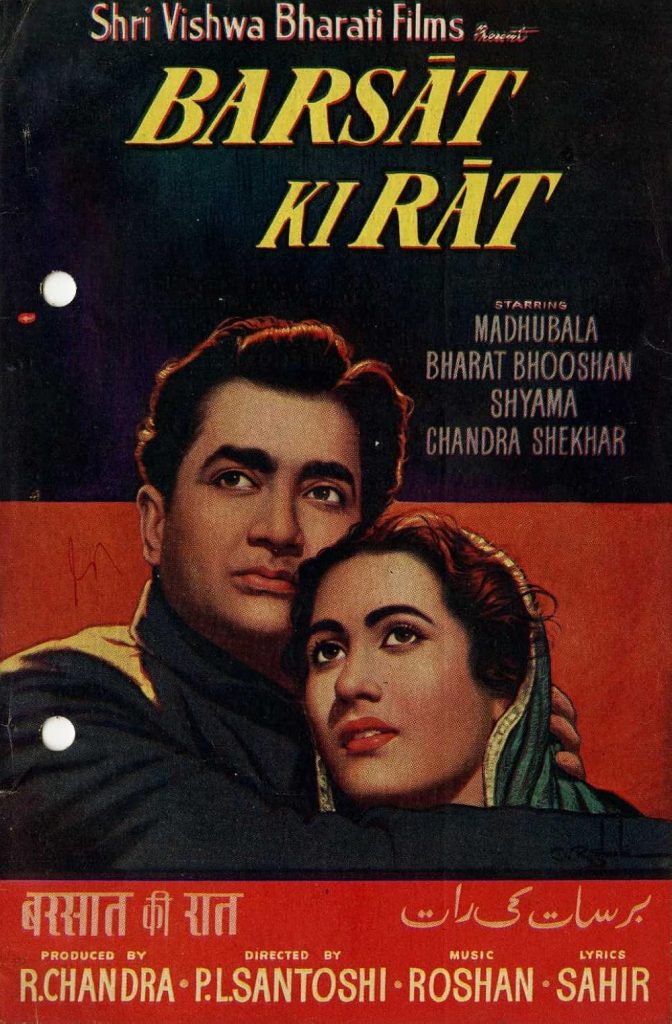
The rather quick journey that took the form of a grand challenge unfolds here melodiously, in the form of a Qawwali and forms the climax in the romantic musical film Barsat Ki Ek Raat (One Rainy Night, 1960).

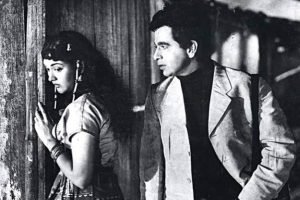
Barsat Ki Ek Raat (1960) directed by P. L Santoshi, story by Rafi Ajmeri, starring Madhubala, Bharat Bhushan and Shyama.

Na to Karwaan ki Talash hai… Qawwali by Sahir Ludhianvi. [Source – IMDB]

Words may never be able to capture what love is, but here Sahir Ludhianvi’s lyrics gallops any and every gap so beautifully that it presents the careful listener with tales, promises, whispers of love, pain, joy, tears, bliss, death and the sublime. The lyrics burn away the duality and confusion, the conflict and rigidness with so much love that your eyes well up.

Melos (song or music in Greek) and drama (drame in French) combine to form melodrama. A fantastic tool used to present all that is life in just a few minutes and hours on stage and screen.


The music creates the mood, it is a jugalbandi (jam session) between the musicians, it rises and falls, it promises nothing and everything and then it stops letting the singers and words to take the centre stage… charismatically.

Male Singer

Na to caaravaan ki talaash hai
I am not in search of a caravan
Na to humsafar ki talaash hai
I am not in search of a fellow traveler
Mere shauq-e-khaana kharaab ko teri rehguzar ki talaash hai
That ruined place of my desire searches for the path that leads to you

Team One presents a challenge via their craft, for it is a matter of love, they know the stakes are high, they challenge the other team as well as declare that they, who know love very well, know how to manoeuvre in this space. They talk about the lover who is content in their loneliness and doesn’t need any support from fellow travellers – another strong perspective – they are talking about someone who is already walking alone in this maze of a world, and that it is a choice because all this person desires is to find the way to their beloved.

Female Singer

Mere naamuraad junoon ka hai ilaaj koi to maut hai
If there is any cure for my unfortunate obsession, then it is death
Jo davaa ke naam pe zehar de
Give me that medicine whose name is poison
Usi chaaraagar ki talaash hai
I am in search of such a healer

Team Two keeps forth a situation less as a reply and more as a fact as the singer is deeply in love with someone who loves another, it starts with and stays in a personal space for her. This lovesickness of hers, an obsession for those who don’t understand her, has only one cure and that is death. She raises the stakes further hinting at her looming death.

The words like obsession, cure, death, medicine, poison, healer, beautifully amplify the intensity of the entire song so early on; but after all, dying, loving and living aren’t separate. The singer is also surrendering, though not giving up, rather she is ready to give up on her life. She is surrendering it all with love.

Male Singer

Tera ishq hai meri aarzoo,
Your love is my desire
Tera ishq hai meri aabroo,
Your love is my honor
Dil ishq, jism ishq hai, aur jaan ishq hai
My heart is love, my body is love, and my life is love
Imaan ki jo poochho to imaan ishq hai
If you ask for faith, then that is love too
Tera ishq main kaise Chhod doon?
How could I ever leave your love?
Meri umr bhar ki talaash hai
That love is what I have been searching for all my life

Team One doesn’t believe in surrendering, they are only too invested in winning the competition. They’re eager to charm the audience too and thus, they announce, that for them the beloved’s love is their desire, honour, heart, body and whole life and in fact, even their FAITH. Whatever is on a pedestal in their lives, they have already kept it at the feet of their beloved and after struggling so much how can they let go of their love, it has been a life time’ search and now they cannot abandon it, they cannot surrender.

This grand announcement receives applause. Continuing the search for love is what the majority does and so the majority claps; those in deep love, watch with love.

The song gallops as it has promised to do so and the tempo changes.

Male Singer

Yeh ishq ishq hai, ishq ishq, yeh ishq ishq hai, ishq ishq
This is love, this is love, this is love
Jaan-soz ki haalat ko jaan-soz hi samjhegaa
Only one in torment can understand the condition of a fellow sufferer
Main shamaa se kehta hoon mehfil se nahiin kehta
I am speaking to the flame, not to the company gathered here
Kyonki yeh ishq ishq hai, ishq ishq, yeh ishq ishq hai, ishq ishq
For this is love, this is love, this is love

Team One enjoying the mood, the vibrancy and lead, takes a rather cheap shot at the opponent that isn’t recognised by all. Showing concern for the wounded lover he says he understands that pain and that is why now he is speaking with the flame directly and not the audience members. While on one level, he seems to be talking about the moth and flame metaphor that represents a self-destructive devotion, yet on another level, he is talking to the lead singer from Team Two, her name being Shama which means flame.

Female Singer –


Sahar tak sab ka hai anjaam jal kar khaak ho jaana
By dawn, everything will burn and be reduced to ashes
Bhari mehfil mein koi shamaa yaa parvaana ho jaaye
Everyone in this gathering shall became either flame or moth
Kyon ki yeh ishq ishq hai, ishq ishq, yeh ishq ishq hai, ishq ishq
For this is love, this is love, this is love

Seeing that the lead singer is in tears, the second singer from Team Two replies instead and that too sharply. She carries the moth and flame metaphor to its finality, declaring that by dawn, everyone present there may very well die because it is possible for them to turn into either the flame or moth – one will die-out and other will burn to death.

Hero

Vehshat-e-dil rasn-o-daar se roki na gayi
Love is not stopped by the madness of the heart or ropes and the gallows
Kisi khanjar, kisi talvaar se roki na gayi
It is not stopped by any dagger, by any sword
Ishq Majnu ki woh aavaz hai jiske aage koi Laila kisi deewaar se roki na gayi,
Love is that voice of Majnu’s which Laila followed and which no barrier could stop
Kyon ki yeh ishq ishq hai, ishq ishq, yeh ishq ishq hai, ishq ishq
For this is love, this is love, this is love

Team Two is joined by the Hero (of the film) who is sitting in the audience, who knows them very well and can see Shama is hurt, he understands her more than anyone for he himself is pining for his beloved; he pitches in so that the enquiry into what is love goes on.

He gets enough aural space to match the rhythm.

Addressing the audience more than the opposition, he says that you are talking about flames here, while love cannot be stopped by anything, be it swords, ropes, gallows, walls or even your own heart. Referring to the celebrated but tragic love story of Laila and Majnu, he says that nothing can stop any Laila once she hears the voice of her Majnu. Indirectly, also saying that there were and will always be people who would choose death over separation from their beloved.

Male Singer

Woh hanske agar maangen to hum jaan bhi deden,
If she laughs and asks, then I would even give my life
Haan yeh jaan to kya cheez hai? Imaan bhi deden!
Yes, after all what is this life? I would even give up my faith!
Kyon ki yeh ishq ishq hai, ishq ishq, yeh ishq ishq hai, ishq ishq
For this is love, this is love, this is love

Team One also talk about life and death, reiterating what they had said earlier. They say that we are ready to die, if that is our beloved’s wish; in fact, not only life, but we can let go of our FAITH too. What was there a need to reiterate at all? What happened to their sharp gift of repartee?

Hero

Naaz-o-andaaz se kehte hain ki jeena hoga,
I am told that I must live with my fate gracefully
Zehar bhi dete hain to kehte hain Ki peena hoga
They give me poison, and say I must drink
Jab main peetaa hoon to kehte hain ki marta bhi nahiin,
But when I drink it, then they say I won’t die
Jab main martaa hoon to kehte hain ki jeenaa hogaa
When I am dying, they say I must live
Yeh ishq ishq hai, ishq ishq, yeh ishq ishq hai, ishq ishq
For this is love, this is love, this is love

Hero’s witticism is filled with love. His voice and words are imbued with the freshness of love. Thus, he counters Team One simply by not countering, he has crossed and reached another level, he speaks directly to his beloved who is listening to his voice somewhere for sure. He knows it, and so does the viewer.

He shows what a paradox romantic love often becomes, where one inadvertently ends up torturing the other, all the while hoping to heal and rise and unite. “You’re asking me to live and die at the same time. Ah love! Tell me how is it possible? Only in love?”

Male Singer –

Mazhab-e-ishq ki har rasm kadi hoti hai,
The laws and customs of love are very strict
Har qadam par koi deewaar khadi hoti hai
At every step, there is a barrier standing

With the sudden change in position, Team One falls down without any noise. They themselves seem unaware of this that from opposing team in a competition they have taken a stance that is somehow opposing lovers. They now talk about the “complicated” laws and customs of love that often places a wall in front of the lovers. They seem to be enjoying restrictions and in doing so they restrict themselves from moving further.

Hero –

Ishq aazad hai, Hindu Na Musalmaan hai ishq,
Love is free, love is neither Hindu nor Muslim
Aap hii dharm hai aur aap hii imaan hai ishq
Your own duty and your own faith alone is love
Jis se aage nahiin shekh-o-Brahaman donon,
Both Hindu and Muslim religious men cannot surpass this
Us haqeeqat ka garajtaa hua ailaan hai ishq
The reality of that thundering proclamation is love

What started as a jugalbandi (jam session), now moves towards a solo performance, a solo voice taking the lead and love, having shed the superficial flimsy faces attached to it, begins to spread in the air like perfume. Love is freedom and freedom love, and it is that which can liberate. Love, the hero says, has nothing to do with the man-made ideas at all. He proclaims that nothing can surpass love. And this truly makes him the hero.

Female singer –

Ishq na puchhe deen dharm nu, ishq na puchhe jaataan
Love does not ask your religion or creed, love does not ask your social class or caste,
Ishq de haathon garam lahu vich doobiyaan laakh baraataan ke
Love has drowned thousands of wedding revelers in its fiery blood
Yeh ishq ishq hai, ishq ishq, yeh ishq ishq hai, ishq ishq
This is love, this is love, this is love

The second singer from Team Two, sings in Punjabi, maybe because it needed to be said in this language, maybe because it doesn’t matter which language you speak, when it comes to love, the essence remains the same. It is yet another passionate declaration – Love doesn’t discriminate. Love also becomes something that vividly is alive, for it consists of “fiery blood”. From abstraction it enters a known realm.

Male Singer –
Raah ulfat ki kathin hai ise aasaan na samajh
The path of love is dangerous, do not think it easy
Yeh ishq ishq hai, ishq ishq, yeh ishq ishq hai, ishq ishq
This is love, this is love, this is love

Team One tries to fill the lovers with doubt and thus, they use fear instead to rise in front of love.

Female Singer –

Bahut kathin hai Dagar panghat ki
The path to the riverside is very dangerous
Ab kya bhar luaun main Jamuna se matki?
Now how can I fill my jug with water from the banks of the Jamuna River?
Main jo chali jal jamuna bharan ko dekho sakhi ji main jo chali jal jamuna bharan ko
As I was on my way to fill my jug with water from the Jamuna,
Nand kishor mohe roke jhaadon to
The young boy of Nanda [Krishna] stopped me
Kya bhar luaun main Jamuna se matki?
So how can I fill my jug with water from the banks of the Jamuna River?

Bringing in cultural reference, talking about the majestic couple – Krishna and Radha, the female singer from Team Two sets-up the stage for the Hero to take over. The reference also brings us closer to the hero and the heroine of the film, that they too are like Krishna and Radha, their love too is divine and that they’re united in their love for each other, even if separated by distance.

Male Singer –

Haan, kya bhar luaun main Jamuna se matki?
So how can I fill my jug with water from the banks of the Jamuna River?

Ab laaj raakho more ghoonghat pat ki
Now protect my honor, this veil of mine

Ab laaj raakho more ghoonghat pat ki
Now protect my honor, this veil of mine

Team One talks about honour and we wonder what about the love which is above honour and which they were talking about earlier? This is their last remark, though they do continue to show their craft, failing nevertheless. They humbly recognise this at the very end.

Hero –

Jab jab Krishn ki bansi baaji,
When Krishna played his flute
Nikali Raadhaa saj ke
Radha emerged, dressed up
Jaan ajaan ka dhyaan bhulaa ke,
Forgetting all she was taught
Lok laaj ko taj ke
She left the honor of society
Haaye ban ban Doli Janak dulaari,
The darling child of King Janak [Sita] swayed into the forest
Pehenke prem ki maalaa
And wore a garland of love
Darshan jal ki pyaasi Meera
Meera thirsty for her a glimpse of her Lord
Pii gayii vishh ka pyaalaa aur phir araj kari ke
Drank a glass of poison and then pleaded
Laaj raakho raakho raakho, laaj raakho dekho dekho,
Protect my honor, protect my honor, protect my honor
Yeh ishq ishq hai, ishq ishq, yeh ishq ishq hai, ishq ishq
This is love, this is love, this is love

In the story, the heroine following the voice of the hero, reaches the venue, showing by her mere presence how love triumphs, how love liberates, and it happens instantly. And Shama, the lead singer, is troubled, she loves the hero, but knows he cannot be hers; she salutes the heroine and almost loses her consciousness, she is taken away.

The hero, meanwhile, as if in trance, begins to touch the pinnacle, rising from mundane to the sublime; from romantic love to sacrifice to total devotion to complete surrender to union. It is all love, all life is love.

Hero –

Allah rasool ka farmaan ishq hai
The commands of God and Mohammed are love
Yaanii Hadith ishq hai, Quraan ishq hai
The teachings of Mohammed are love, the Quraan is love
Gautam kaa aur Maseehaa kaa armaan ishq hai
The wishes of Buddha and Christ are love
Yeh kaayanaat jism hai aur jaan ishq hai
This material existence and this life are love
Ishq sarmad, ishq hii mansoor hai
Love is everlasting, love alone is victorious
Ishq Moosa, ishq Koh-e-Toor hai
Love is Moses, love is Mt. Sinai
Khaaq ko but, aur but ko devtaa karta hai ishq
Love turns clay into idols, and idols into Gods
Intahaa yeh hai ke bande ko khuda karta hai ishq
The pinnacle is that love has the power to turn a man into a revered God
Haan.N yeh ishq ishq hai, ishq ishq, yeh ishq ishq hai, ishq ishq
Yes, this is love, this is love, this is love

Playing with fire called love, the hero lets everyone feel its warmth, holding the elixir in his hands, he lets everyone see their reflection in it, surrendering with love, he rises in love.

And he manages to do this because he is united with his lover, though he still doesn’t know she is there.

He shows how beautifully all the religions converge when they go deep enough in exploring this life, undoubtedly finding love as its source. Something divine yet purely simple.

Love is everlasting, it is the universe. Love is truth and it is everywhere.


Weekly Newsletter

A weekly dose of stories! Get the posts from the Chiming Stories in your inbox and read it when you can. Subscribe now, it is free!

This field is required.

Recent Posts

The Rise

Dancing colours!
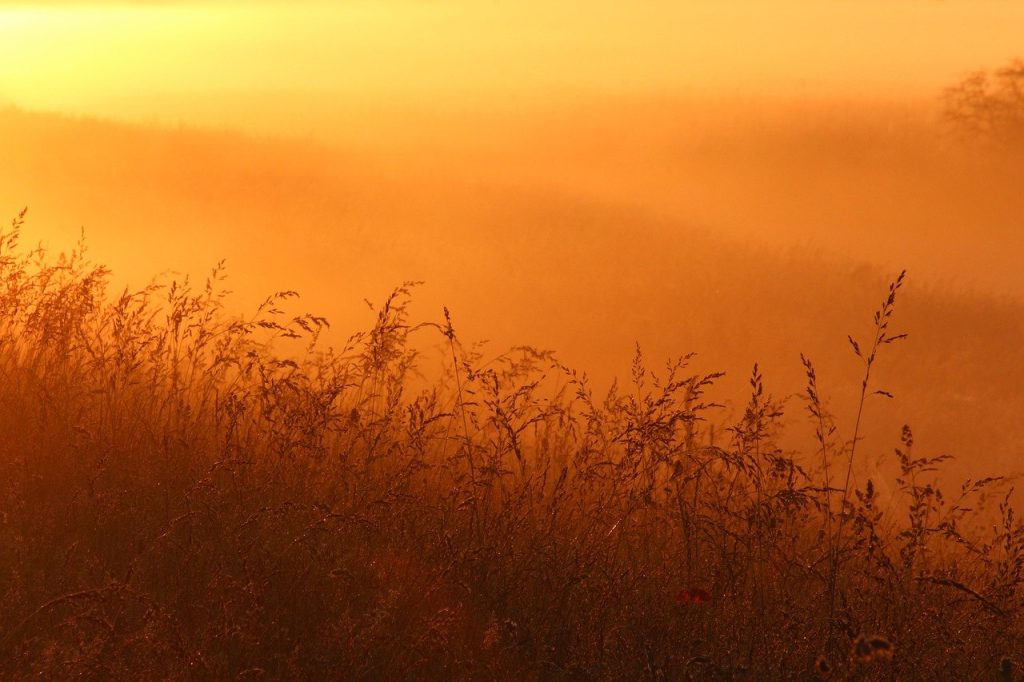
[Source – Pixabay]

Dawn.

Black sky begins to break, fading into a soft white bluishness. All is still, witnessing in each other the daybreak. A gushing of joy silently takes over.

Fresh piercing air, like a giant wave, bathes us in one go. It is everywhere, not word-heavy, yet firmly present. Those who matches its ferocious calmness and coolness, live a long life.

Then a bold crimson red is poured at the rim horizon, complementing the darkness before devouring it fully as the red yawns and stretches into golden orange, sprinkling, spreading throughout, directionless, embracing every nook and cranny warmly.

The dusk sings and sleeps, the dawn rises and sings. And the birds and rivers sing along.

It may appear like an orderly routine, but it is truly a disorderly dance of colours, a splash of melody, fresh and wet, a sweet yet melancholic search at first, but actually a thought-free light oneness.

It is the break of dawn, it is the rise.

Golden warmth!
[Source – Pixabay]

Weekly Newsletter

A weekly dose of stories! Get the posts from the Chiming Stories in your inbox and read it when you can. Subscribe now, it is free!

This field is required.

Recent Posts


Begin and End Like a Raag

Commentary
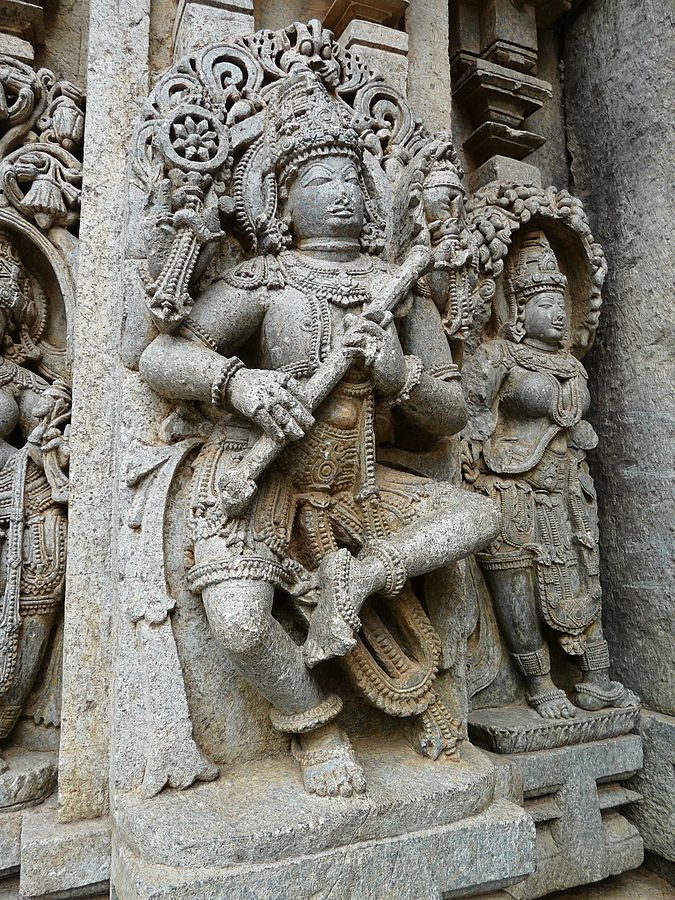
A Lady Playing the Tanpura, ca. 1735 Rajasthan, India.
[Source – Wikipedia]

A raag in Indian classical music becomes Time when orchestrated. Glorious instruments, colourful songs and performances, although, when glimpsed at, mute, await patiently for the right Time, right raag.

For a different season, a different raag – Malkauns, Puriya Dhaneshree for autumn and fall, Megh and Miyan ki Malhar for the monsoons, Brindavani Sarang for summer – that captures the weather in wavelengths, letting it communicate ever so freely.

Raag as Time presents itself in a harmonious clock, naturally. Dawn breaks with raag Ahir Bhairav, Lalit, Bilaval… afternoon visits with raag Bhimpalasi, evening with raag Yaman Kalyan and night with raag Chandrakauns, Darbari, Hameer

Moulding live Time into a majestic melody, into resplendent raags – they sit still. Who all, exactly? Both raag and Time – raag as Time, Time as raag. They sit still, now bursting into true joy, now as fragrant as love, they await, never losing the discipline of being one.

Yes, here comes the structured, palpable, countable, direct, strict form of the raags – notations. Tied to notations, raags sincerely obey the rules set by the masters, always free to improvise and ameliorate the notations. Raags aim for clarity of ever vibrant awareness, presence that transcends.

And who do the masters, gurus, legends and myths obey? Well, life is cyclical – they obey, observe, listen to, be mindful of the raags.

*

*

So, the strictness, the structure of notations attempts to keep the raags’ soul alive, while firmly certain that raags’ soul is eternal. And carrying this paradox rhapsodically, the artists move rather uniquely, theirs is a different gait, rich in colours, in fast-forward or rewind mode.

Ti-ha-yi i.e. tihayi, a technique used in Indian classical music mostly to complete a piece.

“Tihais are sometimes used to distort the listeners’ perception of time, only to reveal the consistent underlying cycle at the sam.”

Music Contexts: A Concise Dictionary of Hindustani Music by Ashok Damodar Ranade

Sam is the ending point/ beat.

Listeners’ perception of time… very true, after all it is done for the listeners, the stage is set for the viewers, the raags become Time for the audience.

Why? So that the sublime connection between the world around and the world within doesn’t break, so that the cyclical journey goes on and on… for no mortal being knows the final destination.


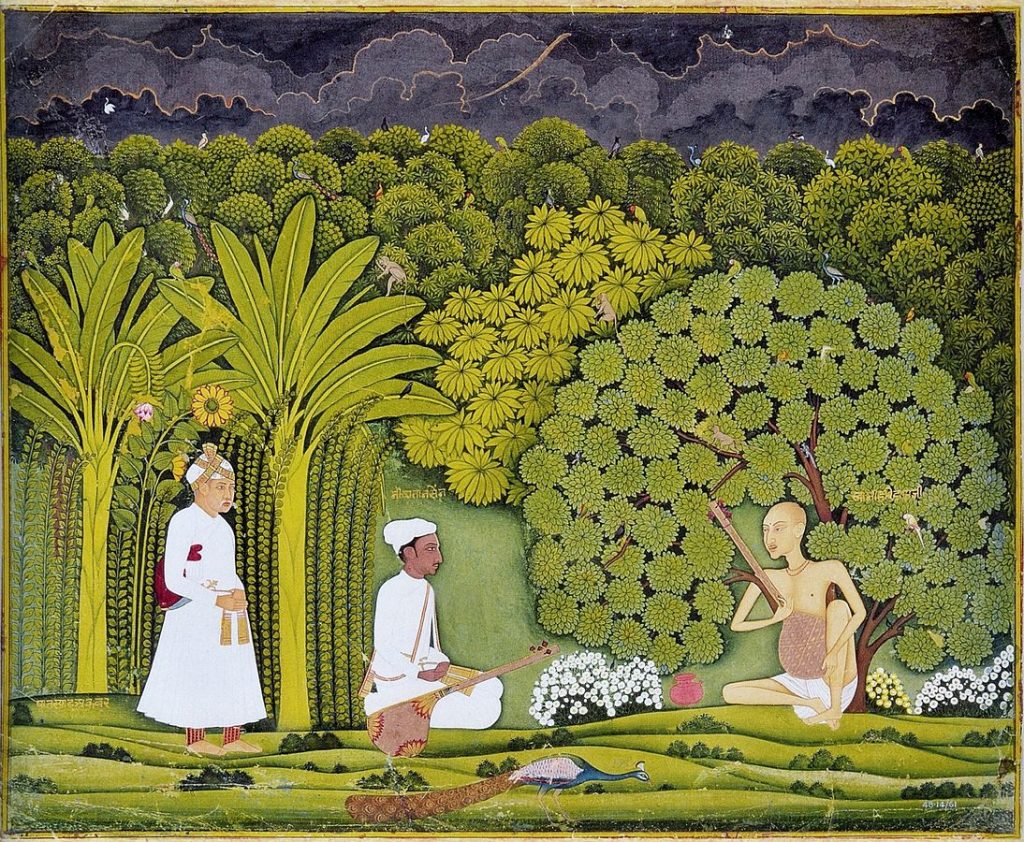
Akbar watching as Tansen receives a lesson from Swami Haridas. Imaginary situation depicted in Mughal miniature painting (Rajasthani style, c. 1750 AD).
[Source – Wikimedia Commons]

Raag comes from a Sanskrit word that means ‘dyeing’ or ‘a colour, tint, hue’, and so when the right note – beautifully beaded, richly fresh – is played, it touches the heart and soul of the listener, affecting and colouring the thoughts, urging one to act well, arresting one’s hurtful quietness, liberating one from the heavy shackles, boosting one’s spirited self.

An ecstasy when experienced so, in general the raags take a traditional ritual’s shape that often gets dull under the burden of untouchable rules… untouchable for they are pious.

And oh, be careful of rupturing the impeccable quaint charming world.

But they forget the raag becomes Time here, when orchestrated well and as Time it evolves, evolving others along.

Who has captured Time in this ephemeral space? And that too in a sweet honeyed way that in captivity it turns melodious – Time becomes raag…?

An eternal tug of war between the thoughtful and careful, a wave rising and falling, union and separation, spoken and unspoken – there is a raag for every shade, every mood, every subtle change, every sky and every earth.

Together why not we take a dive into this ocean of raag… why not we learn to be as patient as a still raag as if we have been sculpted out of stones, while the atoms within hum steadily the right tune… why not we become in action that ecstatic joy like the raag Malhar, causing the clouds of bleakness to rain, in-turn nurturing our roots… why not each one of us create a unique tihayi that uncovers the similarities at the sam…

Why not we begin and end like a raag…


Some supreme performances by the legends –

*

*

*

*

*


Weekly Newsletter

A weekly dose of stories! Get the posts from the Chiming Stories in your inbox and read it when you can. Subscribe now, it is free!

This field is required.

Recent Posts

Those Seekers

Short Feature

#NoWar
[Image by Alexandra_Koch from Pixabay]

How powerful is a melody! A melody struck in the past, struck so beautifully that it broke free.

Timeless! A timeless piece of music rings true always; ten times truer in those moments when the courageous stand tall.

A single spark then is enough to change the narration. The narration that once appeared fixed and firm now burns and melts, making a new path, creating a new reality.

How powerful is a spark! A spark… perishable and yet unfading, tiny celebratory moments in embers, collected often by those seekers.

Those seekers who can also create a timeless melody… a timeless melody that even if buried under rubbles, surrounded by war cries, awaits the moment to be struck and break free once again.


Inspired by and dedicated to Irina Maniukina and all the wonderful seekers in Ukraine.

#NoWarPlease #standwithukraine #StopWarInUkraine


Weekly Newsletter

A weekly dose of stories! Get the posts from the Chiming Stories in your inbox and read it when you can. Subscribe now, it is free!

This field is required.

Recent Posts

Regina Spektor’s Musical World and the Ephemeral Moments of Joy – Part I

Coverage
Delicate dance anthem…
[Source – Pixabay]

Walking down the street with old heavy memories, frozen and hazy, not bothering for a while and the unknown liveliness of the fresh sounds greeting us from all around – the dripping thaw, the golden sunny warmth, the tiny twittering birds, the ‘oh my god’ honking of a dashing car’s ghost that passes by, the hearty smiles and laughter – we blush with hope teasing us, giving us bright ideas, gleaming as we experience our quiet, still mind-pond.

These ephemeral moments of joy, so true and innocent, are hard to capture, harder to sustain, probably that is what makes it so special for and loved by all.


Regina Spektor, the star singer, songwriter, musician, the starry-eyed star, the star magician, knows how to hold such moments very well. She doesn’t capture it, na-na, she only knits a pretty, sweet and soothing melody and then soaks it into such warm moments, letting the melody take this ephemeral colour.

To this colour, she adds free-play, emotions and her pianist-self and, voila, a Regina Spektor song wave is ready.

Listen to “Ne Me Quitte Pas (Don’t Leave Me)” before reading further –

*

…And down on Lexington they’re wearing
New shoes stuck to aging feet
And close their eyes and open
And they’ll recognize the aging street
And think about how things were right
When they were young and veins were tight
And if you are the ghost of Christmas Past
Then wont you stay the night?

Ne Me Quitte Pas, Mon Chere
Ne Me Quitte Pas…

Regina Spektor

She amalgamates it all so well, life’s experiences, cut both ways and so gently she allows herself to smile an honest smile. How beautifully this song captures time and lets it go.

And she loves Paris, especially when it rains there and so do we all (at least the rasiks* do).

Listen now to “Dance Anthem of the 80’s” –

*

…I’m walking through the city
Like a drunk, but not
With my slip showing a little
Like a drunk, but not
And I am one of your people
But the cars don’t stop…

Regina Spektor

This is nothing but a memory, cold, harsh, but funny in retrospect; one that glares until you glare back at it, acceptingly. And Regina Spektor handles this mixed emotion so peacefully and at the same very eagerly, probably eager for it to evolve.


Also, listen to the live performance of “Dance Anthem of the 80’s”, how sweetly she thanks her audience.

*

Here, at Chiming Stories, the blogger will be covering Regina Spektor’s musical world in the coming posts, trying to live and relish her songs in your company, so dear readers ‘ne me quitte pas mon chere’ (don’t leave me, my dear).


*A rasik, in Hindi language, is a passionate and thoughtful being.


Check out the full series here –

Regina Spektor’s Musical World and the Assured Presence of the Antiquity – Part II

Regina Spektor’s Musical World and Perceiving the Emotion Called Love – Part III

Regina Spektor’s Musical World and Addressing the Hero – Part IV

Regina Spektor’s Musical World, the Random Wise Talk and Creativity – Part V.

*


Weekly Newsletter

A weekly dose of stories! Get the posts from the Chiming Stories in your inbox and read it when you can. Subscribe now, it is free!

This field is required.

Recent Posts

The Thousand Faces of Night – A Charcoal-Inked Raga

Book Review

The certainty of it being the night promises us of the erubescent dawn. It is an inky night, it has been for aeons and aeons… and, mind you, she uses charcoal-ink… for the stove is still burning, she never forgets to collect woods.

And so, with her inky fingers she writes messages, anecdotes, dead secrets and stolen dreams on the walls in the kitchen.

A custom followed since antiquity, now the charcoal-ink smells of these quiet cursive messages. It talks about the dark night and the breaking of the dawn.

Her inky fingers will turn red with the dawn.


But Sita needed all the strength she could muster to face the big trial awaiting her. After that, it was one straight path to a single goal, wifehood. The veena was a singularly jealous lover.

Then one morning, abruptly, without an inkling that the choice that was to change her life lurked so near, Sita gave up her love. She tore the strings off the wooden base, and let the blood dry on her fingers, to remind herself of her chosen path on the first difficult days of abstinence.

Githa Hariharan (Part Three; Chapter 1)

*

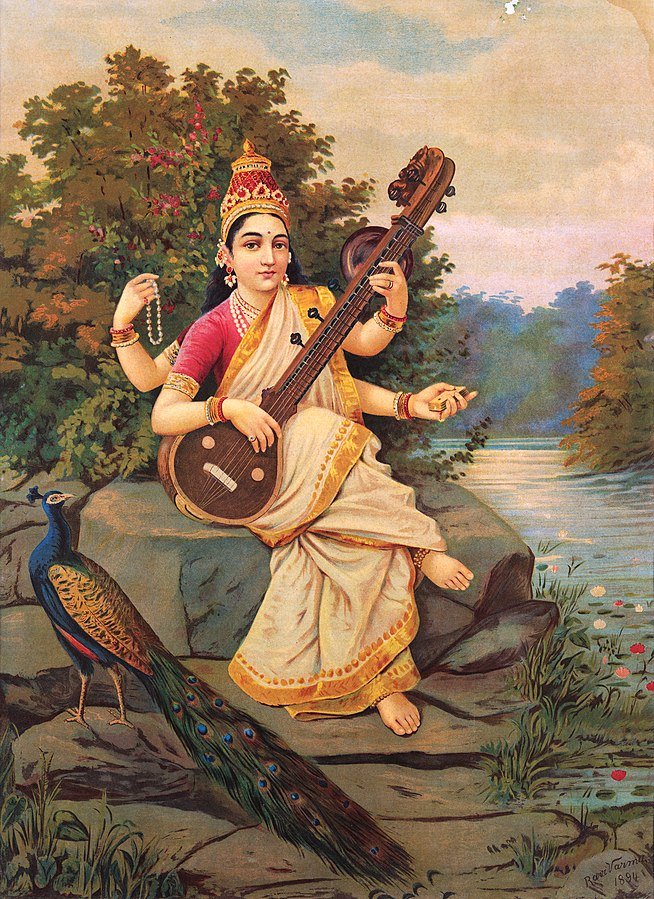
Painting of the Goddess Saraswati by Raja Ravi Varma.
[Source – Wikimedia Commons]

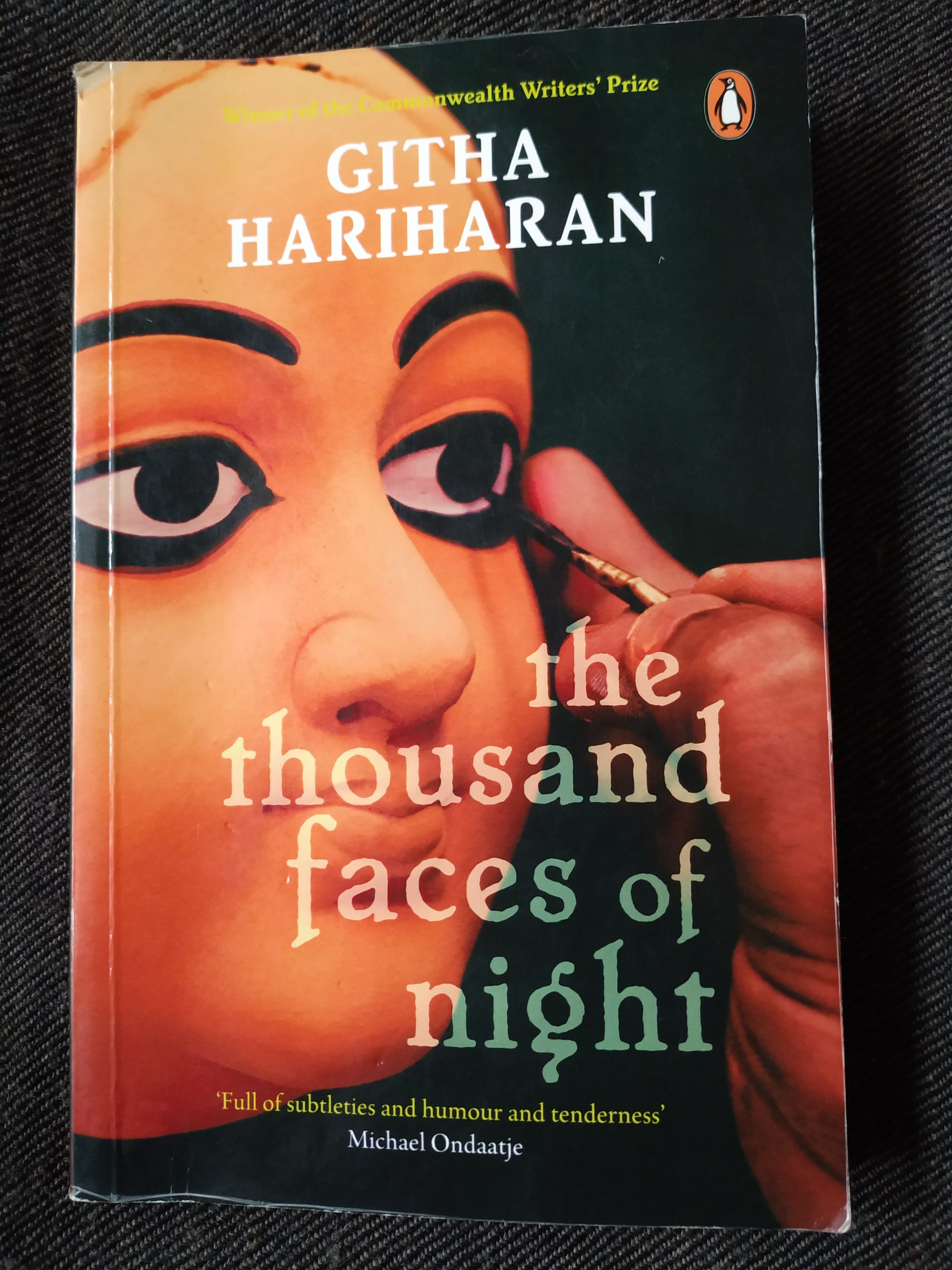
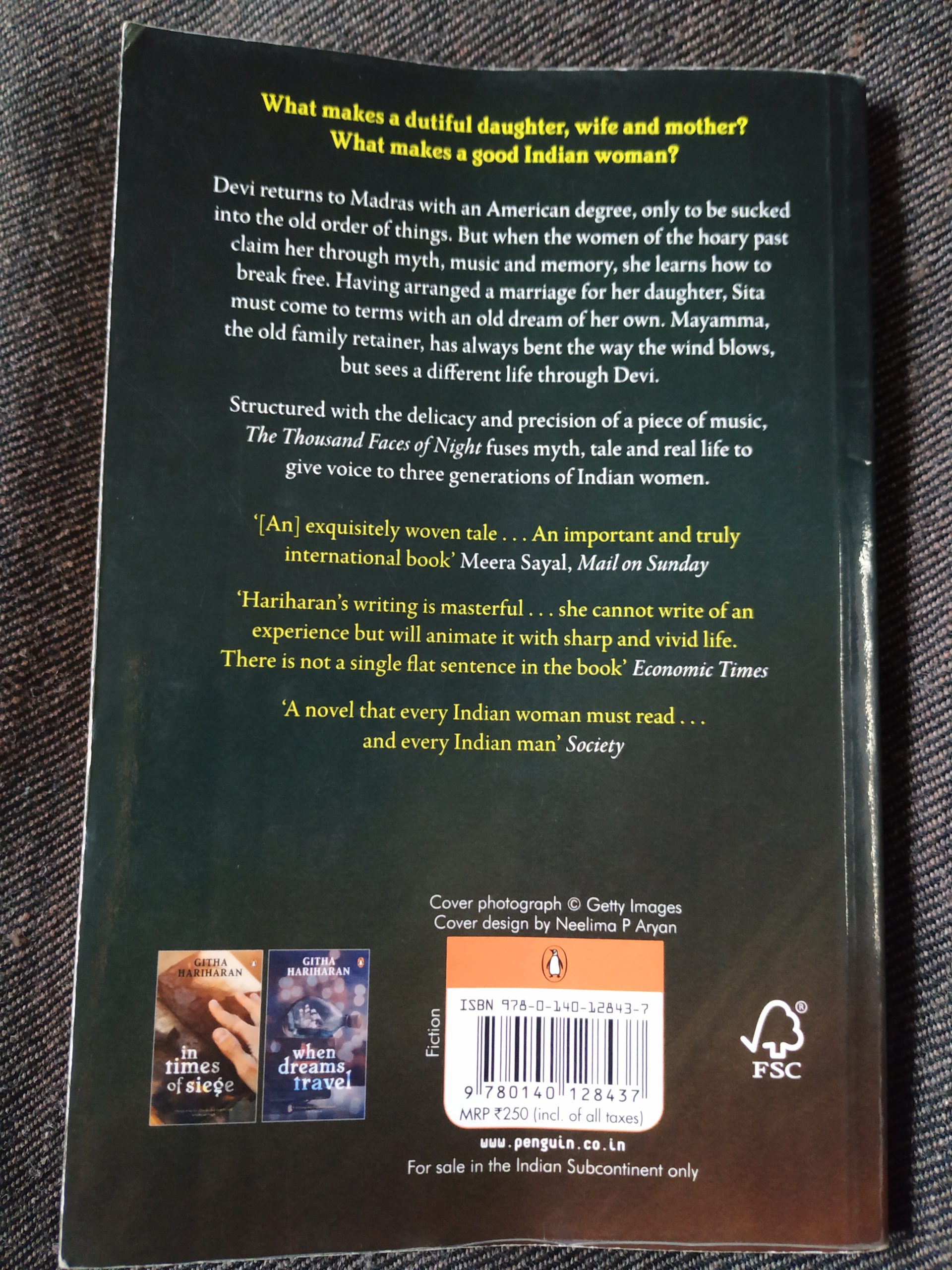
The Thousand Faces of Night (1992) is written by the astounding Githa Hariharan. The novel is a melody sung and composed at night that captures the thousand faces of the moonless, starless night.

It narrates the many tales of Indian women – the celebrated mythical ones and the limited editions – with such excellence that the novel takes the shape of a woman carrying a heavy potli bag full of tales.

The tales, entangled badly, still echo well and dramatise their essence. The tales are spicy and heart wrenching and true.

*

Earthenware… they hold intact their stories, cultures for centuries.
[Source – Pixabay]

Devi, Sita, Mayamma – daughter, mother, maid – kindle fire that burns time, others and themselves. And so powerful is this fire that life gathers around it to get some inspiration.

Delicate like earthenware, painted beautifully, allegedly breakable, they hold intact their stories, cultures for centuries; you must have seen the pieces of such earthenware dug out from archaeological sites, displayed in a museum safely.

Their resilience never fails them even if it means to walk alone, against the tide, the familiar sunshine. Devi, the present, dares to break away, in her agility, eager to explore, moving away from Mayamma and Sita, the past.

Posing in front of the patriarch, they contribute to his legacy/magnificence. After foolishly spending a long time and suffering from backaches, Sita straightens up and Devi dodges the mockery, while Mayamma continues.

The patriarch sees Mayamma and smiles, Mayamma bows and cusses silently. She prays for Devi.

*

The new raga.
[Source – Pixabay]

After etching their charcoal-inked messages on the kitchen walls, the three ladies change the notation of their melody slightly, making the raga, still sung at night, fresher.

*

I must have, as I grew older, begun to see the fine cracks in the bridge my grandmother built between the stories I loved, and the less self-contained, more sordid stories I saw unfolding around me. The cracks I now see are no longer fine, they gape as if the glue that held them together was counterfeit in the first place. But the gap I now see is also a debt: I have to repair it to vindicate my beloved storyteller.

Githa Hariharan (Part One; Chapter 3)

Weekly Newsletter

A weekly dose of stories! Get the posts from the Chiming Stories in your inbox and read it when you can. Subscribe now, it is free!

This field is required.

Recent Posts

The Sweet Sound Waves

Commentary

Sound is a sensation and a stimulus; reflected, refracted, and humbly attenuated by its medium, the sound wave propagates. Only the frequencies between 20 Hz and 20KHz comes in the hearing range of us humans.

Voices, calls, laughs, and whispers fill this range of ours, from morning to evening. We consider, approve, discard, ignore, and absorb it as and when we understand the hidden meaning.

*

Colourful message carrying sweet sound waves.
Image by Gerd Altmann from Pixabay

The hidden meaning…? Yes, the message that every sound wave carries is the hidden meaning, it shapes this very understanding of ours.

And what an exuberating elusive message a melody is, a wonderful wordless story that nevertheless is discernible, more than that in fact, as it touches and soothes our heart and soul.

Bansuri, a bamboo flute, taps a tune, using wind as the source and wind as the medium, carrying the message as far as possible, resonating beyond the visible, accepting all, conquering all.

Two and a half ample octaves and the bansuri deciphers happily the message using the Sargam (solfege); a subtle and soulful tune reads it to us.

Lord Krishna, the Jamun coloured Hindu deity with a peacock-feathered crown, is always depicted with a bansuri in his hands. Various stories tell us how Krishna, the charmer, used to mesmerise the listeners, stopping the time as if to unveil the beauty of the cosmic play.

*

The jamun coloured Krishna Flutist. [Source – 4art.com]

*

The leading character in several ancient Hindu religious, mythological and philosophical texts, Krishna plays his bansuri to win Radha’s heart, to celebrate the victory over evil, to turn impossible into possible and routinely for shepherding cows (he played a melodious tune on the bansuri and the herd of cows themselves returned to him).

*

Lord Krishna playing flute and shepherding cows along with his elder brother Balrama and friends. [Source – indiafacts]

Natya Shastra as well as the other Vedic texts associated art and music with the Supreme, calling it the spiritual means to rise above, concentrate on and connect to one’s consciousness, witness it and attain Moksha (enlightenment, release).

Why would one make a creative artist’s job tougher by leaving the great responsibility of enlightening the receiver on her? Let art be for art’s sake.

Right! But apart from just being true, pure art, what if say a tune played on a bansuri leaves a listener illumined, will this not add to the beauty of the melody? It absolutely will.

If it deciphers the message for the listener, showing her more than what is on the surface, by additionally doing absolutely nothing, then surely the message is intrinsic to the composition.

Wonderfully it all also depends on perception. Synesthesia is a condition in which one sense (for example, hearing) is simultaneously perceived as if by one or more additional senses, such as sight, thus, in such cases sound involuntarily evokes an experience of colour, shape, and movement.

Read what the first recorded case of synesthesia was about –

“The earliest recorded case of synesthesia is attributed to the Oxford University academic and philosopher John Locke, who, in 1690, made a report about a blind man who said he experienced the colour scarlet when he heard the sound of a trumpet.”

Wikipedia

And so everyone perceives it (the message, meaning, and life) differently, one feels, sees, and hears differently.

Vibrating air… that is what sound actually is; a sound wave cannot travel in the vacuum of space. Sound, an exclusive phenomenon on earth, then is indeed truly special.

And maybe that is why music is therapeutic in nature. It heals a troubled heart, it enlivens the mood, it calms a tired mind and often transcends the listener to a blissful state.

Instrumental musical compositions evoke for every individual a ‘thought’ within, yet to be uttered. The message it then delivers is always a favourable one, a high spirited one.

And a bamboo flute always keeps the message sweet, earthy and peaceful.  

*

Bansuri. [Source – Wikipedia Commons]

*

Listen to the spellbinding bansuri notes (that acted as a catalyst for this post) played by the maestro, Pandit Hariprasad Chaurasia –

May it help you to be kind to yourself in these difficult times.


Weekly Newsletter

A weekly dose of stories! Get the posts from the Chiming Stories in your inbox and read it when you can. Subscribe now, it is free!

This field is required.

Recent Posts

Dusk

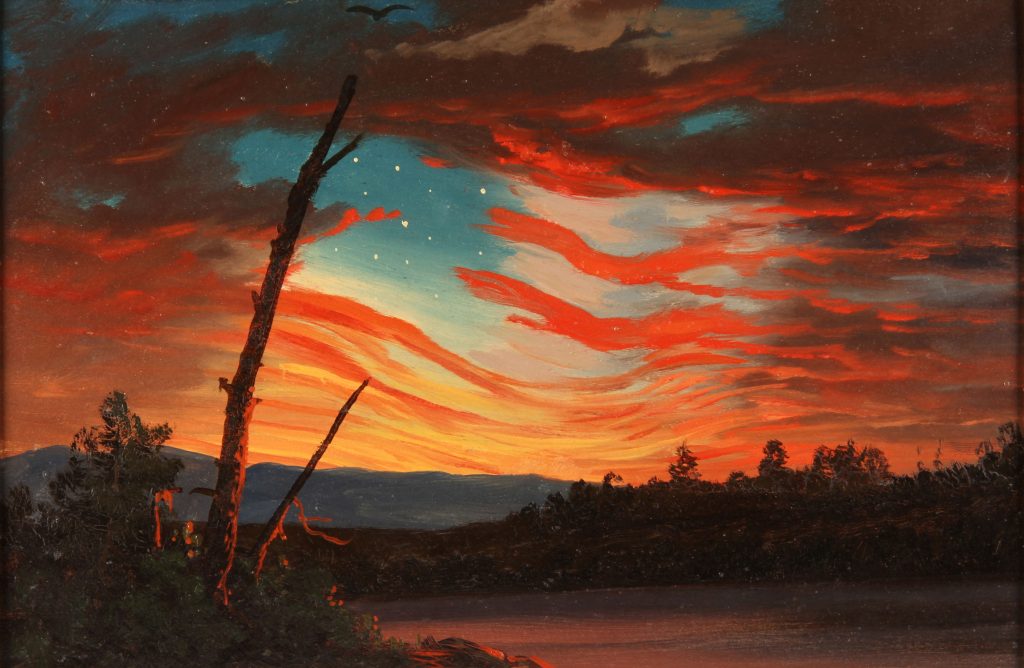
A silent melody!
[Source – Wikipedia]

Can it be that I reach there

Where the golden light changes into golden colour

And bold red and deep orange strokes

All over the night full of violet stars

Hum together a silent melody…

Where I breathe cool wet air

And dance dance dance…

Then I dip my hand in the sky

And a pink sparkle snake

Shines and merges with the violet stars…

Where it is quietly blue and silver,

Where the golden light changes into golden colour

Can it be that I reach there?


Weekly Newsletter

A weekly dose of stories! Get the posts from the Chiming Stories in your inbox and read it when you can. Subscribe now, it is free!
This field is required.

Recent Posts