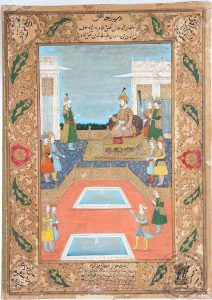
The siege of Daulatabad (April-June 1633). [Source – Wikimedia Commons]
*
But the play is more than a political allegory. It has an irreducible, puzzling quality which comes from the ambiguities of Tughlaq’s character, the dominating figure in the play. All the other characters are dramatized aspects of his complex personality, yet they also exist in their own right. Kannada critics have made detailed analyses of the play, paying special attention to the symbolism of the game of chess, the theme of disguise, the ironic success of Aziz whose amazing story runs parallel to Tughlaq’s, and the dualism of the man and the hero in Tughlaq, which is the source of the entire tragedy. Yet no critical examination of the play can easily exhaust its total meaning for the reader, because the play has, finally, an elusive and haunting quality which it gets from the character of Tughlaq who has been realized in great psychological depth. But it would be unjust to say that the play is about an ‘interesting’ character, for the play relates the character of Tughlaq to philosophical questions on the nature of man and the destiny of a whole kingdom which a dreamer like him controls.
Introduction, U. R. Anantha Murthy
*
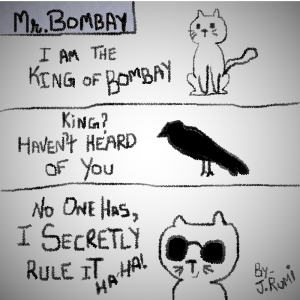
[Image by Jagriti Rumi]
*
Muhammad-bin-Tughlaq, in the play, commits to actions with a confidence of a master player, one who is certain of the ending, one who is far sighted somewhat like an ominous oracle – a skilful, wise puppeteer who runs the show singlehandedly, unaware and forgetful of his involvement in the drama.
People unlike puppets, even though tied to strings, quietly keep gathering the power to pull down and topple the king puppeteer, they always do.
The echo of a future that reached Tughlaq’s ears, the making of history that Tughlaq could see so clearly was nothing but an illusion, a time bound vision, a trick that tricked him.
Sure about a glorious tomorrow, he dragged his people along towards it – an ever evading tomorrow.
Sultan’s experiments done so as to unite the country as one, to build an ideal powerful state, failed pathetically, leading the kingdom to anarchy. With a staunch eye on greatness, Tughlaq couldn’t manoeuvre without ‘murdering’ the stubborn present – the present, so full of the past, so treasured by his subjects.
Subjects who wrote hate-letters, full of rebukes, all addressed to the Sultan.
Let us meet Tughlaq, whom we first met in the library, who is now placed, by the playwright, on the chess board and the game has begun –
Scene One
Old Man: You can go to the Kazi-i-Mumalik for small offences. But who do you appeal to against such madness?
Third Man: This is tyranny! Sheer tyranny! Move the capital to Daulatabad! Such things never happened in his father’s days – may his soul rest in peace. Now he’s got his father’s throne. He isn’t happy with that and—
*
Tughlaq has set up the court of Chief Justice in the capital where people can file a suit against the officers of State or even the Sultan.
He talks about justice and equality after accepting the Kazi’s verdict; he declares to compensate and offers a post in the Civil Service for the Brahmin who had appealed against his land being seized illegally by the State.
The humanistic monologue ends with Tughlaq announcing his well-thought and thoroughly discussed decision of shifting the capital from Delhi to Daulatabad and without waiting for a reaction or a bird to fly by, he leaves.
The shocked public worries if their worst nightmare will come true – what are they to do? The guard shoos them away shouting “Go home! The show’s over!”
*
Aazam: Anyway, why did you have to dress up in these ungodly clothes? Couldn’t you have come like a proper Muslim?
Aziz (scandalized): But then what would happen to the King’s impartial justice? A Muslim plaintiff against a Muslim King? I mean, where’s the question of justice there? Where’s the equality between Hindus and Muslims? If on the other hand the plaintiff’s a Hindu… well, you saw the crowds.
*
Aziz, a thug, disguised as the Brahmin, seeking justice from the Kazi, truly understands Sultan’s ‘impartial justice’; playing along with the Sultan, he makes use of the State’s scheme and presents the Sultan a chance to make use of him – Sultan gets the tag of a “fair ruler” and in turn, Aziz makes some money.
Throughout the play Aziz maintains the stance that no one knows the wise Sultan as much as he does because it is only he who participates in the Sultan’s game.
Aziz will, sooner or later, dare to check-mate the Sultan, will he win?
Scene Two
Muhammad Tughlak orders his brass coins to pass for silver, A.D. 1330. [Source – Wikimedia Commons]
Step-Mother (bursts into laughter): I don’t know what to do with you. I can’t ask a simple question without your giving a royal performance.
*
Tughlaq’s step mother is his confidant; well aware about his burdens, the Step-Mother always urges him to slow down and more importantly, to make every move not in secret, not from her.
The Step-Mother too is playing alongside the Sultan, sometimes delicately trying to use him as a game-piece, but never showing it. The crime of patricide and fratricide hangs heavily on the Sultan’s soul; the Step-Mother never brings this up, never, unless it is required to make an impact.
*
Muhammad: Surely a historian doesn’t need an invitation to watch history take shape! Come, Barani, what does he say?
Barani: It’s as Your Majesty said… He says the Sultan is a disgrace to Islam.
Muhammad: That’s all? I could find worse faults in me. What else?
Silence.
Najib: He says Your Majesty has forfeited the right to rule, by murdering your father and brother at prayer time.
*
First Tughlaq makes praying five times a day compulsory, then he completely bans praying in his kingdom, only to wait in the end for a messiah to bring back pious prayers for his doomed subjects.
Like a devotee crossing all boundaries – that of life too – to connect with the almighty, Tughlaq crossed all boundaries to win over the almighty.
The far-off dream seemed the biggest truth to him and making sacrifices the only way towards it.
Scene Three to Five
Muhammad: No one can go far on his knees. I have a long way to go. I can’t afford to crawl – I have to gallop.
Imam-Ud-Din: And you will do it without the Koran to guide you? Beware, Sultan, you are trying to become another God. It’s a sin worse than patricide.
Muhammad (refusing the bait): Only an atheist can try to be God. I am God’s most humble slave.
*
One Sultan, one dream, one decision, and what did the thousand eyes see – bloodshed or sacrifice, deceits or promises, Delhi or Daulatabad? Perhaps they couldn’t see clearly, perhaps they were hungry – for prayers or food?
*
Shihab-Ud-Din: I’m sorry. But you have never liked the Sultan, I don’t know why. After all that he has done for the Hindus –
Ratan Singh: Yes indeed, who can deny that! He is impartial! Haven’t you heard about the Doab? He levied such taxes on the poor farmers that they preferred to starve. Now there’s a famine there. And of course Hindus as well as Muslims are dying with absolute impartiality.
Moving stealthily ahead, like an animal approaching its prey, Tughlaq finds it hard to remember that he is not an animal. Playing the game too well, he begins to lose the grip on reality; shuffling strategies, imposing with a hope to win once again.
Muhammad: I could have killed you with a word. But I like you too much.
Stabs him. Then almost frenzied, goes on stabbing him. Hits out at Shihab-Ud-Din’s dead body with a ferocity that makes even the soldiers holding the body turn away in horror.
Barani: Your Majesty – he’s dead!
Muhammad stops, then flings the dagger away in disgust.
Muhammad (anguished): Why must this happen, Barani? Are all those I trust condemned to go down in history as traitors? What is happening? Tell me, Barani, will my reign be nothing more than a tortured scream which will stab the night and melt away in the silence?
Scene Nine
Aziz, the thug, awaits a chance to be in the centre, right in front of the king; to be there not as a pawn, rook or knight, but to be invited by the Sultan himself, to be revered – he plans to replace Ghiyasud-din Muhammad, a saint.
*
Aazam (giggles): So you want power, do you? What do you want to be, a Sultan?
Aziz: Laugh away, stupid. You’ll soon see. It all depends on whether Karim will bring the goods.
Aazam (seriously): But, no, Aziz, why are you so dissatisfied? We have such a nice establishment here. We take enough money from travellers and the other robbers are scared to death of you. There’s no limit to what we can make here.
Aziz: I am bored stiff with all this running and hiding. You rob a man, you run and hide. It’s all so pointless. One should be able to rob a man and then stay there to punish him for getting robbed. That’s called ‘class’ – that’s being a real king!
Scene Ten to Twelve
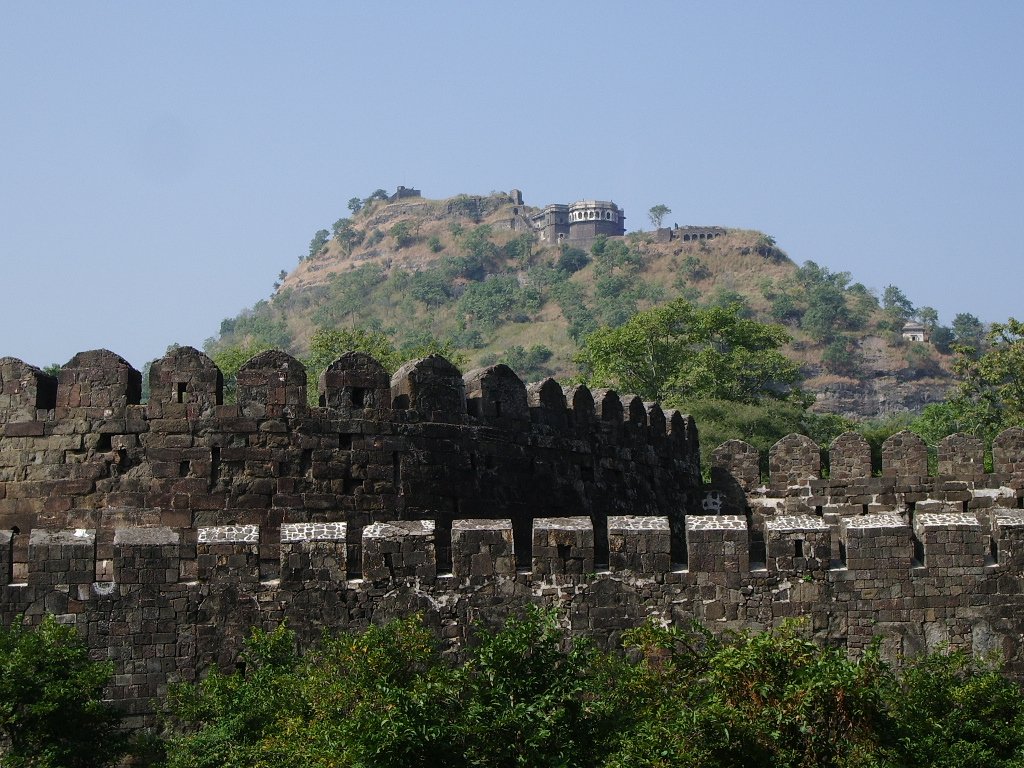
Daulatabad Fort [Source – Wikimedia Commons]
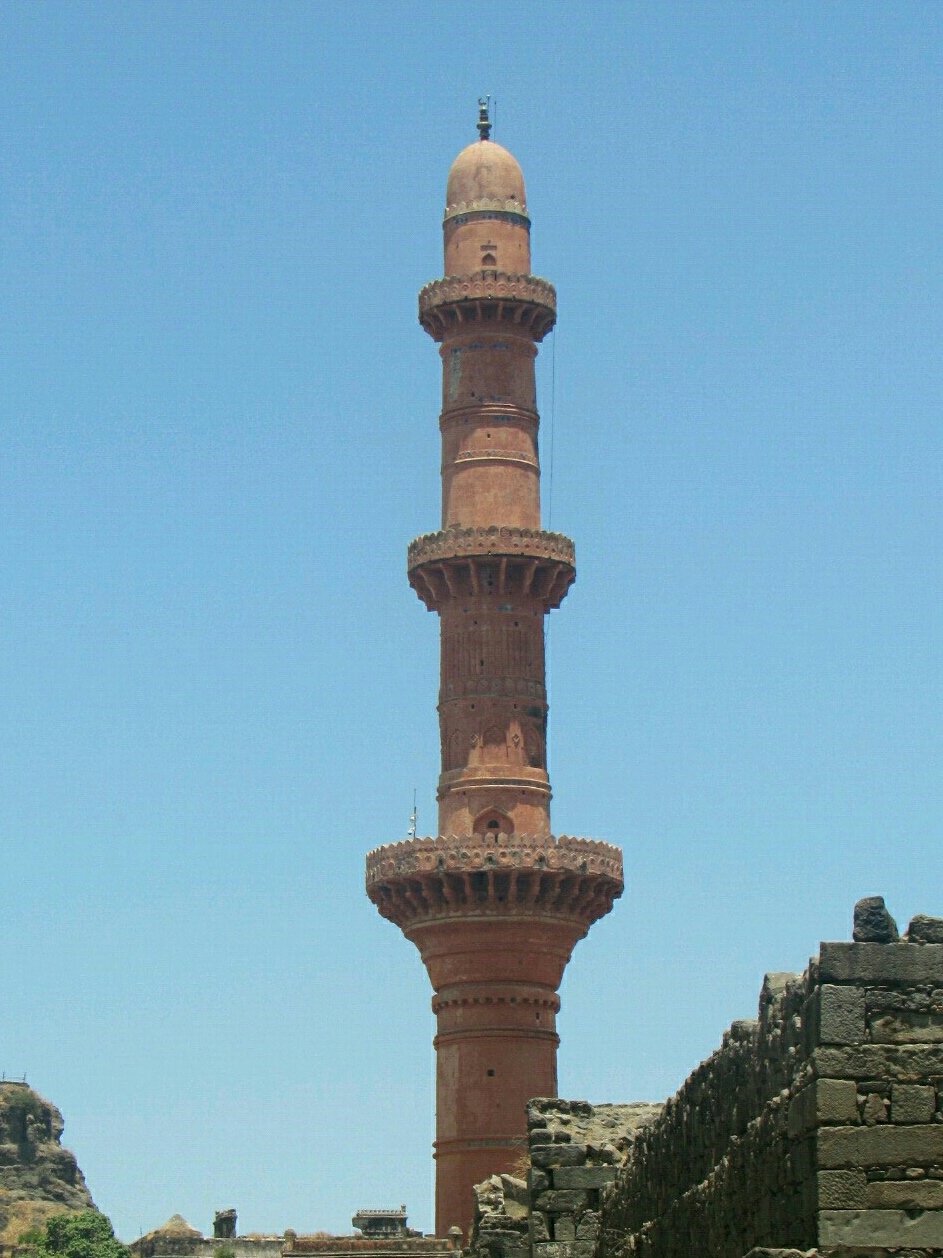
Chand Minar, Daulatabad Fort [Source – Wikimedia Commons]
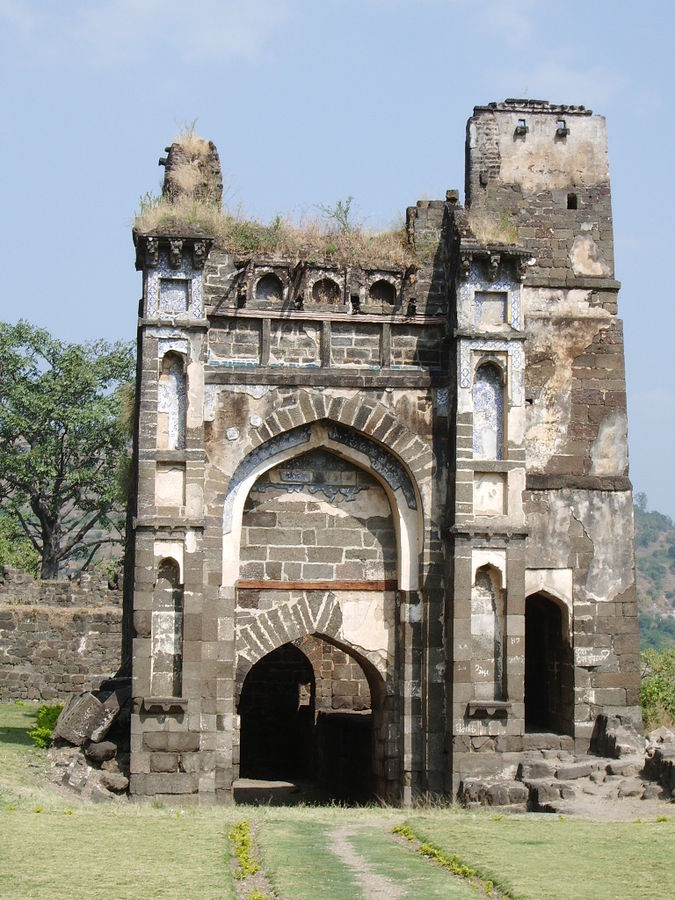
Daulatabad Prison [Source – Wikimedia Commons]
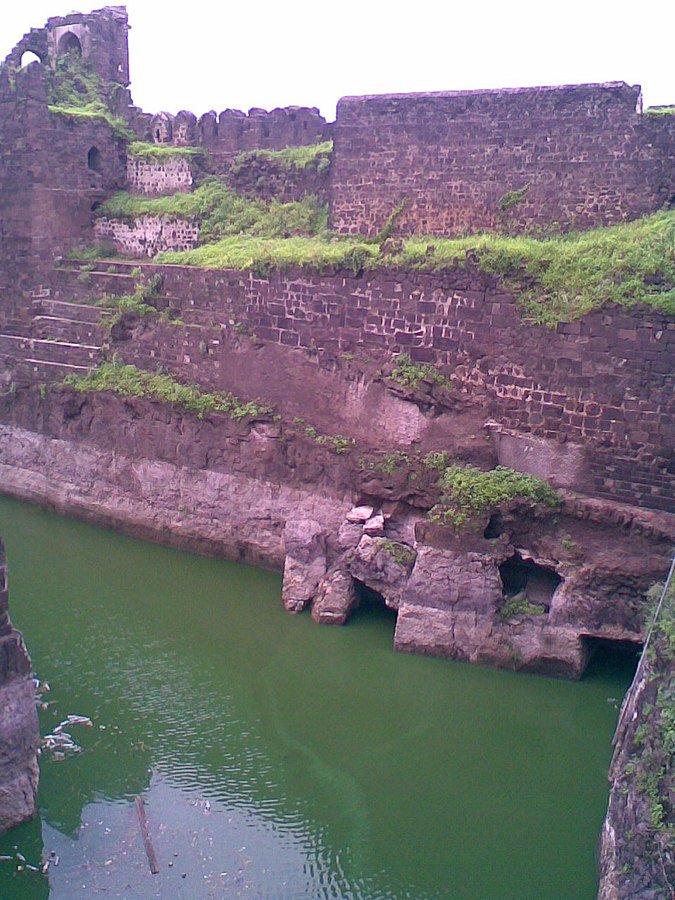
A man made huge duct created around all the sides of Daulatabad Fort [Source – Wikimedia Commons]
Daulatabad Fort [Source – Wikimedia Commons]
*
Unlike the game of chess, the king wages a war against his own people; wounded and hurt, he tortures himself by giving his step-mother the death sentence.
Step-Mother: You had your share of futile deaths. I have mine now.
Muhammad (shouting): No, they were not futile. They gave me what I wanted – power, strength to shape my thoughts, strength to act, strength to recognise myself. What did your little murder give you?
*
The Step-Mother too wanted power, power to rule Sultan’s heart and mind and through him the Sultanate; Tughlaq knew it, but couldn’t accept it anymore, not after she had Najib, the royal adviser, poisoned.
Muhammad: God, God in Heaven, please help me. Please don’t let go of my hand. My skin drips with blood and I don’t know how much of it is mine and how much of others.
Scene Thirteen
Aziz is finally face to face his idol, unafraid and gleefully meek, he praises every move of the Sultan, revealing it to him unabashedly who all profited from his ‘just schemes’ – some goons like him and the generous Sultan himself.
The only character who manages to break Tughlaq’s dream and show him the ugly reality, the present that is far off from his historically grand future. He brings forth the truth as a twist.
*
Barani: This man should be buried alive this minute!
Aziz: I only acted according to His Majesty’s edicts.
Muhammad (exploding): Hold your tongue, fool! You dare pass judgement on me? You think your tongue is so light and swift that you can trap me by your stupid clowning? Let’s see how well it wages when hanging from the top of a pole. I haven’t cared for the bravest and wisest of men – you think I would succumb to you? A dhobi, masquerading as a saint?
Aziz (quietly): What if I am a dhobi, Your Majesty? When it comes to washing away filth no saint is a match for a dhobi.
Muhammad suddenly bursts into a guffaw. There is a slight hysterical tinge to the laughter.
*
Aziz wins without check-mating the king – his life is spared and a job in the deccan is offered by the Sultan – as he seals a deal to continue fooling the crowd for a while and then to vanish. He makes the king adhere to his wish.
Muhammad: If justice was as simple as you think or logic as beautiful as I had hoped, life would have been so much clearer. I have been chasing these words now for five years and now I don’t know if I am pursuing a mirage or fleeing a shadow. Anyway what do all these subtle distinctions matter in the blinding madness of the day? Sweep your logic away into a corner, Barani, all I need now is myself and my madness – madness to prance in a field eaten bare by the scarecrow violence. But I am not alone, Barani. Thank Heaven! For once I am not alone. I have a Companion to share my madness now – the Omnipotent God! (Tired.) When you pass your final judgement on me, don’t forget Him.
*
Barani, the historian, Sultan’s only friend, prepares to leave Daulatabad; Tughlaq will soon be all alone in the magnificent palace, alone with his deeds and this terrifies him.
As a king Tughlaq took responsibility of his subjects, confident of his vision, that when it breaks, he knows he has fallen and with him, so has his people. The cries, chaos, mayhem follow him like his shadow.
But if not a king, yet a ruler, a group of elected rulers, what does responsibility of the citizens mean to them? Who falls, if they fall? What do their shadows sound like?
The play ends with the fake Ghiyasud-din Muhammad performing at the prayer time in the background (Muezzin’s call to the prayer is heard), Tughlaq, sitting on his throne, takes a short nap, then suddenly wakes up unsure of the place or time.
How powerful is a melody! A melody struck in the past, struck so beautifully that it broke free.
Timeless! A timeless piece of music rings true always; ten times truer in those moments when the courageous stand tall.
A single spark then is enough to change the narration. The narration that once appeared fixed and firm now burns and melts, making a new path, creating a new reality.
How powerful is a spark! A spark… perishable and yet unfading, tiny celebratory moments in embers, collected often by those seekers.
Those seekers who can also create a timeless melody… a timeless melody that even if buried under rubbles, surrounded by war cries, awaits the moment to be struck and break free once again.
Peh-peh-peh… a patina trumpeter plays for you. [Source – Pixabay]
Our shadowy past lives, though hidden in the fog, it lives, and we live off it.
Ancient cities now archaeological sites, history books, paintings, literature, music and ideas remind us of the assured presence of antiquity, our link with what was the truth back then.
Like the tail of a shooting star, our past/ the antiquity makes an equally good show in the darkness, at times even a grand show.
Like a terrific shaman, the past predicts when approached with a true question and predicts without any regret.
Come, let us see, what it predicted when Regina Spektor approached it with some melodious queries.
*
Listen to “All The Rowboats” before reading further –
*
…First there’s lights out, then there’s lock-up Masterpieces serving maximum sentences It’s their own fault for being timeless There’s a price to pay and a consequence All the galleries, the museums Here’s your ticket, welcome to the tombs They’re just public mausoleums The living dead fill every room
But the most special are the most lonely God, I pity the violins In glass coffins they keep coughing They’ve forgotten, forgotten how to sing…
Regina Spektor
It seems the antiquity, through this song, shared a message for all those who are listening, which is that the past is not static, so no point in decorating and forgetting it; no point in generalising it and awarding it with a damp stamp.
Feel free to interpret it; relive the change.
Listen to “Samson” –
*
Samson went back to bed Not much hair left on his head He ate a slice of Wonder Bread And went right back to bed And the history books forgot about us And the Bible didn’t mention us And the Bible didn’t mention us, not even once
You are my sweetest downfall…
Regina Spektor
Delilah, Samson’s lover, actually a spy, had his long hair cut one night, making him powerless; the Philistines captured Samson and tortured him brutally. Samson, blind and weak, still destroyed his enemies by magically regaining his strength. He died along with his enemies after he collapsed the temple of Dagon.
This biblical account doesn’t mention the infinite voices that made Samson, Samson and Delilah, Delilah. Culturally nourished biases have always restricted so many voices and the history books have often conveniently ignored it… until someone dares and explores and talks about the sweetest downfall.
Listen to “While My Guitar Gently Weeps” –
*
…I look at you all, see the love there that’s sleeping While my guitar gently weeps I look at the floor and I see it needs sweeping Still my guitar gently weeps
I don’t know why nobody told you How to unfold your love I don’t know how someone controlled you They bought and sold you
I look at the world and I notice it’s turning While my guitar gently weeps With every mistake we must surely be learning Still my guitar gently weeps…
George Harrison
Regina Spektor covered this “Beatles” song for the film Kubo and the Two Strings (a must watch), magnifying the song’s impact so wonderfully. The antiquity becomes fully alive here; it reassures and promises the unfolding of another epic. It is pure magic!
Return in some time dear readers, and continue the tour of Regina Spektor’s musical world here at Chiming Stories.
Those childhood days gone by, gone by in playing, playing hide and seek, ice-water and cycling, cycling all day long like a crazy fool and laughing, those childhood days gone by eating candies and ice creams, hopscotching and skipping ropes, flying kites, strolling aimlessly, gazing at the sky, merry minds flying high, those childhood days are now a dream.
I remember, I still do, Aru and I were sitting, Pinti was roaming around as always; Aru was talking non-stop, sharing one of her charming stories, a feature film story I must mention – our protagonist, a little girl, the best detective in the town, begins her quest, she is looking for some stolen bright precious stones – we paused the story and went to play hopscotch with Pinti, she had re-drawn the rectangle-y pattern for us, sweet Pinti, we talked and played, then followed the clouds, just when we were about to get hold of the moody clouds, they turned and shouted, “peek-a-boo.”
We screamed and ran back, but could not out-do the rain bullets. And then… then we guffawed and danced in the rain, I remember.
Those childhood days gone by were full of dreams, dreams of the future, pocket full of adventure and sweets and joy and endless playtime… those dreams were of the future, a hidden gold chest…
Through those dreams we time travelled and blushed, knowing well that we have to wait a bit before we discover this treasure… we treasured the future and waited.
Those childhood days gone by, what a sweet melody… the future we still dream of, what a happy idea…
And what is left is the present, this very moment – quiet, true, rudely true, factual and boring, but euphoric if grasped and powerful enough to change everything, the past as well as the future.
Take the golden thread I say, take it and chart the course, know that it will not break for it is tied to you, you of the past and you of the future.
Mirai is a Japanese animation film written and directed by Mamoru Hosoda.
A truly beautiful and emotional film, it is a must-watch for it is a piece you need to get hold of to solve this jigsaw puzzle called life. It is beautiful!
I am joy running free/
freely flying, fluttering, soaring in a valley/
Of joy am running free.
Greetings!
A storyteller, following the ancient tradition of cave chroniclers, standing in vrikshasana (the tree pose) on a hill top (it is sunny, but windy), breathing in and out stories (relishing it all, but at times overwhelmed), declares animatedly that she will continue to – tell stories, share rare story gems, and connect with the pacy universe while also keeping the website ad-free.
Big thanks to my readers. Stay tuned!
Also, a humble request to the new subscribers to check the spam folder after subscribing. Silly (but necessary) confirmation emails often land there instead of the bright inboxes. Merci!
Ya-hoy!
Chiming Stories (formerly Home Chimes)
P.S – Supporting a storyteller is good for the world’s health (and undoubtedly, for the storyteller’s health as well). Shower some love by sharing, commenting and subscribing to the Weekly Newsletter.
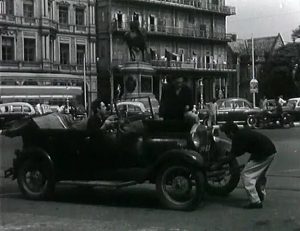
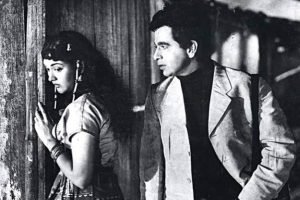
Gabbeh, the 1996 film, is a simple tale of a gipsy girl, her clan and the way their life goes on. Unfolding beautifully just like an artist painting a canvas, Gabbeh quietly touches the grand questions.
Ranked as one of the greatest British films of all time, The Lavender Hill Mob confides in the audience, letting them see, feel, laugh and think without tickling persuasively with a joke here and a punch-line there.
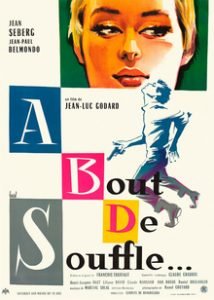
Godard… Breathless and Alive
A Tribute to Jean-Luc Godard, the Film Philologist who Reinvented Cinema.
Yes fly! For walking on the second track is dull and usual, but dreaming high, high, high requires tools. Tools like the right pair of shoes, a chirpy, gritty soul that eats butter-jam dreams, a soul that drinks milky-milky creams.
Silver cascade shimmering the night sky, music to the waves and surreal beauty to the eyes, the Moon loves the art of discipline.
It may be difficult to believe for the Moon’s splendour defies time, it stupefies the clock, it follows the path of a dreamer, but how could this be possible if the Moon knew not discipline?
In this moment, I am a little bit of this and a little bit of that, I am complete and incomplete, I am pleased and uncertain, I wish for nothing and I know I have to wait.
Because the distance covered reminds me of the hurdles I have crossed and the ones I could not, it reminds me of a throbbing past and a dreamy future and it reminds me of how much time is left.
Meredith and the Green Lake
Illimitable Splendour
A joy so complete without any rise or fall, so free without any time corners, so real without true being false, false being true.