Death

Melody, Drama and Love

It is not a humble, gentle quest they all set for, but a challenge that they take up passionately, blindly, gladly to find out the meaning of love. And while it sounded, and was, a glorious and grand task like a celebration, they were tricked by the challenge itself. Nevertheless, this push and pull continued and filled the space with the aroma of first, passion and daring, then, possibilities and impossibilities and finally, it filled the room with love.

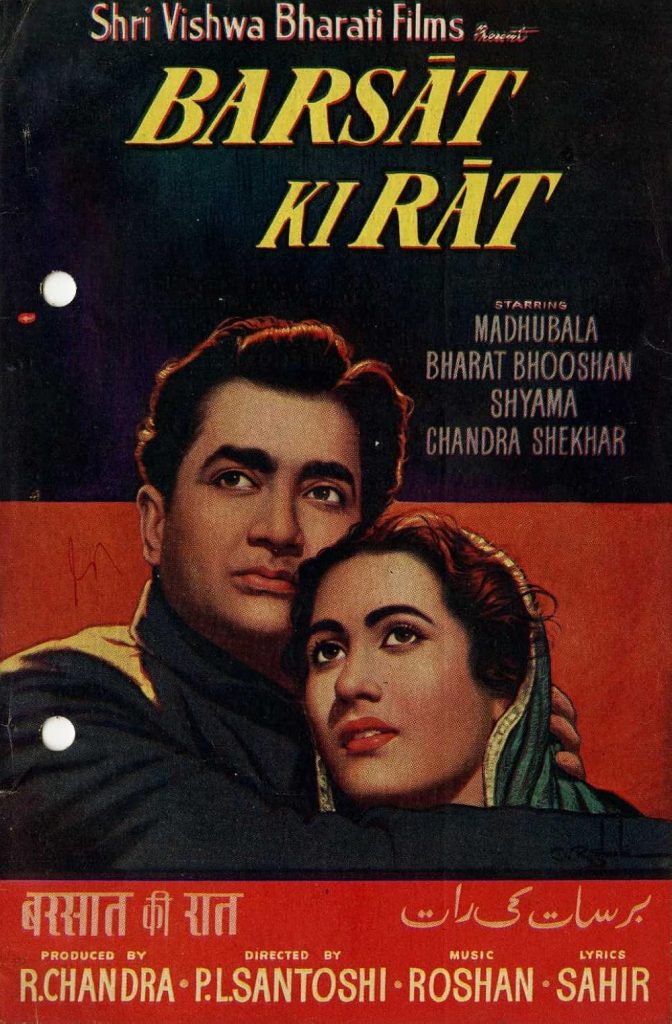
The rather quick journey that took the form of a grand challenge unfolds here melodiously, in the form of a Qawwali and forms the climax in the romantic musical film Barsat Ki Ek Raat (One Rainy Night, 1960).

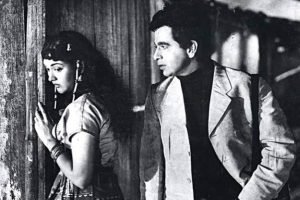
Barsat Ki Ek Raat (1960) directed by P. L Santoshi, story by Rafi Ajmeri, starring Madhubala, Bharat Bhushan and Shyama.

Na to Karwaan ki Talash hai… Qawwali by Sahir Ludhianvi. [Source – IMDB]

Words may never be able to capture what love is, but here Sahir Ludhianvi’s lyrics gallops any and every gap so beautifully that it presents the careful listener with tales, promises, whispers of love, pain, joy, tears, bliss, death and the sublime. The lyrics burn away the duality and confusion, the conflict and rigidness with so much love that your eyes well up.

Melos (song or music in Greek) and drama (drame in French) combine to form melodrama. A fantastic tool used to present all that is life in just a few minutes and hours on stage and screen.


The music creates the mood, it is a jugalbandi (jam session) between the musicians, it rises and falls, it promises nothing and everything and then it stops letting the singers and words to take the centre stage… charismatically.

Male Singer

Na to caaravaan ki talaash hai
I am not in search of a caravan
Na to humsafar ki talaash hai
I am not in search of a fellow traveler
Mere shauq-e-khaana kharaab ko teri rehguzar ki talaash hai
That ruined place of my desire searches for the path that leads to you

Team One presents a challenge via their craft, for it is a matter of love, they know the stakes are high, they challenge the other team as well as declare that they, who know love very well, know how to manoeuvre in this space. They talk about the lover who is content in their loneliness and doesn’t need any support from fellow travellers – another strong perspective – they are talking about someone who is already walking alone in this maze of a world, and that it is a choice because all this person desires is to find the way to their beloved.

Female Singer

Mere naamuraad junoon ka hai ilaaj koi to maut hai
If there is any cure for my unfortunate obsession, then it is death
Jo davaa ke naam pe zehar de
Give me that medicine whose name is poison
Usi chaaraagar ki talaash hai
I am in search of such a healer

Team Two keeps forth a situation less as a reply and more as a fact as the singer is deeply in love with someone who loves another, it starts with and stays in a personal space for her. This lovesickness of hers, an obsession for those who don’t understand her, has only one cure and that is death. She raises the stakes further hinting at her looming death.

The words like obsession, cure, death, medicine, poison, healer, beautifully amplify the intensity of the entire song so early on; but after all, dying, loving and living aren’t separate. The singer is also surrendering, though not giving up, rather she is ready to give up on her life. She is surrendering it all with love.

Male Singer

Tera ishq hai meri aarzoo,
Your love is my desire
Tera ishq hai meri aabroo,
Your love is my honor
Dil ishq, jism ishq hai, aur jaan ishq hai
My heart is love, my body is love, and my life is love
Imaan ki jo poochho to imaan ishq hai
If you ask for faith, then that is love too
Tera ishq main kaise Chhod doon?
How could I ever leave your love?
Meri umr bhar ki talaash hai
That love is what I have been searching for all my life

Team One doesn’t believe in surrendering, they are only too invested in winning the competition. They’re eager to charm the audience too and thus, they announce, that for them the beloved’s love is their desire, honour, heart, body and whole life and in fact, even their FAITH. Whatever is on a pedestal in their lives, they have already kept it at the feet of their beloved and after struggling so much how can they let go of their love, it has been a life time’ search and now they cannot abandon it, they cannot surrender.

This grand announcement receives applause. Continuing the search for love is what the majority does and so the majority claps; those in deep love, watch with love.

The song gallops as it has promised to do so and the tempo changes.

Male Singer

Yeh ishq ishq hai, ishq ishq, yeh ishq ishq hai, ishq ishq
This is love, this is love, this is love
Jaan-soz ki haalat ko jaan-soz hi samjhegaa
Only one in torment can understand the condition of a fellow sufferer
Main shamaa se kehta hoon mehfil se nahiin kehta
I am speaking to the flame, not to the company gathered here
Kyonki yeh ishq ishq hai, ishq ishq, yeh ishq ishq hai, ishq ishq
For this is love, this is love, this is love

Team One enjoying the mood, the vibrancy and lead, takes a rather cheap shot at the opponent that isn’t recognised by all. Showing concern for the wounded lover he says he understands that pain and that is why now he is speaking with the flame directly and not the audience members. While on one level, he seems to be talking about the moth and flame metaphor that represents a self-destructive devotion, yet on another level, he is talking to the lead singer from Team Two, her name being Shama which means flame.

Female Singer –


Sahar tak sab ka hai anjaam jal kar khaak ho jaana
By dawn, everything will burn and be reduced to ashes
Bhari mehfil mein koi shamaa yaa parvaana ho jaaye
Everyone in this gathering shall became either flame or moth
Kyon ki yeh ishq ishq hai, ishq ishq, yeh ishq ishq hai, ishq ishq
For this is love, this is love, this is love

Seeing that the lead singer is in tears, the second singer from Team Two replies instead and that too sharply. She carries the moth and flame metaphor to its finality, declaring that by dawn, everyone present there may very well die because it is possible for them to turn into either the flame or moth – one will die-out and other will burn to death.

Hero

Vehshat-e-dil rasn-o-daar se roki na gayi
Love is not stopped by the madness of the heart or ropes and the gallows
Kisi khanjar, kisi talvaar se roki na gayi
It is not stopped by any dagger, by any sword
Ishq Majnu ki woh aavaz hai jiske aage koi Laila kisi deewaar se roki na gayi,
Love is that voice of Majnu’s which Laila followed and which no barrier could stop
Kyon ki yeh ishq ishq hai, ishq ishq, yeh ishq ishq hai, ishq ishq
For this is love, this is love, this is love

Team Two is joined by the Hero (of the film) who is sitting in the audience, who knows them very well and can see Shama is hurt, he understands her more than anyone for he himself is pining for his beloved; he pitches in so that the enquiry into what is love goes on.

He gets enough aural space to match the rhythm.

Addressing the audience more than the opposition, he says that you are talking about flames here, while love cannot be stopped by anything, be it swords, ropes, gallows, walls or even your own heart. Referring to the celebrated but tragic love story of Laila and Majnu, he says that nothing can stop any Laila once she hears the voice of her Majnu. Indirectly, also saying that there were and will always be people who would choose death over separation from their beloved.

Male Singer

Woh hanske agar maangen to hum jaan bhi deden,
If she laughs and asks, then I would even give my life
Haan yeh jaan to kya cheez hai? Imaan bhi deden!
Yes, after all what is this life? I would even give up my faith!
Kyon ki yeh ishq ishq hai, ishq ishq, yeh ishq ishq hai, ishq ishq
For this is love, this is love, this is love

Team One also talk about life and death, reiterating what they had said earlier. They say that we are ready to die, if that is our beloved’s wish; in fact, not only life, but we can let go of our FAITH too. What was there a need to reiterate at all? What happened to their sharp gift of repartee?

Hero

Naaz-o-andaaz se kehte hain ki jeena hoga,
I am told that I must live with my fate gracefully
Zehar bhi dete hain to kehte hain Ki peena hoga
They give me poison, and say I must drink
Jab main peetaa hoon to kehte hain ki marta bhi nahiin,
But when I drink it, then they say I won’t die
Jab main martaa hoon to kehte hain ki jeenaa hogaa
When I am dying, they say I must live
Yeh ishq ishq hai, ishq ishq, yeh ishq ishq hai, ishq ishq
For this is love, this is love, this is love

Hero’s witticism is filled with love. His voice and words are imbued with the freshness of love. Thus, he counters Team One simply by not countering, he has crossed and reached another level, he speaks directly to his beloved who is listening to his voice somewhere for sure. He knows it, and so does the viewer.

He shows what a paradox romantic love often becomes, where one inadvertently ends up torturing the other, all the while hoping to heal and rise and unite. “You’re asking me to live and die at the same time. Ah love! Tell me how is it possible? Only in love?”

Male Singer –

Mazhab-e-ishq ki har rasm kadi hoti hai,
The laws and customs of love are very strict
Har qadam par koi deewaar khadi hoti hai
At every step, there is a barrier standing

With the sudden change in position, Team One falls down without any noise. They themselves seem unaware of this that from opposing team in a competition they have taken a stance that is somehow opposing lovers. They now talk about the “complicated” laws and customs of love that often places a wall in front of the lovers. They seem to be enjoying restrictions and in doing so they restrict themselves from moving further.

Hero –

Ishq aazad hai, Hindu Na Musalmaan hai ishq,
Love is free, love is neither Hindu nor Muslim
Aap hii dharm hai aur aap hii imaan hai ishq
Your own duty and your own faith alone is love
Jis se aage nahiin shekh-o-Brahaman donon,
Both Hindu and Muslim religious men cannot surpass this
Us haqeeqat ka garajtaa hua ailaan hai ishq
The reality of that thundering proclamation is love

What started as a jugalbandi (jam session), now moves towards a solo performance, a solo voice taking the lead and love, having shed the superficial flimsy faces attached to it, begins to spread in the air like perfume. Love is freedom and freedom love, and it is that which can liberate. Love, the hero says, has nothing to do with the man-made ideas at all. He proclaims that nothing can surpass love. And this truly makes him the hero.

Female singer –

Ishq na puchhe deen dharm nu, ishq na puchhe jaataan
Love does not ask your religion or creed, love does not ask your social class or caste,
Ishq de haathon garam lahu vich doobiyaan laakh baraataan ke
Love has drowned thousands of wedding revelers in its fiery blood
Yeh ishq ishq hai, ishq ishq, yeh ishq ishq hai, ishq ishq
This is love, this is love, this is love

The second singer from Team Two, sings in Punjabi, maybe because it needed to be said in this language, maybe because it doesn’t matter which language you speak, when it comes to love, the essence remains the same. It is yet another passionate declaration – Love doesn’t discriminate. Love also becomes something that vividly is alive, for it consists of “fiery blood”. From abstraction it enters a known realm.

Male Singer –
Raah ulfat ki kathin hai ise aasaan na samajh
The path of love is dangerous, do not think it easy
Yeh ishq ishq hai, ishq ishq, yeh ishq ishq hai, ishq ishq
This is love, this is love, this is love

Team One tries to fill the lovers with doubt and thus, they use fear instead to rise in front of love.

Female Singer –

Bahut kathin hai Dagar panghat ki
The path to the riverside is very dangerous
Ab kya bhar luaun main Jamuna se matki?
Now how can I fill my jug with water from the banks of the Jamuna River?
Main jo chali jal jamuna bharan ko dekho sakhi ji main jo chali jal jamuna bharan ko
As I was on my way to fill my jug with water from the Jamuna,
Nand kishor mohe roke jhaadon to
The young boy of Nanda [Krishna] stopped me
Kya bhar luaun main Jamuna se matki?
So how can I fill my jug with water from the banks of the Jamuna River?

Bringing in cultural reference, talking about the majestic couple – Krishna and Radha, the female singer from Team Two sets-up the stage for the Hero to take over. The reference also brings us closer to the hero and the heroine of the film, that they too are like Krishna and Radha, their love too is divine and that they’re united in their love for each other, even if separated by distance.

Male Singer –

Haan, kya bhar luaun main Jamuna se matki?
So how can I fill my jug with water from the banks of the Jamuna River?

Ab laaj raakho more ghoonghat pat ki
Now protect my honor, this veil of mine

Ab laaj raakho more ghoonghat pat ki
Now protect my honor, this veil of mine

Team One talks about honour and we wonder what about the love which is above honour and which they were talking about earlier? This is their last remark, though they do continue to show their craft, failing nevertheless. They humbly recognise this at the very end.

Hero –

Jab jab Krishn ki bansi baaji,
When Krishna played his flute
Nikali Raadhaa saj ke
Radha emerged, dressed up
Jaan ajaan ka dhyaan bhulaa ke,
Forgetting all she was taught
Lok laaj ko taj ke
She left the honor of society
Haaye ban ban Doli Janak dulaari,
The darling child of King Janak [Sita] swayed into the forest
Pehenke prem ki maalaa
And wore a garland of love
Darshan jal ki pyaasi Meera
Meera thirsty for her a glimpse of her Lord
Pii gayii vishh ka pyaalaa aur phir araj kari ke
Drank a glass of poison and then pleaded
Laaj raakho raakho raakho, laaj raakho dekho dekho,
Protect my honor, protect my honor, protect my honor
Yeh ishq ishq hai, ishq ishq, yeh ishq ishq hai, ishq ishq
This is love, this is love, this is love

In the story, the heroine following the voice of the hero, reaches the venue, showing by her mere presence how love triumphs, how love liberates, and it happens instantly. And Shama, the lead singer, is troubled, she loves the hero, but knows he cannot be hers; she salutes the heroine and almost loses her consciousness, she is taken away.

The hero, meanwhile, as if in trance, begins to touch the pinnacle, rising from mundane to the sublime; from romantic love to sacrifice to total devotion to complete surrender to union. It is all love, all life is love.

Hero –

Allah rasool ka farmaan ishq hai
The commands of God and Mohammed are love
Yaanii Hadith ishq hai, Quraan ishq hai
The teachings of Mohammed are love, the Quraan is love
Gautam kaa aur Maseehaa kaa armaan ishq hai
The wishes of Buddha and Christ are love
Yeh kaayanaat jism hai aur jaan ishq hai
This material existence and this life are love
Ishq sarmad, ishq hii mansoor hai
Love is everlasting, love alone is victorious
Ishq Moosa, ishq Koh-e-Toor hai
Love is Moses, love is Mt. Sinai
Khaaq ko but, aur but ko devtaa karta hai ishq
Love turns clay into idols, and idols into Gods
Intahaa yeh hai ke bande ko khuda karta hai ishq
The pinnacle is that love has the power to turn a man into a revered God
Haan.N yeh ishq ishq hai, ishq ishq, yeh ishq ishq hai, ishq ishq
Yes, this is love, this is love, this is love

Playing with fire called love, the hero lets everyone feel its warmth, holding the elixir in his hands, he lets everyone see their reflection in it, surrendering with love, he rises in love.

And he manages to do this because he is united with his lover, though he still doesn’t know she is there.

He shows how beautifully all the religions converge when they go deep enough in exploring this life, undoubtedly finding love as its source. Something divine yet purely simple.

Love is everlasting, it is the universe. Love is truth and it is everywhere.


Weekly Newsletter

A weekly dose of stories! Get the posts from the Chiming Stories in your inbox and read it when you can. Subscribe now, it is free!

This field is required.

Recent Posts


Tughlaq in the Library – Part II

Review
Read Tughlaq in the Library – Part I here.

*

The siege of Daulatabad (April-June 1633).
[Source – Wikimedia Commons]

*

But the play is more than a political allegory. It has an irreducible, puzzling quality which comes from the ambiguities of Tughlaq’s character, the dominating figure in the play. All the other characters are dramatized aspects of his complex personality, yet they also exist in their own right. Kannada critics have made detailed analyses of the play, paying special attention to the symbolism of the game of chess, the theme of disguise, the ironic success of Aziz whose amazing story runs parallel to Tughlaq’s, and the dualism of the man and the hero in Tughlaq, which is the source of the entire tragedy. Yet no critical examination of the play can easily exhaust its total meaning for the reader, because the play has, finally, an elusive and haunting quality which it gets from the character of Tughlaq who has been realized in great psychological depth. But it would be unjust to say that the play is about an ‘interesting’ character, for the play relates the character of Tughlaq to philosophical questions on the nature of man and the destiny of a whole kingdom which a dreamer like him controls.

Introduction, U. R. Anantha Murthy

*

[Image by Jagriti Rumi]

*

Muhammad-bin-Tughlaq, in the play, commits to actions with a confidence of a master player, one who is certain of the ending, one who is far sighted somewhat like an ominous oracle – a skilful, wise puppeteer who runs the show singlehandedly, unaware and forgetful of his involvement in the drama.

People unlike puppets, even though tied to strings, quietly keep gathering the power to pull down and topple the king puppeteer, they always do.

The echo of a future that reached Tughlaq’s ears, the making of history that Tughlaq could see so clearly was nothing but an illusion, a time bound vision, a trick that tricked him.

Sure about a glorious tomorrow, he dragged his people along towards it – an ever evading tomorrow.

Sultan’s experiments done so as to unite the country as one, to build an ideal powerful state, failed pathetically, leading the kingdom to anarchy. With a staunch eye on greatness, Tughlaq couldn’t manoeuvre without ‘murdering’ the stubborn present – the present, so full of the past, so treasured by his subjects.

Subjects who wrote hate-letters, full of rebukes, all addressed to the Sultan.


Let us meet Tughlaq, whom we first met in the library, who is now placed, by the playwright, on the chess board and the game has begun –

Scene One

Old Man: You can go to the Kazi-i-Mumalik for small offences. But who do you appeal to against such madness?

Third Man: This is tyranny! Sheer tyranny! Move the capital to Daulatabad! Such things never happened in his father’s days – may his soul rest in peace. Now he’s got his father’s throne. He isn’t happy with that and—

*

Tughlaq has set up the court of Chief Justice in the capital where people can file a suit against the officers of State or even the Sultan.

He talks about justice and equality after accepting the Kazi’s verdict; he declares to compensate and offers a post in the Civil Service for the Brahmin who had appealed against his land being seized illegally by the State.

The humanistic monologue ends with Tughlaq announcing his well-thought and thoroughly discussed decision of shifting the capital from Delhi to Daulatabad and without waiting for a reaction or a bird to fly by, he leaves.

The shocked public worries if their worst nightmare will come true – what are they to do? The guard shoos them away shouting “Go home! The show’s over!”

*

Aazam: Anyway, why did you have to dress up in these ungodly clothes? Couldn’t you have come like a proper Muslim?

Aziz (scandalized): But then what would happen to the King’s impartial justice? A Muslim plaintiff against a Muslim King? I mean, where’s the question of justice there? Where’s the equality between Hindus and Muslims? If on the other hand the plaintiff’s a Hindu… well, you saw the crowds.

*

Aziz, a thug, disguised as the Brahmin, seeking justice from the Kazi, truly understands Sultan’s ‘impartial justice’; playing along with the Sultan, he makes use of the State’s scheme and presents the Sultan a chance to make use of him – Sultan gets the tag of a “fair ruler” and in turn, Aziz makes some money.

Throughout the play Aziz maintains the stance that no one knows the wise Sultan as much as he does because it is only he who participates in the Sultan’s game.

Aziz will, sooner or later, dare to check-mate the Sultan, will he win?


Scene Two

Muhammad Tughlak orders his brass coins to pass for silver, A.D. 1330.
[Source – Wikimedia Commons]

Step-Mother (bursts into laughter): I don’t know what to do with you. I can’t ask a simple question without your giving a royal performance.

*

Tughlaq’s step mother is his confidant; well aware about his burdens, the Step-Mother always urges him to slow down and more importantly, to make every move not in secret, not from her.

The Step-Mother too is playing alongside the Sultan, sometimes delicately trying to use him as a game-piece, but never showing it. The crime of patricide and fratricide hangs heavily on the Sultan’s soul; the Step-Mother never brings this up, never, unless it is required to make an impact.

*

Muhammad: Surely a historian doesn’t need an invitation to watch history take shape! Come, Barani, what does he say?

Barani: It’s as Your Majesty said… He says the Sultan is a disgrace to Islam.

Muhammad: That’s all? I could find worse faults in me. What else?

Silence.

Najib: He says Your Majesty has forfeited the right to rule, by murdering your father and brother at prayer time.

*

First Tughlaq makes praying five times a day compulsory, then he completely bans praying in his kingdom, only to wait in the end for a messiah to bring back pious prayers for his doomed subjects.

Like a devotee crossing all boundaries – that of life too – to connect with the almighty, Tughlaq crossed all boundaries to win over the almighty.

The far-off dream seemed the biggest truth to him and making sacrifices the only way towards it.


Scene Three to Five

Muhammad: No one can go far on his knees. I have a long way to go. I can’t afford to crawl – I have to gallop.

Imam-Ud-Din: And you will do it without the Koran to guide you? Beware, Sultan, you are trying to become another God. It’s a sin worse than patricide.

Muhammad (refusing the bait): Only an atheist can try to be God. I am God’s most humble slave.

*

One Sultan, one dream, one decision, and what did the thousand eyes see – bloodshed or sacrifice, deceits or promises, Delhi or Daulatabad? Perhaps they couldn’t see clearly, perhaps they were hungry – for prayers or food?

*

Shihab-Ud-Din: I’m sorry. But you have never liked the Sultan, I don’t know why. After all that he has done for the Hindus –

Ratan Singh: Yes indeed, who can deny that! He is impartial! Haven’t you heard about the Doab? He levied such taxes on the poor farmers that they preferred to starve. Now there’s a famine there. And of course Hindus as well as Muslims are dying with absolute impartiality.


Scene Six to Eight

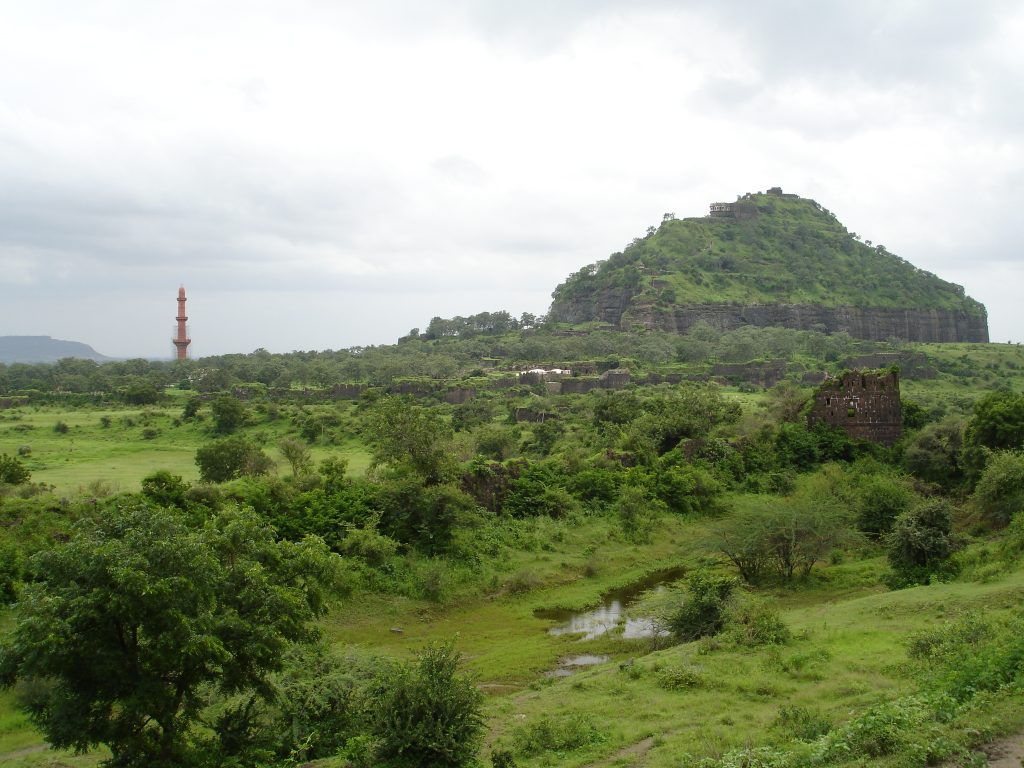
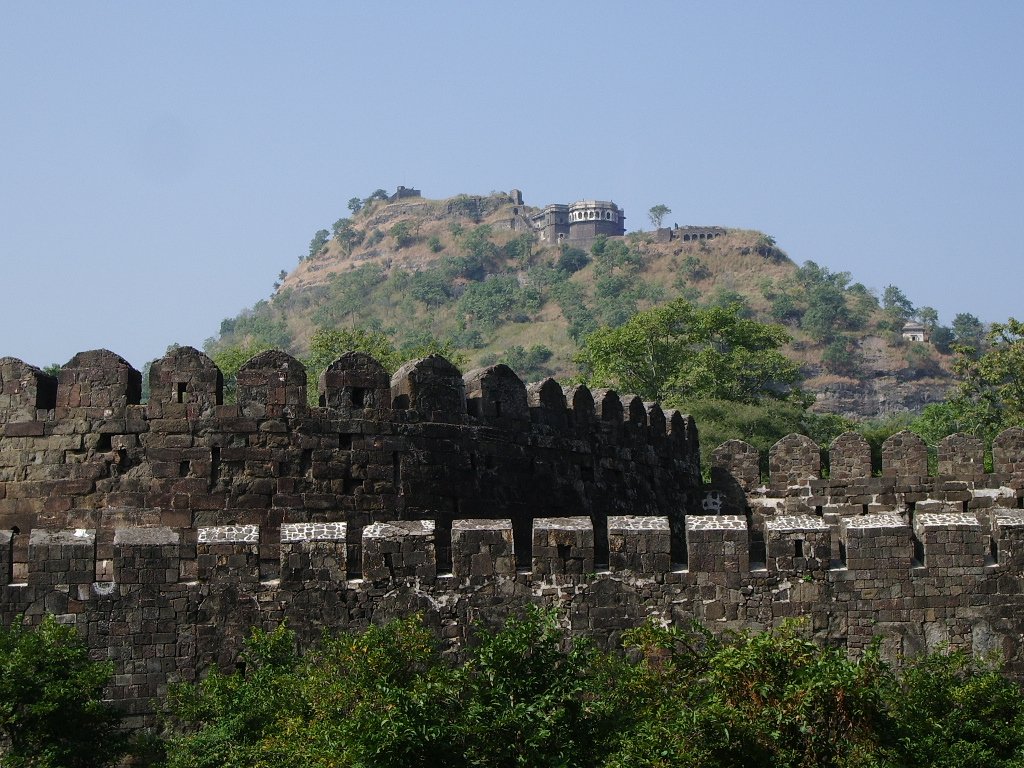
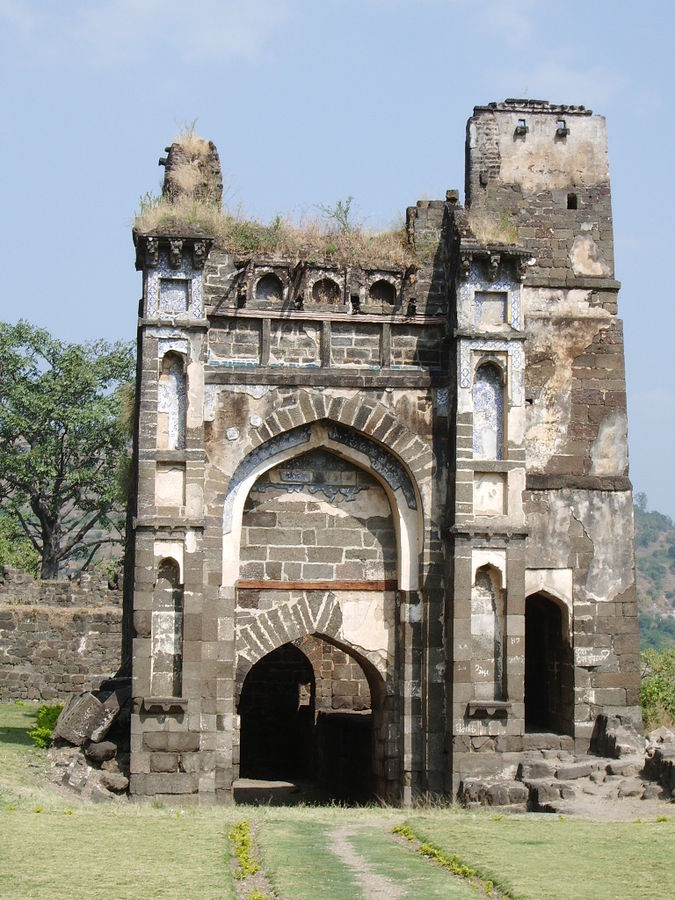
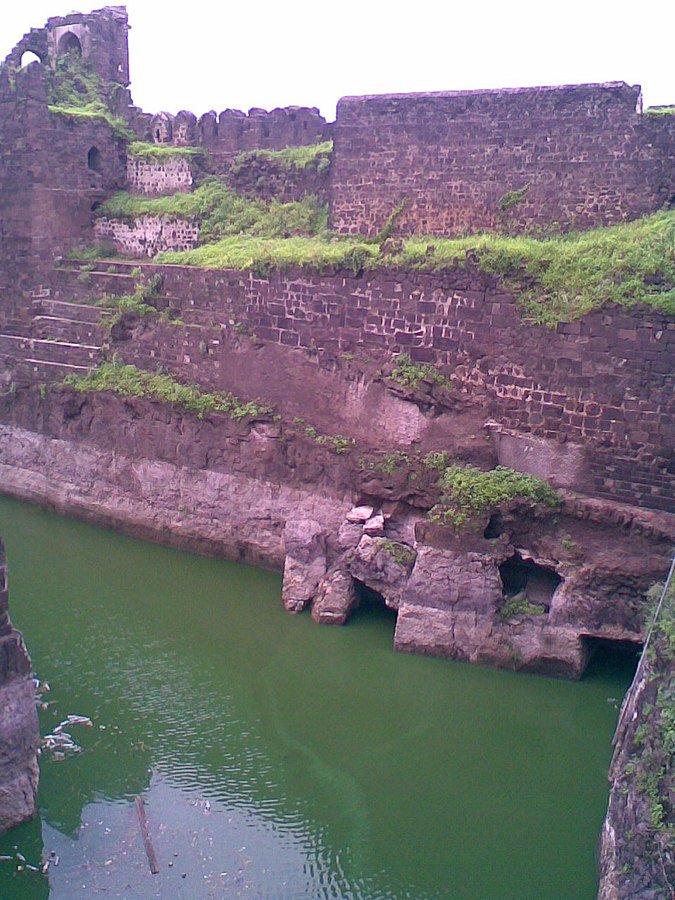
Daulatabad Fort, Aurangabad, Maharashtra.
[Source – Wikimedia Commons]

*

Moving stealthily ahead, like an animal approaching its prey, Tughlaq finds it hard to remember that he is not an animal. Playing the game too well, he begins to lose the grip on reality; shuffling strategies, imposing with a hope to win once again.

Muhammad: I could have killed you with a word. But I like you too much.

Stabs him. Then almost frenzied, goes on stabbing him. Hits out at Shihab-Ud-Din’s dead body with a ferocity that makes even the soldiers holding the body turn away in horror.

Barani: Your Majesty – he’s dead!

Muhammad stops, then flings the dagger away in disgust.

Muhammad (anguished): Why must this happen, Barani? Are all those I trust condemned to go down in history as traitors? What is happening? Tell me, Barani, will my reign be nothing more than a tortured scream which will stab the night and melt away in the silence?


Scene Nine

Aziz, the thug, awaits a chance to be in the centre, right in front of the king; to be there not as a pawn, rook or knight, but to be invited by the Sultan himself, to be revered – he plans to replace Ghiyasud-din Muhammad, a saint.

*

Aazam (giggles): So you want power, do you? What do you want to be, a Sultan?

Aziz: Laugh away, stupid. You’ll soon see. It all depends on whether Karim will bring the goods.

Aazam (seriously): But, no, Aziz, why are you so dissatisfied? We have such a nice establishment here. We take enough money from travellers and the other robbers are scared to death of you. There’s no limit to what we can make here.

Aziz: I am bored stiff with all this running and hiding. You rob a man, you run and hide. It’s all so pointless. One should be able to rob a man and then stay there to punish him for getting robbed. That’s called ‘class’ – that’s being a real king!


Scene Ten to Twelve

*

Unlike the game of chess, the king wages a war against his own people; wounded and hurt, he tortures himself by giving his step-mother the death sentence.

Step-Mother: You had your share of futile deaths. I have mine now.

Muhammad (shouting): No, they were not futile. They gave me what I wanted – power, strength to shape my thoughts, strength to act, strength to recognise myself. What did your little murder give you?

*

The Step-Mother too wanted power, power to rule Sultan’s heart and mind and through him the Sultanate; Tughlaq knew it, but couldn’t accept it anymore, not after she had Najib, the royal adviser, poisoned.

Muhammad: God, God in Heaven, please help me. Please don’t let go of my hand. My skin drips with blood and I don’t know how much of it is mine and how much of others.


Scene Thirteen

Aziz is finally face to face his idol, unafraid and gleefully meek, he praises every move of the Sultan, revealing it to him unabashedly who all profited from his ‘just schemes’ – some goons like him and the generous Sultan himself.

The only character who manages to break Tughlaq’s dream and show him the ugly reality, the present that is far off from his historically grand future. He brings forth the truth as a twist.

*

Barani: This man should be buried alive this minute!

Aziz: I only acted according to His Majesty’s edicts.

Muhammad (exploding): Hold your tongue, fool! You dare pass judgement on me? You think your tongue is so light and swift that you can trap me by your stupid clowning? Let’s see how well it wages when hanging from the top of a pole. I haven’t cared for the bravest and wisest of men – you think I would succumb to you? A dhobi, masquerading as a saint?

Aziz (quietly): What if I am a dhobi, Your Majesty? When it comes to washing away filth no saint is a match for a dhobi.

Muhammad suddenly bursts into a guffaw. There is a slight hysterical tinge to the laughter.

*

Aziz wins without check-mating the king – his life is spared and a job in the deccan is offered by the Sultan – as he seals a deal to continue fooling the crowd for a while and then to vanish. He makes the king adhere to his wish.

*

Judgement day!
[Source – Pixabay]

Muhammad: If justice was as simple as you think or logic as beautiful as I had hoped, life would have been so much clearer. I have been chasing these words now for five years and now I don’t know if I am pursuing a mirage or fleeing a shadow. Anyway what do all these subtle distinctions matter in the blinding madness of the day? Sweep your logic away into a corner, Barani, all I need now is myself and my madness – madness to prance in a field eaten bare by the scarecrow violence. But I am not alone, Barani. Thank Heaven! For once I am not alone. I have a Companion to share my madness now – the Omnipotent God! (Tired.) When you pass your final judgement on me, don’t forget Him.

*

Barani, the historian, Sultan’s only friend, prepares to leave Daulatabad; Tughlaq will soon be all alone in the magnificent palace, alone with his deeds and this terrifies him.

As a king Tughlaq took responsibility of his subjects, confident of his vision, that when it breaks, he knows he has fallen and with him, so has his people. The cries, chaos, mayhem follow him like his shadow.

But if not a king, yet a ruler, a group of elected rulers, what does responsibility of the citizens mean to them? Who falls, if they fall? What do their shadows sound like?

The play ends with the fake Ghiyasud-din Muhammad performing at the prayer time in the background (Muezzin’s call to the prayer is heard), Tughlaq, sitting on his throne, takes a short nap, then suddenly wakes up unsure of the place or time.

*


Weekly Newsletter

A weekly dose of stories! Get the posts from the Chiming Stories in your inbox and read it when you can. Subscribe now, it is free!

This field is required.

Recent Posts


Mary Shelley’s Frankenstein and Ours

Review

The Novel

Frankenstein Or The Modern Prometheus speaks to you directly, showing you with its wintery-cold hands the myth through the lens called life.

Call it a myth, an experiment, a mistake, it retells, at the same time approaching the same unknown vision, the story of Victor Frankenstein – a man who humbly tries to be god.

The novel retells, and is still retelling like a folktale in the air, how Victor Frankenstein’s passion for alchemy, chemistry and natural philosophy acted as a catalyst for his many experiments on lifeless frames he gathered from cemeteries.

Long, maddening but exact and taciturn, expeditions, not to a far off land (not as of now), but inside the laboratory, expedition to the depths of knowing the dead and undead, to the threshold of unruly desire and undue greed, greed to dominate.

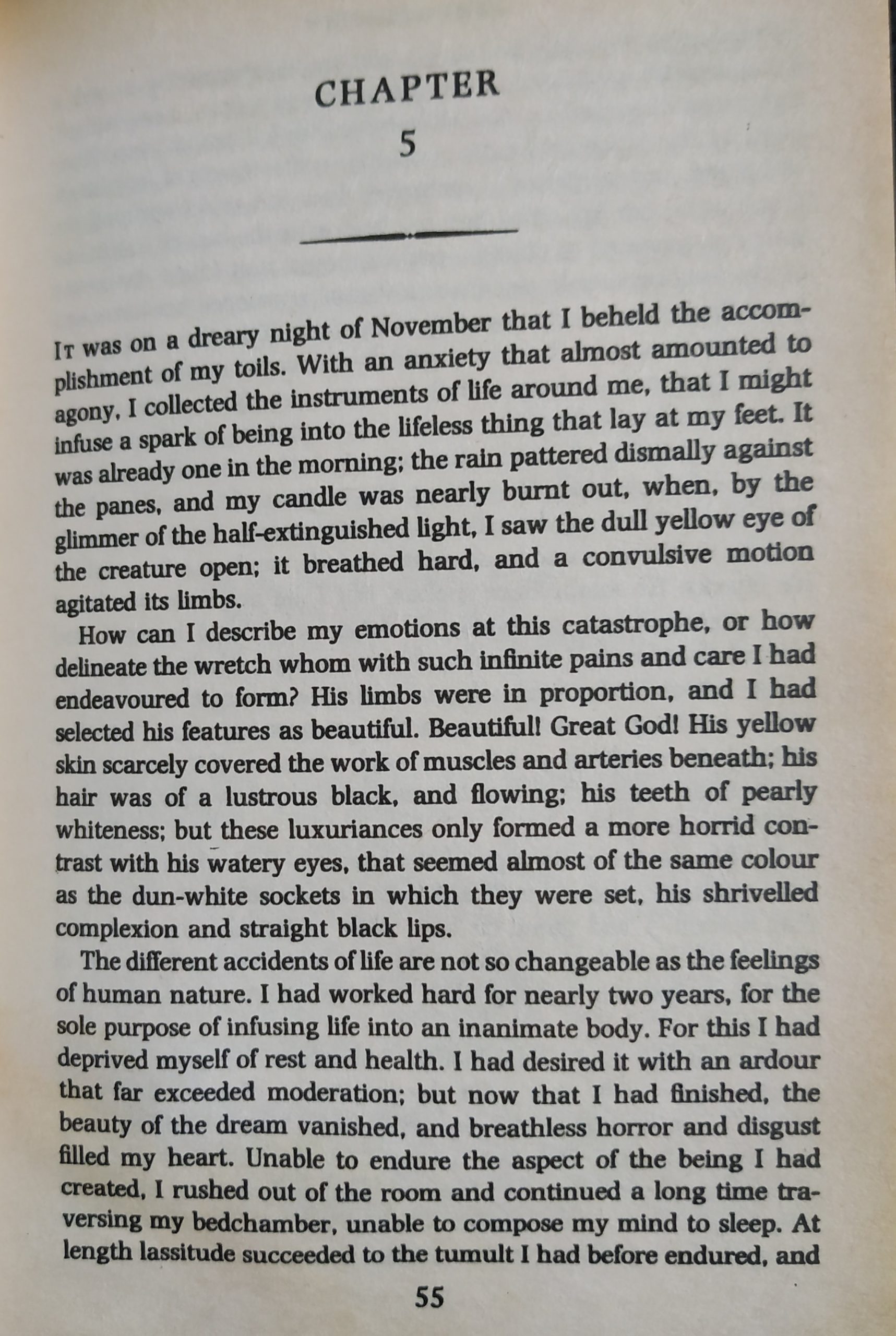
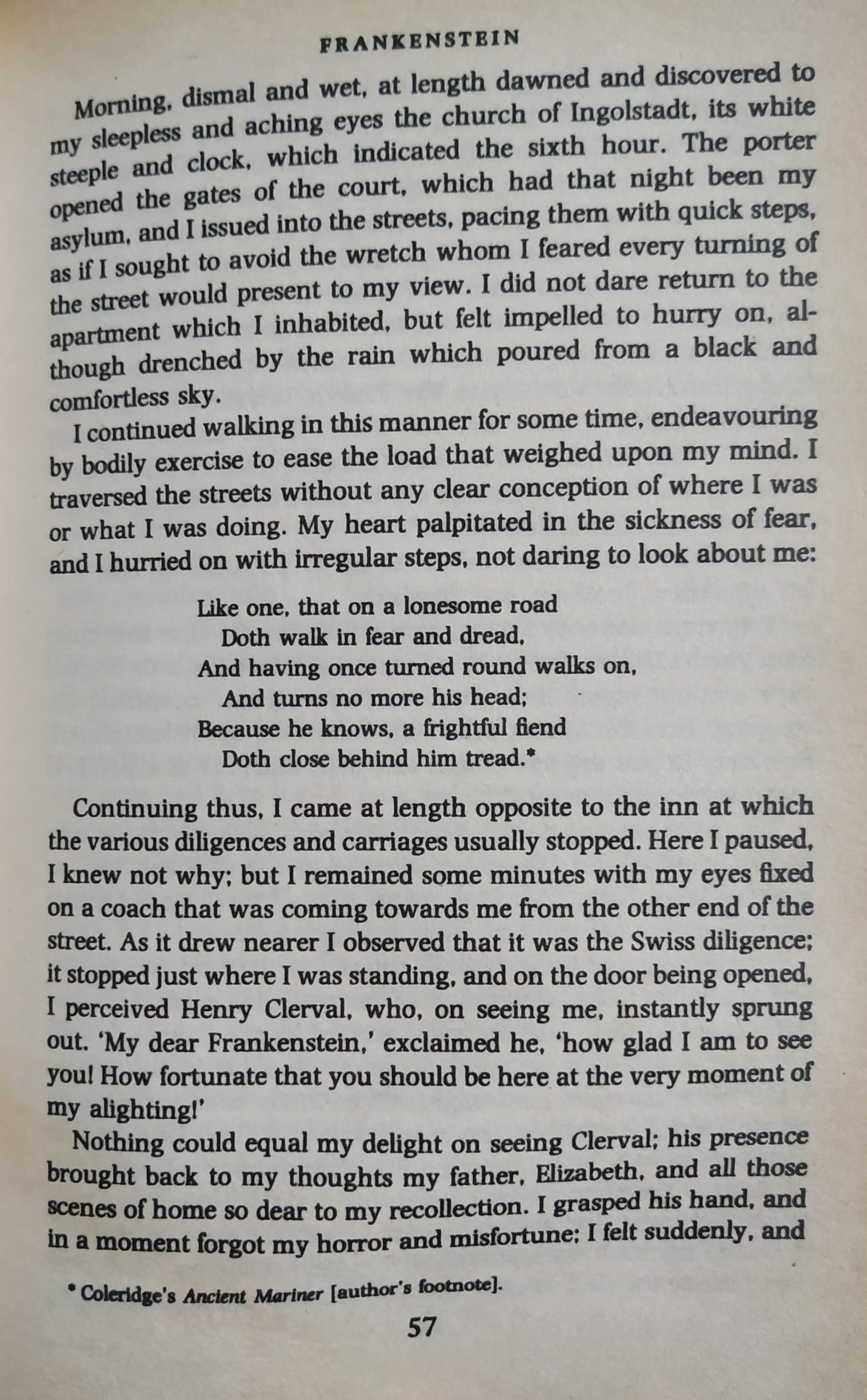
It was on a dreary night of November that I beheld the accomplishment of my toils. With an anxiety that almost amounted to agony, I collected the instruments of life around me, that I might infuse a spark of being into the lifeless thing that lay at my feet. It was already one in the morning; the rain pattered dismally against the panes, and my candle was nearly burnt out, when, by the glimmer of the half-extinguished light, I saw the dull yellow eye of the creature open; it breathed hard, and a convulsive motion agitated its limbs.

How can I describe my emotions at this catastrophe, or how delineate the wretch whom with such infinite pains and care I had endeavoured to form?

Chapter 5, Frankenstein by Mary Shelley

The creator fled away from his creation forgetting that the two are now tied to each other by a thread – a thread stronger than creator’s own shadow, voice and thoughts. Victor created a monster, not on that ‘dreary night of November‘, but over a period of time. Absolute neglect and abhorrence left the monster no choice but to be one.

Even when he learns the ways of the world – living in a hovel, grasping in silence what a family life means, secretly helping people around, picking their language and deciphering meaning in what he could read – he faces rigid rejection to whomsoever he turns to.

Shunned, he questions his existence and finds the winter weather leaping away after answering him with a static silence.

Fear fosters fear and with such weakness and anger the monster acts, brutally he acts, making sure that his master hears all about it. The monster kills Victor’s younger brother William and thus begins the downfall of both the creator and the monster.

Darkness and gloom overpower Victor and with the deaths of his best friend, fiancé and his old father, he becomes as lonely as the monster.

The pure white snow at the North Pole, that appeared to be engulfing the earth and the sky alike, could not make the monster anything less than what he had become – he was a curse, told Victor to his new friend, Robert Walton, an explorer and closed his eyes forever, hoping that in death he may find victory over his loathsome creation.

And this once Victor was right, the monster decides to put an end to his grotesque life too.

A little bit of gleaming sunshine, valley fresh flowers and joy too may feel subdued in this novel by the inky rainy nights and foggy, grey skies, but that is because it stays true to its core – a tragedy, but a modern one where the hero nurtures his flaw, unaware yet certain at first, lamenting and regretting later, truly owning it as a dead man.

Victor Frankenstein borne the brunt of such a curse that no one may ever dare to face, even in the advanced world, maybe only by mistake, but not as a determined goal and even if one did, in the times to come, such a creation will know what happened to Frankenstein’s monster and will know it only too well.

Until then, Frankenstein will continue to live, in our memory, for the sake of the curse and so will his monster.


The Author

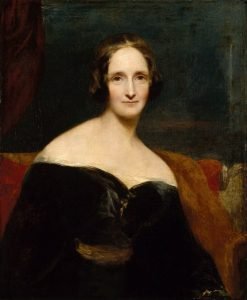
Mary Wollstonecraft Shelley (1797-1851)
[Source – Wikimedia Commons]

When I placed my head on my pillow, I did not sleep, nor could I be said to think. My imagination, unbidden, possessed and guided me, gifting the successive images that arose in my mind with a vividness far beyond the usual bounds of reverie. I saw – with shut eyes, but acute mental vision – I saw the pale student of unhallowed arts kneeling beside the thing he had put together. I saw the hideous phantasm of a man stretched out, and then, on the working of some powerful engine, show signs of life, and stir with an uneasy, half-vital motion. Frightful must it be; for supremely frightful would be the effect of any human endeavour to mock the stupendous mechanism of the Creator of the world.

Author’s introduction, Mary Wollstonecraft Shelley, London 15th October 1831

At 18, when she began writing Frankenstein, Mary Shelley had thought of it to be a tale no longer than a few pages, at 20, the novel, after initial rejections, got published anonymously – customary for most female writers of the period – with a preface by her husband, P.B Shelley.

Some thought P.B Shelley or his father-in-law, the philosopher writer William Godwin, to be the author of this phantasmagoria and Mary Shelley surely was influenced by both, but her close encounters with death that tortured her, but kept her alive, very much like the Titan god of fire, Prometheus, made her who she was.

Mary Shelley wrote in her diary – “Dream that my little baby came to life again – that it had only been cold and that we rubbed it by the fire and it lived – I awake and find no baby – I think about the little thing all day.”

Mary got her name from her mother Mary Wollstonecraft, a feminist writer, who died soon after giving birth to her. Even though deprived of this pious golden bond, Mary Shelley nurtured it solitarily, just like Frankenstein’s creation.

Percy Bysshe Shelley’s world became her world when she, at 16, fled with him, well aware that the journey ahead will be more perilous than it ever was. Percy, then 20, was already married, penniless and somewhat on the run from his creditors. After his first wife’s death, the couple got married and just for a few shy years they happily lived together.

Too strong a wave, was Mary’s beloved, for he rose to meet the light on a stormy night on the sea and drowned unabashedly. Mary Shelley kept the remains of his heart as keepsake and continued to edit and publish his poems posthumously.

Patience of deep sea grew in Mary Shelley and she decided to live – for her only son and her pen. She wrote novels, short stories, travelogues and biographies both to earn a living and stay close to the phantasmagorical world of stories.

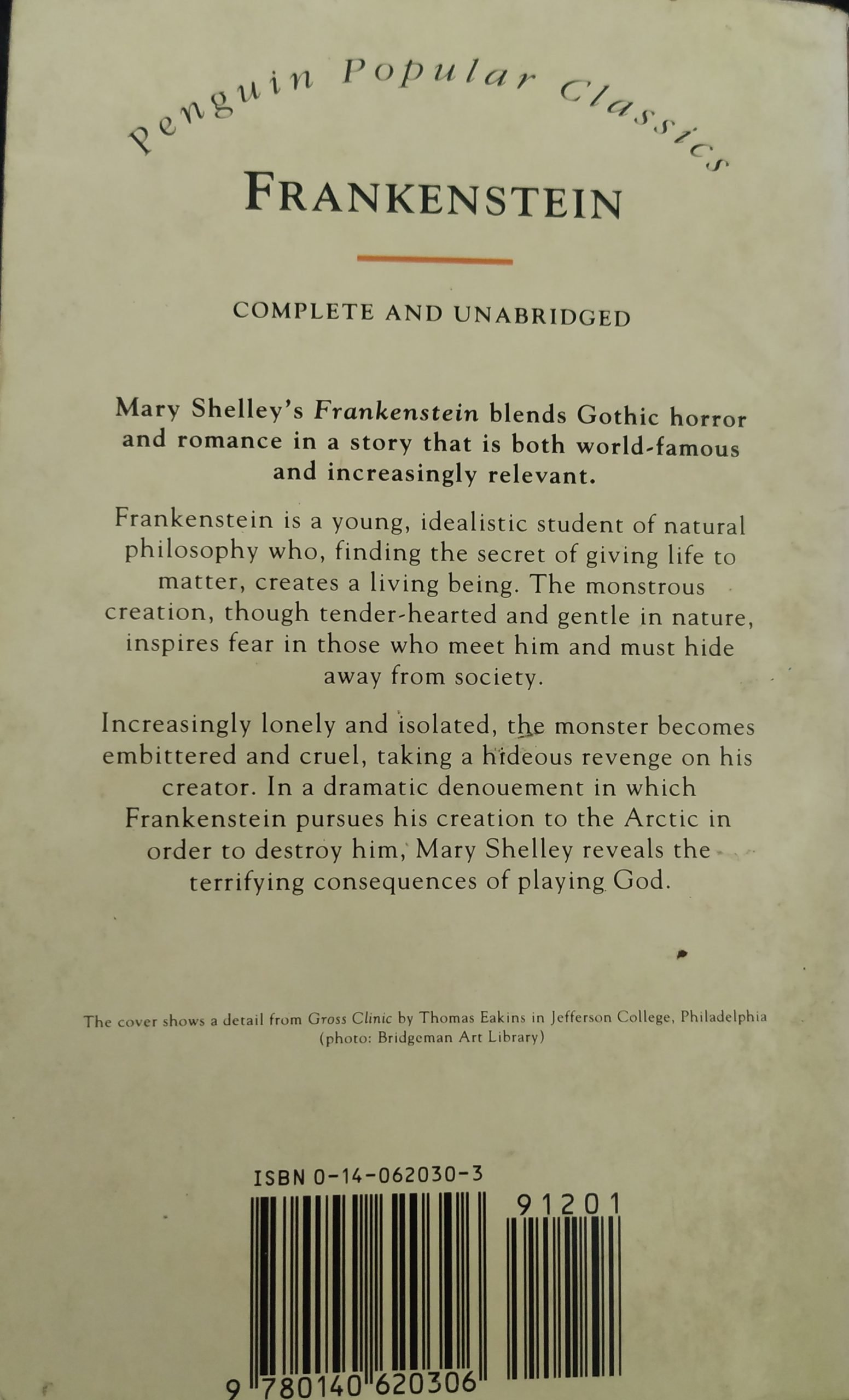
The idea of Frankenstein came to Mary Shelley in a half-waking nightmare in the summer of 1816. She had been staying with her husband and Lord Byron on the shore of Lake Geneva when at Byron’s suggestion they were all challenged to make up a ghost story.

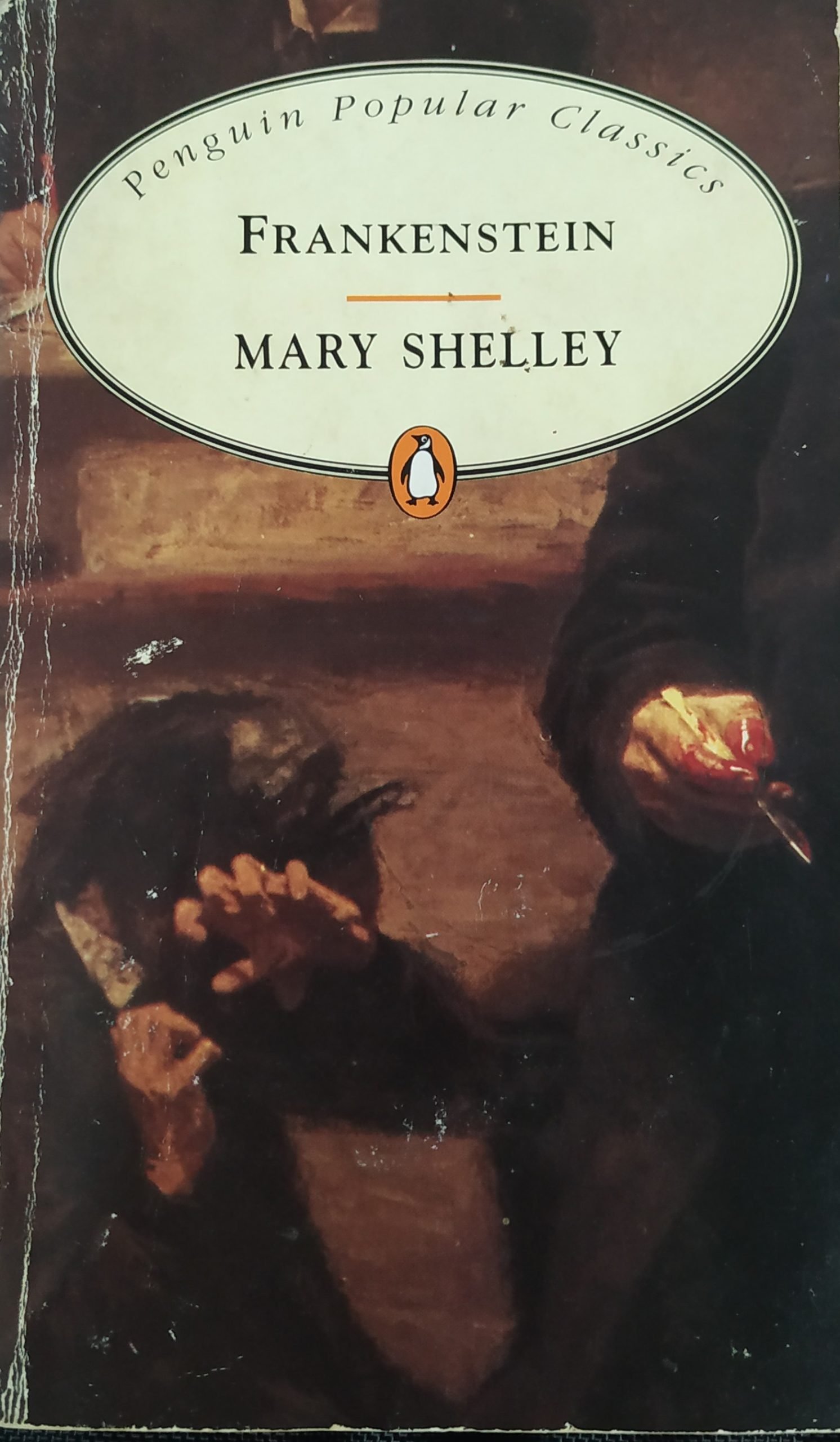
– Frankenstein (Penguin Popular Classics)

The summer of 1816 later came to be known as ‘the year without a summer’ because of the eruption of Mount Tamboro in Indonesia that sent clouds of volcanic ash throughout Europe, North America and Asia.

Torrential rain and grey gloominess filled the sky, it must have, when Mary Shelley sat down to write Frankenstein. And this only favoured her, even if she didn’t realise it, as she managed to breach the measurements of time in presenting a vision, hideous and terrifying, but intact and alive.

And so, it walked, with our desires and knowledge meeting, it walked – Frankenstein’s monster walked.

But what’s he up to now?


Weekly Newsletter

A weekly dose of stories! Get the posts from the Chiming Stories in your inbox and read it when you can. Subscribe now, it is free!

This field is required.

Recent Posts


Let’s Take The Final Curtain Call Together

Flash Fiction
A lovely dancing tree.
[Source – Pixabay]

Standing next to the giant old tree, its static presence made Saami sombre, more and more.

He cried, “Saami is now one with the rigid, rough and-and dead, yes, dead and gruesome tree bark, Saami has turned into this tree bark… O, but why?”

Resting against the tree now, now hugging the tree and mumbling, Saami stared into nothingness blankly, quietly. He opened his fist – a flint stone chip, equally dead he thought – and started ripping off the bark once again.

“Saami sees it all, Saami knows the limits, Saami’s dungeon is different from theirs, but… it’s all the same”, he announced in pain.

*

Sombre Saami’s imagination.
[Source – Pixabay]

The twittering yellow bird, the prancing butterflies, a distant lullaby, the pesky kung-fu crickets’ funny civil war and the red flowers’ bold stance, Saami turned a blind eye to it all.

Even the crickets stopped their civil war to enjoy the rain and the rainbow that day, but not Saami.

“Fools! Saami knows the pattern, Saami knows hope and destiny are always stuck in a traffic jam, and love…”, said Saami two hours ago.

“Love… love coloured Saami’s world black… black is the absence of all colours… black reflects no light… Saami lives in darkness”, he completed the sentence just when the fireflies lit the jungle.

Some rested on his head and hands, but Saami refused to greet them.

With a dry look, sullen eyes and tired limbs, Saami spoke for the last time, “dead, static tallness, this soulless tree bark hates Saami, this is the death penalty, and the most terrible because Saami is not tied, Saami can move, Saami knows, but not anymore, for Saami has become one with this giant numb stubborn treeeeeeeeeeeeeeee…”


Saami spoke for the last time because the lovely, joyous and calm tree’s branch took hold of Saami’s tired body and pulled him up-up-up… in a gushing blast of speed, suddenly music broke Saami’s heart-heart-heart… ta-rum-pup-pup-paa came the sound and immediately replaced it with a musical hub-dub sensation of a heart.

*

The lead singer-cum-dancer-cum-poser.
[Image by Roy N from Pixabay]

From the top-most branch of the tall lovely tree, Saami could see melodic colours and no darkness, nothing was static for the entire jungle and the river and the wind and the sky and the stars and the moon and the sun (together) danced to the twee peppy tune – and equally soothing, thought Saami – that the animal orchestra was playing.

Every animal – jamming freely – sitting on the top of some tree just like Saami… Saami who started clapping, swaying along and tip-tap-toeing in the air.

The tall lovely tree finally spoke, “Saami, yoi-knowi-da-cosmic-i-dance-sO-‘ell”; Saami was seen blushing brightly before the curtain was drawn.

*

Cosmic-i-dance!
[Source – Pixabay]

Weekly Newsletter

A weekly dose of stories! Get the posts from the Chiming Stories in your inbox and read it when you can. Subscribe now, it is free!

This field is required.

Recent Posts

Fear of Fear

The sparkling mystery!
[Source – Pixabay]

The parched land did give me an answer, but how? Doesn’t it fear barrenness? It answered me though I had to wait for hours and hours as I walked ahead, crossed that skeletal shape of an animal and at last saw a cactus flower blooming.

The falling sky did give me an answer, but how? Doesn’t it fear horizon? It answered me to just look up at it and smile. I felt like I was falling back or was I flying… The night sky presented me with a mystery, with the sparkling mystery. I smiled and realised that I have been smiling the answer all the while.

The elixir of life presents itself to me, but why? Doesn’t it fear absorption? It answered me by flowing and gushing and filling up the planet and mankind alike. By giving itself up, it prospered in all forms and all life. Every glass of water now tells me why.

The sun’s fire doesn’t burn anyone, but why? Doesn’t it fear the cold end? It answered me ferociously by reaching every nook and corner and nurturing every universe. The epitome of supreme action and fiery hope, it burned all the questions and answers, leaving a pure residue alive.

The wind carries all life on its shoulders, but how? Doesn’t it fear burden? It answered me not, rather played with kites, the dry leaves, someone’s scarf, whistling in the woods, chiming music all around, lightly o lightly giving life, life.

The grand truths, moulded in Nature, by Nature, don’t know any fear.


They support answers and questions, I support fear. Silently walking down the approved pathway, I never dare to face a fear. Walls of doubts, plastic wallpapers, radio playing endless talks in a loop, I sit and I walk at the same time in my automatic red shoes. When I stay absolutely quiet, I count it as a good conversation. Fear of everything rules a life.

But when death strikes, in the end or the beginning, it surpasses everything. Death comes without any motive or desire.


Fear of fear confuses me, shackles me, blindfolds me, stupefies me, breaks me… but oddly, never stops me to act.

If fear fears anything, it is action. Action requires knowledge. Knowledge gives you experience, experience makes you wise and a wise person fears nothing.

Fearless!
[Source – Pixabay]


P.S – This post is written in remembrance of Gin Gin Bandri, a little kitten.


Weekly Newsletter

A weekly dose of stories! Get the posts from the Chiming Stories in your inbox and read it when you can. Subscribe now, it is free!

This field is required.

Recent Posts

Two Blind Crows

Ra-ra’s famous window story.
[Image from Pixabay]

Ra-ra: Why did the window go SHUT… who closed it SHUT… my question is just HOW?

Ra-ra’s friend Coo stays quiet, looking absolutely nowhere.

*

  Ra-ra: S-H-U-T shut, right when I was about to pick my share and leave…  

Coo: I believe you, it has been so many years since you first told me this story.

Ra-ra: (astonished) Many years you say, gone nuts…? It happened an hour ago.

Ra-ra: Coo, this ain’t the time to argue.

Coo: A while? He died ages ago.

Coo: You’re standing fine, 900 years have passed.

Ra-ra: 900? I have come flying from the west port of Oraffa city just now.

Coo: Oraffa city? Hah! Blind dreams!

Ra-ra: How dare you? I can see very well… you can’t, you blind ugly funny-sounding bad crow!

Coo: I said blind dreams… didn’t call you blind.

Ra-ra: Oh, oh-my, then let me apologise.

Coo: For what? We are blind, the world knows it. Yet…

Ra-ra: Blind we are, yes, yes… very much… (mumbles).

Coo: I’ll complete my sentence… yet we are still alive.

Ra-ra: (flaps wings) Death sentence, I have been given a death sentence and yet I am alive.

Coo: Cool-cool yourself Ra-ra. We are together in this.  

*

Ra-ra starts sobbing, mumbles again.

  Coo: I am turning left.

Ra-ra: (softly) Left?

Coo: Turned.

Ra-ra: Wait for me!

Coo: Can’t.

Ra-ra: I think I also turned left unless it is the right, or it is somewhere in the middle, who knows.

Coo: Not me.

Ra-ra: (laughs) You’re funny!  

*

Both Ra-ra and Coo stand quietly. Coo speaks after some time.

  Coo: Hey Ra-ra, you never told me your famous window story.

Ra-ra: I didn’t? How come?

Coo: That’s the truth.

Ra-ra: Well, then listen… the window was SHUT before I could pick my share… someone just closed it SHUT…

*

The two blind crows talked facing what they thought was the left.

*

Two Blind Crows
[Image by Santa3 from Pixabay]

Weekly Newsletter

A weekly dose of stories! Get the posts from the Chiming Stories in your inbox and read it when you can. Subscribe now, it is free!

This field is required.

Recent Posts


A Seeming

Flash Fiction

That I am and that I am not is a seeming. Life is a seeming just like its partner, death.

*

A beautiful sunrise/ sunset… a beautiful seeming.
[Source – Pixabay]

Rosaline, sitting on the branch of a huge tree, was collecting the passing clouds. Though friends with the clouds, she didn’t like to see them at night, maybe because she also collected stars.

The day-night cycle confused her. Grandma’s solution “you’ll understand it once you become a big girl” didn’t help Rosaline at all.

And so she started living in different worlds – the-bright-blue-sky-world, the-mischievous-cloudy-world, the-paper-boat-rainy-world, the-sparkling-starry-world, the-moon-pie-world, the-ghostly-pitch-black-world…

Two worlds sometimes merged into one and formed something unique.

Whichever world Rosaline was in, she was always excited to live it fully. Happily, she always announced early in the morning “today I’ll be in the-mischievous-cloudy-world’ or ‘give way to Rosaline, the-moon-pie-world awaits her.”

Lost in her myriad worlds, she lived madly. She even recorded her visits to these wonderful worlds.

She was proud to be the youngest and the oldest member of her family, youngest by age and oldest by the many visits she made to these worlds.

On her 92nd visit to the crunchy-autumn-leaves-world, she died. She fell from a huge tree.

Her last words were, “Grandma, you need to plus 22 more worlds to break my record”.

*

A crunchy-autumn-leaves-world.
[Source – Pixabay]

Weekly Newsletter

A weekly dose of stories! Get the posts from the Chiming Stories in your inbox and read it when you can. Subscribe now, it is free!
This field is required.

Death

I was wondering about death… then about someone dying and something dying within… is there a difference or is it just the same thing? Maybe the latter is more cruel and inexplicable than the former. One dies and leaves suddenly without any answer, answered or question, questioned… while sometimes it takes time. Whatever be the manner, it makes us sullen… until we are charmed yet again by our friend/foe – Dear Forgetfulness.
And when something dies within, it dies in spite of being very much alive, it dies no matter if you understand the phenomenon or not. The aloofness rules and takes you away from that person. Rosie and Vanessa are still friends and share a lot with each other, but one of them knows that it will never be the same, ever. This invisible but imposing wave that runs smoothly in this world was the reason that made one of these friends aloof. She is always busy with something or the other.
I talked to my psychoanalyst friend about it and she got the opportunity to lecture me about her theory (she has one for everything). She said that in both the cases, when someone dies and when something dies within, a return-trip ticket is possible and in the majority of the cases it always happens.
The theory goes like this – one can connect with the dead through memories, resolve things in the mind, make up stories with happy endings and firmly believe that the dead one is happily floating and dancing somewhere in the sky (she laughed for five long minutes, saying that one of her patient saw his late dog doing samba one starry night); when something dies within you, its dead body remains inside you, it then depends wholly on the person to either do the burial ceremony properly or let it roam like a zombie. She said, “Fascinatingly, a majority of the people like to have a zombie….”
There were umpteenth dimensions of this theory (she spoke for two hours) which didn’t clear anything to me. I mean what do you mean by ‘sometimes you become friends with the zombie, sometimes you try to kill it and sometimes the zombie turns into a butterfly and is redeemed’? Balderdash! She is bonkers!
It was only later that evening when I sneezed loudly and couldn’t find a handkerchief in time, that I realised what my psychoanalyst friend was trying to say. Sneezing and realizing…it is not linked, I just wrote it to tell the eh …am …the chain of events. I washed my hands immediately. Yes!
Anyways… oh … I was talking about death and… how incredible is this… my friend/foe… Dear Forgetfulness you are too much.
One last thought – I know I will die one day, but this simple truth is something very powerful, I don’t mean I am now waiting for it. Why wait, when it is coming sooner or later. But I thought of it with eyes closed and I saw snow capped mountains and it made me feel grand. Should I share this theory with my psychoanalyst friend? Oh! Not at all! It’ll mean another long session, a very long one or simply death.

An Appeal

I make an appeal to all of you to be aware, to search for the truth and to realise it. I request you to know the purpose of your life, the reason that makes you ‘you’; to be knowledge thirsty so that you understand your place in the universe and the universe in you. To help others not with money but with heart; to be a better person. And especially to make your life larger than your fears of life.

I appeal that don’t participate in the blind race which makes you so busy that you forget to live. And busy in what? In earning money, building house, buying infinite things; a material world, a material life, a material you and a material death. What is the point of running a race that might leave you materially rich but spiritually hollow? That in the end if you ask for love you get a plastic hug?

First school, then college, then job, then marriage, then kids and then planning the same for the kids. All this with creativity…many holidays and many movies and many social activities and endless views about everything…a perfect planned life with an expected death. It is suffocating if you understand the monotonous method we have been following for living (with some exceptions of course).

I would like to share with you that in our one life we can either do all of the above things or we can rise to a higher self where life is full of happiness and death is blissful. So we can do a lot and die or we can feel the sublime and unite.

I appeal again to you that death is a reality, the greatest one. As soon as we grasp this idea our life changes into a beautiful journey till we meet our end. And hence, my request to you is not to burden your mind with any fear, with the concept of surviving and compromising because we all will meet the same end. The only difference will be that the one who knows himself and his life, will also know his death and the one who is too busy in something or the other will find death as an unfair shock. What a pity to end in such a muddled manner!

This appeal is to every human being irrespective of the man-made boundaries that has divided us so magnificently that we murder each other for guarding it. We get the dose of patriotism from childhood that by adulthood we become madly passionate about our country and foolishly ignorant about the Earth. It is nothing but a sad joke we are all part of.   

Lastly, I hope we all realise that it is not about right or wrong, good or bad, you or me…it is much bigger. I hope we realise that we all are one and we will again become one…just like we were one before the Big Bang.

Big Words Are Going Somewhere

Poem

Time is a big word

And a big cheater

It swears to stay

But never stops to say

Even a goodbye


Love is a big word

And a big cheater

Love is what is beautiful

Though not without pain

At it’s best when slain


Life is a big word

And a big cheater

Full of opposites

Charming by nature

It tricks a keen creature


Death is a big word

And a big cheater

Feared by the greatest

A truth that stands tall

Accepted in the end by all


The big words are going somewhere

With a small word ‘smile’ I stare