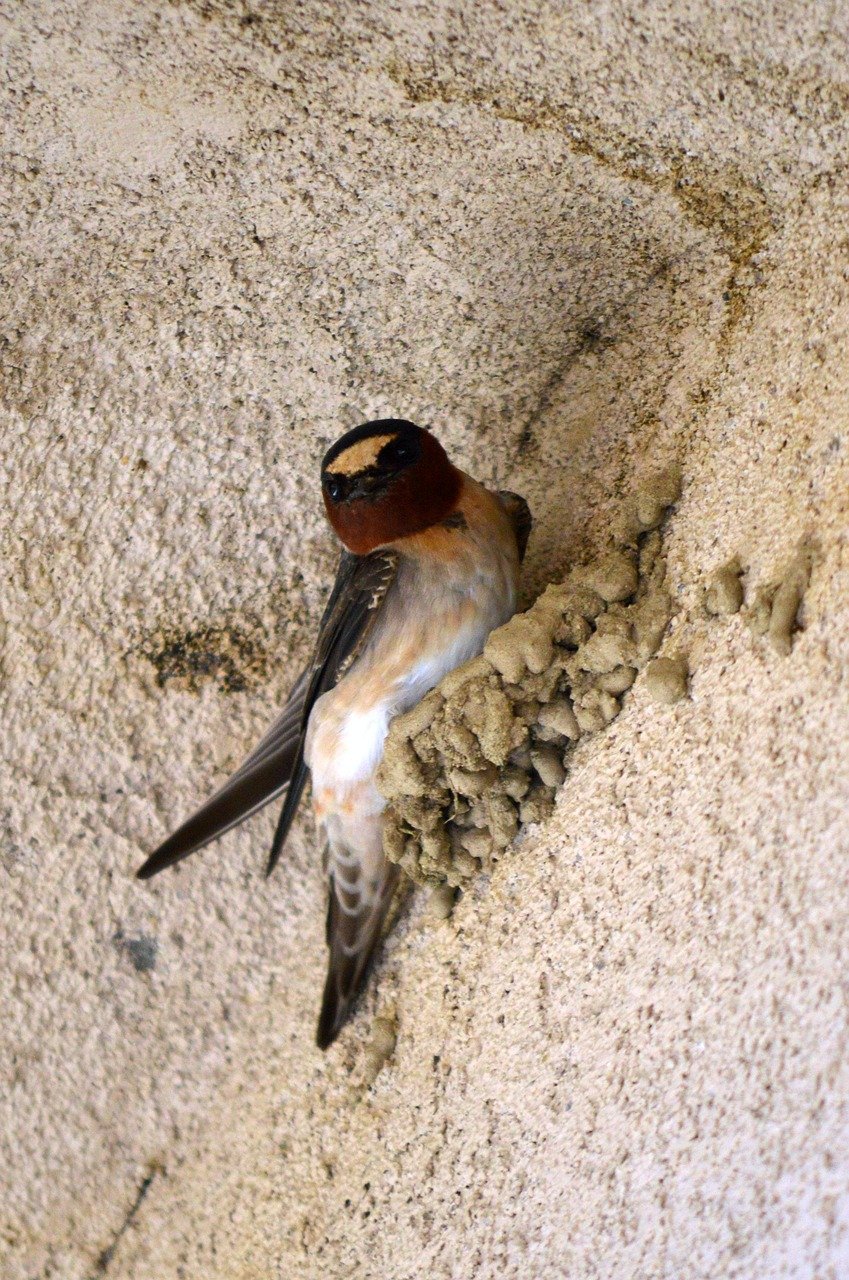
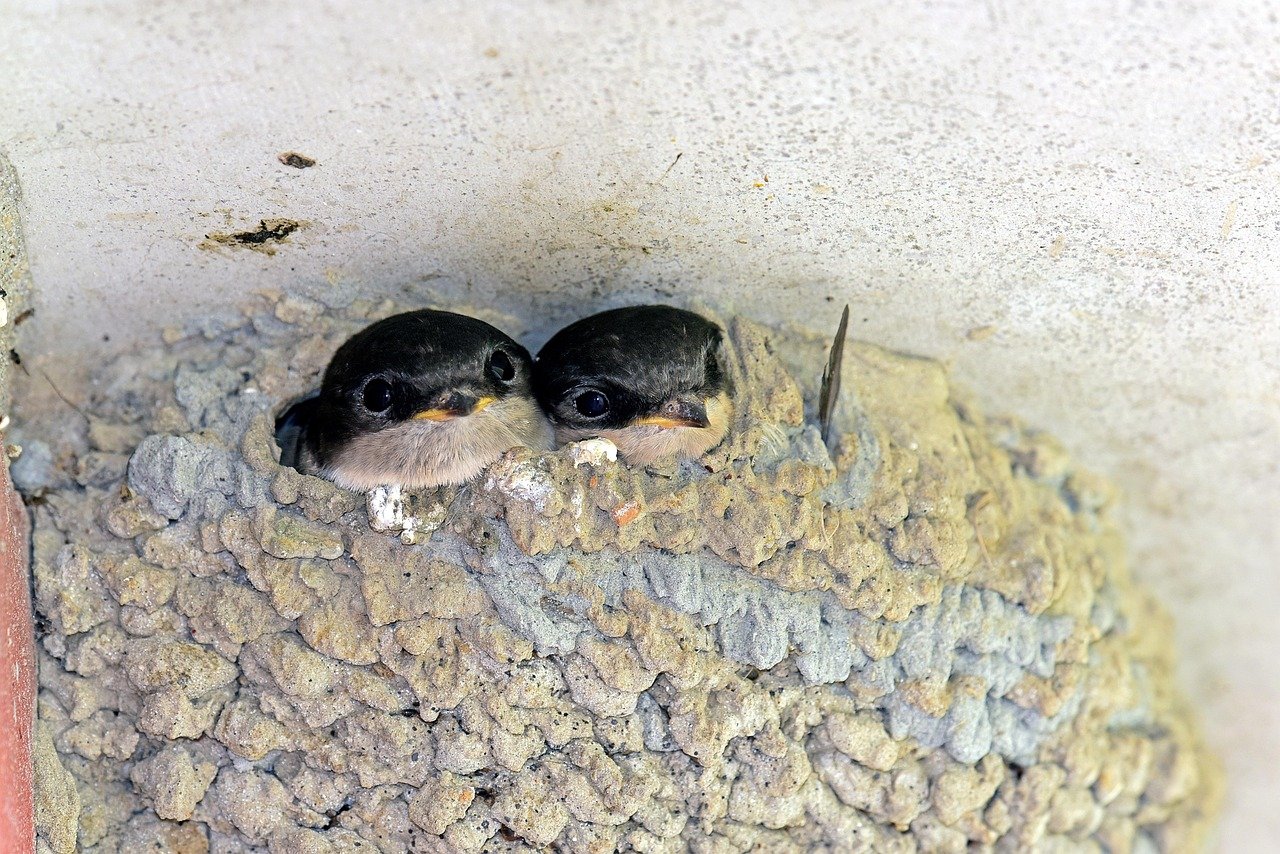
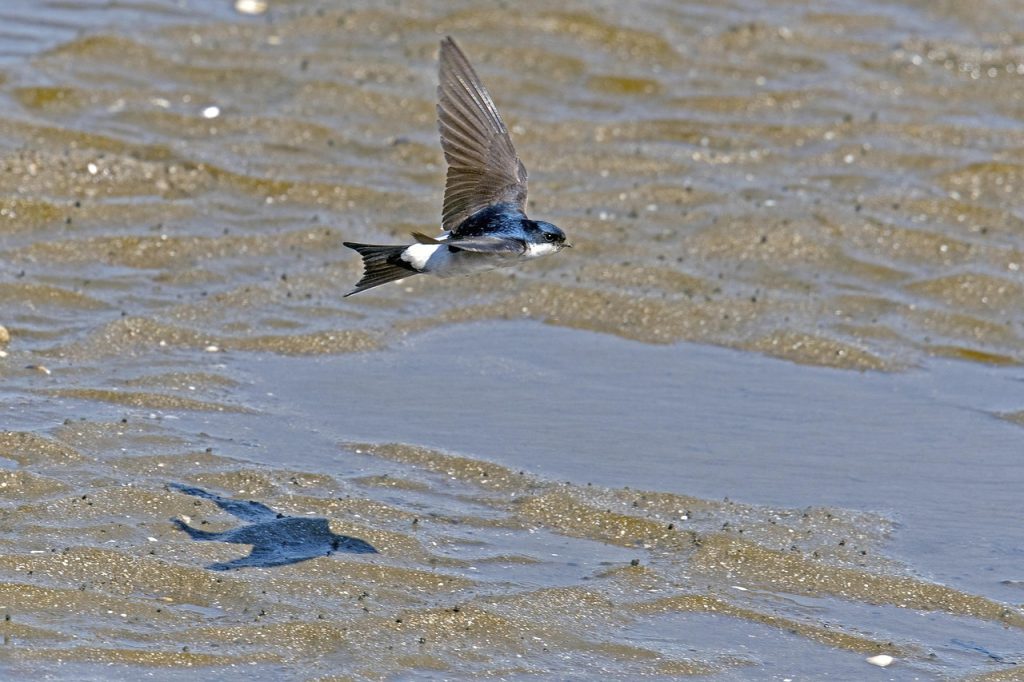
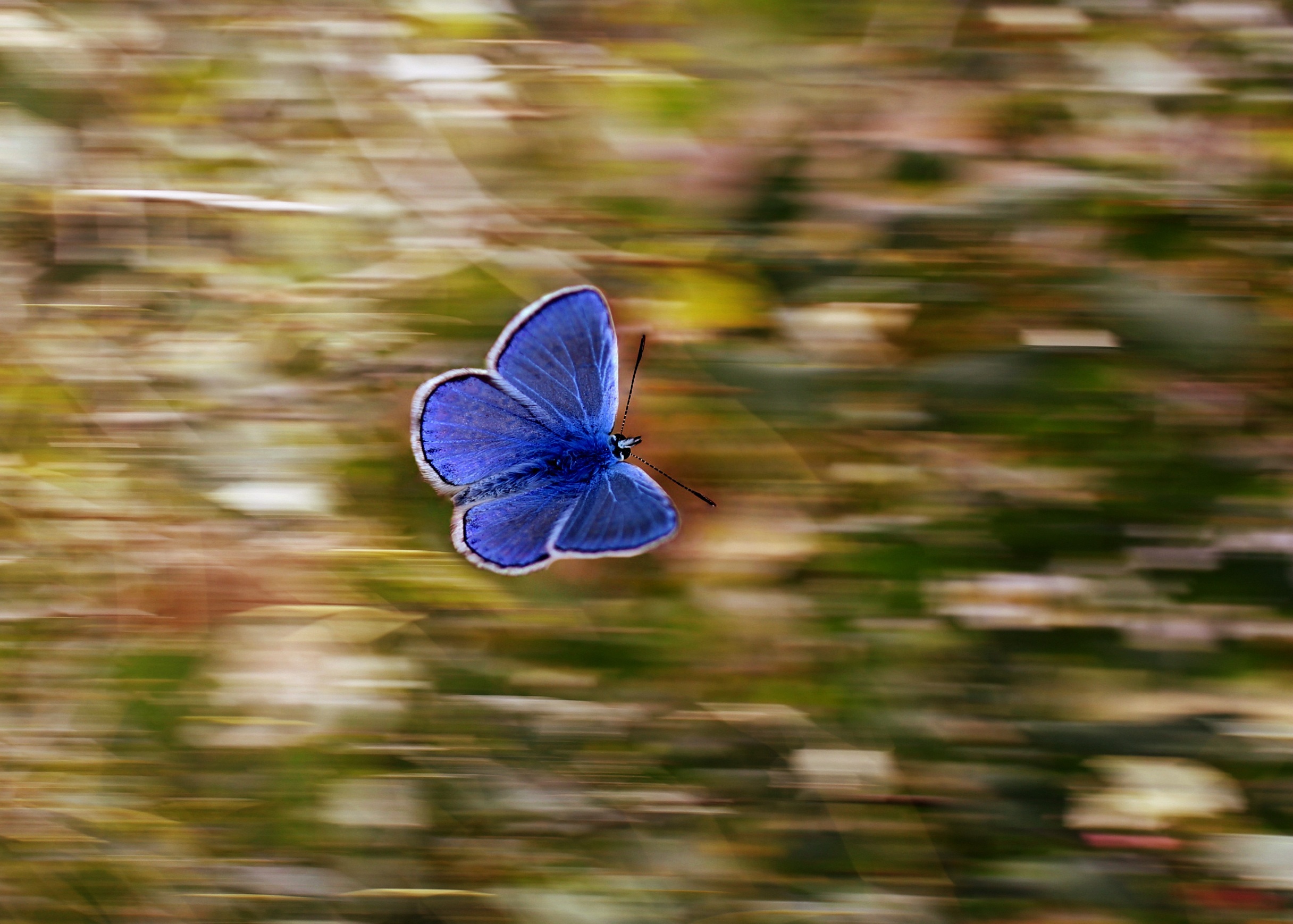
A house martin building its nest. [Source – Pixabay]
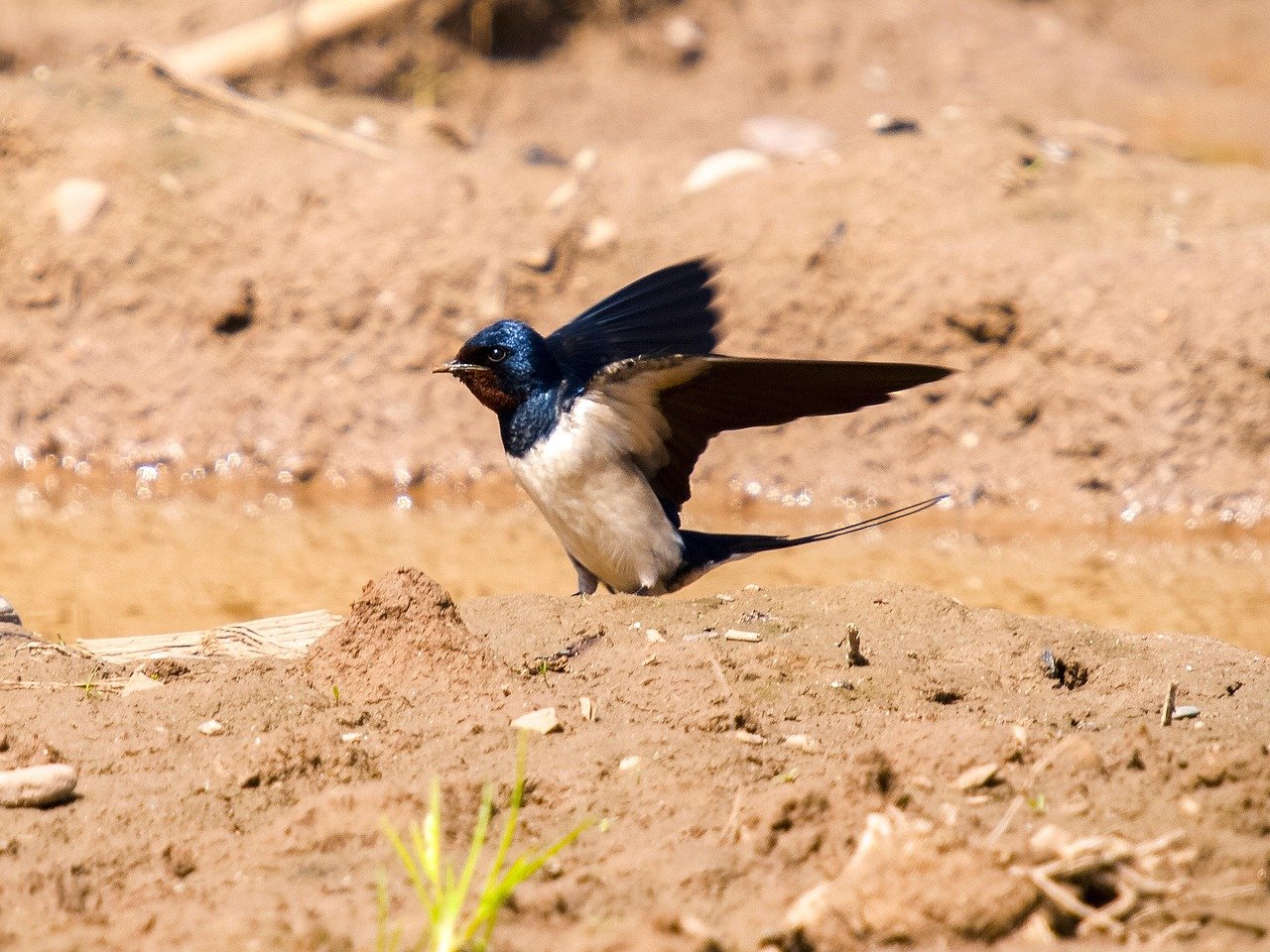
Sun-soaked! [Source – Pixabay]
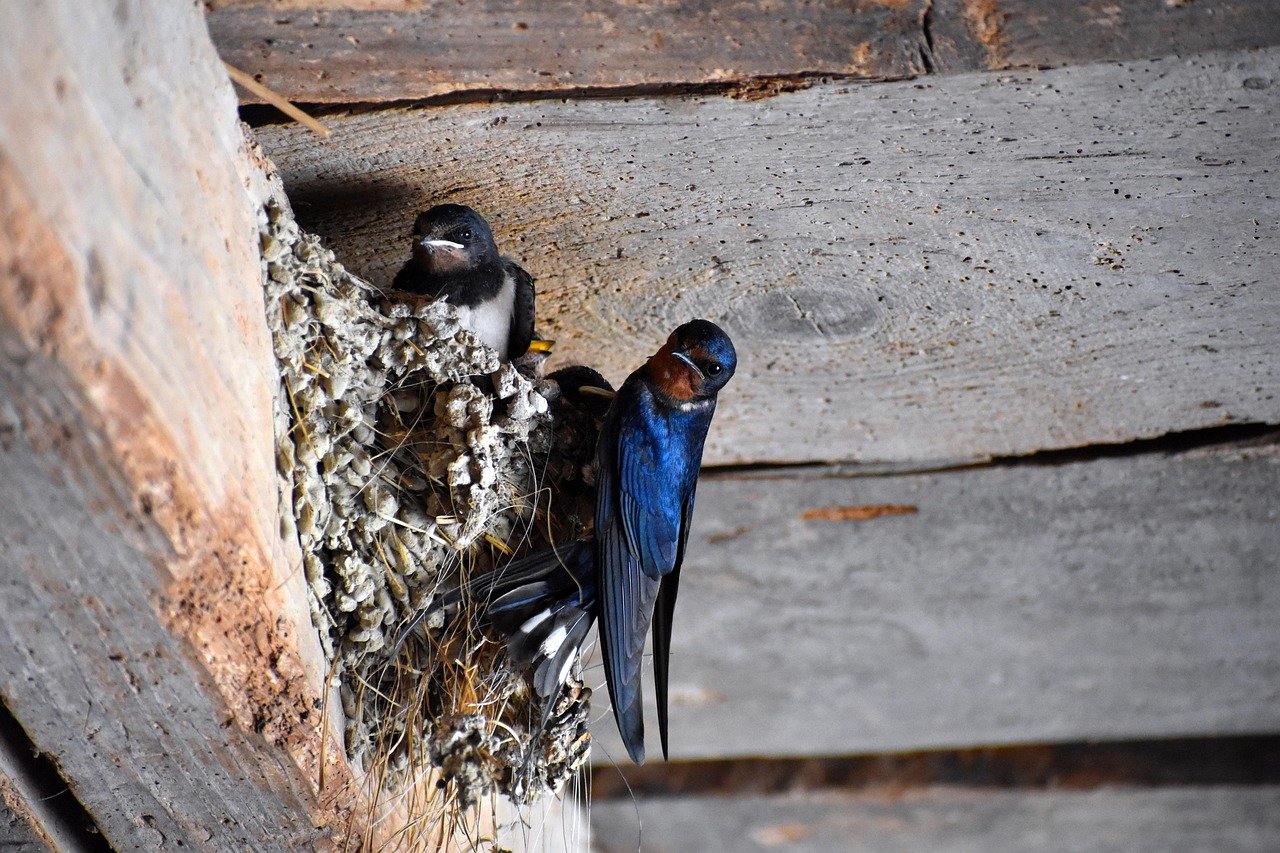
At work! [Source – Pixabay]
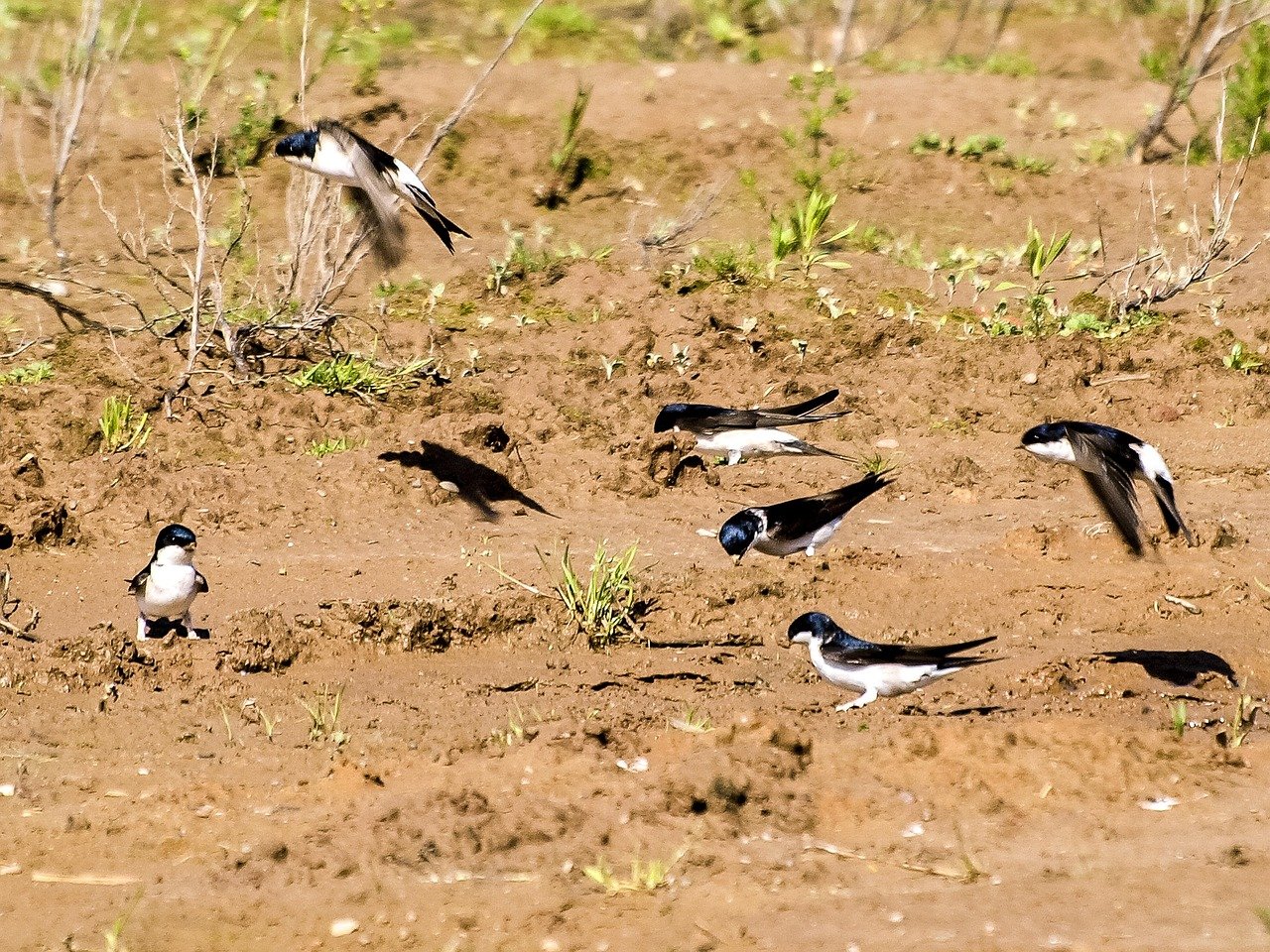
Collecting mud. [Source – Pixabay]
House martins in their sunbaked abode. [Source – Pixabay]
*
Living the old-fashioned way, centuries old, ancient maybe, the House Martins are busy today as well, no, no tea-break. Beading a muddy network, necklace-like, a palace of one room, warm and cozy, like a pretty tiny cup, delicately built yet sturdy and weather proof.
Conquering not the world around but cooperating and cooperating well with the surroundings, these muddy nests form friendships with the mud, grass, grey concrete, wind, rain, moss and all life, very peacefully, no show-off.
Dashing up, slanting down, catching its meal mid-air, round and round, it pierces the sky jet-like.
Their sunbaked abodes, their sun-soaked flights, their sun-tuned lives – the House Martins follow the sun, old style.
I forgot my hat, the cat on the mat didn’t forget anything, but I did, somehow, somewhere, my hat.
A summer fresh rhyme, time for the flowers to blush and soak in the summer fresh rhyme, flower, them I looked at with love, picked and plucked, and placed neatly on my hat that then looked summer fresh.
Our colours matched, summer fresh orange and violet, my hat and tiny bead-like flowers as if beaded in a chain, the summer fresh evening sky, seen from my room’s window.
My room, my small room, an artist’s room. A dream for some. Back then? No, even now!
A chair and a table and good space to work and rest and look at the summer fresh evening sky and rolling gushy whispery light clouds through the window.
And the neighbouring spaces, floating yet firm terraces, all cheerful, soaking in the summer fresh colour and air.
In the room, small room, I roam and wave my hat, let it dance and then rest on the chair, I spoke through it and it spoke on my behalf, my hat, with all that appeared static but wasn’t.
The hat carried and passed my restless ideas to nowhere and no one; the calm space let the restless idea be, which when rested, breathed its last and vanished. The artist’s room continued breathing and then so did the artist, and every time later, even after losing her hat.
The cat sitting on the mat, the neighbour’s cat, this one, a peace-loving warrior, jumped up when the artist opened the door, climbed to the window, its tail waving a slow cheerio at the artist before sauntering out on the roof top.
Back in the room, hat still missing, the artist sat down to work, breathing in the room’s calmness inside, forgetting about the matters that followed her till the room’s door shut.
One glance around, the hat’s not in the room, the artist sighs, gets up, walks towards the window, finds that cat on a different terrace, sitting still like a statue, aware about the artist’s glance, itself looking downwards at a passer-by – a dog, notices the artist too and turns looking up at the summer fresh sky and then goes back to work.
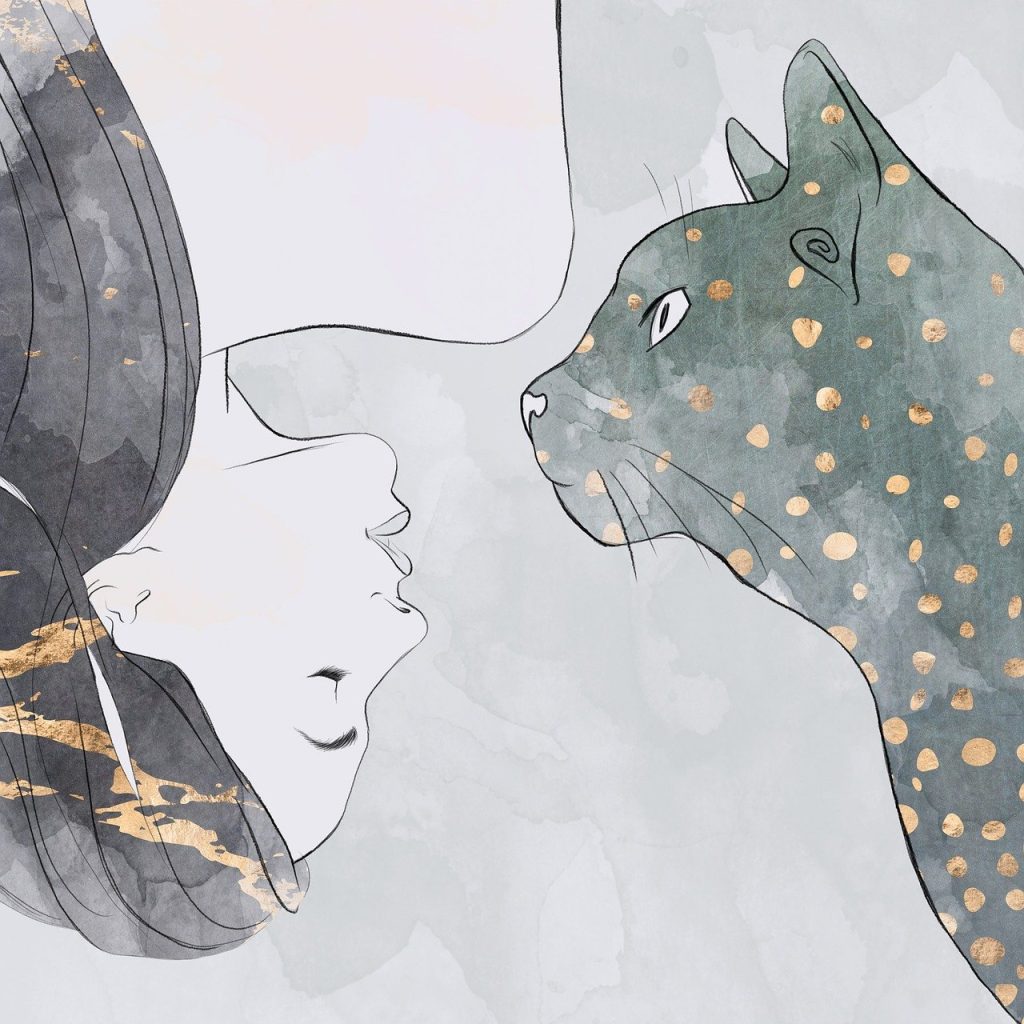
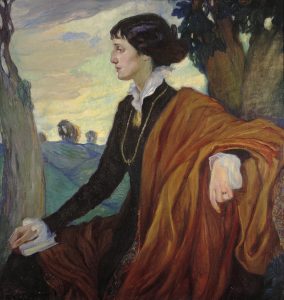
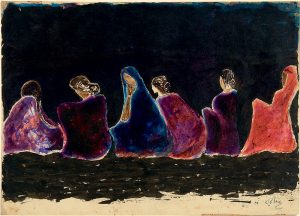
A Corner of the Artist’s Room in Paris by Gwen John (1876 – 1939) inspired the blogger.
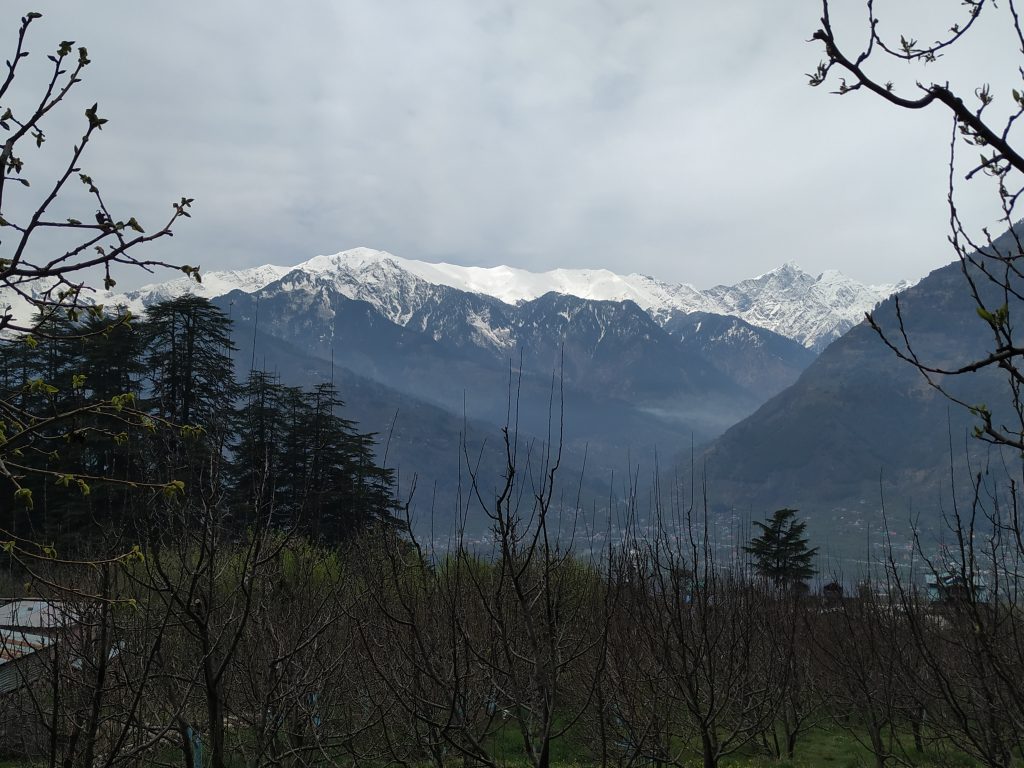
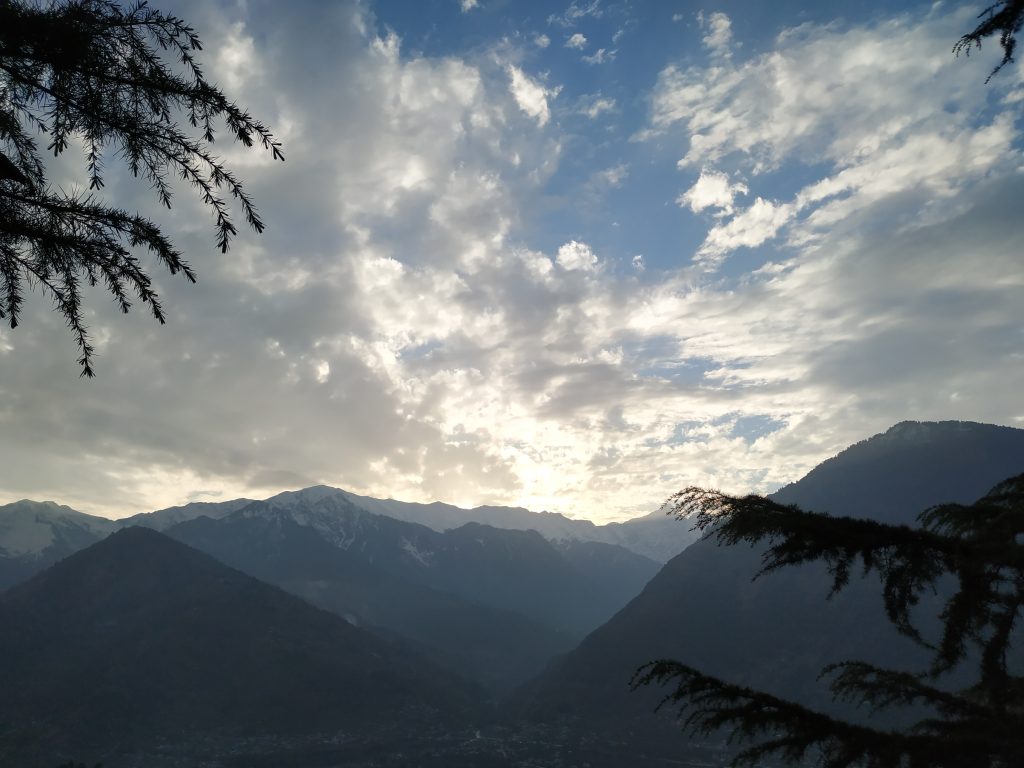
The Pir Panjal Mountain Range, Kullu, Himachal Pradesh. [Image by Jagriti Rumi]
*
What are the mountains saying that doesn’t reach me?
Nothing.
Sun kissed peaks, every hour of every day, shattering time moving in the round clocks, but not the colossal movement, the mountains hide what secret from me?
I’ll measure it, treasure it, capture it once and for all, weigh it well, dissect and familiarise, worship and sell without expectations. Tell me, what is it?
Nothing.
Don’t lie!
I’ll climb and conquer again, I’ll dig and extract again, I’ll create tunnels and pin cables, hang lights and find roads, I’ll race up and down and charge tickets, smart tools are enough to overpower, smartly I move, watch me.
Alas! Ages pass by and you rejoice in stillness while I struggle and fight with no one but myself. In the search of an answer, I have walked past the question always, watch me as I do it again, watch me as I fall.
Watching… Dear mountains, you have watched it all, the movement, steadily you have participated, participated fully… is that it, then? Erosion also doesn’t bother, nor does dying, mixing in dirt, letting the wind take you away in bits.
*
Evening hour, The Pir Panjal Mountain Range. [Image by Jagriti Rumi.]
*
Dear mountains, you don’t speak of love, yet your beauty does. You play with the sky, clouds and lightning.
Not tethered to a window, you see the full picture, and breathe the fresh air, and live… live not as the word ‘live’ explains, dictates, guides, forces, blesses, teaches, restricts, warns, and shouts telling us how to… but simply you do. And for that you need…
Standing next to the giant old tree, its static presence made Saami sombre, more and more.
He cried, “Saami is now one with the rigid, rough and-and dead, yes, dead and gruesome tree bark, Saami has turned into this tree bark… O, but why?”
Resting against the tree now, now hugging the tree and mumbling, Saami stared into nothingness blankly, quietly. He opened his fist – a flint stone chip, equally dead he thought – and started ripping off the bark once again.
“Saami sees it all, Saami knows the limits, Saami’s dungeon is different from theirs, but… it’s all the same”, he announced in pain.
The twittering yellow bird, the prancing butterflies, a distant lullaby, the pesky kung-fu crickets’ funny civil war and the red flowers’ bold stance, Saami turned a blind eye to it all.
Even the crickets stopped their civil war to enjoy the rain and the rainbow that day, but not Saami.
“Fools! Saami knows the pattern, Saami knows hope and destiny are always stuck in a traffic jam, and love…”, said Saami two hours ago.
“Love… love coloured Saami’s world black… black is the absence of all colours… black reflects no light… Saami lives in darkness”, he completed the sentence just when the fireflies lit the jungle.
Some rested on his head and hands, but Saami refused to greet them.
With a dry look, sullen eyes and tired limbs, Saami spoke for the last time, “dead, static tallness, this soulless tree bark hates Saami, this is the death penalty, and the most terrible because Saami is not tied, Saami can move, Saami knows, but not anymore, for Saami has become one with this giant numb stubborn treeeeeeeeeeeeeeee…”
Saami spoke for the last time because the lovely, joyous and calm tree’s branch took hold of Saami’s tired body and pulled him up-up-up… in a gushing blast of speed, suddenly music broke Saami’s heart-heart-heart… ta-rum-pup-pup-paa came the sound and immediately replaced it with a musical hub-dub sensation of a heart.
*
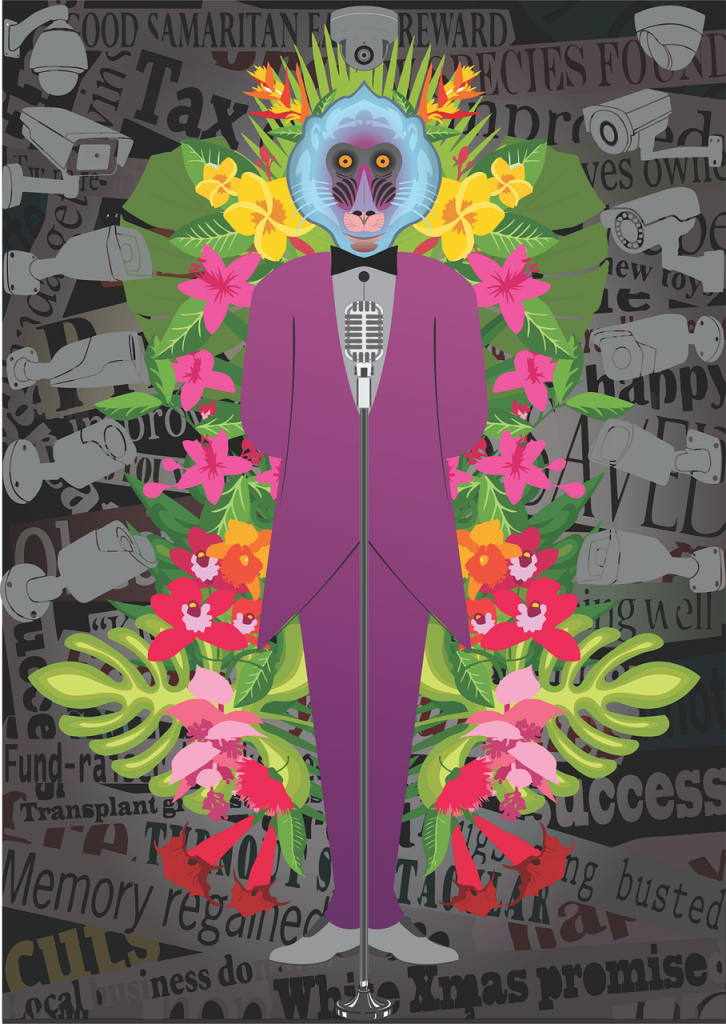
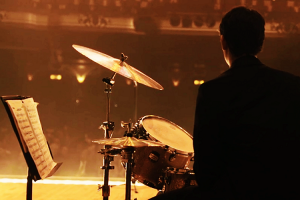
The lead singer-cum-dancer-cum-poser. [Image by Roy N from Pixabay]
From the top-most branch of the tall lovely tree, Saami could see melodic colours and no darkness, nothing was static for the entire jungle and the river and the wind and the sky and the stars and the moon and the sun (together) danced to the twee peppy tune – and equally soothing, thought Saami – that the animal orchestra was playing.
Every animal – jamming freely – sitting on the top of some tree just like Saami… Saami who started clapping, swaying along and tip-tap-toeing in the air.
The tall lovely tree finally spoke, “Saami, yoi-knowi-da-cosmic-i-dance-sO-‘ell”; Saami was seen blushing brightly before the curtain was drawn.
Waiting to take a stand, sitting comfortably, letting the waves cover with silt our body, mind and soul, we continue waiting, living.
Glaring caustically at the silt, we regurgitate pompously.
Unable to cross the maze, we burn the walls down, unable to touch the sky, we pull it to the ground.
Waiting for them to distinguish between the truth and hearsay, to dust off our earnest intentions, to demystify our vision, we humbly stretch and wait.
In waiting for an autonomous lustrous life, we steadily pass by, dulling our society.
C. P. Cavafy, “a Greek gentleman in a straw hat, standing absolutely motionless at a slight angle to the universe” (as per his friend E. M. Forester), wrote the poem “Waiting for Barbarians” in 1904, juxtaposing the past with our modern thoughts, superimposing the ancient image on the now, yes the now, swiftly jolting the reader from slumber and questioning “this wait”.
*
Aren’t they coming!?
Neigh, neigh!
The leaders in ancient Greece, the poem shows, await desperately, in static opulence, for the Barbarians to come and take over everything and to begin mending every disaster, but when they don’t come, the city dwellers are aghast as now they will have to tackle problems and take decisions on their own.
And so the free individual, waiting for an external source to revitalise the life, takes a dip in the bright, glittering mirage, dreading, complaining, ignoring, barricading, adjusting all the while, and refusing to end “the wait”.
The hero is in hiding, asleep, has forgotten or has been brainwashed because only that could explain the hero’s silence; the dead silence is complementing the darkness ostentatiously.
And no surprise, right? This darkness is overwhelming, too huge, so vast, damn cruel, heartless/soulless, steady and conniving that the heroes have all locked themselves up in the epics, legends and myths.
Dejected and weak they have turned their backs, criticising the critics, they hopelessly work to earn a living, measuring their quiet success every fiscal year, waiting for the golden retirement when they will finally wake up… or maybe they will not.
Regina Spektor is calling out to all the heroes to wake up, rise and fight, to accept the responsibilities of actions they so unconsciously take, to wage a war against inequality one little step at a time.
*
Listen to Apres Moi before reading further –
*
I (uh) must go on standing You can’t break that which isn’t yours I (uh) must go on standing I’m not my own, it’s not my choice
Be afraid of the lame, they’ll inherit your legs Be afraid of the old, they’ll inherit your souls Be afraid of the cold, they’ll inherit your blood Apres moi le deluge, after me comes the flood…
Regina Spektor
Revolutions, the downfall of monarchies, totalitarian leaders, genocides… mankind’s history is a presence in the absence, it is ever-looming, reminding us of the foundation on which we are now building smart castles (with Alexa or Google Nest Hub or the gadget you prefer).
Apres moi le deluge is a French phrase that means ‘after me, the flood’ and is attributed to Louis XV of France; one of the explanations suggest its nihilistic connotation that says, ‘Ruin, if you like, when we are dead and gone’ and the other links it with Halley’s comet and the impending French Revolution of 1789.
Here, Regina Spektor talks about the far-reaching presence of history and how we cannot ignore it for long.
She sings a few lines of a Russian poem when reaching the crescendo; it is a poem by Nobel laureate Boris Pasternak, titled ‘February’ –
Black spring! Pick up your pen, and weeping, Of February, in sobs and ink, Write poems, while the slush in thunder Is burning in the black of spring.
An intense song that resonates across and holds your thoughts, it seems as if the song is urging us folks to stand up against the odds without delay, asking us folks not to mellow down.
Listen to Us –
*
They made a statue of us They made a statue of us The tourists come and stare at us The sculptor’s mama sends regards They made a statue of us They made a statue of us Our noses have begun to rust
We’re living in a den of thieves Rummaging for answers in the pages We’re living in a den of thieves And it’s contagious And it’s contagious…
Regina Spektor
Thieves are untied clandestinely, inconspicuously, invincibly, heartily like no other group on this planet, working religiously, solely for their profit.
The one charismatic, luring fact, among other things, is the freedom they give to every individual thief, showing no concern for each other, but keeping a check and standing in solidarity if the deal is profitable.
Regina Spektor rightly diagnosed this behaviour as contagious; the song is giving a warning, it is a reminder. Wake up dear heroes, at least to rub off the rust on your noses.
Listen to Small Bills –
*
His destiny was just too big to spend So he broke it into smaller bills and change By the time he’d try to buy the things he needed He had spent it all on Lucy’s and weed and He had spent it all on chips and Coca-Cola He had spent it all on chocolate and vanilla He had spent it all and didn’t even feel it…
Regina Spektor
May the heroes win the peculiar, surreal, boorish individual battles that they are fighting again and again and again.
Listen to Hero –
*
Hey, open wide, here comes Original sin (Vrrr) Hey, open wide, here comes Original sin
Listen to this song when the sky is orange-pink, dimly twinkling, armouring up for the dark night; listen to this song when the sky is whitish-blue, brightly warm, breathing lightly, gently healing the hero.
Now a clear dot… now hazy… mixing with the clouds through and through, then beaming alone gloriously. Splattering moony clay, then rubbing it, greasing with it the deep dark sky.
Mirroring all the romantics and dream-talkers, the moony clay moulds itself to fit into the beholder’s eyes and patient hearts. It listens, nods and registers its reply with the artist.
Moony clay – an assiduous storyteller, slowly moving away – happily builds the wavy waves and like a sand clock shows the slipping time its way.
Singing joyously, dancing leisurely, the moony clay creates and fills the heart with hope, lost in splendour.
See how it re-shapes, re-writes its journey, certain of uncertainty in knowing… in knowing it all.
I am joy running free/
freely flying, fluttering, soaring in a valley/
Of joy am running free.
Greetings!
A storyteller, following the ancient tradition of cave chroniclers, standing in vrikshasana (the tree pose) on a hill top (it is sunny, but windy), breathing in and out stories (relishing it all, but at times overwhelmed), declares animatedly that she will continue to – tell stories, share rare story gems, and connect with the pacy universe while also keeping the website ad-free.
Big thanks to my readers. Stay tuned!
Also, a humble request to the new subscribers to check the spam folder after subscribing. Silly (but necessary) confirmation emails often land there instead of the bright inboxes. Merci!
Ya-hoy!
Chiming Stories (formerly Home Chimes)
P.S – Supporting a storyteller is good for the world’s health (and undoubtedly, for the storyteller’s health as well). Shower some love by sharing, commenting and subscribing to the Weekly Newsletter.
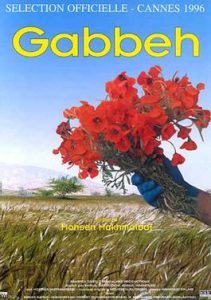
Gabbeh, the 1996 film, is a simple tale of a gipsy girl, her clan and the way their life goes on. Unfolding beautifully just like an artist painting a canvas, Gabbeh quietly touches the grand questions.
Ranked as one of the greatest British films of all time, The Lavender Hill Mob confides in the audience, letting them see, feel, laugh and think without tickling persuasively with a joke here and a punch-line there.
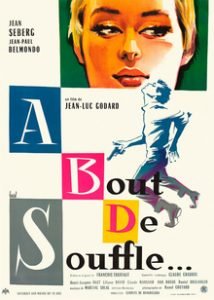
Godard… Breathless and Alive
A Tribute to Jean-Luc Godard, the Film Philologist who Reinvented Cinema.
Yes fly! For walking on the second track is dull and usual, but dreaming high, high, high requires tools. Tools like the right pair of shoes, a chirpy, gritty soul that eats butter-jam dreams, a soul that drinks milky-milky creams.
Silver cascade shimmering the night sky, music to the waves and surreal beauty to the eyes, the Moon loves the art of discipline.
It may be difficult to believe for the Moon’s splendour defies time, it stupefies the clock, it follows the path of a dreamer, but how could this be possible if the Moon knew not discipline?
In this moment, I am a little bit of this and a little bit of that, I am complete and incomplete, I am pleased and uncertain, I wish for nothing and I know I have to wait.
Because the distance covered reminds me of the hurdles I have crossed and the ones I could not, it reminds me of a throbbing past and a dreamy future and it reminds me of how much time is left.
Meredith and the Green Lake
Illimitable Splendour
A joy so complete without any rise or fall, so free without any time corners, so real without true being false, false being true.