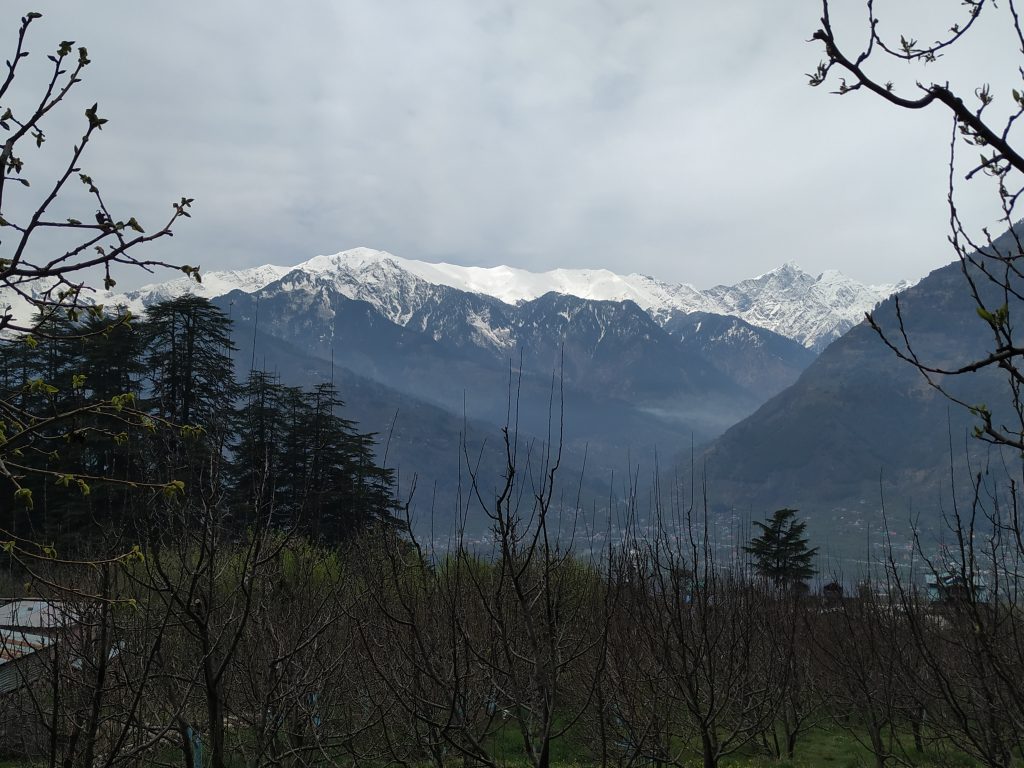
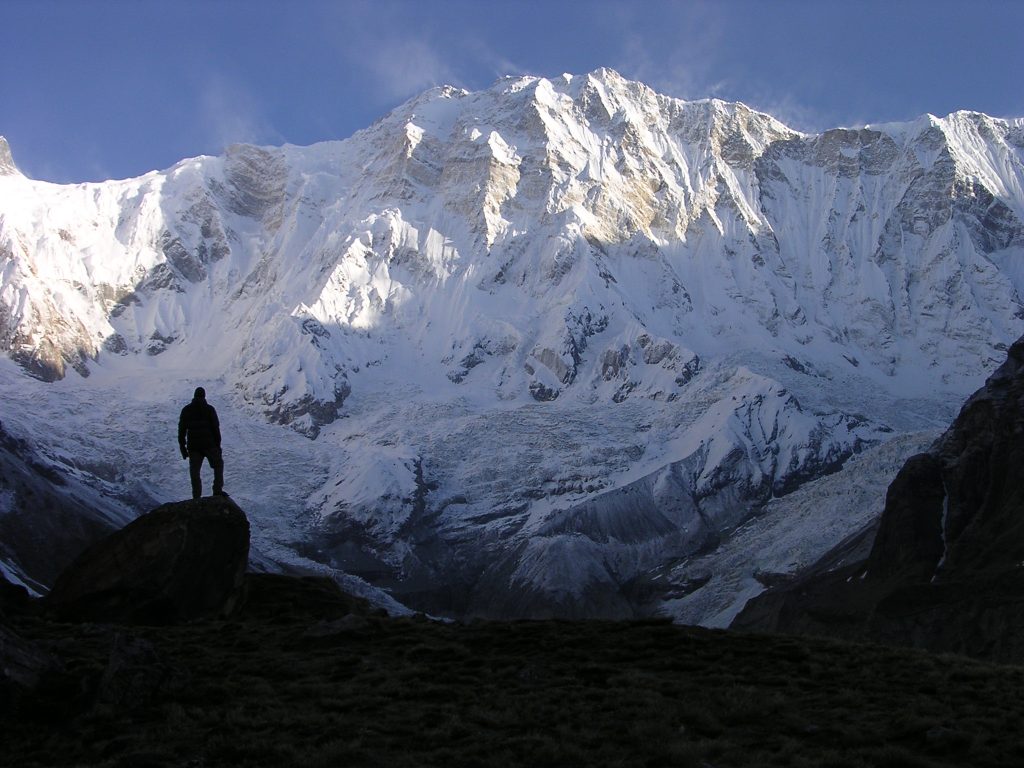
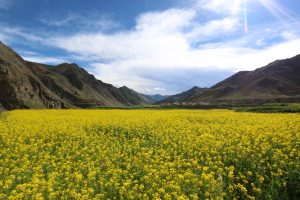
The Pir Panjal Mountain Range, Kullu, Himachal Pradesh. [Image by Jagriti Rumi]
*
What are the mountains saying that doesn’t reach me?
Nothing.
Sun kissed peaks, every hour of every day, shattering time moving in the round clocks, but not the colossal movement, the mountains hide what secret from me?
I’ll measure it, treasure it, capture it once and for all, weigh it well, dissect and familiarise, worship and sell without expectations. Tell me, what is it?
Nothing.
Don’t lie!
I’ll climb and conquer again, I’ll dig and extract again, I’ll create tunnels and pin cables, hang lights and find roads, I’ll race up and down and charge tickets, smart tools are enough to overpower, smartly I move, watch me.
Alas! Ages pass by and you rejoice in stillness while I struggle and fight with no one but myself. In the search of an answer, I have walked past the question always, watch me as I do it again, watch me as I fall.
Watching… Dear mountains, you have watched it all, the movement, steadily you have participated, participated fully… is that it, then? Erosion also doesn’t bother, nor does dying, mixing in dirt, letting the wind take you away in bits.
*
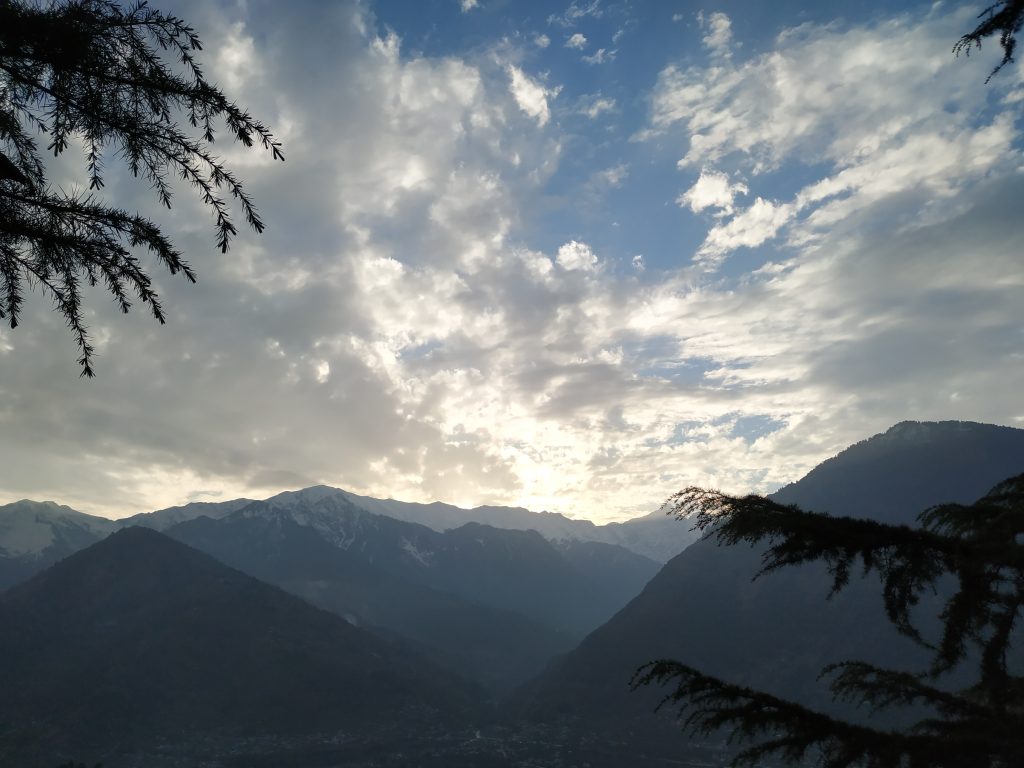
Evening hour, The Pir Panjal Mountain Range. [Image by Jagriti Rumi.]
*
Dear mountains, you don’t speak of love, yet your beauty does. You play with the sky, clouds and lightning.
Not tethered to a window, you see the full picture, and breathe the fresh air, and live… live not as the word ‘live’ explains, dictates, guides, forces, blesses, teaches, restricts, warns, and shouts telling us how to… but simply you do. And for that you need…
The Hindi language is a treasury that stores precious jewels gained from different languages like the ancient Indian languages – Sanskrit, Prakrit, Pali, Apabhramsha and others like Dravidian, Turkish, Farsi, Arabic, Portuguese and English. Gathering from such enriching sources and reforming itself continuously, the Hindi language aimed both for simplicity and profundity, to be an easy guide for its user.
While every form of Hindi literature has only helped in fulfilling this goal, nothing matched the influence of Hindi Poetry. The word Hindi and/ or Hindavi, meaning Indian (the inhabitants of the Indus) in classical Persian, was understood to be the language of India and was taken up by many great poets like the Sufi poet and musician Amir Khusrow (1253 – 1325) for his poems.
Until the printing technique was invented, handwritten books and social gatherings were the only medium to spread literary and cultural ideas; it also meant that very few could afford handwritten books and reading was only for the scholars. Thus, it was poems that reached the masses in the form of songs, stories, folklore, fables and pure poetry; the most famous being the two epic poems of India – The Mahabharata and Ramayana.
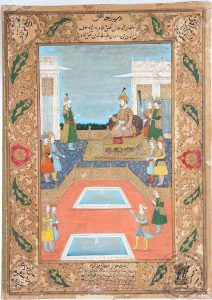
The Hindi poems as well as other literary forms catered to and evolved with the time, changing styles and themes accordingly. With the records available, we find Hindi poems taking a firm position when the poets found patrons in the kings in the 11th to 14th Century, thus, beginning theVir-Gatha Kaal or the AdiKaal. As this period saw many invasions and battles, it influenced Hindi poetry immensely; the poems were mostly about the valiant warriors of the time, adding fictitious encounters to please the King.
With Hindi speaking majority being in the North, the poems of this era also came from this region – Delhi, Kannauj, Ajmer, ranging up to central India. Prithviraj Raso, an epic poem, dedicated to the ruler of Delhi and Ajmer, Prithviraj Chauhan, by his court poet, Chand Bardai, is considered to be the most famous work of this period; though not historically reliable, it gives insights into society under a Hindu ruler. The poem celebrates Prithviraj Chauhan as a ruler; the widely known part of the poem being the King’s love life – how he fell for Sanyogita, his enemy’s daughter, who too wanted to marry him as Prithviraj Chauhan’s success wasn’t a secret, and how he barged in with an army on the day of Sanyogita’s sawayamvar and eloped with her. It is majorly because of this epic poem, that even today we see Prithviraj Chauhan’s love story being enacted on different platforms.
Other works by royal poets include Naishdhiya Charitra by Harsha, Khuman Raso by Dalpativijay, Bisaldev Raso by Narpati Nalha and Parmal Raso by Jagnayak, most of these being a lively rendition of battles and their consequences. Unfortunately, many of these poems were destroyed by the army of Muhammad of Ghor, thus, only a few manuscripts are available today.
Other poetic works include devotional works of the Siddhas (belonged to Vajrayana – a Buddhist cult), Nathpanthis (yogis who practised the Hatha yoga) and Jains. Gorakhnath, a Nathpanthi poet, wrote in styles like Doha (couplet) and Chaupai (quartet) and on themes that laid emphasis on moral values and scorned racial favouritism.
In the Deccan region in South India, Dakkhini or Hindavi was used. It flourished under the Delhi Sultanate and later under the Nizams of Hyderabad. The first Deccan poet was Nizami, his most famous poetical work is Panj Ganj (Persian for – Five Treasures).
By the end of the 14th century devotional poems took the centre stage and maintained its hold till the 18thcentury and came to be known astheBhakti Kaal. New verse patterns like Doha, Sortha (Chhand/ verse), Chaupainya (four liners), Shringara Rasa, etc. were added to Hindi poetry styles. Also, fresh dialects like Avadhi, Brij Bhasha and Bundeli gave fervour to these new styles. The main works in Avadhi are Malik Muhammad Jayasi’s Padmavat and Tulsidas’s Ramacharitamanas and in Braj dialect are Tulsidas’s Vinaya Patrika and Surdas’s Sur Sagar.
Kabir, the great mystic poet and saint, is said to use a mixture of many dialects (especially Khaddi Boli) in his poetry and Dohas –
माला फेरत जुग भया, फिरा न मन का फेर, कर का मनका डार दे, मन का मनका फेर।
Translation – Kabir says, you spent your life turning the beads of a rosary, but could not turn/ change your own heart. Leave the rosary, try and change the evil in your heart.
In the Bhakti Kaal, two schools of thought were formed – Nirguna School (the believers of a formless God) and the Saguna school (the worshippers of Vishnu’s incarnations). Known as the Bhakti Movement, both these schools worked to transform the orthodox and biased ways of the society and offered every individual an alternative path to spirituality regardless of one’s caste or gender.
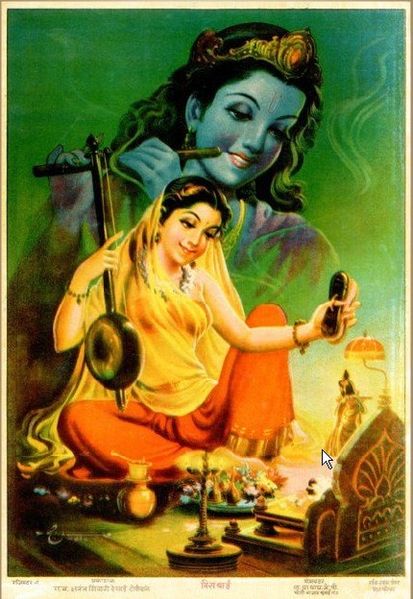
Kabir and Guru Nanak belonged to the Nirguna School; they were truly secular and thus, had a large number of followers irrespective of caste or religion; in fact, Guru Nanak became the founder of a monotheistic religion – Sikhism. The Saguna School was represented by mainly Vaishnava poets like Surdas, Tulsidas, Ramananda, Mira Bai, Tukaram and others.
This was also the age of tremendous integration between the Hindu and the Islamic elements in the Arts with the advent of many Muslim Bhakti poets like Abdul Rahim Khan-I-Khana who was a court poet to Mughal emperor Akbar and was a great devotee of Krishna.
जे गरीबपर हित करैं, हे रहीम बड़ लोग।
कहा सुदामा बापुरो, कृष्ण मिताई जोग॥
Translation – People who work for the poor are great ones. Poor Sudama says that Krishna’s friendship is like worshipping the supreme; Rahim means that one who helps the poor becomes worthy of getting divine love.
The 18th and 20th century saw the unfolding of Riti-Kavya Kaal, the age where the focus shifted from emotions to ‘riti’ which means procedure and to poetic theory and its elements like Alankrit Kaal, Shringar Kaal, Alankaar Kaal, Kala Kaal; euphoria, beauty, heroism and fancy became the major aspects of poetry in this era.
Riti Kaal’s poets lived in the shelter of kings and nobles. The literature written in such an environment was mostly decorative and artistic; thus, the poems also became distant from the general public.
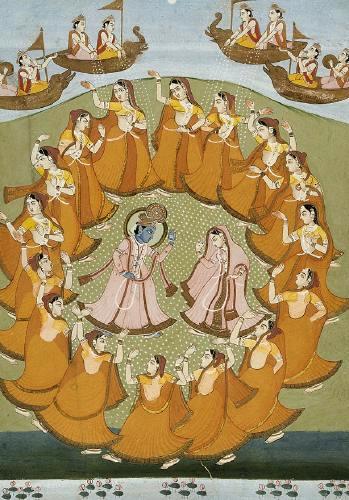
Most of the Riti works were related to Krishna Bhakti, with emphasis mainly on the Rasic (joyful, passionate, playful) and Shringar (physical love and beauty) elements – Krishna Leela, his pranks with the Gopis in Braj, and the description of the physical beauty of Krishna and Radha (Krishna’s consort). The poems of Bihari (Bihari Satsai), Keshavdas (Rasikpriya), Chintamani (Pingal) and Matiram (Rasraj) are well-known works of this period; their poems were a collection of Dohas, dealing with Bhakti (devotion), Neeti (moral policies) and majorly Shringar (physical beauty).
The shift from Sanskrit to a simpler language, even for the royal courts, had long ushered the change that kept on evolving Hindi language and that finally resulted in the formation of Devanagari script in the end; the first two books in Devanagari script, the year 1795, were by Heera Lal, which was a treatise on Ain-i-Akbari and by Rewa Mharaja – a treatise on Kabir.
From the 19th century onwards, started the Adhunik Kaal (modern literature); with the British East India Company establishing a complete hold on the country, Hindi poetry became the catalyst for the chain of revolutions in India. This period is divided into four phases – Bharatendu Yug, Dwivedi Yug, Chhayavad Yug (1918–1937) and the Contemporary Period (1937–present).
Bhartendu Harishchandra(1850-1885), known as the father of modern Hindi literature as well as Hindi theatre, used new media like reports, publications, letters to the editor, translations and literary works to shape public opinion.
Writing under the pen name “Rasa”, Harishchandra represented the agonies of the people, the country’s poverty, dependency, inhuman exploitation, the unrest of the middle class and the urge for the progress of the country. He was an influential Hindu “traditionalist”, using Vaishnava “devotionalism” to define a coherent Hindu religion.
निज भाषा उन्नति अहै, सब उन्नति को मूल। बिन निज भाषा-ज्ञान के, मिटत न हिय को सूल।। विविध कला शिक्षा अमित, ज्ञान अनेक प्रकार। सब देसन से लै करहू, भाषा माहि प्रचार।।
Translation – Progress is made in one’s own language, as it is the foundation of all progress. Without the knowledge of the mother tongue, there is no cure for the pain of the heart.Knowledge is boundless, we should take new ideas from different cultures, but these new ideas should then be proliferated in our own language.
*
The freedom struggle and fighting with the mighty pen. [Image by Ashutosh Kaushik from Pixabay]
Mahavir Prasad Dwivedi (1864 – 1938) was a Hindi writer and editor who played a major role in establishing the modern Hindi language in poetry and broadening the acceptable subjects of Hindi poetry from the traditional ones of religion and romantic love; he encouraged poetry in Hindi dedicated to nationalism and social reform.
One of the most prominent poems of the period was Maithili Sharan Gupt’s Bharat-Bharati, which evokes the past glory of India. Shridhar Prathak’s Bharat-git is another renowned poem of the period.
Chhayavaadi Yugrefers to the era of Neo-romanticism in Hindi literature, particularly Hindi poetry, 1922–1938, and was marked by an upsurge of romantic and humanist content, by a renewed sense of the self and personal expression, visible in the writings of the time.
The great literary figures belonging to this school are known as Chhayavaadi poets –Jaishankar Prasad, Suryakant Tripathi ‘Nirala’, Mahadevi Varma and Sumitranandan Pant. These four representative poets of this era embody the best in Hindi Poetry. A unique feature of this period is the emotional (and sometimes active) attachment of poets with the national freedom struggle, their effort to understand and imbibe the vast spirit of a magnificent ancient culture and their towering genius which grossly overshadowed all the literary ‘talked about’ of next seven decades.
Himadri Tung Shring Se is a patriotic poem by Jaishankar Prasad; though a short one, the poem holds the capability of encouraging a whole generation and is often sung as an anthem –
हिमाद्रि तुंग श्रृंग से प्रबुद्ध शुद्ध भारती — स्वयं प्रभा समुज्ज्वला स्वतंत्रता पुकारती —
अमर्त्य वीरपुत्र हो, दृढ प्रतिज्ञ सोच लो, प्रशस्त पुण्य पंथ है — बढे चलो,बढे चलो
असंख्य कीर्ति-रश्मियाँ , विकीर्ण दिव्य दाह-सी सपूत मातृभूमि के — रुको न शूर साहसी
अराति सैन्य सिंधु में, सुवाड़वाग्नि-से जलो, प्रवीर हो जयी बनो — बढे चलो, बढे चलो !
[Translation – the poem tells every Indian to be as strong as the Himalayas, to be a gallant son of this land and to take a firm vow to continue walking on the path of virtue (i.e. to continue serving the country). Endless glories await the ones who are patriotic. Not to stop, but to burn like pure fire, to keep on walking ahead until you achieve your goal.]
The other prominent poets who also used Chayavaadi elements in their poetry include names like Ramdhari Singh ‘Dinkar’, Harivansh Rai Bachchan, Makhanlal Chaturvedi and Pandit Narendra Sharma.
After India’s independence, the core socio-economic, political and cultural aspect went through a whirlpool of changes and so did the Modern Hindi literature. It entered Pragativaad (progressivist-socialist), Prayogavaad (experimentalist) tendencies culminating in new poetry and further labels like contemporary poetry and reflective poetry.
Some of the famous poets of the Contemporary Period include – Bhawani Prasad Mishra (Buni Hui Rassi), Gulab Khandelwal (Usha, Alokvritt), Kedarnath Singh (Akaal Mein Saras), Nagarjun (Bādal kō Ghiratē Dēkhā hai), Sudama Pandey Dhoomil (Sansad se Sarak Tak), Padma Sachdev (Meri Kavita Mere Geet), Dharamvir Bharati (Toota Pahiya), Geet Chaturvedi (Ubhaychar).
A section of poets also wrote for cinema and television; poets became lyricists and screenwriters, moulding this literary form further. Some of the known lyricists are – Anand Bakshi, Shailendra, Saroj Mohini Nayyar, Sahir Ludhianvi, Amrita Pritam, Gulzar, Javed Akhtar, Prasson Joshi, Jaideep Sahni and Irshad Kamil.
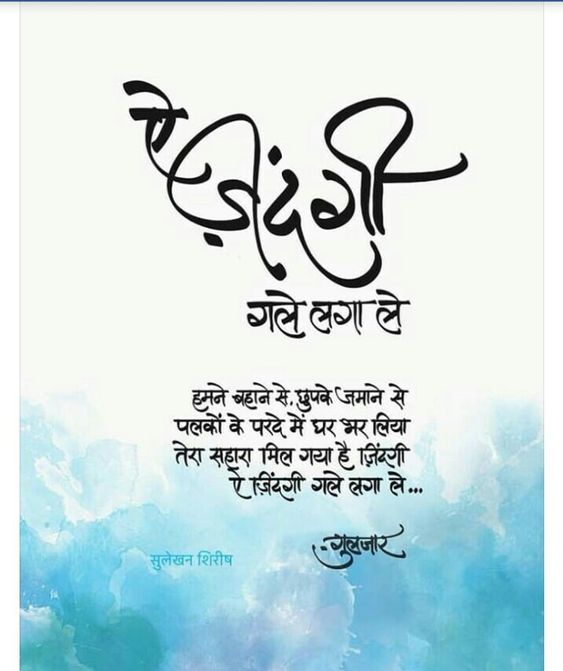
O life, embrace me… a song from the Hindi film Sadma (1983), lyrics by Gulzar. [Source – Pinterest, for English translation click here.]
It has been a long journey for the Hindi Poets, forever evolving along with the Hindi language. The ability of the Hindi language to sanction and its power to absorb new ideas has given Hindi literature a colourful past. While we compartmentalize the eras for it is then easier to approach the bulk of literature produced, it many times overshadow the individuality of a poet for poets are not of one era, they are of every era.
Poets, by nature of their profession, see what is beyond their times, see what is invisible to others, and this is what makes every honest poem unique. The 21st century Hindi poets, like their ancestors, present an image of the world around, and also give us a peek into a deeper world, the inner world.
I am joy running free/
freely flying, fluttering, soaring in a valley/
Of joy am running free.
Greetings!
A storyteller, following the ancient tradition of cave chroniclers, standing in vrikshasana (the tree pose) on a hill top (it is sunny, but windy), breathing in and out stories (relishing it all, but at times overwhelmed), declares animatedly that she will continue to – tell stories, share rare story gems, and connect with the pacy universe while also keeping the website ad-free.
Big thanks to my readers. Stay tuned!
Also, a humble request to the new subscribers to check the spam folder after subscribing. Silly (but necessary) confirmation emails often land there instead of the bright inboxes. Merci!
Ya-hoy!
Chiming Stories (formerly Home Chimes)
P.S – Supporting a storyteller is good for the world’s health (and undoubtedly, for the storyteller’s health as well). Shower some love by sharing, commenting and subscribing to the Weekly Newsletter.
Gabbeh, the 1996 film, is a simple tale of a gipsy girl, her clan and the way their life goes on. Unfolding beautifully just like an artist painting a canvas, Gabbeh quietly touches the grand questions.
Ranked as one of the greatest British films of all time, The Lavender Hill Mob confides in the audience, letting them see, feel, laugh and think without tickling persuasively with a joke here and a punch-line there.
Godard… Breathless and Alive
A Tribute to Jean-Luc Godard, the Film Philologist who Reinvented Cinema.
Yes fly! For walking on the second track is dull and usual, but dreaming high, high, high requires tools. Tools like the right pair of shoes, a chirpy, gritty soul that eats butter-jam dreams, a soul that drinks milky-milky creams.
Silver cascade shimmering the night sky, music to the waves and surreal beauty to the eyes, the Moon loves the art of discipline.
It may be difficult to believe for the Moon’s splendour defies time, it stupefies the clock, it follows the path of a dreamer, but how could this be possible if the Moon knew not discipline?
In this moment, I am a little bit of this and a little bit of that, I am complete and incomplete, I am pleased and uncertain, I wish for nothing and I know I have to wait.
Because the distance covered reminds me of the hurdles I have crossed and the ones I could not, it reminds me of a throbbing past and a dreamy future and it reminds me of how much time is left.
Meredith and the Green Lake
Illimitable Splendour
A joy so complete without any rise or fall, so free without any time corners, so real without true being false, false being true.