A gentle, love filled spotlight! [Source – Pixabay]
*
That which is now is old and gold, golden, oldie, yet lively, burning energy, fire, light, warmth and love, shining always like a flower in spring.
It is the sun we are talking about. It is the sun we see, it is the sun we breathe, it is the sun we eat and drink.
The sun, that which is now, always now, carves in nature its most delicate presence – from a tiny leaf to a magnanimous mountain, from a roaring river to a dancing dew drop. Dance it does, the sun, rhythmic and magnetic, carving along, letting the rhythm seep within all, making magnets of us all.
That is all, a beautiful movement, matched by nature, calmly, ferociously, fearlessly.
The rise and the fall of all follows this powerful rhythm. And every morning the sun touches and takes us along.
*
Nature’s ready, the sun’s shining… and action! [Source – Pixabay]
Black sky begins to break, fading into a soft white bluishness. All is still, witnessing in each other the daybreak. A gushing of joy silently takes over.
Fresh piercing air, like a giant wave, bathes us in one go. It is everywhere, not word-heavy, yet firmly present. Those who matches its ferocious calmness and coolness, live a long life.
Then a bold crimson red is poured at the rim horizon, complementing the darkness before devouring it fully as the red yawns and stretches into golden orange, sprinkling, spreading throughout, directionless, embracing every nook and cranny warmly.
The dusk sings and sleeps, the dawn rises and sings. And the birds and rivers sing along.
It may appear like an orderly routine, but it is truly a disorderly dance of colours, a splash of melody, fresh and wet, a sweet yet melancholic search at first, but actually a thought-free light oneness.
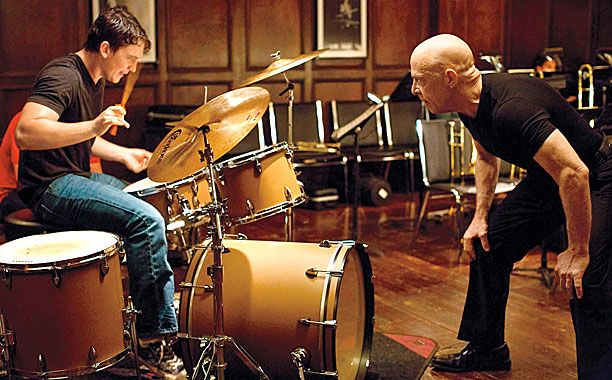
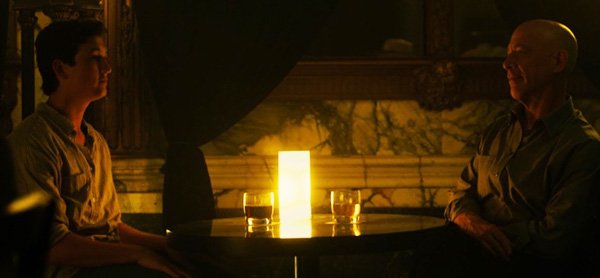
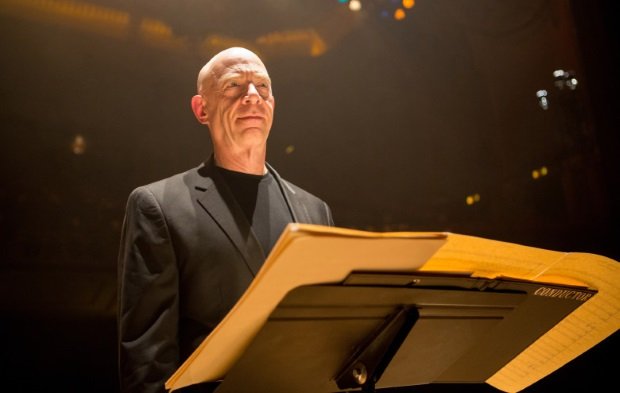
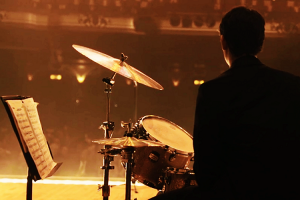
Andrew VS Fletcher; a still from the film Whiplash. [Source – denofgeek.com]
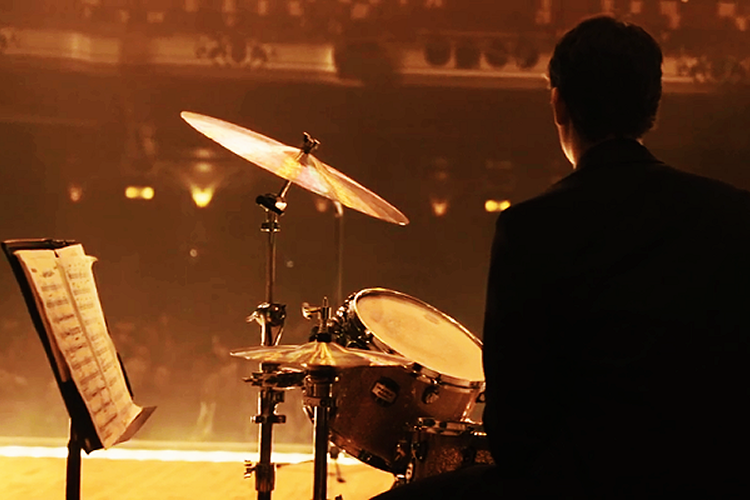
Drums can be heard in a long corridor, with several doors on both sides, that runs till the very end and opens into the last room where the drummer is playing… no, say practising, practising like Buddy Rich, practising until corrected, practising until mastered… this incredibly clever tune, ‘Whiplash’.
Damien Chazelle’s 2014 drama film Whiplash revolves around a passionate jazz drummer Andrew Neiman (played by Miles Teller) and his perfectionist jazz instructor (played by J. K Simmons); one dreams of becoming great, the other demands greatness; one is hopeful, the other is ruthless; when out-of-tune, they clash, when in sync, they dance.
At the still point of the turning world. Neither flesh nor fleshless;
Neither from nor towards; at the still point, there the dance is,
But neither arrest nor movement.
T.S Eliot (Four Quartets: Burnt Norton)
Here, T.S Eliot is talking about that state of mind where not so overwhelmed by it, we make peace with it; Whiplash the film is also about Andrew Neiman’s state of mind which when at peace, allows him to create magic, to dance, to play harmoniously perfect.
Whiplash highlights the protagonist’s internal journey beautifully, in fact, that is all we see – Andrew’s internal dilemmas, struggles, failures and the shining sudden victory. The writer-director very carefully places us within Andrew’s mind.
In the opening scene of the film, Andrew is playing the drums alone in a classroom when he notices that the best teacher in the music school – Terrance Fletcher – is watching him.
*
Andrew – (stops playing) I’m sorry…
Fletcher – No, stay…What’s your name?
Andrew – Andrew Neiman sir.
Fletcher – What year are you?
Andrew – I’m a… first year.
Fletcher – You know who I am.
Andrew – Yes sir.
Fletcher – So you know I’m looking for players.
Andrew – Yes sir.
Fletcher – Then why did you stop playing?
Andrew Neiman starts playing… then stops.
Fletcher – Did I ask you to start playing again?
Andrew – I am sorry…
Fletcher – I asked you why you stopped playing and your version of an answer was to turn into a wind-up monkey…
Andrew Neiman plays… in a few seconds he hears the door shut loudly. Andrew is disappointed… Right then Fletcher comes back inside.
Fletcher – Oopsy Daisy! I forgot my jacket. (Takes his jacket and leaves.)
*
Watch the opening scene here –
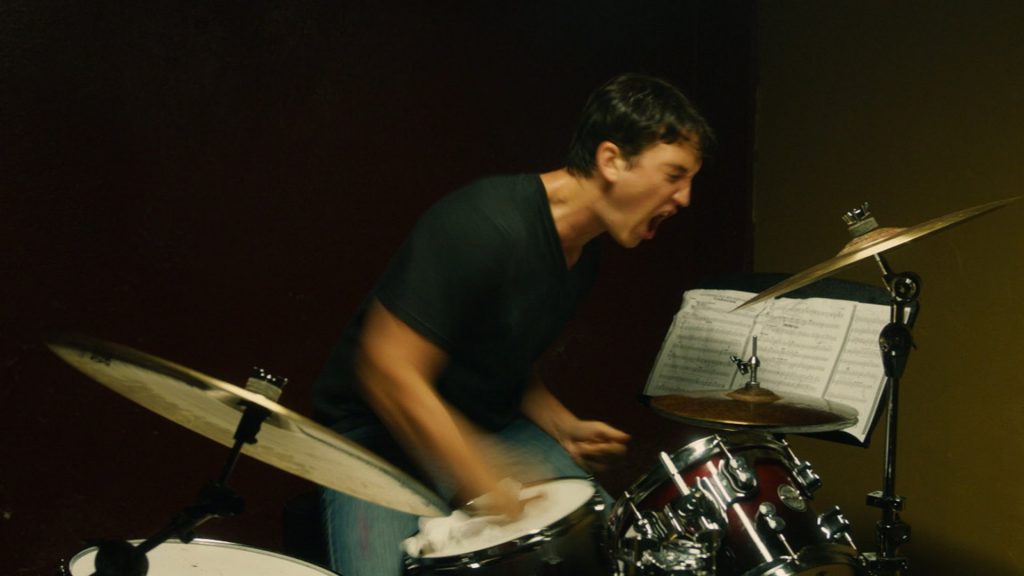
While the Andrew VS Fletcher drama unveils, Fletcher the perfectionist starts to appear more like Andrew’s inner critic especially in those scenes where he is practising; the setting, the lighting, the mood and the music makes it look like a void where either jazz or Fletcher’s authoritative voice plays dominantly.
“Don’t be harsh on yourself”, we often tell this to ourselves as sometimes our inner critic can harm us more than an outsider. The antagonist, Fletcher, is equally harsh and critical; a student when talking about Fletcher’s reputation mentions how he is known for making or ending one’ career.
So who wins here, Fletcher the antagonist or Fletcher, Andrew’s inner critic? The answer is both.
Like a pompous self that often praises itself, there are scenes when Fletcher praises Andrew; initially friendly, Fletcher encourages him to play well and tells him how Jo Jonesthrew a cymbal at Charlie Parker’s head, and how that incident made Parker work insanely hard; later on, like a strict-discipline-loving-freak-self, Fletcher, during a practice session, throws a chair at Andrew, warning him not to dare spoil his bands’ image.
Fletcher personifies Andrew’s obsession to be a great drummer – he works hard, accepts Fletcher’s treatment even when he starts to resent him.
The internal journey of the protagonist overpowers the antagonist, but not in a negative way; it only boosts the antagonist’s authority over the protagonist; it feels like another side of Andrew is working hand in gloves with Fletcher.
The secondary characters too reflect the protagonist’s internal journey.
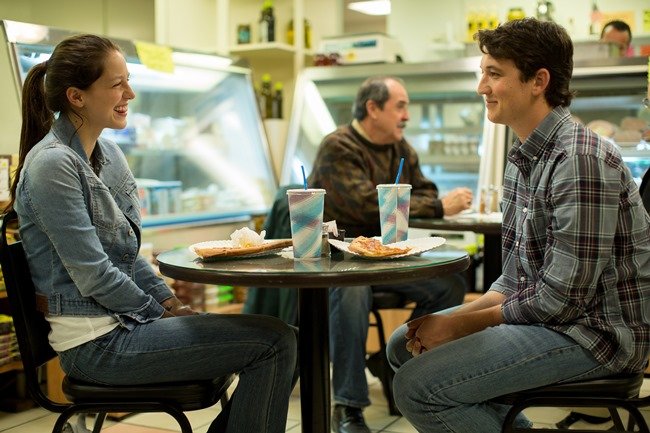
Andrew does not like his father’s mediocre mentality (Fletcher is the one to fan the flames by mentioning it repeatedly that his father is not a true “writer” and that is probably why Andrew’s mom left him), nor does he understands his girlfriend Nicole’s attitude towards life – how is it that she does not know what she wants in life – he loathes mediocrity and it is evident from his behaviour.
In a scene where Andrew, his dad and some guests are having dinner, an argument breaks out where his father, talking about the musician Charlie Parker says –
“Andrew’s Father (Jim) – Dying broke and drunk and full of heroin at the age of 34 is not exactly my idea of success.
Andrew Neiman – I’d rather die drunk, broke at 34 and have people at a dinner table talk about me than live to be rich and sober at 90 and nobody remember who I was.”
*
Watch the dinner scene here –
Even though the secondary characters’ role is nominal, yet this does not weaken the story.
They do have a voice of their own though we do not hear it clearly and that is because the protagonist is not ready to accept their version of the life. Andrew’s obsession does not leave any choice for them but to only listen to him as the core of the film is about this very obsession; the subdued self of these secondary characters, thus, appears to be their actual state.
Andrew is obsessed with the thought of becoming the next great drummer so much so that he refuses to value the external life which consequently starts to fall apart – he has arguments with his father, he also breaks up with Nicole – and this then affects his internal life; he practices day in and out, but one single mistake and Fletcher replaces him with another drummer.
Unable to thread the needle, Andrew first gets irritated with himself for not working hard enough and later on with Fletcher whom he literally attacks.
The result is that he is dismissed from the music school (the best in the country); devastated, he agrees with his dad and secretly files a complaint against Fletcher.
When awakened in the external world, Andrew internally goes into a hiatus. The setting shifts from the dark rooms to brighter ones and to open places.
The story approaches the climax and the internal journey, after the short hiatus, takes over once again. Climax scenes are about Andrew meeting Fletcher, who has been expelled from the music school and is now forming a freelance jazz band; he offers Andrew a position.
Now the internal journey resumes from the same point of tension where Andrew had left it – Fletcher hates Andrew and tells him that he knows it was he who framed him, but reveals it on the stage, just a few seconds before the performance, leaving Andrew utterly shocked.
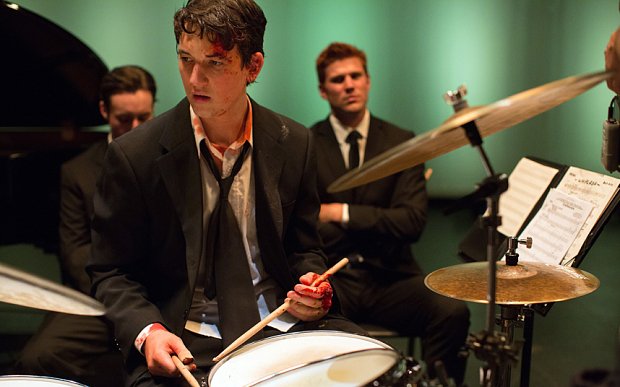
Andrew is defeated by the antagonist, he plays the drums foolishly and finally gets up and goes backstage where his dad waits for him feeling sorry; but because Fletcher is not just an antagonist but also Andrew’s inner self, his obsession – it pulls Andrew back on the stage. He starts playing the drums not worrying about Fletcher’s threats.
*
Final performance part 1 and 2, watch here –
*
This transformation in Andrew may appear to be sudden but is not so; this is an internal transformation that forges gradually.
Andrew transforms in this last scene – he overpowers his fears – he plays flawlessly – so much so that Fletcher recognises his genius at this moment and joins him and together they play a fantastic jazz number (Caravan). As Fletcher reflects Andrew’s inner self, he does not object to this transformation in him and accepts Andrew’s victory quite happily.
Drumming passionately, just like he did in the first scene of the film, Andrew’s story comes to a close; this time he just doesn’t play the tune, he lives it.
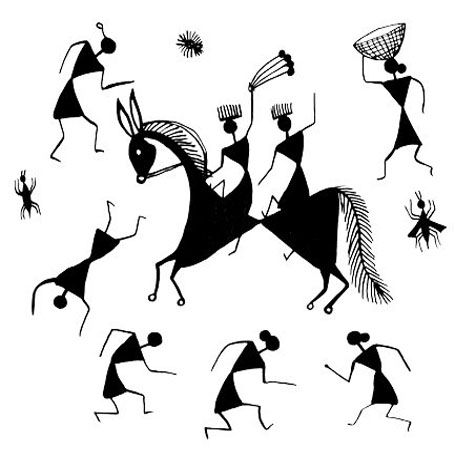
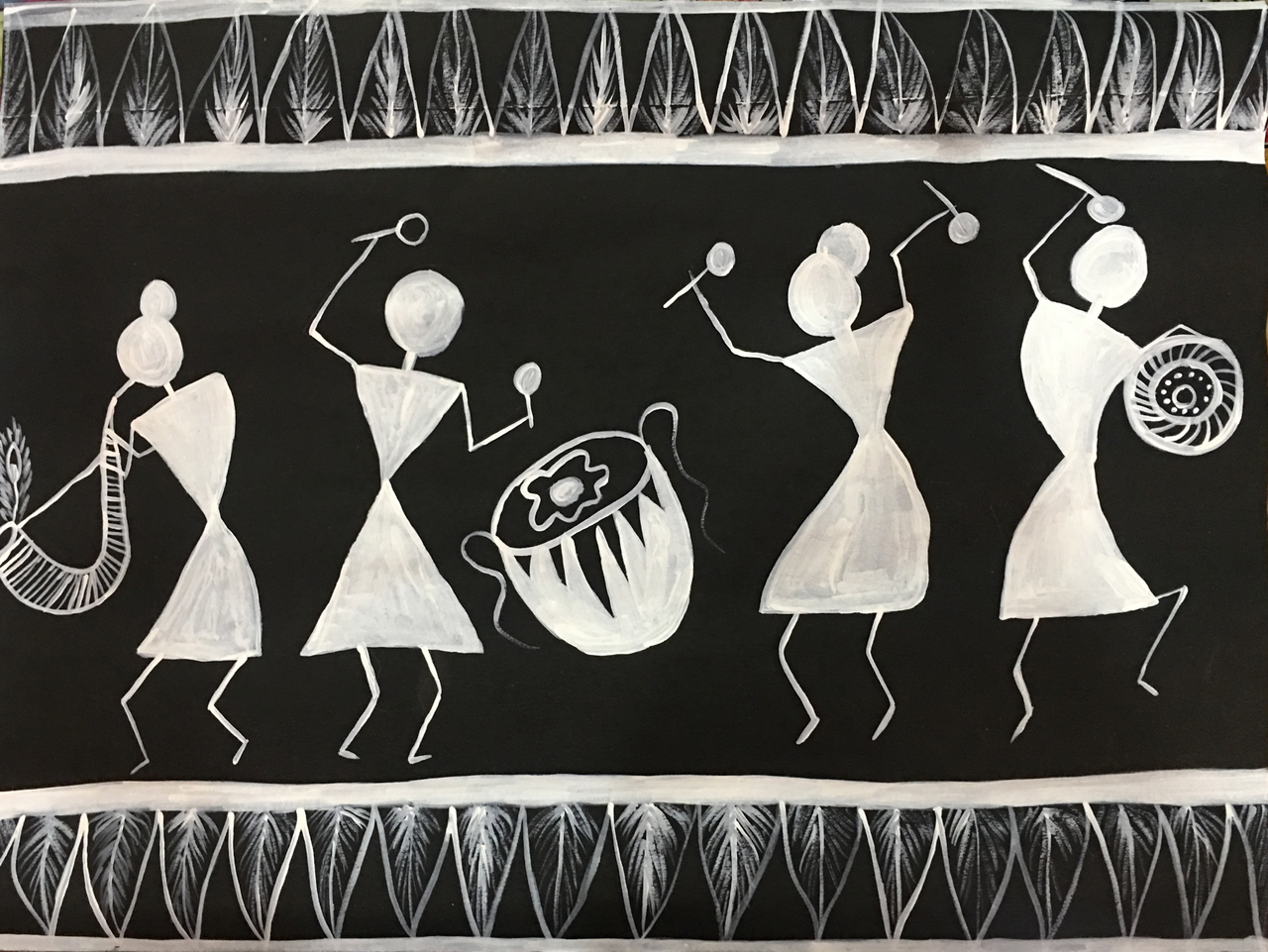
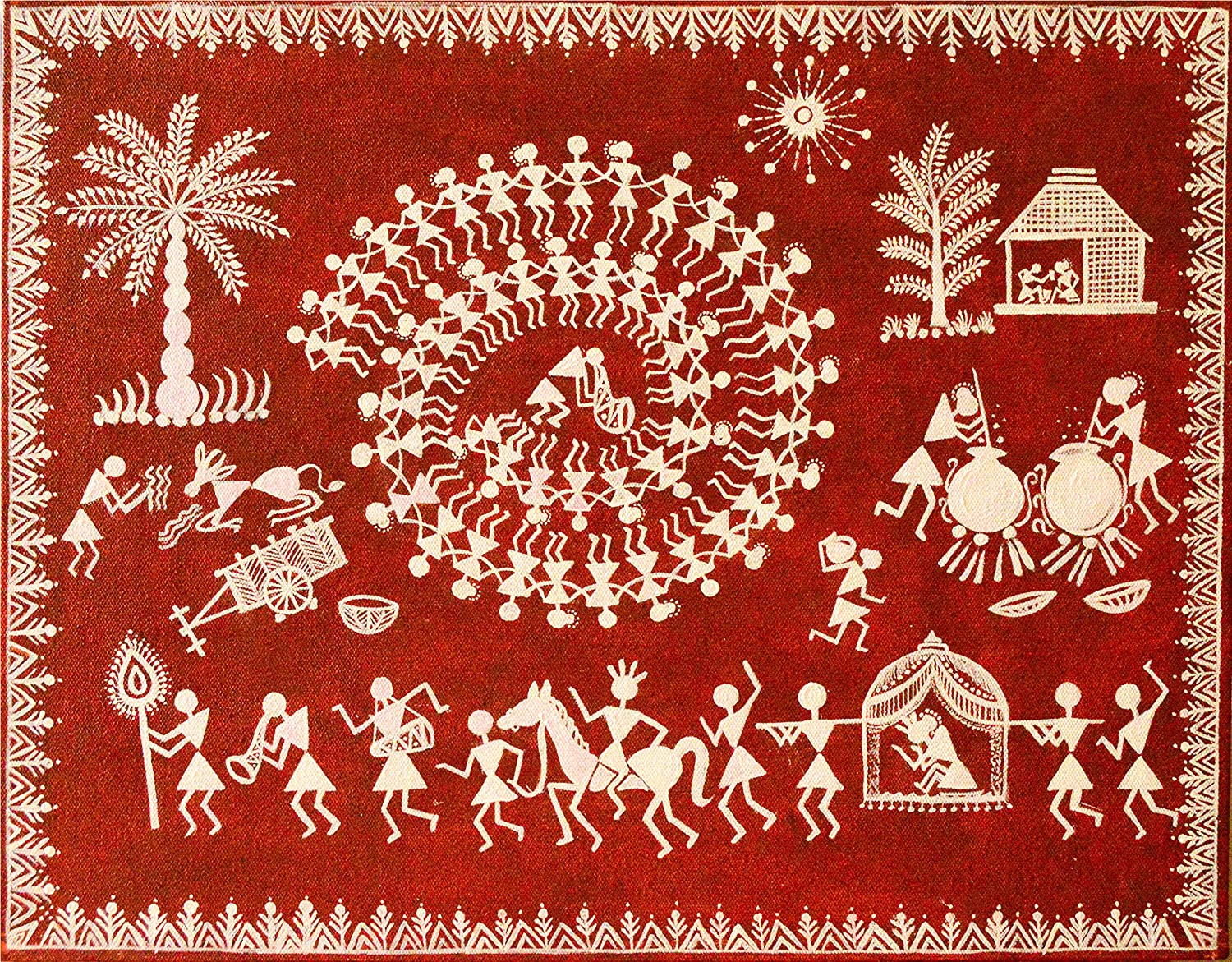
And the Warli drama unfolds… thunderous applause… come and watch the puppets dancing, dancing to the tunes of folktales… look at, but beware, the bewitching dance movements will make you happy and take you to the wonderland. And you will dream the original dream. Ohhs and aahs and wows and wahs!
Hey puppeteer, where are the strings and where are you hiding? “I am over here”, said the puppeteer and added, “the strings are invisible and so am I, my dear.”
But the puppets were ready, the performance had started. Shush! Shush! The tale of a King heard never before by some.
“Where is my horse, commander?”, asked the portly King. “Sir, you’re riding it”, gasped the tired commander. The horse neighed and snorted.
Meanwhile his subjects went through their daily chores of dancing little more…
Tenzin Achi’s magical! [Image by Tri Le from Pixabay]
*
Tenzin Achi for the first time was going to reveal the hidden treasure of her green old trunk. She knew we children were very keen and would do anything just to even take a peek inside. Especially after Lo’s encounter with an alien creature who guaranteed Lo that he came via the green old trunk.
When Tenzin Achi was approached to confirm this incident, she had just laughed and said, “Ask the green trunk.” No one ever dared to do that of course.
And today Tenzin Achi has agreed, astonishingly, at such a low bid – one chocolate and five cookies – to introduce us to the mysterious dwelling of the trunk.
“Oi… not letting you see inside”, said Tenzin Achi, “I’ll show you all myself, stay back.” I knew it, we are duped… she wouldn’t have let our curiosity die so soon.
But you know what, we all were prepared for it. Tenzin Achi is famous as canny granny.
Behold, she announced and took out a pair of silver tinned wire loops, which a talking dragon gifted her. Then came out five stones – red, indigo, yellow, green and white; she collected them from a planet she visited, named Kakuraa, and were extremely precious stones.
Seeing none of us impressed, she challenged us to visit planet Kakuraa and ask anyone about the credibility of the stones. Silence prevailed and when someone yawned, Tenzin Achi was seen sweating.
She then took out a tiny copper ball. Now this appealed to all us children and Tenzin Achi beamed.
There was a message engraved on the tiny copper ball and “only a warrior could read it” said Tenzin Achi. Dramatically she said some words in her dialect and we understood zilch of it, but we stayed hooked.
We all gasped in chorus as she twisted and opened the tiny copper ball. She first made all of us swear with our hands on our heart, “don’t pass my secret to anyone – I am a warrior of Phui clan.” We obeyed as we were clueless and eager to know what’s hidden in the copper ball.
Veil uncovered, Tenzin Achi took out a small piece of crumpled cloth from the copper ball, red-white pattern knitted, it looked extremely ordinary, but the story attached to it wasn’t.
She told us about Zumuh (that piece of cloth had a name). When the Kakuraa dynasty decided to leave for another world, they left on this planet, bits of Zumuh. These magical pieces worked as a Genie and it wasn’t easy to get one. Only who believed in magic and showed reverence to the Kakuraa dynasty could find it. Umpteenth times, she said proudly, Zumuh had helped her. Magic lived in her heart and pocket.
Pazo then said harshly, ‘Tenzin Achi is trying to fool us… this Zumuh can’t be used even as a hanky.’ Laughter filled Tenzin Achi’s old wooden room, but she stayed quiet, like me and Lo. Were there tears in her eyes?
I don’t know, but I stood up and told everyone “I too have a Zumuh, it saved my life thrice from a dog.”
They knew it was true, Kaalu had bitten Pazo and even Lo, but I managed to save my pajamas and myself somehow. I took out a round and rotted plastic but alive key ring from my pocket; with red-white pattern on it, I presented my Zumuh.
I told them that a great traveller gave it to me near the hilltop and then vanished. Surprisingly Lo agreed, adding that he too saw that great traveller vanish into thin air.
Pazo asked me to demonstrate the power of the Zumuh. Tenzin Achi had something else in her eyes then – spark of magic.
I stretched my hand, holding the key-ring and shouted, ‘Zumuh show your power, I believe in you.’
‘I also believe in you O Zumuh, let the magic shine’, said Tenzin Achi as she copied me and looked towards the roof, as if it was magical and we could see through it. Lo, who was without any Zumuh, also got up and screeched ‘I also believe.’
Many eyes were glued to the Zumuh and I was actually hoping for a magical blast.
Thunder!!!!!! We all literally jumped on our places. The sky replied and immediately it started to snow.
Although it was winter, it wasn’t the time of the year for the clouds to shower snow. I yelped, ‘Thank you Zumuh.’
We all rock and rolled and tried to copy Tenzin Achi’s funny one-leg-in-the-air-dance, singing ‘zumuh, kakuraa, o zumuh, kakuraa!!’
*
Lightning dances along with them. [Source – Pixabay]
I am joy running free/
freely flying, fluttering, soaring in a valley/
Of joy am running free.
Greetings!
A storyteller, following the ancient tradition of cave chroniclers, standing in vrikshasana (the tree pose) on a hill top (it is sunny, but windy), breathing in and out stories (relishing it all, but at times overwhelmed), declares animatedly that she will continue to – tell stories, share rare story gems, and connect with the pacy universe while also keeping the website ad-free.
Big thanks to my readers. Stay tuned!
Also, a humble request to the new subscribers to check the spam folder after subscribing. Silly (but necessary) confirmation emails often land there instead of the bright inboxes. Merci!
Ya-hoy!
Chiming Stories (formerly Home Chimes)
P.S – Supporting a storyteller is good for the world’s health (and undoubtedly, for the storyteller’s health as well). Shower some love by sharing, commenting and subscribing to the Weekly Newsletter.
Gabbeh, the 1996 film, is a simple tale of a gipsy girl, her clan and the way their life goes on. Unfolding beautifully just like an artist painting a canvas, Gabbeh quietly touches the grand questions.
Ranked as one of the greatest British films of all time, The Lavender Hill Mob confides in the audience, letting them see, feel, laugh and think without tickling persuasively with a joke here and a punch-line there.
Godard… Breathless and Alive
A Tribute to Jean-Luc Godard, the Film Philologist who Reinvented Cinema.
Yes fly! For walking on the second track is dull and usual, but dreaming high, high, high requires tools. Tools like the right pair of shoes, a chirpy, gritty soul that eats butter-jam dreams, a soul that drinks milky-milky creams.
Silver cascade shimmering the night sky, music to the waves and surreal beauty to the eyes, the Moon loves the art of discipline.
It may be difficult to believe for the Moon’s splendour defies time, it stupefies the clock, it follows the path of a dreamer, but how could this be possible if the Moon knew not discipline?
In this moment, I am a little bit of this and a little bit of that, I am complete and incomplete, I am pleased and uncertain, I wish for nothing and I know I have to wait.
Because the distance covered reminds me of the hurdles I have crossed and the ones I could not, it reminds me of a throbbing past and a dreamy future and it reminds me of how much time is left.
Meredith and the Green Lake
Illimitable Splendour
A joy so complete without any rise or fall, so free without any time corners, so real without true being false, false being true.