Life

Meeting a Fool in a Lovely Quaint Place

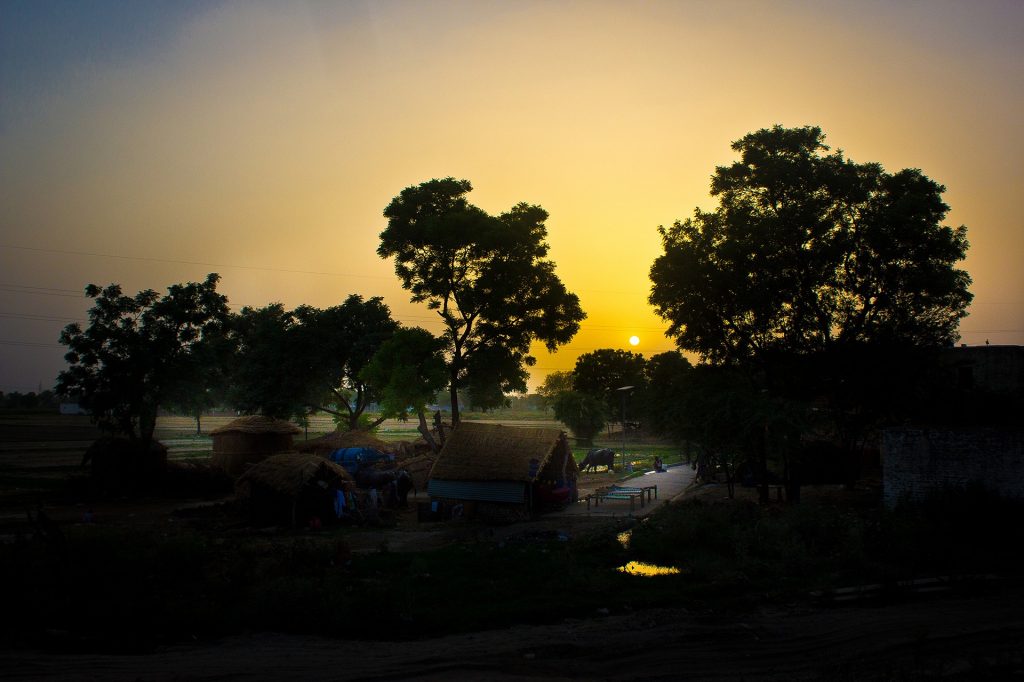
Raga-rich village scene.
Image by siam naulak from Pixabay.

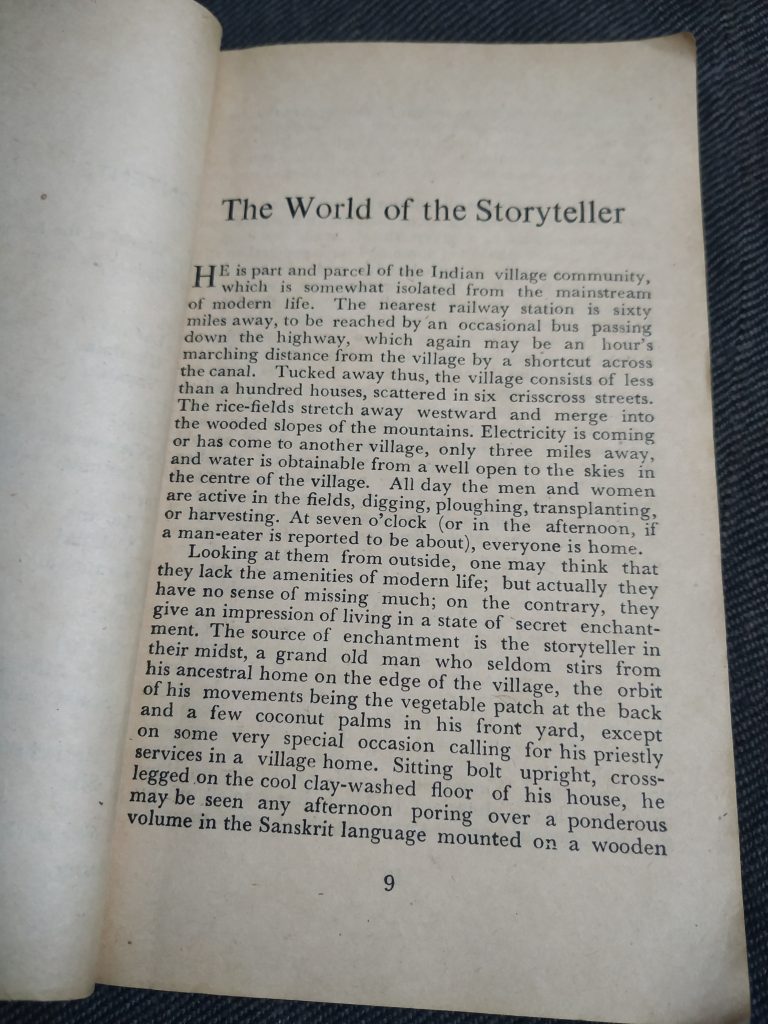
Every language brings a distinctive flavour in the story, making its world unique and familiar at the same time. The world of Hindi stories always comes across as very honest and subtly profound to me.

Just like visiting a beautiful village, coloured green with flora, blue with water-wells and brown with earthen-wares, the Hindi language stories that I have read till now have become this lovely quaint place in my head.

And the people that inhabit this place, interesting characters from all over India, each one has struggled, battled, lived and loved this life truly.

Malkauns, Yaman, Basant bahar, Darbari, Khayal and other such ragas intricately design the wind here.

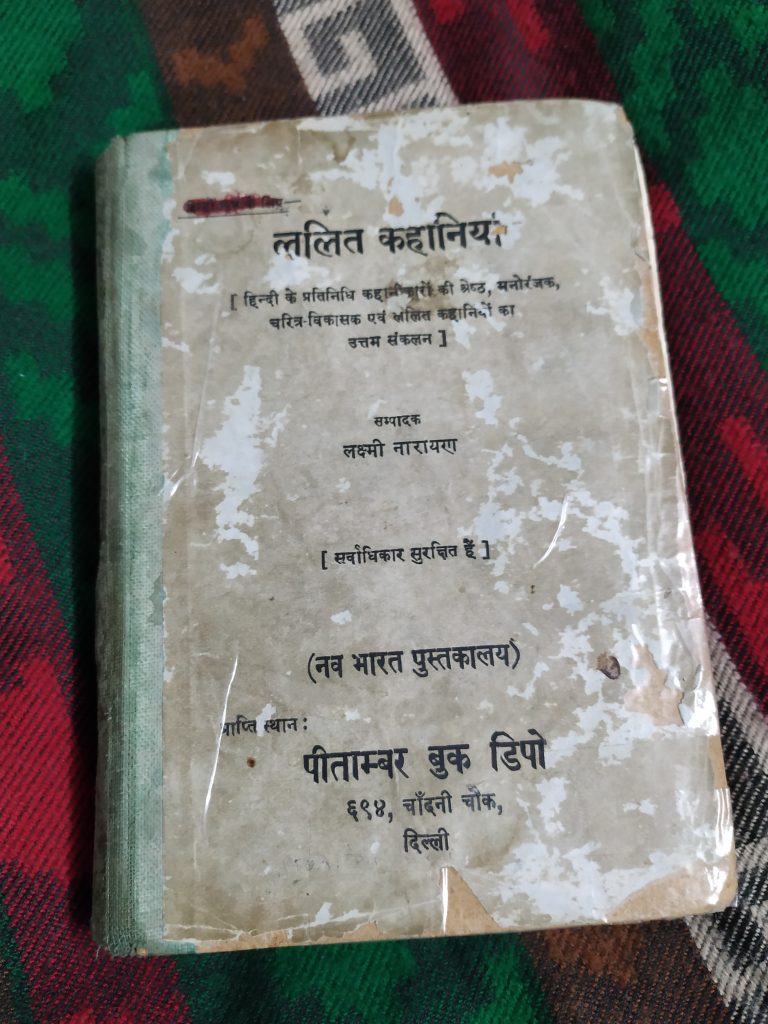
The latest addition to this place of mine is a compilation of short stories of some of the most famous Hindi writers of the early 20th century. Munshi Premchand, Jaishankar Prasad, Subhadra Kumari Chauhan, Upendranath ‘Ashk’ and Bhisham Sahani are the greats whom I have met before via their other stories and poems.

The others – Vishambharnath Sharma ‘Koshik’, Sudarshan, Vishnu Prabhakar, Kamla Chaudhary, Jainendra Kumar Jain, Chandragupt Vidyaalankar, Acharya Chatursen Shastri, Yashpal, ‘Agyaya’ and Siyaramsharan Gupt are the ones whom I had the opportunity to meet for the first time.

What a world they have all created – sensitive, soulful, revolutionary and inspiring.

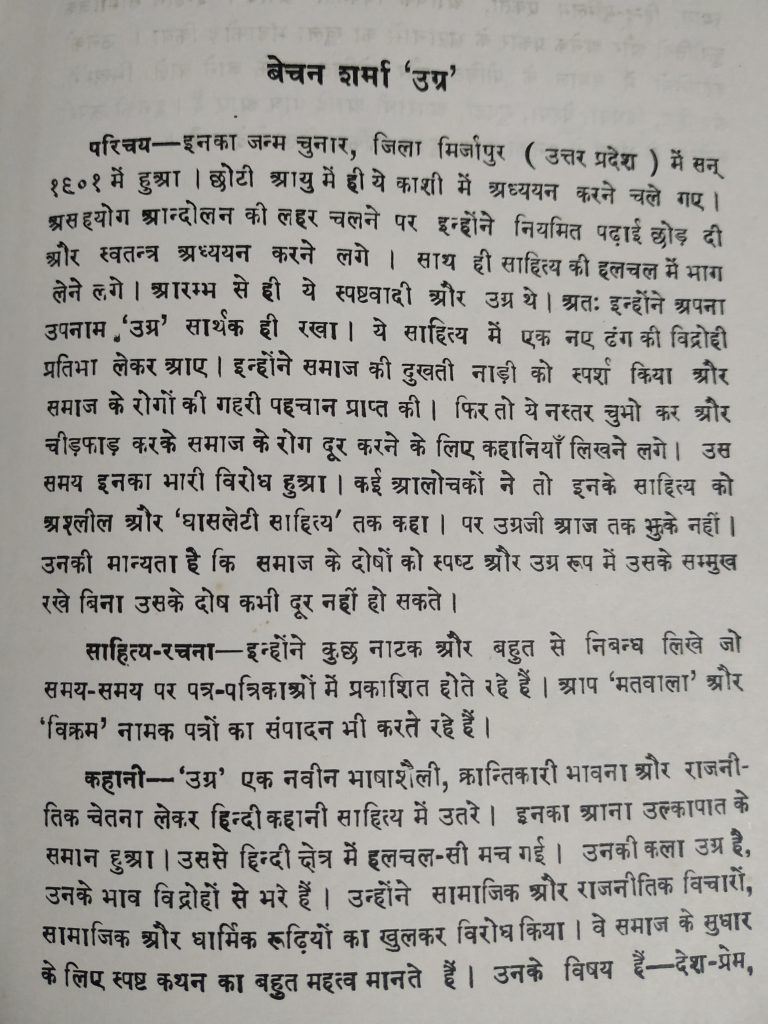
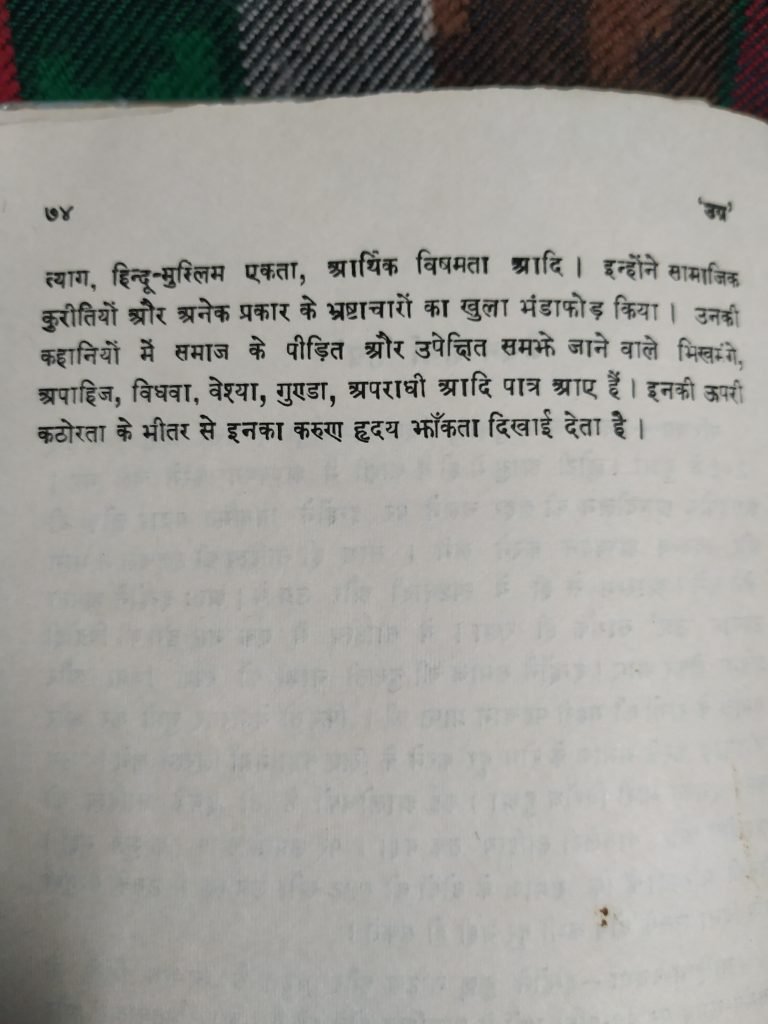
Here, the writer whose short story I would like to share with you is Pandya Bechan Sharma ‘Ugra’.

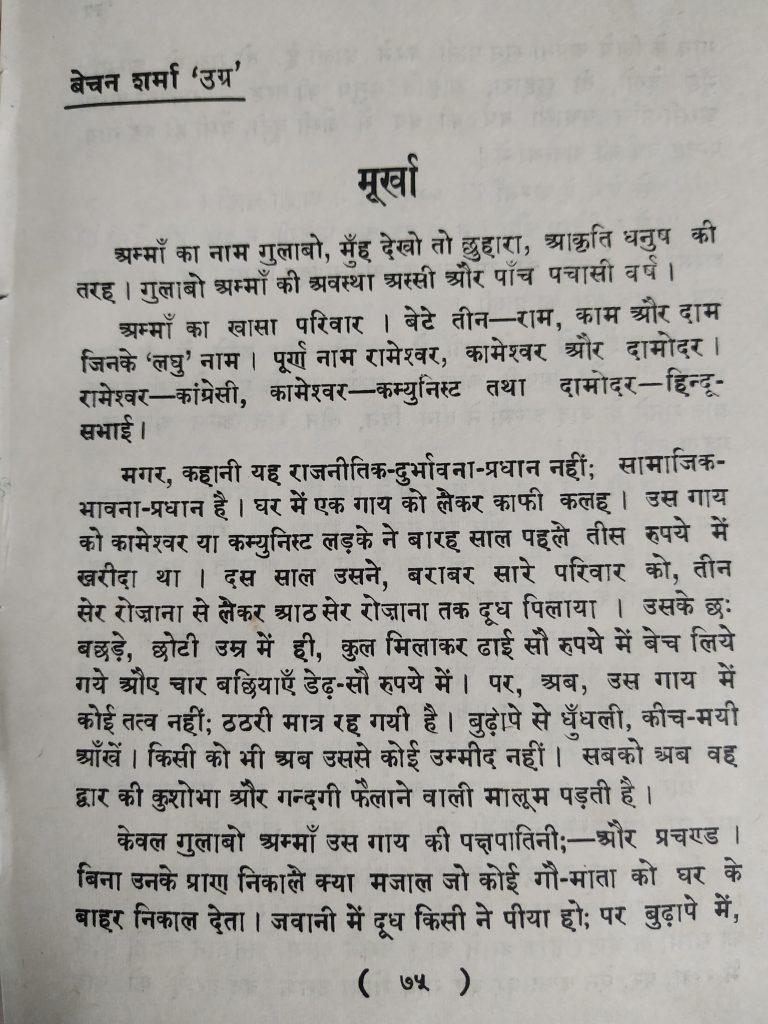
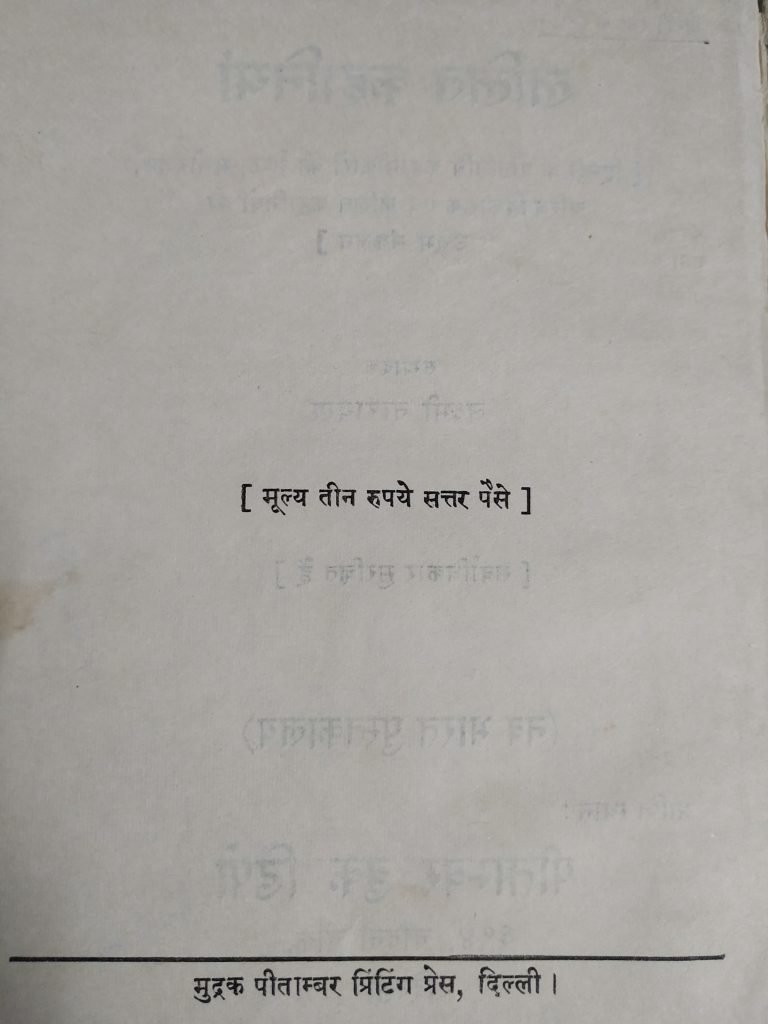
The title of his short story is मूर्खा Murkha (A Fool).

अम्माँ का नाम गुलाबो, मुँह देखो तो छुहारा, आकृति धनुष की तरह।  गुलाबो अम्माँ की अवस्था अस्सी और पाँच पचासी वर्ष।

[Translation – “Amma (Granny) is called Gulabo (Rosy), face, a dried date, shape, bent like a bow. Gulabo Amma is eighty and five, eighty-five years old.”]

Bang!! That is how the story begins, gripping instantly, visually powerful; it reminds you of an old lady, one who is waiting on the roadside to cross the road or sell vegetables or beg.

The author’s famous penname ‘Ugra’ describes his writing aptly. Ugra means fiery, radical, hot-blooded.

He writes economically, hitting the right chord without any delay, not shying away from the truth, not allowing the eyes to escape, making a satirist out of you before you can realise it and run.


The Story Gist

Amma is old and so is the cow that had for past ten years served the family without a complaint; she gave six-litre milk every day, six of her bull calves and four heifer calves were sold for a good amount.

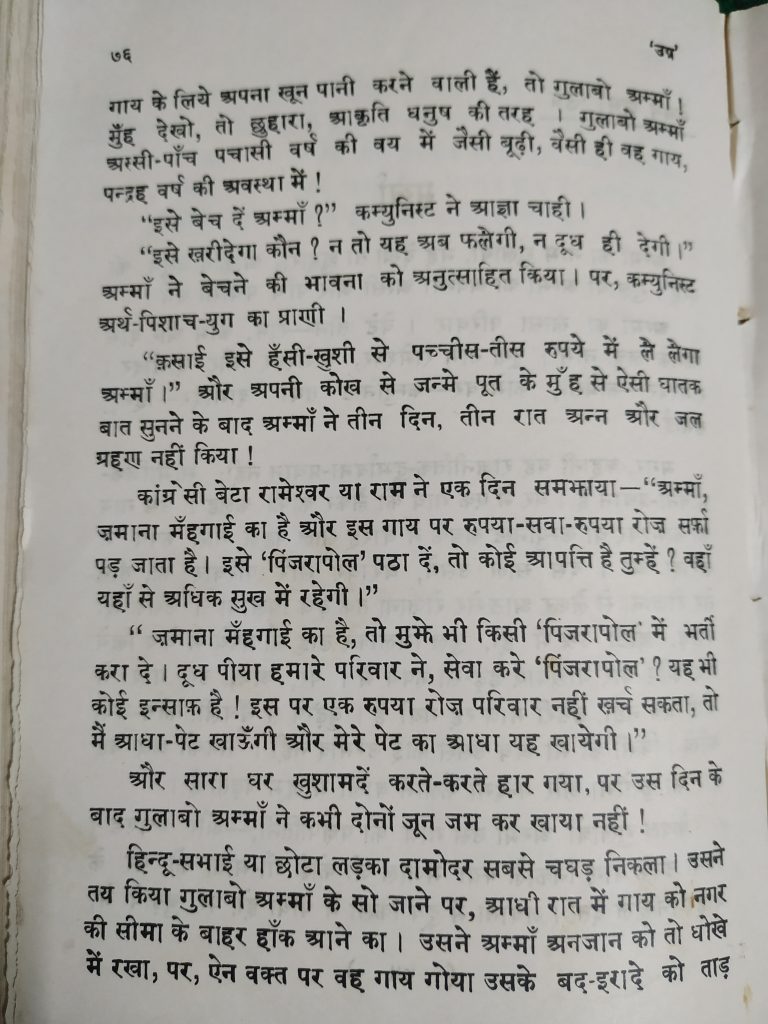
But now old, she is of no good and thus, Amma’s three darling sons want to get rid of the cow.

Though politically inversely aligned – eldest one a congressman, other a communist and the youngest follows a Hindu party – they have unanimously made up their mind to either sell the cow to the butcher or send it to a cow-shelter or simply abandon her.

But Amma has become a heavy hurdle for them; she is horrified to even hear of such a suggestion about her beloved cow.

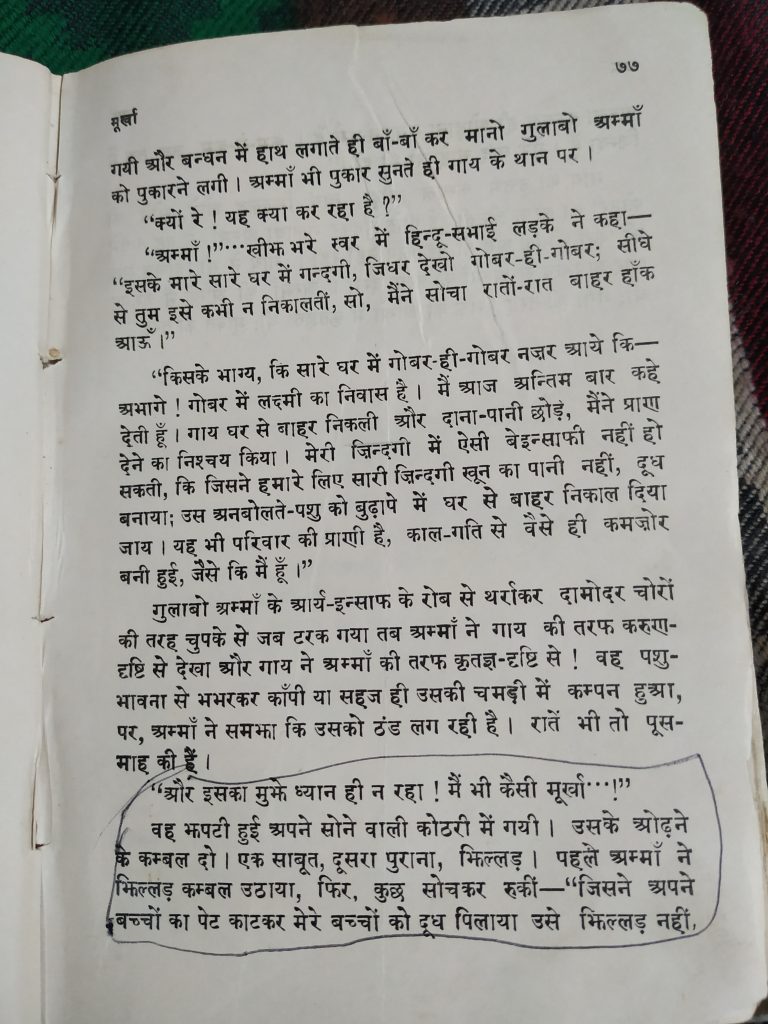
She argues with them, starts eating one meal a day so that they still buy the cow’s feed and saves her one wintry night when the youngest son tries to drag the cow away.

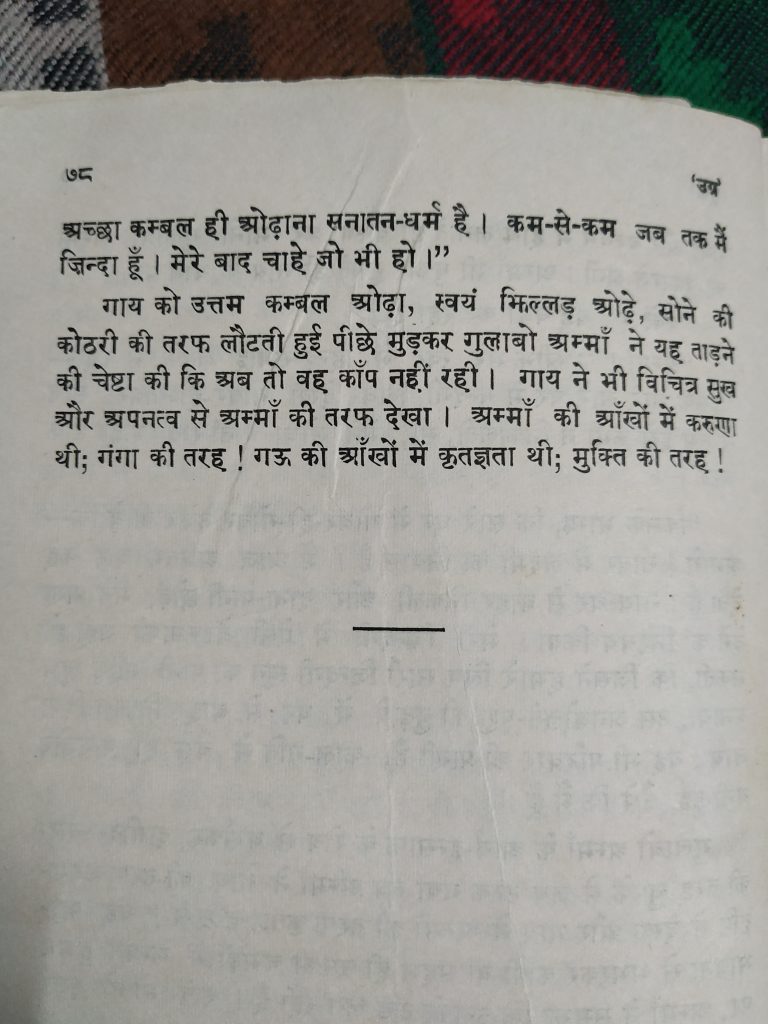
Amma lovingly apologises to her; seeing the cow shivering in the cold weather, she runs to her room, calling herself a fool.

Out of the two blankets that she owned, she picks her own warmer one, goes to the cowshed and happily covers the cow with it.

*

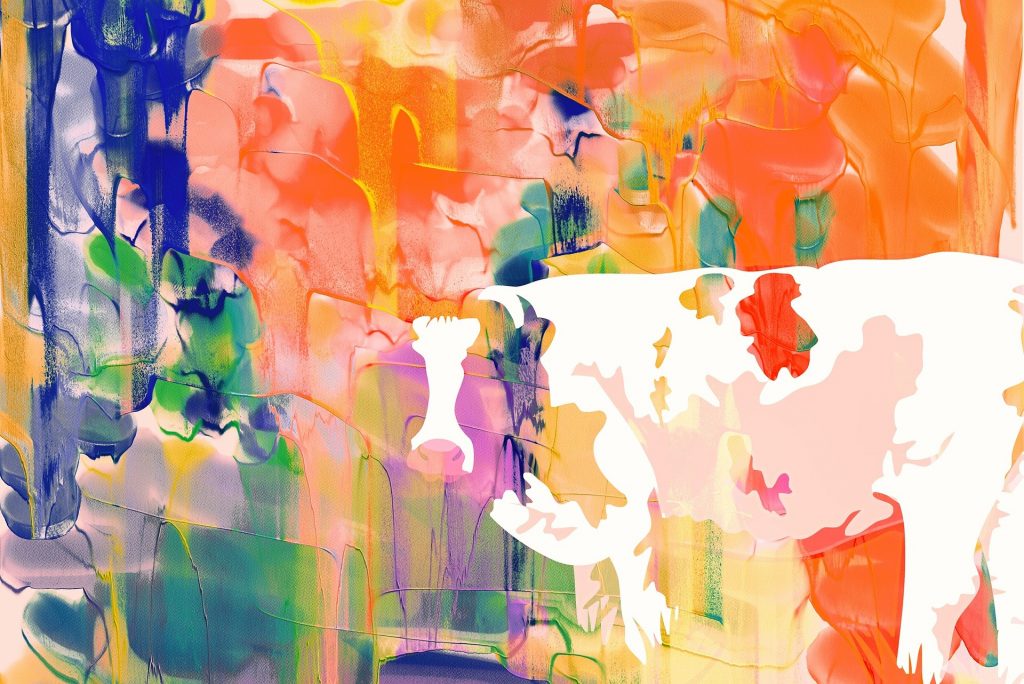
Gulabo Amma’s dear cow.
Image by Prawny from Pixabay.

A two page long short story, dramatically strong, dipped in sweet sarcasm, this piece raises questions unabashedly. What path have you chosen dear one? What rules do you abide by?

You weigh matters miserly, falsely, egotistically and complain of the imbalance. Why do you refuse to learn and almost always forget?

Ugra’s मूर्खा Murkha (A Fool) boldly strengthens the storyteller’s voice; still pertinent to the present times, one looks around to see what all has changed and what has not.

The lovely quaint place is kaleidoscopic in nature; I often see through its lens to pick up the different shades and rhythms of life.


Weekly Newsletter

A weekly dose of stories! Get the posts from the Chiming Stories in your inbox and read it when you can. Subscribe now, it is free!

This field is required.

Recent Posts

Journeying Backwards and Forwards and Sideways

Review

 “The time scheme of the epic is somewhat puzzling to us who are habituated to a mere horizontal sequence of events. Valmiki composed (Ramayana) as if he had a past tale to tell, and yet it was broadcast to the world by Kusa and Lava, the sons of Rama, who heard it directly from the author.

One has to set aside all one’s habitual notions of movement and get used to a narrative going backwards and forwards and sideways.

When we take into consideration the fact that a king ruled for sixty thousand or more years, enjoying an appropriate longevity, it seems quite feasible that the character whose past or middle period is being written about continues to live and turns up to have a word with the historian.”

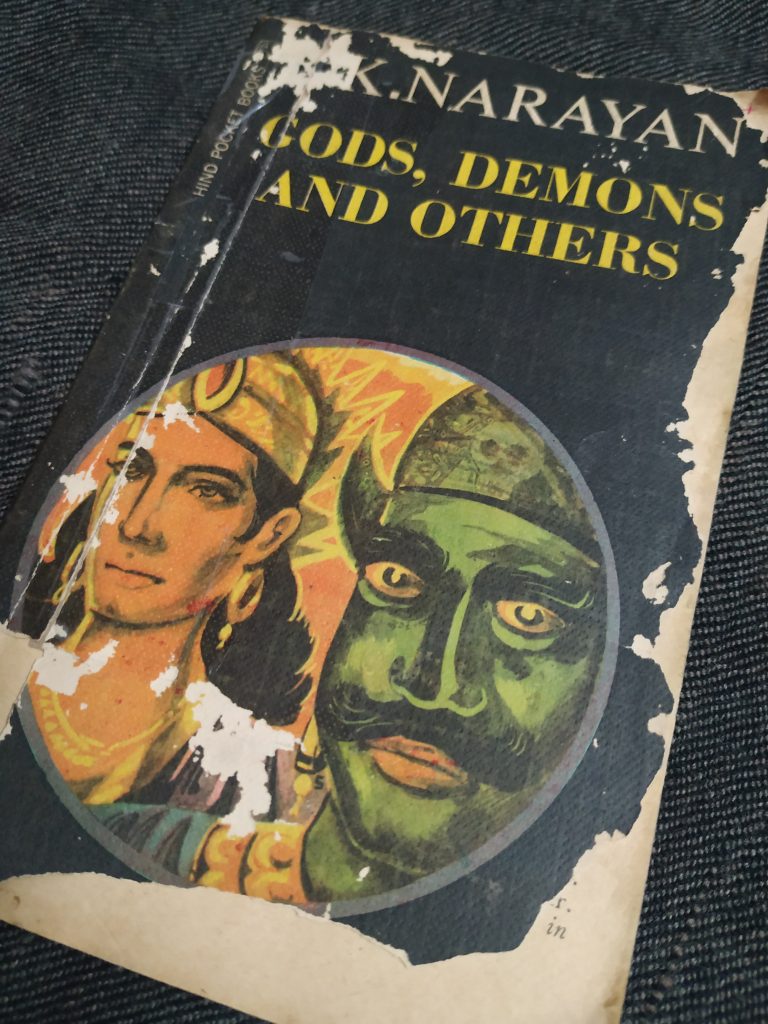
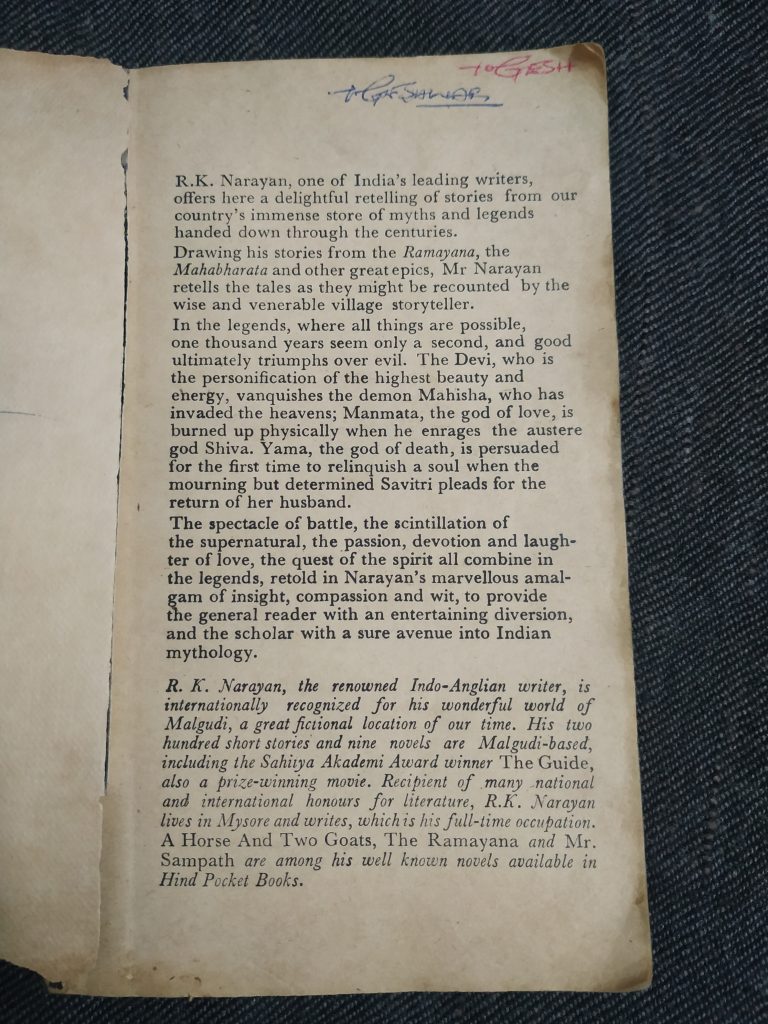
An excerpt from R.K Narayan’s book ‘Gods, Demons and Others’, Chapter 3, Valmiki

*

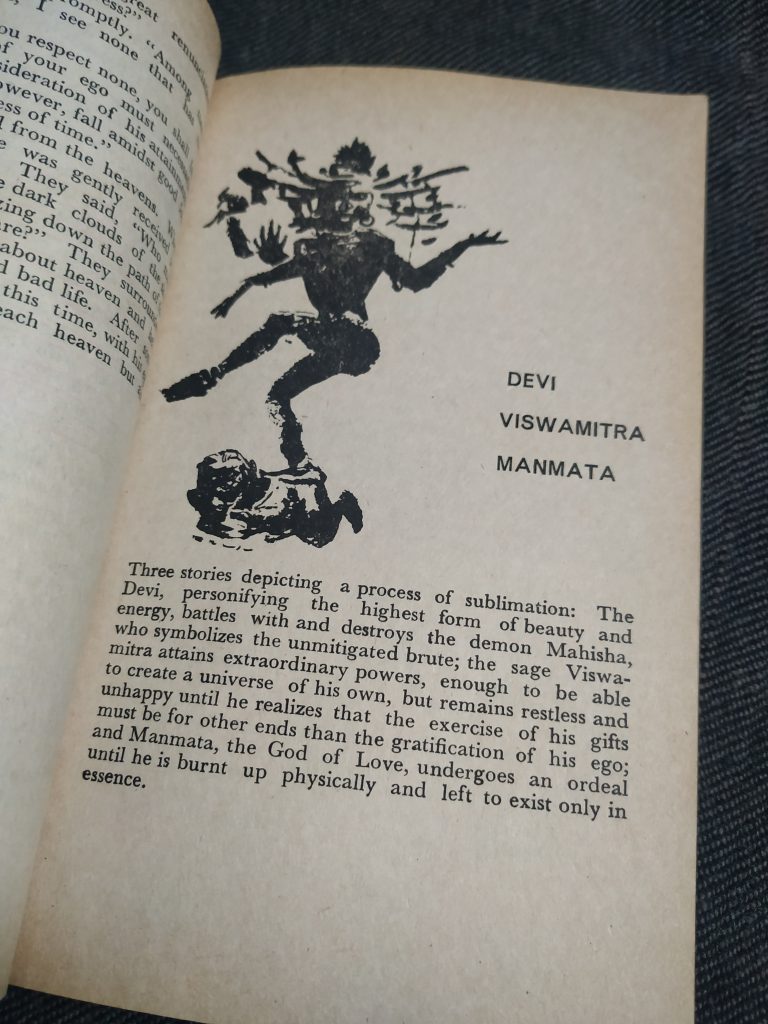
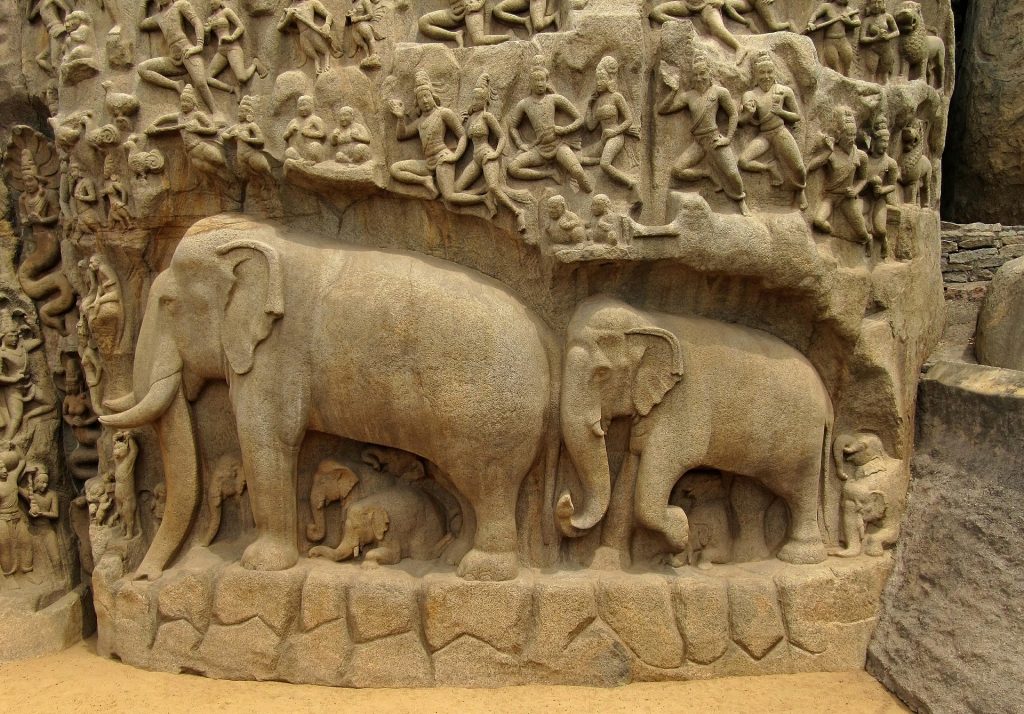
The myths, the legends, the folktales, the epic victories and defeats, the deaths and rebirths simplify the reality of the extraordinary spirit – confounded and weakened often by tribulations or lulled by indolence – that resides within us all.

These stories take myriad routes, journeying from the world of Gods to the world of Demons, concluding on a high and happy note, introducing one to the game of life, entrusting with the secrets to winning.

Every emotion makes an appearance here; ego clashes until it shatters to accept change; Gods create obstacles almost breaking one’s spirit, but blesses the resilient one in the end with immortality and splendour.

These unfathomable, and at times a bit ridiculous, tales are the means to measure the unfathomable, ridiculous reality we live in; these tales, the bases of our culture, our rituals and an amalgamation of past societies, lead us.

*

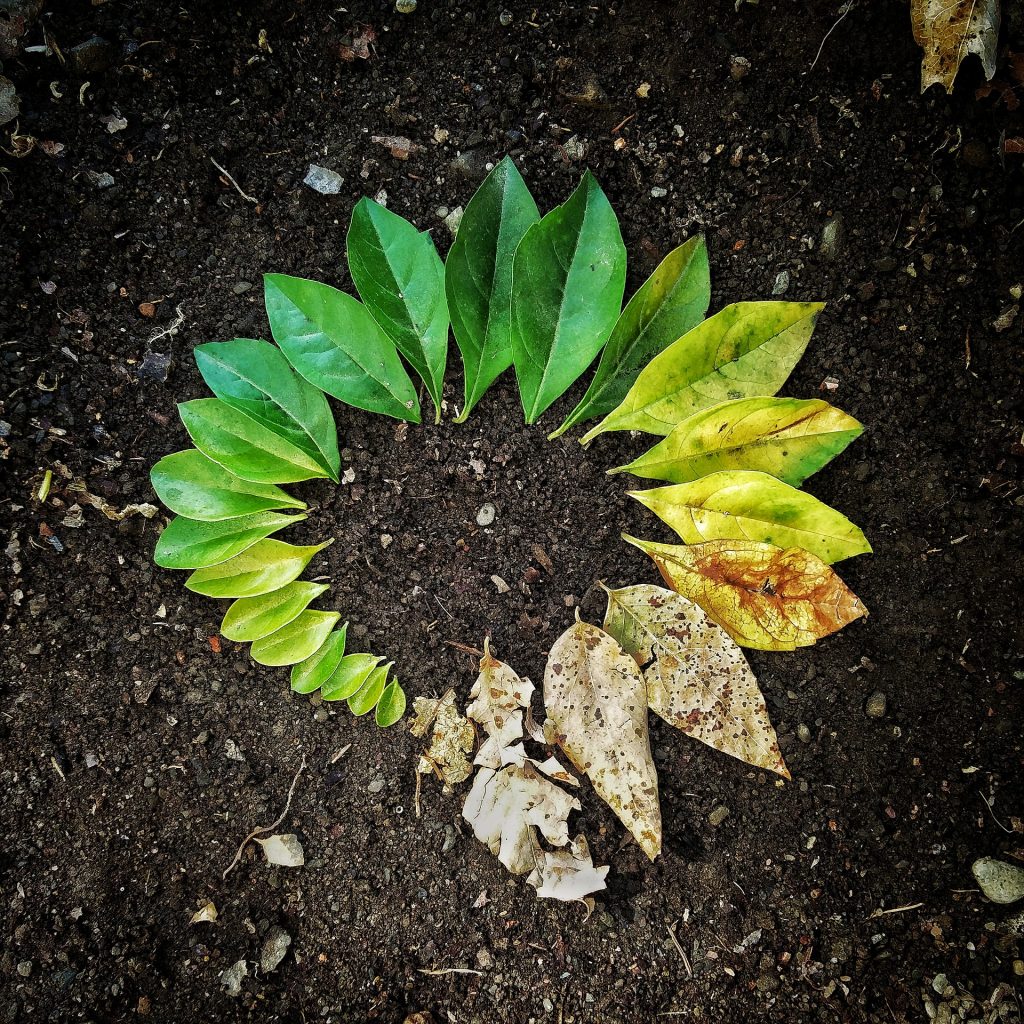
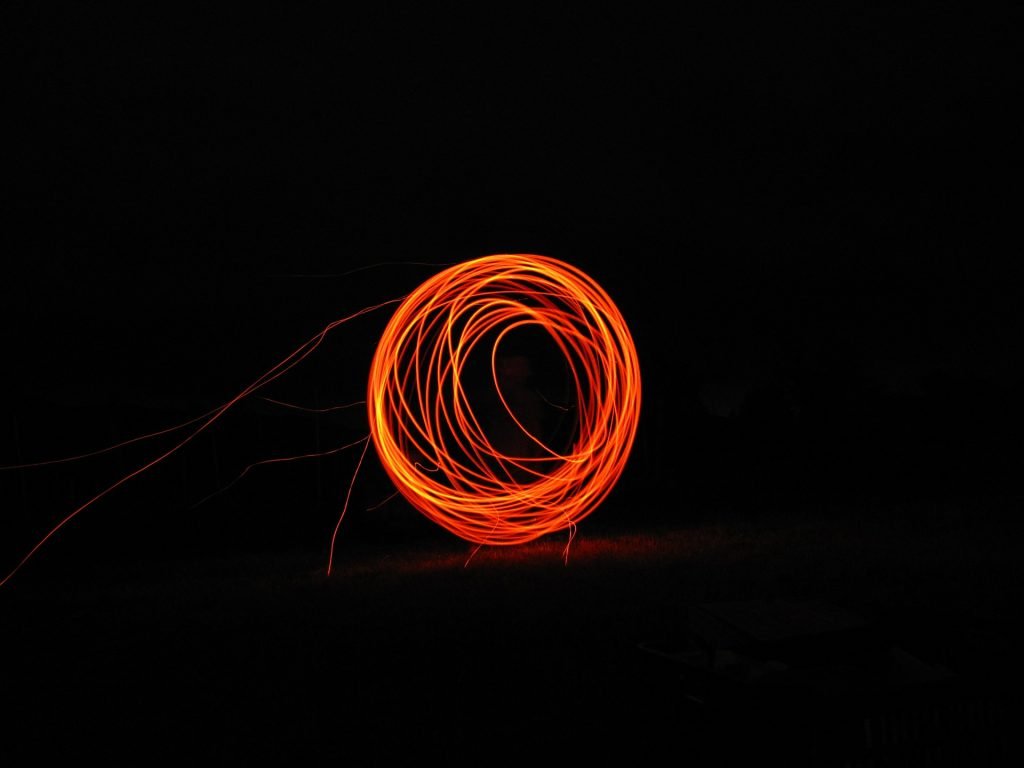
Journeying through the circle of life.
[Image from Pixabay.]

Splendidly well-adjusted to change, it accepts deletions, additions, revisions without much hullaballoo. It revels in various versions and shades read throughout the country. Same gods-goddesses, demons, sages, avatars… often playing different roles, but embarking on similar journeys.

Written in a playful and ambitious tone these valued legends, retold by storytellers in every generation, are our inheritance; it holds a secret for every tenacious individual.

It is not a particular theme that is the moral of the story here but the journey, the journey with its endless possibilities and absurdities, twists crafted by the capricious fate and the supremacy of time that gives us insight into our understanding of life.

And such has been the role of the myths, legends and epics and of course, the storytellers and it continues.


The renowned author R. K Narayan’s Gods, Demons and Others is an interesting and engaging read, one that opens the gate to Indian mythology for one and all.


Weekly Newsletter

A weekly dose of stories! Get the posts from the Chiming Stories in your inbox and read it when you can. Subscribe now, it is free!

This field is required.

Recent Posts

God is a Belief

Satchitananda – Existence Consciousness Bliss.
Image by Bessi from Pixabay.

Eyes that can see the divine,

Ears that hear the bliss,

Voices that utter a name –

Allah, Vishnu, Shiva, Jesus

Waheguru, Parvardigar, Eloah, HaShem –

Witness the power that is the same.

*

God is one, present everywhere

Like an atom unseen in the air;

Passion for the one supreme,

Searching the pious dream

That every holy book reveals,

Takes us to the ultimate truth and peace.

*

Fine belief this is that we all

Have nurtured since antiquity,

For it unifies, it gives us courage;

Its cursed crusades aren’t a lie

And yet the belief only multiplies;

A believer sees the God inside.

*

Omnipotent, Omnipresent, Omniscient

This glorious idea assures the devotee

Of support, of comfort, of being home;

In this grand scheme you’re not alone,

A guide walks by your side – this belief

Shows the seeker an end they hope.

*

The mystical power, that is the universe, listens, call it life force, dark matter or god, it depends on what you believe…
Image by Leonardo Valente from Pixabay.

Weekly Newsletter

A weekly dose of stories! Get the posts from the Chiming Stories in your inbox and read it when you can. Subscribe now, it is free!

This field is required.

Recent Posts


The Multitasking Voice Within Learns On The Go

Poem

A machine mind never stops thinking.
[Image by Gerd Altmann from Pixabay]

*

The multitasking voice within learns on the go

It hisses, swishes, cheers, jeers and almost always forgets the flow

Running slowly when you are fast and rushing when you are slow

A confidant and conspirator, the voice knows

Nothing that you do not know

*

Castles, ruins, castles, ruins

Building, hiding, building, hiding

Honest and unashamed of it all

When needed, clever as a Jackal

The voice, so ambitious, hates to stall

*

But it obstructs, this friend and foe of ours

Especially if one is not aware of the day or the hour

When quiet, it forgives and forgets

The voice then patiently sits and looks

At us and smiles, waiting for us to calmly turn and smile

*

The multitasking voice within learns on the go

One life, one journey, one flow!

*

“To gain your own voice, forget about having it heard. Become a saint of your own province and your own consciousness.”

Allen Ginsberg

*


Weekly Newsletter

A weekly dose of stories! Get the posts from the Chiming Stories in your inbox and read it when you can. Subscribe now, it is free!

This field is required.

Recent Posts

The Circle Game, Joni Mitchell, You and Me

Coverage
Image by Siamlian Ngaihte from Pixabay

The Circle Game

Yesterday a child came out to wonder

Caught a dragonfly inside a jar

Fearful when the sky was full of thunder

And tearful at the falling of a star

And the seasons they go round and round

And the painted ponies go up and down

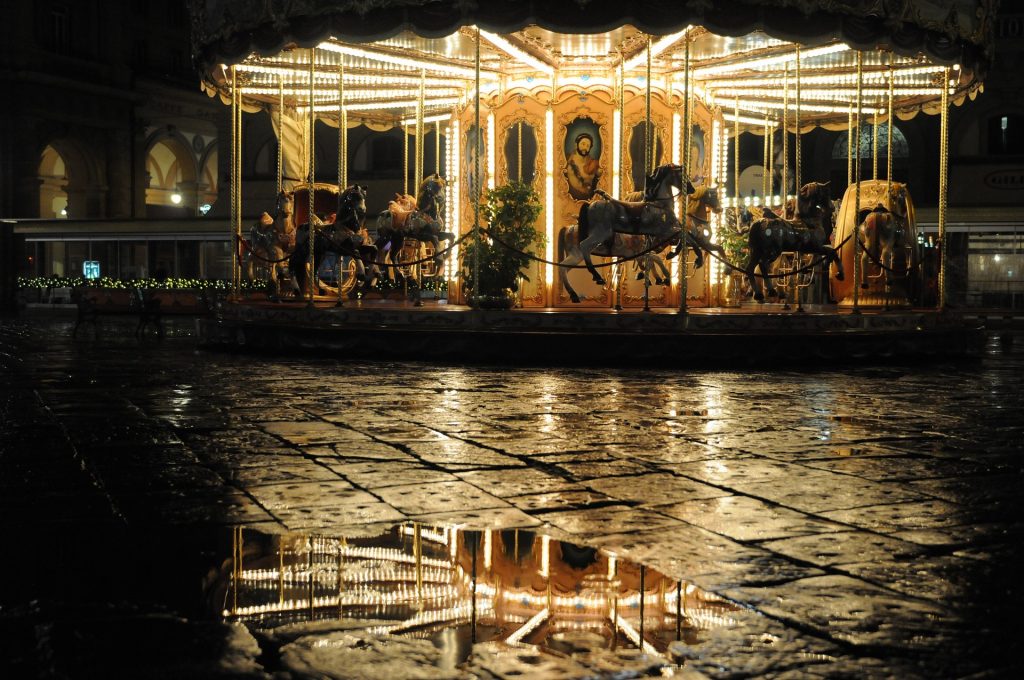
We’re captive on the carousel of time

We can’t return we can only look behind

From where we came

And go round and round and round

In the circle game

– by Joni Mitchell

*

The everlasting, all-embracing, ebullient circle game is manoeuvring it all so well. The cycle of life, the movement of planets and the galaxies, the journey of every individual swivel beautifully.

Joni Mitchel’s beautiful song The Circle Game from the album Ladies of the Canyon is a reminder, I feel, to remember the rules of the circle game.

A game in which we all are participating no matter how forgetful we may be.

*

The Circle Game, play well dear me. Image from Pixabay.

Stories have been working from the very beginning to prove the presence of the circle game; every story that was ever written or will be written becomes complete when it forms a neat circle in the end.

It could be a linear circle with a clear structure like Macbeth or it could be a non-linear circle that nicely and freely waits for its completion in the viewers’ mind just like this song.

“So the years spin by and now the boy is twenty/ Though his dreams have lost some grandeur coming true/ There’ll be new dreams, maybe better dreams and plenty/ Before the last revolving year is through…”

The Boy is twenty and life has happened; he has fallen but is hopeful, and there is still time for him to give it another try. And life goes on.

*

The Ouroboros Symbol. [Image from Pixabay]

The circling theory of Karma – what goes around comes around, the circling nature of the first law of the thermodynamics – energy can neither be created nor destroyed, it only changes its form, the ancient Ouroboros symbol, for instance, all voice the same truth.

“We’re captive on the carousel of time/ We can’t return, we can only look behind/ From where we came/ And go round and round and round/ In the circle game.”

“Captive on the carousel of time”, curtly this hits the mind and the realisation disturbs languidly.

Like a plaything, like “the painted ponies”, we are tied to the carousel of time. And the only way forward is to continue.

*

Time to carousel! [Image from Pixabay]

Moving forward not painted-pony-like, limited and not captive every individual in this life holds the power to swivel in her fashion.

Destined and yet free, that is how life is, by nature paradoxical.

We are not separate, we are one with the circle game, we add to its beauty as we go round and round and together we are moving towards its never-ending end.

*

Listen to this track now –

(Read the lyrics here.)


Weekly Newsletter

A weekly dose of stories! Get the posts from the Chiming Stories in your inbox and read it when you can. Subscribe now, it is free!

This field is required.

Recent Posts


Basho’s Haiku Pond

Let us go back in time, a few centuries back, in the mid-17th century to be precise, to meet Matsuo Basho and embark on a journey to the interiors of Japan.

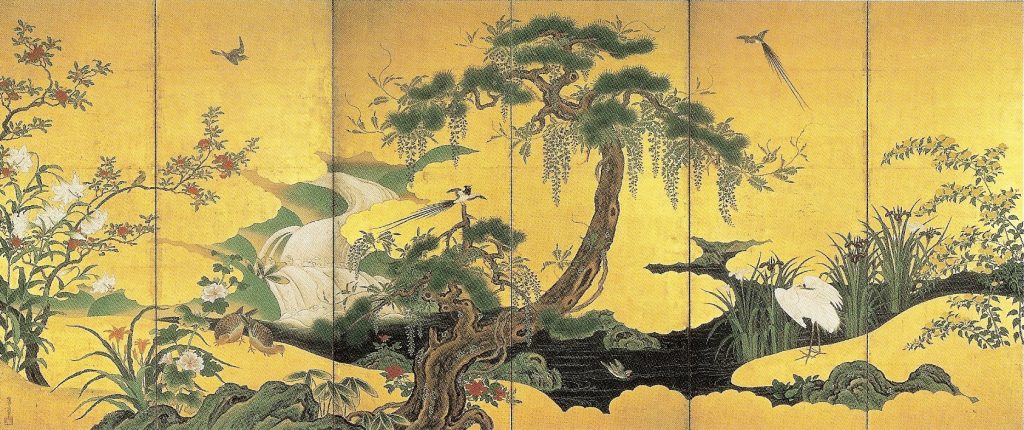
Folding screen with Birds and Flowers of Spring and Summer by Kano Eino, a 17th Century Edo Period Japanese painter. [Source – Wikipedia]

A fabulous poet, known for his Haikus, Basho wanders giving voice to nature, the moon, the earth, the seasons, the rain, the monkey, the dragonfly, the cicada, and everything that he observes.

He paints his dreams in the air; the flora breathes that air and blooms like a dream.

Let us go and learn this art from the master himself.

Falling sick on a journey

My dream goes wandering

Over a field of dried grass.

Basho has fallen sick, he is old now, this haiku is usually considered as his farewell poem, but our journey has just started, we need to travel back a few more years.

Portrait of Bashō by Hokusai, late 18th century. [Source – Wikipedia Commons]

Teeth sensitive to the sand

In salad greens–

I’m getting old.

He is funny, oh, but let us keep going back in time for we need to learn the art of painting dreams in the air, remember. Stay focused!

The rough sea

Stretching out towards Sado

The Milky Way.

Sado is a city in Japan’s Sado Island and Basho travels there to witness the vast sea and the endless sky.

Look, at night the sea becomes a mirror for our galaxy.

Seasons come and go, each one is beautifully recorded in Japanese poetry; Kigo, the representation of and the reference to the seasons is still a part of Japanese culture and literature.

Different seasons, different Bashos

First winter rain-

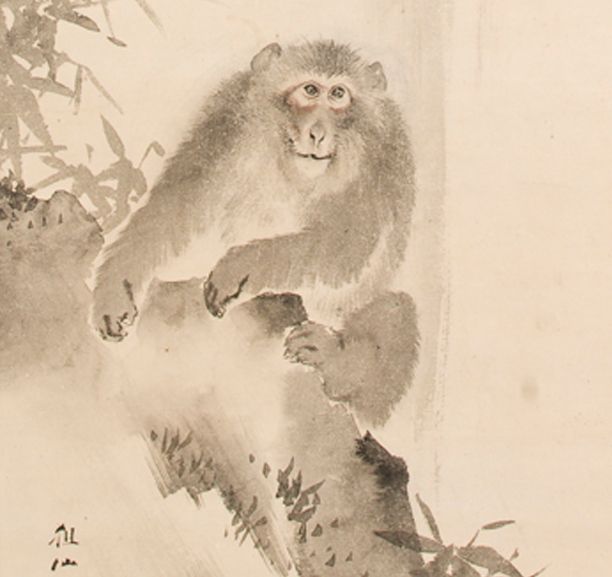
Even the monkey

Seems to want a raincoat.

Monkey and Waterfall by Mori Sosen, a Japanese Edo Period painter, 1747 – 1821), Honolulu Museum of Art. [Source – bing.com]

Now then, let’s go out

To enjoy the snow … until

I slip and fall!

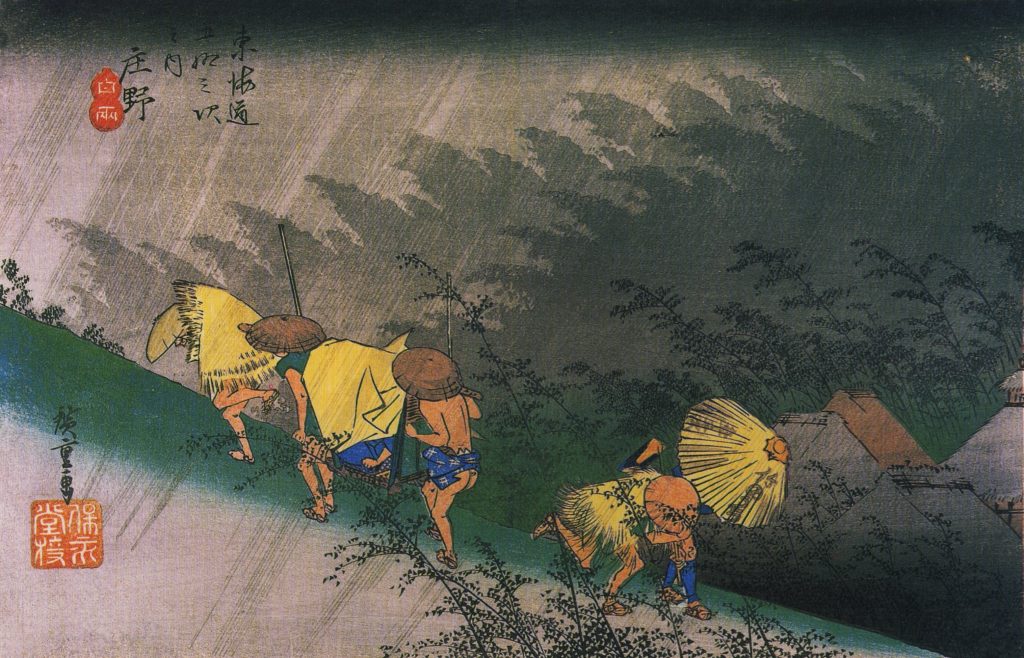
 Print 16 Kanbara, from  The Fifty-three Stations of the Tōkaidō, by Hiroshige, a Japanese Edo Period artist. [Source – Wikipedia Commons]

First cherry

Budding

By peach blossoms.


***

The summer grasses.

All that remains

Of warriors’ dreams.

Travellers surprised by sudden rain, by Hiroshige. [Source – Wikipedia Commons]

Spring rain

Leaking through the roof

Dripping from the wasps’ nest.

***

Autumn moonlight-

A worm digs silently

Into the chestnut.

Basho, Basho, Basho… you have captured it, you just did, a moment in eternity.

Every worm digging every chestnut tree in every autumn in the cool moonlight is this very worm. It will be living forever now.

First day of spring–

I keep thinking about

The end of autumn.

***

Winter garden,

The moon thinned to a thread,

Insects singing.

“The moon thinned to a thread” yet beautiful and bright, busy telling stories.

Winter solitude–

In a world of one color

The sound of wind.

Such an arduous journey…

Taking a nap,

Feet planted

Against a cool wall.

…but Basho’s right, nature reassures us of what lies ahead… the balmy moon.

Wind Blown Grass Across the Moon, by Hiroshige. [Source – Wikipedia Commons]

A field of cotton

As if the moon

Had flowered.

***

Moonlight slanting

Through the bamboo grove;

A cuckoo crying.

***

From time to time

The clouds give rest

To the moon-beholders.

“Can you hear it, the cicada, the dragonfly and the skylark? Free beings!” Yes, I can Basho, yes I can.

A cicada shell;

It sang itself

Utterly away.

***

Midfield,

Attached to nothing,

The skylark singing.

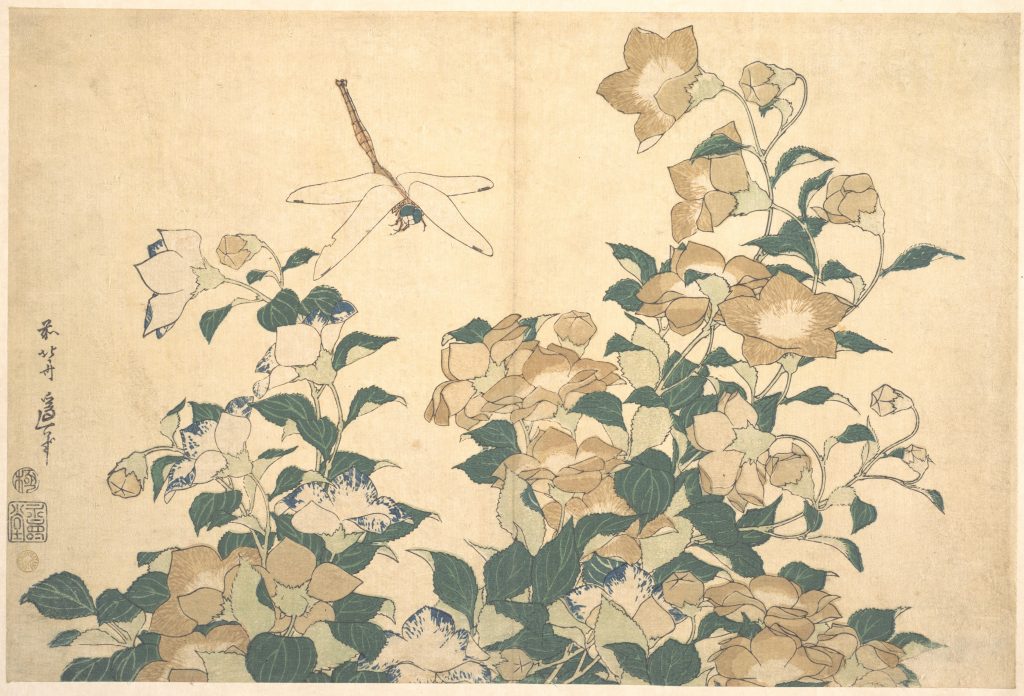
Dragonfly and Bellflower by Hokusai, a Japanese Edo Period artist. [Source – The Met Museum]

The dragonfly

Can’t quite land

On that blade of grass.

***

Stillness–

The cicada’s cry

Drills into the rocks.

We climb the mountain and reach an old village.

This old village–

Not a single house

Without persimmon trees.

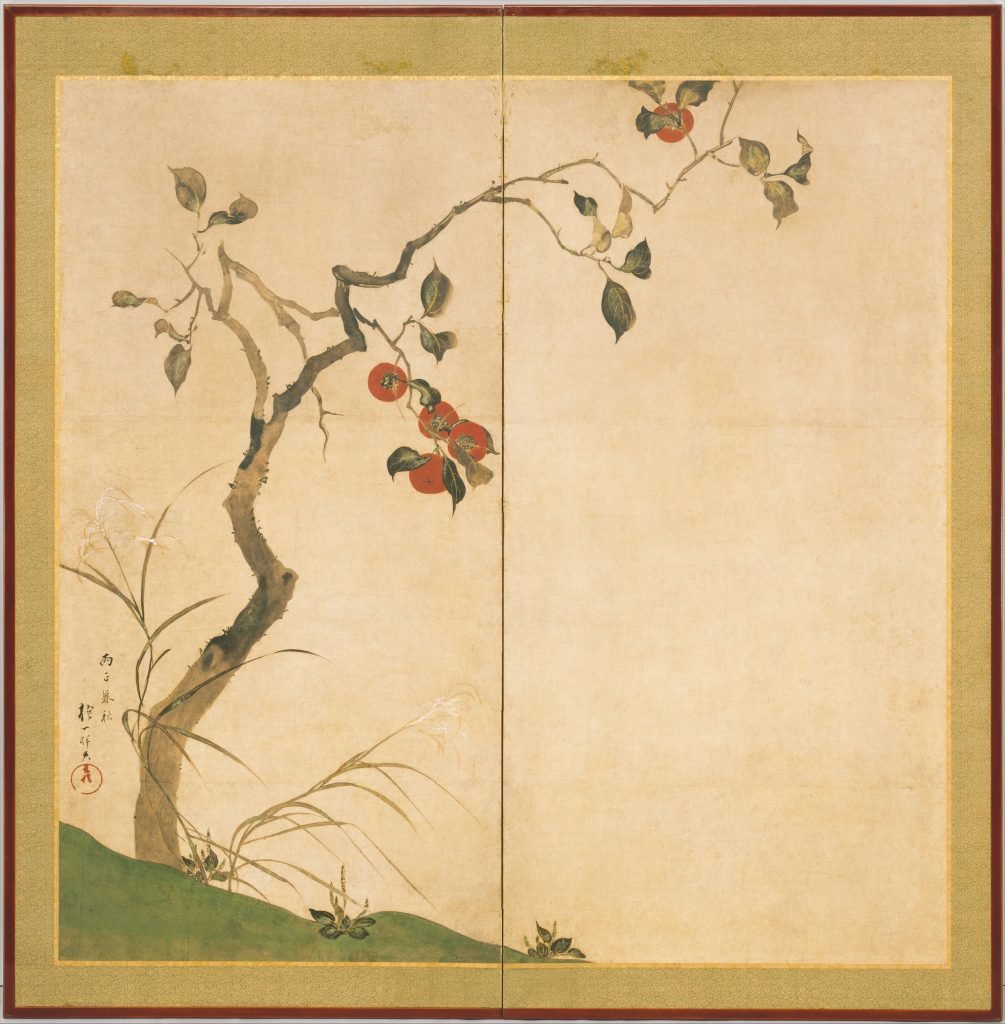
Persimmon Tree by Sakai Hoitsu, a Japanese Edo Period painter. [Source – The Met Museum]

After some rest, we now resume our journey. Oh, Basho is stopping again to sit by the pond, but why I am wondering?

Wait, is this the place where he will pen his most famous haiku that has occupied the minds of a legion of poets and critics… yes, it is.

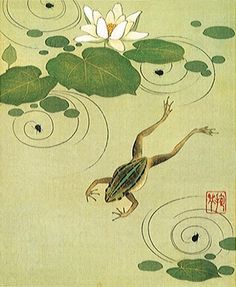
An ancient pond

A frog jumps in

The splash of water.

Frog by Sakai Hoitsu. [Source – flowerofliving.com]

I heard it too, the splash of water, you all must have heard it as well, somewhere, sometime… here, right now the frog’s jump turned the clock back, ending the journey, bringing me to the present.

That ancient pond of time glimmered with stories abound and I was in one, the frog living its routine life made me surrender to the present moment and splash, I returned back.

Basho’s work, what a wonderful portal to the enchanted dream that can be perceived anytime, by anyone…

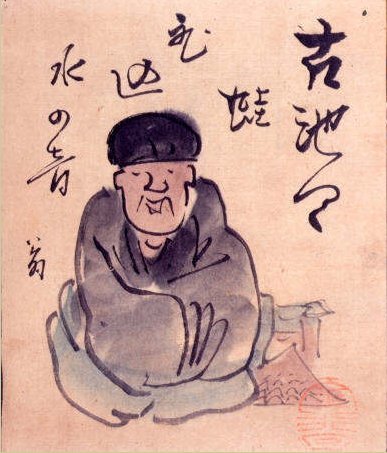
Basho with his frog poem by Yokoi Kinkoku, a Japanese Edo Period artist and monk. [Source – Wikipedia Commons]

Let me bid adieu to you all with another glorious haiku of his. Basho!

How admirable!

To see lightning and not think

Life is fleeting.


Other Haiku Posts

Violets

Haiku Mandala

Moon, Moon, Moon, Moonlight

Live And Rise

Cid Corman’s Blue Aerogrammes


Weekly Newsletter

A weekly dose of stories! Get the posts from the Chiming Stories in your inbox and read it when you can. Subscribe now, it is free!

This field is required.

Live and Rise

Summer night–

even the stars

are whispering to each other.

– Haiku by Kobayashi Issa

And they are whispering, twinkling blue and green, sharing the secret we all know… that love is in the air.

The summer earth blooms for it is in love, the summer sky sways for it is in love.

A promise is made with joy in the eyes by every soul, promise to live and rise.  

Man Before the Infinite – by Rufino Tamayo (1950).

Weekly Newsletter

A weekly dose of stories! Get the posts from the Chiming Stories in your inbox and read it when you can. Subscribe now, it is free!

This field is required.

Recent Posts

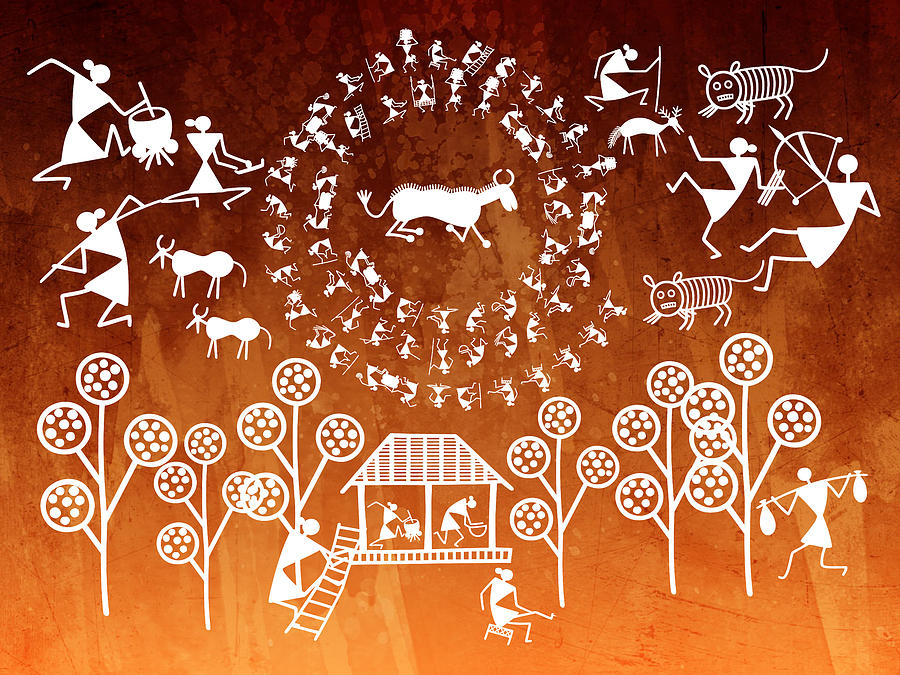
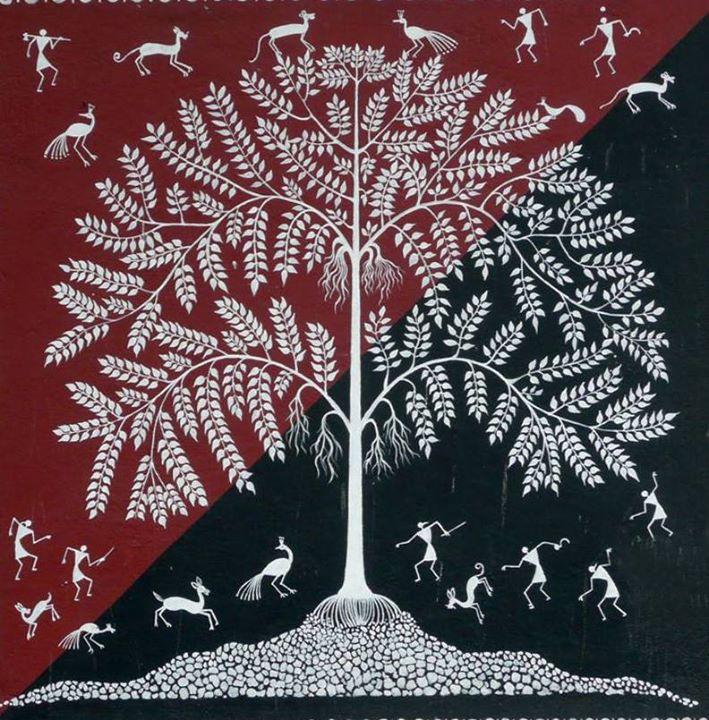
Thunderous Applause… And the Warli Drama Unfolds


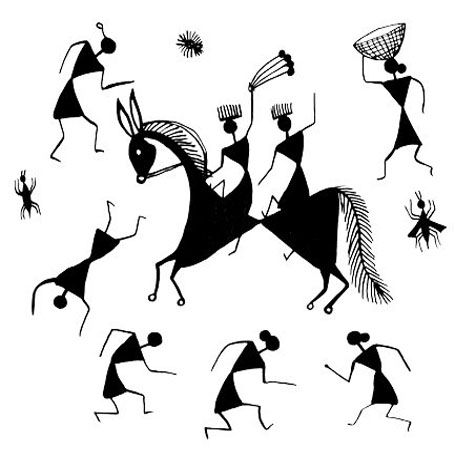
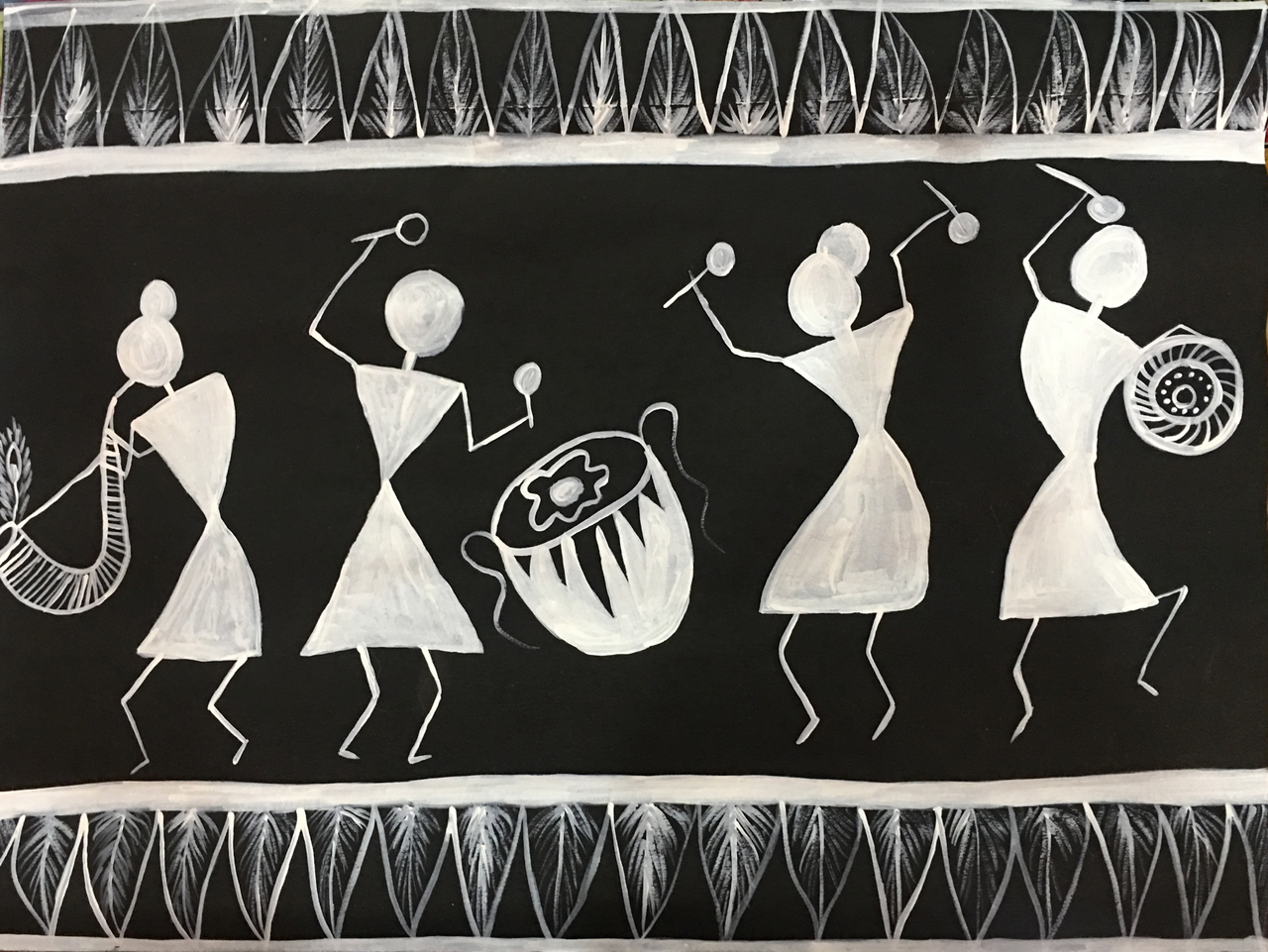
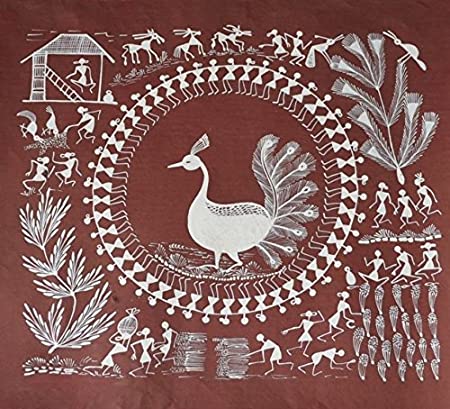
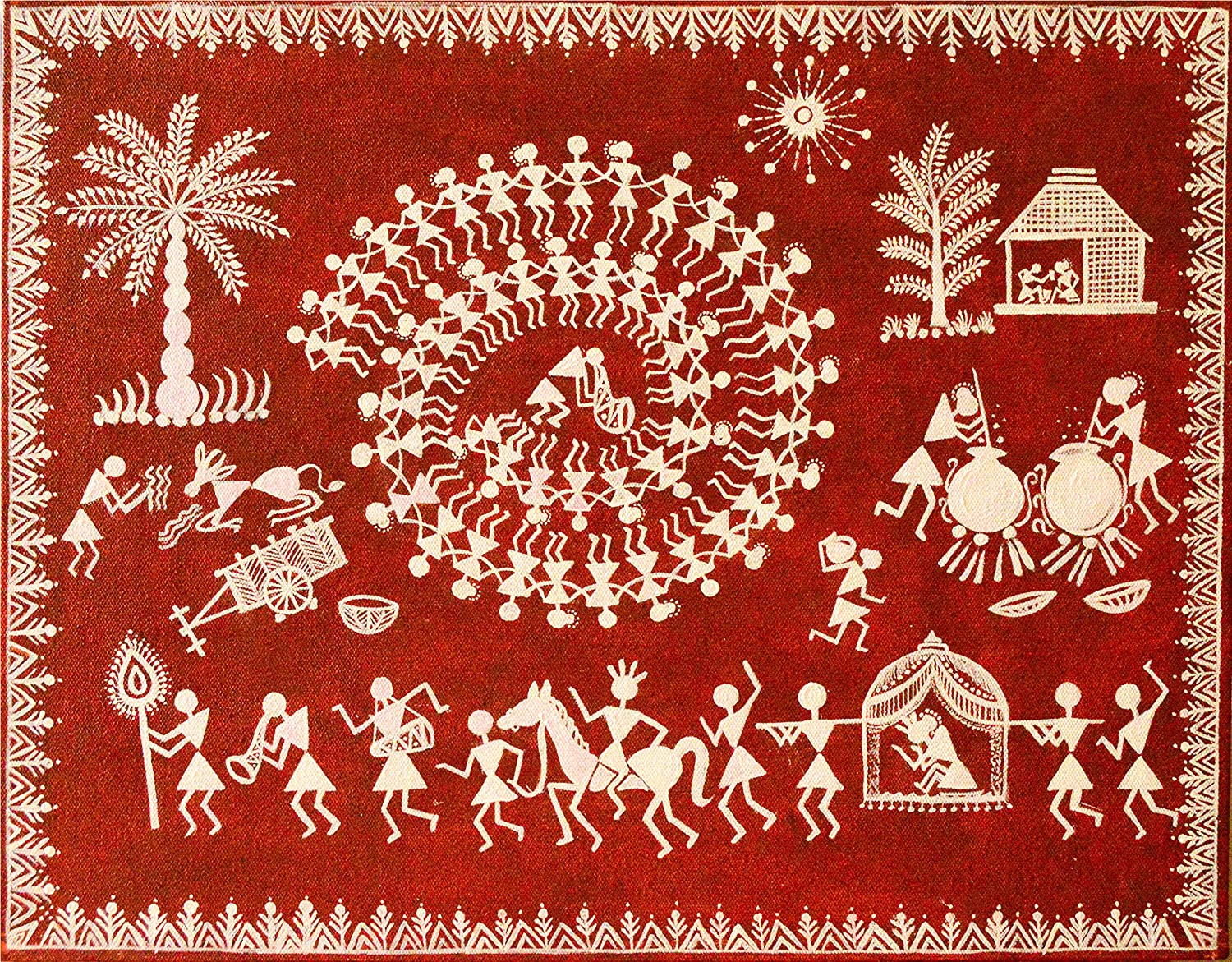
And the Warli drama unfolds… thunderous applause… come and watch the puppets dancing, dancing to the tunes of folktales… look at, but beware, the bewitching dance movements will make you happy and take you to the wonderland. And you will dream the original dream. Ohhs and aahs and wows and wahs!
 
Hey puppeteer, where are the strings and where are you hiding? “I am over here”, said the puppeteer and added, “the strings are invisible and so am I, my dear.”
 
But the puppets were ready, the performance had started. Shush! Shush! The tale of a King heard never before by some.
 
“Where is my horse, commander?”, asked the portly King. “Sir, you’re riding it”, gasped the tired commander. The horse neighed and snorted.
 
Meanwhile his subjects went through their daily chores of dancing little more…


Let us work and dance and dance and work!


Seeing us dance, look the sun is smiling.


Look, how the tree dances!


 And the cattle dances. 
 My horse dances! He is happy (unlike the king’s).


Peeeepeeee-pepe! Dhumdhum-dhum-dhum! Jhunjhun-jhun-jhun!


The swing’s swinging.


Now the joyous peacock’s here.


It is a wedding and everyone’s dancing!


Uu-uu-uuuuuu! Dancing to the beat of life!


And the King in his kingdom, tired of the moody horse returns to his palace to attend a meeting.
Uu-uu-uuuuuu! The end!
The end? What type of story is this? It is the tale of a King heard never before by some.
 
Thunderous applause!


Read more about the Warli art here.
 
Photo courtesy – Google
 
Happy Earth Day everyone!
 

Weekly Newsletter

A weekly dose of stories! Get the posts from the Chiming Stories in your inbox and read it when you can. Subscribe now, it is free!

This field is required.

Recent Posts


Raga Pranayama

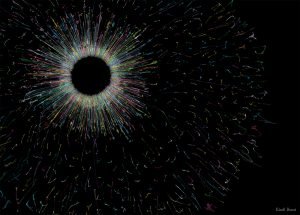
When the Music is Good by Dr. Kirell Benzi.

Playing the Raga Pranayama in my heart and soul I am sitting inside this quiet room for so many days now and slowly this world has stopped reeling.

The shrivelled old self shed off its glories and achievements and regrets all at once, it was painful and I did die a little. Then all I did was to look up and breathe, close my eyes and breathe again.  

Now brighter, with no desire to compete with light or a sharper mind or the maestro musician, I sit simply playing the Raga Pranayama.

Yes, often my memory makes me feel overwhelmed, and yet something allows me to accept it all that too with a smile.  

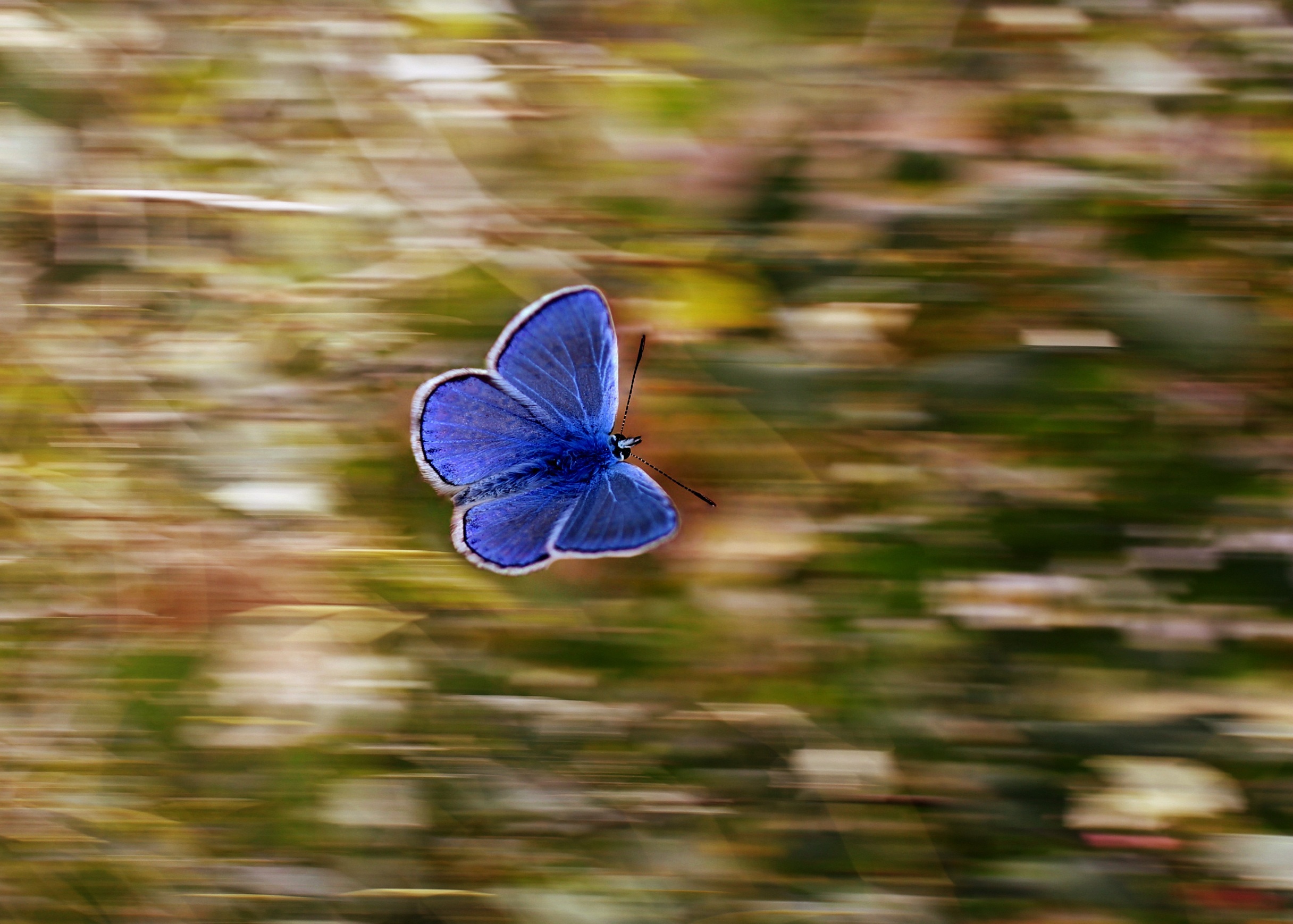
And softly the wind brings a message from the meadows that the dandelions are gushing with joy and beaming for one and all; that the butterflies are coming carrying colours for you and me; that the stream is singing, sparkling sibilantly, shy at first, vibrant then. Oh it is lovely!

*

It is a new beginning, I am sitting in my room and everything has changed as I play the Raga Pranayama.

Dispelling the emaciated fears that had spread and frolicked in my mind, dispelling with the truth of this life force running lightly within and without… the fears just succumbed in the end and this I will remember, always, so that I too can share and struck a happy peaceful note.  

Voices together, singing this happy note, playing the Raga Pranayama will eventually rise above the gloomy cry of this malady.

Together we will rise and break that wall which was once built greedily by us. Hold on, hold on for it will pass.  

Play with me the Raga Pranayama in your heart and soul and let the life energy guide you.

That hazy glow you see when you close your eyes and breathe, that dot, it is the one that surmounts, it has and it will, sometimes with and sometimes without the shell.    


Raga (Sanskrit for “colour” or “passion”) is a melodic framework for improvisation and composition in Indian classical music. Read more here.

Pranayama (prana, Sanskrit for “life force” or “vital energy” and yama, Sanskrit for “restraint” or “control”), is a set of meditative practices designed to control pranawithin the human body by means of various breathing techniques. Read more here.


Also, listen to the magnificent Ragas that inspired me to write this post –  Raga Rasia by Pandit Ravi Shankar

Raga Brindabani Sarang by Pandit Hariprasad Chaurasia


Learn more about Data Art by the fantastic Dr. Kirell Benzi, click here.

*


Weekly Newsletter

A weekly dose of stories! Get the posts from the Chiming Stories in your inbox and read it when you can. Subscribe now, it is free!

This field is required.

Recent Posts

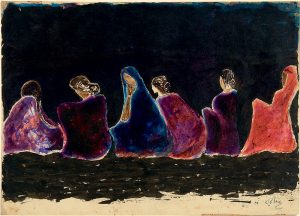
Three Voices

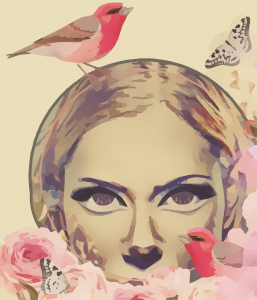
Three voices in pink.
Image from Pixabay.

The three voices are saying the same thing.  

What is tolerance… the capacity to endure hardships and… and the willingness to accept beliefs, respect the opinions that are different from our own.  

Tolerance, they say, shows that you are educated for you listen, you debate and you rule out what is not plausible.

You stick to what gives you clarity and what appears to be true, true for one and all because we, the people, are walking forward together.

The boundaries are superficial.  

And so the intolerant idea that in its core aims to divide, to break, to segregate is a foolish one, it does not succeed in the long run.  

But oh, oh, we are complex beings, we are slow and we glow with pride or we moan with guilt and we disturb the peace, we freeze the disease in our minds and resist the resolution till the very end of the war.  

We the humanity and I the individual still do not know who is more powerful… powerful not only to survive but powerful enough to understand, to forge a balanced world, to see through eyes unclouded by hatred… powerful enough to show tolerance.  

The three voices are saying the same thing.  

It is the mark of an educated mind to be able to entertain a thought without accepting it.

Aristotle

The highest result of education is tolerance.

Helen Keller

Tolerance implies no lack of commitment to one’s own beliefs. Rather it condemns the oppression or persecution of others.

John F. Kennedy

Weekly Newsletter

A weekly dose of stories! Get the posts from the Chiming Stories in your inbox and read it when you can. Subscribe now, it is free!
This field is required.

Recent Posts