Along the great rivers – Tigris, Euphrates, Nile, Indus, Yellow, Yangtze, coastal Peru rivers, Coatzacoalcos – rose the world’s oldest great civilisations – Mesopotamian, Egyptian, Indus Valley, Chinese, Caral-Supe, Mesoamerican. Rivers sustained these agricultural civilisations, providing food, fertile soil and better access to build trade relations with the rest of the world.
Archaeological findings provide us with a map that take us closer to these ancient civilisations, yet mysteries remain, as in the case of the Indus Valley civilisation, also known as the Harappan civilisation.
*
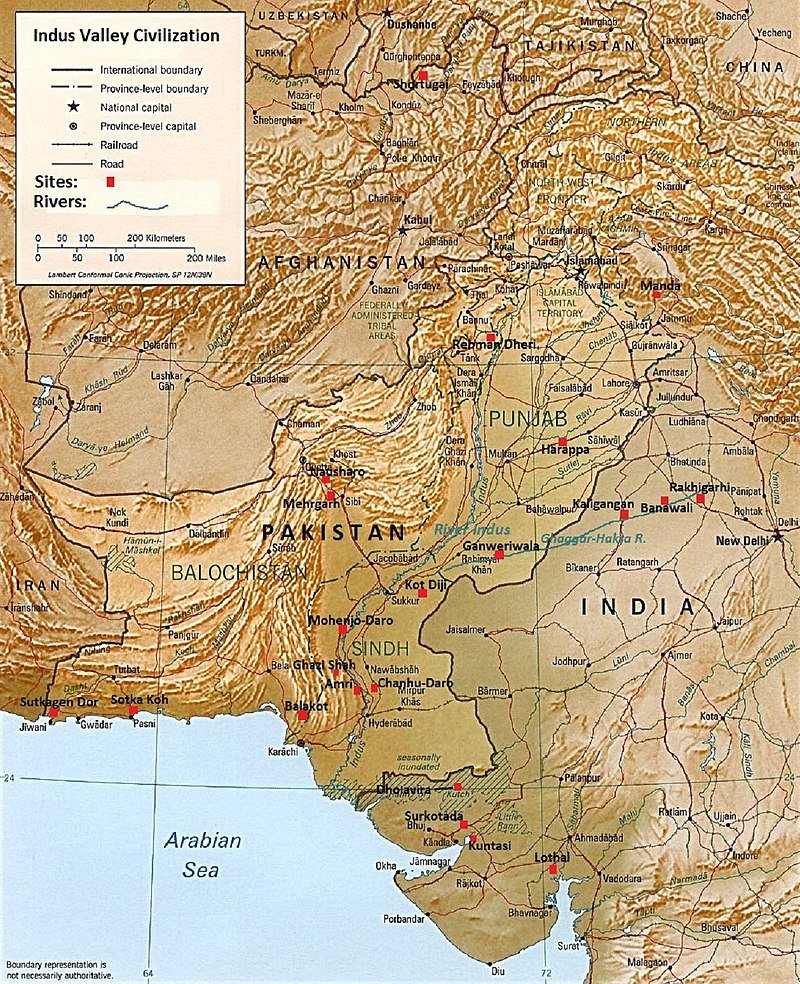
Major sites and extent of the Indus Valley Civilisation. [Source – Wikipedia]
*
Although bigger than Egyptian or Mesopotamian (spread across northwest India, Pakistan and northeast Afghanistan, more than 1500 sites being found), the Harappan society boasts no monumental marvels like the pyramids or a deciphered writing like the cuneiform, nor even a ruling class, a military, weapons of war and not even distinctive burial sites.
The historians found no evidence of violence either and therefore, a tectonic shift that dried up the river or a terribly great flood is seen as the main reason behind the Indus Valley civilisation’s final collapse.
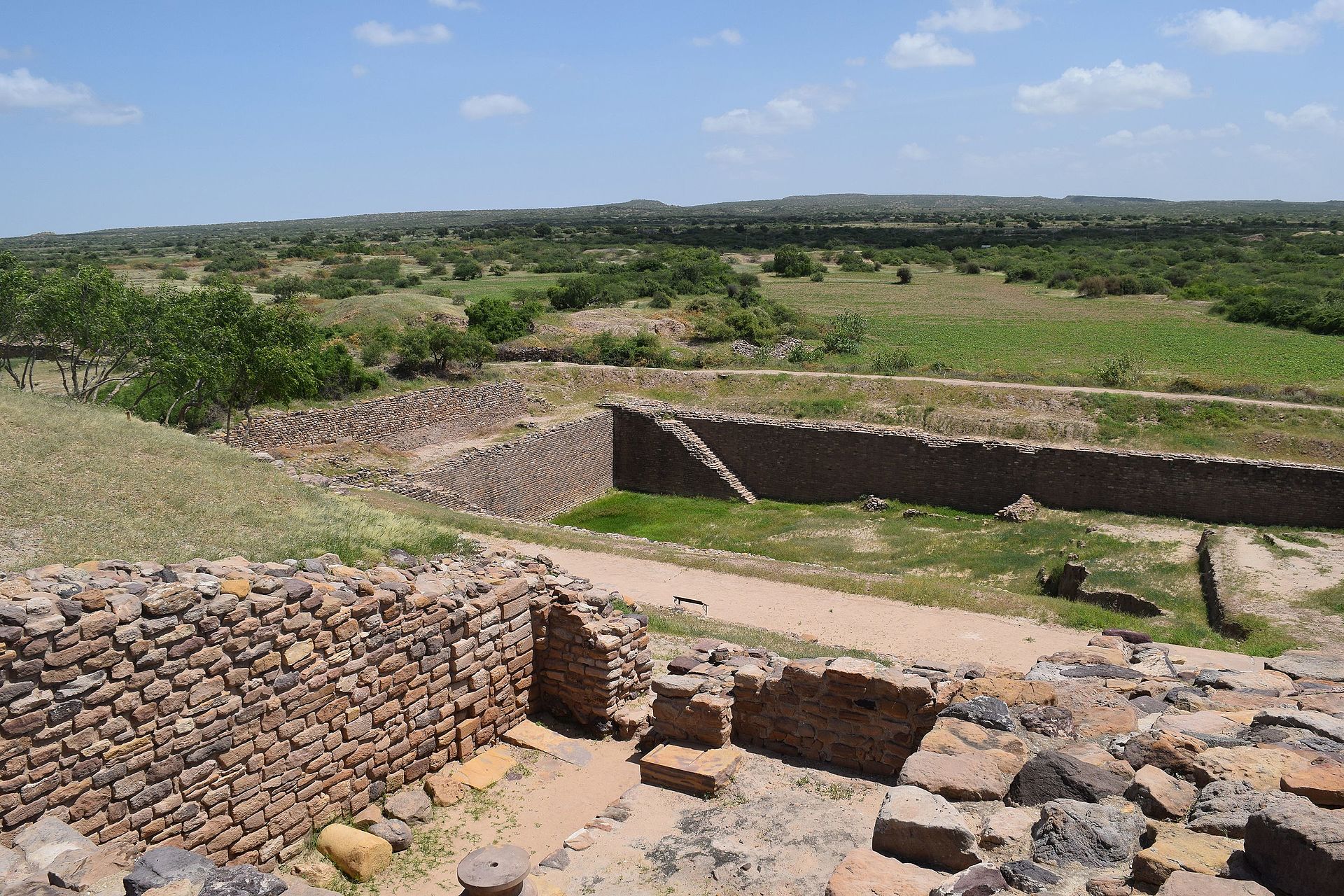
Nevertheless, what was discovered makes Mohenjo-Daro and Dholavira – the main Indus Valley cities amongst others – world heritage sites of immense importance. Indus Valley people lived in a very well-planned city that was most likely cosmopolitan-natured.
*
Dholavira in Gujarat, India, is one of the largest cities of Indus Valley Civilisation, with steps to reach the water level in artificially constructed reservoirs. [Source – Wikipedia]
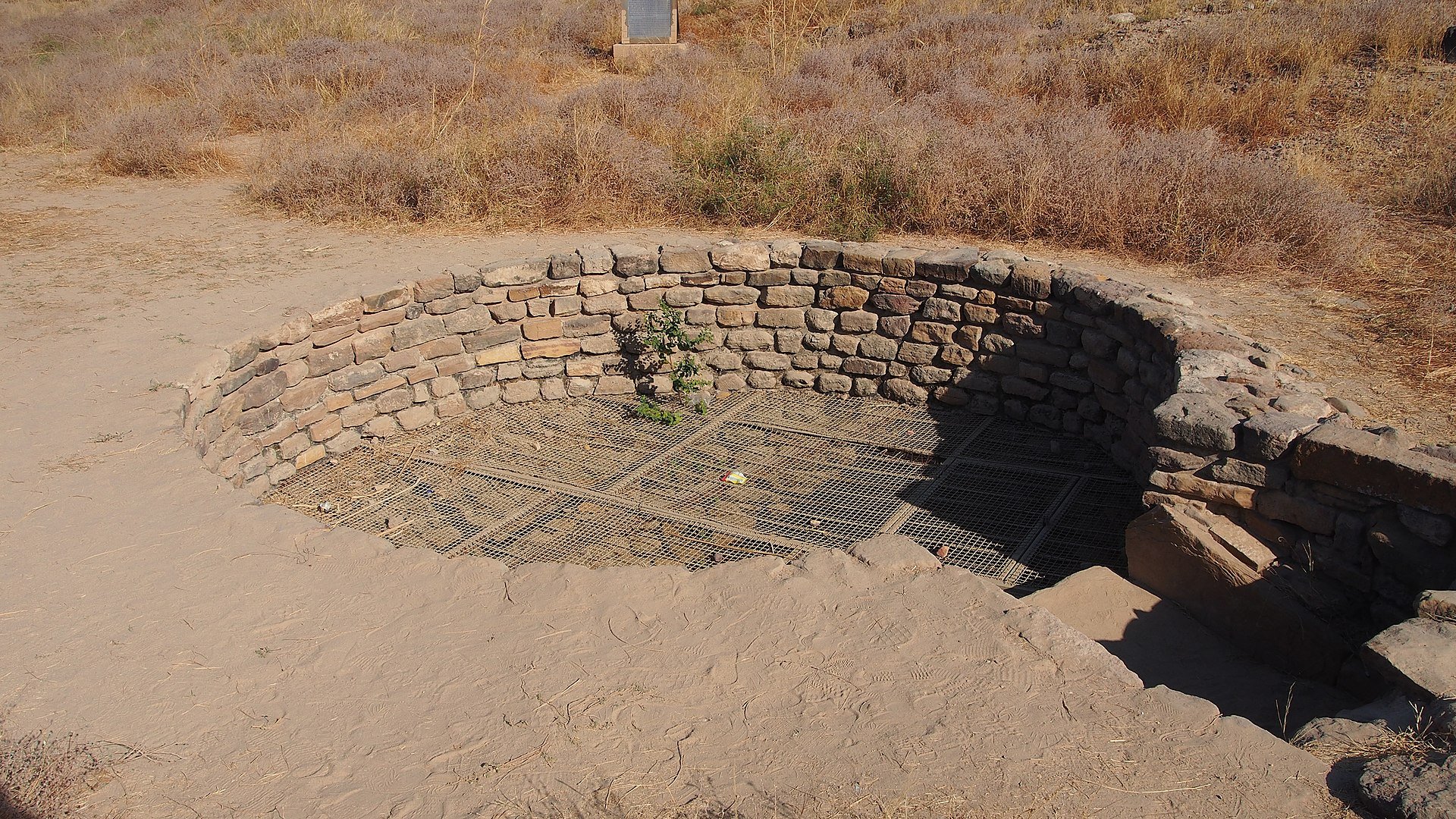
The Well at ancient Harappan city of Dholavira. [Source – Wikipedia]
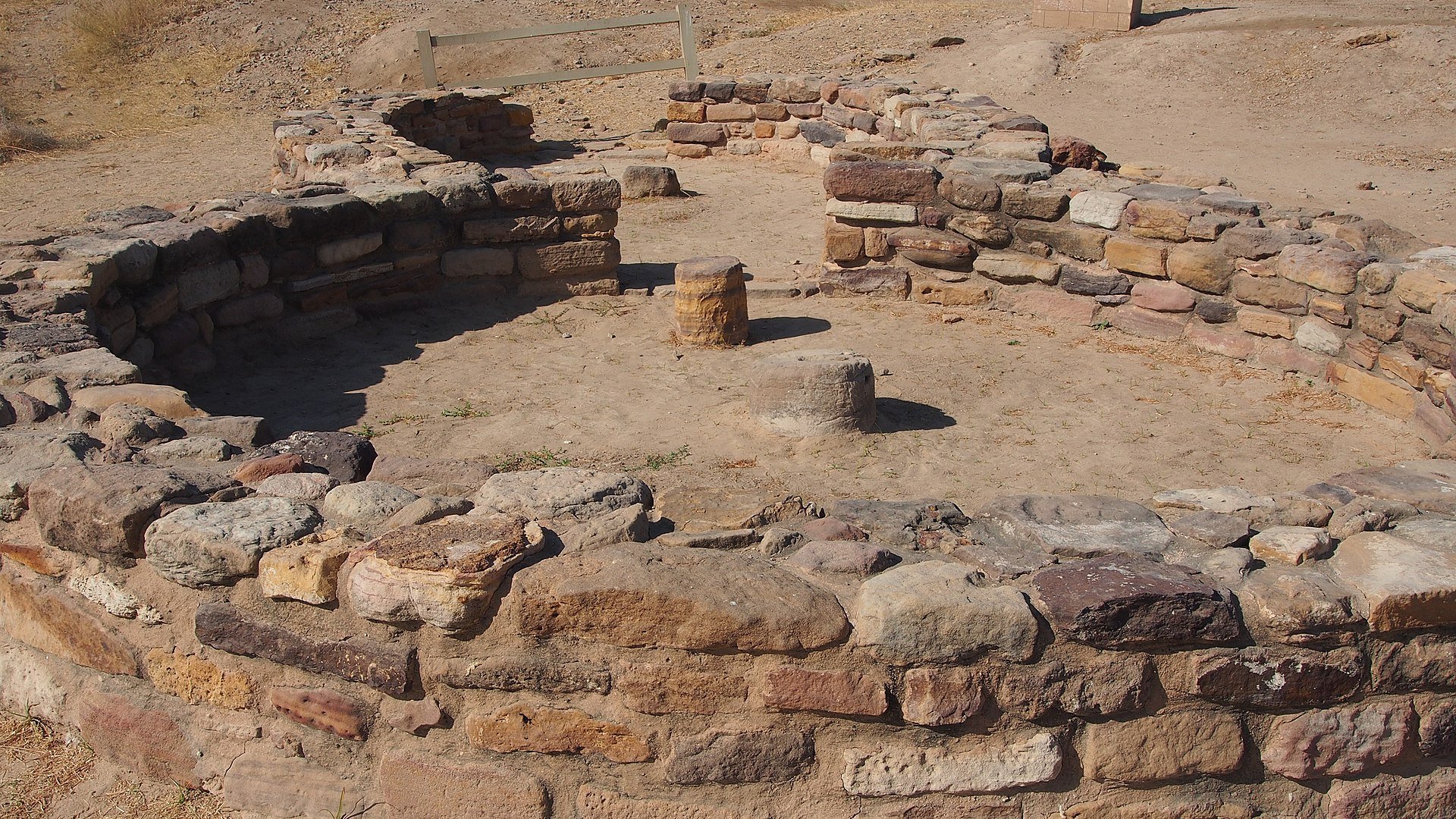
Circular houses of Dholavira. [Source – Wikipedia]
*
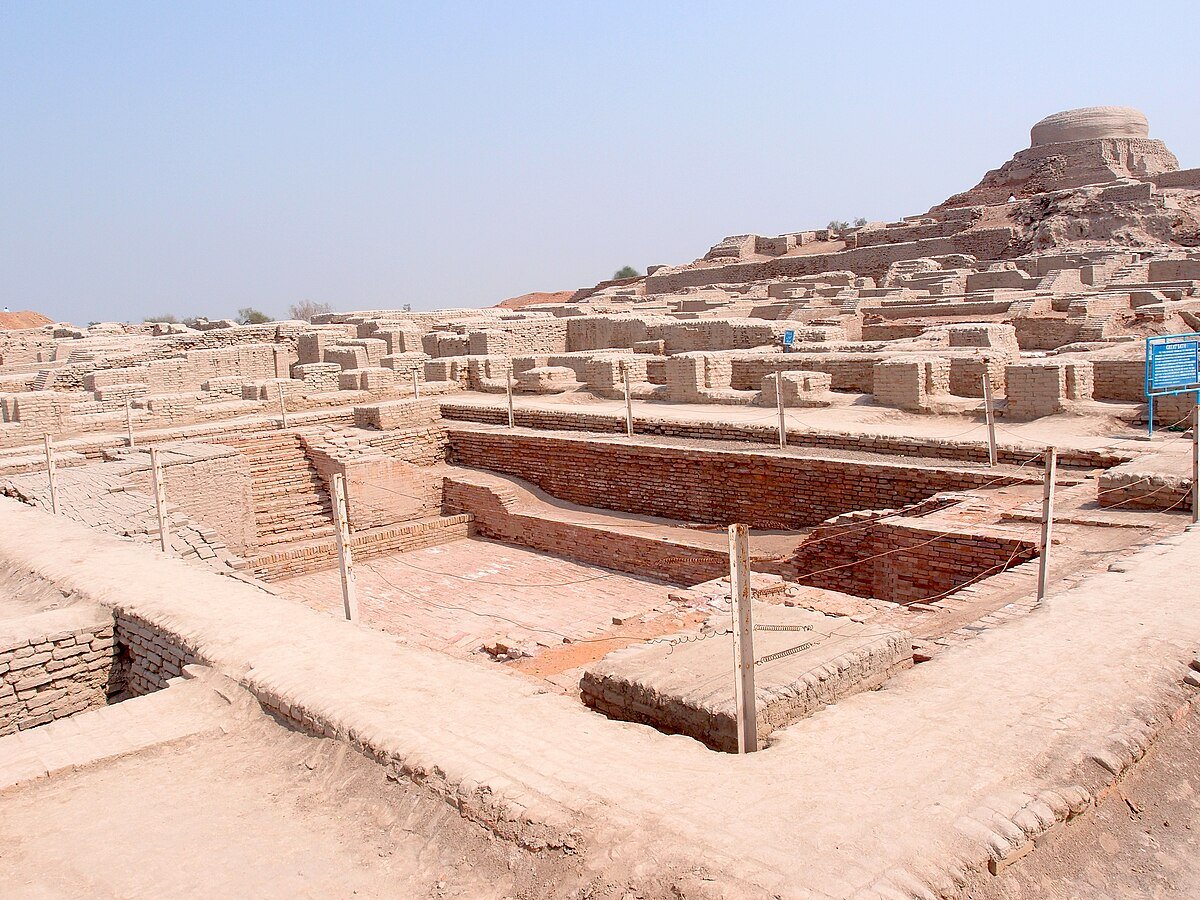
With its naturally ventilated and uniformly baked clay brick houses, well connected grid-patterned streets, an elaborate drainage system (some of these 4,500-year-old drains still perfectly operational), public washrooms, dustbins, around 700 freshwater wells, a massive granary, a citadel, uniformly made artefacts, seals and weights – Mohenjo-Daro was one of the twin capital towns, along with Harappa, of the Indus Valley civilisation.
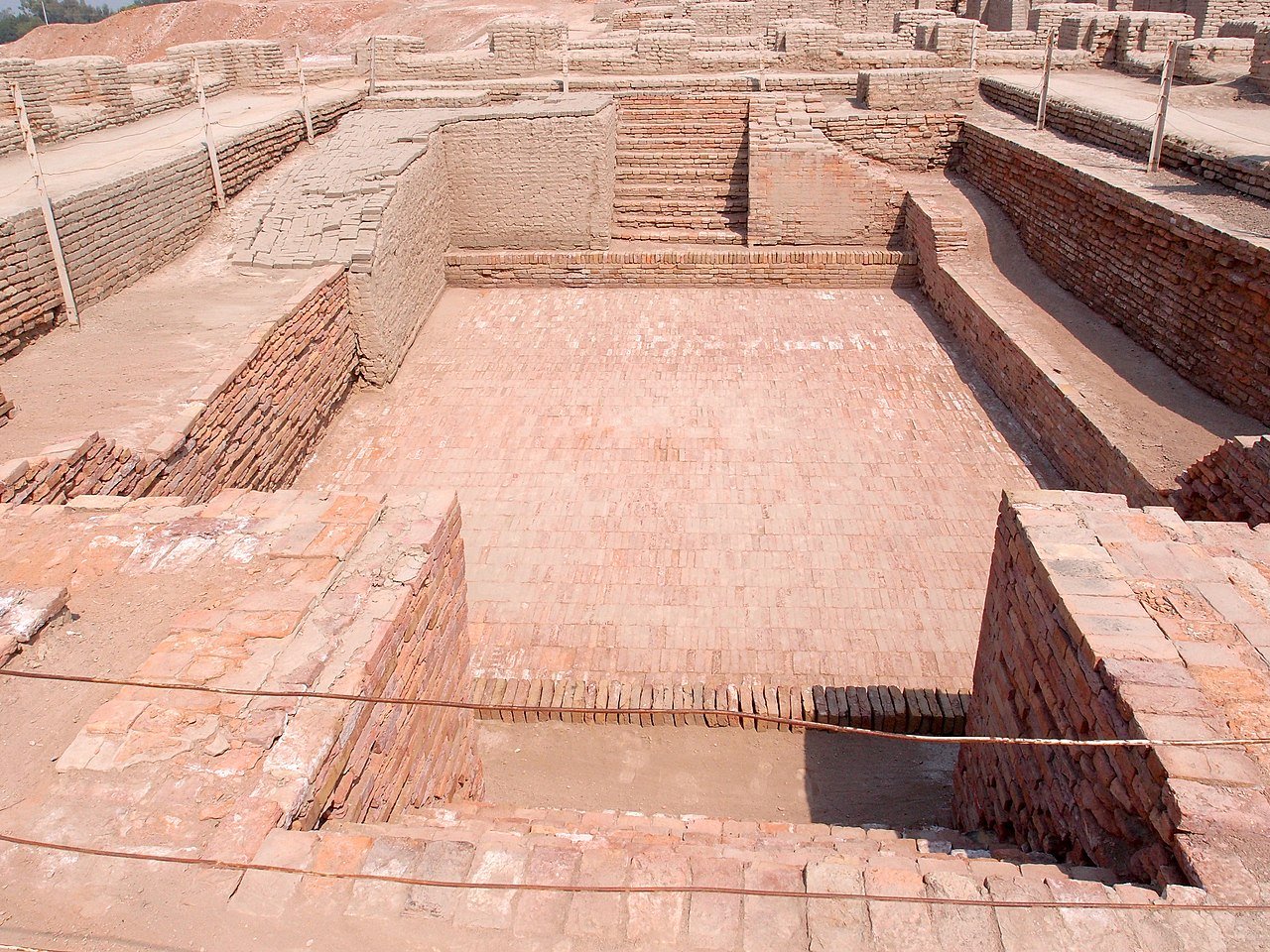
The most important structure excavated here is not a palace or a temple, but a public bath – known as the Great Bath – also called the “earliest public water tank of the ancient world”.
Tightly fitted bricks and a layer of bitumen (waterproof tar) made the floor of the bath watertight; it was a large building with several rooms, one of which also had a freshwater well.
*
Behold… the Great Bath. [Source – Wikipedia]
Stairs to enter the Great Bath. [Source – Wikipedia]
*
The ruins of what was once a large multi-storied building – now termed as the House of Priests – right across the street of the Great Bath, reinforces the idea that the bath had a sacred purpose.
Most scholars agree that this tank would have been used for special religious functions where water was used to purify and renew the well-being of the bathers. This indicates the importance attached to ceremonial bathing in sacred tanks, pools and rivers since time immemorial.
J. M. Kenoyer
*
“The Priest-King”, a seated stone sculpture at the National Museum, Karachi. [Source – Wikipedia]
A single soapstone seated structure termed as “Priest-King” by the archaeologists does not suggest that a monarchy or a priest ruled the city of Mohenjo-Daro, yet the remarkable urban planning and meticulous construction focusing on public welfare hints at probably a council of elders and a community that worked together.
Fiction
A Mohenjo-Daro’s citizen’s Diary
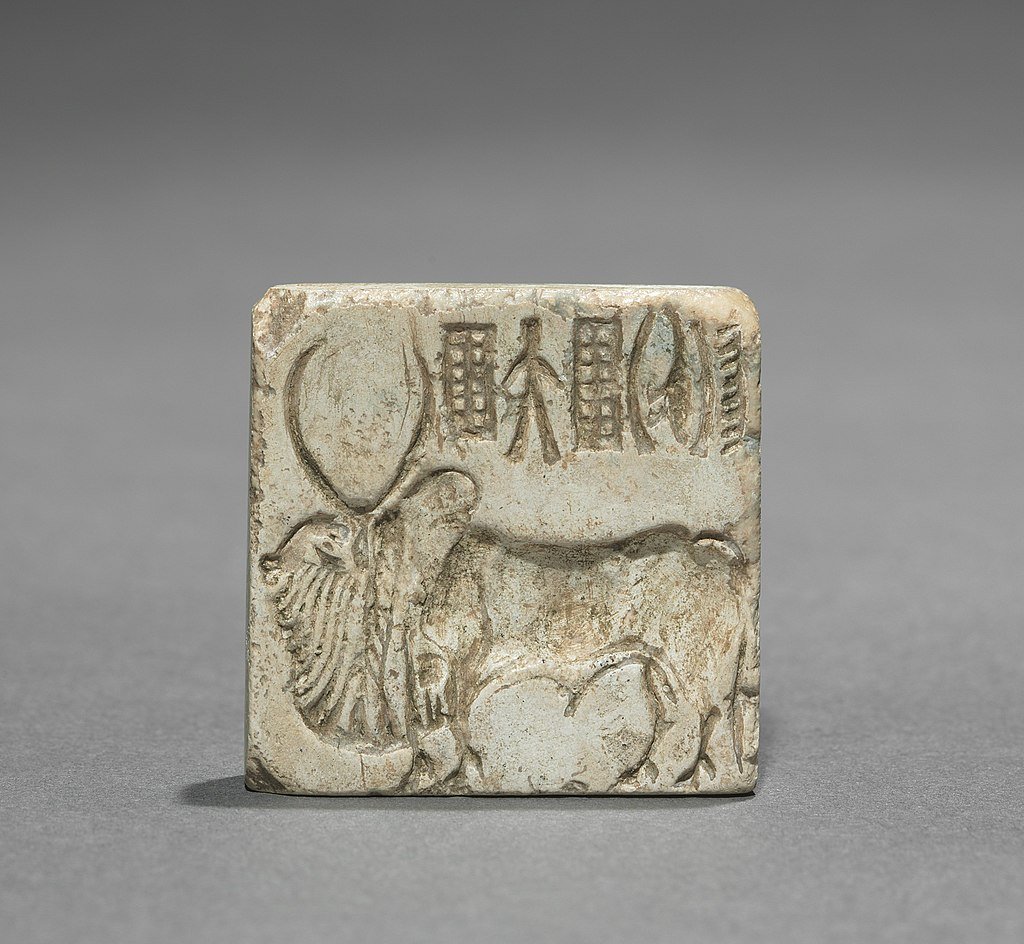
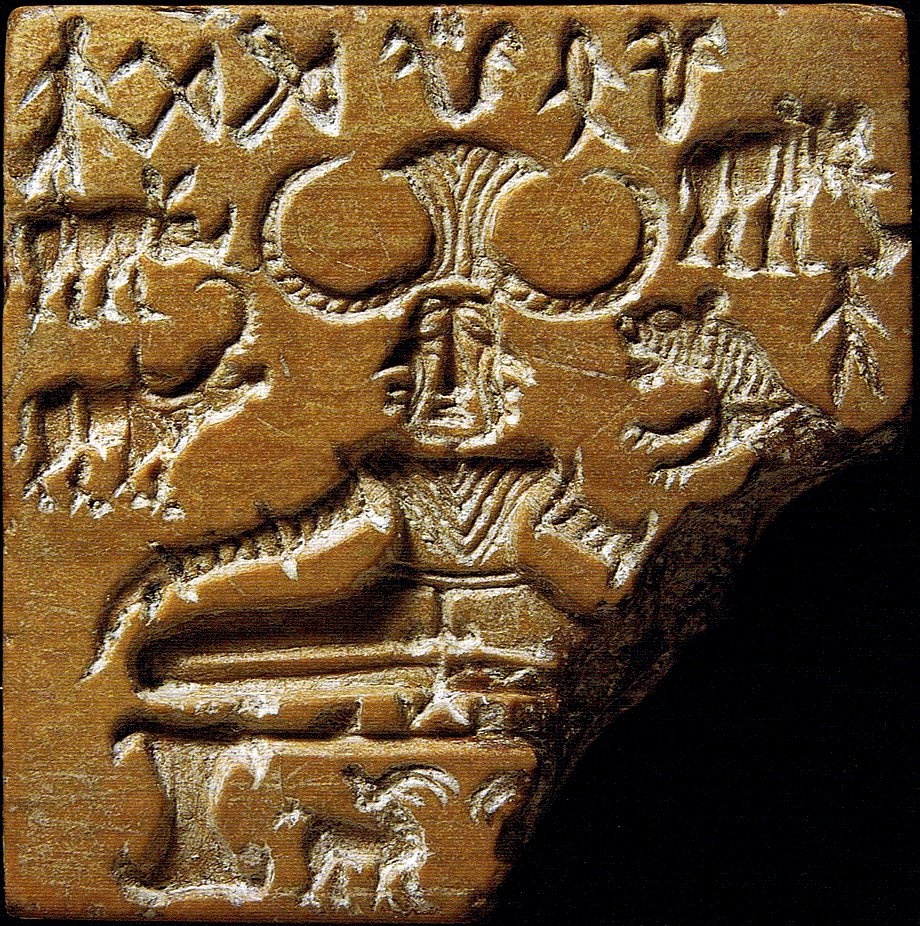
Seal with two-horned bull and inscription; 2010 BC; steatite; overall: 3.2 x 3.2 cm; Cleveland Museum of Art (Cleveland, Ohio, US). [Source – Wikipedia]
Day – Sunny
Got up. Slipped from broken stairs. Mended. Water’s fresh, took bath, drank plenty.
Seals made – water buffaloes, elephants, bulls, rhinoceros. Ha!
Day – Sunny, Clouds Playing
At The Great Bath. Slipped from slippery stairs. Cleaned. Cleaned more. Got fresh water from the well. Poured. Poured more. Thanked noble Indus.
Day – Too Rainy
Group work. Mending limestone slabs. Mended. Dry granary functions. Ate well. Didn’t slip. Healed.
Day – Raining
At The Great Bath. Mending roof. Unfinished. Slipped. Fell into the Bath. Resurrected. Ha!
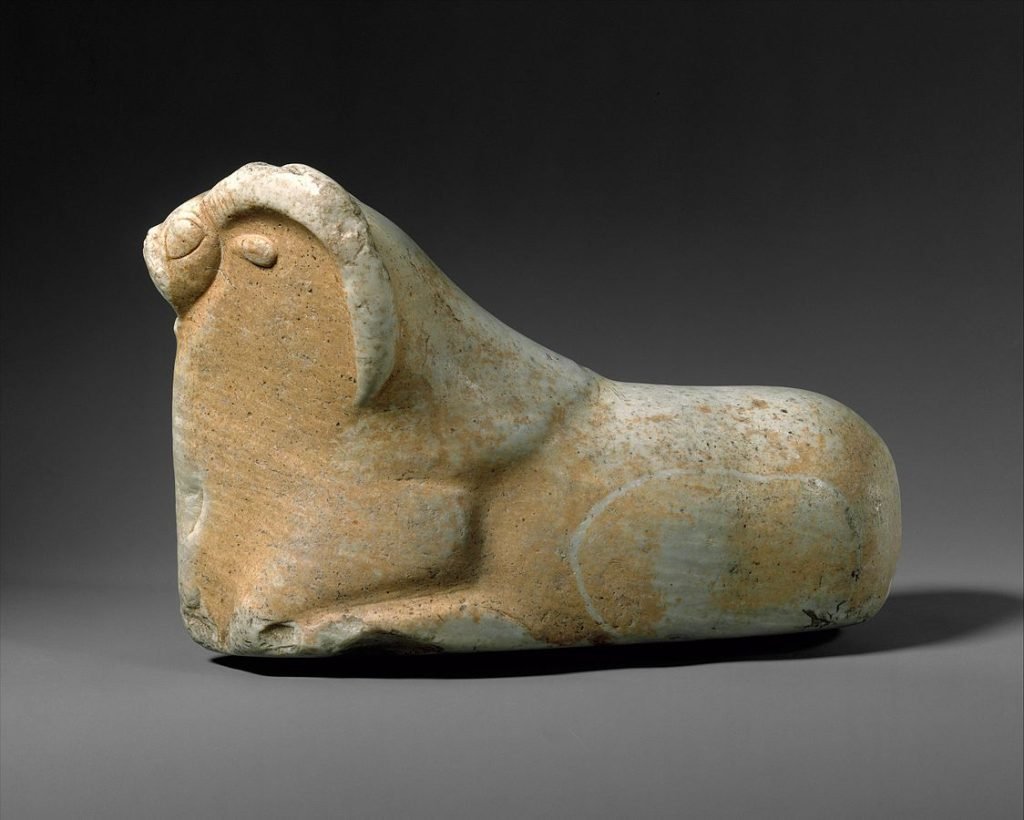
Reclining mouflon; 2600–1900 BC; marble; length: 28 cm; Metropolitan Museum of Art (New York City). [Source – Wikipedia]
*
Blogger’s Note –
Only ten percent of Mohenjo-Daro has been excavated so far and yet it shows how grand the city must have been, its citizens living a simple life, nurturing good daily-living-practices; either celebrating special occasions at the Great Bath or just storing water, humbly accepting what the Indus River brought.
Spiritually awakened or not, religiously enlightened or not, fiercely ambitious or not, the Indus Valley folks definitely, without any doubt, slept well. And that’s their secret, if there is any. They rested and digested fantastically and so they functioned wonderfully. Maybe they slept for 12-14 hours, working from dawn, with a calming break around noon time, to early evening. Not rushing or worrying when at work.
And so, well rested, they loved water – fresh, salty, rainy (and were also aware about floods; they constantly rebuilt their buildings in cities like Mohenjo-Daro), and fire – for they loved baking bricks, and music and art – for ahm…The Dancing Girl, the ornaments and toys. They loved to work.
Every task was a joint venture, everything done together with nothing but the Sunny/Rainy/Cloudy day in front of them. And then the starry and peaceful night, when the wind played a lullaby and one with nature, they slept.
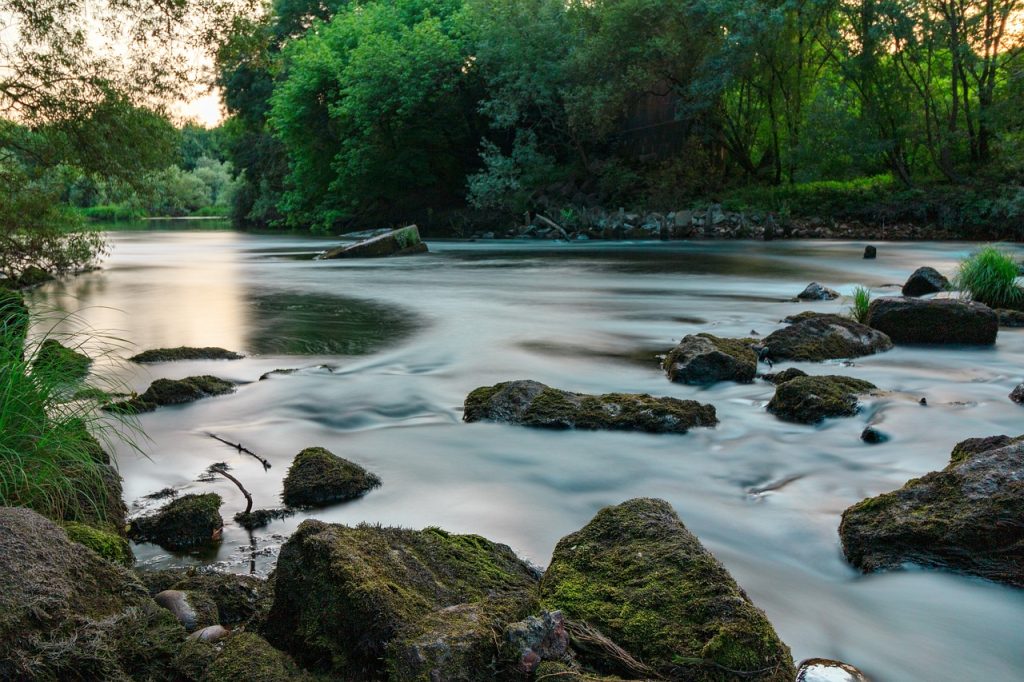
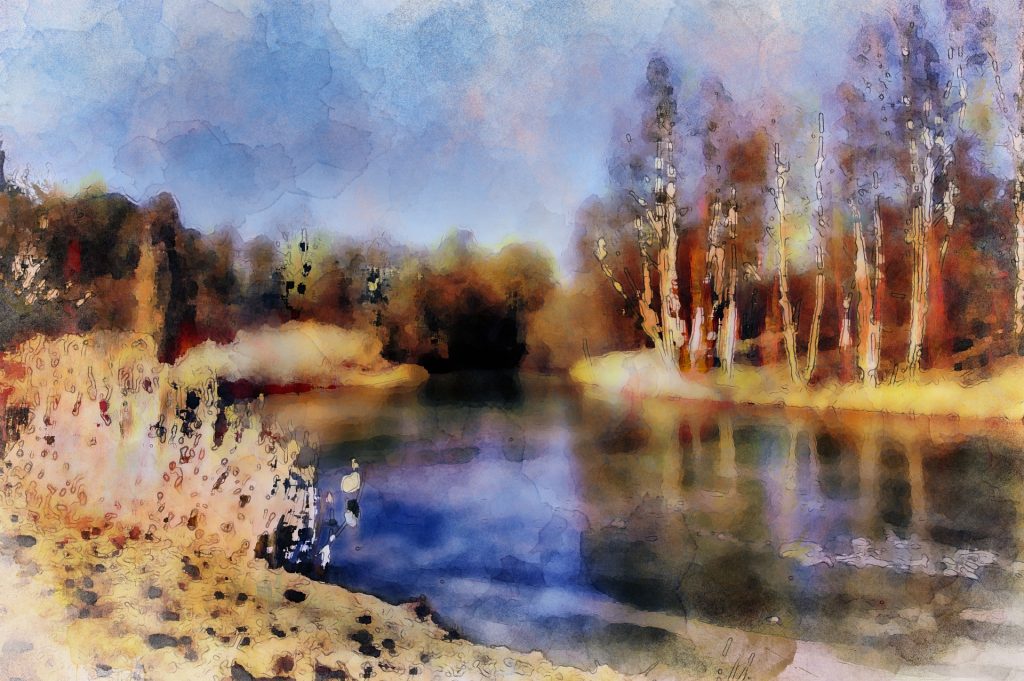
The river… sketching its way ahead… [Source – Pixabay]
The Negro Speaks of Rivers
by Langston Hughes
*
I’ve known rivers:
I’ve known rivers ancient as the world and older than the flow of human blood in human veins.
My soul has grown deep like the rivers.
*
I bathed in the Euphrates when dawns were young.
I built my hut near the Congo and it lulled me to sleep.
I looked upon the Nile and raised the pyramids above it.
I heard the singing of the Mississippi when Abe Lincoln went down to New Orleans, and I’ve seen its muddy bosom turn all golden in the sunset.
*
I’ve known rivers:
Ancient, dusky rivers.
My soul has grown deep like the rivers.
Rivers – streams, creeks, brooks or rivulets – love to flow; flowing towards a sea, lake, an ocean or another river, and at times also drying out. Rivers love to flow just like life.
Most of the earlier civilisations prospered when they settled around rivers, channelizing the same love when drinking its fresh water.
And when mankind sat in a circle around the fire and created stories – of the sun, the moon, the thunder and the wind – they fostered their imaginations and decided to pass on the love running in their blood to a lovely supreme one.
Different supreme ones took the centre stage at different places and myriad dramas unfolded that the rivers watched quietly, flowing, gushing with joy every moment.
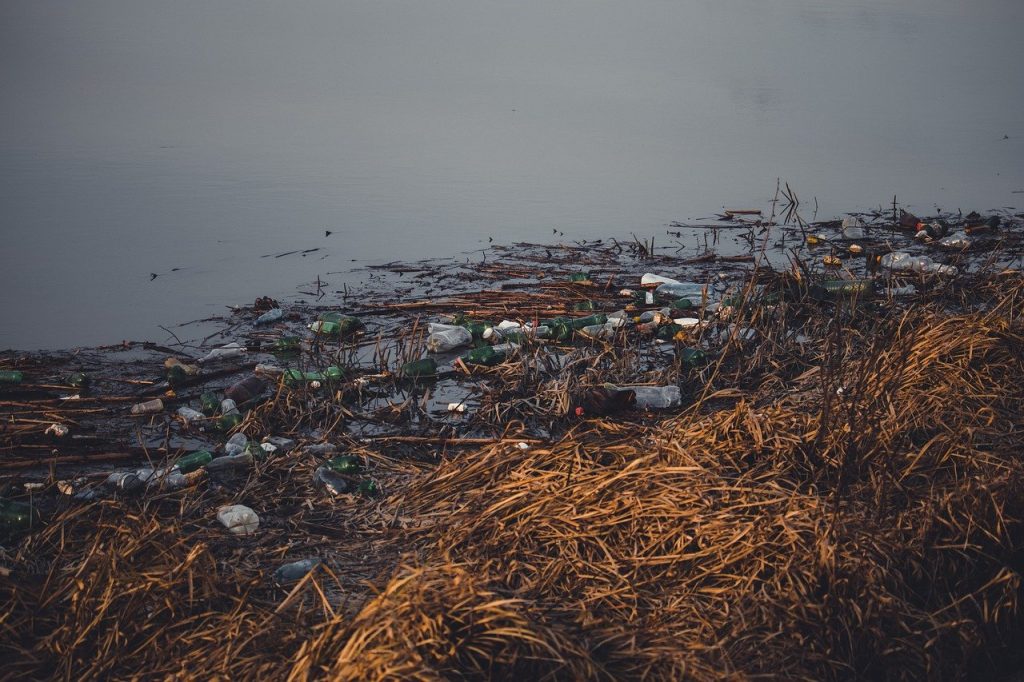
Resisting neither the rocks nor filth, accepting the dead and plastic bottles alike, it continues to flow… for now.
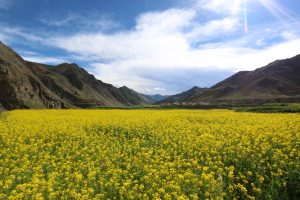
Still like a mirror, moving like a reflection… [Source – Pixabay]
Langston Hughes in his poem The Negro Speaks of Rivers connects the human soul with the world’s ancient rivers; the hands that cupped to drink water, the feet that crossed the river, whatever race it belonged to, felt the same damp calmness every single time they drank water and crossed the river.
Written during the early twentieth century when African Americans struggled to achieve equality and justice, Hughes, presenting a powerful historical perspective in this poem, emphasises the link between his ancestors, the ancient rivers and the rest of the human civilisation.
The Euphrates, often believed to be the birthplace of human civilisation, the Congo, powerful and mysterious, that saw the rise of many great African kingdoms, the magical Nile that carries with poise the secrets of the great Egyptian pyramids, the folklorist Mississippi that shared here the tales of Abraham Lincoln and American slavery – shows how rivers carry the past in its depth, carrying it always with love.
And the one who sees with love can sense the connection between rivers and souls, between them and us; we all started this journey together, the rivers are a testimony.
“I’ve known rivers:
Ancient, dusky rivers.
My soul has grown deep like the rivers.”
Experience and history, though often oppressive, have not extinguished but rather emboldened the development of a soul, the birth of an immortal self, the proud ‘I’ that now speaks to all who will listen.
I am joy running free/
freely flying, fluttering, soaring in a valley/
Of joy am running free.
Greetings!
A storyteller, following the ancient tradition of cave chroniclers, standing in vrikshasana (the tree pose) on a hill top (it is sunny, but windy), breathing in and out stories (relishing it all, but at times overwhelmed), declares animatedly that she will continue to – tell stories, share rare story gems, and connect with the pacy universe while also keeping the website ad-free.
Big thanks to my readers. Stay tuned!
Also, a humble request to the new subscribers to check the spam folder after subscribing. Silly (but necessary) confirmation emails often land there instead of the bright inboxes. Merci!
Ya-hoy!
Chiming Stories (formerly Home Chimes)
P.S – Supporting a storyteller is good for the world’s health (and undoubtedly, for the storyteller’s health as well). Shower some love by sharing, commenting and subscribing to the Weekly Newsletter.
Gabbeh, the 1996 film, is a simple tale of a gipsy girl, her clan and the way their life goes on. Unfolding beautifully just like an artist painting a canvas, Gabbeh quietly touches the grand questions.
Ranked as one of the greatest British films of all time, The Lavender Hill Mob confides in the audience, letting them see, feel, laugh and think without tickling persuasively with a joke here and a punch-line there.
Godard… Breathless and Alive
A Tribute to Jean-Luc Godard, the Film Philologist who Reinvented Cinema.
Yes fly! For walking on the second track is dull and usual, but dreaming high, high, high requires tools. Tools like the right pair of shoes, a chirpy, gritty soul that eats butter-jam dreams, a soul that drinks milky-milky creams.
Silver cascade shimmering the night sky, music to the waves and surreal beauty to the eyes, the Moon loves the art of discipline.
It may be difficult to believe for the Moon’s splendour defies time, it stupefies the clock, it follows the path of a dreamer, but how could this be possible if the Moon knew not discipline?
In this moment, I am a little bit of this and a little bit of that, I am complete and incomplete, I am pleased and uncertain, I wish for nothing and I know I have to wait.
Because the distance covered reminds me of the hurdles I have crossed and the ones I could not, it reminds me of a throbbing past and a dreamy future and it reminds me of how much time is left.
Meredith and the Green Lake
Illimitable Splendour
A joy so complete without any rise or fall, so free without any time corners, so real without true being false, false being true.