
Fact and Fiction
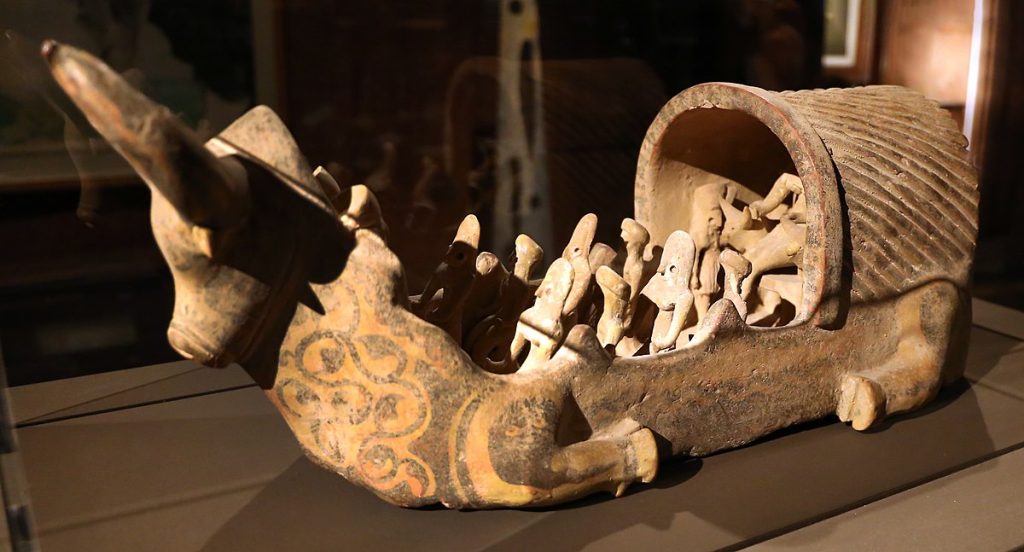
[Source – Wikipedia]
*
Along the great rivers – Tigris, Euphrates, Nile, Indus, Yellow, Yangtze, coastal Peru rivers, Coatzacoalcos – rose the world’s oldest great civilisations – Mesopotamian, Egyptian, Indus Valley, Chinese, Caral-Supe, Mesoamerican. Rivers sustained these agricultural civilisations, providing food, fertile soil and better access to build trade relations with the rest of the world.
Archaeological findings provide us with a map that take us closer to these ancient civilisations, yet mysteries remain, as in the case of the Indus Valley civilisation, also known as the Harappan civilisation.
*
[Source – Wikipedia]
*
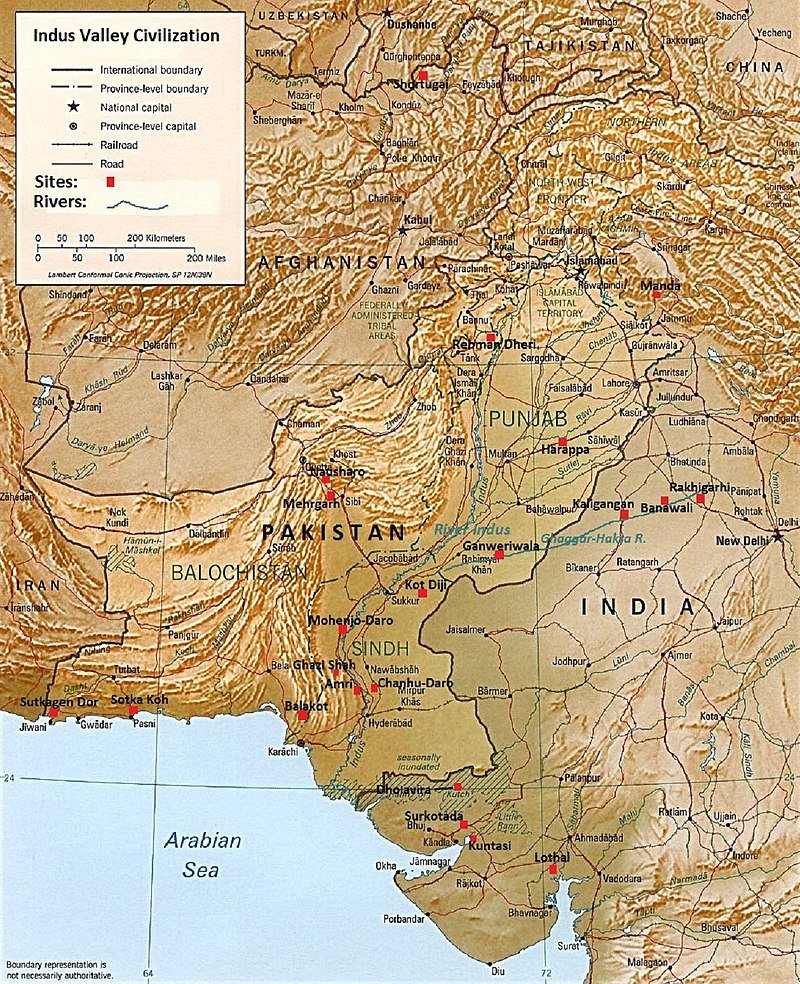
Although bigger than Egyptian or Mesopotamian (spread across northwest India, Pakistan and northeast Afghanistan, more than 1500 sites being found), the Harappan society boasts no monumental marvels like the pyramids or a deciphered writing like the cuneiform, nor even a ruling class, a military, weapons of war and not even distinctive burial sites.
The historians found no evidence of violence either and therefore, a tectonic shift that dried up the river or a terribly great flood is seen as the main reason behind the Indus Valley civilisation’s final collapse.
Nevertheless, what was discovered makes Mohenjo-Daro and Dholavira – the main Indus Valley cities amongst others – world heritage sites of immense importance. Indus Valley people lived in a very well-planned city that was most likely cosmopolitan-natured.
*

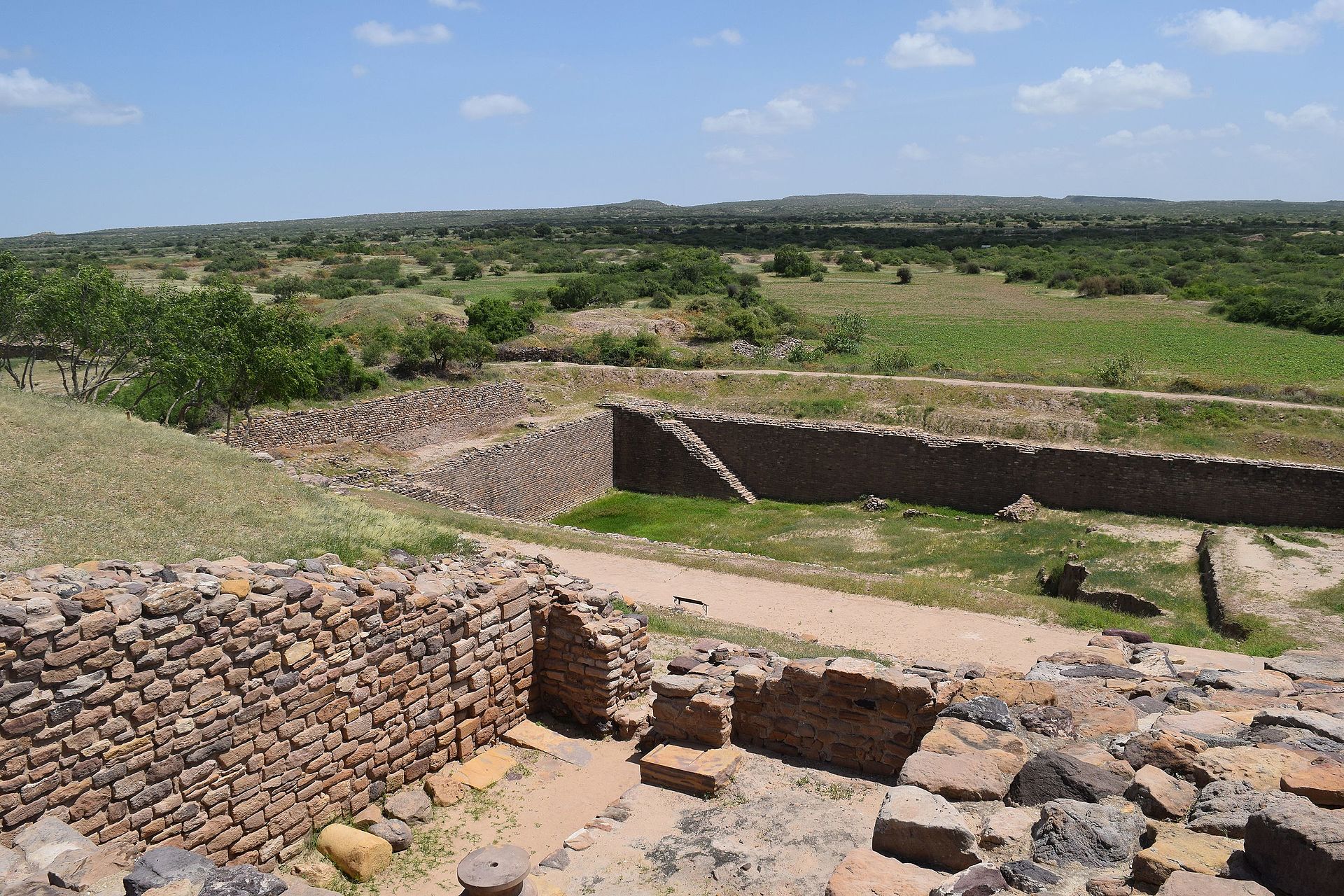
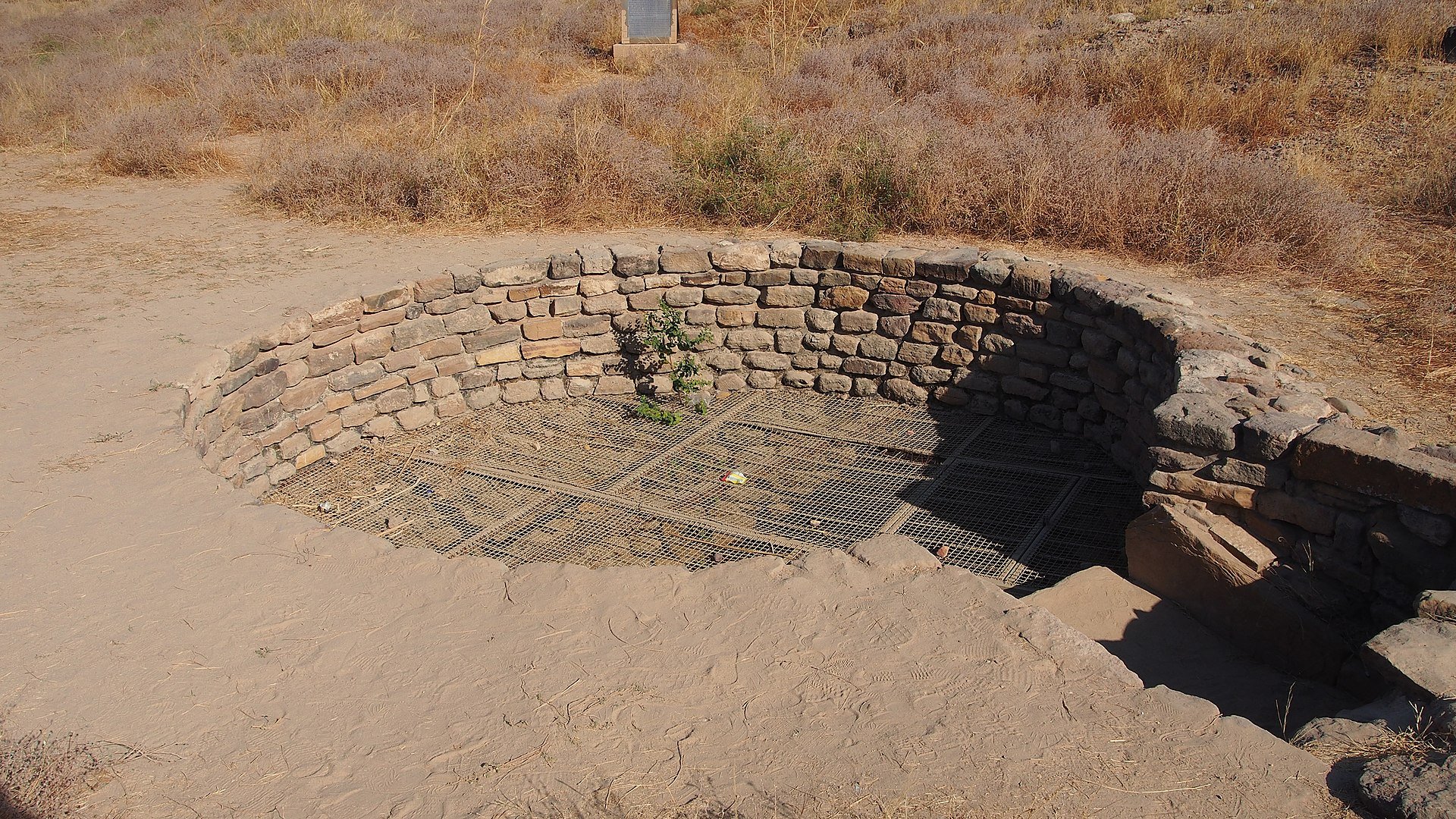
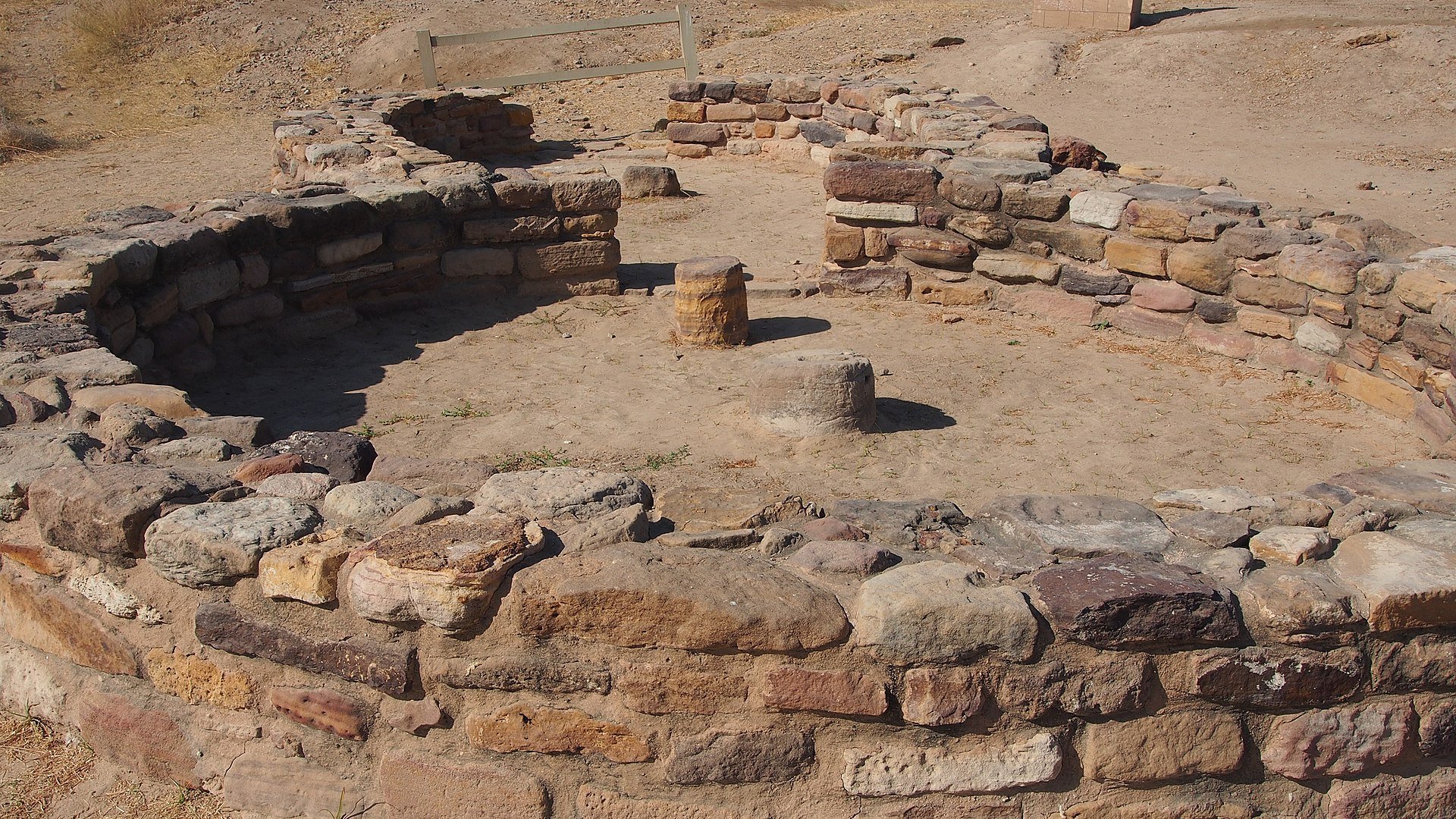
Dholavira in Gujarat, India, is one of the largest cities of Indus Valley Civilisation, with steps to reach the water level in artificially constructed reservoirs. [Source – Wikipedia] The Well at ancient Harappan city of Dholavira. [Source – Wikipedia] Circular houses of Dholavira. [Source – Wikipedia]
*
With its naturally ventilated and uniformly baked clay brick houses, well connected grid-patterned streets, an elaborate drainage system (some of these 4,500-year-old drains still perfectly operational), public washrooms, dustbins, around 700 freshwater wells, a massive granary, a citadel, uniformly made artefacts, seals and weights – Mohenjo-Daro was one of the twin capital towns, along with Harappa, of the Indus Valley civilisation.
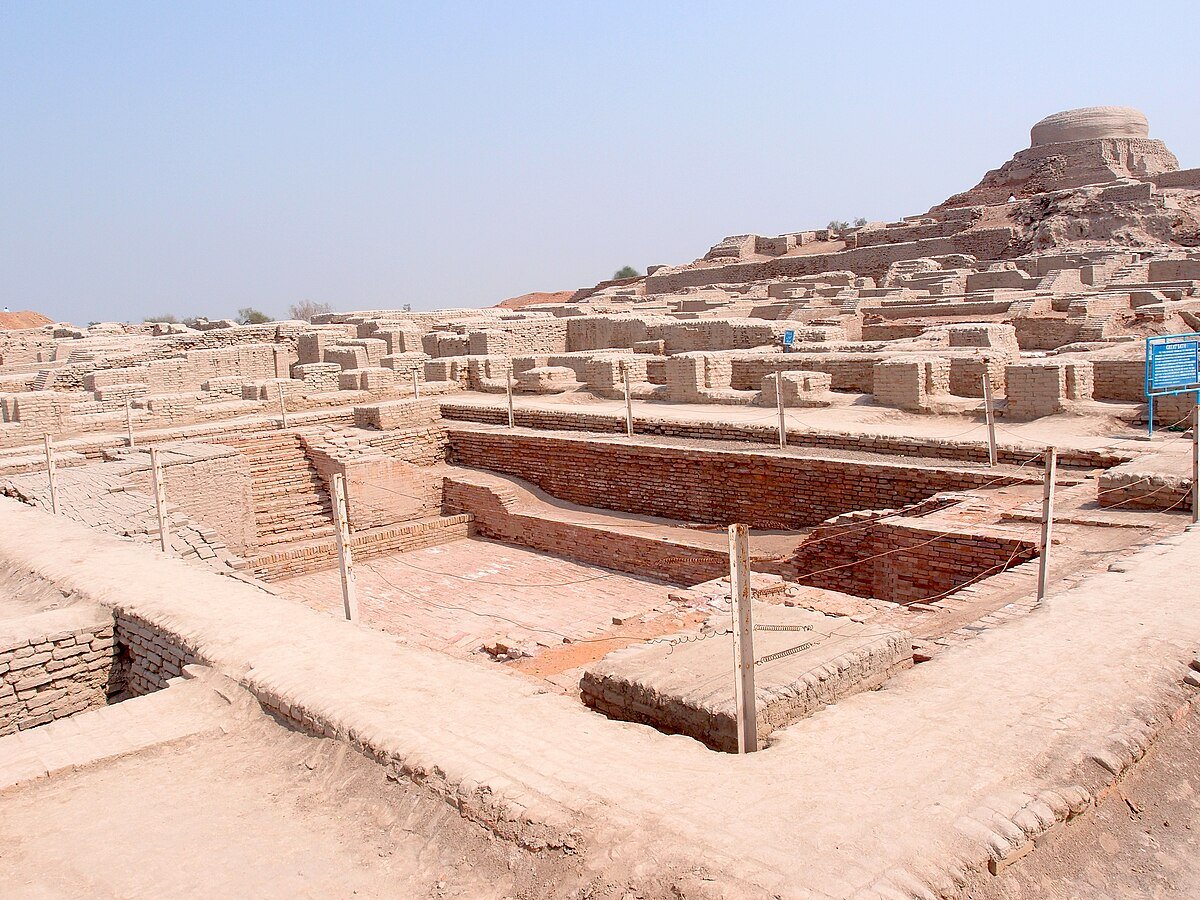
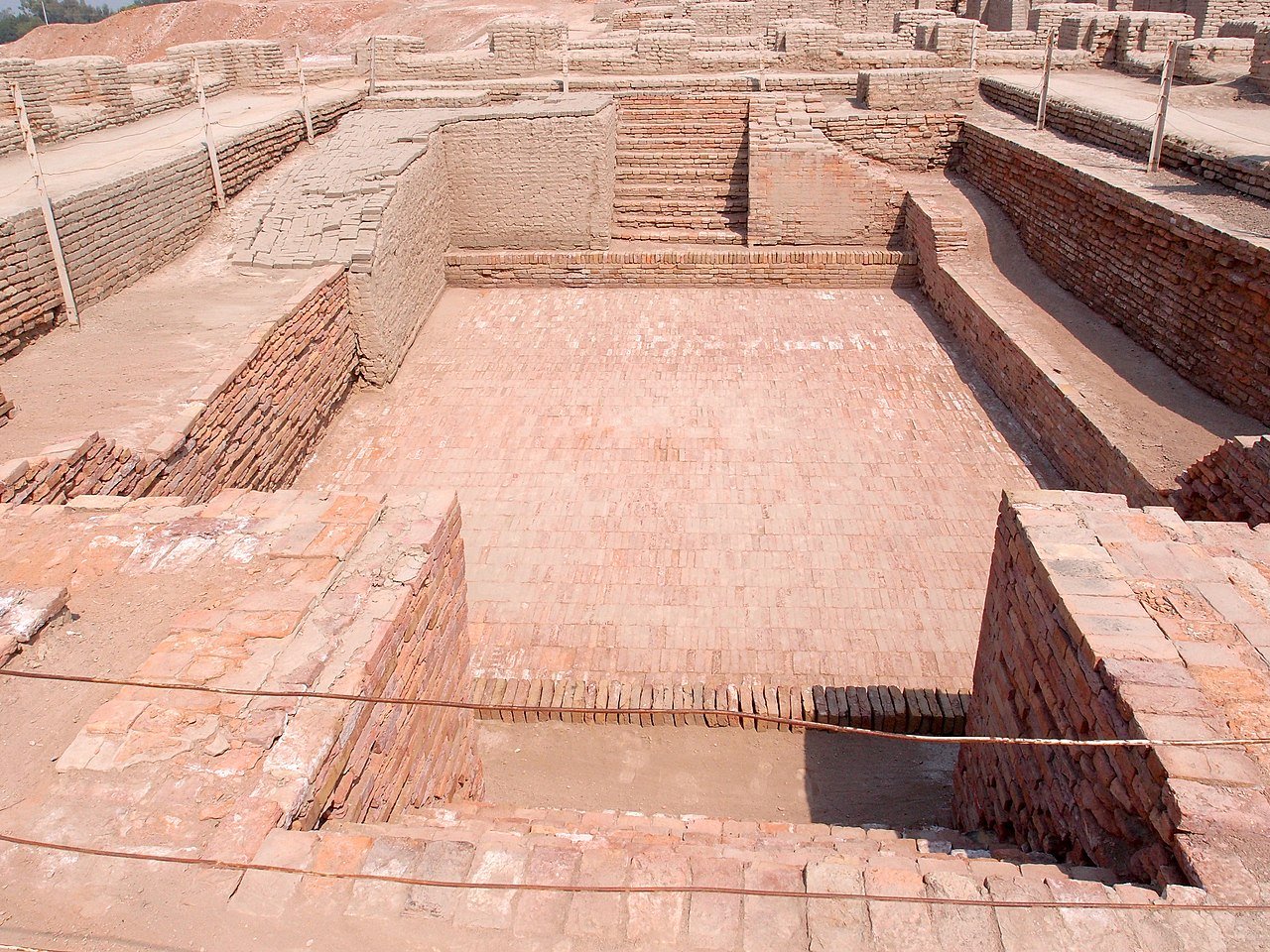
The most important structure excavated here is not a palace or a temple, but a public bath – known as the Great Bath – also called the “earliest public water tank of the ancient world”.
Tightly fitted bricks and a layer of bitumen (waterproof tar) made the floor of the bath watertight; it was a large building with several rooms, one of which also had a freshwater well.
*
*
The ruins of what was once a large multi-storied building – now termed as the House of Priests – right across the street of the Great Bath, reinforces the idea that the bath had a sacred purpose.
Most scholars agree that this tank would have been used for special religious functions where water was used to purify and renew the well-being of the bathers. This indicates the importance attached to ceremonial bathing in sacred tanks, pools and rivers since time immemorial.
J. M. Kenoyer
*

A single soapstone seated structure termed as “Priest-King” by the archaeologists does not suggest that a monarchy or a priest ruled the city of Mohenjo-Daro, yet the remarkable urban planning and meticulous construction focusing on public welfare hints at probably a council of elders and a community that worked together.
Fiction
A Mohenjo-Daro’s citizen’s Diary
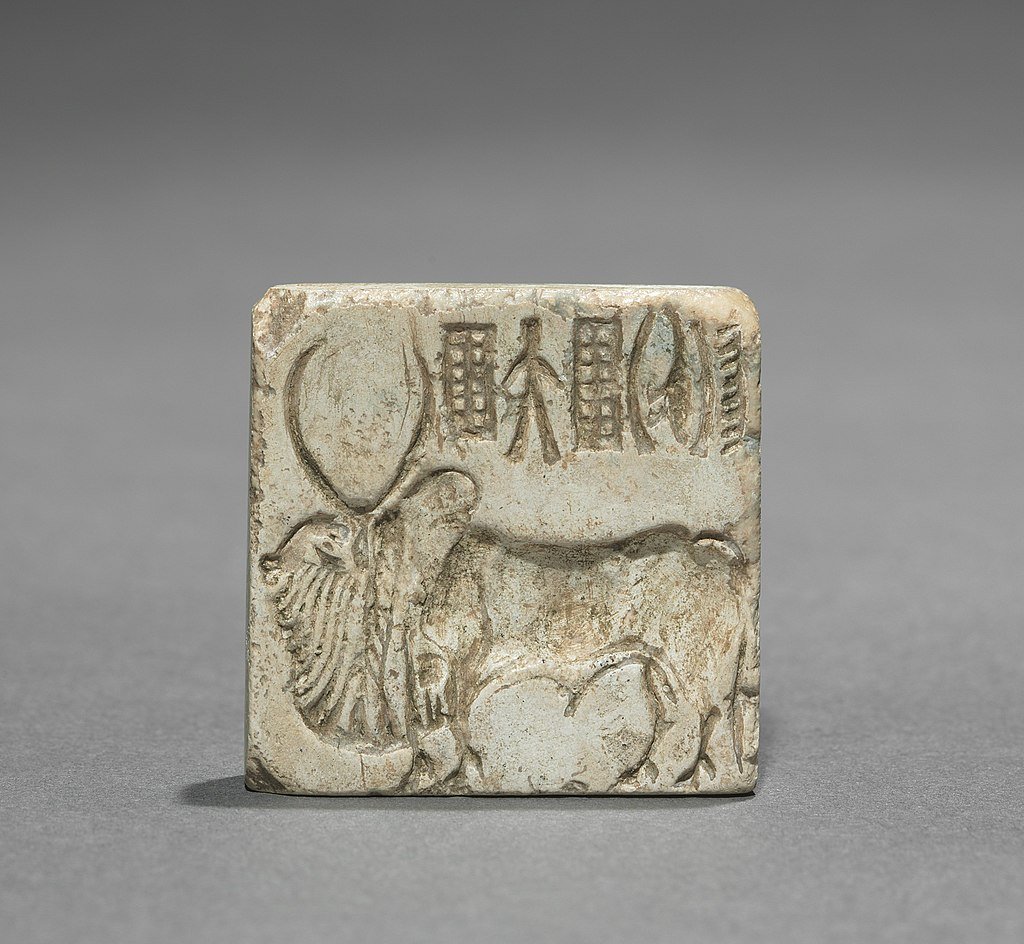
[Source – Wikipedia]
Day – Sunny
Got up. Slipped from broken stairs. Mended. Water’s fresh, took bath, drank plenty.
Seals made – water buffaloes, elephants, bulls, rhinoceros. Ha!
Day – Sunny, Clouds Playing
At The Great Bath. Slipped from slippery stairs. Cleaned. Cleaned more. Got fresh water from the well. Poured. Poured more. Thanked noble Indus.
Day – Too Rainy
Group work. Mending limestone slabs. Mended. Dry granary functions. Ate well. Didn’t slip. Healed.
Day – Raining
At The Great Bath. Mending roof. Unfinished. Slipped. Fell into the Bath. Resurrected. Ha!
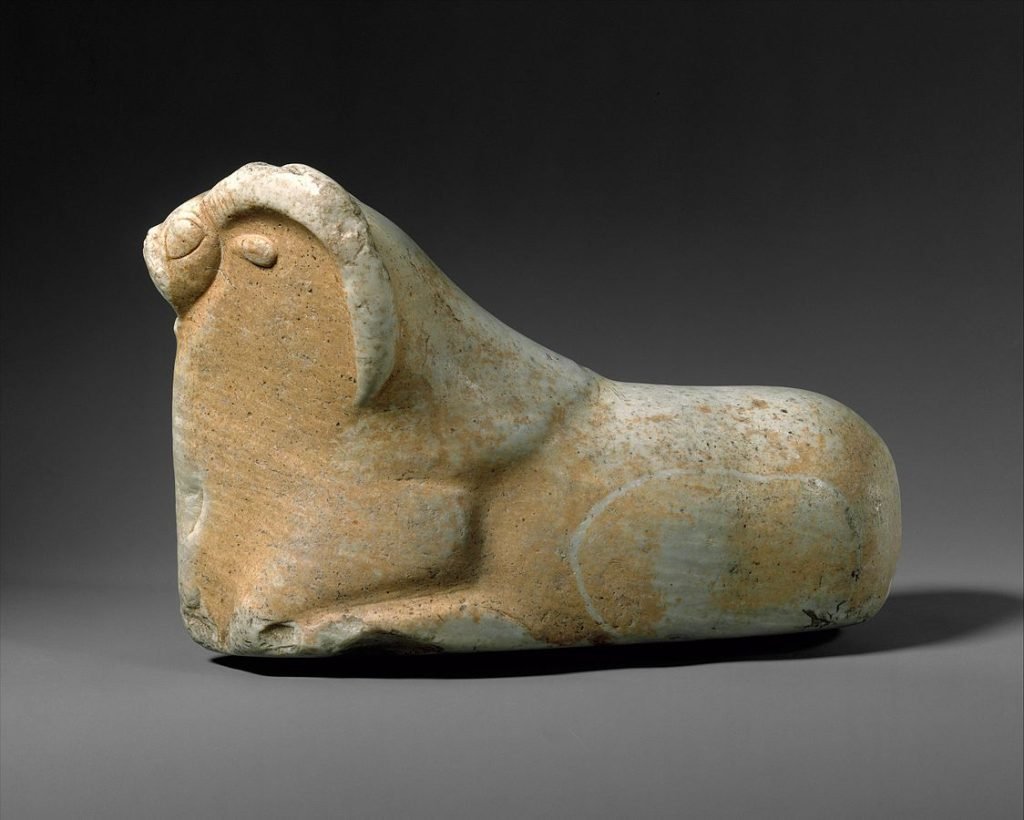
[Source – Wikipedia]
*
Blogger’s Note –
Only ten percent of Mohenjo-Daro has been excavated so far and yet it shows how grand the city must have been, its citizens living a simple life, nurturing good daily-living-practices; either celebrating special occasions at the Great Bath or just storing water, humbly accepting what the Indus River brought.
Spiritually awakened or not, religiously enlightened or not, fiercely ambitious or not, the Indus Valley folks definitely, without any doubt, slept well. And that’s their secret, if there is any. They rested and digested fantastically and so they functioned wonderfully. Maybe they slept for 12-14 hours, working from dawn, with a calming break around noon time, to early evening. Not rushing or worrying when at work.
And so, well rested, they loved water – fresh, salty, rainy (and were also aware about floods; they constantly rebuilt their buildings in cities like Mohenjo-Daro), and fire – for they loved baking bricks, and music and art – for ahm…The Dancing Girl, the ornaments and toys. They loved to work.
Every task was a joint venture, everything done together with nothing but the Sunny/Rainy/Cloudy day in front of them. And then the starry and peaceful night, when the wind played a lullaby and one with nature, they slept.
Good sleep made them bright and happy.
*
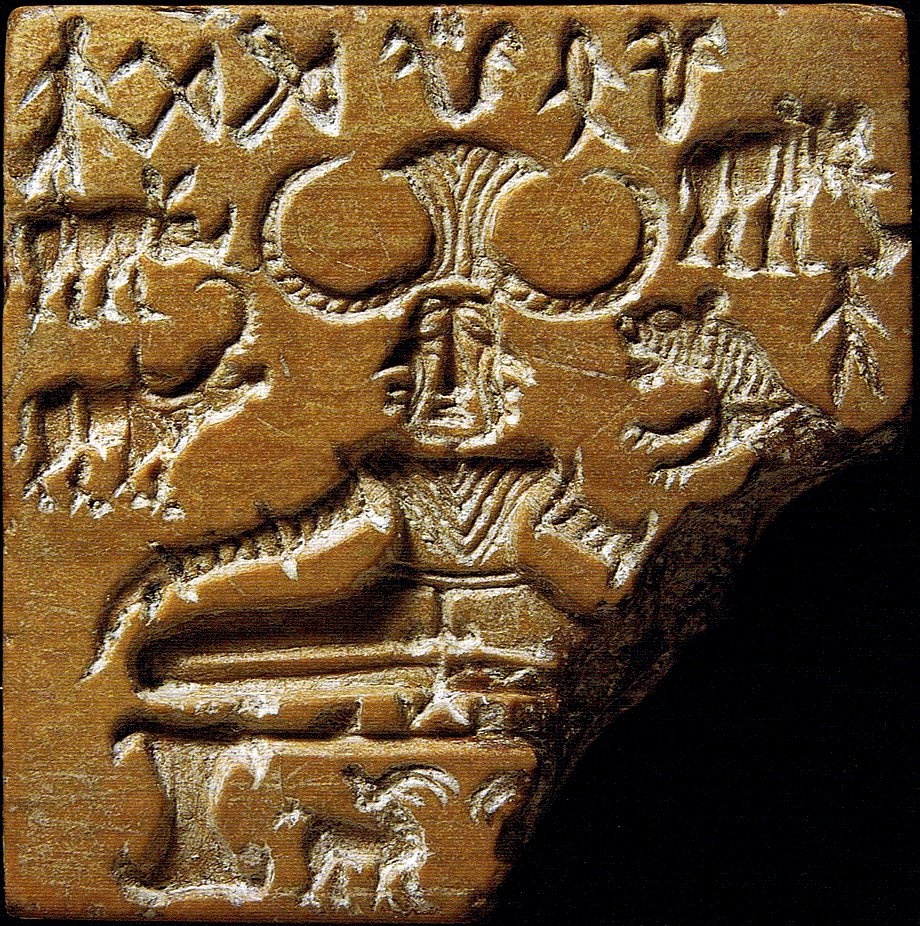
[Source – Wikipedia]
Read further –
*
Rediscovering the magic of Mohenjo-Daro
Indus Valley Civilisation, Mohenjo-Daro and the Cradle of Civilisation
*
Watch to learn –
*
At the Great Bath, Bollywood style… enjoy –
Weekly Newsletter
Recent Posts














Superb writing 🤗 well-done 👍
Thanks for reading, thanks for taking out time.
Ya-hoy! :)
History is so charming yet alarming, dreamy yet real, in the past yet feels like will be repeated in the future in some way – thank you for this post writer! 🙌
Most welcome, dear friend. I am glad you enjoyed the post. :D
Yeah, and we carry both the past and the future in the present…
Cheers, ya-hoy!
Thanks!
clinical start, imagined past, and sweet appreciation. what a nice post, J ji.
nice song at the end too. the song somewhat i remembered, just that I had about forgotten that film release :)
the journaling guy seems to have made a gratification entry around lunchtime. i’m decoding that he went in for a siesta just then. all i would like to say is that i appreciate a guy who is thankful just before hitting the bed.
also also it just occurred, i assumed the dairy to be belonging to a guy, mostly because of the repairing labour and all. but well possibly it was a girl. i would like to think like that now. the bath repairing girl or dancing while repairing girl
Oh-ya-hoy!! ‘Dancing while repairing girl’… that is her, fantastic, working rhythmically. This Harappan citizen rocks! :D
A wonderful observation, ‘one being thankful’, cool-cool-cool, thanks Dorje!
The song is calming… A.R Rahman’s magical! B)
Ya-hoy, thanks again!
Read this again, and was charmed and transported again, so impressive this piece is. :)