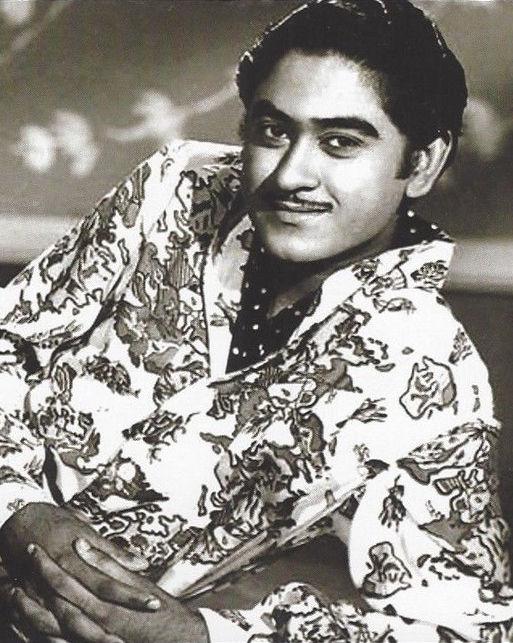
The Clown Hero – Kishore Kumar(1929-1987) [Source – Wikipedia]
*
Like a carefree child walking down the hilly road, singing and frolicking, beaming like the bright blue sky and swirling like the wildflowers, ready for adventure, now here, now there, shouting a big “hello!” to no one in particular, catching the lovely echo, whistling, yodelling, walking swiftly, playing hide and seek with the sun, breathing the fragrant air, holding on to his hat, turning to see what is left behind, then turning to see what lies ahead, plucking a flower, smelling it, keeping it in his shirt’s pocket, the clown hero keeps walking with joy, the heavy backpack not bothering him at all.
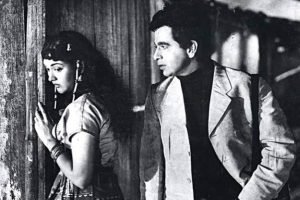
Indian cinema of the 1950s is often remembered through its iconic heroes like Dilip Kumar, the tragedy king, Raj Kapoor, the dreamer and Dev Anand, the charmer. Against this backdrop emerged Kishore Kumar, a performer who brought laughter, music and mischief to the Hindi film hero.
This curated archive explores Kishore Kumar’s early career, before he became Hindi cinema’s most celebrated playback singer. Through a series of black-and-white musical comedies and romantic films, he crafted a unique screen persona and introduced a new kind of hero who is playful, mischievous and emotionally expressive.
The 16 songs from 9 films and 1 film clip in this archive show how comedy became an integral part of romance in Kishore Kumar’s films. Through teasing, playful banter, misunderstandings and musical performance, Kishore Kumar transformed love into a space of humour, spontaneity and charm.
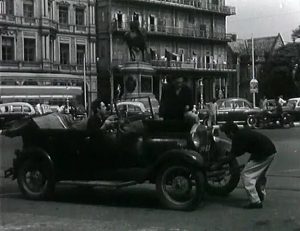
These songs also capture a changing India, with their heroes moving through garages, railway stations and city streets, embracing modern lifestyles and new forms of youthful self-expression. Unlike the tragic or larger-than-life heroes of the era, Kishore Kumar’s characters are imperfect, awkward, playful and deeply human. His yodelling, vocal experimentation, physical comedy and effortless improvisation gave his performances a sense of spontaneity, making it seem as though anything could happen once he appeared on screen. In films such as Chalti Ka Naam Gaadi, Jhumroo and Half Ticket, songs become more than musical interludes. They help shape character, humour and narrative while reinforcing Kishore Kumar’s unique screen persona.
Yet this playful image was only one side of Kishore Kumar’s immense talent. Though best remembered as a singer, he was also a gifted actor, filmmaker, writer, director and composer. While music remained his first love, he entered acting largely at the encouragement of his elder brother, Ashok Kumar. Beyond comedy, films such as Jhumroo, Bandi, Naukri and Door Gagan Ki Chhaon Mein also showcase his creative range and ability to portray serious and emotionally complex characters.
More than popular songs, these works capture the emergence of Kishore Kumar’s distinctive screen identity. Long before he became the iconic playback voice of the 1970s, he had already expanded the possibilities of the Hindi film hero through laughter, music, romance and performance.
Crystal walked in the centre of the quiet road, laughing, frolicking, humming a sweet tune, breaking away from the role of the pedestrian, swaying and moving forward, sideways and backwards, sideways.
Reaching on time didn’t bother her, so she jumped out of joy, tapping on the road as if saying hello. The road, a bit confused, said “where to?” And Crystal tapped, tapped, tapped and said, “do you change and grow bigger when it’s quiet?”
Quietly the road began observing itself (and continues to do so even now).
Walking ahead Crystal met a tall tree that mimed some ten thousand stories, each one blowing away with the wind, now and then. She sat to listen, then walked away carrying a dozen (stories) in her pocket.
She has been walking since so long, she doesn’t remember when and where did she start. But nothing is amiss and so she continues ahead with now some hundreds of stories in her pocket.
Crystal stops only near water-wells to drink the cool calming water and see her reflection in it before gulping it down. An older self beams back at her from deep within the well and Crystal, checking her hairstyle, waves a greeting, rippling the water.
The stone steps, the tiny plants, the rope and tin bucket, in union with the well, then tell the visitor (Crystal) a story about the well and the sky. She is carrying this tale along, she dropped some (stories) there to make some space.
And she is walking, walking, walking away… laughing and frolicking, humming a tune, breaking away from the role of the pedestrian, dancing on those days when it rains.
Quiet and meditative energy of the whole world appears to erode everything here for it is a rocky desert region, and that golden sun and that bright moon drop shadows, following every soul as if to engulf it.
But that which is eroding is full of life and not static. It moves in all directions, in exuberance, this energy does, swallowing whatever comes in between.
Nothing is lost here and nothing is found, everything stays right in front of your eyes and you take in as much as you can.
A कारवाँ (a caravan of people travelling together) moves through such a land and is caught unawares in this directionless, seamless bigger movement. They stay in shock until they learn to tune themselves to what is unfolding.
What is unfolding is too simple to be seen in a rush, it is a drama that is acting upon itself. Its movements are beautiful, in stillness it rises and flowing it colours us all, sooner or later.
The कारवाँ sees its beauty, at times terrified by its brutal suddenness, unable to see its care in a rush. They finally become one with the quiet and meditative energy of the whole world, the whole universe that appear to be eroding everything here.
Sirāt is a 2025 drama road film directed by Óliver Laxe and co-written by Santiago Fillol and Laxe. It follows a father in search of his missing daughter along with his son and a group of ravers in the deserts of southern Morocco. – Wikipedia [Image source – whentostream.com]
I forgot my hat, the cat on the mat didn’t forget anything, but I did, somehow, somewhere, my hat.
A summer fresh rhyme, time for the flowers to blush and soak in the summer fresh rhyme, flower, them I looked at with love, picked and plucked, and placed neatly on my hat that then looked summer fresh.
Our colours matched, summer fresh orange and violet, my hat and tiny bead-like flowers as if beaded in a chain, the summer fresh evening sky, seen from my room’s window.
My room, my small room, an artist’s room. A dream for some. Back then? No, even now!
A chair and a table and good space to work and rest and look at the summer fresh evening sky and rolling gushy whispery light clouds through the window.
And the neighbouring spaces, floating yet firm terraces, all cheerful, soaking in the summer fresh colour and air.
In the room, small room, I roam and wave my hat, let it dance and then rest on the chair, I spoke through it and it spoke on my behalf, my hat, with all that appeared static but wasn’t.
The hat carried and passed my restless ideas to nowhere and no one; the calm space let the restless idea be, which when rested, breathed its last and vanished. The artist’s room continued breathing and then so did the artist, and every time later, even after losing her hat.
The cat sitting on the mat, the neighbour’s cat, this one, a peace-loving warrior, jumped up when the artist opened the door, climbed to the window, its tail waving a slow cheerio at the artist before sauntering out on the roof top.
Back in the room, hat still missing, the artist sat down to work, breathing in the room’s calmness inside, forgetting about the matters that followed her till the room’s door shut.
One glance around, the hat’s not in the room, the artist sighs, gets up, walks towards the window, finds that cat on a different terrace, sitting still like a statue, aware about the artist’s glance, itself looking downwards at a passer-by – a dog, notices the artist too and turns looking up at the summer fresh sky and then goes back to work.
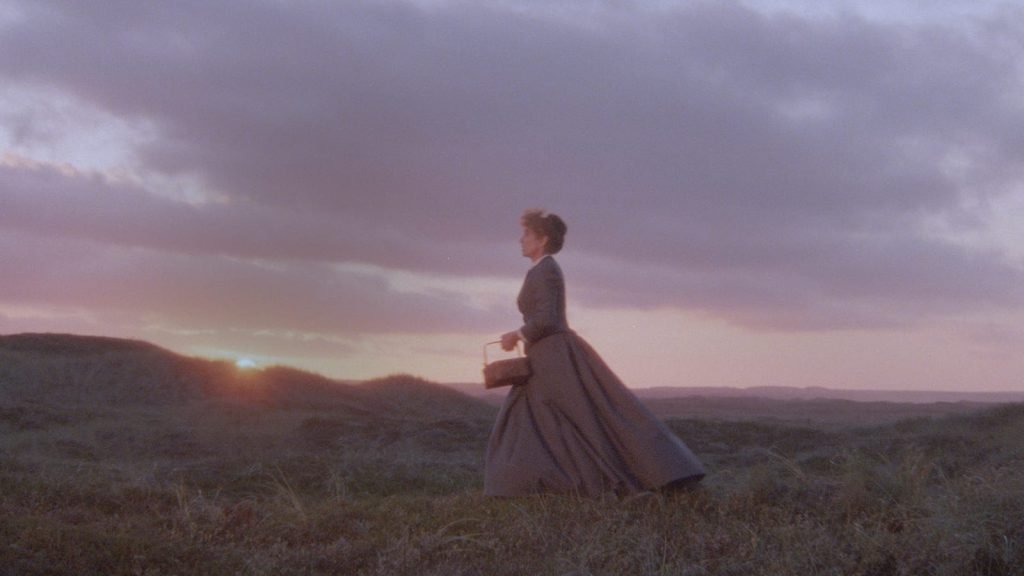
A Corner of the Artist’s Room in Paris by Gwen John (1876 – 1939) inspired the blogger.
Together it rises and together it falls, together it sees and together it takes us all.
Some lives afloat, literally, on a boat, do nothing much but are going with the flow. They rowed and roamed, the city and the jungle – thin line dividing the both not visible anymore.
The city now as quiet as the jungle, though decidedly more dead for it died stiff and in its rigidity that always glowed in its want to devour more and more and more.
But that it was made to go with the flow, it has long shed the many well-measured ideas of victory and defeat and has accepted with open eyes what it saw, what it is seeing now.
The jungle – quiet and alive – broke and fell and bowed to the Flow, peeking with wet eyes the beauty, the beauty of the Flow that the sun and the moon stopped to witness, that the winds tried to match, that the rain tried to touch – the beauty that came in the jungle’s share.
Some lives afloat, at times on a boat, at times moving in the wet jungle, did not try to stubbornly know the meaning of it all, deep breaths they took and flowed.
Not waiting and hoping for a miracle rather living it.
Source – Wikipedia
Source – Wikipedia
Source – IMDB
Flowis a 2024 dialogue-free animation film, written and produced by Latvian filmmakers Gints Zilbalodis and Matiss Kaza, directed by Gints Zilbalodis. It is the story of a cat and the animals it meets in a post-apocalyptic world where they all try to survive, facing the extreme and sudden rise and fall in the water levels around them.
Read more about this fantastic film that used a free and open-source animation software (Blender), that didn’t use any storyboards, has no deleted scenes and that used real voices of the animals.
Flow also won the Best Animated Feature award at the 97th Academy Awards and also won the Golden Globe Award for Best Animated Feature Film.
The sound of an axe against the giant tree’s trunk breaks the quiet air, chopping it off into pieces, bit-by-bit, the air is stunned.
Mister, why would you cut down trees?
The fragrance of the giant tree’s old life, full of a mixture of rich air, earth, water, light and love, now bleeding, sharpening the axe with every hit, giving-giving-giving with every touch, revives the stunned air then.
Mister, why would you cut down trees?
Them sparrows, squirrels and owls, eagles look at from a distance, them lizards, beetles, butterflies, bees, run towards a new shelter, them ants keep crawling for they know they must find a new path for the giant tree is being hit by a sharp message.
Mister, why would you cut down trees?
The creepers and crawlers were cut down first, they are lying in a bundle chopped off there and there, life in their slippery veins still taking in the thick grim air moving around the tree. The air hugs the tree tightly, now and then, and every time it does, the axe gets stuck in the trunk, stunned by love.
Mister, why would you cut down trees?
The fungi and lichen that sat on the giant tree’s trunk and branches, meditating for ages, open their eyes to observe carefully everything, every hit, every drop, every turn of the air around the giant tree. It observes and becomes one with the slow killing, seeing, dying along, yet living to pass it on.
Mister, why would you cut down trees?
The giant tree is about to fall down, the birds know it, and so does everyone that is alive there, but the man doubts and waits. The man pushes and picks the axe again, in a hurry for a solo reason. The giant tree sways a little, it is ready, look, hear, it comes down kissing gravity.
The man shudders, for the giant tree is down and it says nothing, it cries not. The air feels heavy, almost dead and the man senses it not.
Mister, why did you cut done the tree?
“For fire and to build a house, a garden, a giant building, a bridge, a highway, a dam, a runway, a platform on which one can stand and address thousands and thousands, explaining them the many ways to live a better life, a peaceful life, a cleaner life with fresh air for all.”
Somewhere, a seed comes alive and is gently caressed by the sun-soaked bright air and the rich wet earth; and so, like it happens every time, with the very first step that the seed takes, it knows of love.
Tied to a drunkard good-for-nothing husband, Ma seems to be ready to cross the bridge today, yes she is, I saw it in her eyes, she spoke a different language that silenced him, my so-called father. And we will walk away… away from him, away from poverty… Ma, I promise…
Alas, on returning home, the son found his mother packing bags… she, a ‘bandini’, is ready to follow her old husband to their old village… a broken hut on a parched land awaits her… her home.
Images by Jagriti Rumi
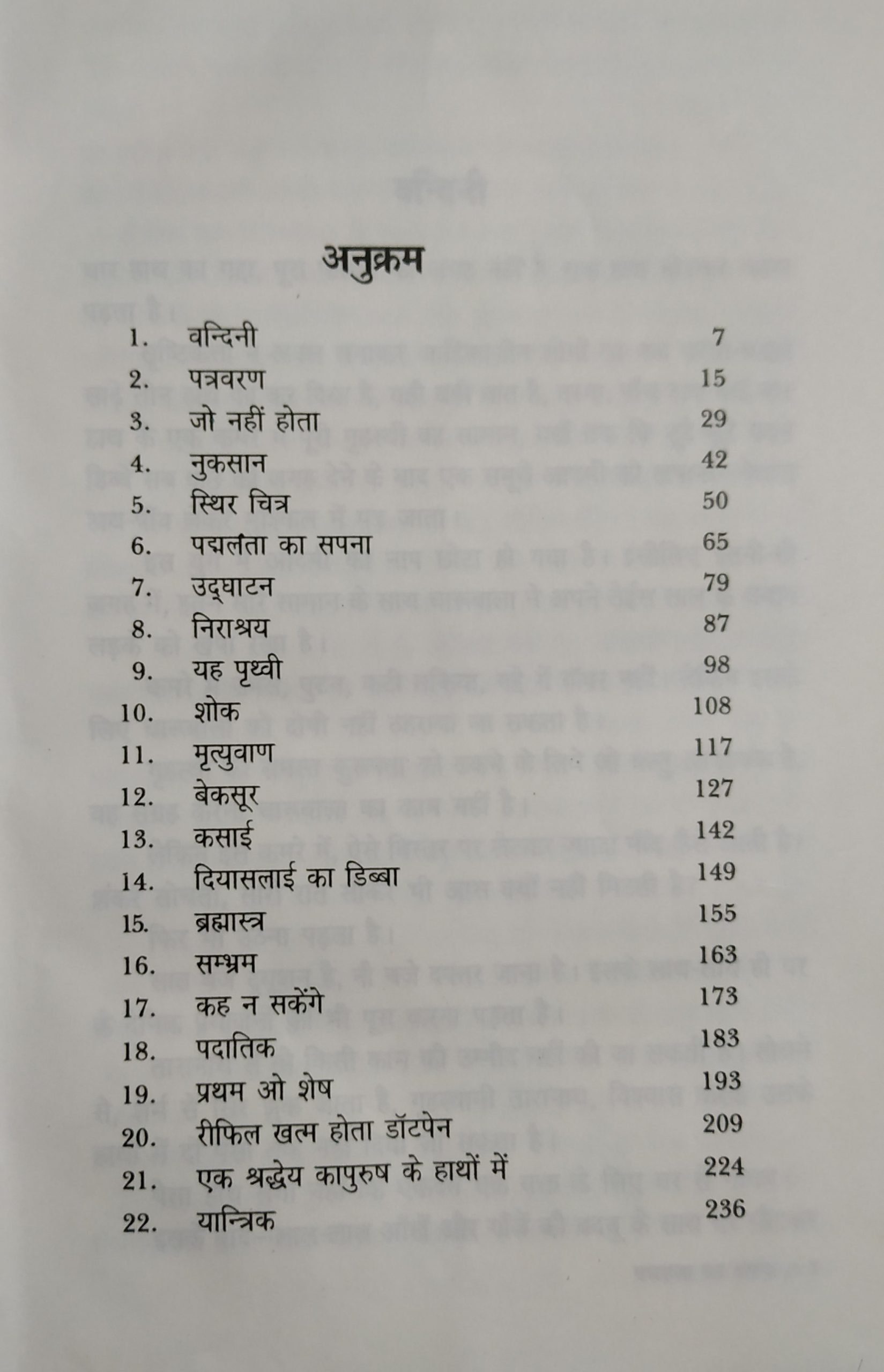
Index
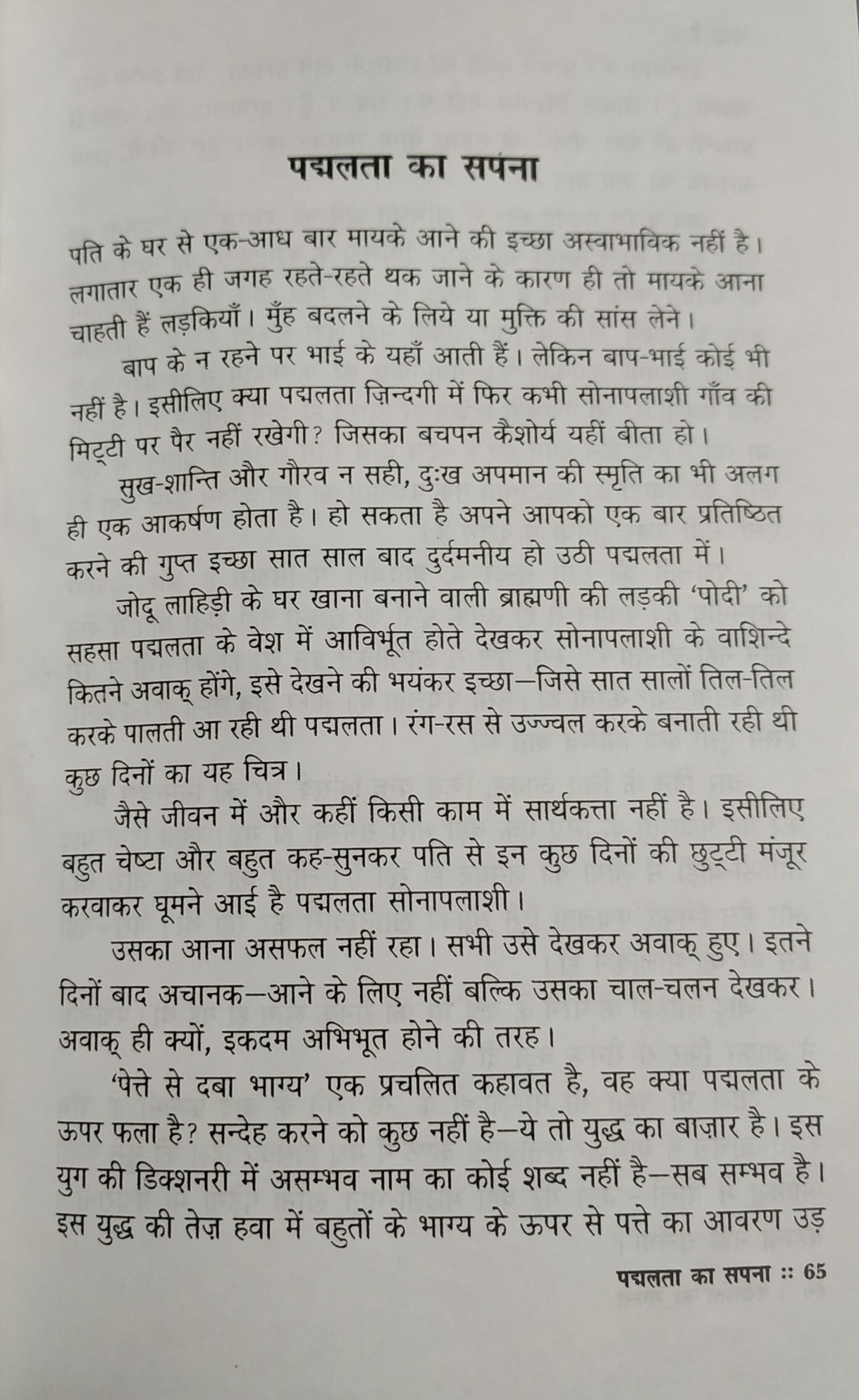
First page of the story ‘Padamlata’s Dream’.
Last page of the story ‘Padamlata’s Dream’.
*
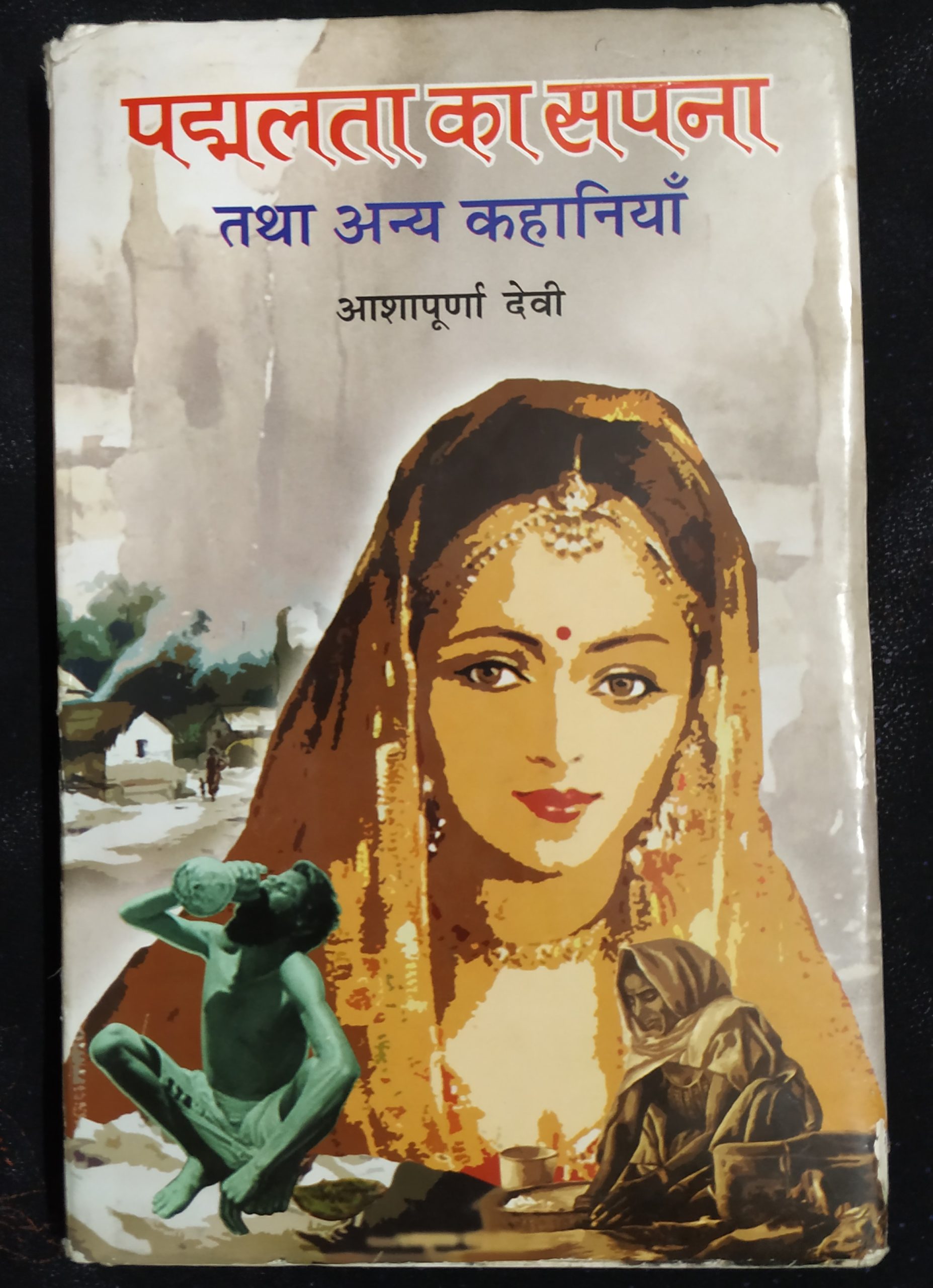
पदम्लता का सपना/Padamlata’s Dream
…क्या पदम्लता ज़िन्दगी में फिर कभी सोनापलाशी गाँव की मिटटी पर पैर नहीं रखेगी? जिसका बचपन केशोर्य यहीं बीता हो। सुख शांति और गौरव न सही, दुःख अपमान की समृति का भी अलग ही एक आकर्षण होता है। हो सकता है अपने आपको एक बार प्रतिष्ठित करने की गुप्त इच्छा सात साल बाद दुर्दमनीय हो उठी पदम्लता में।
जोदू लाहिड़ी के घर खाना बनाने वाली ब्राह्मणी की लड़की ‘पोदी’ को सहसा पदम्लता के वेश में आविर्भूत होते देखकर सोनापलाशी के वाशिंदे कितने अवाक होंगे, इसे देखने की भयंकर इच्छा – जिसे सात सालों तिल-तिल करके पालती आ रही थी पदम्लता…
-पदम्लता का सपना
*
In the corner of the open veranda, little Podi slept close to her mother, boldly showing her back to the cold winters that kept prodding her. When her running nose and childhood got cured itself and bloomed into a beautiful young Padamlata, people couldn’t believe it nor could they believe when she got married. How did the old maid managed to marry little Podi? That too to a school master?
Word has it that Padamlata has turned into gold… she is a walking, talking bank… one who doesn’t believe in “interests”. Wide-eyed, jealous, in awe… the folks of Sonapalashi village are witnessing this role reversal speechlessly, they speak up only to welcome Padamlata, singing her praises and remembering her late mother.
Padamlata’s dream has come true, elated, she wants nothing more. But back home, her husband has gone bankrupt. His savings, he hid well in the house, are gone.
Exactly how much? Ask Padamlata, for she had secretly taken an amount to Sonapalashi before leaving.
*
सिक्योरिटी जमा करने के लिए घर-दवार ज़मीन-जायदाद यथा सर्वस्व बेचकर जो दो हज़ार रूपए इकठा किए थे, वह रूपया चोरी चला गया है। तुम तो जानती हो, चोरों के डर से बक्से में न रखकर, रज़ाई रखने के टाँड पर रुपए की थैली छिपाकर राखी थी, लेकिन वहाँ भी चोर की नज़र कैसे पड़ी, यही आश्चर्य हो रहा है।
Old and ailing mother-in-law is no more, said the telegram early in the morning, just when Mr. Ji was leaving for the office. Imagining how Mrs. Ji will breakdown, shake mountains, tear rivers apart, he left to get his salary first, and later balance the personal world. He left only after tiptoeing to the window, keeping the telegram above the magazine, that too had arrived this morning.
Mrs. Ji unaware, walks to the room, finds the telegram as well as the magazine there; dumbstruck after reading about her mother’s death, she forgets to cry. There is no one around to acknowledge her absolute shock and pain. Her four months old son is crying in the kitchen, she rushes to tend to him.
Ashamed to reach home too late, Mr. Ji finds that Mrs. Ji has apparently not found the telegram; he finally breaks the news to Mrs. Ji, wondering if she hasn’t read it, how come the telegram shifted its place from sitting above to below the magazine and got a yellow spot of turmeric on it.
बेकसूर/Bekasoor (Innocent)
An open and shut case, thanks to so many witnesses who had not seen anything clearly, yet were sure how the business man’s son killed his wife in the darkness of late night by pushing her from the first floor. These witnesses, business man’s close relatives/rivals, had travelled via tram, ran and walked and persuaded the girl’s father to file an FIR before even seeing the dead girl’s face once.
The girl’s father, furious at first, wanting his son-in-law to be hanged immediately, realises it one day that his daughter’s old habit of sleepwalking got the best of her. The sun-in-law was not guilty.
That her suspicious husband read her letter before she could find out, yes, he read it yet again, read it shamelessly and tried to justify his stand, blaming her mother for always asking for money, probably assuming him to be a bank… sparked a fire within her.
Even though she turned this letter and her mother’s request for more money into ashes within herself, she couldn’t swallow her husband’s cold taunt, maybe 100th taunt and began to spit fire.
The smoke could have smothered the husband, but the joint family life quietly quelled this fire, that too unknowingly.
Entering the kitchen with a smile, engaging herself instantly, the wife didn’t let anyone guess that she had been on fire just a while ago.
A woman can also be like a matchbox…
कह न सकेंगे/Keh Na Sakenge (Speechless)
Back quite late, he is questioned by all – his wife, elder son, younger daughter – everyone who is at home. Irked to say the least, his behaviour irked the others. The old chap had come quietly, said he won’t eat and went to bed, then came to the kitchen to finish his dinner… But who is not at home?
His wife declares, as usual, that she will wait for their younger son to return. Slightly worried for him as protests and riots have erupted in the Calcutta city.
Who is not at home? The one who shouted at everyone in the tram and asked to de-board? One of the rioters? Because of whom the old chap, with aching knees, ran to a corner? In hiding he heard gun-shots and then heard someone describe a beautiful young boy with curly hair who had been hit.
The old chap, at home, remembers the sound of the gun shots and goes mum.
रीफिल खत्म होता एक डॉटपेन/Refill Khatam Hota Ek Dot Pen (Faulty Pen)
The whole day went in looking for grandma, but when did someone saw her stepping out of the puja room… she left without having her morning tea… not possible… run-run-run… no, not on the terrace or in the backyard speaking to the gardener, not at any of the neighbours’ place, or at the temple, not at her brother’s or sister’s house, not at the ghat or the bazaar… this double storey house has come to a standstill… elder son went to the office nevertheless… he has a government service unlike the younger son who is naturally expected to wait… late-late-late… assigning duties to others and he left… daughters-in-law tackled the chores and the inquisitive neighbours, relatives alike… when kids came home from the school, one spoke, “grandma must have gone to end her life…” and showed a note… grandma had tried to scribble something on it… “but the dot pen stopped working“, said the kid and laughed… the world swirled and the time became stiff as everyone took notice of it… late in the evening they heard grandma’s voice… she was bargaining with the rickshaw-wala… both her sons, daughters-in-law, grandchildren came running… she laughed and said she had gone to visit a temple… that is on the outskirts of the Calcutta city…
The family took a sigh of relief… and so did the grandmother…
The illustrious Ashapurna Devi. (1909 -1995) [Source – eyramagazine.com]
Winner of the Sahitya Akademi Fellowship (1994), Jnanpith Award and Padam Shri (1976), Ashapurna Devi was an eminent Indian writer who wrote in Bengali. She had the knack for writing realistic, powerful characters, all caught in the flow of life, facing, choosing, accepting, neglecting, forgetting, overcoming, surrendering to the drama… the drama called life.
Along the great rivers – Tigris, Euphrates, Nile, Indus, Yellow, Yangtze, coastal Peru rivers, Coatzacoalcos – rose the world’s oldest great civilisations – Mesopotamian, Egyptian, Indus Valley, Chinese, Caral-Supe, Mesoamerican. Rivers sustained these agricultural civilisations, providing food, fertile soil and better access to build trade relations with the rest of the world.
Archaeological findings provide us with a map that take us closer to these ancient civilisations, yet mysteries remain, as in the case of the Indus Valley civilisation, also known as the Harappan civilisation.
*
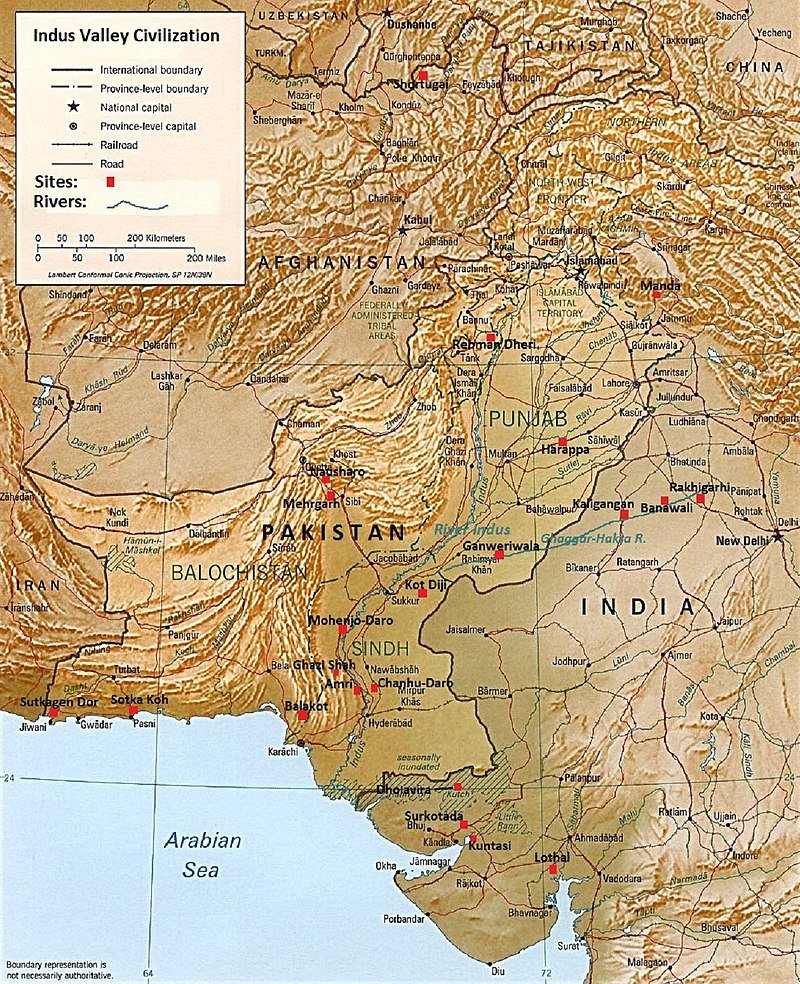
Major sites and extent of the Indus Valley Civilisation. [Source – Wikipedia]
*
Although bigger than Egyptian or Mesopotamian (spread across northwest India, Pakistan and northeast Afghanistan, more than 1500 sites being found), the Harappan society boasts no monumental marvels like the pyramids or a deciphered writing like the cuneiform, nor even a ruling class, a military, weapons of war and not even distinctive burial sites.
The historians found no evidence of violence either and therefore, a tectonic shift that dried up the river or a terribly great flood is seen as the main reason behind the Indus Valley civilisation’s final collapse.
Nevertheless, what was discovered makes Mohenjo-Daro and Dholavira – the main Indus Valley cities amongst others – world heritage sites of immense importance. Indus Valley people lived in a very well-planned city that was most likely cosmopolitan-natured.
*
Dholavira in Gujarat, India, is one of the largest cities of Indus Valley Civilisation, with steps to reach the water level in artificially constructed reservoirs. [Source – Wikipedia]
The Well at ancient Harappan city of Dholavira. [Source – Wikipedia]
Circular houses of Dholavira. [Source – Wikipedia]
*
With its naturally ventilated and uniformly baked clay brick houses, well connected grid-patterned streets, an elaborate drainage system (some of these 4,500-year-old drains still perfectly operational), public washrooms, dustbins, around 700 freshwater wells, a massive granary, a citadel, uniformly made artefacts, seals and weights – Mohenjo-Daro was one of the twin capital towns, along with Harappa, of the Indus Valley civilisation.
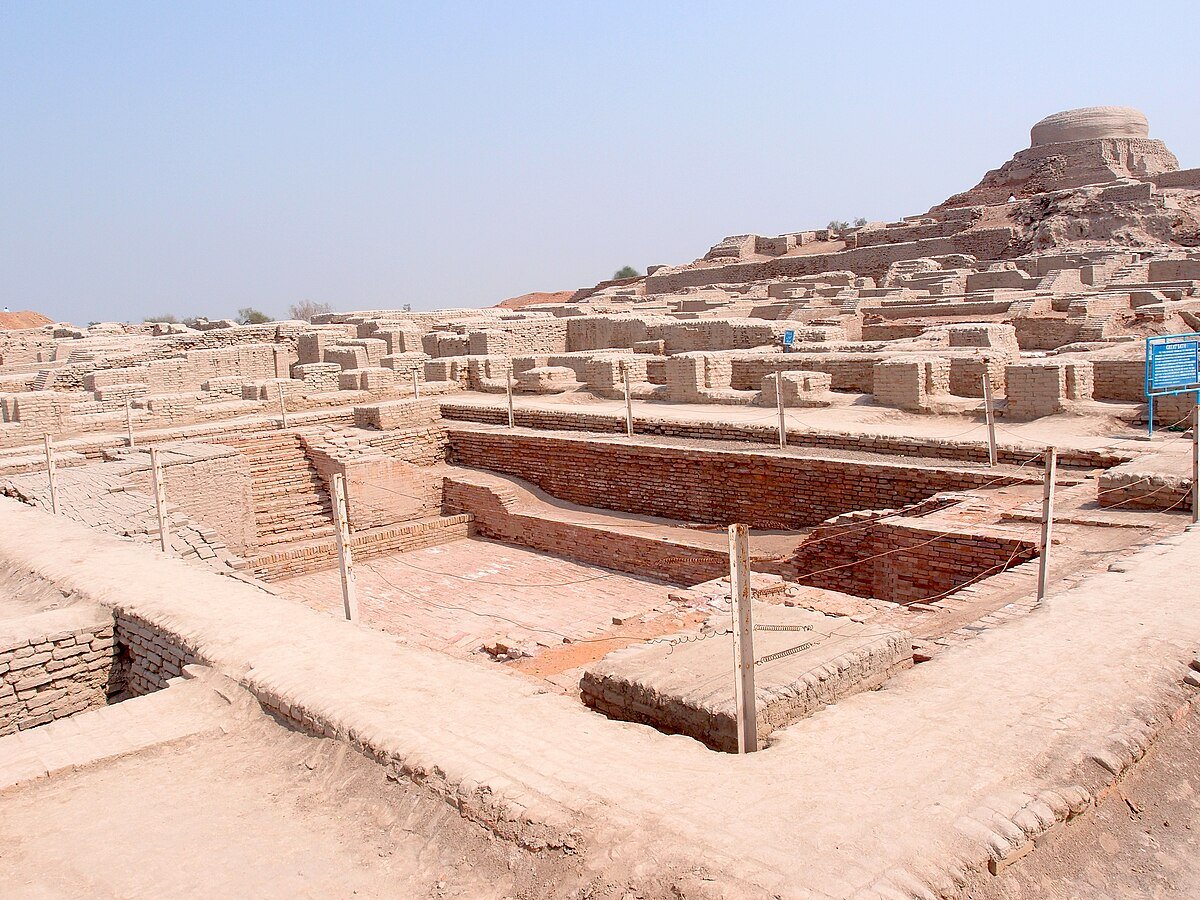
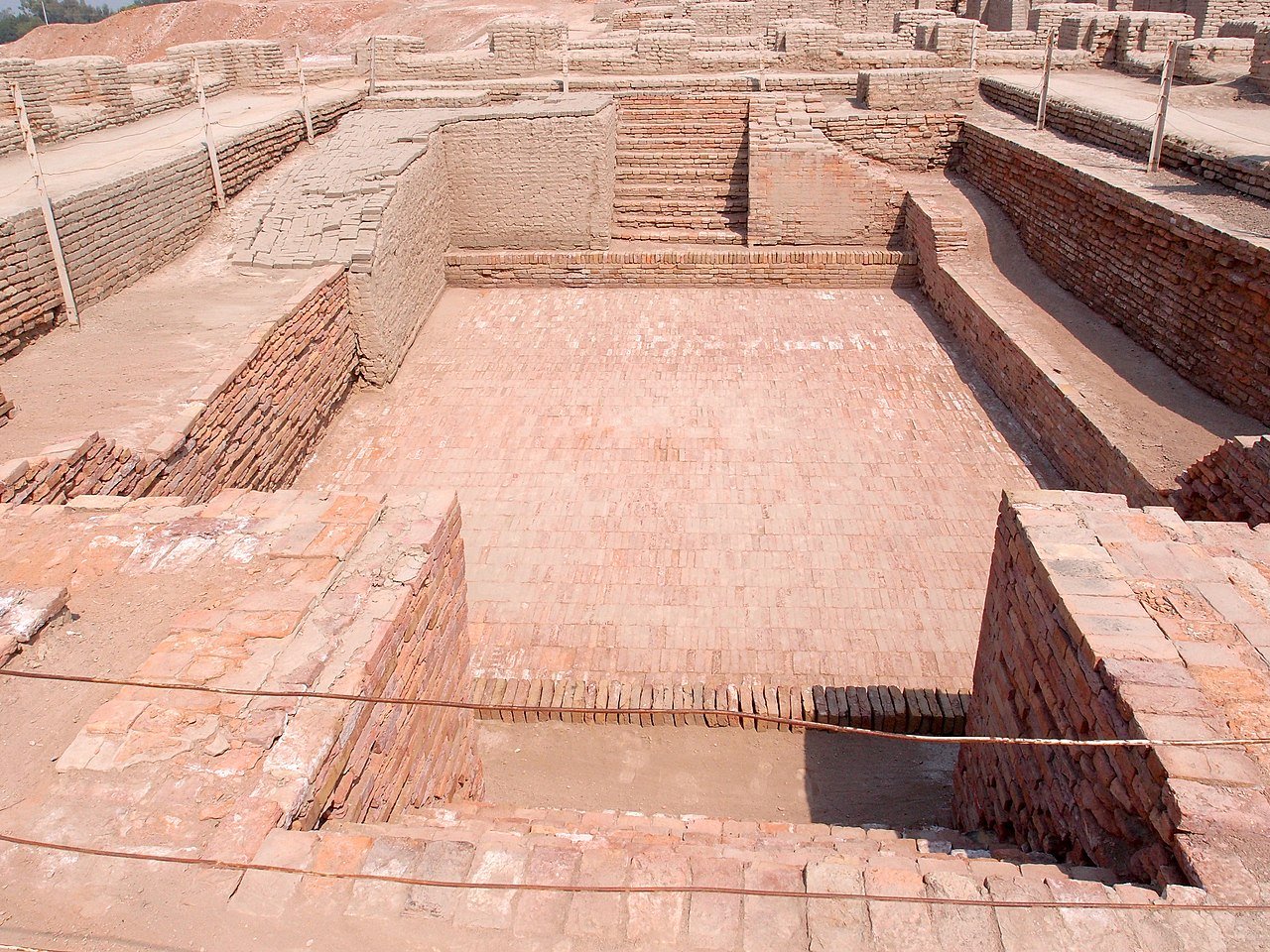
The most important structure excavated here is not a palace or a temple, but a public bath – known as the Great Bath – also called the “earliest public water tank of the ancient world”.
Tightly fitted bricks and a layer of bitumen (waterproof tar) made the floor of the bath watertight; it was a large building with several rooms, one of which also had a freshwater well.
*
Behold… the Great Bath. [Source – Wikipedia]
Stairs to enter the Great Bath. [Source – Wikipedia]
*
The ruins of what was once a large multi-storied building – now termed as the House of Priests – right across the street of the Great Bath, reinforces the idea that the bath had a sacred purpose.
Most scholars agree that this tank would have been used for special religious functions where water was used to purify and renew the well-being of the bathers. This indicates the importance attached to ceremonial bathing in sacred tanks, pools and rivers since time immemorial.
J. M. Kenoyer
*
“The Priest-King”, a seated stone sculpture at the National Museum, Karachi. [Source – Wikipedia]
A single soapstone seated structure termed as “Priest-King” by the archaeologists does not suggest that a monarchy or a priest ruled the city of Mohenjo-Daro, yet the remarkable urban planning and meticulous construction focusing on public welfare hints at probably a council of elders and a community that worked together.
Fiction
A Mohenjo-Daro’s citizen’s Diary
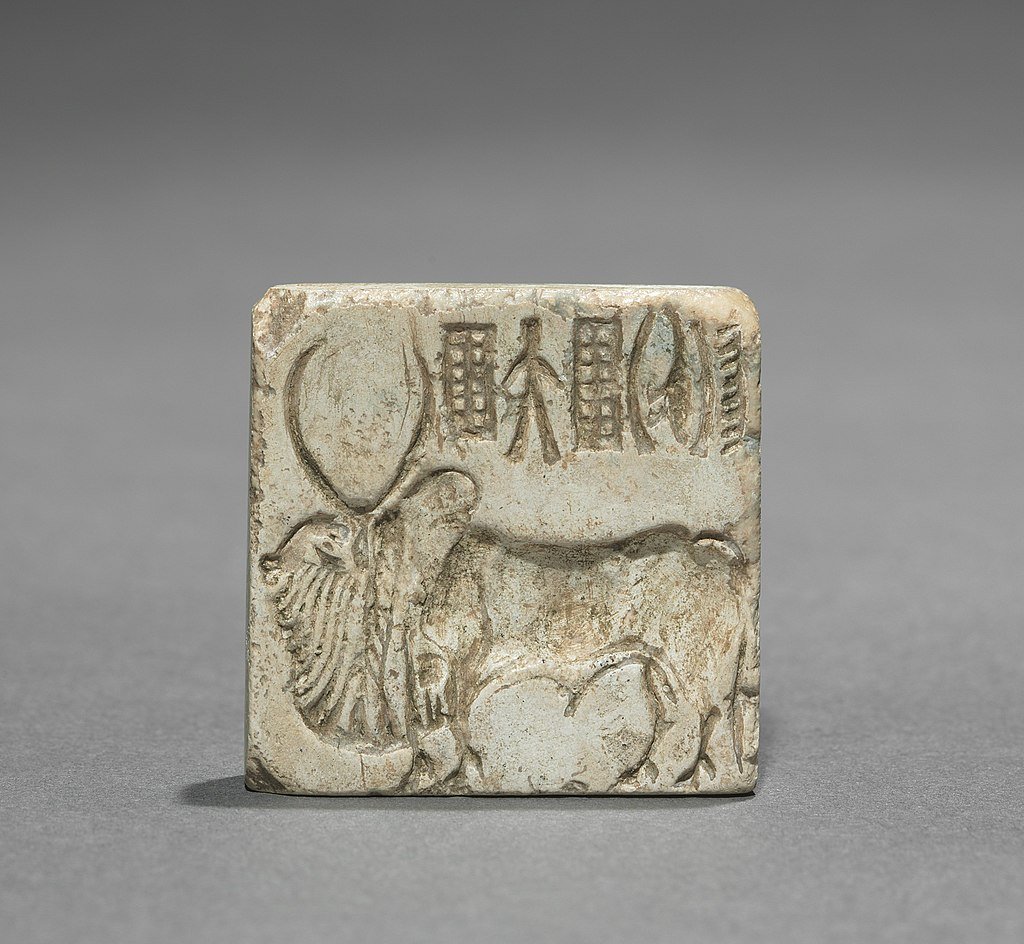
Seal with two-horned bull and inscription; 2010 BC; steatite; overall: 3.2 x 3.2 cm; Cleveland Museum of Art (Cleveland, Ohio, US). [Source – Wikipedia]
Day – Sunny
Got up. Slipped from broken stairs. Mended. Water’s fresh, took bath, drank plenty.
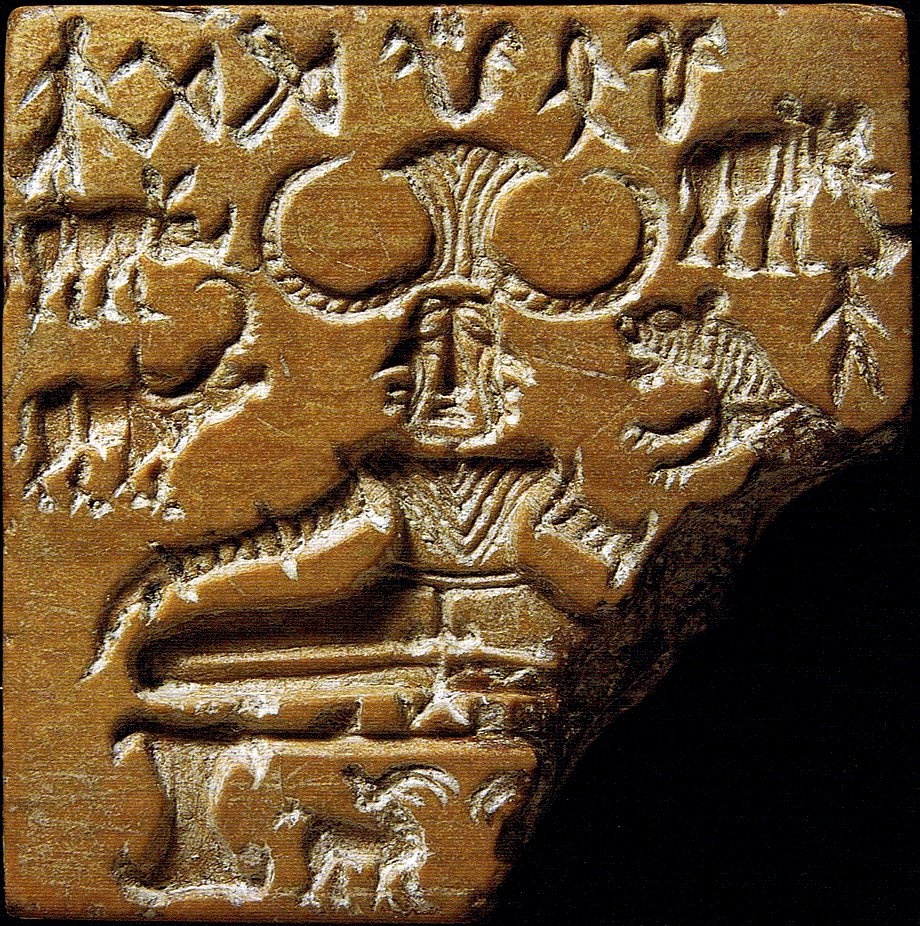
Seals made – water buffaloes, elephants, bulls, rhinoceros. Ha!
Day – Sunny, Clouds Playing
At The Great Bath. Slipped from slippery stairs. Cleaned. Cleaned more. Got fresh water from the well. Poured. Poured more. Thanked noble Indus.
Day – Too Rainy
Group work. Mending limestone slabs. Mended. Dry granary functions. Ate well. Didn’t slip. Healed.
Day – Raining
At The Great Bath. Mending roof. Unfinished. Slipped. Fell into the Bath. Resurrected. Ha!
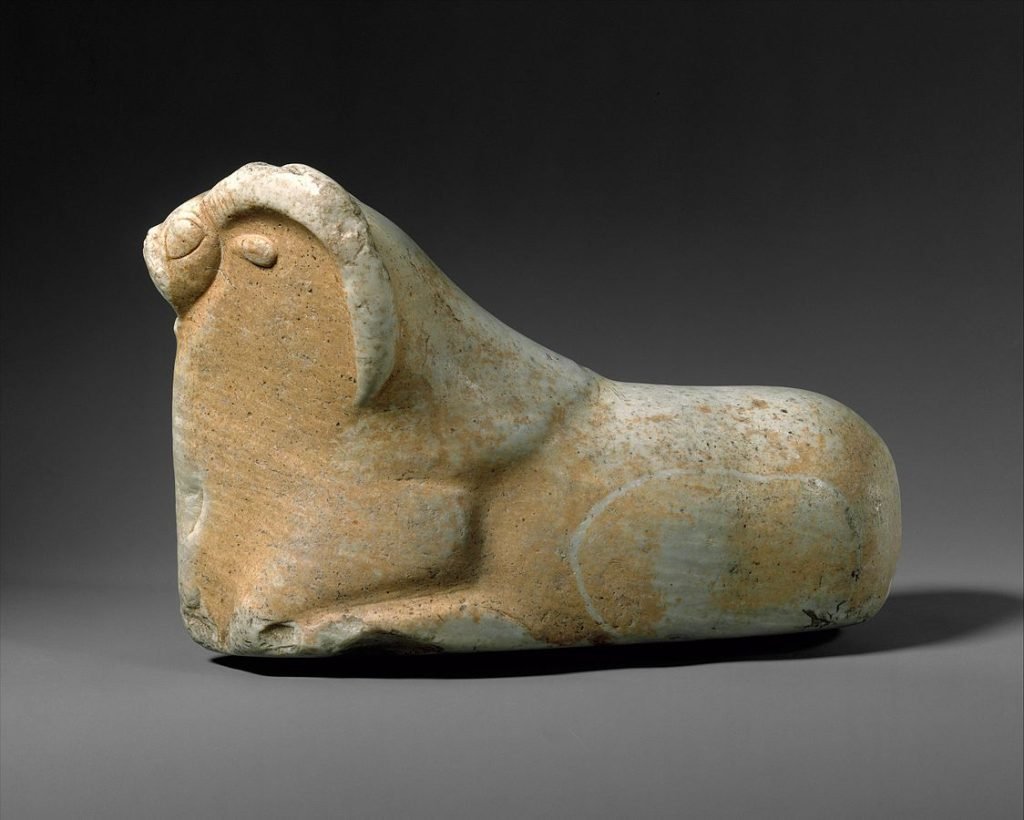
Reclining mouflon; 2600–1900 BC; marble; length: 28 cm; Metropolitan Museum of Art (New York City). [Source – Wikipedia]
*
Blogger’s Note –
Only ten percent of Mohenjo-Daro has been excavated so far and yet it shows how grand the city must have been, its citizens living a simple life, nurturing good daily-living-practices; either celebrating special occasions at the Great Bath or just storing water, humbly accepting what the Indus River brought.
Spiritually awakened or not, religiously enlightened or not, fiercely ambitious or not, the Indus Valley folks definitely, without any doubt, slept well. And that’s their secret, if there is any. They rested and digested fantastically and so they functioned wonderfully. Maybe they slept for 12-14 hours, working from dawn, with a calming break around noon time, to early evening. Not rushing or worrying when at work.
And so, well rested, they loved water – fresh, salty, rainy (and were also aware about floods; they constantly rebuilt their buildings in cities like Mohenjo-Daro), and fire – for they loved baking bricks, and music and art – for ahm…The Dancing Girl, the ornaments and toys. They loved to work.
Every task was a joint venture, everything done together with nothing but the Sunny/Rainy/Cloudy day in front of them. And then the starry and peaceful night, when the wind played a lullaby and one with nature, they slept.
Believing in a belief, conclusion-loving, pinning the words ‘this way, please’ on a dimly lit – could be dusk, could be dawn – sky, they followed the direction, unchallenged they went for ages, preaching and praying, walking as said… old eyes looking at the sky, chanting the words again when suddenly a dazzling shooting star strikes through the pinned message… which way now?
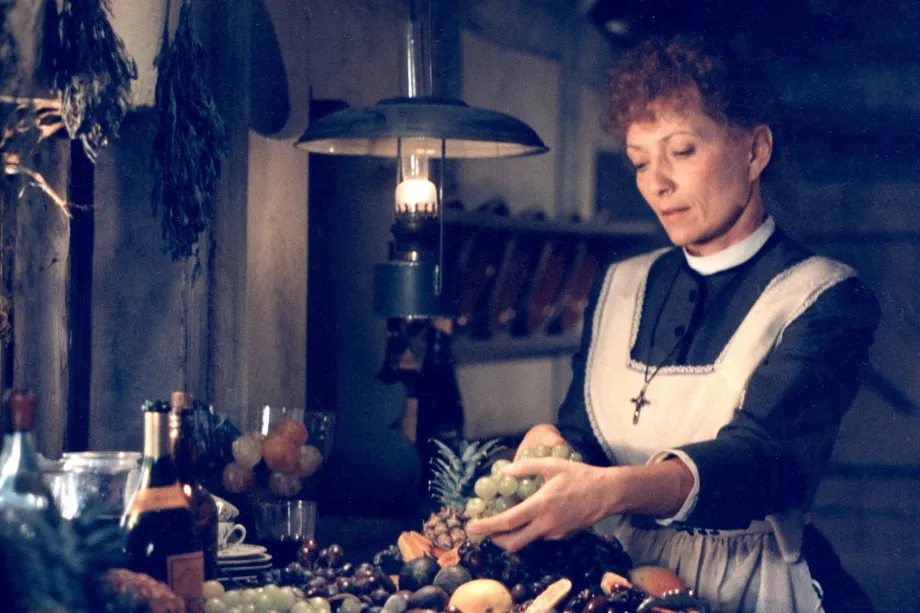
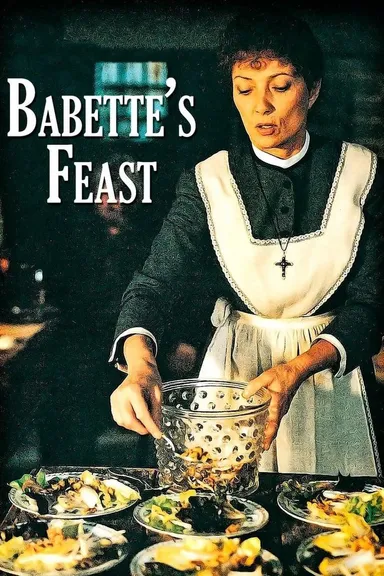
In Babette’s Feast a humble group of elderly believers – tired, corroded by time yet hoarding time, finicky, daft and cement strict – are made to taste another route, taste literally, for they are invited to a feast, “a real French dinner”.
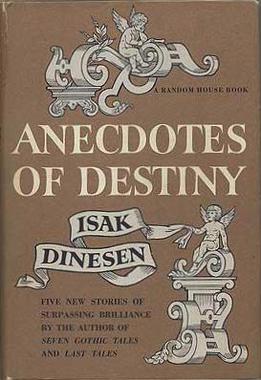
First US edition. [Source – Wikipedia]
[Source – danishfilms.dk]
*
This 1987 Danish masterpiece directed and written by Gabriel Axel, based on one of Karen Blixen’s stories from Anecdotes of Destiny, termed by critics as “gastro-cinema at its most sensual and intoxicating”, “melancholy bliss”, and “a classic of literary adaptation”, in its simplicity and candour trespasses the humdrum routine life, and compassionately so… that you feel full.
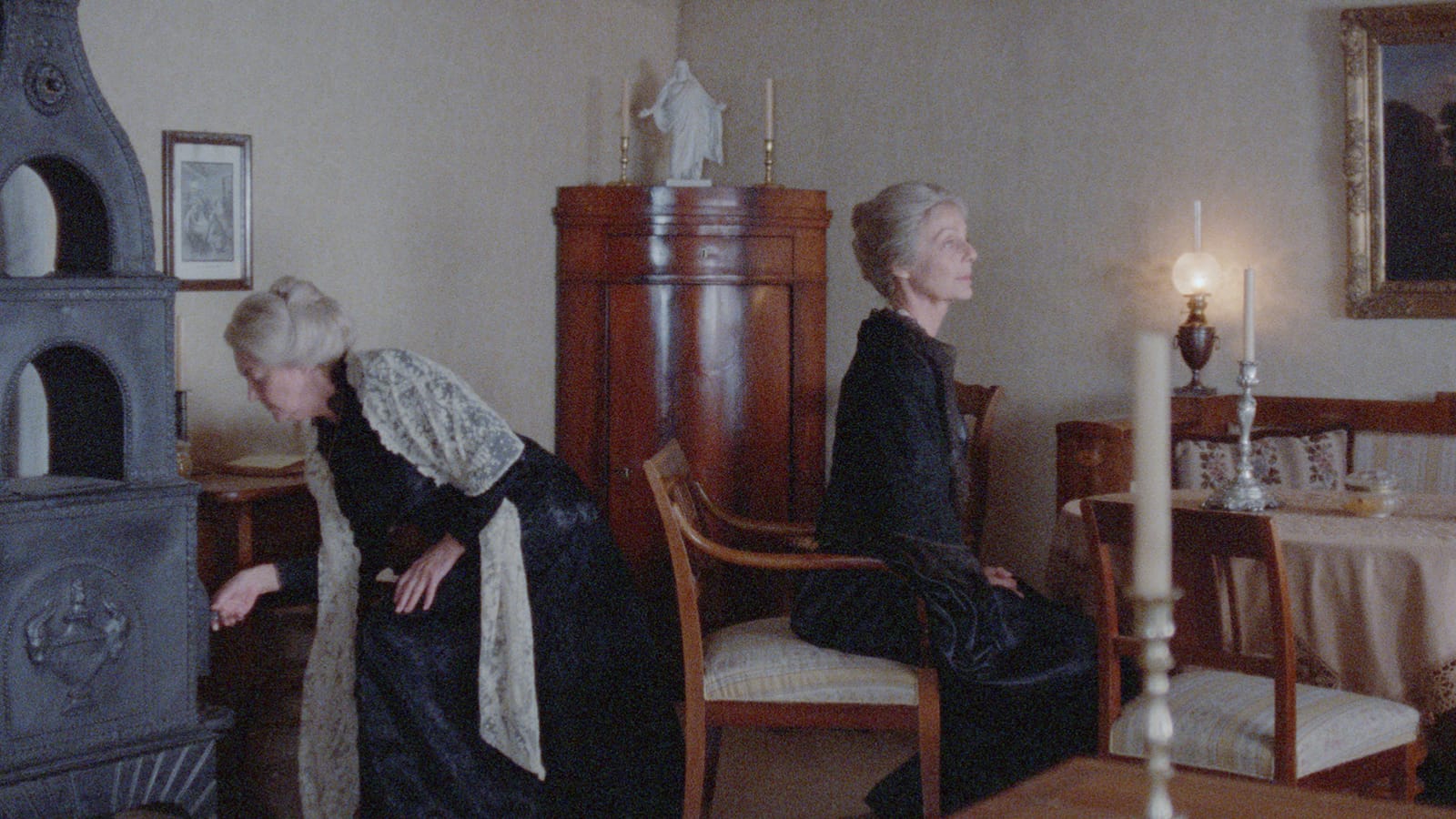
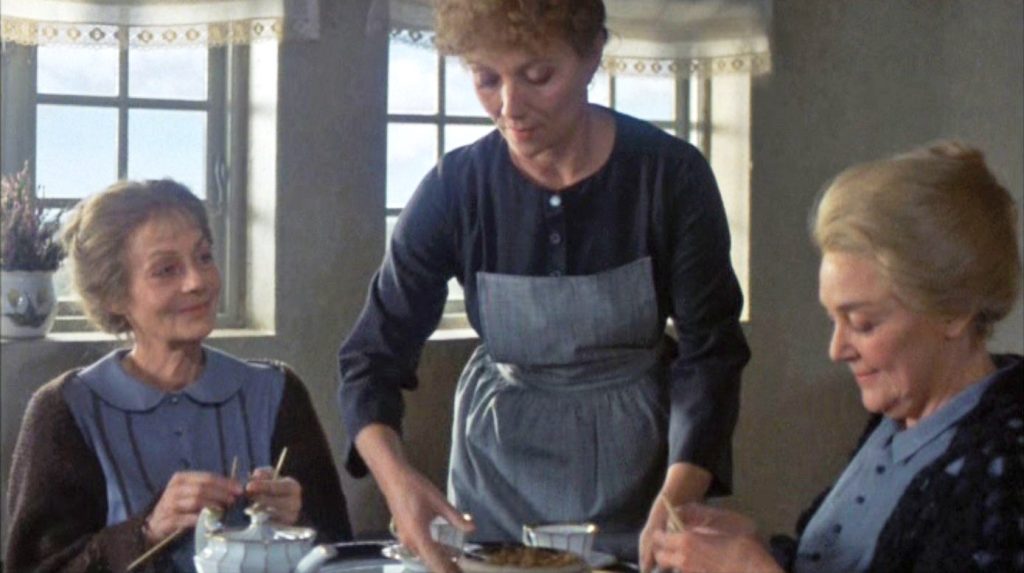
Filippa and Martine. [Source – The Criterion Collection]
Filippa and Martine. [Source – The Criterion Collection]
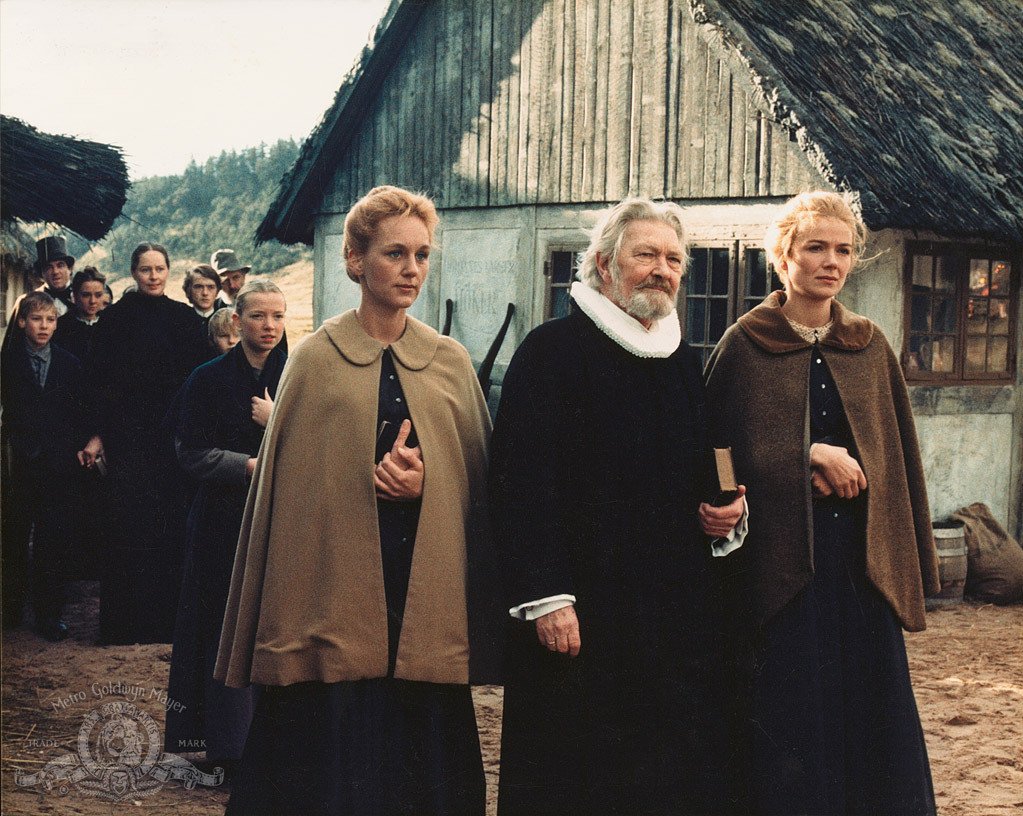
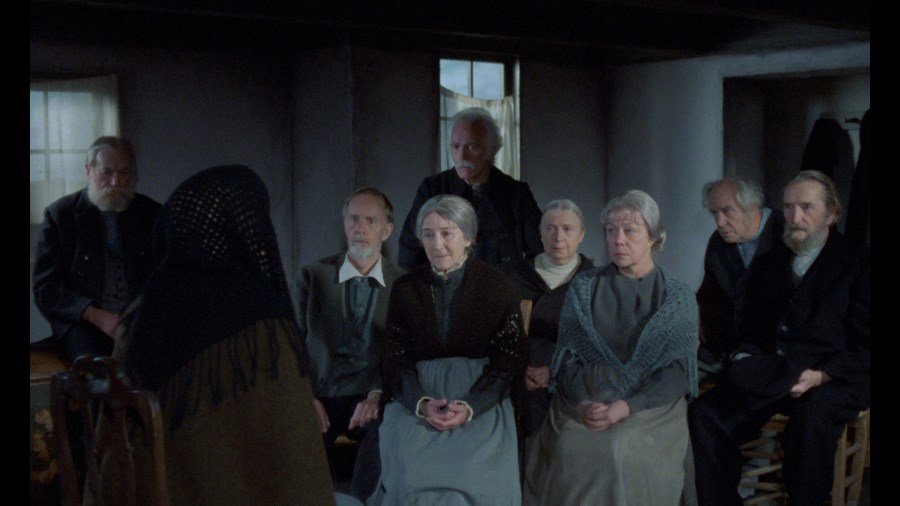
The pastor with his Lutheran brothers and sisters and his two young daughters. [Source – The Criterion Collection]
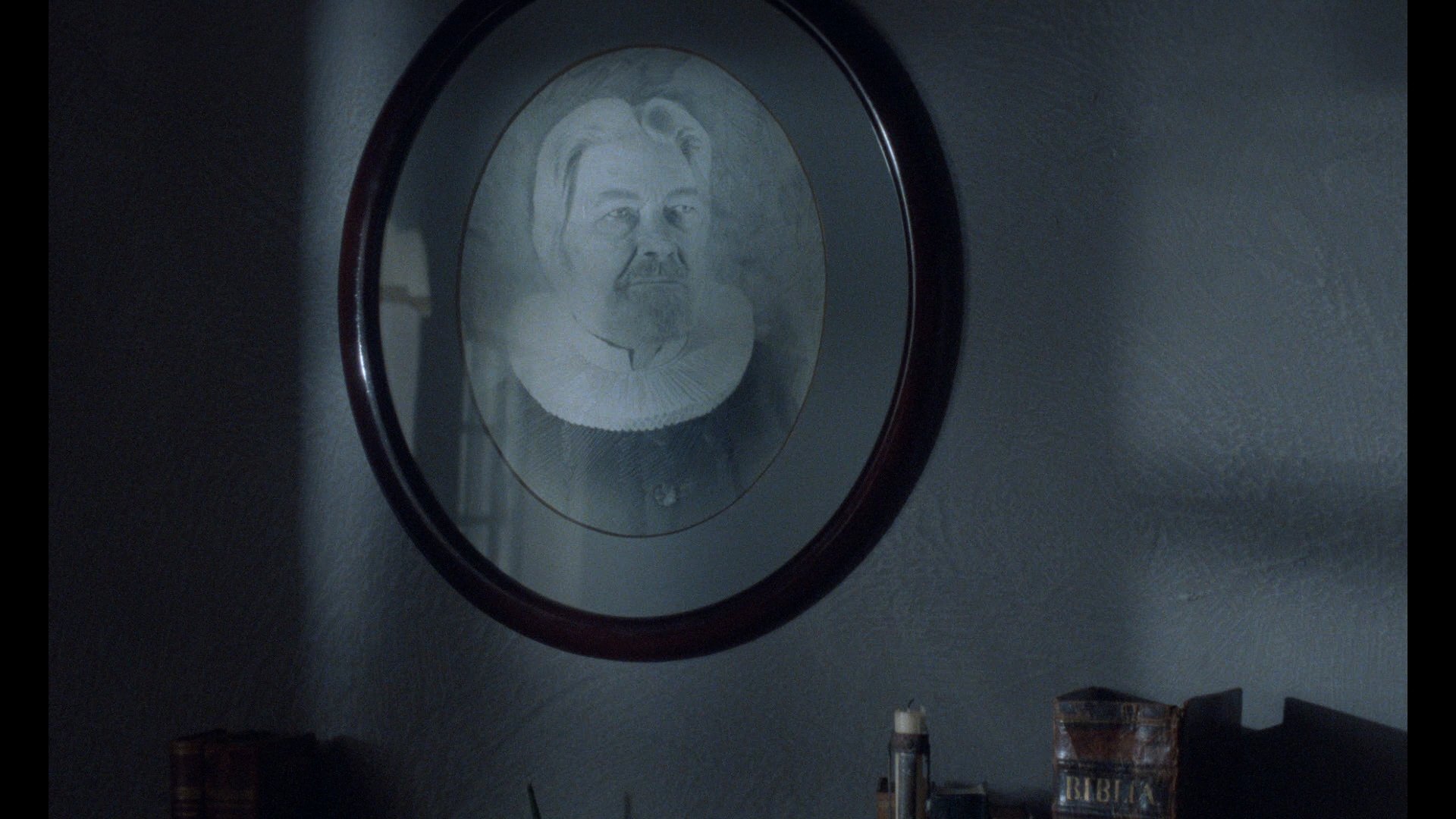
The pastor. [Source – The Criterion Collection]
*
Martine and Filippa, two elderly sisters, in a remote region on the western coast in Denmark, have lived a life of austerity, carefully always measuring the rules set – set in stone, grey and seashore stone, often used to hold the roof, the door, the window, sincere and sturdy stone, set in the 19th century – by their late father, a pastor, who named them after the theologians Martin Luther and Philip Melanchthon.
Following the spirit of Protestant Reformation, the pastor had started a congregation, a group with a mission to follow the followers who followed from the beginning the grand words of the follower. Now long gone, the pastor’s congregation is being carried on, thanks to his two daughters.
Sacrificing themselves for a greater good, the two elderly sisters, when young, were heartbreakers; many suitors attended the mass just to get a glimpse of the two beauties. The suitors dared to fall in love, Martine and Filippa dared to love not one but all, and the pastor loved his rule books.
*
The pastor with his two young daughters, Filippa and Martine, followed by the Lutheran sect members. [Source – IMDB]
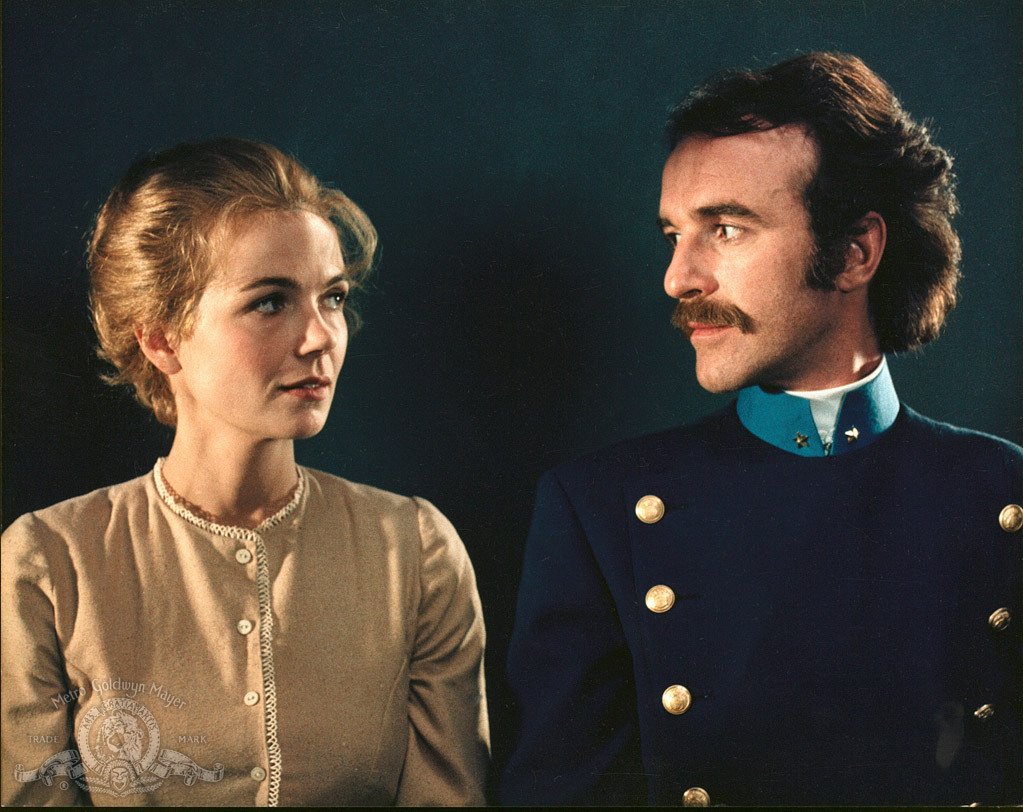
Yet, two true lovers – a Swedish cavalry officer, Lorens Löwenhielm, and a classical singer, Achille Papin – heartbroken, never stopped loving Martine and Filippa.
Martine and Lorens. [Source – IMDB]
Filippa and Achille Papin. [Source – IMDB]
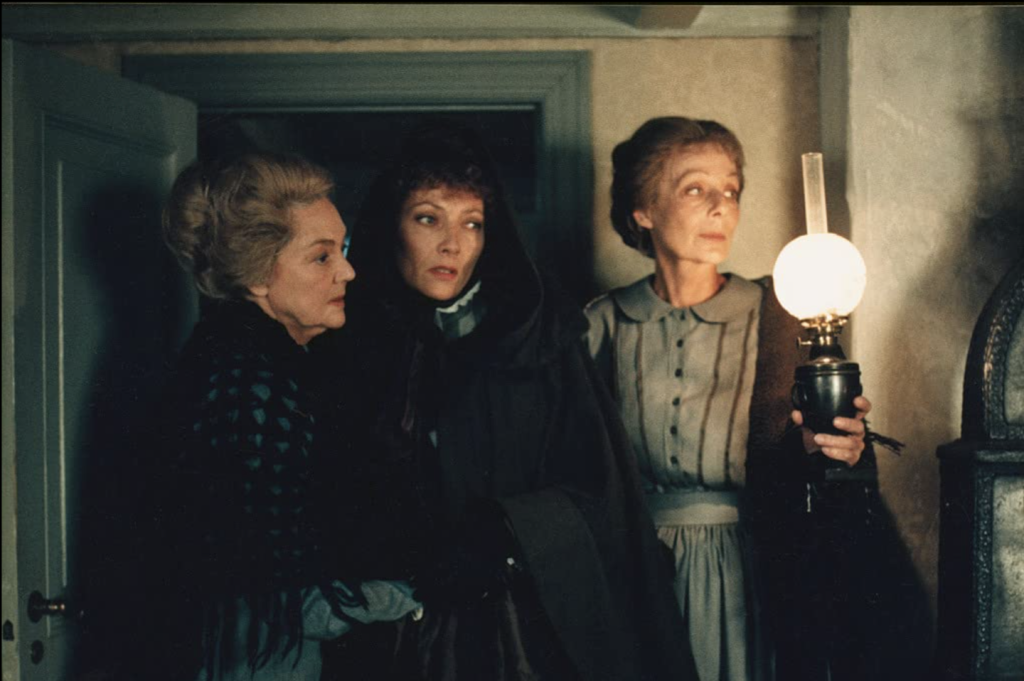
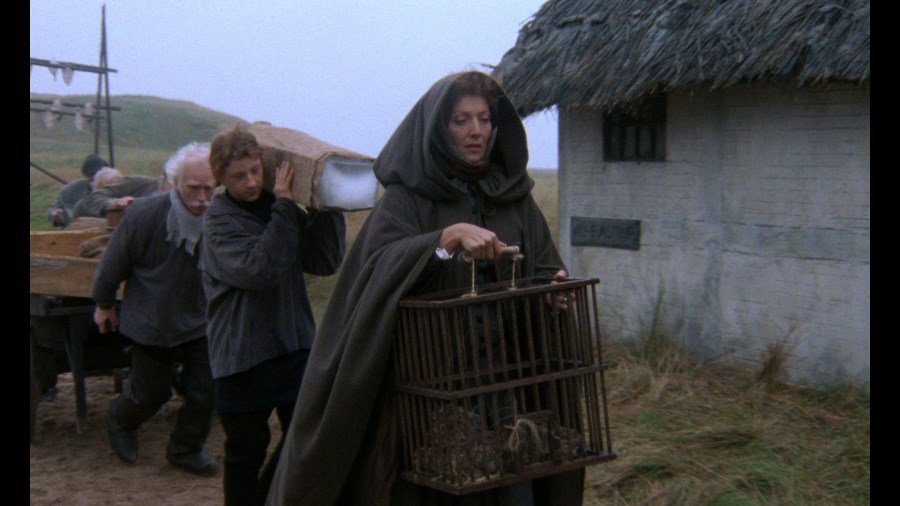
When Babette Hersant, a refugee, appears on a dark rainy night, begging for shelter, offering to work as a housekeeper for free, showing Achille Papin’s recommendation letter, the two sisters take her in. Fourteen years pass by and Babette, as a cook, serves Martine, Filippa and the congregation with better meals, deftly using from whatever is available.
The handful of folks who stayed loyal to the congregation – attending meetings, reading hymns, sighing, lamenting, cursing, gossiping – forgot, in actuality, why the congregation was formed. Saddened to see the folks bickering, Martine and Filippa, nevertheless, wish to celebrate their father’s hundredth birthday (a modest supper followed by a cup of coffee, that’s the plan).
Babette requests the sisters, and it is the first time she does so, to let her prepare the commemorative dinner – a real French dinner – and also allow her to pay from her own pocket as she has won a lottery. The sisters, thinking that Babette will soon return to France and it probably will be her last time cooking for them, agree with her.
When Babette’s ingredients – exquisite wines, quail, a turtle, a calf’s head, etc., – for the feast arrive, the villagers are dumbfounded and the sisters are scared, regretting permitting Babette for she is turning the modest supper into a fantastic feast.
*
Sacrifice
A sacrifice is something sacred, holy, often done either to appease a deity or for the sake of others by renouncing something significant. Tied down in such a manner, sacrifice carelessly brings comparison in the framework of our societies.
The old pastor, thus, got lost in comparison. Comparing the text in his rule books with capricious people, he made them march-past, sing, sit and stand like the written word. All hail, now!
*
The congregation listens to Martine… Hallelujah! [Source – criterionforum.org]
He couldn’t ever think of letting his two sweet bookmarks, his daughters, step out of his rule books, and the daughters knew, and the daughters obeyed, and the daughters gently broke hearts, and the daughters worked hard to run the congregation, to make the commoners appreciate. Hail and sing and love thy neighbour!
The pastor adored his daughters, appreciated the congregation, and loved the rule books for he identified with it the most.
The daughters surpassed the good old pastor’s attempt to follow a righteous path, for they sacrificed with compassion.
*
Compassion
Compassion works without failing, ceaselessly, for all and that is it; not divisive in nature, all comparison vanishes when a compassionate eye turns and looks through it.
Martine and Filippa are compassionate, always giving. From young to old age, they lived for others, tending and caring, cooking and serving, all seasons, morning to evening.
Not a sacrifice, for comparison rarely touches them, they quietly live – like the wavy grass, the cold ocean-fresh sand, the smoke coming out of the chimneys in the village, the lit and silent candles – cherishing their duty, performing it with love. Love!
Love engulfed their old father’s rule books and became Martine and Filippa’s sole guide, without declaring it.
But their habit of following the late pastor often led them to troubled states – the congregation was decaying unnaturally – and the rule books offered no solution. Round and round they went.
Who brought a change then? Who?
The act of giving a wounded Babette a place to rest, recover and serve, turned out to be that shooting star that struck through their fixated way of living… unawares the sisters stirred the scene and ripples of change began. It was a simple act.
Story – Babette’s preparing the feast
A chain carrying the food ingredients. [Source – criterionforum.org]
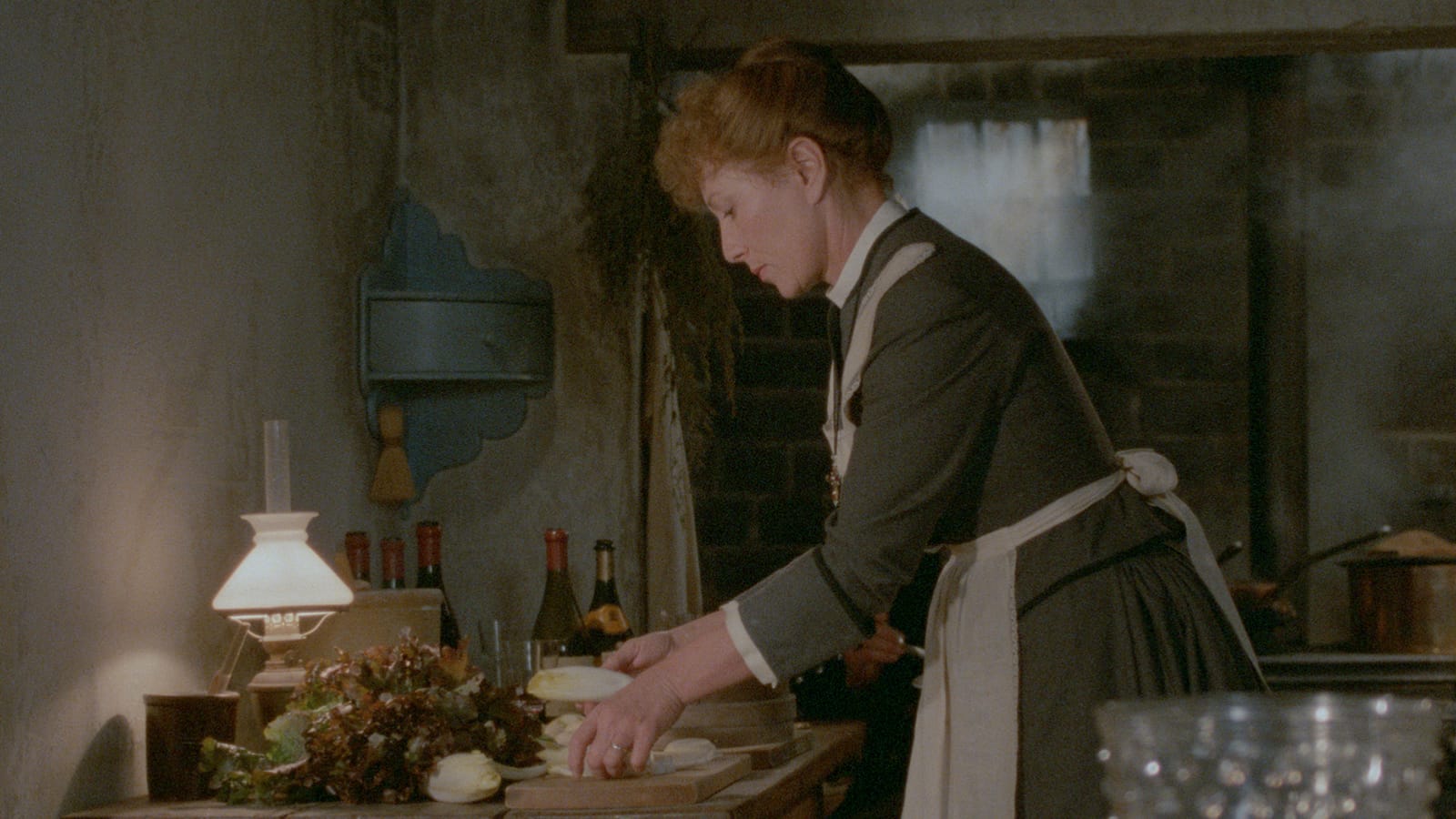
Babette’s art. [Source – The Criterion Collection]
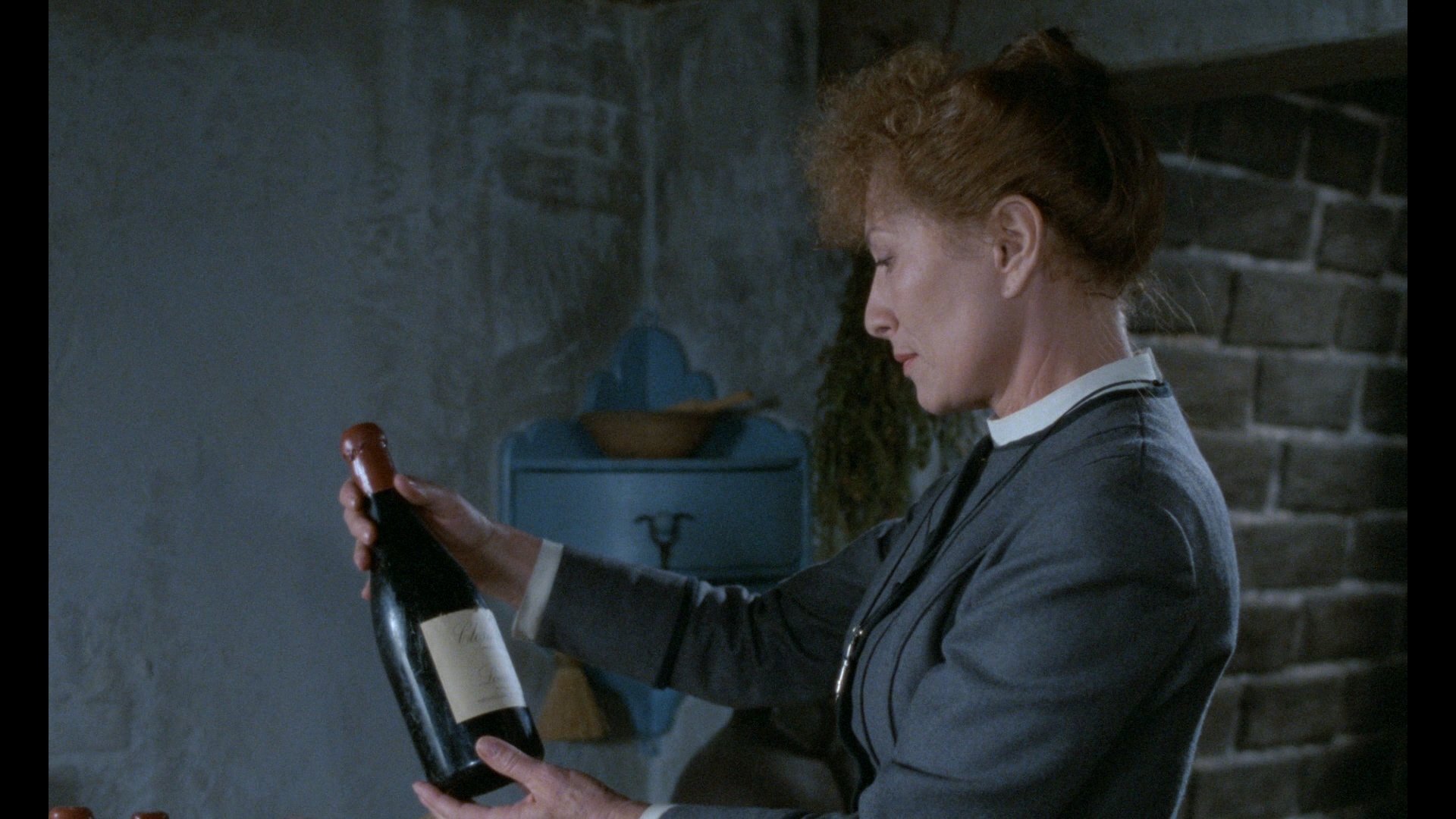
It becomes a grand affair, Babette’s feast, with the turtle soup and amontillado sherry, buckwheat pancakes with caviar and sour cream and of course, Champagne Veuve Clicquot 1860, then quail in puff pastry with foie gras and truffle sauce, accompanied with what the sisters were earlier worried about – they had asked, seeing the bottles of alcohol, “Surely that’s not wine?” and Babette had replied honestly, ‘No, that’s not wine. It is Clos de Vougeot, 1845!’
‘Cailles en sarcophage’ — quail in puff pastry with foie gras and truffle sauce. [Source – The Criterion Collection]
Babette holding the bottle of Wine: Clos de Vougeot 1845. [Source – The Criterion Collection]
*
The sisters don’t say anything when dining, they had made a pact with all the community members, all of them won’t participate in this “witches’ sabbath”, they won’t accept pleasure and commit sin by describing how good the food is… so they eat everything quietly, the salade and dessert and the champagne and then the cheeses, fruits, sauternes, the coffee at the very end with the Grande Champagne cognac.
They chewed, sipped, swallowed slowly, sheepishly at first, then heartily tasting the fantastic joyful scrumptious heavenly meal, though never ever saying a word about the food, they do talk about their differences, mistakes, fraudulence, foolishness, love for the congregation, the old pastor and the lovely sisters.
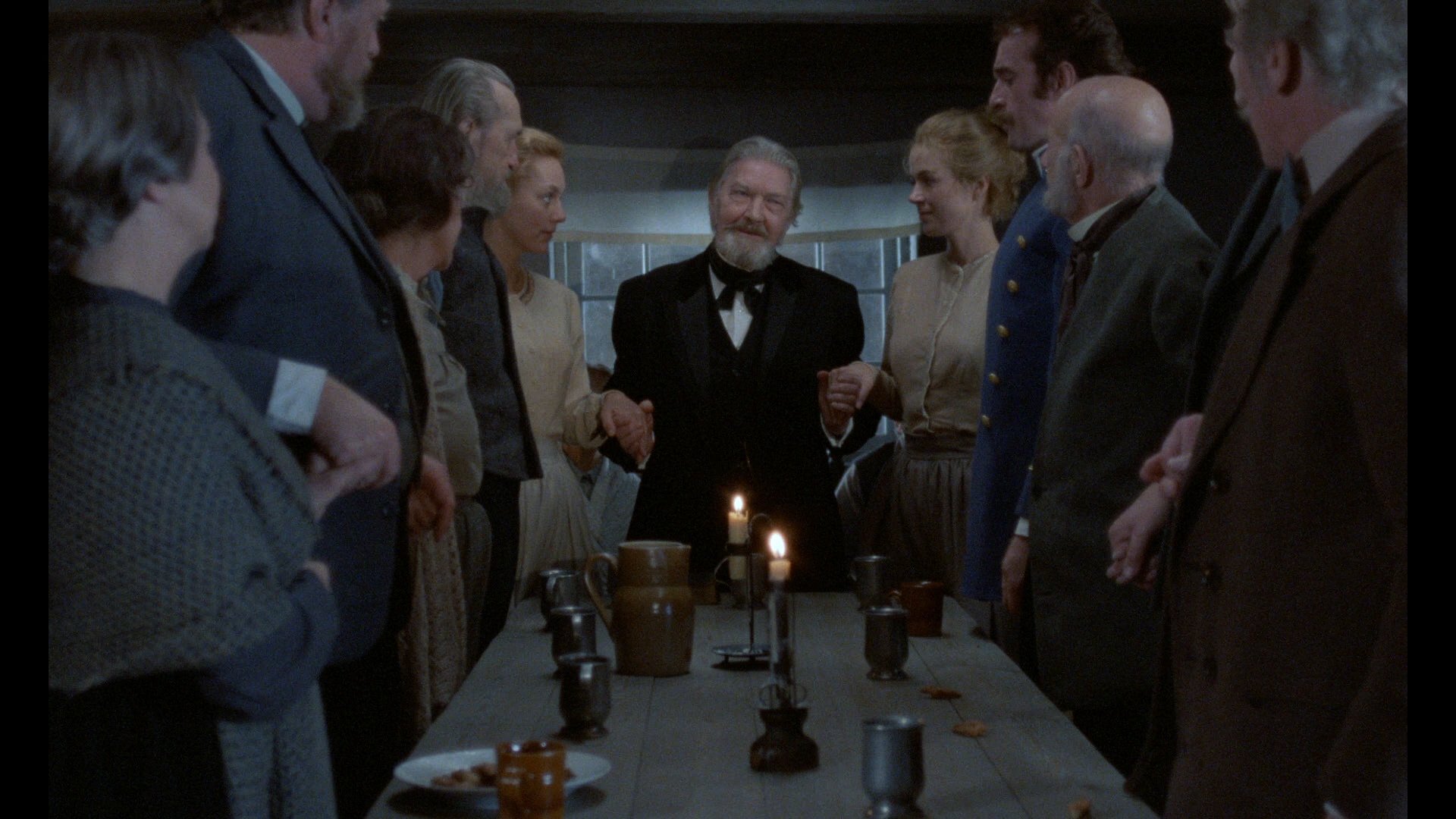
Full and happy, pleased and welcoming, they then feel good and so, compassionately sing together, holding hands in a circle like little children.
*
“Mercy imposes no conditions…”, says General Lorens Lowenhielm. [Source – The Criterion Collection]
The only one who did acknowledge the excellently prepared and presented dinner, is Lorens, Martine’s former lover, a General and married man now, who attends the dinner with his old aunt – the oldest member of the congregation.
Savouring every combination that is served, relishing the elegant, rounded, rich wines, he shares an anecdote about a woman chef, an artist, a culinary genius, who was behind the success of a renowned restaurant in Paris, and how this meal reminds him of the time when he once dined there.
Thanks to Lorens, the others get to know about the intricacies that made every dish so special. ‘Hallelujah!’ They sing together, the old hymns, looking at the night sky, and this once, find only the stars twinkling, not the pinned message.
Bidding goodbye, Lorens shares with Martine –
I have been with you everyday of my life. Tell me you know that.
Yes, I know it.
You must also know that I shall be with you every day that is granted to me from now on. Every evening, I shall sit down to dine with you. Not with my body, which is of no importance, but with my soul. Because this evening I have learned, my dear, that in this beautiful world of ours, all things are possible.
Food chopped and sliced, butchered and boiled, softened, sweetened and spiced for the feast. The running food cycle does not appear like a sacrifice, one depends on consuming food, until one doesn’t.
The running food cycle turns exploitative when one species begins to burden the others, when storing food becomes the norm, when one has only two-minutes to cook. Nothing is sacrificed other than one’s health in such a case.
Says one of the members of the congregation – “Man shall not merely refrain from but also reject any thought of food and drink. Only then can he eat and drink in the proper spirit.” She then sips the champagne quietly.
The good food overpowering each one of them gradually, humbly, without a desire to win over, makes them forget the yardstick to measure goodness. They forget to compare.
Even though they follow Lorens’ lead – copying his manners, what to eat first and how exactly, for the exotic feast is absolutely new to them – they do so without fear. Conditions imposed faded away when they sat down to eat the meal.
*
Compassion
Babette once worked as the head chef of the famous Café Anglais in Paris, she is the culinary genius – an exception – Lorens spoke about; her passion for food guided her to experiment freely.
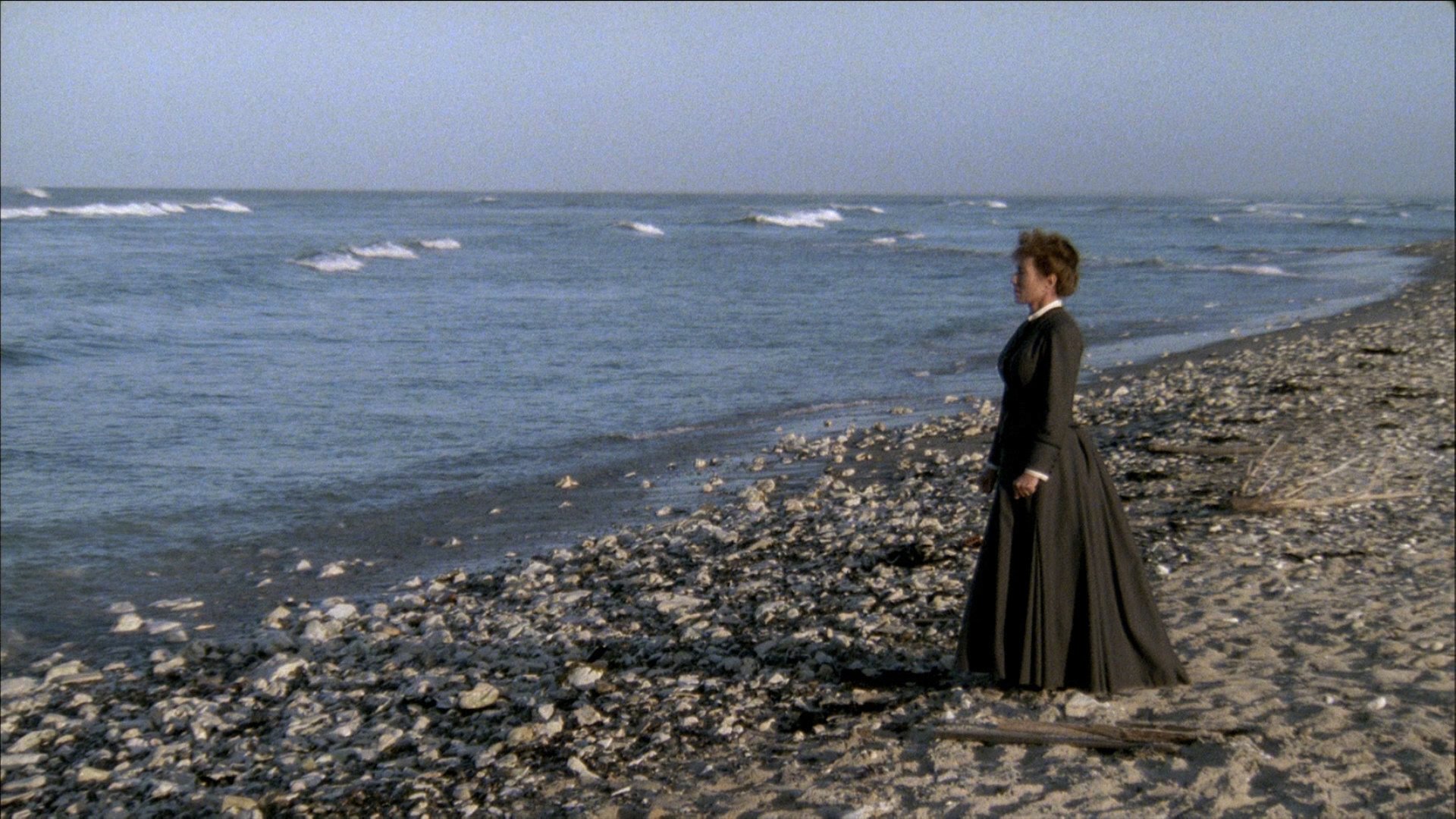
Fourteen years pass by and Babette, a refugee from a revolution that devoured her husband and son, scarred and impoverished her, learns to live, daily, by doing housework and cooking, serving meals to the congregation, learning the local parlance, cracking deals with vendors, experimenting with the home-grown herbs … she learns to live by doing nothing extraordinary.
In daily living, emptying herself of the past, she finds space for the present. Paying absolute attention to her chores, unknowingly she falls for it, and when she wins the lottery, after a little contemplation, she decides how to spend it – by cooking a proper feast for the congregation. Money doesn’t bother her now. She prepares a sumptuous meal, setting the stage well with beautiful silver and chinaware, brightening the mood with candle lights.
Perfectly, she conducts the performance – what is to be served, in combination with which drink, after exactly which dish – with the help of a local kid and the General’s in-waiting coachman, without taking the centre stage even once. Allowing the two helpers and herself to taste the food and sip the drink at the end, knowing well that the task is done.
Her food transforms all the guests; her passion takes the form of compassion; everyone feels grateful for one little thing or more. With the happy chaps gone, the two sisters come running to thank Babette for turning their father’s hundredth birthday into a wonderful celebration, something to remember her for when she returns back to Paris.
But she is not going back to Paris, says Babette, revealing that she was the head chef of Café Anglais where a dinner of twelve costed just the amount she won in the lottery (10,000 francs). Greatly surprised to know this, the sisters worry for her as she is back to being penniless, Martine says, “Now you will be poor for the rest of your life”, but “An artist is never poor”, says a smiling Babette.
The performance was for the guests as well as for herself, she adds, remembering what Achille Pappin often said, “Throughout the world sounds one long cry from the heart of the artist: Give me the chance to do my very best.” Filippa, a singer Pappin wanted to rule the French Operas, gives Babette a warm hug, saying it is not the end, that in heaven her art will delight the angels.
Overwhelmed, the sisters speak the language of the book and Babette of her art, that is all they know, but they speak with love. Love!
The Film
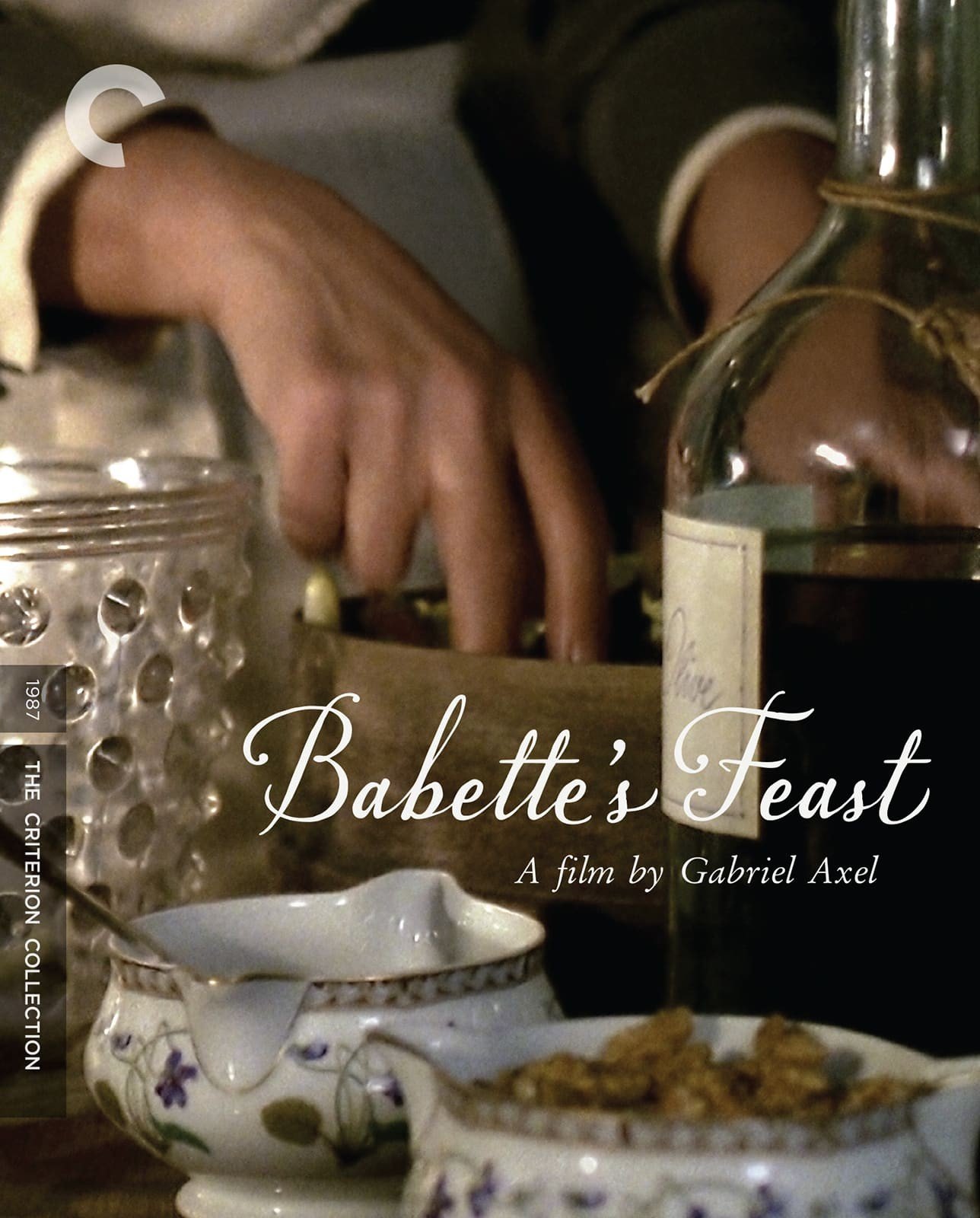
A must watch! [Source – The Criterion Collection]
Babette contemplates. [criterionforum.org]
“God, let thy brightness ever shine / Admit us to Thy mercy divine.” [Source – The Movie Screen Scene]
Gaberial Axel’s Babette’s Feast has given wings to this lovely short story by Karan Blixen aka Isak Dinesen, feather light, the 102 minutes long film never feels long. It begins like a folklore that gently plays with time – now talking about the father pastor, now the suitors proposing the young sisters and now the sisters, old, running the sect, then introducing a stranger, a troubled lady, on a rainy night… and now we want to know who she is.
Even though a religious sect paints this village in its colours, the story never preaches nor gets dull and overburdened with saddened affairs of the sad souls. Good food keeps them in good mood after Babette’s arrival, earlier they didn’t know the difference, and when they find out, and have to eat what the sisters cook in Babette’s short absence, they protest silently – grimace on face, one old fellow drops the mushy porridge back in the bowl, mumbling.
Until the feast is served, the community second guesses Babette’s every move – after all there’s an alive turtle in the kitchen – which even haunts Martine in her dreams. When the celebrations begin, we the audience also participate actively in it, watching what Babette serves and how the worried old folks react to it, we watch though not expecting much… for such is the art of cooking and shhhhh… Babette’s at work.
The candle dies out in the end… the feast is over, it fed and restored many, words were spoken, words were heard and understood, now there is nothing more to say, the day’s over and the night sky shines with stars for some, with messages for others… and a shooting star striking through again for the one who looks.
“A truly lovely tale of everyday passion, magic and miracles.” – Geoff Andrew
I am joy running free/
freely flying, fluttering, soaring in a valley/
Of joy am running free.
Greetings!
A storyteller, following the ancient tradition of cave chroniclers, standing in vrikshasana (the tree pose) on a hill top (it is sunny, but windy), breathing in and out stories (relishing it all, but at times overwhelmed), declares animatedly that she will continue to – tell stories, share rare story gems, and connect with the pacy universe while also keeping the website ad-free.
Big thanks to my readers. Stay tuned!
Also, a humble request to the new subscribers to check the spam folder after subscribing. Silly (but necessary) confirmation emails often land there instead of the bright inboxes. Merci!
Ya-hoy!
Chiming Stories (formerly Home Chimes)
P.S – Supporting a storyteller is good for the world’s health (and undoubtedly, for the storyteller’s health as well). Shower some love by sharing, commenting and subscribing to the Weekly Newsletter.
Gabbeh, the 1996 film, is a simple tale of a gipsy girl, her clan and the way their life goes on. Unfolding beautifully just like an artist painting a canvas, Gabbeh quietly touches the grand questions.
Ranked as one of the greatest British films of all time, The Lavender Hill Mob confides in the audience, letting them see, feel, laugh and think without tickling persuasively with a joke here and a punch-line there.
Godard… Breathless and Alive
A Tribute to Jean-Luc Godard, the Film Philologist who Reinvented Cinema.
Yes fly! For walking on the second track is dull and usual, but dreaming high, high, high requires tools. Tools like the right pair of shoes, a chirpy, gritty soul that eats butter-jam dreams, a soul that drinks milky-milky creams.
Silver cascade shimmering the night sky, music to the waves and surreal beauty to the eyes, the Moon loves the art of discipline.
It may be difficult to believe for the Moon’s splendour defies time, it stupefies the clock, it follows the path of a dreamer, but how could this be possible if the Moon knew not discipline?
In this moment, I am a little bit of this and a little bit of that, I am complete and incomplete, I am pleased and uncertain, I wish for nothing and I know I have to wait.
Because the distance covered reminds me of the hurdles I have crossed and the ones I could not, it reminds me of a throbbing past and a dreamy future and it reminds me of how much time is left.
Meredith and the Green Lake
Illimitable Splendour
A joy so complete without any rise or fall, so free without any time corners, so real without true being false, false being true.