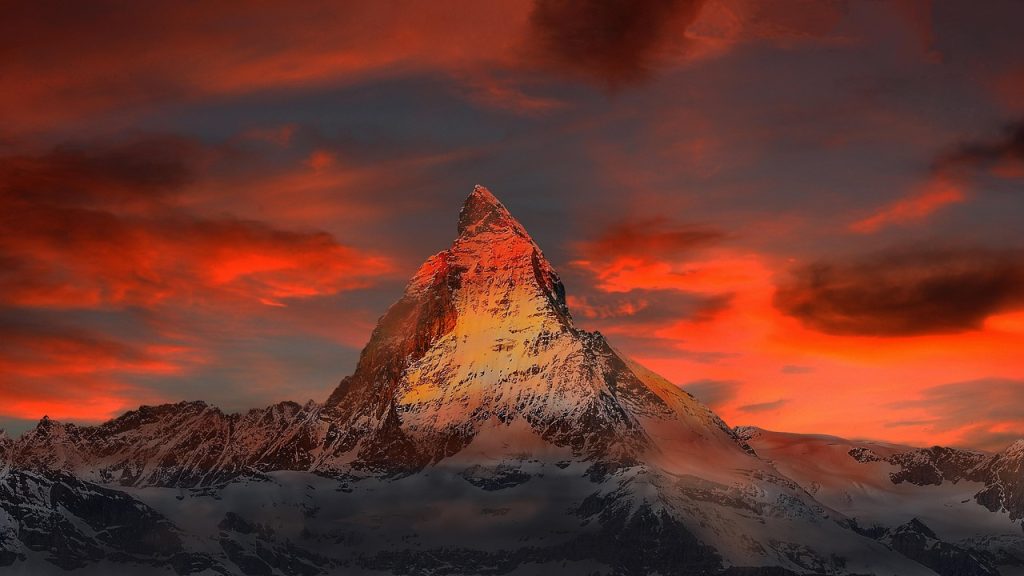
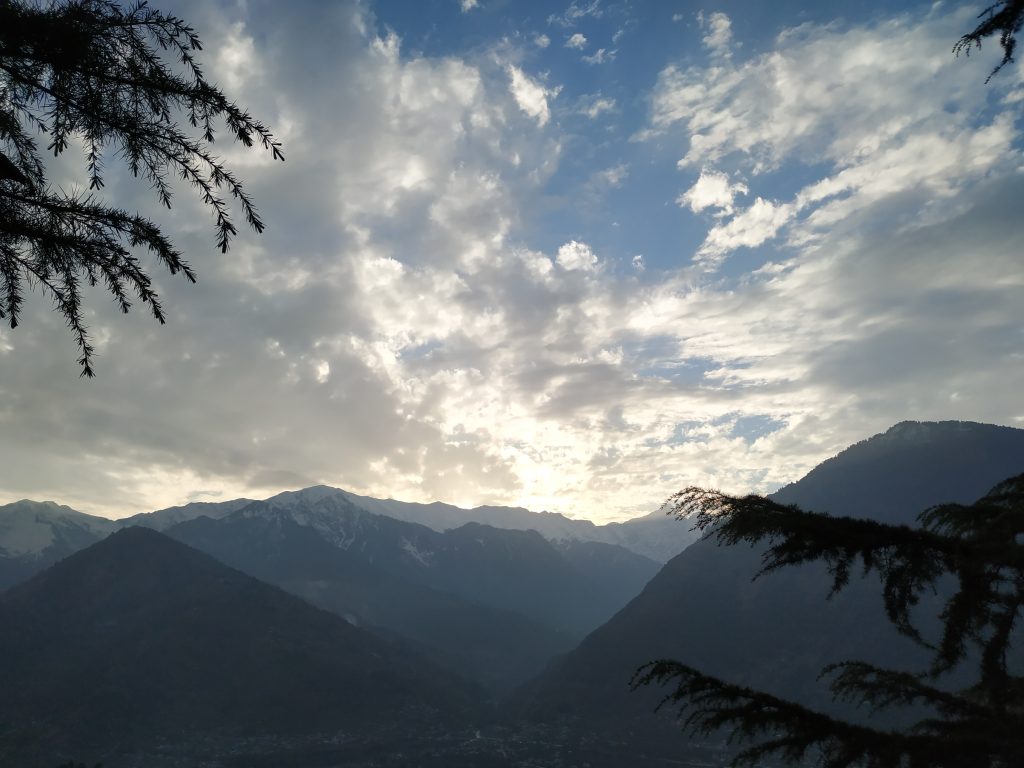
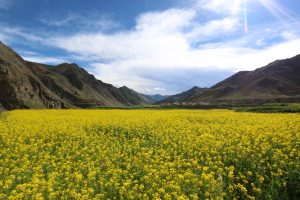
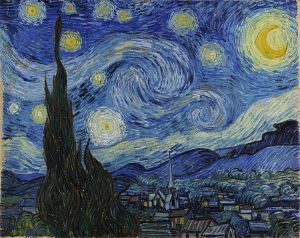
Mountains break Time. Mountains – gigantic, dense, rocky, snowy, meandering tracks and meandering rives crisscrossing each other – break Time.
Mountains – loudly still, gently dancing, lightly flying following the wind, touching the clouds – break Time.
Mountains, not continuing in any way or form, not turning behind or looking forward – break Time.
Mountains – splitting nothing, turning nothing into halves, in its completeness – break Time.
A mountain’s roots, deep inside the earth, swirls freely, effortlessly, embracing the warm energy that has no beginning or ending, that has eyes and senses and something that swallows Time.
The grass on the mountain top and the plants, trees, rocks and rivers, all curl up and rise, filled with this energy, breaking Time.
Mountains – tall peaks and sweet hills – know just the truth and the truth has nothing to do with Time.
As if anger – throbbing and tight-, burning hatred and cold fear filled this person’s veins and arteries so that there was no need of the warmth of the blood, red wasn’t red anymore, it was all too dark.
Jassi clung to the darkness, crumpled into it, eyes wide-open that almost attacked every direction mercilessly, the glances were like arrows, everything in darkness, not allowing a ray of light or laughter or love to enter. Jassi was blind, it happened in an accident.
True! Colours were colourful before, but not anymore.
Jassi hated to ask for help, hated the space around, bumping into things now and then, and most of all hated the breeze, why did it try to play, sing, sway or say anything, thought Jassi when nothing moved or flowed within? No, not even the thoughts moved, Jassi killed them, the memories – good/bad – in the very first year after the fatal accident.
Some years passed and an opportunity knocked. A new technology, a new expert, a new experiment could bring back Jassi’s eyesight. To everyone’s surprise, Jassi agreed to undergo another surgery, everyone hugged and cried for Jassi was still alive somewhere inside that stern piece of shell that reciprocated nothing all this while.
Pushing every loved on aside, Jassi spoke – I want to see the galaxy and only the galaxy first!
That was Jassi’s condition, it was accepted, and with some difficulties arrangements were made. Days passed by, it rained, the sun too came out and a rainbow beamed, but did Jassi hear all this? Nothing!
Like never before, Jassi refused to go out of the house or even the finite room. Jassi’s steady un-moving eyes tried to pull, it seemed, the movement of time towards Jassi, not to fight a battle, but to bring it to a stand-still. Jassi had changed and no one knew what fruit this change would bear.
Jassi’s steady, un-moving eyes’ pull worked, so felt the others as the day of the surgery came and passed only too quickly. The doctor said it was a success, but Jassi’s firm and unwavering voice made the doctor sweat and slightly doubt himself. All this for a couple of minutes because Jassi refused to remove the bandages and no one touched the new black goggles; everyone knew how much Jassi abhorred them.
And soon, very soon, so soon that no one remembered what day or time it was when they left for the astronomical observatory, and when they reached the place.
After climbing down into the dark abyss, Jassi got up to climb the stairs to reach the galaxy.
Jassi couldn’t hear anything but felt extremely cold, especially on touching the telescope. Jassi reacted like a little curious child, whispered the others.
The guide guided and made adjustments, but only Jassi’s shell listened, Jassi followed not the guide, but an energy and removed the bandages from the cold eyes, that were shut not so tightly this time. Jassi took a breath and touched the telescope again, feeling the round eyepiece shape through which one could swallow the galaxy.
Jassi gently, almost with love looked through the telescope, one eye open, one closed, then opened both. Jassi looked, looked and looked…
…see for yourself… the galaxy’s arms reaching out, holding Jassi now, breaking the shell with love, showing the dance of colours and light, caressing, bursting with joy, filling the one who witnesses with timelessness and bliss…
Jassi fell on the floor unconscious after so gracefully looking through the telescope that too for so long that the others were by then seated on benches to rest. Jassi woke up in the hospital next, with a high-grade fever and a big grin that turned into laughter.
Tears came out of Jassi’s eyes but the laughter didn’t stop. Jassi’s wet eyes glistened, the eyes looked like jewels, the eyes looked beautiful.
But the doctor couldn’t see it, the doctor was worried, he had failed. Jassi couldn’t see anything from one eye and the other eye tried to see through haziness. There was another way out, doctor promised and sighed that Jassi should not have travelled right after surgery.
Jassi left the hospital the same day and went to eat in a restaurant with the loved ones who were confused, also happy, but unsure.
Jassi has stopped explaining anything to anyone now and has started living. A friend’s friend gave Jassi a simple job that promises nothing grand, yet Jassi loves working there. Jassi walks to the workplace using the stick and a new furry friend, Milo.
Every mirror shows that Jassi is doing good. Walking briskly, so lightly, breathing calmly, Jassi looks like a flight-less bird.
Often hurt, Jassi keeps bumping into things at home and office as if every morning chairs, tables, utensils and pens move on their own to trick Jassi.
Jassi gets up every time, not shying from taking any help from the others.
Milo loves Jassi and Jassi finds Milo to be a funny, happy-go-lucky dog.
What do you want for your birthday, Jassi?
Birthday, hmm, nothing much, will be meeting friends, that’s it. And Milo will be there. Well, we may go stargazing.
Today, now, painting a picture with eyes, fresh eyes, a picture uncaptured before, uncaptured still after I finish painting, of course, for I am not a collector, why to collect, why to tie-up or get tied to, when I am living the moment in all its glory… free of any fear or want… free of thoughts… free of time.
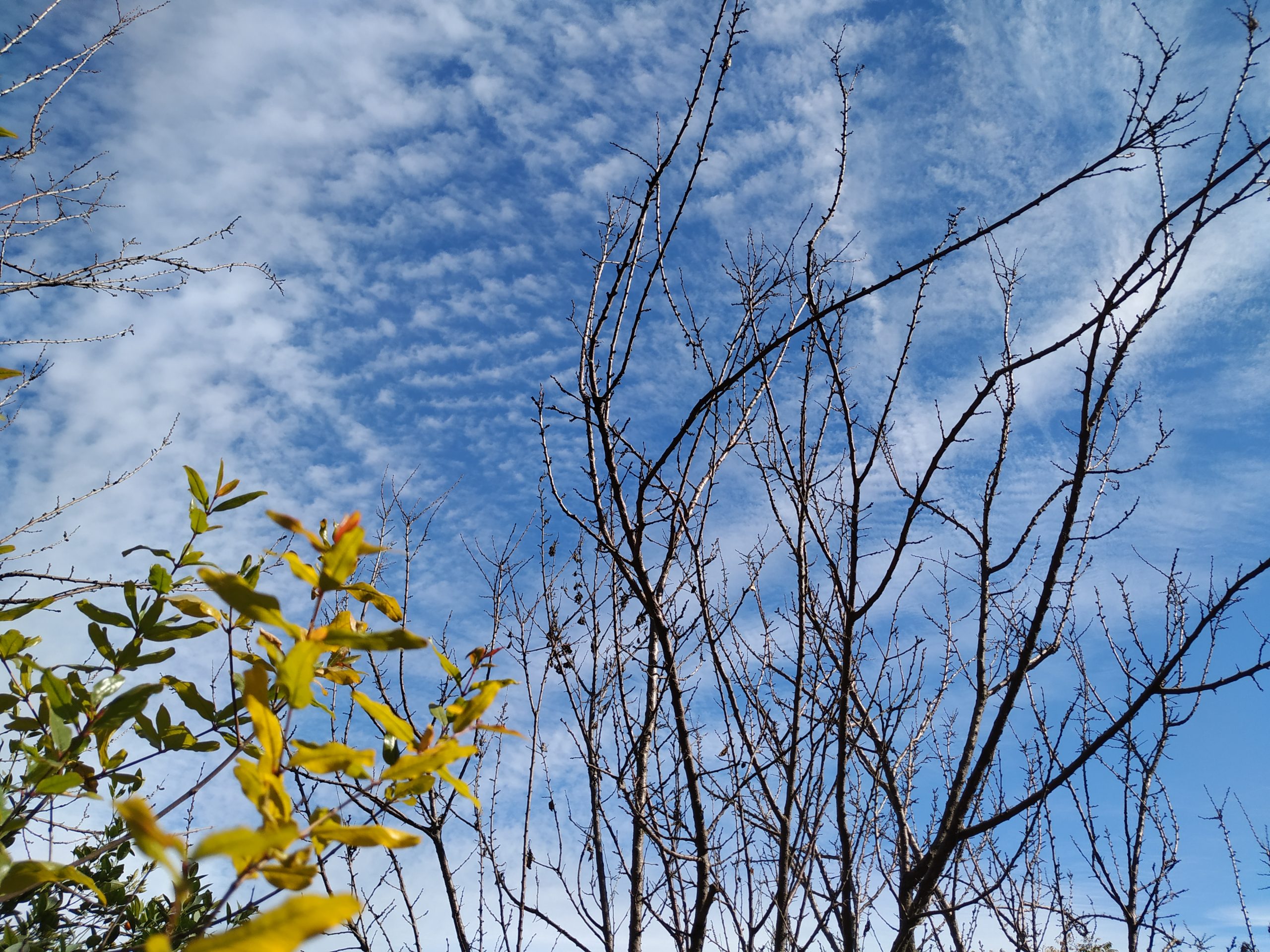
Patches of white on the sky-blue ocean, shape-shifting, these clouds, now right above me, now near the giant tree, now hiding the shy half-moon, now pulling the snow-covered mountain top closer and getting pulled towards simultaneously.
The wind playing on its own, swaying to-and-fro, dancing in a whirl, breathing through the trees, blowing a kiss to every broken leaf, falling gently with it on the ground.
The greens, browns, yellows and the spots of red and orange, all soaked in sun rays, full of winter-warmth, tease the cold shadows, shadows that keep whispering and slow dancing following the sun rays in sync – like one flowy movement.
Even though the eyes doze off, the picture paints well – the crimson sky and the crimson clouds, the twilight mix and the twinkling dots, winning over the night with love, falling stars, falling, falling in love.
And now, I open my eyes, afresh, I paint a picture with my eyes, it is all new, it is all unseen.
Stone like still and steady… so that quietness comes naturally to me, in me the artist lives and so does all the eyes that fall on me… in reverence, pain, hatred, fear, love and joy alike.
Stone like calm and composed… so that patience comes naturally to me, in me the atoms dance a difference dance, such as the dance of the time… in tune always… out-of-tune only for the dying.
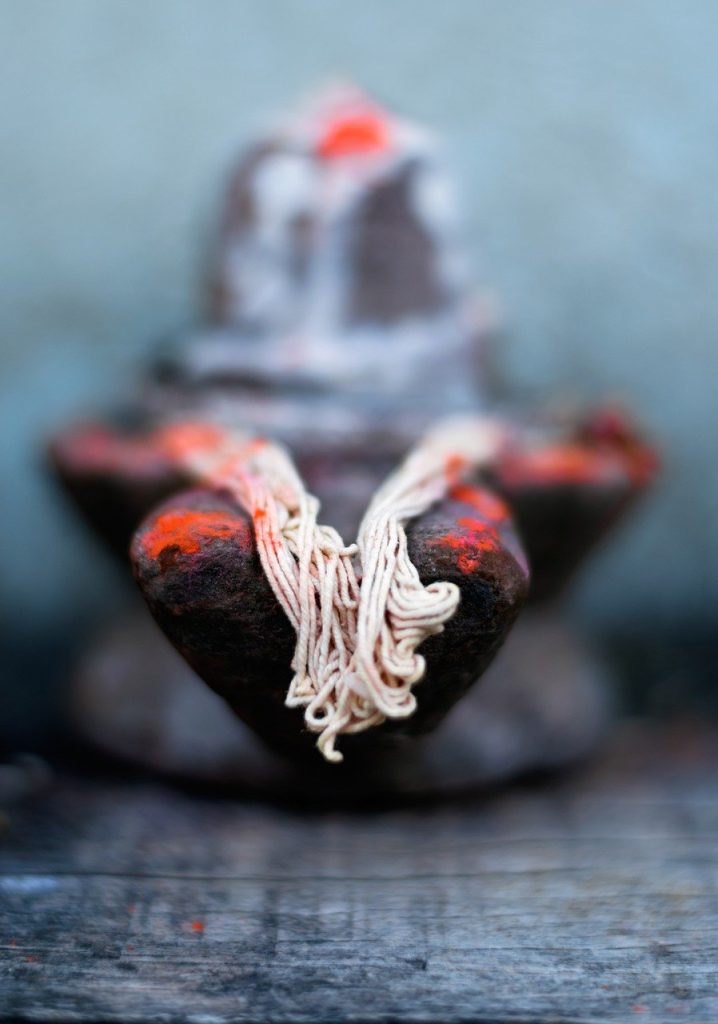
When an idol, I am worshipped, when a stone, I worship it all… the flowery and fragrant air, the bright wet vermilion, the soft sandalwood, the bells, the dancing feet on dancing hymns, the passersby, the glares, the sheen, the prayers, the daily life’s hurried tales.
Absorbing the voices and noise and music and reverberations alike, I continue to un-measure the measured and this is what attracts the weary souls, I know, to meet the unmoving stone.
Stone like wise and kind… the statue lives unwaveringly, beaming and alive, with a beating heart like yours and mine.
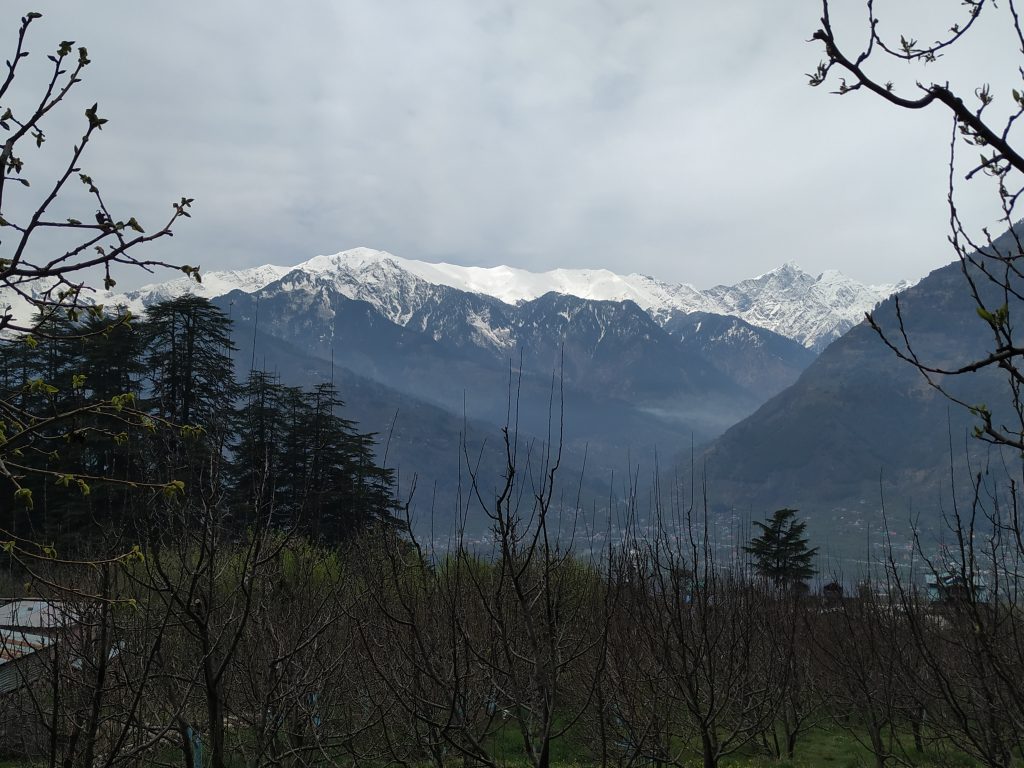
The Pir Panjal Mountain Range, Kullu, Himachal Pradesh. [Image by Jagriti Rumi]
*
What are the mountains saying that doesn’t reach me?
Nothing.
Sun kissed peaks, every hour of every day, shattering time moving in the round clocks, but not the colossal movement, the mountains hide what secret from me?
I’ll measure it, treasure it, capture it once and for all, weigh it well, dissect and familiarise, worship and sell without expectations. Tell me, what is it?
Nothing.
Don’t lie!
I’ll climb and conquer again, I’ll dig and extract again, I’ll create tunnels and pin cables, hang lights and find roads, I’ll race up and down and charge tickets, smart tools are enough to overpower, smartly I move, watch me.
Alas! Ages pass by and you rejoice in stillness while I struggle and fight with no one but myself. In the search of an answer, I have walked past the question always, watch me as I do it again, watch me as I fall.
Watching… Dear mountains, you have watched it all, the movement, steadily you have participated, participated fully… is that it, then? Erosion also doesn’t bother, nor does dying, mixing in dirt, letting the wind take you away in bits.
*
Evening hour, The Pir Panjal Mountain Range. [Image by Jagriti Rumi.]
*
Dear mountains, you don’t speak of love, yet your beauty does. You play with the sky, clouds and lightning.
Not tethered to a window, you see the full picture, and breathe the fresh air, and live… live not as the word ‘live’ explains, dictates, guides, forces, blesses, teaches, restricts, warns, and shouts telling us how to… but simply you do. And for that you need…
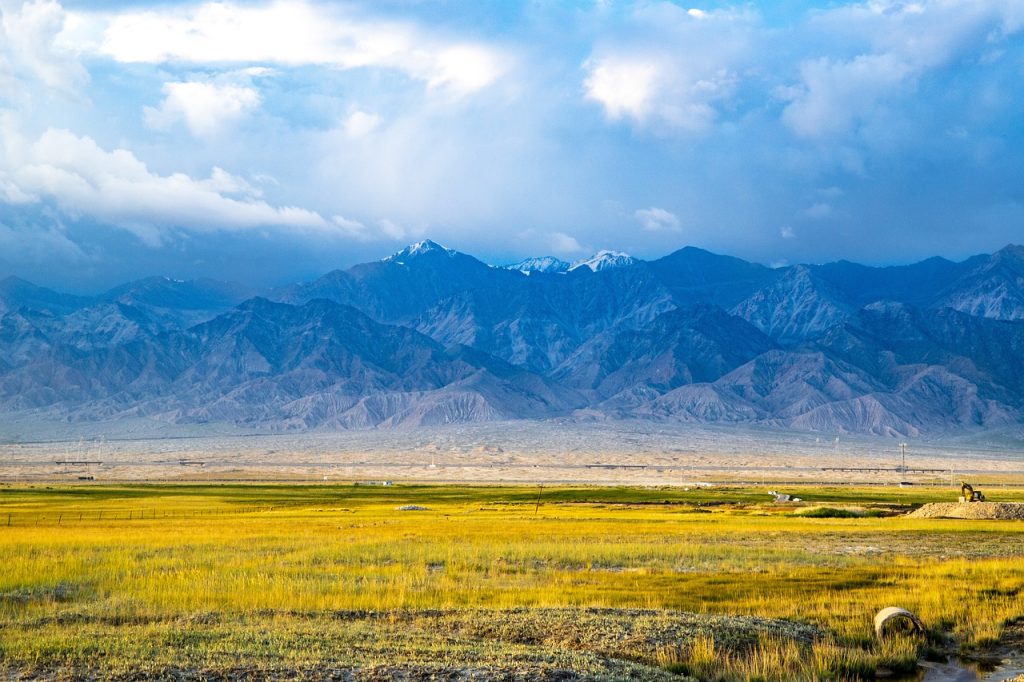
Reverberating grand mountain range… here I come! [Source – Pixabay]
*
Recently ordained as a samurai or was she a veteran, no one knows for what is the difference between new and old journeys… Experience! Experience? Experience is always limited, tied to the past, a guide it maybe, yes, just that, but not a compass, for the working compass points towards the present, always.
And grannie, the samurai never called herself a samurai… she said, and I have heard too grannie, she called herself a walker.
Hmm… yes, yes, that’s right too, but listen what happened next. She crossed the ocean of the golden grass that swayed with the silken wind, her hands stroking the golden waves past her, dancing a little to the left, then to the right, dancing to dodge the crickets, grasshoppers and in some seasons the dragonflies. Some seasons? Some seasons, yes, for she has crossed this ocean of the golden grass many a times.
You mean the meadow, right grannie? Golden grass ocean is where we play? Because I have seen her passing by.
Yes kiddo! So, listen now, she crosses this ocean to climb the reverberating grand mountain range… mountains that speak and its white peaks touch the sky, its high peaks that speak that us chaps fail to see for we bend to sow seeds, our backs ache and speak a different language that doesn’t reaches the peaks that speak.
But the samurai’s footprints, when in the mood, talk and share anecdotes and so we know somethings like that she stands still to sleep and drinks fresh water for breakfast and dinner, skipping lunch altogether, that she takes different routes to reach the top in search of an answer.
Grannie, she bought flour from the market one day, I saw her. She knows how to cook too.
The footprints are complete, not weak, she is never in a hurry, walking ahead, different routes but one direction. Where to? What chasing question she chases? What can be seen that is hidden in these glorious mountains? An answer? Why again? Yes, again… isn’t the old answer relevant anymore? Or is the question too old, dimming the revelation in-turn? Or there’s no question, no answer to be known?
Kiddo? You asleep, good. Rest now, for you too have to go on a long walk soon.
The samurai, standing on the mountain peak, her hundredth journey, maybe, she mutters, for she stopped counting long time back, for it didn’t answer, it dated the time passed and that is all. Why hundredth then? For impact, she whispers.
Biting cold wind reminded nothing of its silken version that swayed the golden grass, the meadows that looked like a shiny river from there. The samurai looked in one direction for hours, concentrating madly, couldn’t see clearly when suddenly a brisk energy filled her fully, and she stopped looking in one direction, and looked at the panorama fully, the whole of it and not just a part.
The question, the answer busted in joy then, concentration took a dive into complete attention, a clarity dawned that stopped the samurai from checking time, for the whole movement moved in her wholly.
This one movement played like a melodious orchestra around her, that from that day, the samurai walker didn’t imagine her goal, but saw the radiant whole.
The job was done, yet the samurai walked, fought and caught the fallen and rose every time, looking, from a certain angle, as tall and strong as the mountains.
And those who have heard the peaks, mostly the oldies like our grannie, even once – the echoes of the purple caves – they have spent the days and nights in glorifying it as a legend, speaking in riddles, confusing all and never…
Listen to this wonderful track by Pandit Jasraj and read along.
*
*
Transported to the past, a pinch of time plucked, rubbed, glided from vilambit (slow), madhya (medium), to drut (fast) tempo, casting a spell to unite.
The golden light smeared the pillars, the roof, escaping through the hall, smudging the dusk too… or was it dawn?
A small earthen diya (lamp) lit the space wholly, for so long, and though the last one to enter the hall, standing near the pillar, you feel the warmth.
No one moves, as if they are painted and fixed, but you do to see the diya from nearby, you ask it something, it flickers gently, and you realise it is the music that is its source.
The beats slowly embrace you.
Suddenly, in the end, before transporting back, you find yourself dancing, joyfully.
Hip-hip-hurray, just like that! [Source – Filmfreeway]
*
That high school year passed too quickly, swiftly, madly and you could not believe it – holding unsaid messages in one hand and uncertain life decisions in the other, you had stepped out of the school gate.
Footsteps, voices, promises, laughter, you could hear it all, but when you had turned, you saw no one there.
Suddenly on your own, with phone calls, messages not being good enough and the classroom meetings of everyday, of every month, for so many years, suddenly took over by hostel walls, you were hit strongly.
The everyday meetings become few, fewer, rare… and the bond?
Presently, it makes a good happy place within you.
If you remember that last high school year, the last month, friends leaving town, and maybe you too leaving for a hostel, all by yourself, then you will love Nautanki*.
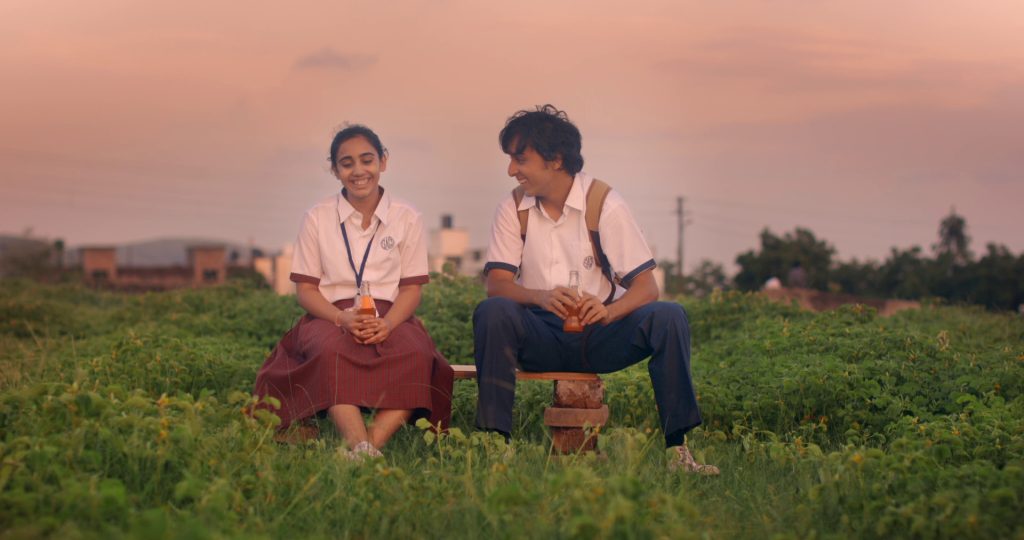
A 2022 feature film, Nautanki, is a coming-of-age drama that calmly, brightly, innocently tells its story. It never forces any thoughts nor is it in a hurry to reach a dramatic point in the protagonist’s saga.
A very rare film that allows the viewer to be on a journey without the burden, aggression of being on one. Not fulfilling a duty, but just observing and exploring honestly, as much as one can.
*
Joshi will leave the town after his 10th standard exams and his best friend, Priti, wonders if he has learnt anything at all, to pass the exams and in life, in general.
*
Experimenting with the flow, twisting the technique, the film progresses beautifully – where to, you ask, we don’t know for we too are moving with Joshi.
Fun times and fights with friends, that ‘not-speaking-anymore’ zone, the reunions that colours our high school years give us a tool for sure before thrusting us towards the end, the beginning.
A tool that navigates.
And with our very own – skilled, unskilled, aware, unaware – hands we write our life’s drama.
*
Joshi, who knows simply to be – not in the moment, he is ‘moment-free’, he is super careless/carefree – eventually will be pulled into the world’s drama…
Yes, no? And what role will he play in the Nautanki?
*Nautanki is a Hindi word that means drama in English. It is used to refer to a style of theatrical performance that is usually more showy, exaggerated and over-the-top than traditional types of theatre. Nautanki performances often include elements like music and dance.
The siege of Daulatabad (April-June 1633). [Source – Wikimedia Commons]
*
But the play is more than a political allegory. It has an irreducible, puzzling quality which comes from the ambiguities of Tughlaq’s character, the dominating figure in the play. All the other characters are dramatized aspects of his complex personality, yet they also exist in their own right. Kannada critics have made detailed analyses of the play, paying special attention to the symbolism of the game of chess, the theme of disguise, the ironic success of Aziz whose amazing story runs parallel to Tughlaq’s, and the dualism of the man and the hero in Tughlaq, which is the source of the entire tragedy. Yet no critical examination of the play can easily exhaust its total meaning for the reader, because the play has, finally, an elusive and haunting quality which it gets from the character of Tughlaq who has been realized in great psychological depth. But it would be unjust to say that the play is about an ‘interesting’ character, for the play relates the character of Tughlaq to philosophical questions on the nature of man and the destiny of a whole kingdom which a dreamer like him controls.
Introduction, U. R. Anantha Murthy
*
[Image by Jagriti Rumi]
*
Muhammad-bin-Tughlaq, in the play, commits to actions with a confidence of a master player, one who is certain of the ending, one who is far sighted somewhat like an ominous oracle – a skilful, wise puppeteer who runs the show singlehandedly, unaware and forgetful of his involvement in the drama.
People unlike puppets, even though tied to strings, quietly keep gathering the power to pull down and topple the king puppeteer, they always do.
The echo of a future that reached Tughlaq’s ears, the making of history that Tughlaq could see so clearly was nothing but an illusion, a time bound vision, a trick that tricked him.
Sure about a glorious tomorrow, he dragged his people along towards it – an ever evading tomorrow.
Sultan’s experiments done so as to unite the country as one, to build an ideal powerful state, failed pathetically, leading the kingdom to anarchy. With a staunch eye on greatness, Tughlaq couldn’t manoeuvre without ‘murdering’ the stubborn present – the present, so full of the past, so treasured by his subjects.
Subjects who wrote hate-letters, full of rebukes, all addressed to the Sultan.
Let us meet Tughlaq, whom we first met in the library, who is now placed, by the playwright, on the chess board and the game has begun –
Scene One
Old Man: You can go to the Kazi-i-Mumalik for small offences. But who do you appeal to against such madness?
Third Man: This is tyranny! Sheer tyranny! Move the capital to Daulatabad! Such things never happened in his father’s days – may his soul rest in peace. Now he’s got his father’s throne. He isn’t happy with that and—
*
Tughlaq has set up the court of Chief Justice in the capital where people can file a suit against the officers of State or even the Sultan.
He talks about justice and equality after accepting the Kazi’s verdict; he declares to compensate and offers a post in the Civil Service for the Brahmin who had appealed against his land being seized illegally by the State.
The humanistic monologue ends with Tughlaq announcing his well-thought and thoroughly discussed decision of shifting the capital from Delhi to Daulatabad and without waiting for a reaction or a bird to fly by, he leaves.
The shocked public worries if their worst nightmare will come true – what are they to do? The guard shoos them away shouting “Go home! The show’s over!”
*
Aazam: Anyway, why did you have to dress up in these ungodly clothes? Couldn’t you have come like a proper Muslim?
Aziz (scandalized): But then what would happen to the King’s impartial justice? A Muslim plaintiff against a Muslim King? I mean, where’s the question of justice there? Where’s the equality between Hindus and Muslims? If on the other hand the plaintiff’s a Hindu… well, you saw the crowds.
*
Aziz, a thug, disguised as the Brahmin, seeking justice from the Kazi, truly understands Sultan’s ‘impartial justice’; playing along with the Sultan, he makes use of the State’s scheme and presents the Sultan a chance to make use of him – Sultan gets the tag of a “fair ruler” and in turn, Aziz makes some money.
Throughout the play Aziz maintains the stance that no one knows the wise Sultan as much as he does because it is only he who participates in the Sultan’s game.
Aziz will, sooner or later, dare to check-mate the Sultan, will he win?
Scene Two
Muhammad Tughlak orders his brass coins to pass for silver, A.D. 1330. [Source – Wikimedia Commons]
Step-Mother (bursts into laughter): I don’t know what to do with you. I can’t ask a simple question without your giving a royal performance.
*
Tughlaq’s step mother is his confidant; well aware about his burdens, the Step-Mother always urges him to slow down and more importantly, to make every move not in secret, not from her.
The Step-Mother too is playing alongside the Sultan, sometimes delicately trying to use him as a game-piece, but never showing it. The crime of patricide and fratricide hangs heavily on the Sultan’s soul; the Step-Mother never brings this up, never, unless it is required to make an impact.
*
Muhammad: Surely a historian doesn’t need an invitation to watch history take shape! Come, Barani, what does he say?
Barani: It’s as Your Majesty said… He says the Sultan is a disgrace to Islam.
Muhammad: That’s all? I could find worse faults in me. What else?
Silence.
Najib: He says Your Majesty has forfeited the right to rule, by murdering your father and brother at prayer time.
*
First Tughlaq makes praying five times a day compulsory, then he completely bans praying in his kingdom, only to wait in the end for a messiah to bring back pious prayers for his doomed subjects.
Like a devotee crossing all boundaries – that of life too – to connect with the almighty, Tughlaq crossed all boundaries to win over the almighty.
The far-off dream seemed the biggest truth to him and making sacrifices the only way towards it.
Scene Three to Five
Muhammad: No one can go far on his knees. I have a long way to go. I can’t afford to crawl – I have to gallop.
Imam-Ud-Din: And you will do it without the Koran to guide you? Beware, Sultan, you are trying to become another God. It’s a sin worse than patricide.
Muhammad (refusing the bait): Only an atheist can try to be God. I am God’s most humble slave.
*
One Sultan, one dream, one decision, and what did the thousand eyes see – bloodshed or sacrifice, deceits or promises, Delhi or Daulatabad? Perhaps they couldn’t see clearly, perhaps they were hungry – for prayers or food?
*
Shihab-Ud-Din: I’m sorry. But you have never liked the Sultan, I don’t know why. After all that he has done for the Hindus –
Ratan Singh: Yes indeed, who can deny that! He is impartial! Haven’t you heard about the Doab? He levied such taxes on the poor farmers that they preferred to starve. Now there’s a famine there. And of course Hindus as well as Muslims are dying with absolute impartiality.
Moving stealthily ahead, like an animal approaching its prey, Tughlaq finds it hard to remember that he is not an animal. Playing the game too well, he begins to lose the grip on reality; shuffling strategies, imposing with a hope to win once again.
Muhammad: I could have killed you with a word. But I like you too much.
Stabs him. Then almost frenzied, goes on stabbing him. Hits out at Shihab-Ud-Din’s dead body with a ferocity that makes even the soldiers holding the body turn away in horror.
Barani: Your Majesty – he’s dead!
Muhammad stops, then flings the dagger away in disgust.
Muhammad (anguished): Why must this happen, Barani? Are all those I trust condemned to go down in history as traitors? What is happening? Tell me, Barani, will my reign be nothing more than a tortured scream which will stab the night and melt away in the silence?
Scene Nine
Aziz, the thug, awaits a chance to be in the centre, right in front of the king; to be there not as a pawn, rook or knight, but to be invited by the Sultan himself, to be revered – he plans to replace Ghiyasud-din Muhammad, a saint.
*
Aazam (giggles): So you want power, do you? What do you want to be, a Sultan?
Aziz: Laugh away, stupid. You’ll soon see. It all depends on whether Karim will bring the goods.
Aazam (seriously): But, no, Aziz, why are you so dissatisfied? We have such a nice establishment here. We take enough money from travellers and the other robbers are scared to death of you. There’s no limit to what we can make here.
Aziz: I am bored stiff with all this running and hiding. You rob a man, you run and hide. It’s all so pointless. One should be able to rob a man and then stay there to punish him for getting robbed. That’s called ‘class’ – that’s being a real king!
Scene Ten to Twelve
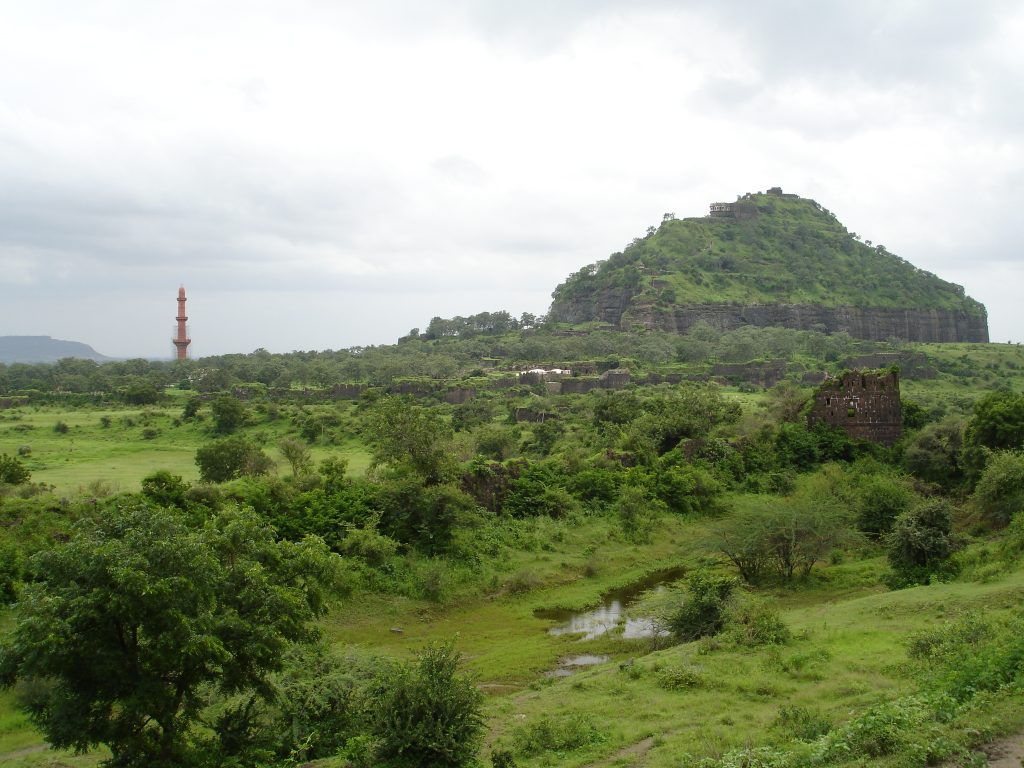
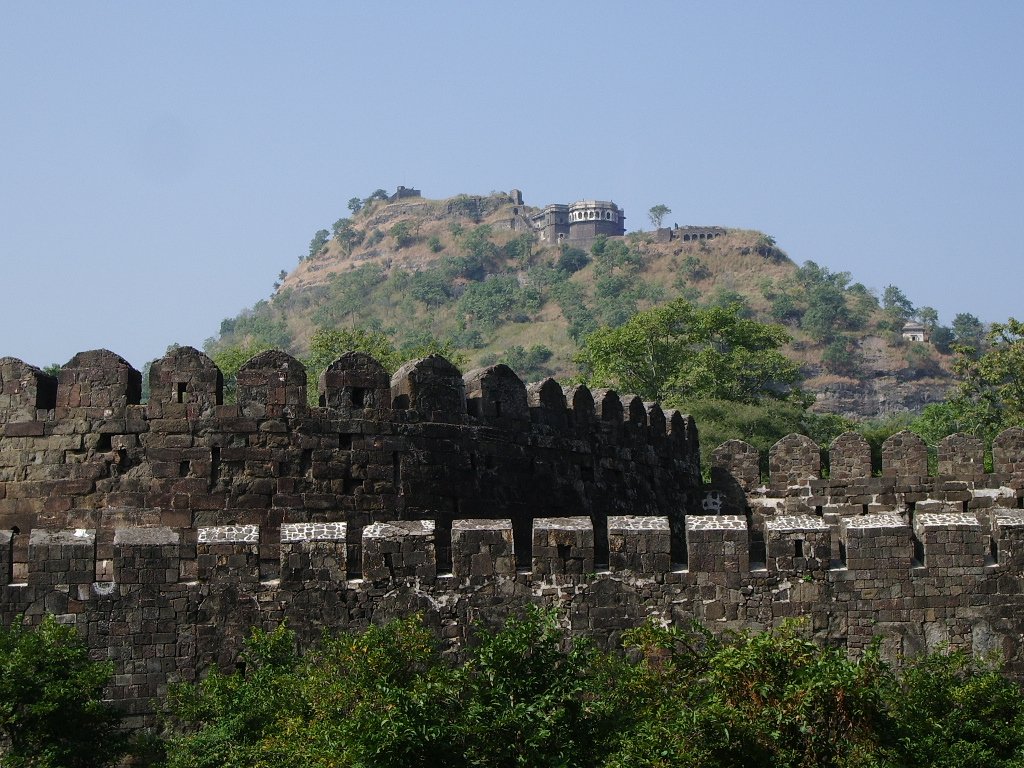
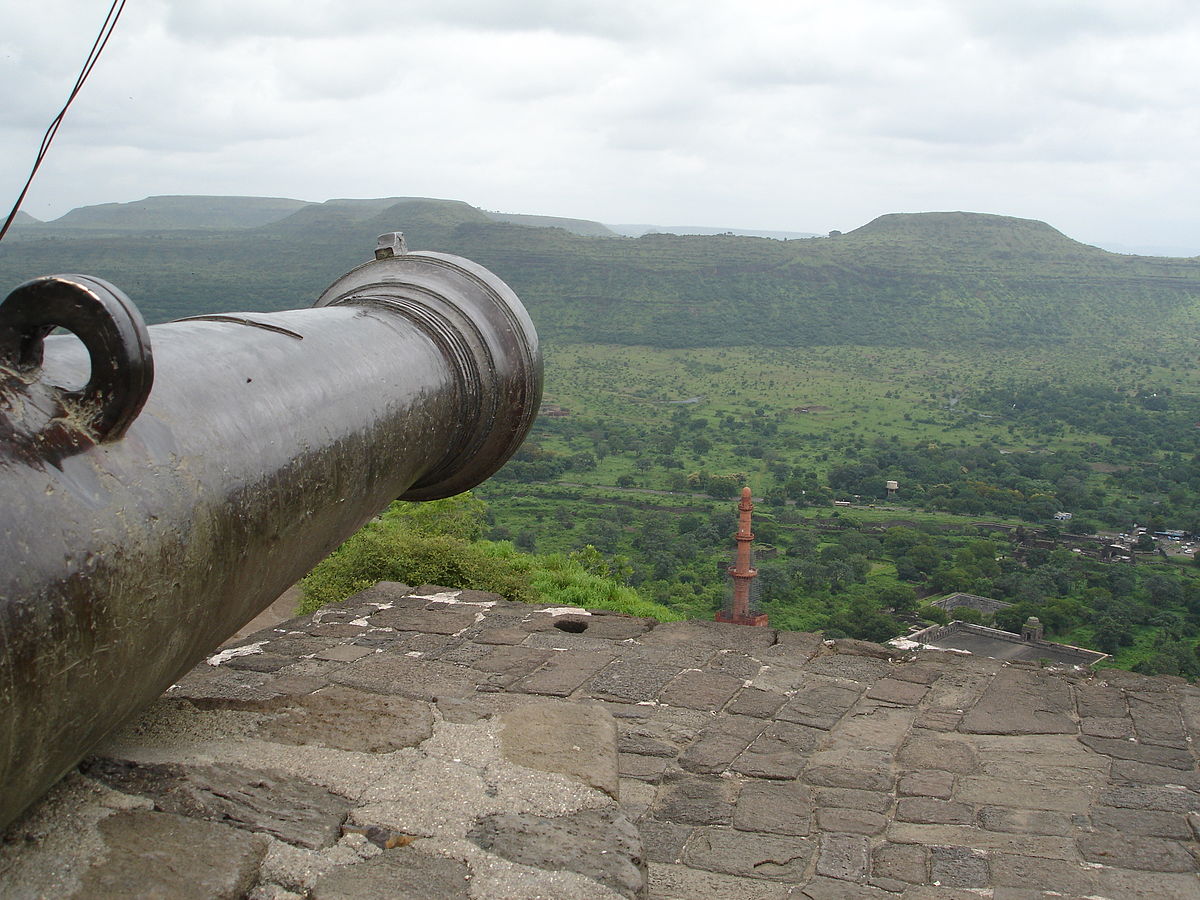
Daulatabad Fort [Source – Wikimedia Commons]
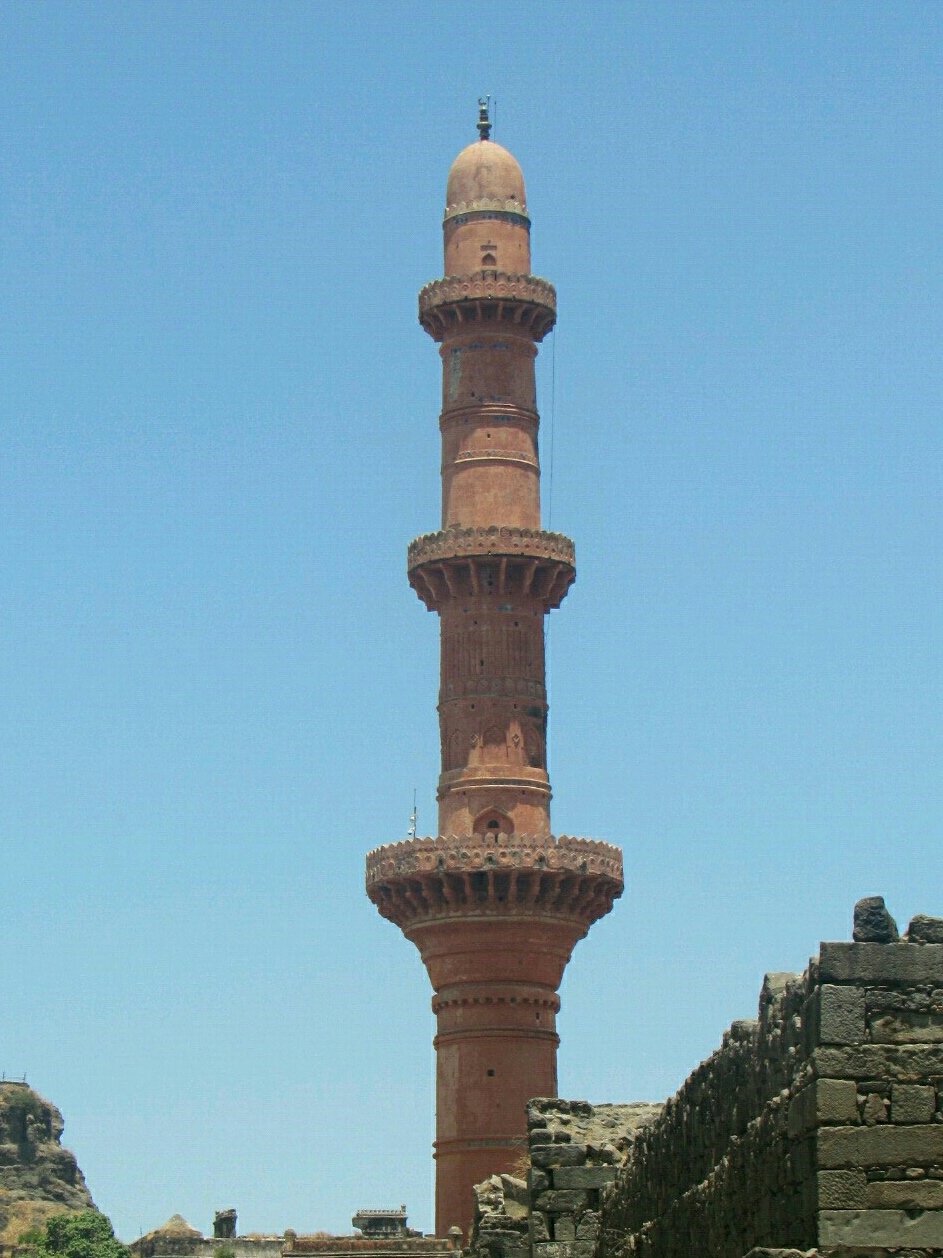
Chand Minar, Daulatabad Fort [Source – Wikimedia Commons]
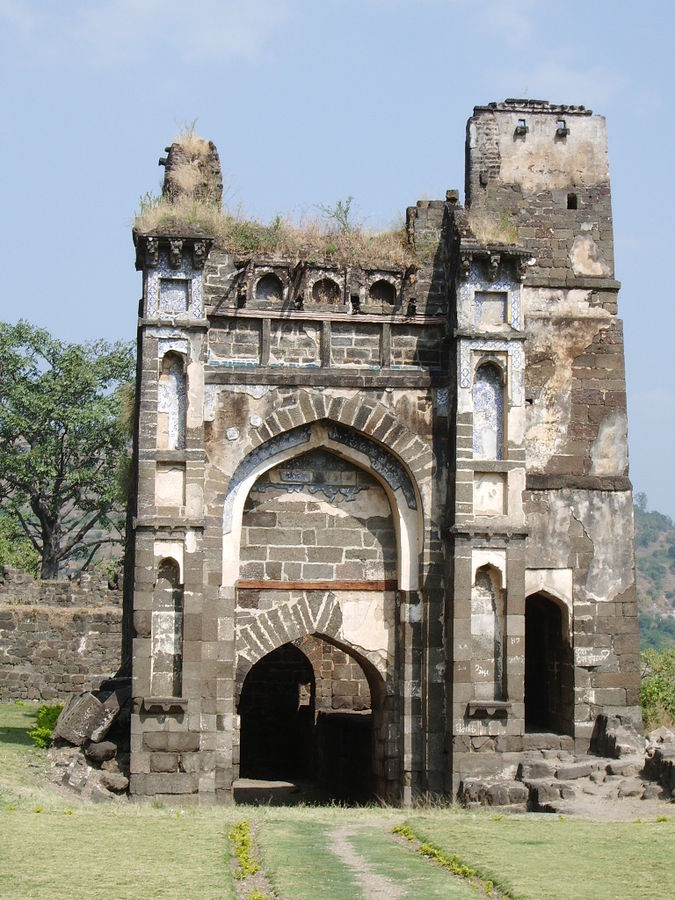
Daulatabad Prison [Source – Wikimedia Commons]
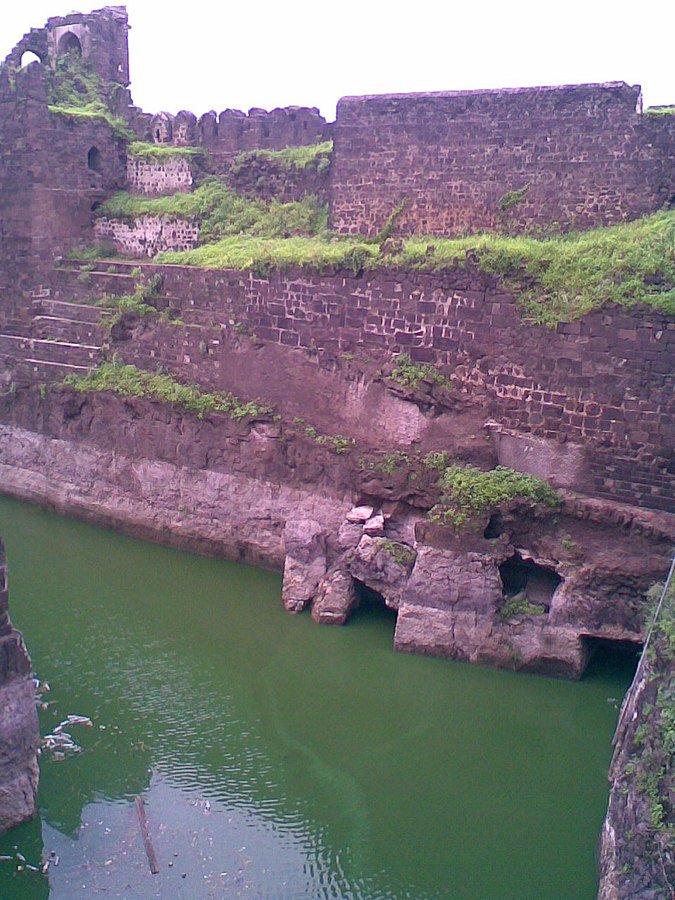
A man made huge duct created around all the sides of Daulatabad Fort [Source – Wikimedia Commons]
Daulatabad Fort [Source – Wikimedia Commons]
*
Unlike the game of chess, the king wages a war against his own people; wounded and hurt, he tortures himself by giving his step-mother the death sentence.
Step-Mother: You had your share of futile deaths. I have mine now.
Muhammad (shouting): No, they were not futile. They gave me what I wanted – power, strength to shape my thoughts, strength to act, strength to recognise myself. What did your little murder give you?
*
The Step-Mother too wanted power, power to rule Sultan’s heart and mind and through him the Sultanate; Tughlaq knew it, but couldn’t accept it anymore, not after she had Najib, the royal adviser, poisoned.
Muhammad: God, God in Heaven, please help me. Please don’t let go of my hand. My skin drips with blood and I don’t know how much of it is mine and how much of others.
Scene Thirteen
Aziz is finally face to face his idol, unafraid and gleefully meek, he praises every move of the Sultan, revealing it to him unabashedly who all profited from his ‘just schemes’ – some goons like him and the generous Sultan himself.
The only character who manages to break Tughlaq’s dream and show him the ugly reality, the present that is far off from his historically grand future. He brings forth the truth as a twist.
*
Barani: This man should be buried alive this minute!
Aziz: I only acted according to His Majesty’s edicts.
Muhammad (exploding): Hold your tongue, fool! You dare pass judgement on me? You think your tongue is so light and swift that you can trap me by your stupid clowning? Let’s see how well it wages when hanging from the top of a pole. I haven’t cared for the bravest and wisest of men – you think I would succumb to you? A dhobi, masquerading as a saint?
Aziz (quietly): What if I am a dhobi, Your Majesty? When it comes to washing away filth no saint is a match for a dhobi.
Muhammad suddenly bursts into a guffaw. There is a slight hysterical tinge to the laughter.
*
Aziz wins without check-mating the king – his life is spared and a job in the deccan is offered by the Sultan – as he seals a deal to continue fooling the crowd for a while and then to vanish. He makes the king adhere to his wish.
Muhammad: If justice was as simple as you think or logic as beautiful as I had hoped, life would have been so much clearer. I have been chasing these words now for five years and now I don’t know if I am pursuing a mirage or fleeing a shadow. Anyway what do all these subtle distinctions matter in the blinding madness of the day? Sweep your logic away into a corner, Barani, all I need now is myself and my madness – madness to prance in a field eaten bare by the scarecrow violence. But I am not alone, Barani. Thank Heaven! For once I am not alone. I have a Companion to share my madness now – the Omnipotent God! (Tired.) When you pass your final judgement on me, don’t forget Him.
*
Barani, the historian, Sultan’s only friend, prepares to leave Daulatabad; Tughlaq will soon be all alone in the magnificent palace, alone with his deeds and this terrifies him.
As a king Tughlaq took responsibility of his subjects, confident of his vision, that when it breaks, he knows he has fallen and with him, so has his people. The cries, chaos, mayhem follow him like his shadow.
But if not a king, yet a ruler, a group of elected rulers, what does responsibility of the citizens mean to them? Who falls, if they fall? What do their shadows sound like?
The play ends with the fake Ghiyasud-din Muhammad performing at the prayer time in the background (Muezzin’s call to the prayer is heard), Tughlaq, sitting on his throne, takes a short nap, then suddenly wakes up unsure of the place or time.
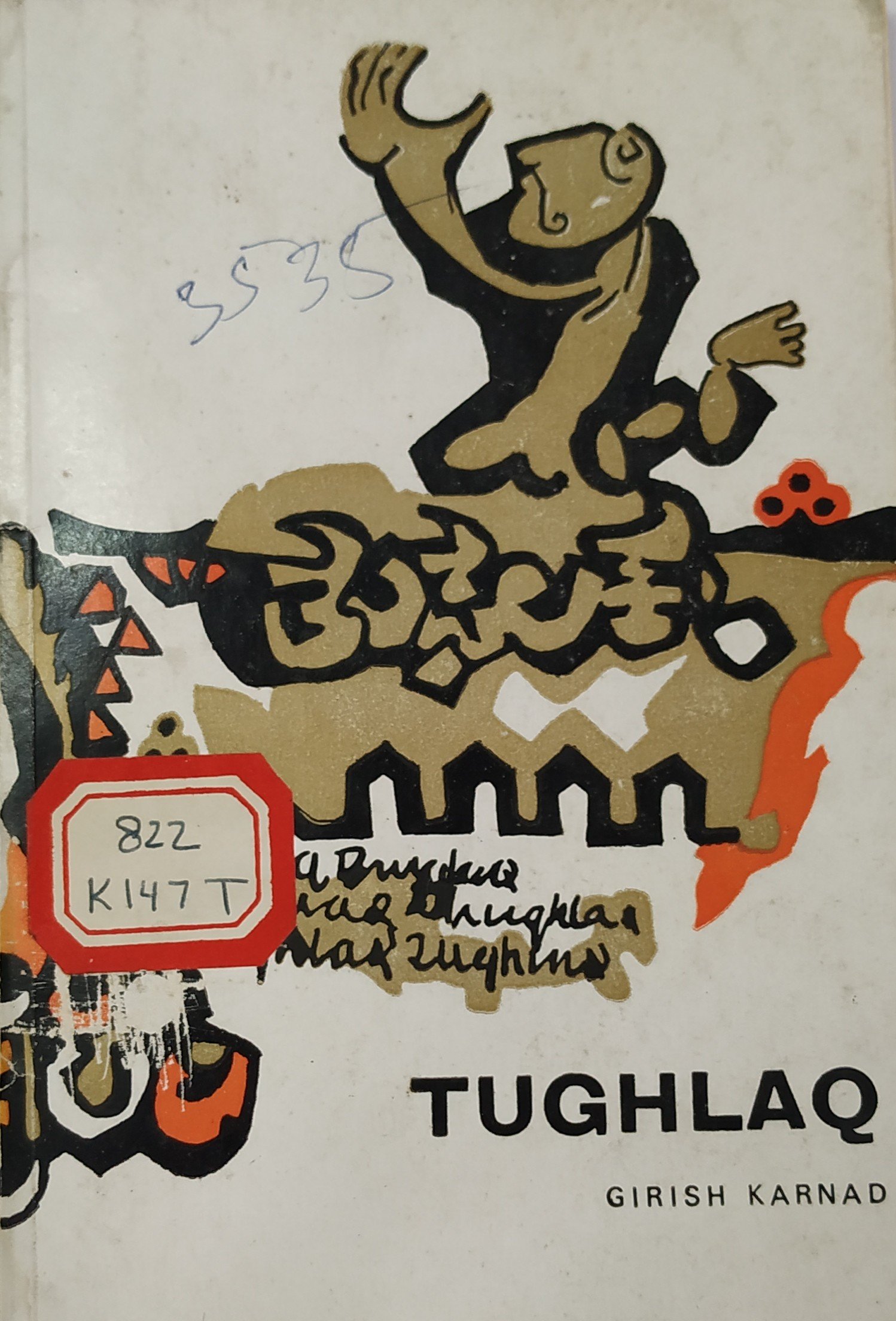
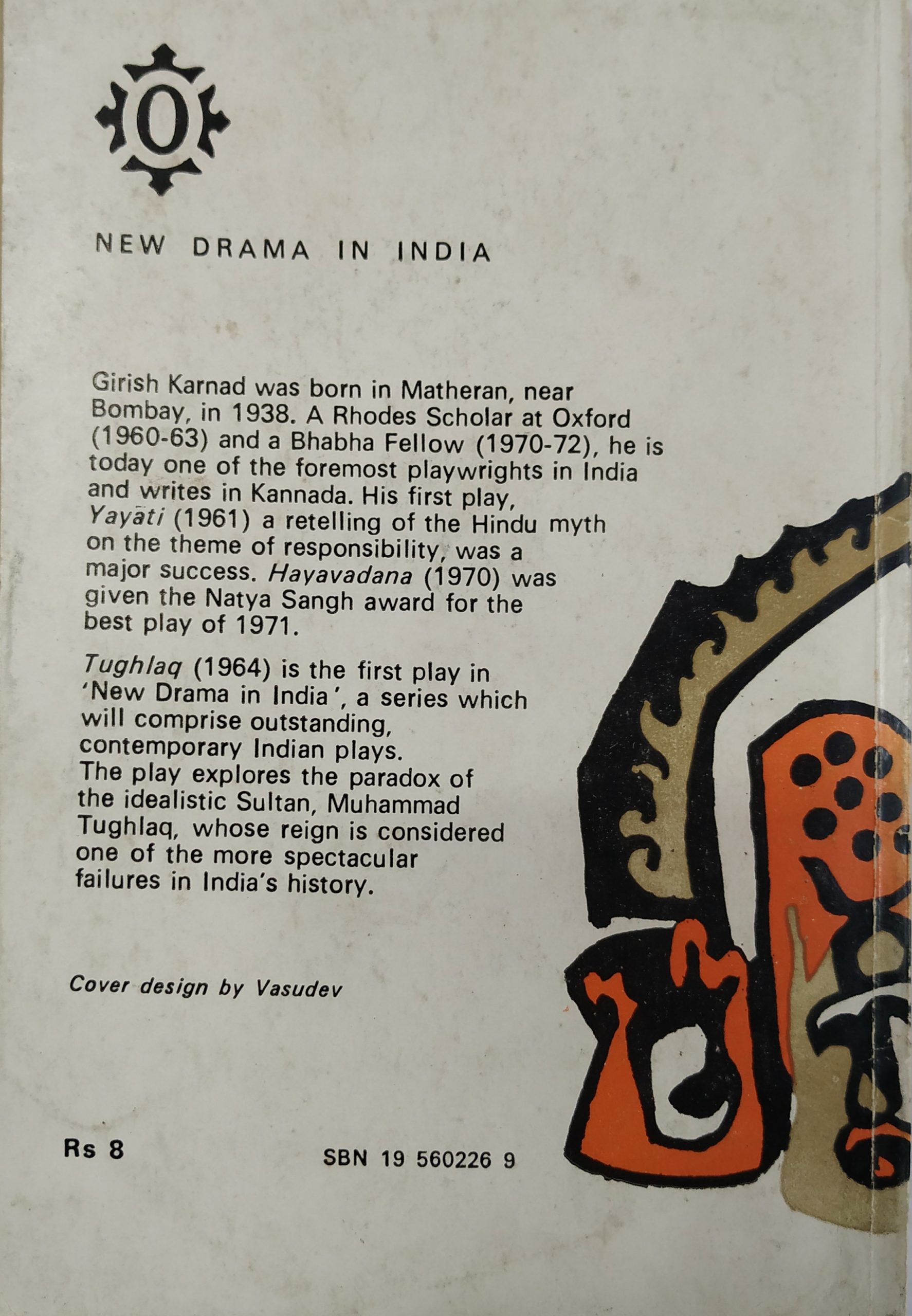
Witnessing the sun rays dancing leisurely, peeking from this-that window, for days and days, it sat in dust amongst others, quaintly steady despite of its love for an extravaganza. Tughlaq – a play by Girish Karnad – captured in a petite white book, first published in 1972, sold at a humble (that now appears to be too little, too funny) price, steadily awaits the reader on the shelf in the library for that one chance.
But why so steady? Are you dead? Were you immured then?
Like a bright star in the darkness, it spreads its light when the reader opens the book first, without any promise – it may guide you, lead you astray or try nothing or try everything that you have cooked up in your head.
But be assured that it will stay with you, always, once you meet Tughlaq; a play in thirteen scenes, thirteen tricks, thirteen faiths, many murders and one Sultan.
Time’s moving, time has changed, many ruled and died, no more Sultans, no more sultanates, what’s in it for you? Has the power game changed too?
*
Source – HP State Library; Photo by Jagriti Rumi
Source – HP State Library; Photo by Jagriti Rumi
*
What struck me absolutely about Tughlaq’s history was that it was contemporary. The fact that here was the most idealistic, the most intelligent king ever to come on the throne of Delhi… and one of the greatest failures also. And within a span of twenty years this tremendously capable man had gone to pieces. This seemed to be both due to his idealism as well as the shortcomings within him, such as his impatience, his cruelty, his feeling that he had the only correct answer. And I felt in the early sixties India had also come very far in the same direction – the twenty-year period seemed to me very much a striking parallel.
Introduction, Girish Karnad
*
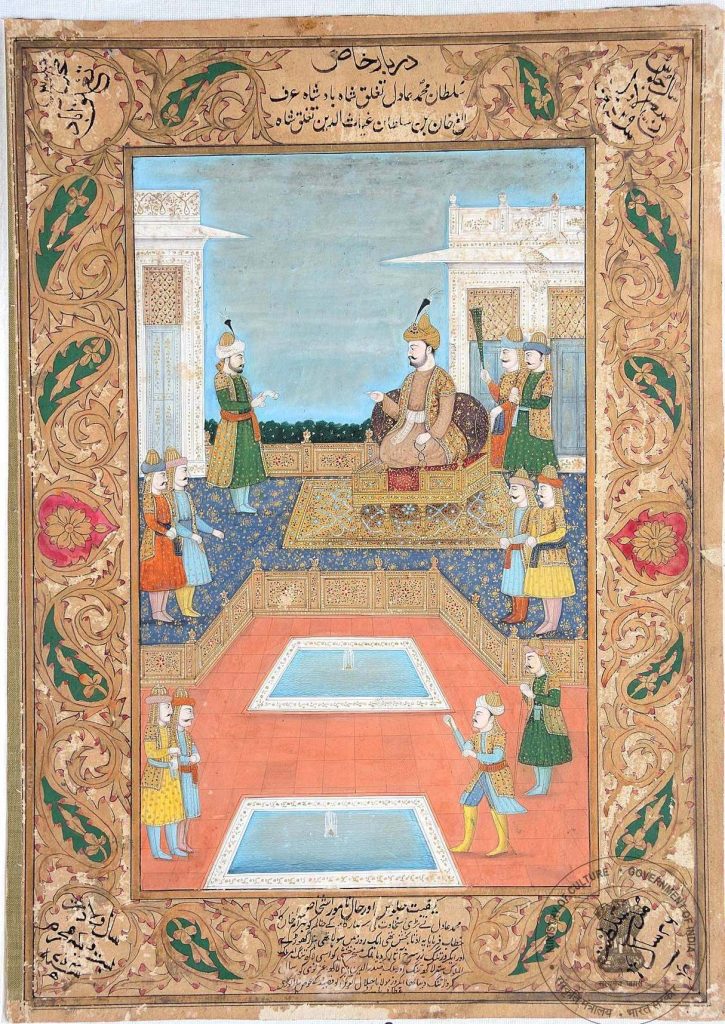
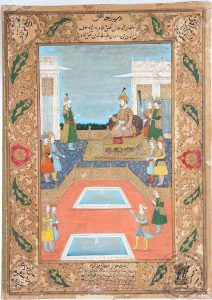
Muhammad-bin-Tughlaq (1290 – 1351) reigned the Delhi Sultanate (from 1325 to 1351) like no other; a visionary famous (less) for his political experiments, innovative ideas, (more for) tyrannical grandiose love for his public, the sultanate and history – he was the public’s beloved mad king.
*
Painting depicting the court of Muhammad bin Tughluq. Salar Jung Museum, Hyderabad.19th century [Source – Wikimedia Commons]
…I have something to give, something to teach, which may open the eyes of history, but I have to do it within this life. I’ve got to make them listen to me before I lose even that!
Sultan Muhammad, The Fort at Daulatabad, Scene 8
*
Who is the Sultan addressing here, if not us?
Ahead of his time, this king spoke directly to his future listeners, galloping towards his ideals, desires and dreams, forgetting behind the world he was tied to, and while he fell several times on this journey, the world tied to him suffered more.
Shifting the capital from Delhi to Daulatabad (Maharashtra), he pined to make history in a jiffy, combine past-present-future hurriedly, uplift every life, even the one that was not his own.
*
Guard 1: Was it hard, coming from Delhi to here?
Guard 2: I survived. But my family was more fortunate. They all died on the way.
Guard 1 (sympathetically): I am sorry. The arrangements must have been very bad.
Guard 2: Oh no. The merciful Sultan had made perfect arrangements. But do you know, you can love a city like a woman? My old father had lived in Delhi all his life. He died of a broken heart. Then my son Ismail. He was six years old – would have been ten now! The fine dust that hung in the air, fine as silk, it covered him like a silken shroud. After him, his mother.
The Fort at Daulatabad, Scene 8
*
You begin with just one image – the mysterious cover design (by Vasudev), a chess-piece-like king wanting to seize it all – which challenges you, but not so much as the dramatic scenes in the play as they convert your imagination into a projector. You visualise as you read, only to find that the king is not where you placed him; he deceives you again.
Sultan’s sins grow faster than his glory and power; and we get a first-hand experience for the playwright makes us sit in the front row.
We witness it all – the king’s game, we take part in it, but what part do we play? Unknowingly, knowingly?
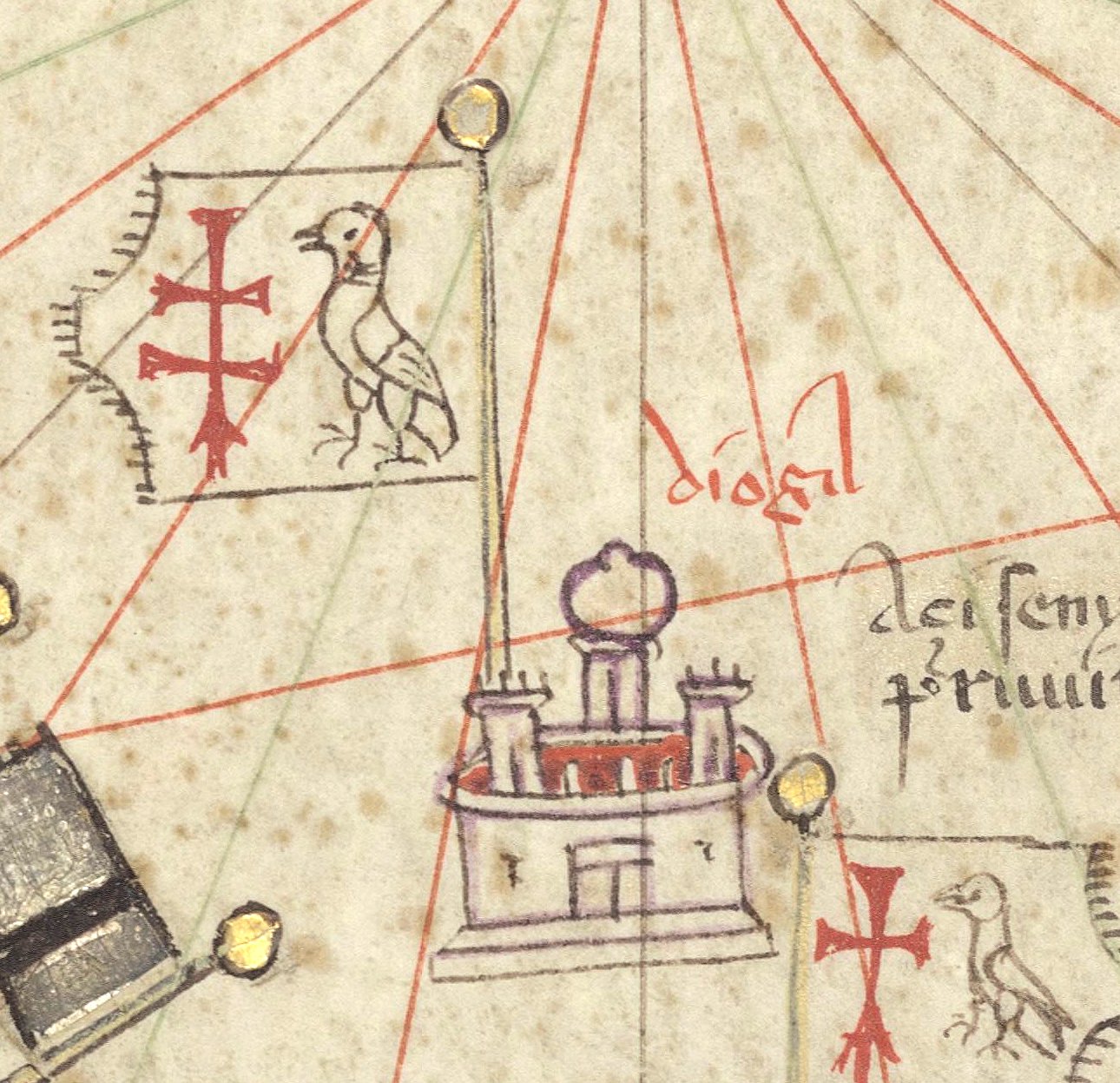
Region of the Yadavas, with the city of Diogil (Deogil. Dwaigir. Daulatabad) in the Catalan Atlas (1375). [Source – Wikimedia Commons]
Western coast of India, with the traditional Yadava capital of Diogil (“Deogiri”, or Devagiri or Daulatabad) at the center, in the Catalan Atlas (1375). On top of the city of Diogil floats a peculiar flag, while coastal cities are under the black flag of the Delhi Sultanate. Devagiri was ultimately captured by ‘Alā ud-Dīn Khaljī in 1307. The trading ship raises the flag of the Ilkhanate. [Source – Wikimedia Commons]
“Both Tughlaq and his enemies initially appear to be idealists; yet, in the pursuit of the ideal, they perpetrate its opposite. The whole play is structured on these opposites: the ideal and the real; the divine aspiration and the deft intrigue. Tughlaq is what he is in spite of his self-knowledge and an intense desire for divine grace.”
Introduction, U. R. Anantha Murthy
*
Tughlaq, first published in 1964 in Kannada, received immense success on stage and amongst readers; it was translated into English by Karnad; capturing that era so well, he frees his work from limitations – time changes, but human emotions don’t.
Time, something the Sultan tried to play with, passing sleepless nights as if to overpower it, facing defeats, yet not accepting the fact that his public was not on his side, but Time’s.
For now, let us keep sitting in the front row, the classic play is about to begin –
“Announcer: Attention! Attention! The Warrior in the Path of God, the Defender of the Word of the Prophet, the Friend of the Khalif, the Just, His Merciful Majesty, Sultan Muhammad Tughlaq.”
I am joy running free/
freely flying, fluttering, soaring in a valley/
Of joy am running free.
Greetings!
A storyteller, following the ancient tradition of cave chroniclers, standing in vrikshasana (the tree pose) on a hill top (it is sunny, but windy), breathing in and out stories (relishing it all, but at times overwhelmed), declares animatedly that she will continue to – tell stories, share rare story gems, and connect with the pacy universe while also keeping the website ad-free.
Big thanks to my readers. Stay tuned!
Also, a humble request to the new subscribers to check the spam folder after subscribing. Silly (but necessary) confirmation emails often land there instead of the bright inboxes. Merci!
Ya-hoy!
Chiming Stories (formerly Home Chimes)
P.S – Supporting a storyteller is good for the world’s health (and undoubtedly, for the storyteller’s health as well). Shower some love by sharing, commenting and subscribing to the Weekly Newsletter.
Gabbeh, the 1996 film, is a simple tale of a gipsy girl, her clan and the way their life goes on. Unfolding beautifully just like an artist painting a canvas, Gabbeh quietly touches the grand questions.
Ranked as one of the greatest British films of all time, The Lavender Hill Mob confides in the audience, letting them see, feel, laugh and think without tickling persuasively with a joke here and a punch-line there.
Godard… Breathless and Alive
A Tribute to Jean-Luc Godard, the Film Philologist who Reinvented Cinema.
Yes fly! For walking on the second track is dull and usual, but dreaming high, high, high requires tools. Tools like the right pair of shoes, a chirpy, gritty soul that eats butter-jam dreams, a soul that drinks milky-milky creams.
Silver cascade shimmering the night sky, music to the waves and surreal beauty to the eyes, the Moon loves the art of discipline.
It may be difficult to believe for the Moon’s splendour defies time, it stupefies the clock, it follows the path of a dreamer, but how could this be possible if the Moon knew not discipline?
In this moment, I am a little bit of this and a little bit of that, I am complete and incomplete, I am pleased and uncertain, I wish for nothing and I know I have to wait.
Because the distance covered reminds me of the hurdles I have crossed and the ones I could not, it reminds me of a throbbing past and a dreamy future and it reminds me of how much time is left.
Meredith and the Green Lake
Illimitable Splendour
A joy so complete without any rise or fall, so free without any time corners, so real without true being false, false being true.