
Telescope

A Fruit Called Galaxy

Behold!
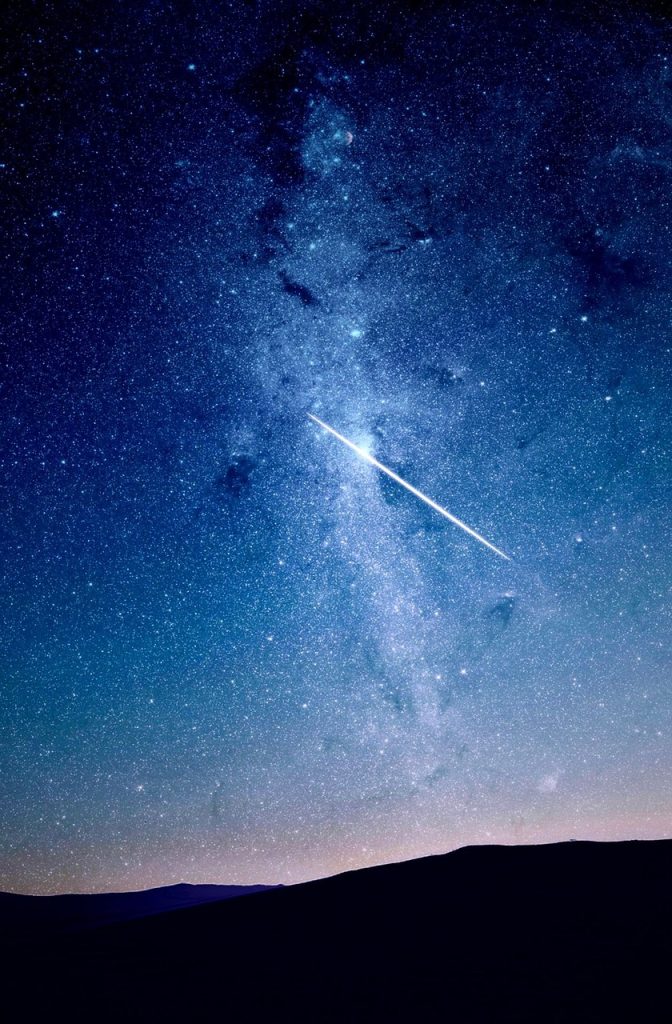
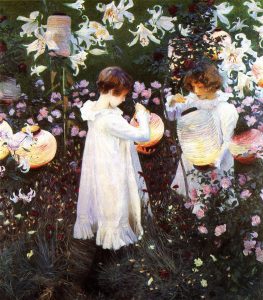
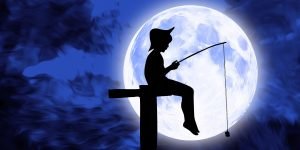
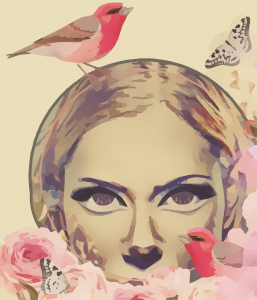
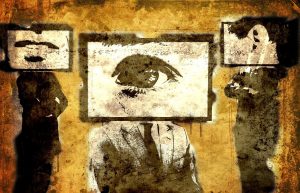
[Image by Iris,Helen,silvy from Pixabay]

As if anger – throbbing and tight-, burning hatred and cold fear filled this person’s veins and arteries so that there was no need of the warmth of the blood, red wasn’t red anymore, it was all too dark.

Jassi clung to the darkness, crumpled into it, eyes wide-open that almost attacked every direction mercilessly, the glances were like arrows, everything in darkness, not allowing a ray of light or laughter or love to enter. Jassi was blind, it happened in an accident.

True! Colours were colourful before, but not anymore.

Jassi hated to ask for help, hated the space around, bumping into things now and then, and most of all hated the breeze, why did it try to play, sing, sway or say anything, thought Jassi when nothing moved or flowed within? No, not even the thoughts moved, Jassi killed them, the memories – good/bad – in the very first year after the fatal accident.

Some years passed and an opportunity knocked. A new technology, a new expert, a new experiment could bring back Jassi’s eyesight. To everyone’s surprise, Jassi agreed to undergo another surgery, everyone hugged and cried for Jassi was still alive somewhere inside that stern piece of shell that reciprocated nothing all this while.

Pushing every loved on aside, Jassi spoke – I want to see the galaxy and only the galaxy first!

That was Jassi’s condition, it was accepted, and with some difficulties arrangements were made. Days passed by, it rained, the sun too came out and a rainbow beamed, but did Jassi hear all this? Nothing!

Like never before, Jassi refused to go out of the house or even the finite room. Jassi’s steady un-moving eyes tried to pull, it seemed, the movement of time towards Jassi, not to fight a battle, but to bring it to a stand-still. Jassi had changed and no one knew what fruit this change would bear.

Jassi’s steady, un-moving eyes’ pull worked, so felt the others as the day of the surgery came and passed only too quickly. The doctor said it was a success, but Jassi’s firm and unwavering voice made the doctor sweat and slightly doubt himself. All this for a couple of minutes because Jassi refused to remove the bandages and no one touched the new black goggles; everyone knew how much Jassi abhorred them.

And soon, very soon, so soon that no one remembered what day or time it was when they left for the astronomical observatory, and when they reached the place.

After climbing down into the dark abyss, Jassi got up to climb the stairs to reach the galaxy.

Jassi couldn’t hear anything but felt extremely cold, especially on touching the telescope. Jassi reacted like a little curious child, whispered the others.

The guide guided and made adjustments, but only Jassi’s shell listened, Jassi followed not the guide, but an energy and removed the bandages from the cold eyes, that were shut not so tightly this time. Jassi took a breath and touched the telescope again, feeling the round eyepiece shape through which one could swallow the galaxy.

Jassi gently, almost with love looked through the telescope, one eye open, one closed, then opened both. Jassi looked, looked and looked…

…see for yourself… the galaxy’s arms reaching out, holding Jassi now, breaking the shell with love, showing the dance of colours and light, caressing, bursting with joy, filling the one who witnesses with timelessness and bliss…

Jassi fell on the floor unconscious after so gracefully looking through the telescope that too for so long that the others were by then seated on benches to rest. Jassi woke up in the hospital next, with a high-grade fever and a big grin that turned into laughter.

Tears came out of Jassi’s eyes but the laughter didn’t stop. Jassi’s wet eyes glistened, the eyes looked like jewels, the eyes looked beautiful.

But the doctor couldn’t see it, the doctor was worried, he had failed. Jassi couldn’t see anything from one eye and the other eye tried to see through haziness. There was another way out, doctor promised and sighed that Jassi should not have travelled right after surgery.

Jassi left the hospital the same day and went to eat in a restaurant with the loved ones who were confused, also happy, but unsure.


Jassi has stopped explaining anything to anyone now and has started living. A friend’s friend gave Jassi a simple job that promises nothing grand, yet Jassi loves working there. Jassi walks to the workplace using the stick and a new furry friend, Milo.

Every mirror shows that Jassi is doing good. Walking briskly, so lightly, breathing calmly, Jassi looks like a flight-less bird.

Often hurt, Jassi keeps bumping into things at home and office as if every morning chairs, tables, utensils and pens move on their own to trick Jassi.

Jassi gets up every time, not shying from taking any help from the others.

Milo loves Jassi and Jassi finds Milo to be a funny, happy-go-lucky dog.


What do you want for your birthday, Jassi?

Birthday, hmm, nothing much, will be meeting friends, that’s it. And Milo will be there. Well, we may go stargazing.

It has all come true!
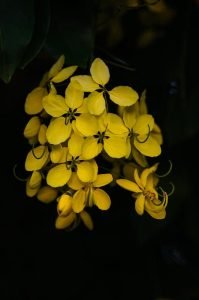
[Image by Nicole Rose from Pixabay]

Weekly Newsletter

A weekly dose of stories! Get the posts from the Chiming Stories in your inbox and read it when you can. Subscribe now, it is free!

This field is required.

Recent Posts


To The Moon And Back

Reaching for the moon, love,
In Gemini G4C suit, love,
Will bring some for you, love,
Papery pieces of the surface,
If not a piece of moon, love.

Our love affair with the moon is an open secret; waning, waxing, crescent, full, each phase has been glorified and studied by the curious minds. The silvery moonlight never fails to express.

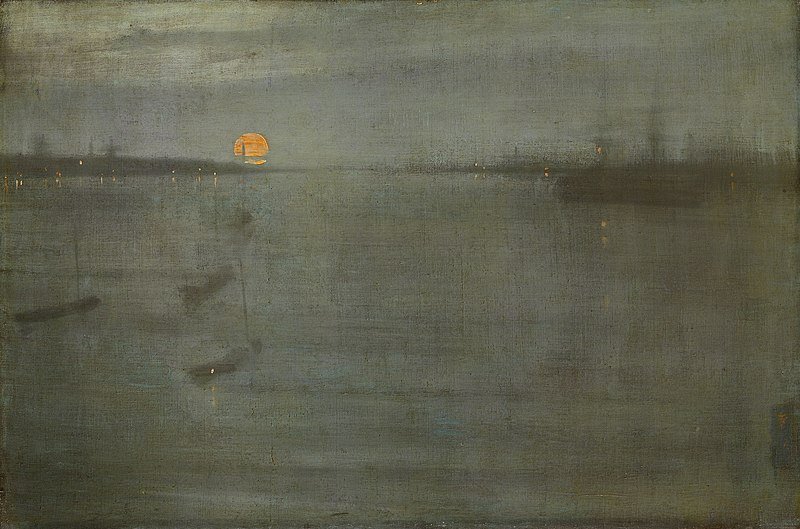
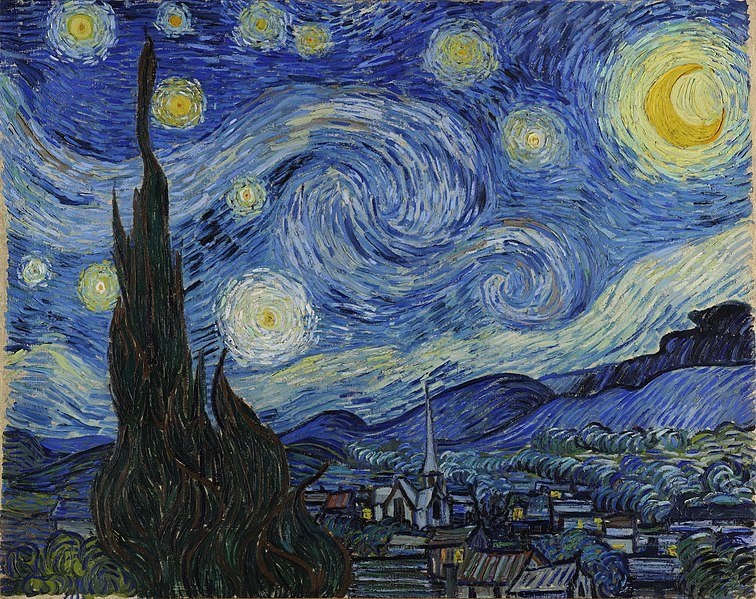
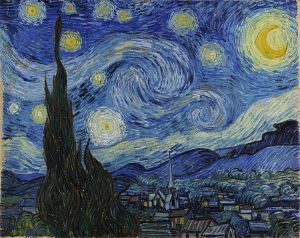
In poems like The Man in the Moon Came Down Too Soon by J. R. R. Tolkien, Half Moon in a High Wind by Carl Sandburg, The Freedom of the Moon by Robert Frost, The Moon Was But a Chin Of Gold by Emily Dickenson, The Mother Moon by Louisa May Alcott, Mrs Moon by Roger McGough, in paintings like Caspar David Friedrich’s Two Men Contemplating the Moon (1819), James McNeill Whistler’s Nocturne, Blue and Gold—Southampton Water (1872), Vincent Van Gogh’s The Starry Night (1889), the artists reveal and revel in the moony secret.

Caspar David Friedrich’s Two Men Contemplating the Moon (1819). [Source – Wikipedia]
James McNeill Whistler’s Nocturne, Blue and Gold—Southampton Water (1872). [Source – Google Arts & Culture
Vincent Van Gogh’s The Starry Night (1889). [Source – Wikipedia]

What is the moony secret? It is the personal conversation that one has with the moon. It is intense yet quick, fierce yet soothing, honest yet an illusion.

Sidereus Nuncius (Latin for Sidereal/ Starry Messenger or Sidereal Message; published in 1610) talks in-depth about the moony secret; it is an astronomical treatise written by Galileo Galilei, the father of modern science.

Title page of Sidereus Nuncius by Galileo Galilei (1610). [Source – Wikipedia Commons]

Becoming one of the first few who used a telescope to study the surface of the moon (along with some constellations and Jupiter’s four moons) Galileo discovered that the moon was not translucent and ‘a perfect sphere’ like Aristotle had believed it to be, that it had mountains and craters which were formed after it was hit by asteroids and comets, just like our planet Earth was.

Galileo’s sketches of the moon from Sidereus Nuncius (1610). [Source – Wikipedia Commons]

The moon is imperfect (its surface is irregular), said Galileo’s theory, and this magnificent, and at the same time, tumultuous discovery brought it (the moon) closer to us mortal beings, providing exhaustive research material for the future scientists, accelerating the world towards a change.

“And yet it (Earth) moves”, a rebellious phrase at that time, allegedly spoken by Galileo, led to his imprisonment.

The Copernican heliocentric view (1543) that the Sun is in the centre of the solar system, with Earth and the other planets orbiting around it in circular paths, was a theory which Galileo studied and defended.

Centuries later, Galileo’s moony secret reached the moon when astronaut David Scott, during the 1972 Apollo 15 mission, demonstrated through the ‘Falling Bodies’ experiment what Galileo had proved long back, that the “acceleration is the same for all bodies subject to gravity on the Moon, even for a hammer and a feather” (watch the video here).

A view of the Apollo 11 lunar module “Eagle” as it returned from the surface of the moon to dock with the command module “Columbia”; the Earth in the background (21st July 1969). [Source – NSSDCA NASA]

A space race between the USA and the Soviet Union led to many successful moon exploration missions, both manned and unmanned ones.

While the US Surveyor probes (1966-1968) transmitted 87,000 pictures of the surface of the moon and measured its chemical properties, the manned missions brought back pieces of the moon; Apollo 11 alone brought 47.5 pounds (21.5 Kg) of the lunar material.

‘Papery pieces of the moon, love’
A collage of photographs of the lunar surface sent by the US Surveyor Probe 7 (1966-1968). [Source – NSSDCA NASA]
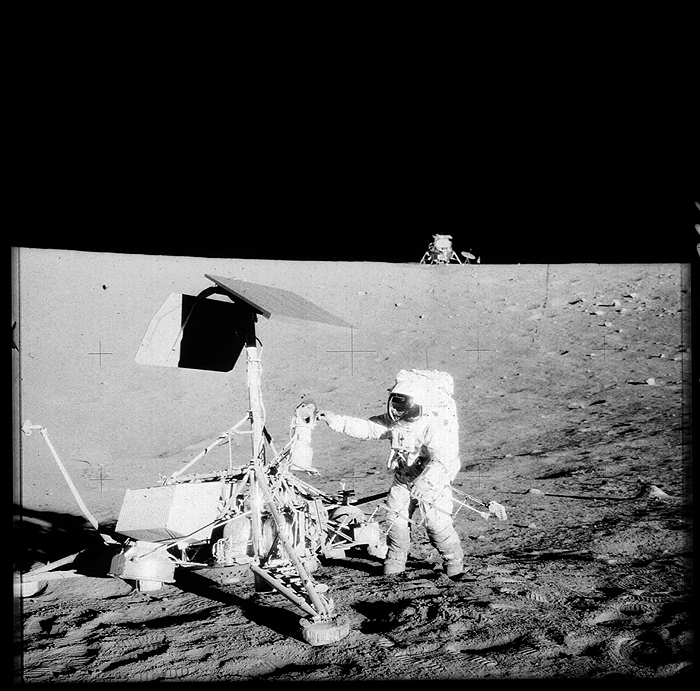
Astronaut Pete Conrad inspects the Surveyor 3 spacecraft on the Moon (20th November 1969). [Source – NSSDCA NASA]

The twelve people who have walked on the surface of the moon also left behind items, some as meaningful gifts to the moon and some out of necessity as they needed free space to carry moon rocks home.

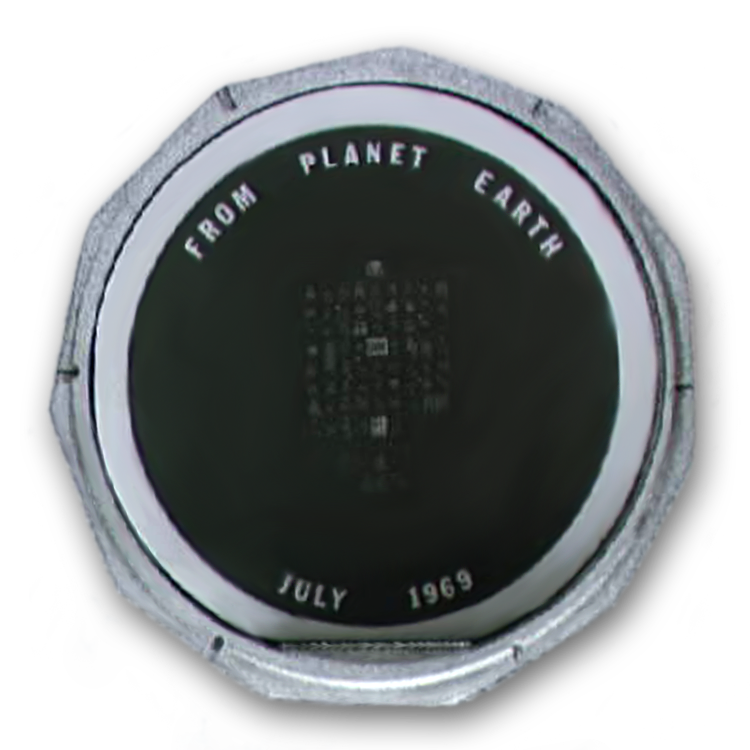
A golden olive branch, the Bible, a silicon disk inscribed with goodwill messages from world leaders of 74 countries, American flags, a family photo, three golf balls, scientific pieces of equipment and also, bags full of human waste are some of the “artificial objects” still lying, in worn-out or wiped-out condition, on the moon.

Lying there as a symbol of victory, of advancement, of trust and of human life itself – humans, the mortal beings of the lonely planet Earth.

The silicon disc left on moon by Apollo 11 astronauts (1969). [Source – Wikipedia]
Fallen Astronaut, a statuette, and a plaque were placed on the surface of the moon by astronaut Hadley Rille in remembrance of the astronauts and cosmonauts who died in the advancement of space exploration (1971). [Source – Wikipedia]
Astronaut Charlie Duke’s family portrait left on the surface of the moon (1972). [Source – Wikipedia Commons]

Or maybe these items are just a message for the Moon Rabbit who, according to some East Asian folklore, lives on the moon, pounding elixir of life for the moon goddess Chang’e.

After all, Apollo 11 astronauts were also aware of this story; command module pilot Michael Collins had said to the NASA mission control – “Okay. We’ll keep a close eye out for the bunny girl.”

An 18th-century embroidered Chinese emperor’s robe. A Chinese dragon; a medallion above it shows the White Hare of the Moon, at the foot of a cassia tree, making the elixir of immortality (18th century). [Source – Wikipedia Commons]

We are connecting pieces, we are steadily moving towards the darkness out there, hoping to see the light. We are all reaching out for the moon with our eyes glued to the telescope, our minds calculating the numbers, our hands painting a masterpiece, our words penning an epic, our voices singing a moony melody and our hearts feeling the moony secret.

We have even smelt it (and perhaps even tasted it), the moon, yes we have. The moon dust smelt like burnt gunpowder to most of the astronauts. Quote—

I wish I could send you some, it is amazing stuff, said Apollo 17 astronaut Gene Cernan.
It’s soft like snow, yet strangely abrasive.
Not half bad (sic), said John Young Apollo 16 astronaut.
It smells like spent (sic) gunpowder, said Cernan.

Our love affair with the moon has only grown stronger with time; it is a part of our story and vice-versa, right, dear moon?

Science with its meticulous explorations and art with its colourful gravity will keep bringing us closer to the moon; it will take us to the moon and back.

Till then let us admire the only memento left on the moon that may last for millions of years, which is, the tracks left by the astronauts. Because there is no air or water on the moon, nothing will wipe it off, neither the extreme cold conditions nor the savage sunlight.

Apollo 11 astronaut Edwin “Buzz” Aldrin photographed this footprint in the lunar soil as part of an experiment to study the nature of lunar dust and the effects of pressure on the surface (1969). [Source – NSSDCA NASA]

Till then let us continue revelling in the moony secret.


Read More Moon Lovers!


Weekly Newsletter

A weekly dose of stories! Get the posts from the Chiming Stories in your inbox and read it when you can. Subscribe now, it is free!
This field is required.

Recent Posts