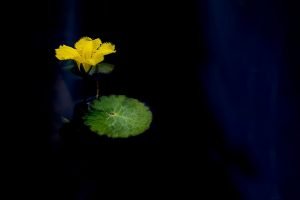
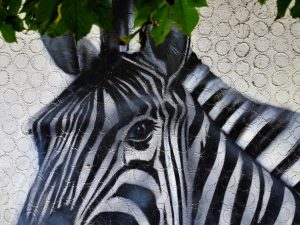
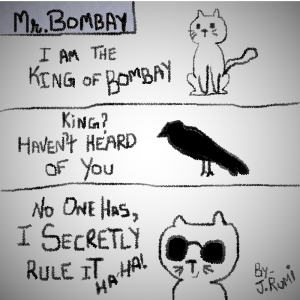
The certainty of it being the night promises us of the erubescent dawn. It is an inky night, it has been for aeons and aeons… and, mind you, she uses charcoal-ink… for the stove is still burning, she never forgets to collect woods.
And so, with her inky fingers she writes messages, anecdotes, dead secrets and stolen dreams on the walls in the kitchen.
A custom followed since antiquity, now the charcoal-ink smells of these quiet cursive messages. It talks about the dark night and the breaking of the dawn.
Her inky fingers will turn red with the dawn.
But Sita needed all the strength she could muster to face the big trial awaiting her. After that, it was one straight path to a single goal, wifehood. The veena was a singularly jealous lover.
Then one morning, abruptly, without an inkling that the choice that was to change her life lurked so near, Sita gave up her love. She tore the strings off the wooden base, and let the blood dry on her fingers, to remind herself of her chosen path on the first difficult days of abstinence.
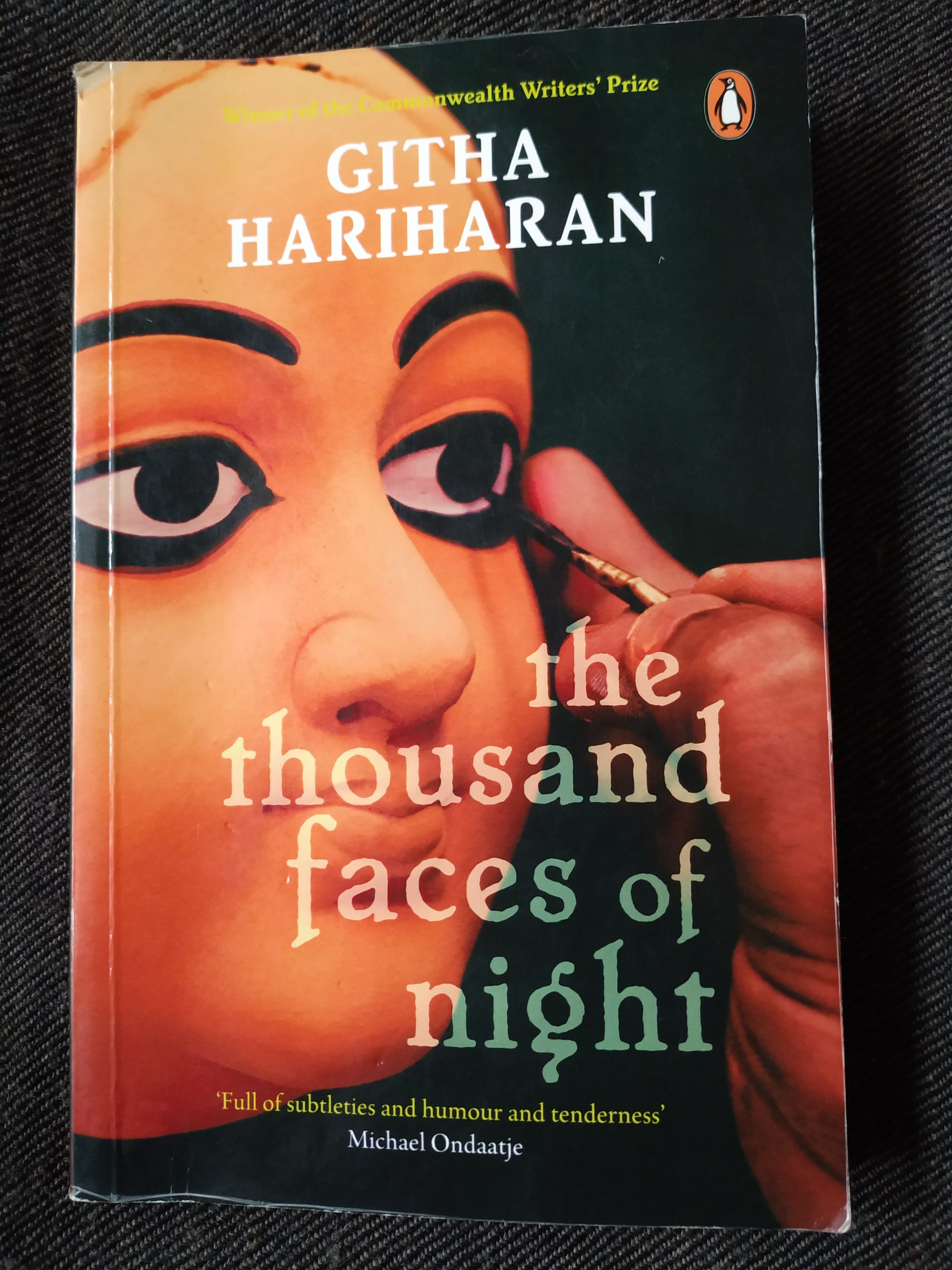
The Thousand Faces of Night (1992) is written by the astounding Githa Hariharan. The novel is a melody sung and composed at night that captures the thousand faces of the moonless, starless night.
It narrates the many tales of Indian women – the celebrated mythical ones and the limited editions – with such excellence that the novel takes the shape of a woman carrying a heavy potli bag full of tales.
The tales, entangled badly, still echo well and dramatise their essence. The tales are spicy and heart wrenching and true.
*
Earthenware… they hold intact their stories, cultures for centuries. [Source – Pixabay]
Devi, Sita, Mayamma – daughter, mother, maid – kindle fire that burns time, others and themselves. And so powerful is this fire that life gathers around it to get some inspiration.
Delicate like earthenware, painted beautifully, allegedly breakable, they hold intact their stories, cultures for centuries; you must have seen the pieces of such earthenware dug out from archaeological sites, displayed in a museum safely.
Their resilience never fails them even if it means to walk alone, against the tide, the familiar sunshine. Devi, the present, dares to break away, in her agility, eager to explore, moving away from Mayamma and Sita, the past.
Posing in front of the patriarch, they contribute to his legacy/magnificence. After foolishly spending a long time and suffering from backaches, Sita straightens up and Devi dodges the mockery, while Mayamma continues.
The patriarch sees Mayamma and smiles, Mayamma bows and cusses silently. She prays for Devi.
After etching their charcoal-inked messages on the kitchen walls, the three ladies change the notation of their melody slightly, making the raga, still sung at night, fresher.
*
I must have, as I grew older, begun to see the fine cracks in the bridge my grandmother built between the stories I loved, and the less self-contained, more sordid stories I saw unfolding around me. The cracks I now see are no longer fine, they gape as if the glue that held them together was counterfeit in the first place. But the gap I now see is also a debt: I have to repair it to vindicate my beloved storyteller.
Thinking… the activity of using our mind to consider something; the process of using our mind to understand matters, make judgments and solve problems… that is what the dictionary says and says more and then sites many lovely examples:
“I had to do some quick thinking.”
“She explained the thinking behind the campaign.”
“Thinking, for me, is hard work!”
Our mind, coloured by a plethora of this and that, happy and sad, a sea of information, thinks in isolation, yet always a part of the collective unconscious. And how wonderful is it that this tinted mind, nevertheless, is fully capable to create something novel.
The thinking mind turns the wheel, knitting the society tighter. The juggernaut of sociocultural norms, in turn, fabricates the yarn for such a mind.
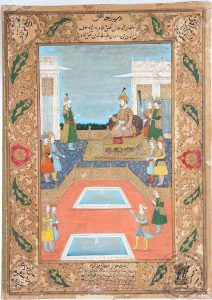
Avicenna or Ibn Sina (980 AD – 1037) was a physician, philosopher, astronomer, theologian, poet – a polymath – who greatly contributed to the Islamic Golden age. His book Al Qanun fi al Tibb or The Canon of Medicine, a medical encyclopedia, was studied as a textbook for medical education in many universities, also in Europe, up till the 17th Century.
Philosophical encyclopedias like Kitab al Shifa or The Book Healing and Kitab al-Isharat wa alTanbihat or The Book of Directive and Remarks presented Avicenna’s take on the Aristotelian and Platonian philosophy through the lens of an Islamic theologian.
*
Avicenna’s TheCanon of Medicine, Latin translation, dated 1484 CE. [Source – Wikimedia Commons]
A well-known physician, Avicenna got support from most of the rulers of his time – some made him a vizir or an advisor in their court – and the opportunity to access the royal library. Highly influenced by Aristotle, Avicenna also disagreed with the Greek polymath on many points.
One of us must suppose that he was just created at a stroke, fully developed and perfectly formed but with his vision shrouded from perceiving all external objects – created floating in the air or in the space, not buffeted by any perceptible current of the air that supports him, his limbs separated and kept out of contact with one another, so that they do not feel each other. Then let the subject consider whether he would affirm the existence of his self. There is no doubt that he would affirm his own existence, although not affirming the reality of any of his limbs or inner organs, his bowels, or heart or brain or any external thing. Indeed he would affirm the existence of this self of his while not affirming that it had any length, breadth or depth. And if it were possible for him in such a state to imagine a hand or any other organ, he would not imagine it to be a part of himself or a condition of his existence.
Avicenna
While this blogger will definitely take a lot of time to grasp these theories in entirety, she would like to appreciate the art of thinking that moulds the world in such a steady and grandiose manner.
The art of thinking, in which we participate daily and, most importantly, in the times of despair, is running the show as we then stand face to face our true being and raise questions, refute the botched theory and create a new one.
Avicenna wrote the floating/ flying man argument when imprisoned for around four months as a result of a political debacle – an argument that was later termed weak by the other thinkers.
But this is how the thinking mind works, it continues to question, argue and turn the wheel.
Not mine own fears, nor the prophetic soul Of the wide world dreaming on things to come, Can yet the lease of my true love control, Suppos’d as forfeit to a confin’d doom. The mortal moon hath her eclipse endur’d, And the sad augurs mock their own presage; Incertainties now crown themselves assur’d, And peace proclaims olives of endless age. Now with the drops of this most balmy time My love looks fresh, and Death to me subscribes, Since, spite of him, I’ll live in this poor rime, While he insults o’er dull and speechless tribes: And thou in this shalt find thy monument, When tyrants’ crests and tombs of brass are spent.
The idea of timelessness, eternity, immortality must be true as we wish, look and aim for it in some way or the other. Imagining living continuously, building and creating happy ways of life, chiselling and shaping the continuous source of happiness, we forgetfully live with the idea of forever.
The decisive time gone by, the melting present and the secret future, though definite, knows the indefinite. And one is lured, naturally, to know and identify with the indefinite. Why? For the indefinite is the absolute. So? The absolute appears to be complete, eternal, beyond the cyclic drama and free. Then? We may be a part of it or we too may want to be complete. And so? I don’t know, I am living forgetfully with the idea of forever, remember.
Shakespeare, the greatest and most famous playwright ever, via his works, attained immortality and this is what he celebrated in Sonnet 107. Full of creative splendour, he announced his lead on rusty cenotaphs and statues of the rulers.
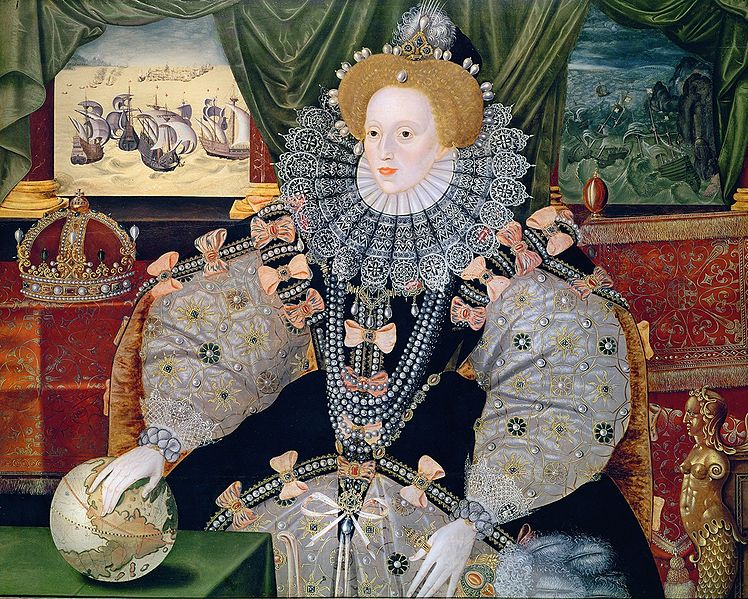
The Battle at Gavelines and Elizabeth I at Tilbury (Pastiche). The painting presents a stylized account of the battle of Gravelines between the Spanish Armada and the English fleet, including the beacons, Elizabeth’s address at Tilbury, and the battle itself in a single montage on three jointed pieces of fine tabby-weave linen. [Source – Wikimedia Commons]
“The mortal moon hath her eclipse endured”
That the grand, rock-hard, grave and lovely moon too continues its finite journey, eroding gradually, black red white, suggests that the moon knows well the infinite’s will. Or else why will it so humbly accept its role? This long journey, then, is no less than a quiet meditation. The deep circular craters are the timekeepers and the moon knows it.
One of William Shakespeare’s renowned 154 Sonnets, Sonnet 107 is often linked with the contemporary events of the time: the defeat of the Spanish Armada (1588), Queen Elizabeth’s death (in 1603), the Long Turkish War (1593-1606); the Armada charged in a crescent formation, Queen Elizabeth was also called Cynthia (name of the Greek moon goddess), the Ottoman Empire’s flag boasted the crescent moon symbol.
In times so precarious, one would want to hold on to a secure thought or remember the limits of mortality, mocking unabashedly the warmongers and peace-lovers alike, or even hope to create something timeless.
Read the wonderfully crisp commentary on Sonnet 107, here.
Like flowers threaded to form a sheet, woven intricately, the free white petals settling in a designed pattern, accepting the arrangement with joy, like an endless beaded wave of fragrant flower-colours, the ragas also weave intricately musical framework that evokes fragrant feelings in a quiet listener’s mind.
Just like the perfection-loving flowers – the humble sepal, the vibrant petal, the ambitious anther – the ragas too know how to bloom to perfection. Capturing the exact mood that exudes the season’s essence perfectly, the ragas effortlessly scent time making it beautifully appreciable.
*
The scented time celebrates the raga – in Vilambit laya (slow tempo), Madhya laya (medium tempo), Drut laya (fast tempo) – accepting every melodic improvisation, evolving with each performance, never bothering with change, rather ushering it with consistent Riyaz (practice).
Overwhelming calculations keep the ragas free from vegetating and from the burden of the past that at times tries to confine its spirit, but almost always the spirit remembers to break free.
The many notations, the Swara, bring forth incessant improvisations, giving space to every emotional twist, forming an intricate, fragrant Mandala.
The ragas symbolise, like a flower threaded sheet, intricacies of life… and more.
Lat uljhi suljha ja balam
Piya more haath mein mehndi lagi hai
Lat uljhi suljha ja balam…
Mathe ki bindiya bikhar rahi hai
Apne hi haath laga ja balam
Lat uljhi suljha ja balam…
*
(Translation – Disentangle my hair, dear beloved/ I have applied henna on my hands/ So come and disentangle my hair, dear beloved/ The bindiya too is spreading on my forehead/ Correct it for me with your own hands, dear beloved/ Disentangle my hair, dear beloved)
This Bandish* in raga Bihag decorates time with a jasmine-rich fragrant emotion that vehemently values love and life.
*Bindiya – a colourful dot mark (of vermilion) worn between the eyebrows, especially by married Hindu women.
*Bandish – a composition in Hindustani classical music.
Listen to a melodious version of this bandish now.
Chihiro – My goodbye card’s still here. Chi-hi-ro… Chihiro, that is my name, isn’t it?
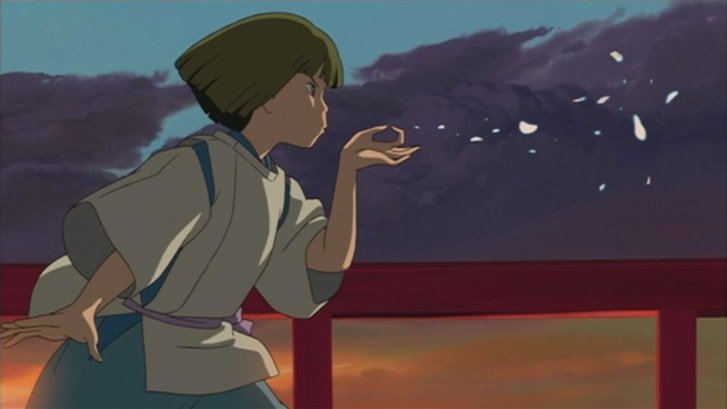
Haku – That is how Yubaba controls you, by stealing your name… so hold on to that card, keep it hidden and while you are here, you must call yourself Sen.
Chihiro – I can’t believe I forgot my name. She almost took it from me.
Haku – If you completely forget it, you will never find your way home… I have tried everything to remember mine.
Chihiro – You can’t remember your real name?
Haku – No, but for some reason, I remember yours.
*
Those forgotten names, memories, thoughts, bemused glances, talks, ear-to-ear cheers, that sweet-warm feeling of forgetfulness and the forgotten tales complete us in the truest sense. Our best friends, these forgotten episodes, always stay with us, kindling our being with love. Absurd if seen with open eyes, pleasant when seen with eyes closed, our forgotten selves are immortal. And surprisingly these bond us strongly as a community.
A warm feeling of forgetfulness slips away and enters this community hoping to meet us one day. Just remember… remember if you want to meet such a feeling, it will come and surprise you.
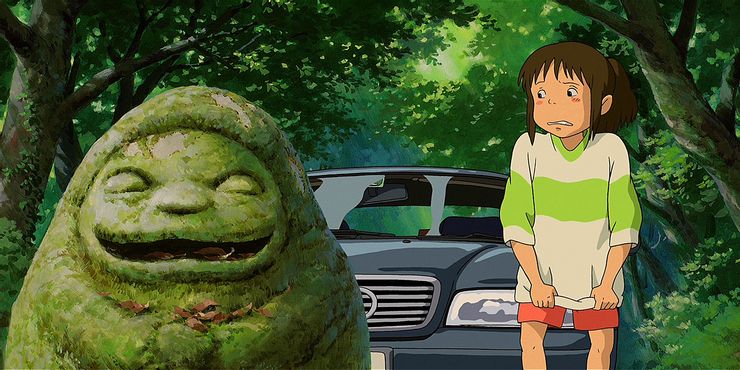
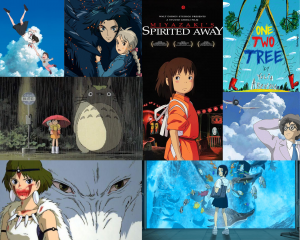
Forgetfulness, a boon or a curse, every individual experiences it differently. One of such mystical experiences captured is titled Spirited Away, in a Japanese anime style by the incredible writer, animator, director Hayao Miyazaki.
Chihiro and Sen’s Spiriting Away is the literal translation of the Japanese title of this film. But how can a 10-year-old girl experience the “spiriting away” twice? Maybe it can be done by forgetting and accepting.
Folklores and myths, since ‘eternity’, have used the art of forgetfulness to complicate the hero’s journey and to open a gate to a unique never-heard-of-yet-familiar world; an enchanted world with flying mountains, a lotus island with tempting, misleading heavens, a charlatan with a devious plan, a monster masquerading and a memory trick that evades reality.
What is the art of forgetfulness? Surely something very delicate, absurd and too hard to explain. That we forget both good and bad days and yet remember it all when the need arises, that everything is stored in our subconscious and we forget what we must, to evolve, we forget and make mistakes and grow and bring a change… this is such an ephemeral art, and nonetheless, we have mastered it.
In stories, forgetfulness raises the stakes for a hero that it becomes a matter of life and death, bringing a drastic transformation.
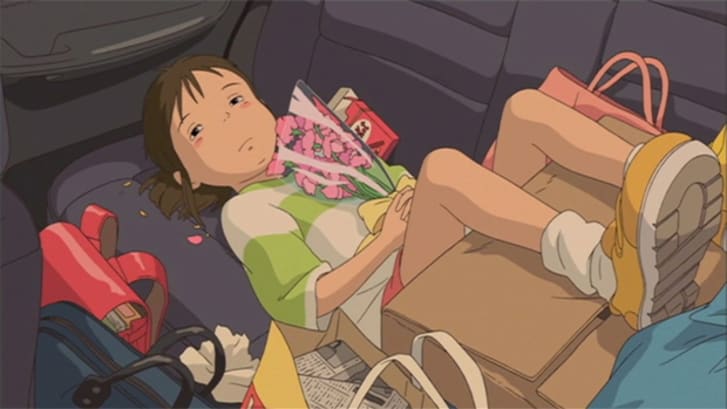
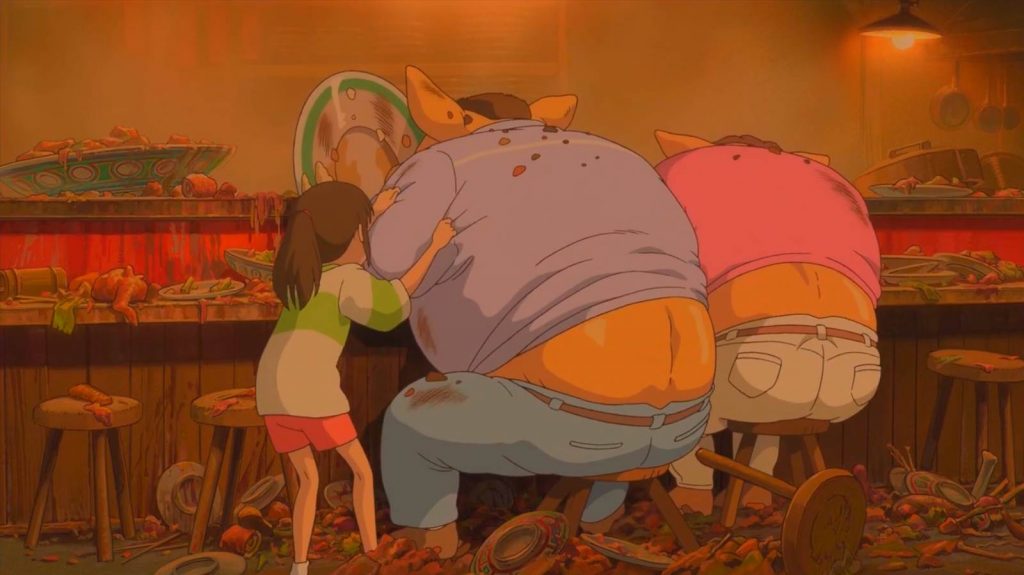
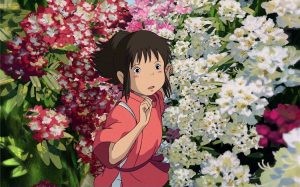
Chihiro almost forgets her real name when working for Yubaba at the Bathhouse, Chihiro becomes Sen, but this helps her to be in the moment and give her best when trapped in the spirits’ world. She is worried for her parents who have turned into pigs and her goal is to rescue them and return back, but as if cut-off from her past, she works in the Bathhouse as an employee, searching for answers, helping Haku and others, living like her true self, making decisions without her parents’ guidance.
A very thin thread connects her with the real world, she holds on to it without sorrow or regret and moves ahead anticipating nothing, accepting every new surprise.
What Chihiro doesn’t remember about herself, we do and this information gives us an upper hand, we stick to it galloping blindly, trusting her at every step, waiting carefully for a breakthrough. The storyteller uses the art of forgetfulness to build a strong bond between the audience and the character via a short fabulous episode.
And so if someone asks, “why doesn’t Chihiro simply runs back to where she comes from or why doesn’t she take Haku’s help to escape”, we leap forward to answer, “because she cannot leave her parents behind and because Haku is Yubaba’s slave.” We know Chihiro only too well because we know something of great importance that she now doesn’t remember.
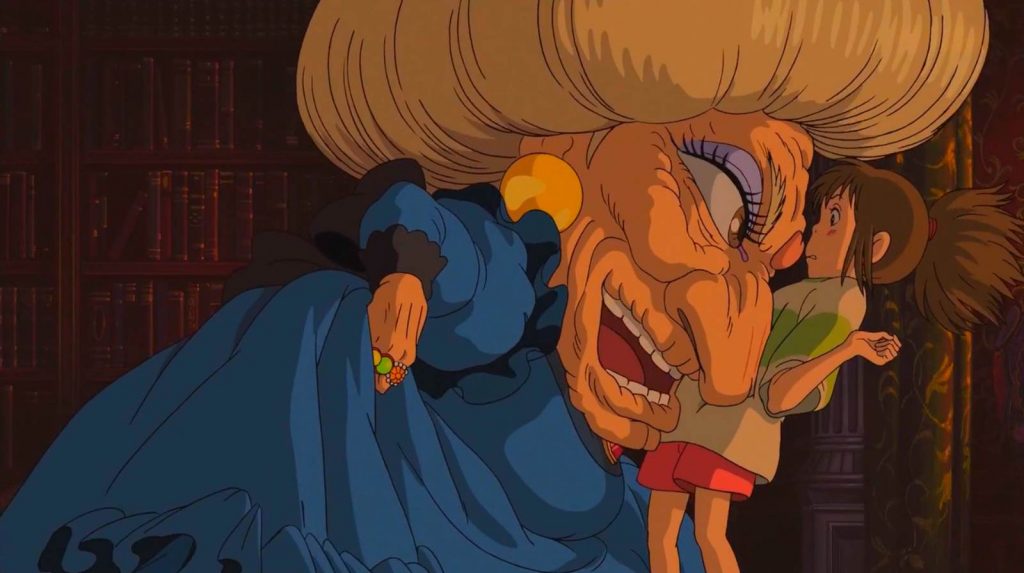
The Japanese ‘Chi’, when translated in English, means thousand and ‘hiro’ means to question or search. When Yubaba hires Chihiro, she steals her name, her identity, trying to trap her in the spirit world forever.
Your name is something that defines you throughout your life and Chihiro, having lost her name in the spirit world starts to forget about the living world. So she will effectively forget everything about her life of the living, who she was, her parents and basically everything she ever knew.
– Hayao Miyazaki
*
Chihiro survives, she tackles and finds the untapped power source within, like the leaves of grass she holds her ground and even without a clear picture of herself and her name, she lives by it; she questions and searches without knowing concretely what she is looking for. She simply doesn’t give up and continuously reminds herself that she has forgotten something.
Initially hoping the spirit world to be nothing but a dream, later Chihiro accepts it without any qualm. Why? Because she is Chihiro, the one with abundance, thousands of questions, she is someone who has plenty of tricks up her sleeve, moves on freely, whose imagination is still alive, just like any other little 10 year old.
Adults, routinely signing their names on several documents well aware of its meaning, forget to live by it. Often begrudgingly they accept the plain perspective, effacing a possibility, forgetting their search, abandoning it altogether.
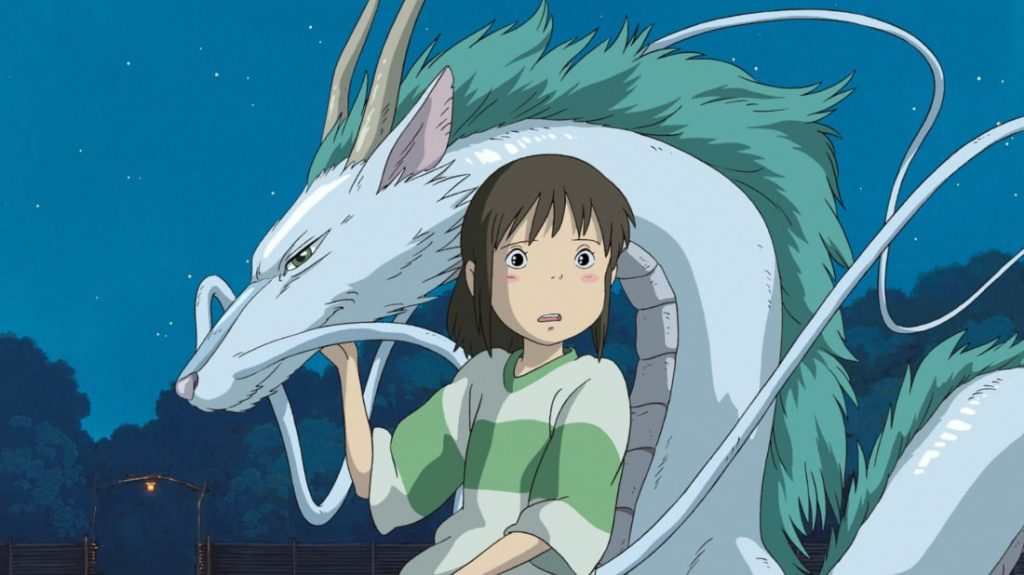
Haku, the spirit of river Kohaku, serves Yubaba as she stole his real name “Nigihayami Kohaku Nushi”. He remembers nothing but the fact that he had met Chihiro when she was very little. He recognises her and helps her from the beginning, expecting nothing in return. Chihiro saves Haku from Yubaba’s cursed spells and liberates him in the end as a sweet warm memory returns to her. As a little child she had almost drowned in a river, but survived mysteriously; the name of the river, she tells Haku, was Kohaku. Immediately Yubaba’s spell breaks and Haku’s memories return to him.
A forgotten childhood memory, an upsetting one that must have left everyone (related to Chihiro) troubled, beautifully turns into a magical key setting a soul, a dragon soul free.
And in flashes when we see those episodes, those hazy childhood memories – good, bad – we realise how it has shaped us, how far we have come and how its randomness is actually a puzzle piece.
Chihiro and Haku’s friendship represents the fragrant spirit of the romantic era (late 18th century); an era (especially Europe) that through its artists shifted towards a more imaginative and free life, valuing the sublime thought and expression, living more passionately, revolting against classicism and Yubaba like overwhelming Industrial Revolution.
Valuing freedom, both Chihiro and Haku, take risks to win it back, to win it back for each other. In a short span, they bond strongly, like one does with an old memory, not burdening their steps with the idea of remembrance, but only sealing their love with a promise to meet again. That is how they part ways.
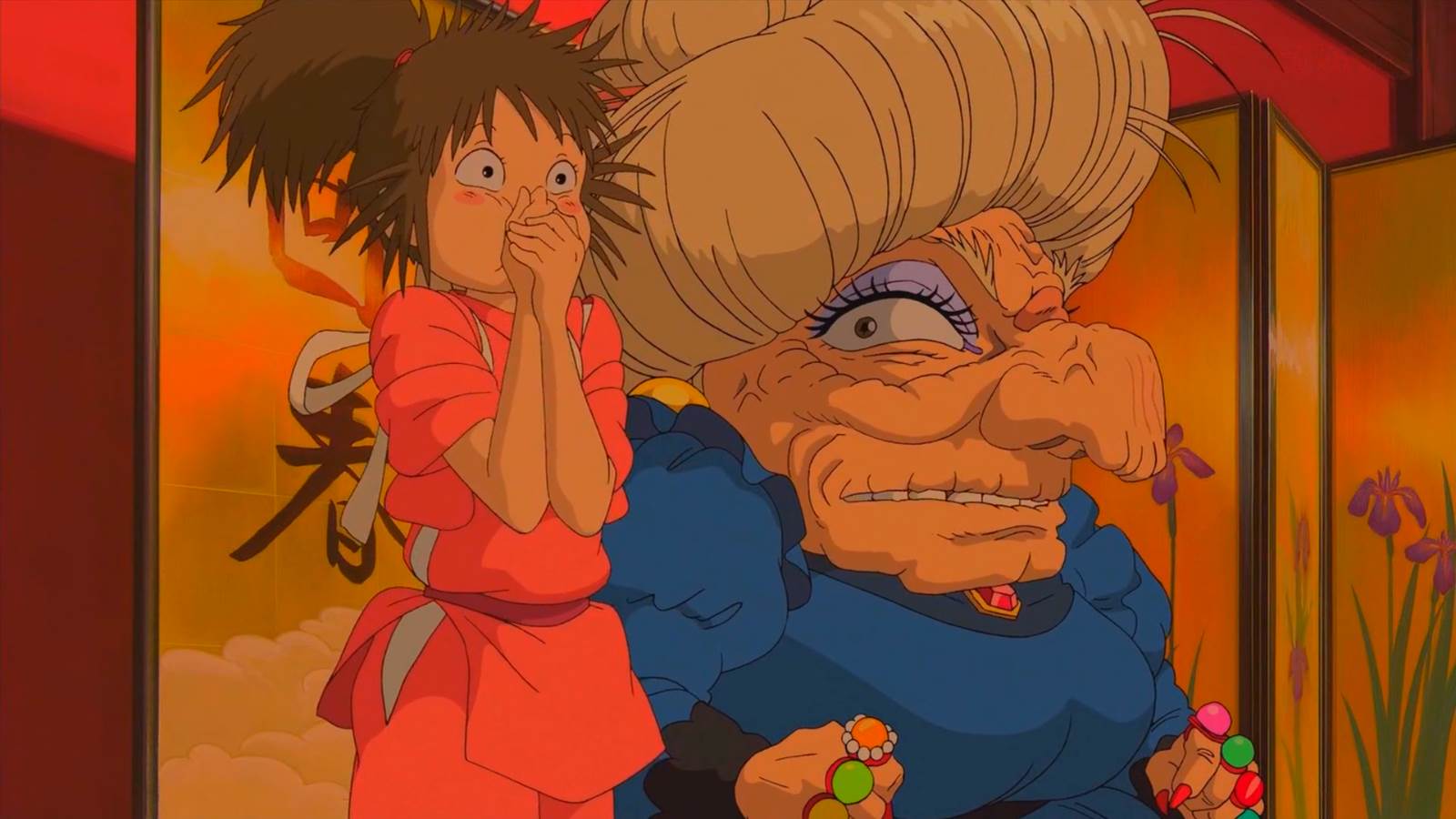
Two twins, one evil the other caring, Yubaba and Zeniba, act like a see-saw on which the story plays (and plays so well). Yubaba is not a dark character nor is Zeniba a saint; Yubaba is greedy, cunning and at times silly, silly enough to be tricked.
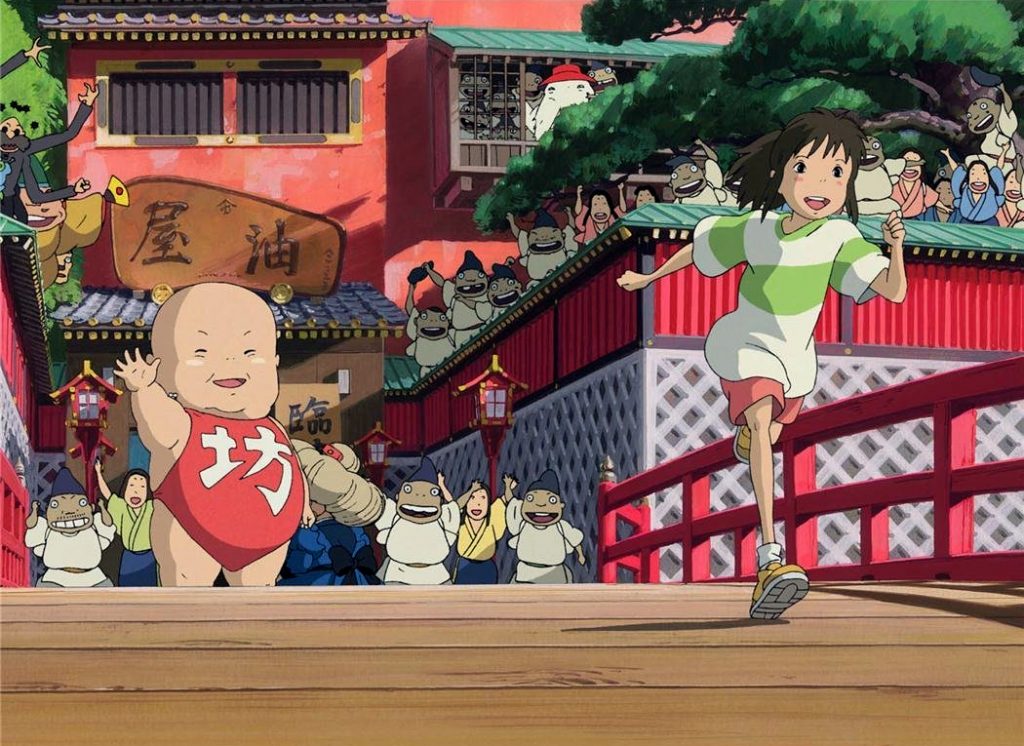
She may thunder when on a hunt or when managing the Bathhouse employees, but she becomes a tip-toeing mother of a giant baby (Boh), ready to do anything for him. She has flaws and this makes her a doubly interesting antagonist.
Zeniba, a kind-hearted smart witch, recognises Chihiro’s bravery and admires her amiable nature. Her presence assures Chihiro that Yubaba too is vulnerable. She supports Chihiro but not by snapping her fingers and resolving everything, rather by trusting her spirit and asking her to trust it too.
Zeniba – I am sorry she turned your parents into pigs, but there is nothing that I can do. It is just the way things are… You will have to help your parents and Haku on your own. Use what you remember about them.
Chihiro – What, can’t you please give me more of a hint than that…? I feel I have met Haku before but it was a long time ago.
Zeniba – That is a good start. Once you have met someone, you never really forget them, it just takes a while for your memories to return.
Zeniba asks Chihiro to call her granny when at her place and later, Chihiro before leaving the Bathhouse thanks Yubaba and calls her granny too (leaving her annoyed). Things turn out to be in Chihiro’s favour by the end, as her memories return, she keeps no hard feelings against anyone, not even the antagonist.
Chihiro forgives and forgets easily, like children usually do, freeing her own spirit, feeling its happy push towards the next destination.
Purgation, the holy ritual of cleansing oneself of the sins committed, is one ceremony that is celebrated in many religions worldwide. The Great Bath of Mahenjo-daro, built in the 3rd millennium BCE, had a special religious function for the Indus Valley civilisation according to the scholars.
The unrecognisable “stink spirit” who is Chihiro’s first customer is the spirit of a polluted river. She and her partner Len, Yubaba and all the employees at the Bathhouse work together to cleanse it; the free and happy river spirit, in the end, floats away, giving Chihiro a gift (a herbal cake) that she uses later on to heal Haku’s fatal wound. The purged river spirit also, like a mirror, shows Chihiro her forgotten memory, just a sneak peek of the incident when she had fallen in Kahaku River as a little girl – of how she and Haku first met.
Forgetfulness is not an answer, it is a stage, a brief mental stasis, that gives you a momentary way out or presents you with a leeway so that you can start your journey again.
The Bathhouse here represents a place where you can not only clean your spirit but also free it by remembering all that you have forgotten, ignored, absorbed, quietly accepted, helplessly agreed with. The bright and active Bathhouse, run by Yubaba, is strictly professional, always focusing on the guests need.
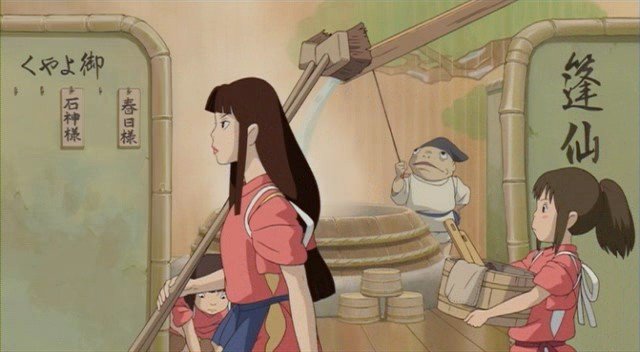
Amongst Yubaba’s employees busy running the business, elevators moving up and down, workers keeping the baths clean and the floor shiny, the spirits find peace; in all this loud drama, the spirits manage to find a way out, they cross the maze and pay the company for allowing them to play.
A contradiction for Yubaba steals names, removing an individual’s memory and the baths tend to remind a guest of her unique forgotten identity, the Bathhouse tirelessly functions to unite the community. Together and yet alone we all move forward towards the unexpected future.
In my grandparents’ time, it was believed that kami (spirits) existed everywhere – in trees, rivers, insects, wells, anything. My generation does not believe this, but I like the idea that we should all treasure everything because spirits might exist there, and we should treasure everything because there is a kind of life to everything.
– Hayao Miyazaki
*
The animal, plant, river and other spirits, and the little dark soot-ball spirits, bring in, ironically, the element of permanence in the story. These forgotten souls never pause, they steadily keep acting, dutifully participating in the after-life drama.
The radish spirit’s gaze, the old river spirit’s thank you gift, the soot-ball spirits’ liveliness all help in solidifying the backdrop; it appears then that Chihiro has entered an ancient mythical land, where everyone has a job to do. That it is not a vague dream but a wonderful possibility. And the same goes for the weird looking frog-like men and women.
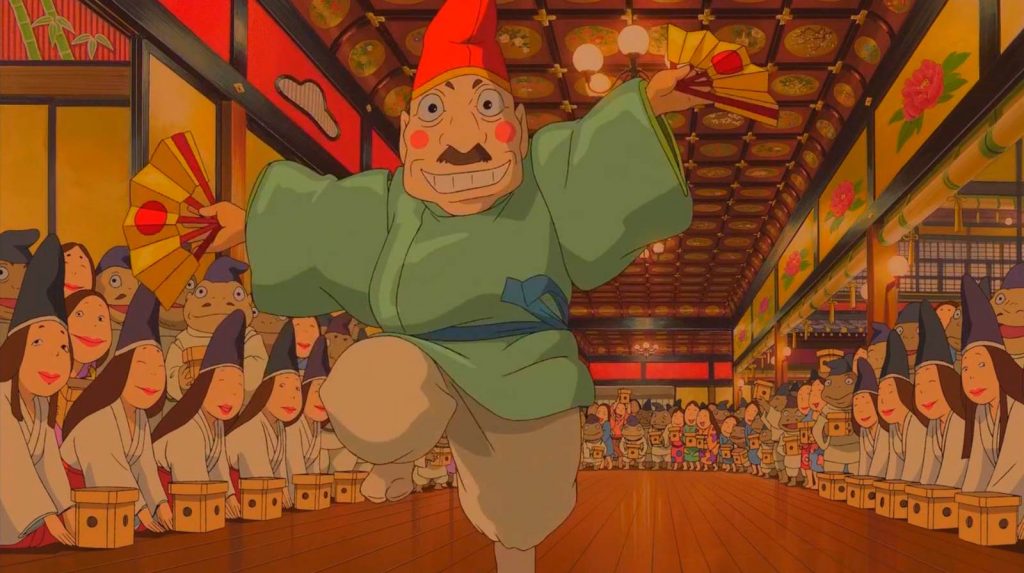
Every spirit and employee gathers near the Bathhouse’s entrance where Yubaba quizzes Chihiro about her parents at the end, when Chihiro wins, the spirits jump up and sway joyously. We don’t meet them once Chihiro leaves, but one feels that they must have gone back to work immediately.
A spirit that has no memory, no goal, waits in stillness and clings on to the first hope it gets, a hope to create new memories, to set a new goal. This is No Face, a very interesting grey character; vulnerable for it is clueless, dangerous for it has limitless powers.
When Chihiro, out of generosity, keeps a sliding door open for him to enter as it is raining outside, No Face quietly enters the Bathhouse with the sole purpose to help Chihiro; very soon it becomes greedy to fulfil this purpose – first by offering Chihiro too many herbal soap tokens and then by showering gold. No Face, hungry and out of control, starts swallowing the workers and creates havoc in the Bathhouse. Chihiro then feeds him half of the herbal cake gifted by the revived old river spirit, bringing No Face back to normal; it regurgitates all that he had swallowed.
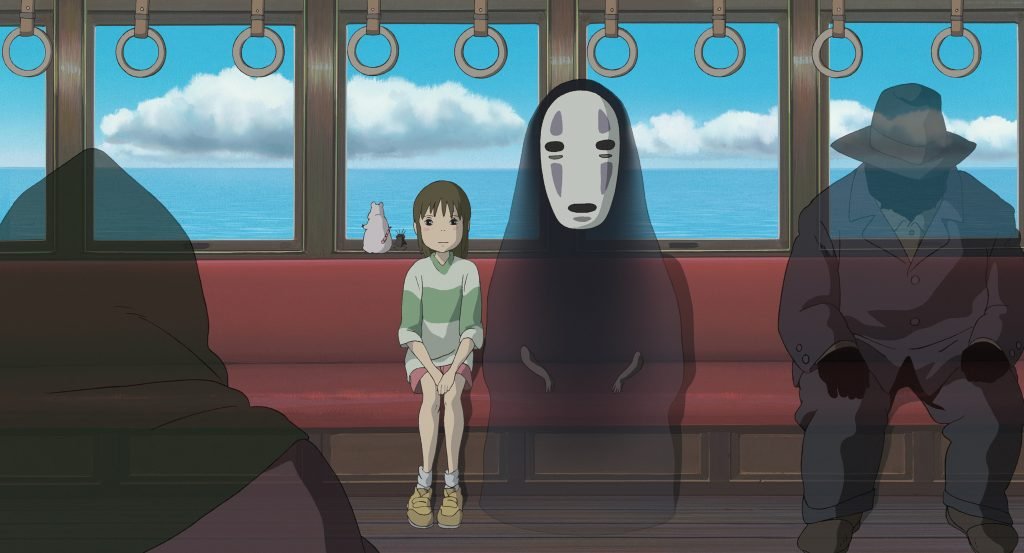
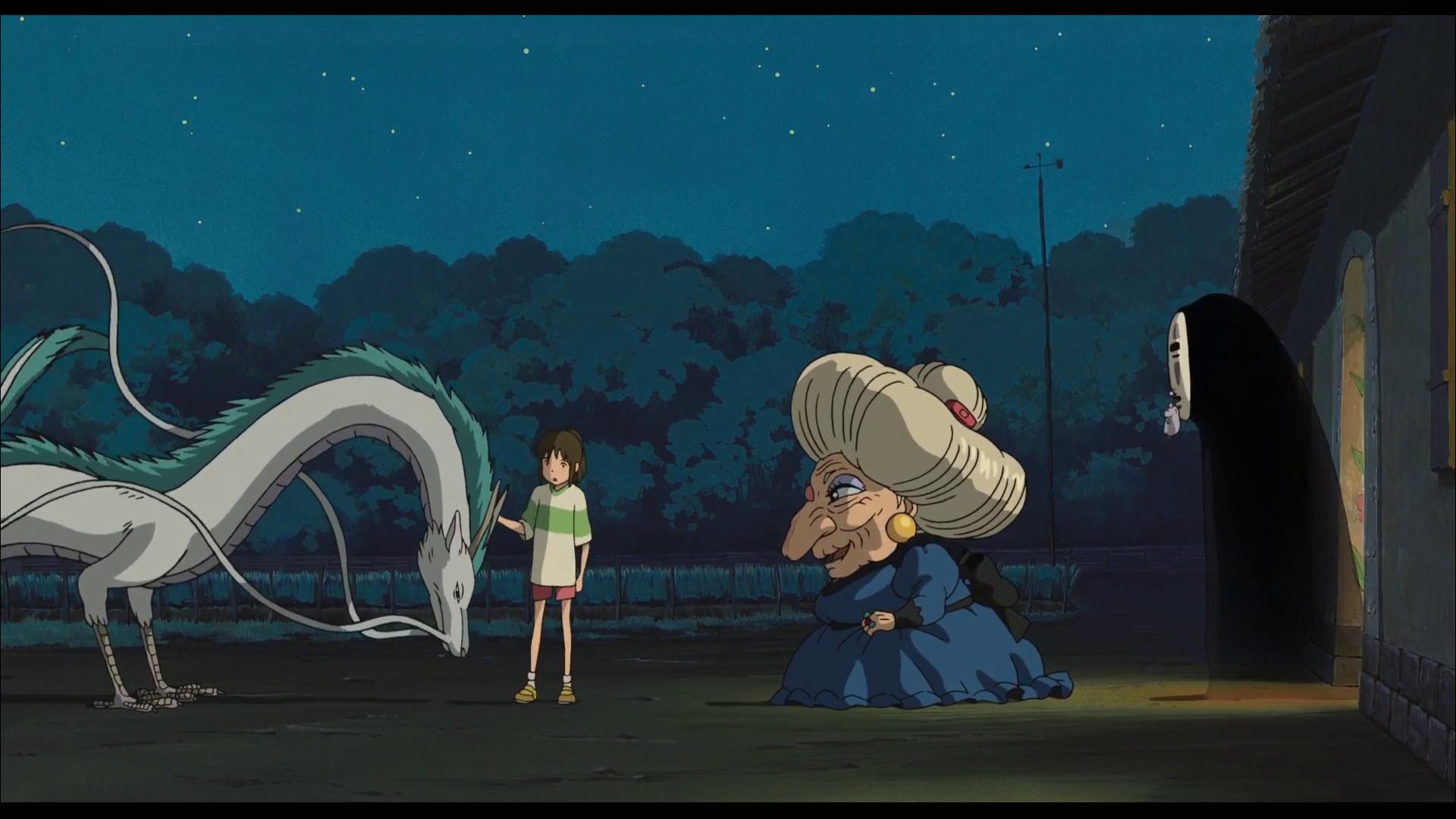
This quiet, puzzled spirit then accompanies Chihiro on her train journey to Zeniba and later, agrees to stay back and help Zeniba.
How superbly then No Face’s journey points at the significance of memories and a purpose in life! And what an apt name it has got… No Face… purposeless, faceless, one without an identity.
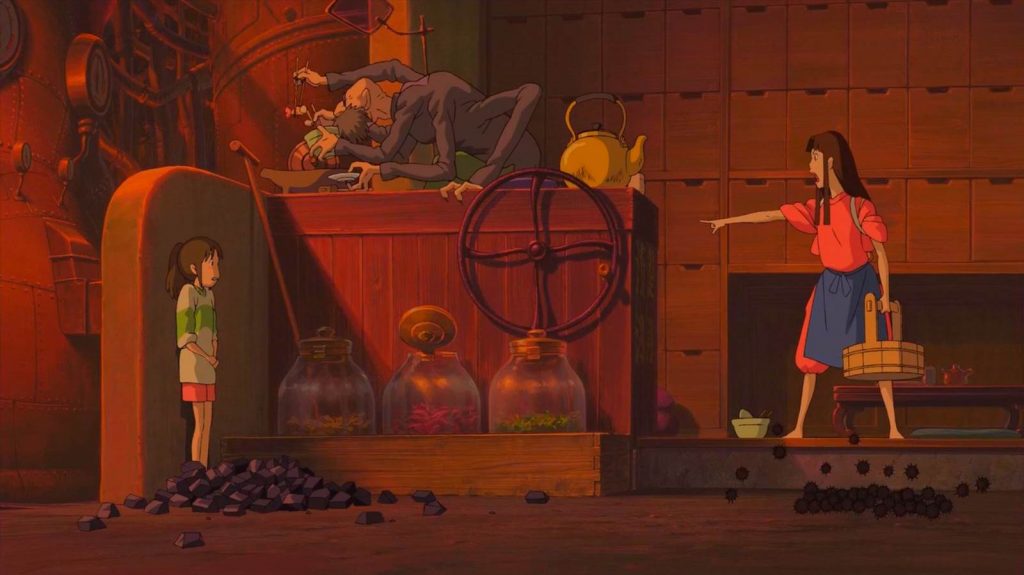
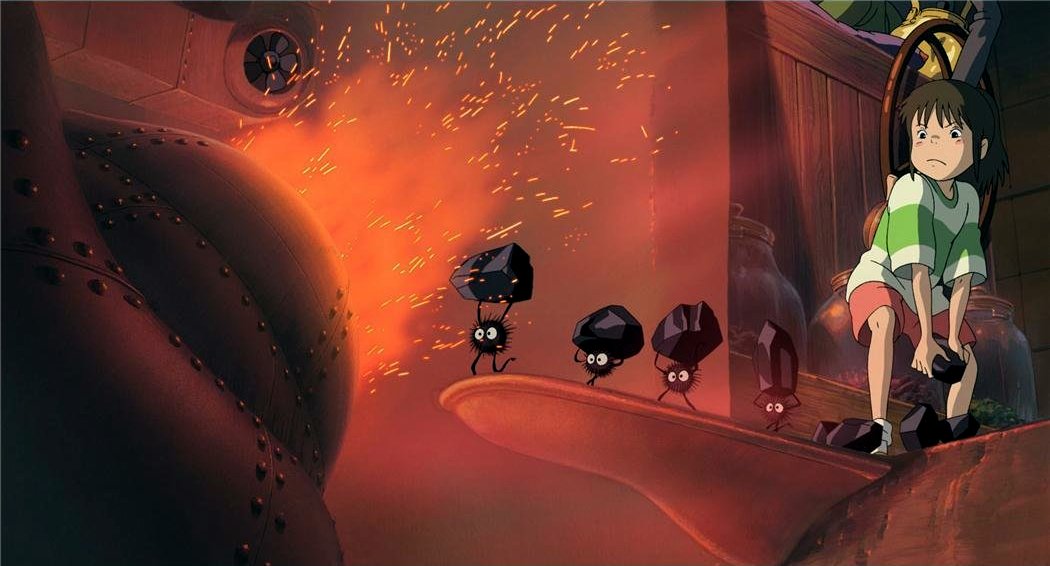
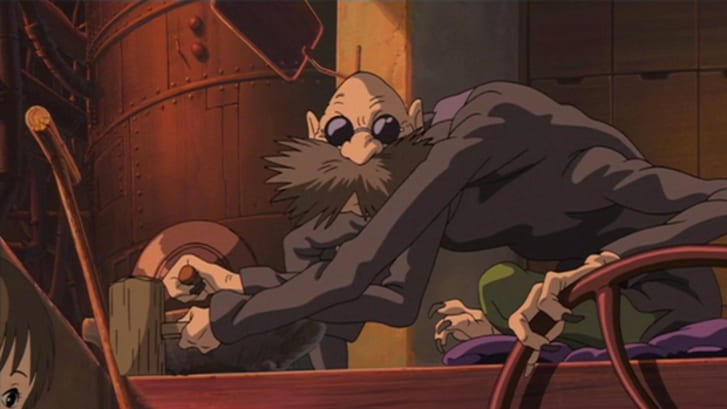
The spider-like six-armed, goggled eyed boiler man, Kamaji, is a character who never forgets, even if he does, he hasn’t got the time to remember what and when, because he singlehandedly runs the water-supply system in the Bathhouse, he and his little soot-ball spirits. Kind-hearted, but always occupied, wise, but always busy, Kamaji’s six arms, which can stretch indefinitely, also find it difficult for such is his workload.
Another character who hasn’t got the time to forget things is Lin; a human-like servant who is not less than an informant as she knows everything about everything. Interestingly, according to the Japanese picture book, The Art of Spirited Away, Lin is described as the spirit of a white tiger, she surely is like a free-spirited soul, rushing, resourceful and undaunted.
It is with Kamaji and Lin’s help that Chihiro survives her time at the Bathhouse; they are the ones who make Chihiro see the spirit world’s reality, suggesting her to adjust immediately and act quickly. And this is what Chihiro needed the most, to keep her forgotten memories aside and build some new ones for her own good. Action always leads to progression; it is the answer to Chihiro’s thousand questions.
Before Yubaba could steal Chihiro’s name and her identity, we get to meet her parents who are two lost beings, unaware of their true identity. Living on the borderline, they act superficially smart on a routine basis but get greedily excited on seeing something that they love – food (or whatever is free).
As they are hardly in touch with their inner voice, with every passing year they have learned the ways of the consumerist society, they are the first ones to forget the reality, leaving their kid with the responsibility to liberate them.
We are not supposed to hate Chihiro’s parents, they may be lost, stubborn, calculative, but they too can find their way back, all they have to do is remember what they have forgotten about themselves.
The fact that their greediness leads to Chihiro going forward all by herself doesn’t appear to be a stereotypical writing tactic because they immediately raise the stakes for the protagonist by turning into pigs. What if they are butchered, what if they can never return back to their human selves? Will Chihiro be able to save them?
These tense queries leave us with no time to wonder about any cliché, we are hooked to witness the unfolding of the uncanny drama. We forget the rest.
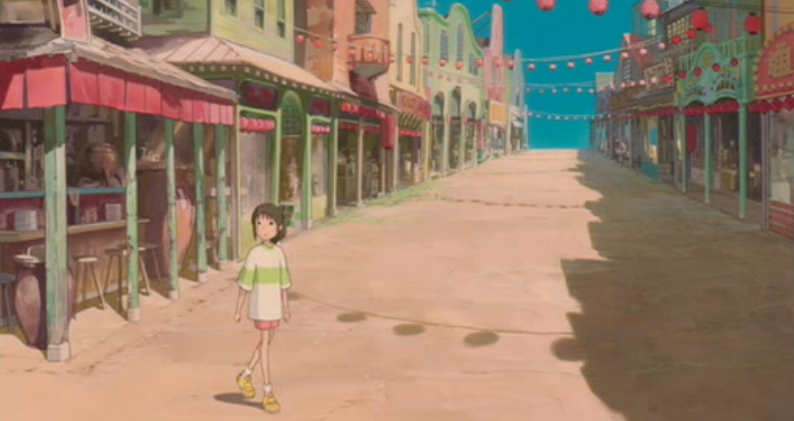
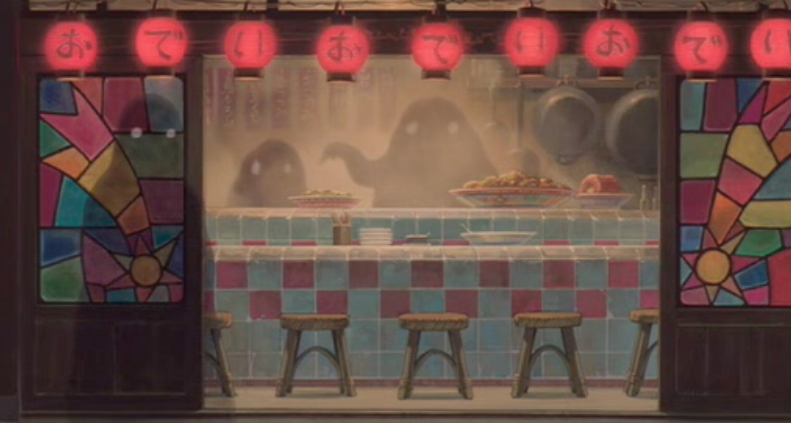
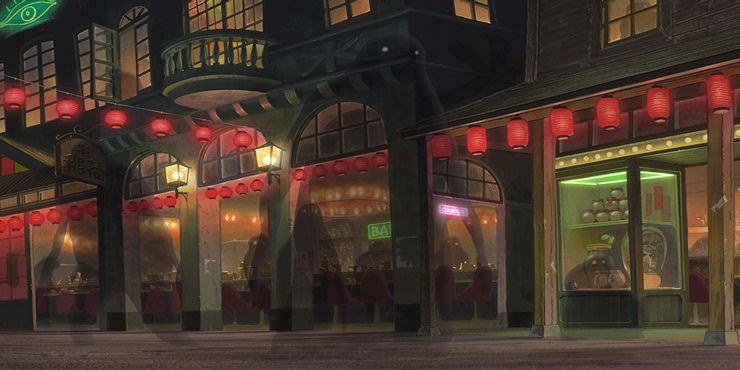
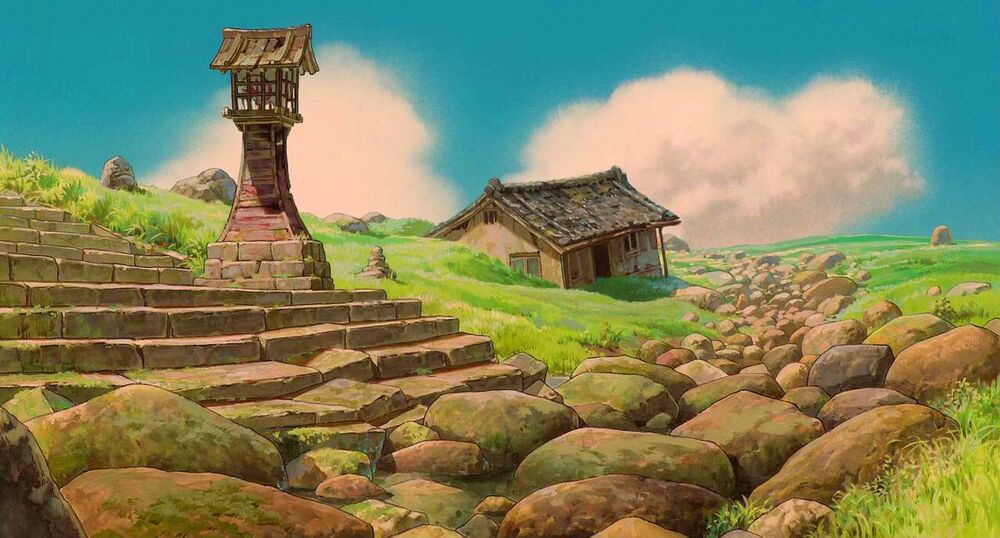
The vast stretch of grassland, the well-lit restaurant market, the flooded river with big bright carrier ships, the Bathhouse building and rooms, the staircases, the pigsty, Kamaji’s boiler room, Chihiro’s dormitory, the witches’ dwelling, the railway track under the ocean and the dainty cloudy blue sky… the film’s setting contributes richly in making us feel the Chihiro’s “spiriting away”.
It is unique and dreamy, it is intense and crowded, scenic and sublime, wonderful and ridiculous and more… the setting makes the story believable and palpable in a brilliant way. It is a place we have never been, yet is remarkably familiar… like a forgotten memory.
‘Spirited Away’ is one of the most loved and successful anime of all time; a bundle of magical moments and surprises, tussles and raptures, it connects with our inner child, one who believed in dreams and magic and talismans…
It reminds the forgetful ones that they too can find a way out of the crudeness that ties them down, that the answer to their thousand questions and their endless search lies within, hidden in a forgotten memory.
Winner of Academy Award for Best Animated Feature (making it the only hand-drawn, non-English-language animated film to win the award); it was also named the second “Best Film… of the 21st Century So Far” by The New York Times.
It held the record of becoming the most successful and highest-grossing film in Japanese history for 19 years (Demon Slayer: Kimetsu no Yaiba the Movie: Mugen Train broke its record in 2020.)
Read these reviews to know more about Spirited Away –
One summer gleaming morning, back in the 90s, a musician woke up, looked at the world maze and its commuters when a rapturous beat filled his mind… it was a fusion, a fusion of ragga and bhangra beats… the musician knew it was the time to sweetly twist the great razzmatazz of the world maze drama.
Album – Make way for the Indian (1995) [Source – Wikipedia]
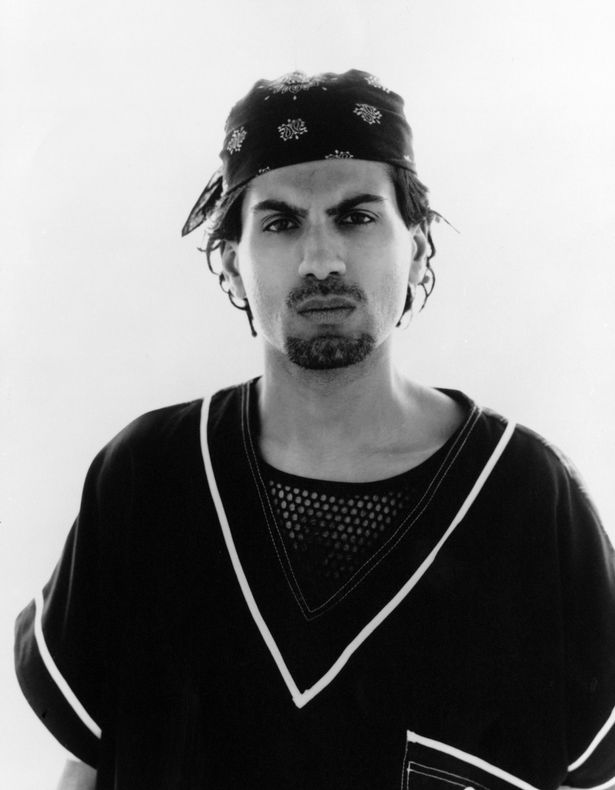
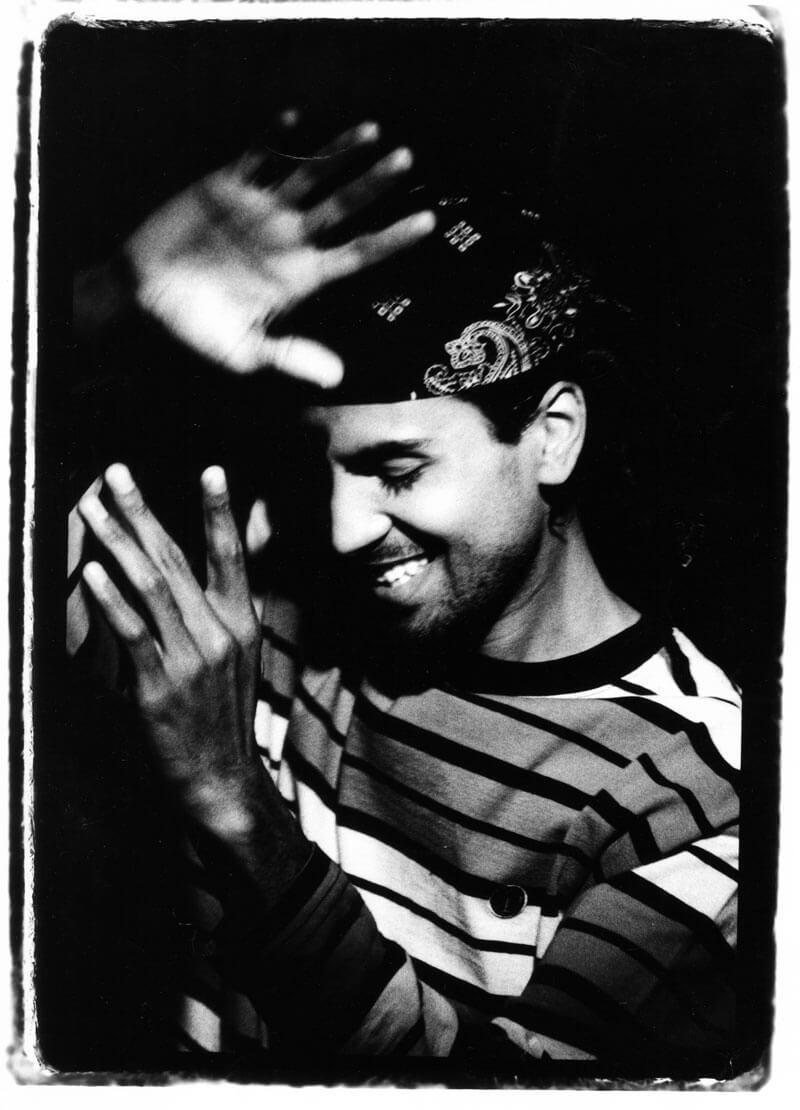
Apache Indian [Source – Birminghammail.co.uk]
Album – No Reservations (1993) [Source – Wikipedia]
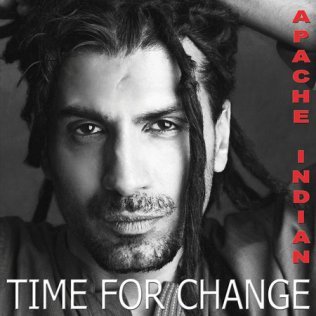
Album – Time for Change (2005) [Source – Wikipedia]
Album – Real People/ Wild East (1997) [Source – Wikipedia]
Steven Kapur aka Apache Indian (2015) [Source – Wikimedia Commons]
And so Apache Indian, the British Indian singer and reggae DJ, mixing cultures, tunes and beliefs, London to India via Jamaica, created a new wave that danced its way into stiff-grumpy-busy society’s heart. His funky hybrid tracks spoke bluntly but always with the spirit to bring a change.
Staying true to its roots – the reggae music genre is known to attack social evils – Apache Indian tried to arrest some fanatic dogmas and set free our handicapped progress.
*
“High caste low caste, we don’t want that,
Everyone equal, let us decide that.
High caste low caste, Sanu ni chahida (we don’t want that),
Saare jaane barabar (we are all equal), Maano rab da kehna (listen to the one God).”
Caste System – Apache Indian; Album – Nuff Vibes
*
“Caste System”, “Arranged Marriage”, “Aids Warning”, “Election Crisis” are some tracks that talk about an era and some persistent crippling ideas, all composed in an upbeat style. The very vigorous sounds of bhangra beats give these songs a desi, identifiable and yet refreshing touch; the east and the west amalgamates beautifully.
Then the peppy catchy dance numbers like “Boom Shack-A-Lak”, “Chok There”, “Don Raja”, “Ragamuffin Girl”, “Jump Up”, and “Celebrate” call out to all the listeners to enjoy the moment.
*
No.1 in a the Bombay chart Indian me a tear them apart When me come me bring a new stylee So listen crowd of people and you have to follow me Chok there – them a ball when they see the Indian Chok there – raggamuffin under style and pattern Chok there – when me come that a different fashion First tune a say me do no it reach No.1 In a the reggae charts and the Indian Chok there – see me face upon the television Chok there – hear me voice pon the radio station Promotor them a come them a rub off them hand Keeping a session and them want it fe ram Chok there – put me name pon the invitation Chok there – pon the gate go raise a million Me bring a brand new style upon the Island Fe the black a fe white and a fe the Indian So each and everyone come follow fashion
Chok there – dip your knee cork out you bottom Chok there – everyone in a the Bhangra fashion Nuff DJ them a have a fe them own stylee Some a wa da dong deng same a come follar me And some a them a say Oh Lord a mercy Pnumina ick pnumina do and also in a three But anytime me came me bring a brand stylee So listen crowd of people and you have to follow me…
Chok There; Songwriters: Simon Duggal, Diamond Duggal, Steven Kapur aka Apache Indian; Album – No Reservations
Apache Indian Music Academy, Handsworth. [Source – Birminghammail.co.uk]
Image by rcphotographyoriginal; source – Urban Asian
Experimenting freely and successfully, Apache Indian collaborated with many artists worldwide, from Sean Paul, Maxi Priest, Shaggy, Boy George to A. R Rahman, Asha Bhosle, Bally Sagoo, SteroNation and Jazzy B.
It was in the 90s, a summer dream that came true… not a super-sonic era, but moving towards one, grooving and listening to Apache Indian’s music… that was created with a hope, adding a little bit of this and that to ragamuffin magic, a hope to become better… a hope that is still alive.
Now a clear dot… now hazy… mixing with the clouds through and through, then beaming alone gloriously. Splattering moony clay, then rubbing it, greasing with it the deep dark sky.
Mirroring all the romantics and dream-talkers, the moony clay moulds itself to fit into the beholder’s eyes and patient hearts. It listens, nods and registers its reply with the artist.
Moony clay – an assiduous storyteller, slowly moving away – happily builds the wavy waves and like a sand clock shows the slipping time its way.
Singing joyously, dancing leisurely, the moony clay creates and fills the heart with hope, lost in splendour.
See how it re-shapes, re-writes its journey, certain of uncertainty in knowing… in knowing it all.
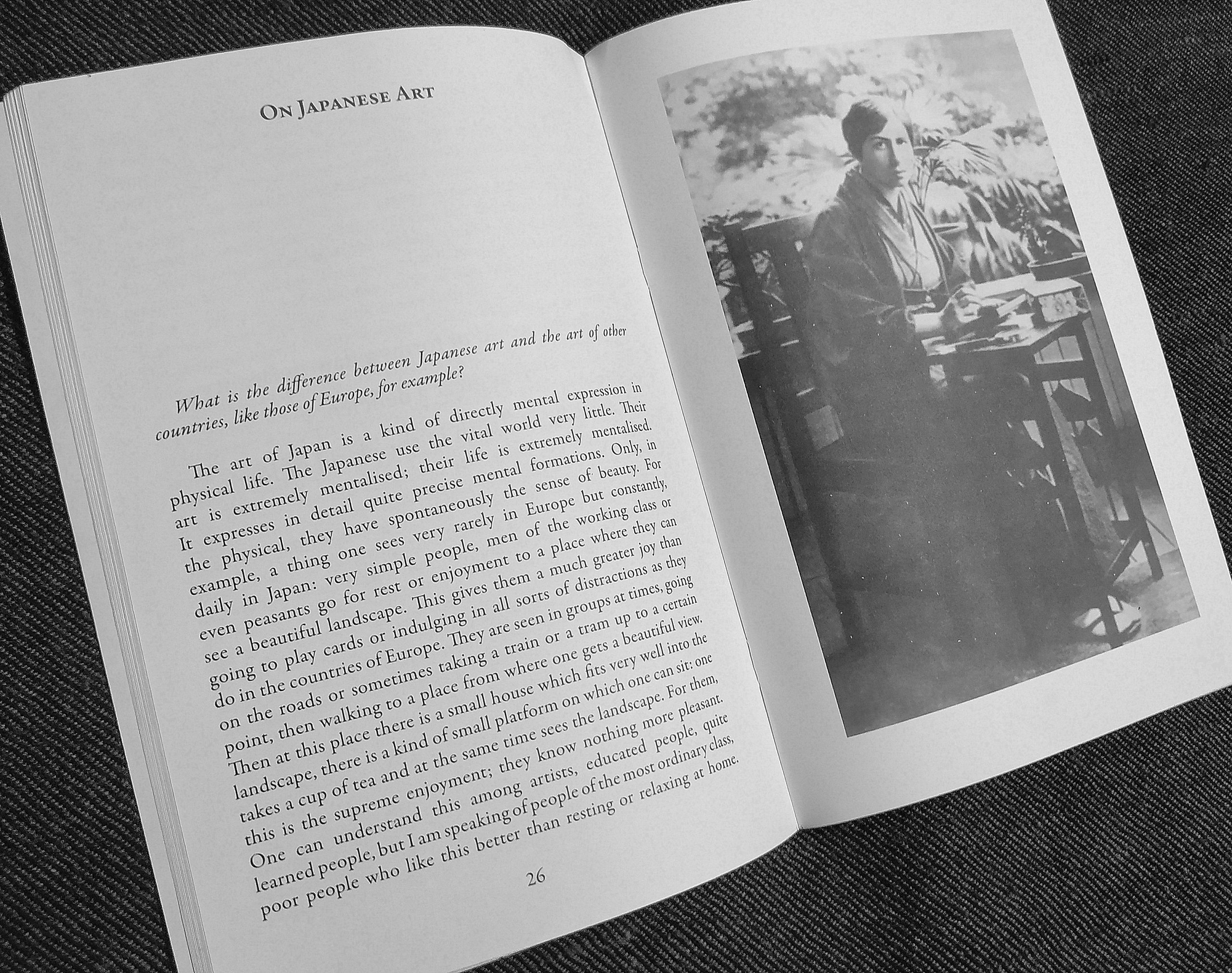
Seeing through a lens that sees things as it is, in its truest form, looking at a broken feather as a feather, not denying its reality, not giving it a quality, experiencing the moment quietly the Mother wrote about Japan. She wrote about its perfection/ beauty-loving people, the value given to nurturing kids, the dedicated women, the Japanese restrained-balanced-subtle art and the transient life.
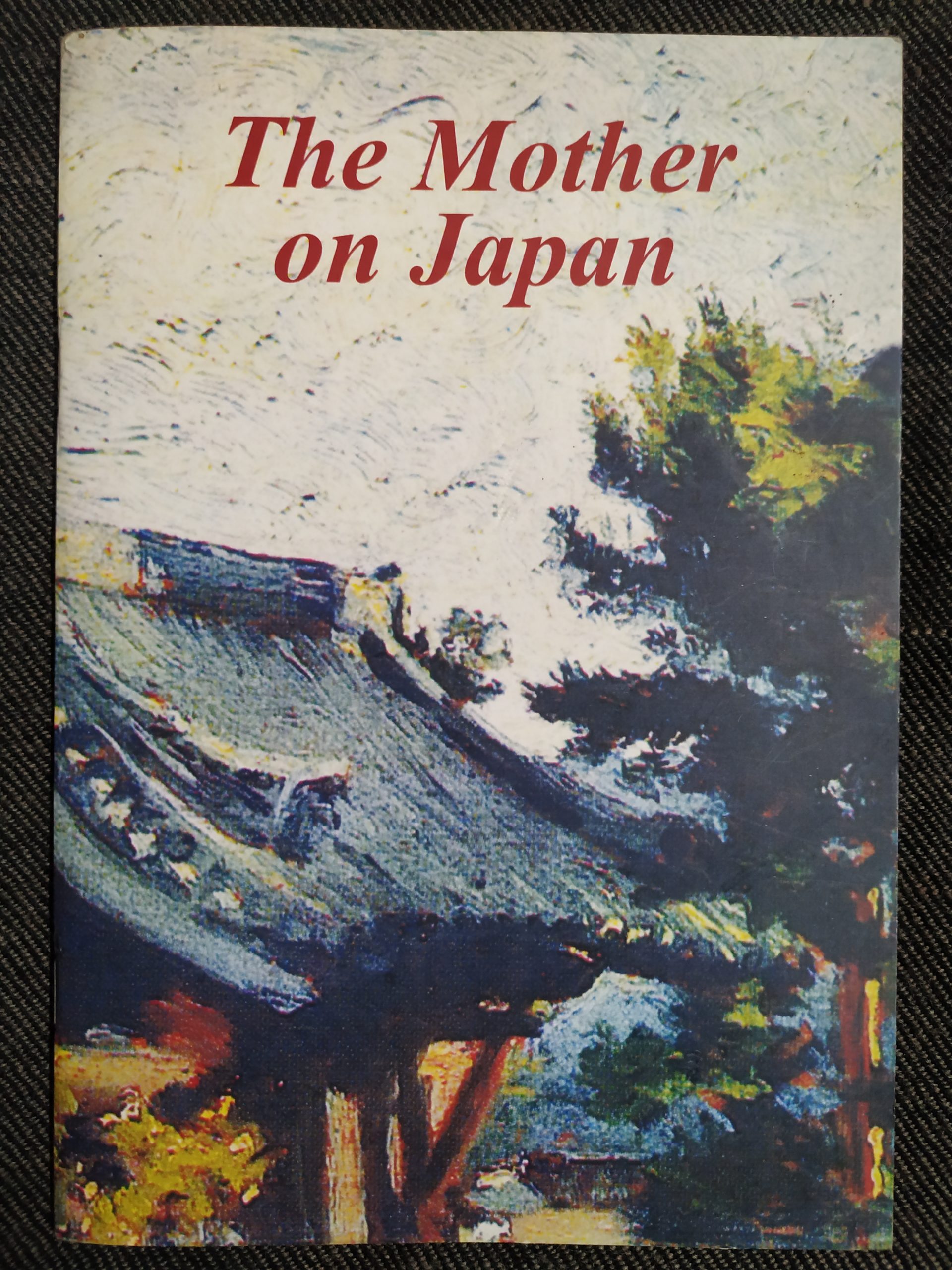
Roof of the Daiunji Temple in Kyoto, painting by the Mother. (Book cover) [Photo by Jagriti Rumi]
The Mother on Japan [Photo by Jagriti Rumi]
The Mother on Japan [Photo by Jagriti Rumi]
The Mother on Japan [Photo by Jagriti Rumi]
The Mother on Japan [Photo by Jagriti Rumi]
The people, she observed, not via reactions, but by silent selfless actions showed how much they cared for someone; happy to persevere they worked to fulfil the task at hand, devoted harmoniously and absolutely in the present moment, aware about nothing else.
*
Taking long walks to a garden in spring or autumns and spending time there or climbing the steep stairs to reach the monastery at the top of the hilltop, the people (of every and any class), she noticed, believed in beauty and peace.
*
“…very simple people, men of working class or even peasants go for rest or enjoyment to a place where they can see a beautiful landscape. This gives them a much greater joy than going to play cards or indulging in all sorts of distractions as they do in the countries of Europe. They are seen in groups at times, going on the roads or sometimes taking a train or a tram up to a certain point, then walking to a place from where one gets a beautiful view.”
“For instance, in autumn leaves become red; they have large numbers of maple-trees (the leaves of the maple turn into all the shades of the most vivid red in autumn, it is absolutely marvellous), so they arrange a place near temple, for instance, on the top of a hill, and the entire hill is covered with maples.”
“Well, an artist who goes there will experience an emotion of absolutely exceptional, marvellous beauty. But one sees very small children, families even, with a baby on the shoulder, going there in groups. In autumn they will go there. In springtime they will go elsewhere.”
The Mother (Questions and Answers, The Mother on Japan 12 April 1951)
Image of the Buddha, painting by the Mother. (The Mother, Paintings and Drawings, Sri Aurobindo Ashram Trust, 1992) [Photo by – Jagriti Rumi]
While reading about the 1919 flu and how the Mother fought back the negative, dark energy, one thinks about the present pandemic and hopes to win like the Mother in the end.
The glorious cherry-blossom trees in bloom – pink, white, vivid joyous pink – and the narrow paths that take one to wonderful places, with old Japanese houses on both sides, presented the Mother with a paradise puzzle…
*
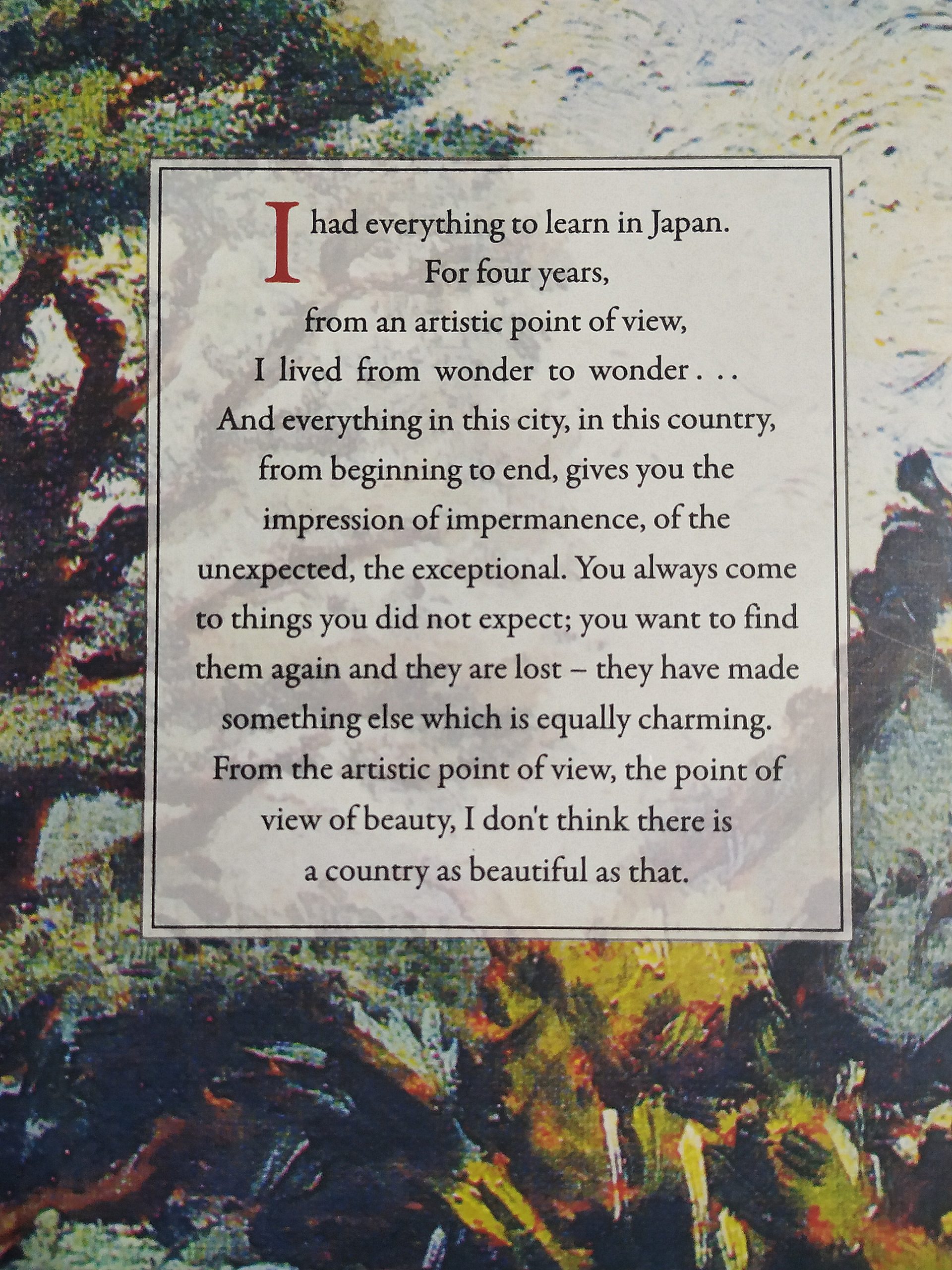
“Then you go wandering around – always one wanders at random in that country – you go wandering and all of a sudden you turn the corner of a street and come to a kind of paradise: there are magnificent trees, a temple as beautiful as everything else, you see nothing of the city (Tokyo) any longer, no more traffic, no tramways; a corner, a corner of trees with magnificent colours, and it is beautiful, beautiful like everything else. You do not know how you have reached there, you seem to have come by luck. And then you turn, you seek your way, you wander off again and go elsewhere. And some days later you want to come back to this very place, but it is impossible, it is as though it had disappeared. And this is so frequent, this is so true that such stories are often told in Japan. Their literature is full of fairy-lore. They tell you a story in which the hero comes suddenly to an enchanted place: he sees fairies, he sees marvellous beings, he spends exquisite hours among flowers, music; all is splendid. The next day he is obliged to leave; it is the law of the place, he goes away. He tries to come back, but never does. He can no longer find the place: it was there, it has disappeared!… And everything in this city, in this country, from beginning to end, gives you the impression of impermanence, of the unexpected, the exceptional. You always come to things you did not expect; you want to find them again and they are lost – they have made something else which is equally charming. From the artistic point of view, the point of view of beauty, I don’t think there is a country as beautiful as that.”
The Mother (Questions and Answers, The Mother on Japan 12 April 1951)
I am joy running free/
freely flying, fluttering, soaring in a valley/
Of joy am running free.
Greetings!
A storyteller, following the ancient tradition of cave chroniclers, standing in vrikshasana (the tree pose) on a hill top (it is sunny, but windy), breathing in and out stories (relishing it all, but at times overwhelmed), declares animatedly that she will continue to – tell stories, share rare story gems, and connect with the pacy universe while also keeping the website ad-free.
Big thanks to my readers. Stay tuned!
Also, a humble request to the new subscribers to check the spam folder after subscribing. Silly (but necessary) confirmation emails often land there instead of the bright inboxes. Merci!
Ya-hoy!
Chiming Stories (formerly Home Chimes)
P.S – Supporting a storyteller is good for the world’s health (and undoubtedly, for the storyteller’s health as well). Shower some love by sharing, commenting and subscribing to the Weekly Newsletter.
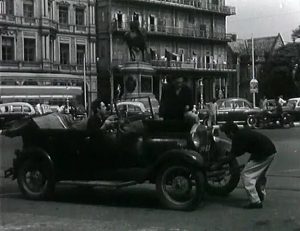
Gabbeh, the 1996 film, is a simple tale of a gipsy girl, her clan and the way their life goes on. Unfolding beautifully just like an artist painting a canvas, Gabbeh quietly touches the grand questions.
Ranked as one of the greatest British films of all time, The Lavender Hill Mob confides in the audience, letting them see, feel, laugh and think without tickling persuasively with a joke here and a punch-line there.
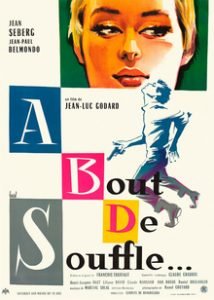
Godard… Breathless and Alive
A Tribute to Jean-Luc Godard, the Film Philologist who Reinvented Cinema.
Yes fly! For walking on the second track is dull and usual, but dreaming high, high, high requires tools. Tools like the right pair of shoes, a chirpy, gritty soul that eats butter-jam dreams, a soul that drinks milky-milky creams.
Silver cascade shimmering the night sky, music to the waves and surreal beauty to the eyes, the Moon loves the art of discipline.
It may be difficult to believe for the Moon’s splendour defies time, it stupefies the clock, it follows the path of a dreamer, but how could this be possible if the Moon knew not discipline?
In this moment, I am a little bit of this and a little bit of that, I am complete and incomplete, I am pleased and uncertain, I wish for nothing and I know I have to wait.
Because the distance covered reminds me of the hurdles I have crossed and the ones I could not, it reminds me of a throbbing past and a dreamy future and it reminds me of how much time is left.
Meredith and the Green Lake
Illimitable Splendour
A joy so complete without any rise or fall, so free without any time corners, so real without true being false, false being true.