Blogging

Children of the Sea – A Glimpse and A Message

The times when the sky mirrors the sea and the sea mirrors the sky, when the horizon disappears and the sun’s reddish stroke colours both alike, at those times you get a glimpse of the whole Universe celebrating life.  

Ruka underwater. © Studio 4°C

Children of the Sea is a Japanese animation film directed by Ayumu Watanabe and is based on Daisuke Igarashi’s manga series.

The story unfolds leisurely as the protagonist Ruka, a teenager, meets two brothers – Umi and Sora – who are from the ocean.

While the grown-ups stay occupied with understanding the physiology of the two boys, hoping to know through them the secrets of the marine world, Ruka, Umi, and Sora go through a magnificent journey.  

Ready to explore the marine world. © Studio 4°C
Umi and Sora. © Studio 4°C
Blue magic. © Studio 4°C

The unseen and the unknown happen for Ruka as she sees and lives the connection… the connection of every being with the universe.

Umi and Sora tell her that every living being is waiting to be found, that the awakened bright light in one finds the other and that if you pay attention and listen, you can hear the sea and the sky talking.  

Quite depths of the ocean await the light of the comet for it is then that the celebrations begin; all the marine life gathers to be in this light of the comet.

Umi and Sora take Ruka along as a guest to witness this mystical event, themselves turning into a comet and disappearing forever.

The light of the comet is here. © Studio 4°C
Dancing round and round. © Studio 4°C
Cosmic dance. © Studio 4°C

Ruka on one hand cannot forget the surreal experience, cannot forget Umi and Sora, on the other hand, she just can not understand the meaning of it all and is not ashamed to say it out loud.

Dede, an old lady, tells Ruka that she also met a boy from the ocean when she was her age and that she did not understand things just like her, but she learned to understand the sound of the wind that carries secrets from the five oceans of the world.  

Ruka’s confusion reminds me of Arjun from the Mahabharata, he, after witnessing the supreme lord in his absolute vastness and glory and listening to him, requests the lord after winning the battle to elucidate once again the message of the Bhagwat Gita.

An unfathomable experience and a human’s forgettable nature…

Summer vacation ends and Ruka heads back to school, to the routine life, on the way she hears the ocean and looks at the sky, she feels the secret is within her and smiles.  

The times when the sky mirrors the sea and the sea mirrors the sky, when the horizon disappears and the sun’s reddish stroke colours both alike, at those times the Universe shares a message, one that is meant for you and only you.

Moon Colour

A touch of the moon colour!
[Image from Pixabay]

A touch of the moon colour and this life will glow and slowly will it know of a love story so pure that has travelled a long distance facing boldly every storm that has become a norm, followed by all, the same ones who secretly, meekly hope for someone to rise, rebel and risk it proudly, showing the world that a heart beats in every being, a heart that falls irrefutably in love, in love with a smile, a gesture, the earth, the sky and the moon… all this life needs is a touch of the moon colour.


Ready for a MOON-y overdose, read more –

Moon!
The Moon is Singing White Light
In Slo-mo Towards the Moon
Moon, Moon, Moon, Moonlight
The Moon Talks
The Moon is Moving
Crescent Moon Lights


Weekly Newsletter

A weekly dose of stories! Get the posts from the Chiming Stories in your inbox and read it when you can. Subscribe now, it is free!

This field is required.

Recent Posts


Violets

Walking and observing.
[Source – Pixabay]

Violets—

how precious on

a mountain path.

– Haiku by Matsuo Basho


The violets, the lovely peaceful charming quiet perfect violets, helped me see the path that I had covered, the mountainous journey suddenly filled me with warmth and glow and I blushed.

I know not what lies ahead, but I am sure to see some violets.


Weekly Newsletter

A weekly dose of stories! Get the posts from the Chiming Stories in your inbox and read it when you can. Subscribe now, it is free!

This field is required.

Recent Posts


The Echo

The sound of silence!
[Source – Pixabay]

Can it be that the echo listens and speaks at the same time? I wondered this and nothing more, sitting on a quiet cliff, knowing this and nothing more.

The eagle soars against the wind, challenging it for fun, gushing now and then.

The grass, the daffodils relished it all, the sun, the wind alike. And the clouds?

I know not what the clouds said to the grass, the daffodils, for I was wondering about my response, the echo.


Weekly Posts

A weekly dose of stories! Get the posts from the Chiming Stories in your inbox and read it when you can. Subscribe now, it is free!

This field is required.

Recent Posts


Sahib Bibi Aur Ghulam – A tale of role-reversals and downfalls

Film Analysis

The beautiful Meena Kumari as Choti Bahu (Bibi). [Source – bollywoodirect.com]

In the game of cards, the roles of a King, Queen and Jack are determined, but in the real-life nothing is certain, in the real-life the roles often interchange, a King becomes a salve, a Queen a maid and a Jack a conqueror. Bimal Mitra’s Bengali novel, Saheb Bibi Golam (1952), narrates one such tale of a bygone era of flourishing feudalism that ultimately saw its ashen downfall.

The Hindi film Sahib Bibi aur Ghulam (1962), keeping the spirit of the novel alive, enriches its impact through the well-knitted, tight screenplay, realistic yet charismatic direction and spellbinding performances.


Adaptation

Literary adaptation to any other medium always changes the story; it inevitably enhances an aspect of it and ignores the other. The audio-visual medium of cinema chooses the part that ‘shows the story’ rather than that which ‘tells the story’. This film has very beautifully matched the tonality of a novel; scenes, transitions, songs and dialogues all combine to give it a mystical forgotten tale-like feel.

Let us see how the first scene is structured in the film:-

The first scene begins with someone flipping through the pages of Bimal Mitra’s novel that fuses into the image of a huge mansion that is now lying in a complete state of ruin; labourers are digging and clearing the place, pulling down the giant pillars; labourers who were once not allowed to enter the royal mansion are now seen shovelling its remains.

Then enters the Ghulam in suit-boot, grey haired and gazes at the ruin that was once a palace, a symbol of rich feudal lords; he does not need to say anything to the audience, his demeanour and troubled look reveal enough, there is a mystery and he is the only one who can narrate it. This is how the film begins, with a long flashback.

Just like a page-turner novel, the film hooks its audience right from the beginning. We know now that the Ghulam survived the downfall, but what about the Sahib and Bibi.


Plot & Characters

The Ghulam

Atulya Chakraborty aka Bhootnath, played by Guru Dutt, comes to the city of Calcutta, looking for a job. The protagonist is as ignorant as the audience about the drama that is yet to unfold and thus, is the best character to relate with.

Bhootnath’s brother-in-law, a teacher who lives in the quarters of the grand mansion, warns him to ignore the ‘bade log’ (big people) just as they ignore all their petty lodgers.

He gets a job in a factory that produces Mohini Sindhoor – vermilion that is supposed to have aphrodisiac properties. The factory owner’s daughter, Jaba, astounds him with her wit and Brahmo Samaji attitude.

Fantastically, the plot and the main character together move this story forward. Bhootnath’s love story begins when he meets Jaba and parallelly the plot reveals the glittering feudal world, seen through Bhootnath’s eyes, building a mysterious charm capturing both his and the audience’s attention – one night, when he hears a painful voice singing about her misfortunes, he wonders about her, who is she? Who is Choti Bahu?

Bibi

The great Meena Kumari played the role of Choti Bahu, the unlucky wife of the younger brother of the two Zamindars. The fact that she is called Choti Bahu by one and all, that no one, not even her husband, calls her by her first name, suggests a lot about her character. She is truly beautiful, elegant, a devoted wife, the youngest daughter-in-law in the family and this is her job.

It is expected from her that she will forever maintain this status and not complaint in any way. After all what is there to complain about? She has everything – silk saris, jewelry, servants and a palace to call her home. That is why when she requests her beloved husband to stay back for one night instead of visiting his mistress, the husband is shocked and reminds her that he is a feudal lord and this is not only his right, but this is how he can earn a good reputation amongst other lords, he even asks her what sort of a lord spends nights with his wife.

Choti Bahu meets Bhootnath and asks for his help; she wants him to get her a packet of Mohini Sindoor so that she can win her husband’s love back and to do it secretly because women of her status does not approve of such methods. At first Bhootnath is struck by Choti Bahu’s beauty, he stares at her speechless, only later to feel pity for her, struck by her helplessness.

As the story unfolds we see how tragic a life Choti Bahu is living, like a bird in the cage. This character is very well crafted. Choti Bahu’s predicament sheds light on the hidden and ugly aspect of not only the society, the women folk, but also the individual.

When Choti Bahu is nearing her end Bhootnath tries to stop her from drinking, he even holds her hand, taken aback by his guts, she says, ‘Main Choti Bahu hun’ (I am Choti Bahu), reminding him his place that of a ghulam. This scene also highlights how an individual creates an identity and then clings to it forever; whoever then challenges her/his identity becomes her/his enemy.

Everyone is a foe for Choti Bahu, everyone who does not understand how dedicated she is, how selfless she is. Though drinking starts to kill her, she, in a troubled and an incomplete way, stays happy thinking that she is following her husband’s order and thus, fulfilling the duty of a loyal wife.

Meena Kumari’s acting heightens the dramatic impact of each scene and every dialogue. The song ‘Na jao saiyan chuda k bainya, kasam tumhari main ro padungi… ro pdungi’ has become eponymous to her. After her track begins, all the scenes are more or less about her. Bhootnath worries for her, Jaba is jealous of her without even having an encounter with her and her husband, indifferent to Choti Bahu throughout, digs his and her grave foolishly with his own hands.

Sahib

Chhote Babu, played by Rehman and Majhle Babu, played by D.K. Sapru are the Zamindar brothers who stay busy in their own silly world – one busy attending the dancer’s performance every night and the other busy either enjoying his royal cat’s wedding or pumping up for a pigeon war with his neighbouring counterpart. Blinded by excess of everything both the brothers bring their own downfall.

Majhle Babu assuming that Choti Bahu and Bhootnath are having an affair takes a reckless step; he gets Bhootnath beaten up and abducts Choti Bahu, murdering her in the end. But it is not Majhle Babu’s arrogance or the social dogma alone that killed Choti Bahu, it is her husband’s doing as well.

It is Chote Babu who made his wife addicted to alcohol, not only by asking her to be like his dancer mistress, but also by not giving her the respect and love a wife deserves. By the time he accepts his fault, he is bed ridden and it is all too late. His misery ends with his death.

The portrayal of the Sahibs of this era facing the collapse of the Zamindari system is written and directed wonderfully in the film. The two brothers come across as truly pitiful characters.


Ending

The flashback gets over and Bhootnath is informed by one of the labourers that they have found a grave on the site. He rushes to the spot only to be completely shocked to see Choti Bahu’s gold bangles on the skeleton; he remembers what she had told him, that when she dies, she should be decked up properly, with vermillion in her head, so that everyone can say that ‘Sati Laxmi’ passed away. Imagining the beautiful Choti Bahu, Bhootnath with a heavy heart steps back from the site; he sits in the carriage next to his wife Jaba and leaves the place.

The ending surprises the audience once again; that Choti Bahu was murdered and buried in the mansion itself is not something that Bhootnath or the viewer would have expected. It also closes two chapters – one of Choti Bahu’s disappearance and the second, of Jaba and Bhootnath’s relationship. They both are shown as a married couple, contrary to the novel’s ending.


Conclusion

Sahib, Biwi aur Ghulam is an amazing adaption; it does justice to both the medium of the novel and cinema. Chosen as India’s official entry to the Oscars, it was soon rejected by the academy stating that they sternly forbid showing alcoholic women in their culture.

The concept, quite bold for that period, is actually much deeper than the mere portrayal of a woman as an alcoholic. It has captured that moment in time where the powerful and rich were falling down and the servants were free to do as they wished. It is striking that the suffering labour-class where equally surprised by this change as they too had adjusted well to the feudal system. Bansi, Chote Babu’s personal attendant, jobless after his master’s death, tells Bhootnath that he has started working in the train station and that no one lives in the mansion anymore.

Therefore, the film is not only an interesting watch to study its screenplay, but also for those who wish to write/ make an adaptation, those who wish to study how both plot and characters can drive the story forward and how an individual fits in the larger scheme of things.

In the game of cards and in the real life, every Sahib, Biwi and Ghulam can overthrow the other and win; it is all a matter of time.


[Originally written for the Screenwriters Association (SWA), you can check the same here.]


Weekly Newsletter

A weekly dose of stories! Get the posts from the Chiming Stories in your inbox and read it when you can. Subscribe now, it is free!

This field is required.

Recent Posts


Dream Light

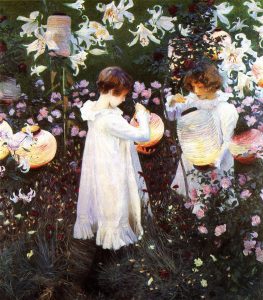
Carnation, Lily, Lily, Rose by John Singer Sargent.
[Source – Wikipedia]

Keep your dream light on. When bright it reveals the Narnia world, takes you to Alice’s Wonderland, and introduces you to Peter Pan and the Wizard of Oz. When dim it shows you the path that no one can see in the, hah, real world…

The real world of oh so beautiful Earth, the real world of oh so enchanting colours, the real world of oh so troubled minds, the real world of oh so trapped hearts.

So keep the lantern ready and walk towards the dream light. Tip toeing the wooden floor, tap dancing on the way, gliding on the sea, swirling high in the sky, however twisted maybe your turn, the lantern will keep on glowing, it will never betray you, even when you go blind.

How to select a lantern for such a trip? Always, write it down if you want, always choose the lantern that chimes, hums and whistles, after all music fuels dream lights.

On the lonely road towards your dream you will see things that you have never seen, meet djinns and dragons, flying carpets and cars, funny friends and foes and your doppelganger for sure.

And when you fall down, when your heart breaks, close your eyes, breathe and believe, you’ll then remember to follow your dream light.

So keep your dream light on forever.


Weekly Newsletter

A weekly dose of stories! Get the posts from the Chiming Stories in your inbox and read it when you can. Subscribe now, it is free!

This field is required.

Recent Posts


Follow The Light

The light!
[Image by Bruno from Pixabay]

After succumbing to the darkness I sat there quietly for ages. Did the wind play with the kite? Did the dew drop decorate the petals? I saw nothing, I stared at nothing, it was all dark. But I did hear them mocking, complaining, exclaiming, demanding. I said nothing, my voice had become dark too.

Then from nowhere a light emerged, glowing softly, fading now and then, but never dying completely. I remembered then that I can stand up, I realised then that I can walk ahead, I felt then that I am still alive. And I walked towards the light. I could see then, in the light, how dark it was.

I followed and I am still following the light.


Weekly Newsletter

A weekly dose of stories! Get the posts from the Chiming Stories in your inbox and read it when you can. Subscribe now, it is free!

This field is required.

Recent Posts


Crescent Moon Lights

“Crescent moon lights

Buckwheat flowers

This hazy earth.”  

Basho  

*

*

The moon is being carved, I can hear the hammers, the chisels, it is raining white shimmer… the crescent shape will light up every heart soon.  

And the valley of buckwheat flowers will then dance the dance of love, soothing the eyes of a traveller.  

Intoxicated, the earth will then spin and stagger making, as always, a painter’s painting hazy.


Complement this haiku post with similar ones –

Basho’s Haiku Pond

Violets

Fetching Water from a Haiku-Well


Weekly Newsletter

A weekly dose of stories! Get the posts from the Chiming Stories in your inbox and read it when you can. Subscribe now, it is free!

This field is required.

Recent Posts


Flowers Are Made Of Stories

Flowers are made of stories, every colour a different genre, every form a different journey. 
 
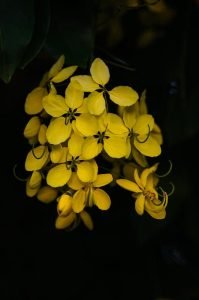
A yellow flower lived high on a tree; it sang and danced along with the wind. One day the yellow flower fell on a passerby who looked up at the tree, then down at the flower, smiled and left. The passerby loved its story.
 
Flowers are the best storytellers, just a glance and the job is done, allowing the story to unfold, to bloom within the seeker slowly.
 
A lotus once told me an epic and a night jasmine a love story and a marigold a fairy-tale saga.
 
Flowers are made of stories which the mind forgets but the heart remembers.


Cassia Fistula, golden shower


Weekly Newsletter

A weekly dose of stories! Get the posts from the Chiming Stories in your inbox and read it when you can. Subscribe now, it is free!

This field is required.

Recent Posts


Calling the Ocean

Georgina was walking towards her home, by the same old path. With grocery bags in both her hands she could not straighten her hat or pull her hair back. She blew her hair when it tickled her nose.
 
It was a hot summer day, everything around her glistened in heat. Then she heard something, she could feel a vibration and as she turned her head right, she saw a wave, higher than the surrounding trees and the sweet hillocks. Georgina, dumbstruck, could not move, she kept on gazing at the giant wave devouring the trees, the hillocks and rushing towards her. ‘This can’t be true’, exclaimed Georgina. The wave hit her.
 
She twisted and swirled, the grocery bags somehow managed the wet blow and so did her hat. Georgina could breathe; she was not hurt rather she could swim without any effort. She looked all around with bewilderment, a school of Goldband forage fish crossed her; each one greeted her with a quick ‘hello’. Beaming, Georgina nodded and said ‘hello’; she tried to wave, but she could not, because of the grocery bags in her hands.
 
Georgina swam happily and was joined by two dolphins. They whistled a tune and said something that Georgina did not understand. Both the dolphins then nudged her hands and made her let go off the grocery bags. She felt light as she saw the bags sinking and touching the ‘sea bed’. Joyfully then she danced along with the dolphins. She threw her hat away and opened her hair; she swam, she swayed, she stretched her arms and flew away.
 
Late in the day she reached home soaking wet; grocery bags in her hands made a puddle in the kitchen and her hat added a tiny stream to it. Aghast, her mother finally managed to say ‘where in the world have you been?’ Georgina looked at her mom and with a glint in her eyes, smile on her face she said ‘the ocean’.


Weekly Newsletter

A weekly dose of stories! Get the posts from the Chiming Stories in your inbox and read it when you can. Subscribe now, it is free!


This field is required.

Recent Posts