
Stories

The Circle Game, Joni Mitchell, You and Me

Coverage
Image by Siamlian Ngaihte from Pixabay

The Circle Game

Yesterday a child came out to wonder

Caught a dragonfly inside a jar

Fearful when the sky was full of thunder

And tearful at the falling of a star

And the seasons they go round and round

And the painted ponies go up and down

We’re captive on the carousel of time

We can’t return we can only look behind

From where we came

And go round and round and round

In the circle game

– by Joni Mitchell

*

The everlasting, all-embracing, ebullient circle game is manoeuvring it all so well. The cycle of life, the movement of planets and the galaxies, the journey of every individual swivel beautifully.

Joni Mitchel’s beautiful song The Circle Game from the album Ladies of the Canyon is a reminder, I feel, to remember the rules of the circle game.

A game in which we all are participating no matter how forgetful we may be.

*

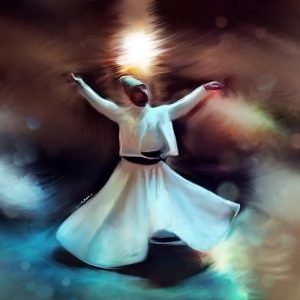
The Circle Game, play well dear me. Image from Pixabay.

Stories have been working from the very beginning to prove the presence of the circle game; every story that was ever written or will be written becomes complete when it forms a neat circle in the end.

It could be a linear circle with a clear structure like Macbeth or it could be a non-linear circle that nicely and freely waits for its completion in the viewers’ mind just like this song.

“So the years spin by and now the boy is twenty/ Though his dreams have lost some grandeur coming true/ There’ll be new dreams, maybe better dreams and plenty/ Before the last revolving year is through…”

The Boy is twenty and life has happened; he has fallen but is hopeful, and there is still time for him to give it another try. And life goes on.

*

The Ouroboros Symbol. [Image from Pixabay]

The circling theory of Karma – what goes around comes around, the circling nature of the first law of the thermodynamics – energy can neither be created nor destroyed, it only changes its form, the ancient Ouroboros symbol, for instance, all voice the same truth.

“We’re captive on the carousel of time/ We can’t return, we can only look behind/ From where we came/ And go round and round and round/ In the circle game.”

“Captive on the carousel of time”, curtly this hits the mind and the realisation disturbs languidly.

Like a plaything, like “the painted ponies”, we are tied to the carousel of time. And the only way forward is to continue.

*
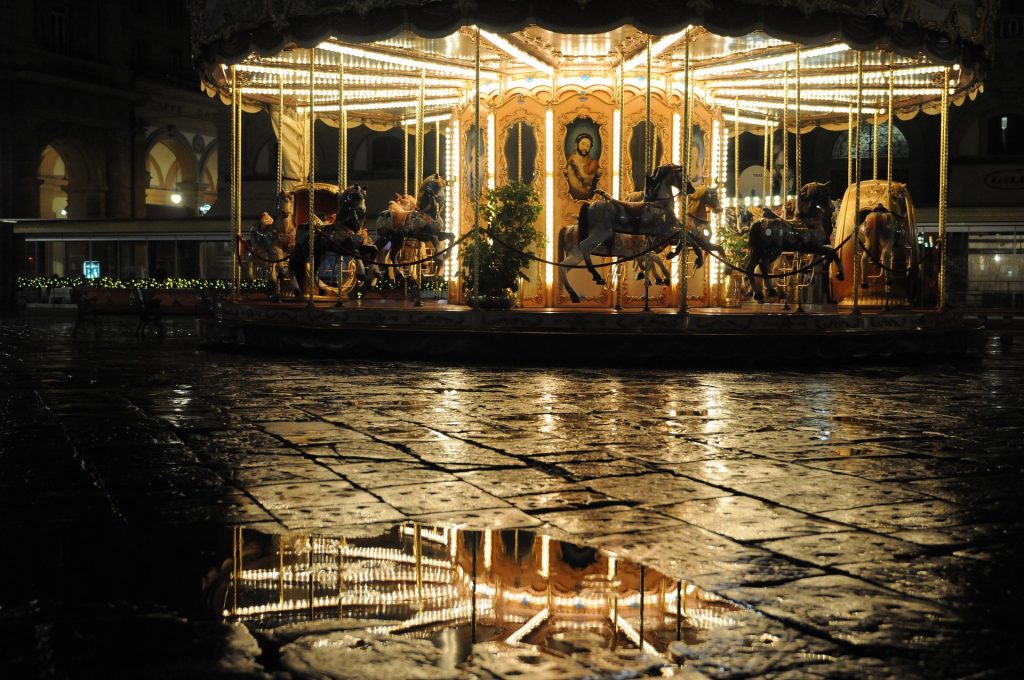
Time to carousel! [Image from Pixabay]

Moving forward not painted-pony-like, limited and not captive every individual in this life holds the power to swivel in her fashion.

Destined and yet free, that is how life is, by nature paradoxical.

We are not separate, we are one with the circle game, we add to its beauty as we go round and round and together we are moving towards its never-ending end.

*

Listen to this track now –

(Read the lyrics here.)


Weekly Newsletter

A weekly dose of stories! Get the posts from the Chiming Stories in your inbox and read it when you can. Subscribe now, it is free!

This field is required.

Recent Posts


Canonized For Love

John Donne was a prominent 17th century Metaphysical Poet.
Poster design by Jagriti Rumi.

Love is pure truth, a divine experience, a way to live more and surpass even death.

It is a sublime fantasy that is real and better than the material world. Love is life’s paradox.

This is the idea that John Donne is expressing in the poem The Canonization. It is a reply as well as a declaration that the poet makes to the world- a world that treats lovers harshly.

He scorns the worldly, he questions the inquisitive, he proves the myths true, he places his love high and announces it as canonized.

The sudden change in his tone doesn’t bother if one recognises the powerful and apt imagery he has used in the poem.

The very first line ‘For God’s sake, hold your tongue, and let me love’ hits hard, but certainly in a good manner. In fact, it catches the interest of the reader at once.

The poem is like a necklace, beaded with beautiful and grand images like –

‘What merchant’s ships have my sighs drowned?’

‘And we in us find the eagle and the dove’

‘The phoenix riddle hath more wit/ By us; we two being one, are it’

‘As well a well-wrought urn becomes/ The greatest ashes, as half-acre tombs/ And by these hymns, all shall approve / Us canonized for Love.’

‘Countries, towns, courts: beg from above/ A pattern of your love!’

‘And if unfit for tombs and hearse/ Our legend be, it will be fit for verse’ (Stanza 4)
Image by Prawny from Pixabay

These are not empty expressions as every word in the poem is linked with the central theme – love.

If we randomly pick one word from each stanza, it will still be related to the poem.

For example, ‘improve’ (stanza 1) – one who is in love grows as an individual and improves by learning to be selfless; ‘remove’ (stanza 2) – when in love you cannot dwell on hatred, and so the negativity is removed to make space for hope; ‘Mysterious’ (stanza 3) – love is an easy mystery; ‘legend’ (stanza 4) – we all remember love stories as legends, sadly these are mostly incomplete ones; ‘mirrors’ (stanza 5) – love is as reflective as a mirror.

Love is closely related to asceticism in the poem, which is one of the conceits (an ingenious or fanciful comparison or metaphor) used by the poet.

He proves it with great subtlety that the lovers need nothing from the world; they complete each other and hence, know inner peace.

The poet says that the lovers rise to such a level that they become one and enter a divine world, thus leaving the material world behind. They dwell in each other’s simple presence.

In the last stanza, after canonizing himself and his lover, the poet says that his pious canonized love would be celebrated in the world by one and all.

He ends by completing the canonization of his love, placing it on a high pedestal, and separating it from the worldly pleasures.

‘And if no piece of chronicle we prove/ We’ll build in sonnets pretty rooms’ (Stanza 4).
Image by Gordon Johnson from Pixabay

Canonization, the title of the poem, seems to be a question and an answer at the same time. As one wonders about how love can be canonized and attain sainthood, the divine nature of the poet’s love presented in the poem gradually justifies the same.

The poet shows that his love is spiritual not merely physical, that his union with his lover has made them blissful and assures that it will radiate amongst the others.

His canonized love is not against the world rather it is for the world, acting as an inspiration. His love is not harming anyone but is a liberating force, just like a saint’s.

John Donne’s The Canonization is a smart poem with brilliant use of wit, the quintessential quality of a metaphysical poet.

He celebrates love in a simple, forthright tone that makes this 17th-century poem wondrously alive in today’s world as well.

‘Alas, alas, who’s injured by my love?’ (Stanza 2)

‘Call her one, me another fly/ We’re tapers too, and at our own cost die’ (Stanza 3)

There is a message hidden in this poem and the title ‘canonization’ is the key to unveil it. Donne wants to share that every one of us, whatever be our rank in the society that runs according to the man-made rules, has the ability to reach the divine state.

Sainthood according to him is not reserved for some but is achievable by all.

What we need is to rise above the material world, to resurrect ourselves through true love. Here the beloved represents anything- a person, God, nature, the entire world.

Love is the best, the all-embracing way to reach the sublime state as it is love that makes a person truly selfless and compassionate.

Even today if someone pursues this path, they will know that they are canonized, for they are in love.

Love is to be selfless and compassionate.
Image by Nika Akin from Pixabay

Weekly Newsletter

A weekly dose of stories! Get the posts from the Chiming Stories in your inbox and read it when you can. Subscribe now, it is free!

This field is required.

Recent Posts

The Flying Golden-Grass Machine

The unknown labourer in the outskirts of Kolkata.
Photograph by Jagriti Rumi

Excerpts from the report

#First entry; Day 1

It landed lightly right behind the unknown labourer who was sweating his day off, certain of his actions and in complete focus, busy in a simple yet, arduous task.

#Fifth entry; Day 1

The flying golden-grass machine runs on a magic engine. A high maintenance product, if not frequently checked, leaks pixie dust.

#Thirteenth entry; Day 1

On the way back from home, that evening, when you saw an aeroplane blinking red-blue lights in the sky, you had uttered something, do you remember it, mister?

You were just fourteen then and had a rather rough day and a broken slipper was not helping either.

You had wished to fly.

Of course, you meant in an aeroplane, but you know how things are in offices, what was spoken was noted down verbatim, it became a written record and a record is the most sacrosanct concept and is hailed throughout the universe.

#Third entry; Day 3

It may look a bit raggedy to you, but it is as good as new. After the service station gave it a nod and we made them sign a nine-paged document for the record, this is its first trip. We, sir, run a professional organisation here.

#Ninth entry; Day 5

Come on now, why don’t you give it a try. The sky awaits you, explore the world and be spellbound by its majesty.

Also, then you have to fill a bunch of forms and sign it, for record purposes.

#First entry; Day 9

Listen, we do apologise for being late. Don’t be upset, in fact, you would be pleased to know that this is also an award, you are one of the most efficient and disciplined people in this world, please accept your prize… and then sign this document here… just a formality.

#Eleventh entry; Day 21

A handful of resources and a handful of desires, how do you adjust to such a life so easily? Doesn’t the heat bother you… the flies, the stench and the failures?

Is life nothing but a cycle ride to you? Oh, remember the cycle rides from your childhood? I do, very clearly, we have it in the records.

With the wind in your hair, you rode it so swiftly, beating all your friends… I bet you can beat the flying golden-grass machine as well.

#First entry; Day 40

Ahm! Let me again ask for your forgiveness for the delay, our department is not the best, it is the 6th best, well 16th actually, but keep this off the record please.

Nevertheless, there is no fault of this machine. It is a good model; many have travelled to far off lands in this little light ride.

What is remarkable is that it is in so many ways just like you, mister.

It too works year long, dreaming of meeting new travellers, visiting different lands, stopping at pixie-dust-pump-stations, collecting visions silently.

#Fifteenth entry; Day 55

Yes, for the 100th time yes, this is a magical machine… and… oh, why don’t you understand… think of it this way, you have won a lottery… you are getting to travel the world, okay? Now, don’t waste time and sign this…


RECORDS

Entry: 90005070QPx∞

The unknown labourer, id no.00089∞, after two months of bewilderment, shock, anxiety, panic, anger and confusion, agreed to make use of the flying golden-grass machine.

The messenger, id no. ᶲᴥ჻֎, successfully delivered the award and got the awardee’s signatures on all the forms.

Please find attached here the detailed report of the awardee’s world tour.

The messenger took charge of the flying golden-grass machine once the tour ended; the awardee’s memory was altered as per the protocol; he will now remember it as a strange dream.

Please find attached here all the signed documents for your perusal.

Blessings and bell chimes!

Bright regards,

XO

Messenger id no. ᶲᴥ჻֎

Random Honest Wishes Fulfilling Department

The Misty Realm


Weekly Newsletter

A weekly dose of stories! Get the posts from the Chiming Stories in your inbox and read it when you can. Subscribe now, it is free!

This field is required.

Recent Posts


Basho’s Haiku Pond

Let us go back in time, a few centuries back, in the mid-17th century to be precise, to meet Matsuo Basho and embark on a journey to the interiors of Japan.

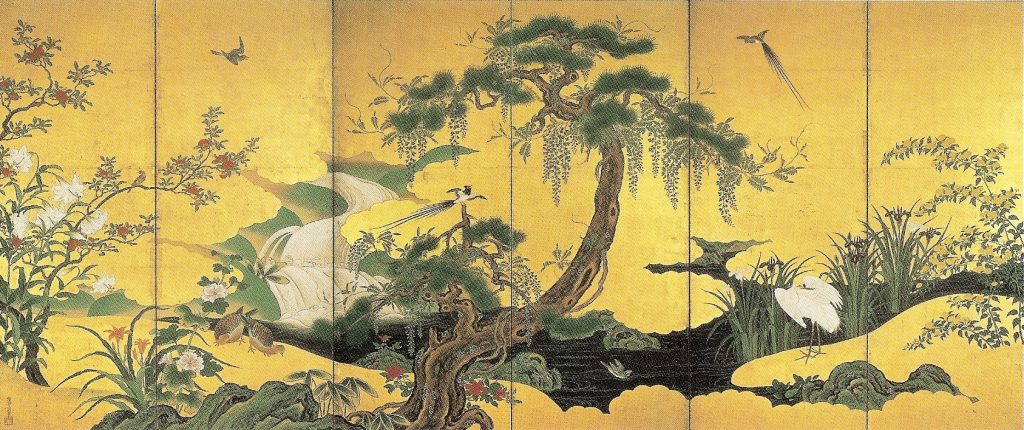
Folding screen with Birds and Flowers of Spring and Summer by Kano Eino, a 17th Century Edo Period Japanese painter. [Source – Wikipedia]

A fabulous poet, known for his Haikus, Basho wanders giving voice to nature, the moon, the earth, the seasons, the rain, the monkey, the dragonfly, the cicada, and everything that he observes.

He paints his dreams in the air; the flora breathes that air and blooms like a dream.

Let us go and learn this art from the master himself.

Falling sick on a journey

My dream goes wandering

Over a field of dried grass.

Basho has fallen sick, he is old now, this haiku is usually considered as his farewell poem, but our journey has just started, we need to travel back a few more years.

Portrait of Bashō by Hokusai, late 18th century. [Source – Wikipedia Commons]

Teeth sensitive to the sand

In salad greens–

I’m getting old.

He is funny, oh, but let us keep going back in time for we need to learn the art of painting dreams in the air, remember. Stay focused!

The rough sea

Stretching out towards Sado

The Milky Way.

Sado is a city in Japan’s Sado Island and Basho travels there to witness the vast sea and the endless sky.

Look, at night the sea becomes a mirror for our galaxy.

Seasons come and go, each one is beautifully recorded in Japanese poetry; Kigo, the representation of and the reference to the seasons is still a part of Japanese culture and literature.

Different seasons, different Bashos –

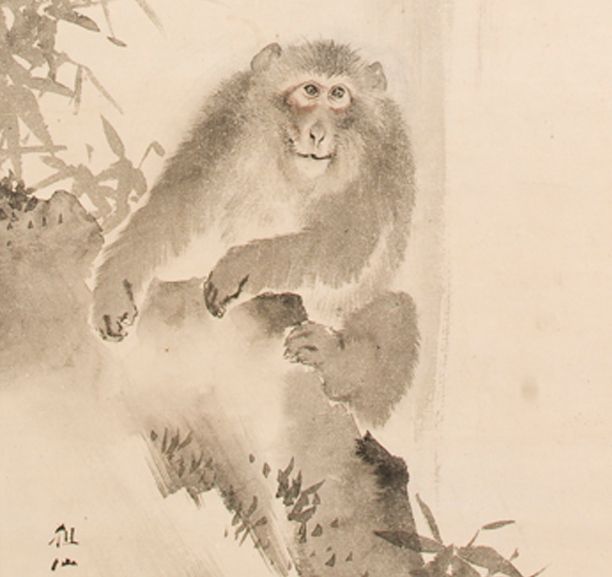
First winter rain-

Even the monkey

Seems to want a raincoat.

Monkey and Waterfall by Mori Sosen, a Japanese Edo Period painter, 1747 – 1821), Honolulu Museum of Art. [Source – bing.com]

Now then, let’s go out

To enjoy the snow … until

I slip and fall!

 Print 16 Kanbara, from  The Fifty-three Stations of the Tōkaidō, by Hiroshige, a Japanese Edo Period artist. [Source – Wikipedia Commons]

First cherry

Budding

By peach blossoms.


***

The summer grasses.

All that remains

Of warriors’ dreams.

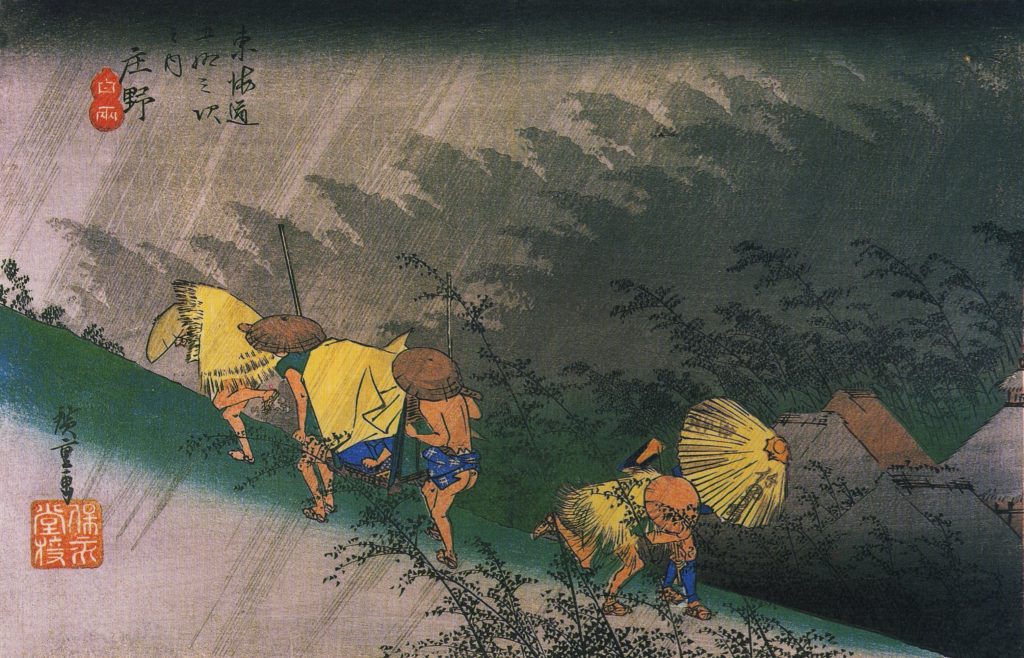
Travellers surprised by sudden rain, by Hiroshige. [Source – Wikipedia Commons]

Spring rain

Leaking through the roof

Dripping from the wasps’ nest.

***

Autumn moonlight-

A worm digs silently

Into the chestnut.

Basho, Basho, Basho… you have captured it, you just did, a moment in eternity.

Every worm digging every chestnut tree in every autumn in the cool moonlight is this very worm. It will be living forever now.

First day of spring–

I keep thinking about

The end of autumn.

***

Winter garden,

The moon thinned to a thread,

Insects singing.

“The moon thinned to a thread” yet beautiful and bright, busy telling stories.

Winter solitude–

In a world of one color

The sound of wind.

Such an arduous journey…

Taking a nap,

Feet planted

Against a cool wall.

…but Basho’s right, nature reassures us of what lies ahead… the balmy moon.

Wind Blown Grass Across the Moon, by Hiroshige. [Source – Wikipedia Commons]

A field of cotton

As if the moon

Had flowered.

***

Moonlight slanting

Through the bamboo grove;

A cuckoo crying.

***

From time to time

The clouds give rest

To the moon-beholders.

“Can you hear it, the cicada, the dragonfly and the skylark? Free beings!” Yes, I can Basho, yes I can.

A cicada shell;

It sang itself

Utterly away.

***

Midfield,

Attached to nothing,

The skylark singing.

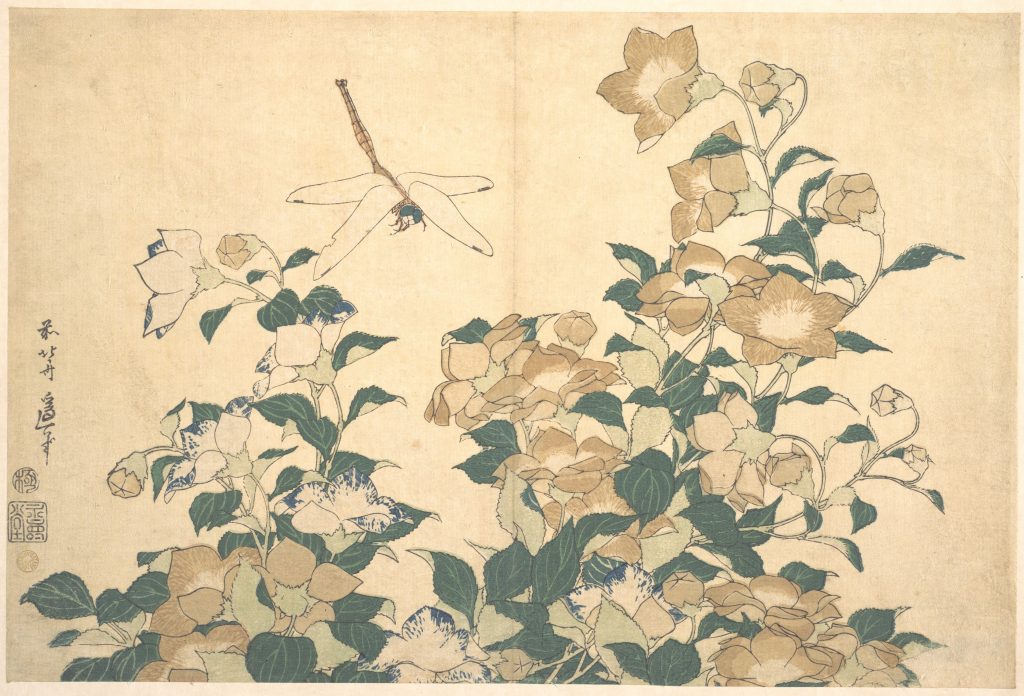
Dragonfly and Bellflower by Hokusai, a Japanese Edo Period artist. [Source – The Met Museum]

The dragonfly

Can’t quite land

On that blade of grass.

***

Stillness–

The cicada’s cry

Drills into the rocks.

We climb the mountain and reach an old village.

This old village–

Not a single house

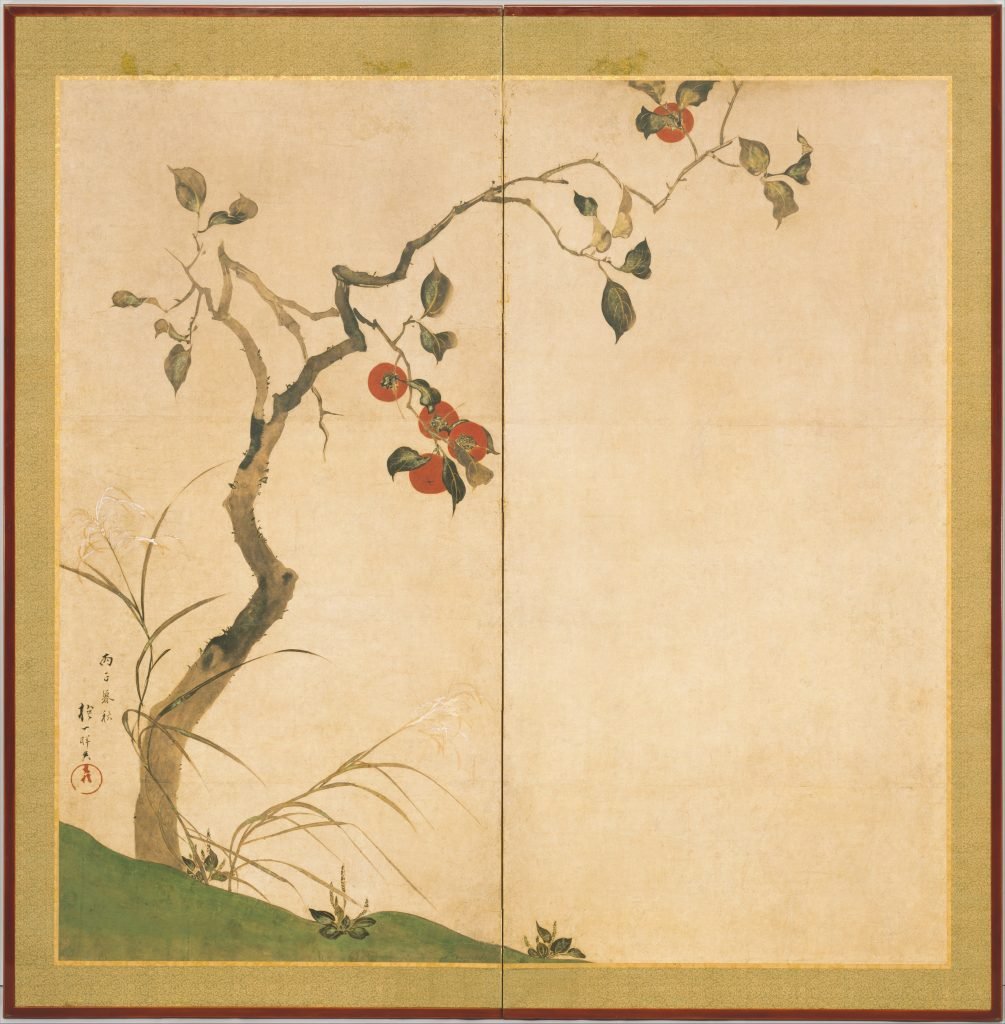
Without persimmon trees.

Persimmon Tree by Sakai Hoitsu, a Japanese Edo Period painter. [Source – The Met Museum]

After some rest, we now resume our journey. Oh, Basho is stopping again to sit by the pond, but why I am wondering?

Wait, is this the place where he will pen his most famous haiku that has occupied the minds of a legion of poets and critics… yes, it is.

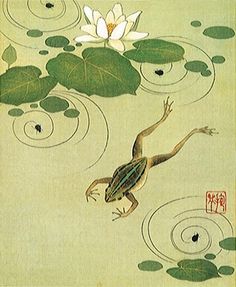
An ancient pond

A frog jumps in

The splash of water.

Frog by Sakai Hoitsu. [Source – flowerofliving.com]

I heard it too, the splash of water, you all must have heard it as well, somewhere, sometime… here, right now the frog’s jump turned the clock back, ending the journey, bringing me to the present.

That ancient pond of time glimmered with stories abound and I was in one, the frog living its routine life made me surrender to the present moment and splash, I returned back.

Basho’s work, what a wonderful portal to the enchanted dream that can be perceived anytime, by anyone…

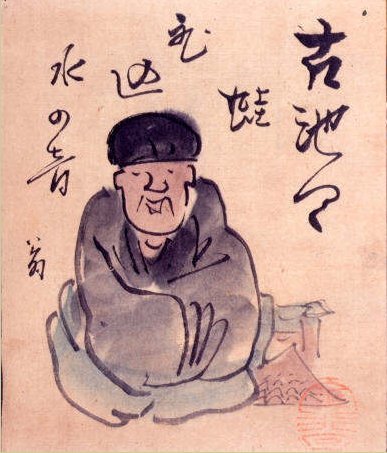
Basho with his frog poem by Yokoi Kinkoku, a Japanese Edo Period artist and monk. [Source – Wikipedia Commons]

Let me bid adieu to you all with another glorious haiku of his. Basho!

How admirable!

To see lightning and not think

Life is fleeting.


Other Haiku Posts

Violets

Haiku Mandala

Moon, Moon, Moon, Moonlight

Live And Rise

Cid Corman’s Blue Aerogrammes


Weekly Newsletter

A weekly dose of stories! Get the posts from the Chiming Stories in your inbox and read it when you can. Subscribe now, it is free!

This field is required.

Chapter II: Chiming Stories

I started blogging back in the year 2011 following my brother’s lead, unaware of the world of bloggers, without any plan of action, happy simply to write one, happy to share my stories on Home Chimes.

This is what I wrote in my introduction earlier-

“I dreamed of Home Chimes a long time back with my eyes open. Since then, I am on a journey to understand that dream.”

“I dreamed of Home Chimes…”
Image by Comfreak from Pixabay

It was indeed like a dream because I do not remember why I came up with this particular name. I remember that I wanted it to do something with the word ‘chimes’, but that was it.

After I selected the name and started blogging, I found out that there used to be a magazine in the late 19th century in London that was also named Home Chimes. And that it went out of publication around the year 1894. You can read about this magazine here. 

I was very thrilled to know that Jerome K Jerome was amongst the many writers who got their work published in this magazine. Such a wonderful thing it is, I thought. But then this new information made me wonder if I should change the name of my blog to be truly authentic.

I did not change it. The happy coincidence forced me to keep exploring the hidden meaning behind Home Chimes and to keep writing about the stories I became a part of.

From anecdotes to spiritual thoughts, from poems to film reviews, from comic strips to scientific phenomenon, I wrote about all that made me “curiouser and curiouser”. It started as, has stayed and will always be a lovely place – Home Chimes.

One fine day a simmering thought spoke to me, the devotion with which I write these blog entries and the joy that it gives me, it said, is immense, and I realised then that the blog holds a very special place in my life. Gleefully, I stepped forward. Neither a hobby nor a medium, my blog should be simply what I do.

I am a writer, I love the art of storytelling. And like lightening it hit me that it is time now to turn to the second chapter – Chiming Stories.

Tales of this and that world.
Image by PublicDomainPictures from Pixabay

Dear all, with much gusto I have begun and I promise that the second chapter would be a wonderful one. Tales of this and that world, of today and tomorrow… just to give colour to your thoughts and add rhythm to your flying time, ‘Chiming Stories’ is here to tell you a story. Oh! And a good chunk of it will be about the lotus-eyed one, because I love him.

From my dear old Blogger I have now shifted to the fantastic WordPress, the sound reason behind it is – I wanted a high-quality website and the complete freedom to create it.

Both the responsibility and risk are mine now. Voila!

“O muse, bless me that I write well and become the best in chiming stories.”

Amen! Ya-hoy!

P.s. – I apologise for the glitches you must have noticed (and will notice in the coming weeks as well); it is because I am still in the process of developing this website and am doing it all by myself, kindly bear with me. Thanks!

Live and Rise

Summer night–

even the stars

are whispering to each other.

– Haiku by Kobayashi Issa

And they are whispering, twinkling blue and green, sharing the secret we all know… that love is in the air.

The summer earth blooms for it is in love, the summer sky sways for it is in love.

A promise is made with joy in the eyes by every soul, promise to live and rise.  

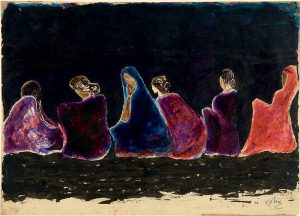
Man Before the Infinite – by Rufino Tamayo (1950).

Weekly Newsletter

A weekly dose of stories! Get the posts from the Chiming Stories in your inbox and read it when you can. Subscribe now, it is free!

This field is required.

Recent Posts

रंगों की तरंग/ The Wave of Colours

शॉर्ट कविता/ Short Poem
Holi Festival
[Source – Indiaculturetree.com]

रंगों की तरंग

रंगों की तरंग

बस इतना कहने उठी,

की ये जो अस्मा है,

रंगो के लिए बना है।

*

Translation –  The Wave of Colours  

The wave of colours

Rose to say

That this sky is

Meant to be coloured.   

*


Weekly Newsletters

A weekly dose of stories! Get the posts from the Chiming Stories in your inbox and read it when you can. Subscribe now, it is free!

This field is required.

Recent Posts


Jailed

Golden me and the golden light.
[Source – Pixabay]

Four giant steps forward and six steps sideways, a room with no window, locked in it forever.

The thoughts buzz tirelessly, not letting the music of a quiet mind to settle.

The walls are painted daily, it shouts ‘I blame you’ boldly.

But there is light, it comes from underneath the door, sometimes mixed with the chirping of the birds. It fills the jail with a happy calm light. It does.

And the key, kept on a tiny table beside the door, never moves itself to unlock the door. It just waits.

Amusingly, the happy calm light never ceases to be. It wishes us to breakout.


Weekly Newsletter

A weekly dose of stories! Get the posts from the Chiming Stories in your inbox and read it when you can. Subscribe now, it is free!

This field is required.

Recent Posts


The Truth is Pale Blue and its Apparent Size is Equal to a Dot

Pale Blue Dot by Voyager 1 Space Probe.
[Source – Wikimedia Commons]

We, this people, on this small and drifting planet

Whose hands can strike with such abandon

That in a twinkling, life is sapped from the living

Yet those same hands can touch with such healing, irresistible tenderness

That the haughty neck is happy to bow

And the proud back is glad to bend

Out of such chaos, of such contradiction

We learn that we are neither devils nor divines  

*

This excerpt is from a refined piece of poem by Maya Angelou which shared then and is sharing still the truth.

We all call a pale blue dot in this magnanimous universe our home, and then we forget. For what else can it be if not weak memory that we repeat the same blunders and invite catastrophes?

We are full of contradictions, we are the chaos, we are neither devils nor divines… and yet we are the miraculous, the true wonder of this world. Why?

Because we can think, we can create, we can sing and dance, we can understand the science behind everything, and we can write a poem to share with everyone A Brave and Startling Truth.

Because deep down all each one of us want is peace. Yes, but only if we remember… if we remember to think.

*

When we come to it

We, this people, on this wayward, floating body

Created on this earth, of this earth

Have the power to fashion for this earth

A climate where every man and every woman

Can live freely without sanctimonious piety

Without crippling fear

When we come to it

We must confess that we are the possible

We are the miraculous, the true wonder of this world

That is when, and only when

We come to it.

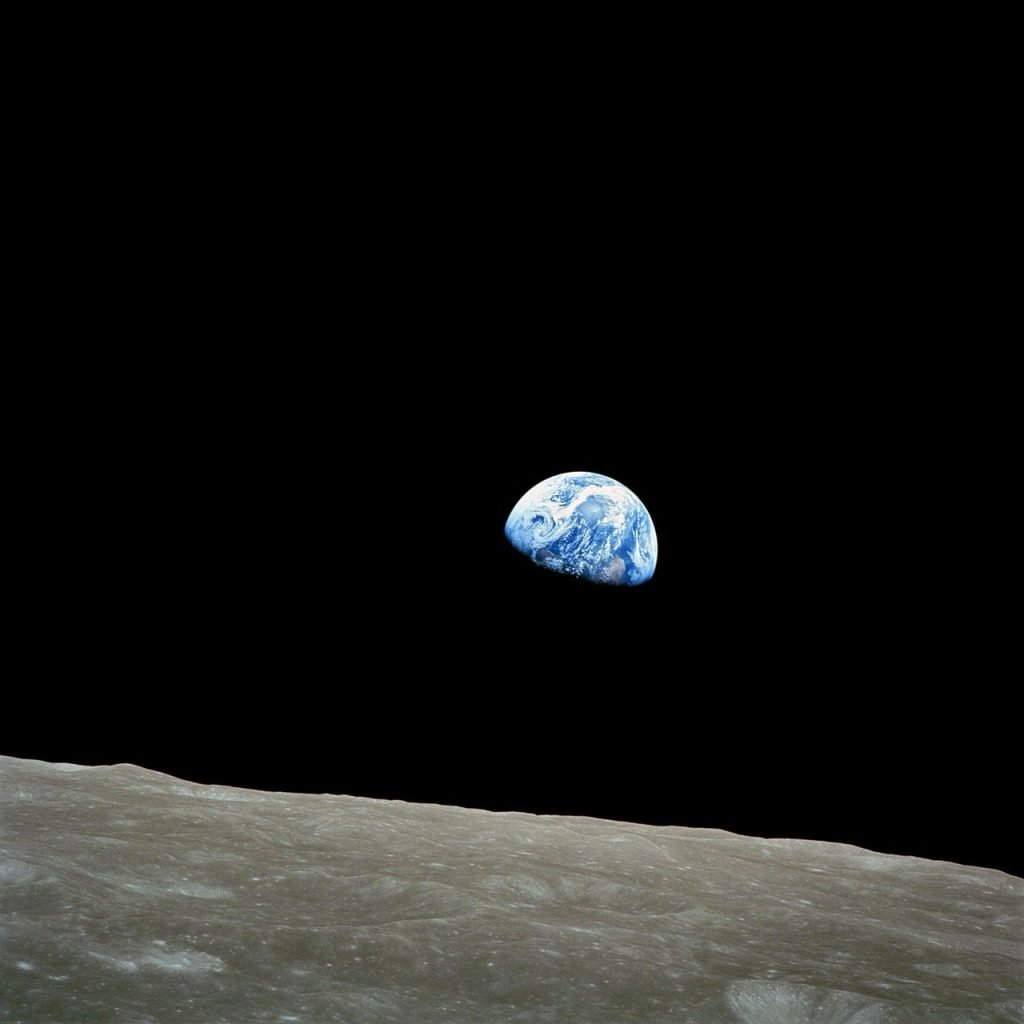
Earth from the surface of moon.
[Image by WikiImages from Pixabay]

Read Maya Angelou’s beautiful poem, A Brave and Startling Truth here.

Know more about our planet, the Pale Blue Dot.

My inspiration for this post – A Brave and Startling Truth: Maya Angelou’s Stunning Humanist Poem That Flew to Space, Inspired by Carl Sagan and Read by Astrophysicist Janna Levin (a fabulous article written by the fabulous Maria Popova).


Weekly Newsletter

A weekly dose of stories! Get the posts from the Chiming Stories in your inbox and read it when you can. Subscribe now, it is free!

This field is required.

Recent Posts


Jazzing the Big Book Look

An office room, yellowish wallpaper, green warn-out yet full of warmth carpet, dark brown wooden chairs, small tables and an old drawing board. The man sitting and illustrating is also jazzing, listening to the melodious record ‘In Walked Bud’, relishing the classic Monk effect.
 
The surprising and free rhythms touch his soul and soothe his forehead wrinkles. Piano teases sweetly, bass and saxophone builds a smoky castle in the air and the drum beats make him spill the rum.
 
He laughs and continues drawing, with two colours maximum, he walks the jaunty jazz path.
Paul Bacon
And he did it till the very end. He was Paul Bacon, an amazing American album and book cover designer and also a jazz musician.
 
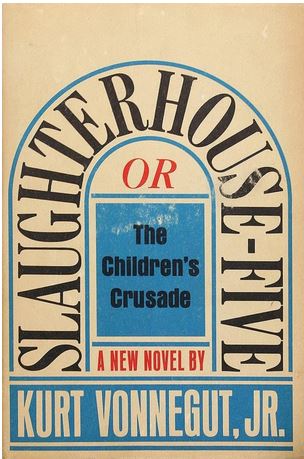
With a decent dose of technology available at that time, he drew all his designs by hand (used photographs for some of his album covers) and his minimalistic book cover style – bold title, author’s name and a symbolic image – known as the ‘Big Book Look’ became famous in the late 50s.
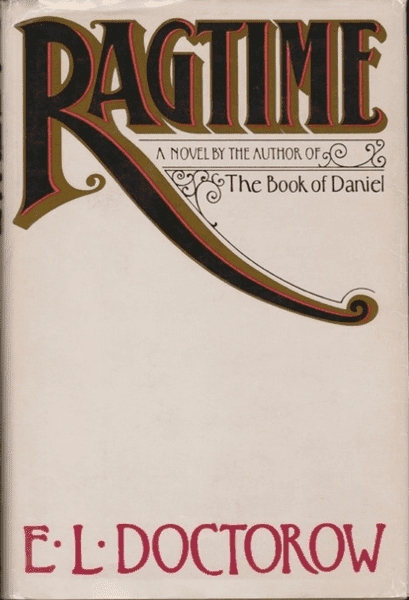
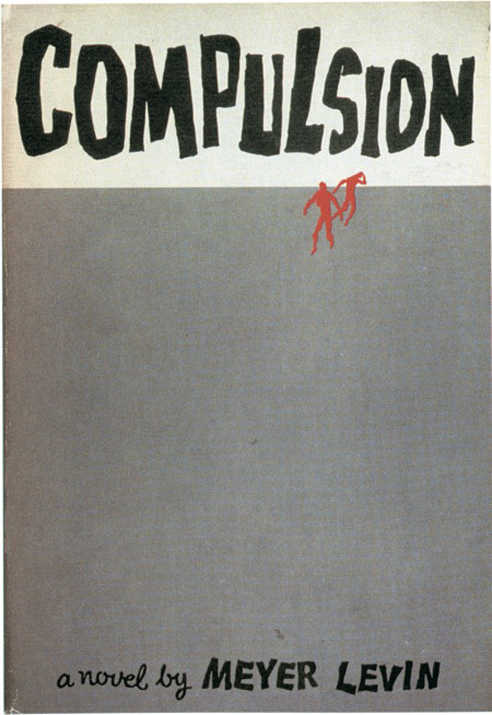
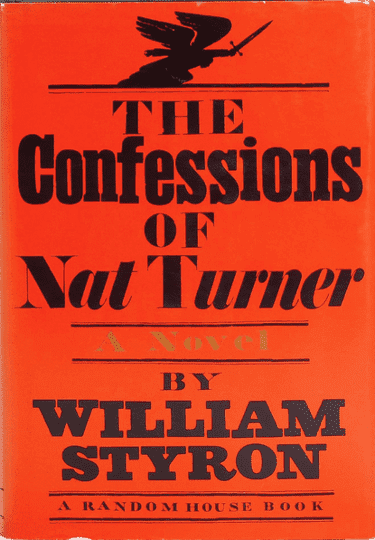
Paul Bacon designed around 6,500 book jackets, some of them are –
 
Giving this crazy classic a crazy touch.
Psychedelic soft colours
A twisted touch.
Visions… on the road.
The ‘R’ sways like a flag. Subtly symbolic.
Intense look. 
And we are cornered. 
American dream, just a fable?
BOLD!
The most beautiful map.
We did?
The Asian saga, part one.
Bold colour for the bold classic.
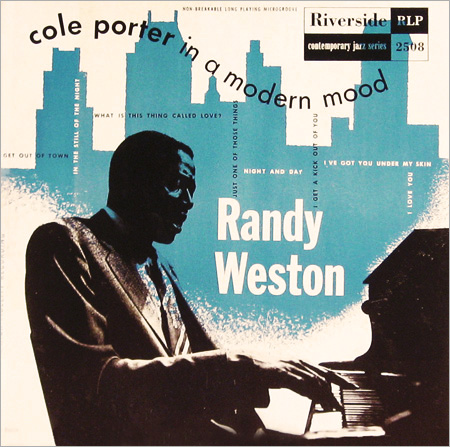
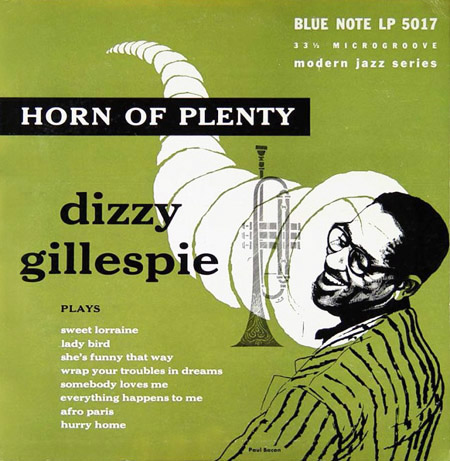
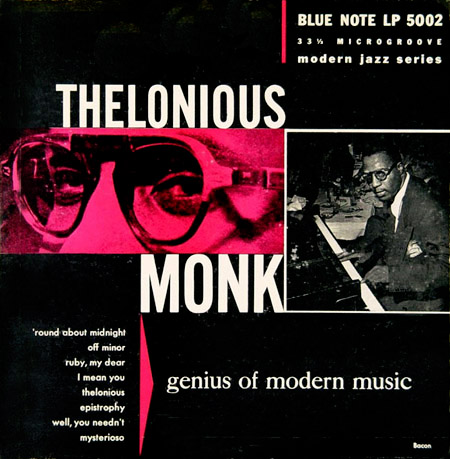
Living in the golden jazz age, attuned to Bebop, Paul breathed his passion for jazz into his illustrations. Apart from the name of the composer, it was upto the designer to catch hold of as many jazz lovers as possible, to reach out and rule.
 
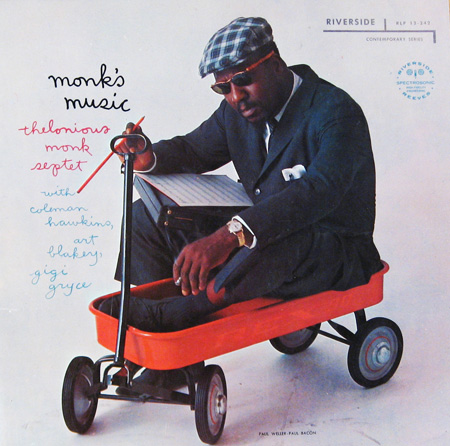
Paul’s magic worked without fail. The album covers reflected the mood of the music enclosed in the round disc beautifully.
 
 
Paul Bacon’s first album cover for the company Riverside.
 
How powerful his work is! All the illustrations are no less than a wonderful jazz composition.
 
Strong and straightforward designs that play the voice of the artist! He carried the charming jazz era within him without any embellishment to glorify it; he was just a true lover of the jazz music.
 
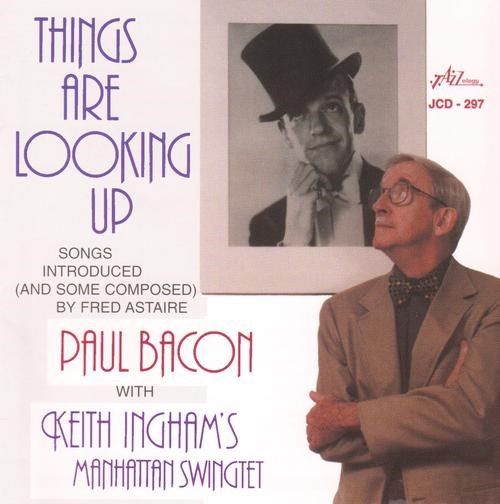
Things are looking up (2002)
 – one of Paul Bacon’s two albums.
To read more about the fabulous Paul Jazz Bacon, click here.
 
Check out the track In Walked Bud, by Thelonious Monk here.  
 
All images from – jazzwax.com


Weekly Newsletter

A weekly dose of stories! Get the posts from the Chiming Stories in your inbox and read it when you can. Subscribe now, it is free!

This field is required.

Recent Posts