Jagriti Rumi
Today with the Clouds
Fictive Short Feature


*
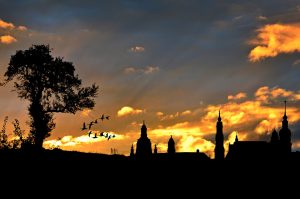
I say the clouds by nature are very funky and awe-inspiring. I enjoy watching them pass; just a simple hello or a nod is appreciated. They swirl and sway, move in waves and dance every single time, yet they maintain their uniqueness. I mean something which can be counted as a routine, an unchanging event, is actually a very grand and beautiful journey.
Only time might be able to answer how many eyes have dreamt and seen their secret mysteries getting a platform on the clouds – a bunch of flowers, a giraffe eating tree leaves, a cute rabbit, a candy bar, a bicycle, a boat, a pretty face, a simple smile – everything floating silently, invisible to others but clear to those happy eyes.
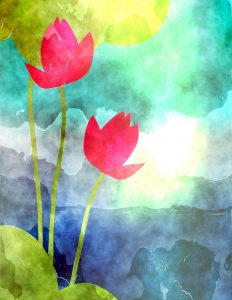
I say the clouds are a blessing in disguise. They are what freedom might look if given a form. I often try to paint them, to capture them, to be like them… a far-fetched dream. I am trying and I’ll continue.
I tell you there is some sort of sublime never-ending party that is going on up there. I have a proof… I didn’t believe it until I shared it and got to know that many, many, many people know about it too. Some of them have, like me, heard the clouds laugh… not just giggle but burst into laughter.
Others talk about the clouds as singers, dancers, good listeners, painters; a well-known scientist had said once that the clouds have the coolest particles, meaning that by nature they are funny and calm. Clouds also like to play. But more than anything, they are profound… I mean they have depth.
Wise people say that all the answers become clear in the end… it is now believed that ‘all the answers become clear’ because they are hidden in the clear looking clouds. So I guess one should not wait till the end and just keep looking. I am going on the hill top today… let’s see if I get any answers… nevertheless, I’ll have a good reason to burst into laughter.
*

[Image – Pixabay]
Weekly Newsletter
Recent Posts
It Came Quietly To Me
Poem
Weekly Newsletter
Recent Posts
Death
Duma Xan

©Warner Bros. Pictures
Xan’s life changed forever. He didn’t change his path; he walked on the path that was meant for him.
Everything revealed slowly and transformed him and made him aware. Xan cared for Duma, loved Duma to an extent that he started understanding him completely.
Though he accepted it only at the last moment, he somewhere always knew that Duma deserves to live a free life.
The laughs, the games, the tears, the silent talks were soon going to be nothing but shared moments stored in an old box kept somewhere in the past.
All Xan knew was that he could open that box anytime and relive those memories – memories of his late father and his lovely friend, Duma.
Xan often thought about Duma and the time they said goodbye to each other. At first, he was skeptical, he thought Duma might be upset with him for leaving, but then, he realised that it was the right thing to do.
He closed his eyes and saw Duma’s eyes –big, beautiful, and alive. Xan was hit by a gust of wind which slowly tried to calm him down and stayed with him until he smiled.
He told himself, ‘Duma must be with his friends right now, going down to the riverside or maybe already there… relaxing under the shade.’

The film is based on a children’s book How it Was with Dooms that tells the true story of a young boy’s friendship with an orphaned Cheetah.
©Warner Bros. Pictures
Duma is sitting on a tree branch, one of his friends is sitting nearby and the other one is strolling in the bushes, just like that.
The sun rays are not falling on Duma, but his eyes are shining nevertheless. He can see Xan.
Watch the trailer now –
While these questions circle uneasily in our minds, “Duma” creates scenes of wonderful adventure. The stalled motorcycle is turned into a wind-driven land yacht. A raft trip on a river involves rapids and crocodiles. The cheetah itself plays a role in their survival. And the movie takes on an additional depth because Xan is not a cute one-dimensional “family movie” child, and Ripkuna is freed from the usual cliches about noble and helpful wanderers. These are characters free to hold surprises in the real world.
Roger Ebert, the film critic.
Read his review of Duma here.
Weekly Newsletter
Recent Posts
I Forgot
Mixed Fiction


Where are my colours? [Source – Pixabay]
*
I was coming back. In the bus, people sitting attuned in silence, hypnotised to the bone, were no different from me until I looked outside the window with sleepy eyes, swaying without a reason. I wasn’t asleep. Whatever was passing was in a rush and I was in a deep slow-motion, so nothing matched.
A thought came to me and I started pondering over it. Gauged a bit about the thought and would have done more, written a few lines, but I forgot; whether I just forgot the thought or to pen down the thought or both, I don’t know.
It is really funny, the party lights seem to be dancing just because they are in a party. But in that sullen room where a solitary sullen bulb glows, no one dances. Rich place for getting scolded and for discussing the future. Who listens when the elders talk? Who listens when anyone talks?
My mind keeps running a never ending tape that I have to adhere to. Yet another thought that I wanted to work on, but I didn’t because of two reasons – I couldn’t find a pen and then I simply forgot to. Hah!
Could it be that while you are walking all alone, nothing changes in you, you are naively, accidentally, mistakenly moving with tranquility and when you are a part of a loud ‘what’s up-oh that-like really?’ crowd everything changes in you, you are then surrounded by absolute confusion and fear?
Changes that crawl and form a labyrinth inside, of which you stay completely unaware.
It can happen. I completely forgot that it can.
What I remember though is that I should make a card for my uncle and auntie. There is no occasion, but then cards aren’t meant only for some special, grand celebrations alone.
“Where are my colours?” Yes, I remember that and so one day I began. I half did it; learnt a good lesson though. Here it is in parts – 1) even if you are not a 10 year old, you can still spill water and make a fabulous mess and 2) (the best one) the comfort of your bed and using water colours is not at all a good combination.
Soon million tiny things around wage a war against you without even moving and you are certainly helpless. You’ll then not find the scissors, the only clean brush, pencil or eraser and as soon as you get up to take a stand, things fall and laugh at you.
My hands… they are muddy green and bluish… am I an alien?
Using water colours mean getting your hands dirty. Oh! This didn’t bother me when I was a kid. I very often made cards for all my friends, getting my hands dirty was never a problem. I guess, I just forgot this.
*
Weekly Newsletter
Recent Posts
Earth Day Every Day!
![]() |
| Photo courtesy – Google |
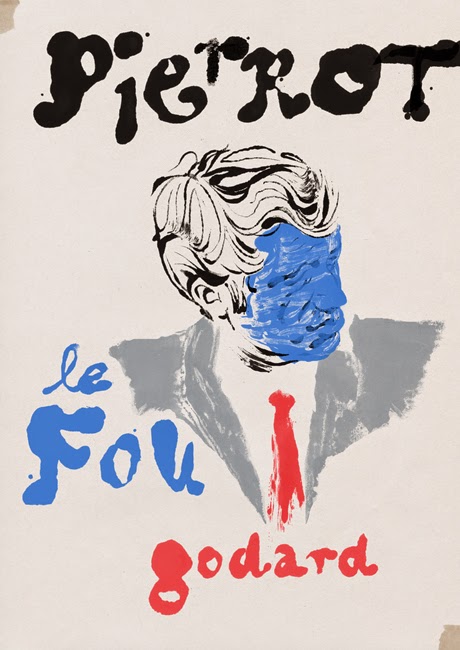
Pierrot Le Fou
Review-Cum-Commentary
![]() |
The Poster of Pierrot Le Fou, a film by Jean-Luc Godard |
![]() |
| So happy! |
![]() |
| So excited! |
![]() |
| Pierrot, busy reading. |
![]() |
| This is what he was reading. |
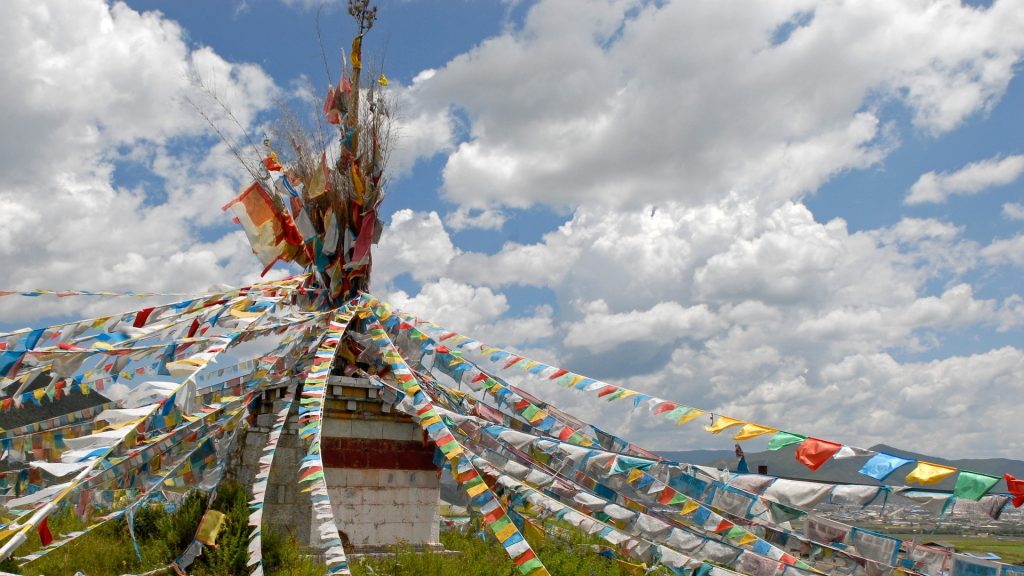
I Wish to SEE Tibet
Book Review

Certain things are meant to be, but while we are living a moment, we rarely understand this beautiful phenomenon.
I am calling it a beautiful phenomenon because sooner or later we are able to gauge its magnanimity and purity. Everything simply falls into place.
Early last year, I bought a book from a second hand street bookshop. The cover page captured my attention and reading a few lines here and there, I told myself that I am in for a treat. And happily, I wasn’t wrong.
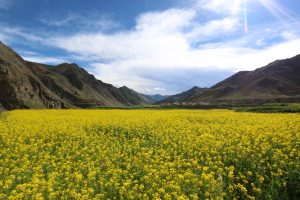
‘The last time I saw Tibet’ took me to the land of the gods, to an eternal pilgrimage, to witness the serene beauty of the pious land and gave me a humbling experience.
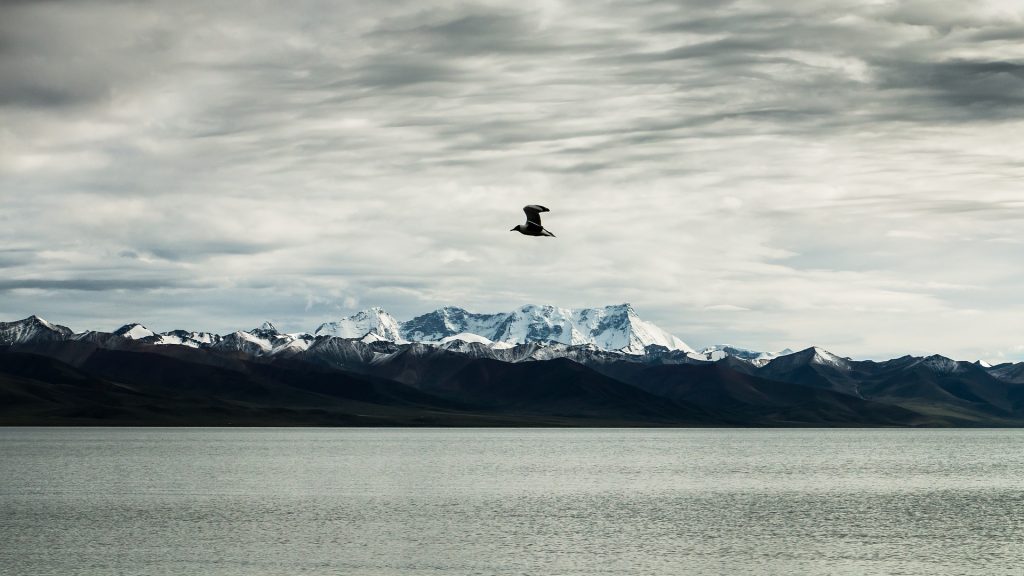
Yes, the book is magical. There were times when a mere description of the icy winds blowing in a small village, Thokchen, at a height of almost 15,700 feet, made me quiver and a few lines about the picturesque valley that the author gazed upon left me in a trance.
His visits to the ancient and grand monasteries – Drepung, Sera and Ganden, to the fabulous Jokhang temple in Lhasa, to the royal palaces – Potala and Norbulingka – of His Holiness the Fourteenth Dalai Lama and especially his journey to the Kailashnath and Mansarovar offered me a spiritual spectacle, a chance to feel the presence of the Supreme One.
*

This fabulous travelogue by Bimal Dey along with presenting the reader with the wonderful scenic beauty of Tibet talks about its rich culture, about the mystical Lamas, about the simple, poor but happy people of Tibet.
What makes his journey to Tibet an immensely special tale is the fact that he traveled in the year 1956, when he was only 16, along with a group of lamas and theirs was the last group of pilgrims to do so until the dawn of the 21st century.

The glory of Tibet, the land that accepted Buddhism wholly and spread its enlightening knowledge everywhere in the world, is now a tale of the past. With the Revered Dalai Lama living a life of a refugee in India since 1959 and the maximum number of Tibetan lamas either living in India or abroad, the spirit of Tibet has weakened.
Tibet, under the rule of China, is not what it was. Can development now seen in Tibet be acknowledged when the soul of the land is quietly being crushed every day?
The number of monasteries destroyed in the past, the so called Cultural Revolution that took place in Tibet, the bloodshed of countless monks and nuns, the sudden disappearances of the religious leaders, the number of Tibetans who have given into self-immolation will shock you, it will dishearten you.
I was aware about the plight of the Tibetans before I read this book. Reading about their on-going fight troubled me as I felt helpless. But slowly something brought a change, my efforts to understand Buddhism through whatever means possible, made me realize that Buddhahood is present in everyone, it cannot be conquered, it cannot be oppressed.
Rather, if one starts recognizing it, such a person can achieve complete freedom. And I concluded and told myself that Tibet is free.
*

‘The last time I saw Tibet’ was meant to be read by me because after finishing this book I again felt that Tibet is free. How lovely this feeling is, how empowering! Such is the positivity with which this book has been written.
All the facts will defy this statement at the moment, but Tibet, its culture and its religion is not about facts, it is about the spiritual connection with the Ultimate One, with the Lord Buddha, the enlightened one, whose blessings are always there with every free mind.
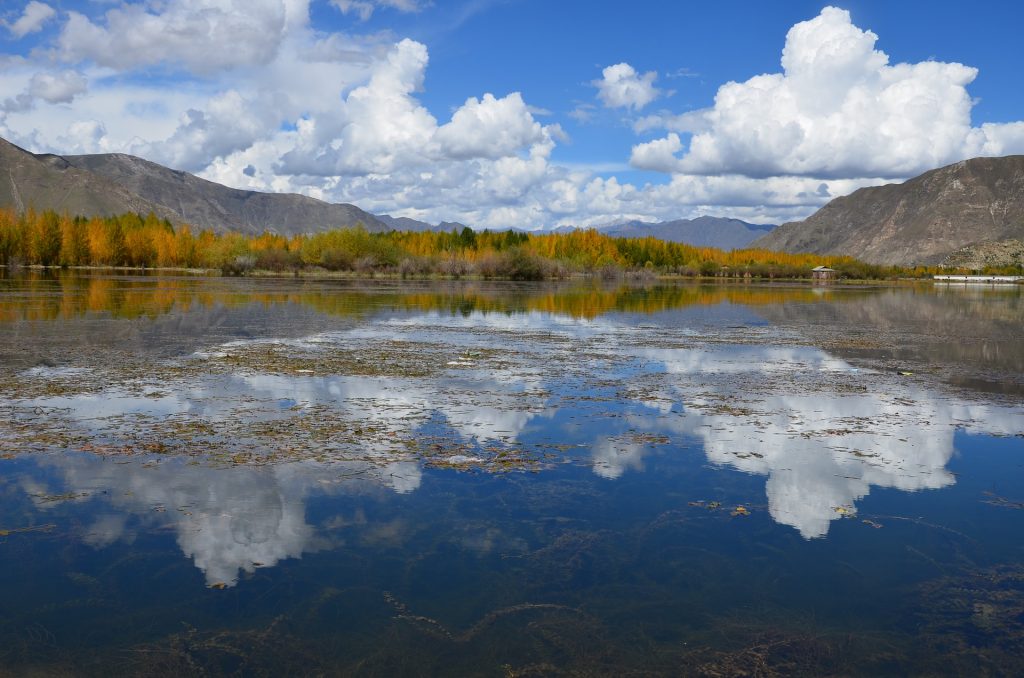
Caught in the political drama some may not be able to understand this, Tibet –the roof of the world, where gods reside- is, was and will remain free.

Time, no matter years or decades, will seal this thought with grandeur that the peaceful land of Tibet deserves.
*

Also, read about the history of Tibet here.
Weekly Newsletter
Recent Posts