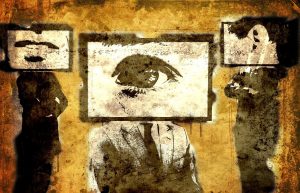
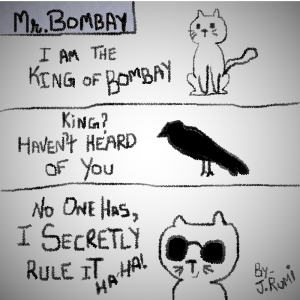
Tell me now of the very soul that look alike, look alike
Do you know the stranglehold covering their eyes?
If I call on every soul in the land, on the moon
Tell me if I’ll ever know a blessing in disguise…
The curse ruled from the underground, down by the shore
And their hope grew with a hunger to live unlike before
And the curse ruled from the underground, down by the shore
And their hope grew with a hunger to live unlike before…
– The Curse, by Agnes Obel
*
Listen to the song The Curse by Agnes Obel before reading further –
Humanity as an unabridged version, dancing forwards, backwards, forwards, in joy, in pain, walking down the lane is moving too fast and swaying too slow, thought she and wrote it on the blackboard. The white words looked silly but good. She gave a date to this thought and it made a ‘gong’ sound that ricocheted for fun.
The curse is the boon, thought she, but only once in a while when seen thus.
Retracing becomes easier than stepping forth and so one forgets.
And in the search for meaning when they get tired, they choose to imbibe what they hear from others, what they find familiar.
The familiar good that is, not the familiar grim; nevertheless, it is an overwhelming experience, thought she.
Just so you know the underlying emotion here when in search, is that of love – love that doesn’t chase meaning… for it owns it. A simple smile, gesture, hello-hi wave, acknowledging the tata-goodbye, is love triumphing over time.
Time notices it and smiles, each time just so you know. And she followed this thought and it withered away, it withered peacefully.
Now you take this cool-cool mountain air to the riverside and let it gush, let it fall as droplets. Sit by the riverside, fall and rise as someone else who is thrilled to continue the search.
*
So let the narrative grow
like a rhizome, spreading then like Time
Without boundaries, fast and slow.
Here’s the official video of the song The Curse –
*
“The Curse” is a song I wrote after I read the book Thinking, Fast and Slow by Daniel Kahneman. It’s a book about the mind, and there is a chapter in the book about narrative fallacies, and I thought that was really interesting – how we construct these narratives of our own lives, even though so many things, almost anything that happens, is the result of a lot of things outside of our own control and doesn’t have any meaning – it’s completely accidental. But our minds want to put meaning into everything and to make sense of them. We’re like these “meaning machines” – human beings.
I thought it was really beautiful and interesting, because in a way, he says it’s why we invented math, music, science, and poetry: this need for meaning. And religion, and so forth. But there is also the flip side, why we have all these wars and these hardcore ideas of national identity. That you can go out and kill other people. It’s a blessing and it’s a curse. I just thought it was interesting, and then I wrote this song about it. Some people couldn’t figure out if it was a blessing or a curse.
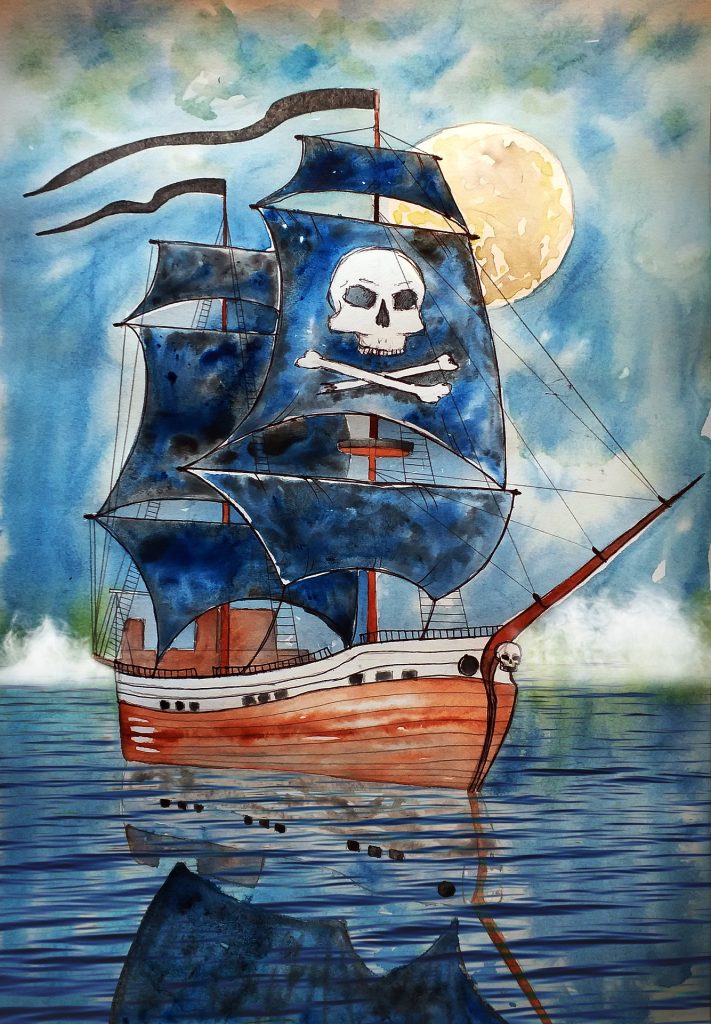
Pasha de Roos decides very early, it is the late 1800s, that he wants to become a pirate; a pirate captain, sans a wooden leg, eye-patch, bandana or even a pa-pa-parrot. Yeah! He loves turtles instead and there he goes, buying one old tortoise from a simpleton near the Tomato Market.
Oh, the Tomato Market is famous for many things like moringa, escarole, brussels sprouts, and you know…
Fredric-O, Ben, Pappy, Charles Vane, Jarrico and Inderpal are more or less ready to join Pasha de Roos’ troupe. He feels jittery these days, Pasha does, as he is not sure if this dream of his will ever come true.
Ignoring his family business of tomato farming is easy as his family has ousted him forever. Confident, Pasha is on the way back to his ancestral house to steal his great grandmother’s jewels, see, right, as otherwise how will he pay for the ship he bought last-to-last month from that simpleton?
Inderpal ditches Pasha de Roos; he weeps his heart out, but he, Inderpal, leaves nevertheless to work as a clerk in the town office. He promises to support Pasha de Roos emotionally.
*
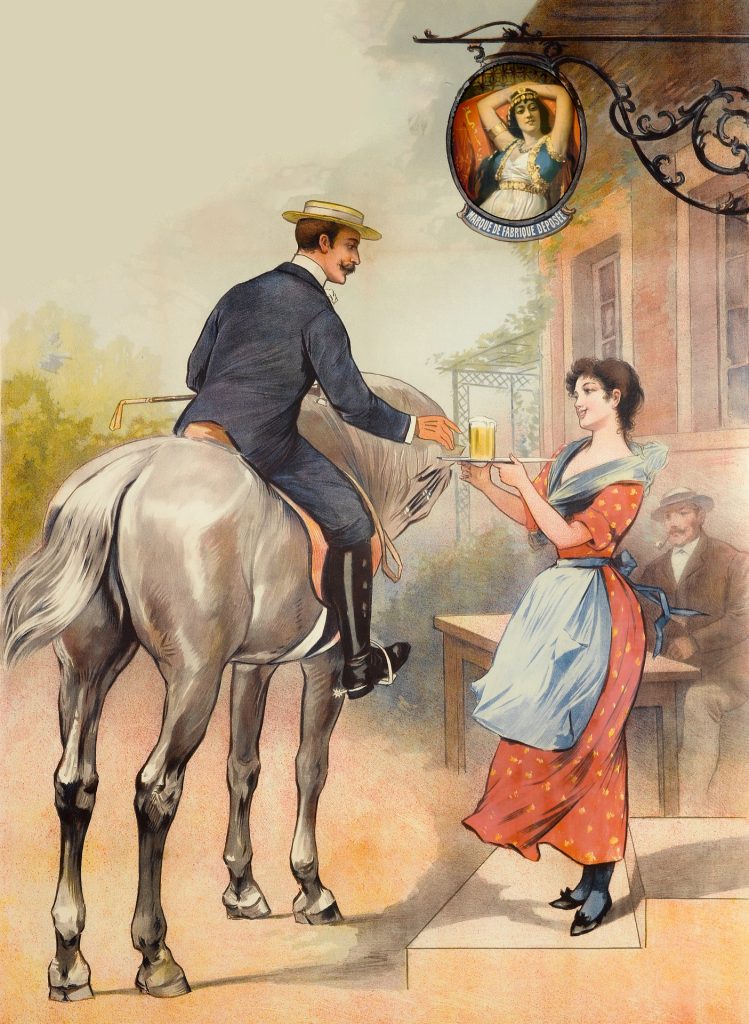
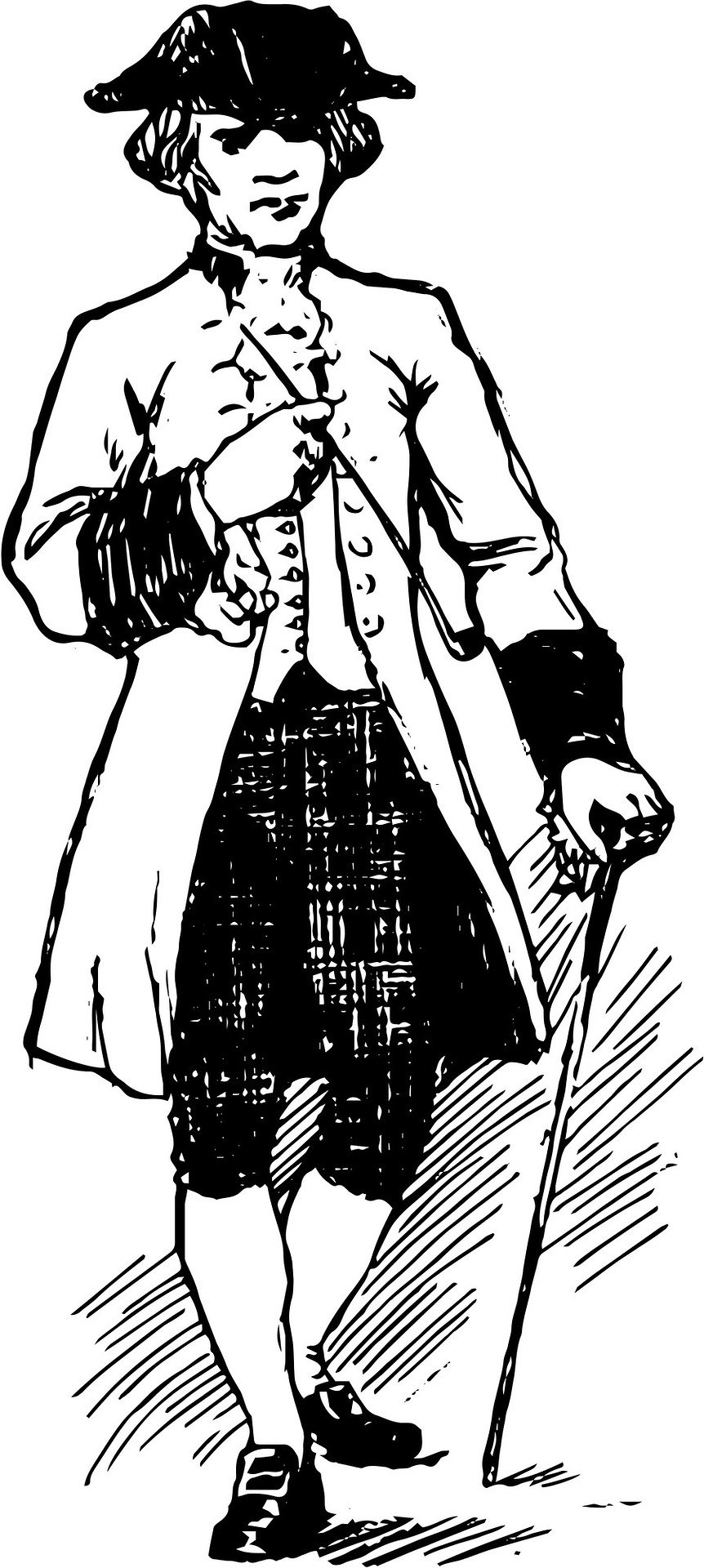
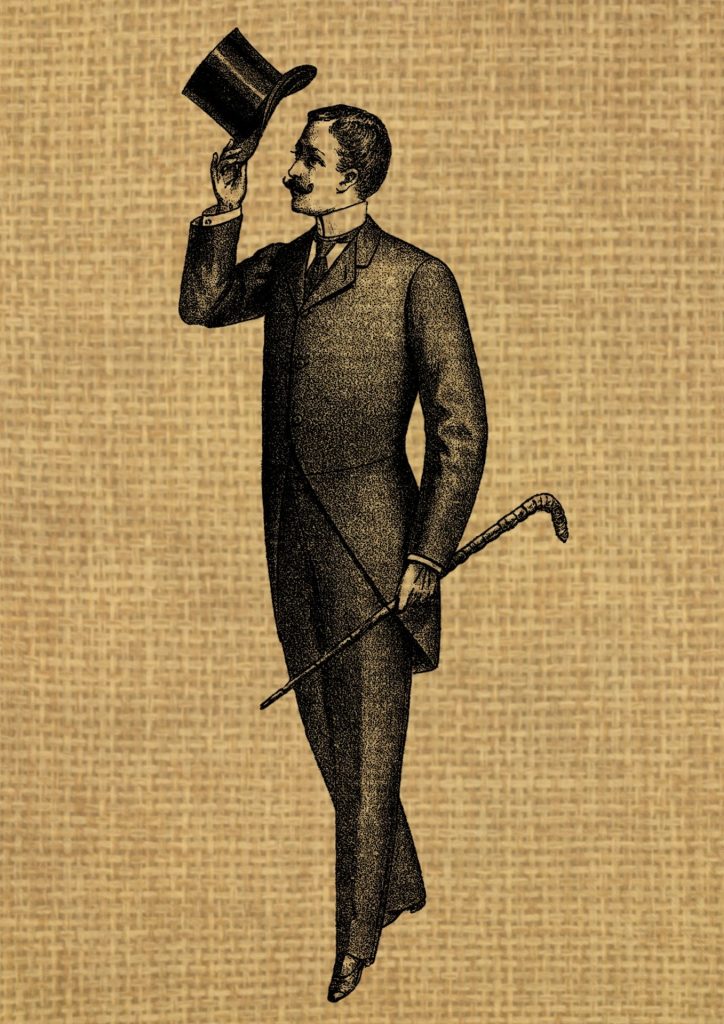
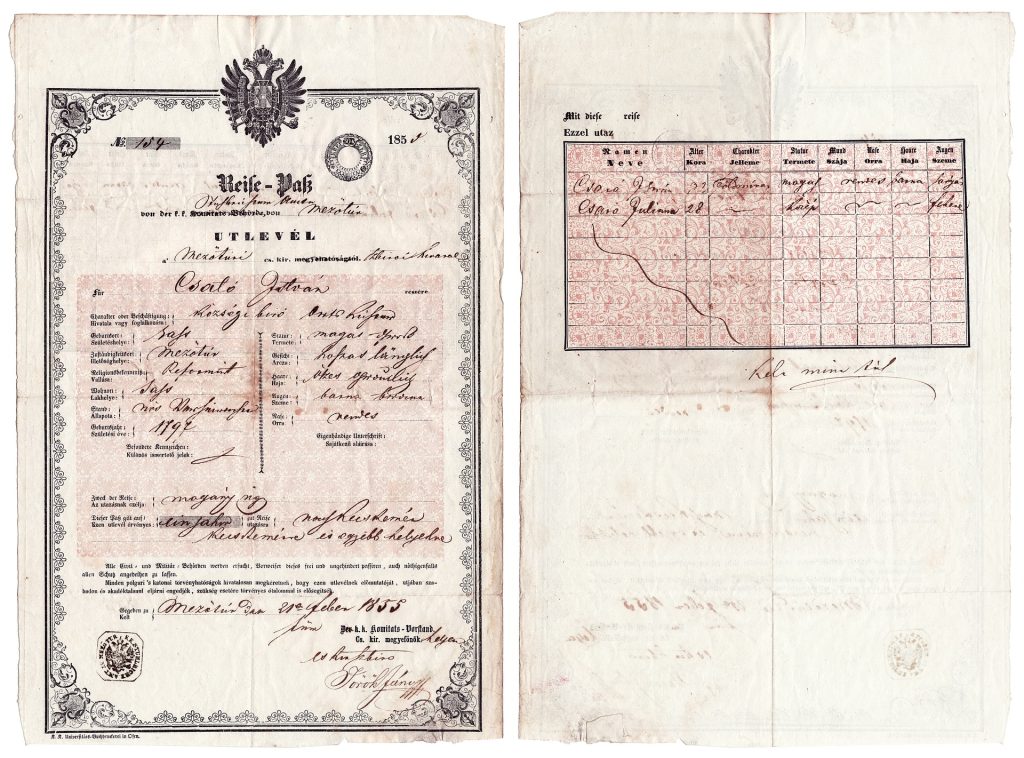
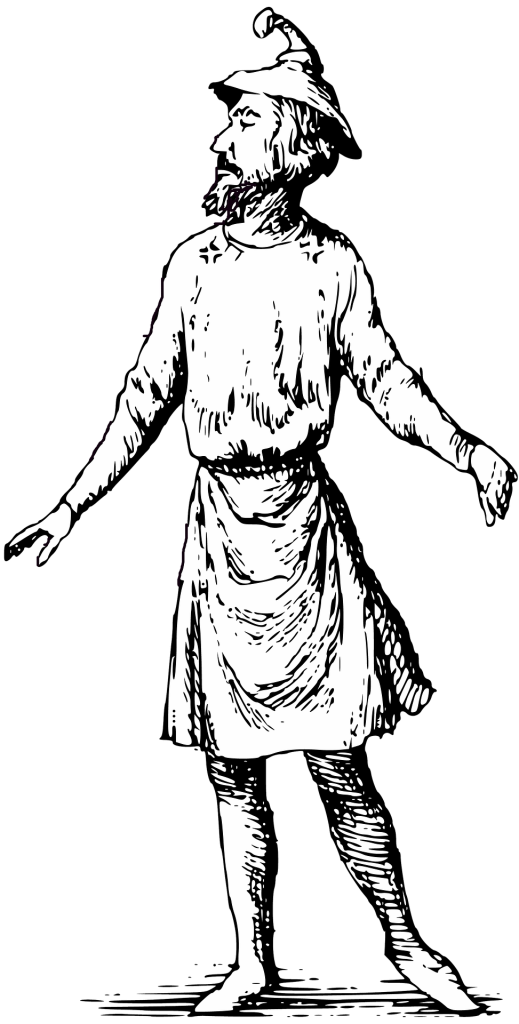
Please focus on Inderpal who is smoking cigar in the background.Merci! [Source – Pixabay]
Times are changing, pirating is not desired by many, this deadly joyful dangerous profession is dying, is dead already, say many sailors.
The simpleton before selling his ship shared such concerns about pirating with Pasha de Roos that a one-legged person with an eye patch and a parrot on his shoulder standing nearby died on the spot.
“Let us just go anyway, eh, let us just go anyway, eh, let us just go anyway, eh”, cries Pappy and the whole pub agrees with him. Pasha de Roos is addressing the wild crowd, hear him out once.
“Oh, come on, who says pirates are not reigning the seas anymore, eh, eh, who says the ocean bed has no riches, eh, eh, ha-ha-ha-ha-ha-ha.”
Everyone’s laughing now.
“Listen, tomorrow, I will file papers, me friend one clerk, old buddy, I say, let the clerks rule the seas on papery paper and we shall rule it for real, eh, eh, ha-ha-ha-ha-ha-ha-ha… I will take stamped permission to sail, ay, we will leave tomorrow around the lunch break time, eh, eh, ha-ha-ha-ha-ha-ha-ha.”
They have gone silent suddenly, the crowd.
And we time travel, it is 1955. Hmm!
Cyril Northcote Parkinson, a naval historian, has published an essay in The Economist. Pasha de Roos cannot, but we shall read about it now –
*
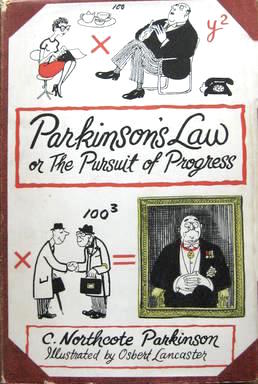
First edition cover of the book Parkinson’s Law (1958) [Source – Wikipedia]
Parkinson’s law is the observation that public administration, bureaucracy and officialdom expands, regardless of the amount of work to be done. This is attributed mainly to two factors: that officials want subordinates, not rivals, and that officials make work for each other.
Cyril Northcote Parkinson gives, as examples, the growth in the size of the British Admiralty and Colonial Office even when the numbers of their ships and colonies are declining.
The growth is presented mathematically with the formula x=(2km+P)/n in which k is the number of officials wanting subordinates, m is the hours they spent writing minutes to each other and so on.
Well, the Parkinson’s law can be applied in every situation, even in Pasha de Roos’. Pass it, pass it as a gossip or be direct, take it along, these calculation-free corollaries may guide him.
“Work complicates to fill the available time.”
“If you wait until the last minute, it only takes a minute to do.”
Again, we time travel, back to Pasha de Roos’s world.
Ben, Pappy and Fredric-O have become Inderpal’s subordinate and they are all working as clerks. It is true, Jarrico shares with Pasha de Roos, telling him to set a deadline for his dream project.
A deadline!? A word unheard of, tickles the mind.
*
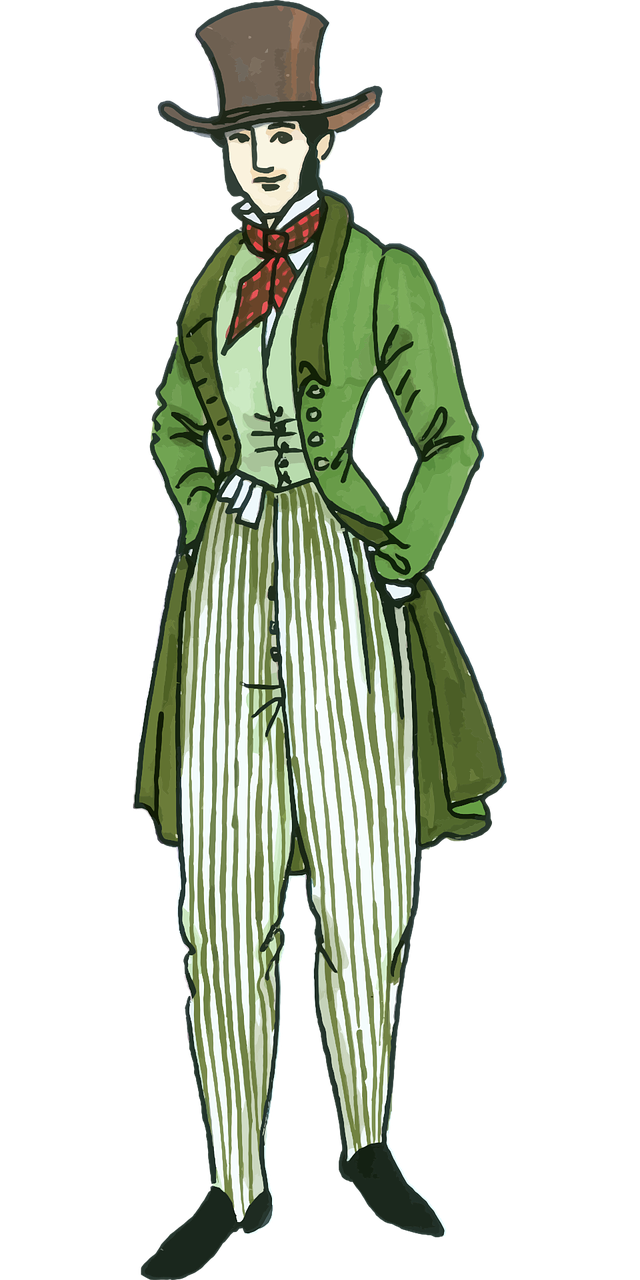
This is Pappy
Ben
Fredric-O
The simpleton who always helped Pasha de Roos, always, in fact he looked for him to offer help in this or that matter.
Confident that with so many of his buddies working as clerks, in tie-suit-boots, his one silly file with one silly paper – he really didn’t need the file, but that’s the fashion so – will be signed, stamped, signed, stamped and attested in a matter of minutes, yes, minutes that he reaches the office, look there he goes, laughing. ‘Ha-ha-ha-ha-ha-ha-ha-ha!”
A queue here, a queue there, wrongly filled form, no fee paid, no number, no date… and there leaves Pasha de Roos, bent and late. Late simply to set sail.
After three years, on a bright day when a deadline is also set, with no confusion and dense clarity, they are meeting today to paint the boat (he sold the ship back to the simpleton and bought a small boat in exchange), who all you say, well, Jarrico, Charles Vane and Pasha de Roos.
But the bright day is turning now into a dark evening, yet they haven’t settled on the colour. Oh! And now five berserk by-passers are arguing fervently about Jarrico’s choice of colour and Charles Vane’s paint brush’s size.
Huff-huff! Amongst all these experts, no one budges.
Deadline dies alone.
There in the future Cyril Northcote Parkinson gives a fresh argument in 1957 via the law of trivialitythat people within an organization commonly or typically give disproportionate weight to trivial issues.
He dramatizes this “law of triviality” with the example of a committee’s deliberations on an atomic reactor, contrasting it to deliberations on a bicycle shed.
Pasha de Roos is working all by himself in the farm. His exhausted shoulders droop in the sun, he is crying. “No, eh, I am sweating, eh, come on.” Okay, right, when Jarrico joined the clerk culture he didn’t cry then, when Charles Vane became the boss of the clerks, he didn’t cry then, why will he do so now.
*
Jarrico the Clerk
Charles Vane the boss as an old man.
Pasha’s great grandmother
See Pasha, you failed to get signature here, here and there. See for yourself!
Pasha de Roos as an old chap.
“Ha-ha-ha-ha-ha-ha-ha, I have a dream, yes, I will rule the Tomato Market. I have bought potato seeds and-aaaahhheeee.” Pasha de Roos’s great grandmother hits him with her sleek walking cane. She is in a good shape; look how she runs after him in the tomato farm. “Aaaahhhheee!”
Pasha de Roos, here ‘roos’ represents their family sign, that looks like a rose, and thus, the name ‘roos’ but was meant to be a tomato. Some painter got it wrong.
“No-no, it was my great, great, great Uncle Frye-aaahhheeee.”
Shweta, an eighth-class student, is chit-chatting with her friend in the school bus; they choose to stand by an empty seat.
The bus’s engine crackles and starts running as the driver takes his seat. The boys standing near the back door are talking loudly. With more and more students boarding the bus, it becomes a happy noisy site.
CUT TO:
CLOSE UP
Shweta is searchingly looking at the back door while pretending to be fully engrossed in the conversation.
CUT TO:
INT. SCHOOL BUS – DAY
A boy enters the school bus from the back door; his friends address him as ‘Raghu’; they immediately start discussing something.
CUT TO:
Shweta’s eyes are now fixed at Raghu; she even stops pretending to listen to what her friend is saying. Funnily, her friend doesn’t notice.
CUT TO:
Raghu, while listening to his chirpy friends, turns to look at Shweta just for a second and then turns back again.
CUT TO:
CLOSE UP
Shweta, with a tinge of anger in her eyes, glares at Raghu. This time her friend also notices it. The bus grunts and sluggishly starts moving.
ZOOM OUT
Raghu turns to see her again and when he does, right at that moment, Shweta quickly switches her place with her confused friend.
Taking Shweta’s side, the bus swayed to take a turn on the road, giving this switch a rhythmic touch.
Shweta, with her back towards Raghu, now can’t see him but is smiling as if she has somehow defeated Raghu in a game.
Raghu, somewhat baffled, stares at Shweta in the background and we hear a voice –
Note that the show is a satire – satire is the humorous ridiculing of the social evils, the vices that we tend to hide and hide behind waiting for a solution; satires are crucial for they are reminders reminding us not to repeat, replicate, reiterate, duplicate the mistakes, blunders, rebukes, devils we commit, cause, utter and create foolishly, out-of-weakness and when terribly burdened; satires don’t pass judgements rather they accept the folly, the situation at hand, they acknowledge the ruin, the disgrace, always aiming for a better, united, cooperative, humble, sensible world.
Note that the show is a comedy as well – naturally, because comedy is satire’s aura.
Note that the show is a Pakistani show – pro-this or anti-that, the show stays true to its genre, its keen sword like wit cuts through the superficial, holding its ground against the dogmatic prevalence of all types, of this and that society; slowly, very gently, very patiently it knocks down every King’s crown, so that the oligarchy bends.
Note that the show is not against anyone – it hails the present time, present lives, societies as we are all trying to play well. Yet, it promotes old values like brotherhood, kindness, truthfulness and love for one’s land. It also acknowledges its limitedness, slantly, but mostly straightforwardly.
Last, please note that the show is created and written by Anwar Maqsood, starring late Moin Akhtar (as the guest) and himself (as the host) – together they leave the viewer in a dilemma whether to bow before the absolutely astounding acting, the phenomenal script or their jugalbandi (the duo’s entwined performance).
For now, watch Loose Talk’s nine engaging episodes out of the total three hundred –
*
*
Interviewing a Pakistani senior citizen on 14th August, Independence Day special –
*
होस्ट: जब आपने पाकिस्तान के सर ज़मीन पे कदम रखा तो आपको कैसा लगा?
गेस्ट: कदम नहीं रखा, नहीं नहीं ना , हमने माथा रखा था ।
होस्ट: सुबान अल्लाह ! आपने एक नयी सर ज़मीन को सजदा किया।
गेस्ट: कह चुके।
होस्ट: जी।
गेस्ट: बीच में से बात मत उचक लिया करो, सजदा नहीं किया, वागाह बॉर्डर पर किसी ने हमे धक्का दिया था, यह कह कर के ‘जल्दी चल बे’, बस उसमे जो गिरे निचे, तो सर जा कर धाड़ से पाकिस्तान की सर ज़मीन पर लगा और हमारा सर फट गया और पहली दफा जब हम दाखिल हुए पाकिस्तान तो फटे हुए सर के साथ दाखिल हुए।
होस्ट: इस मुल्क के लिए हज़ारों लोगों ने कुर्बानियां दी है, आपने अपना सर फोड़ा।
गेस्ट: हैं?
होस्ट: आपने अपना माथा फोड़ा।
गेस्ट: जी।
होस्ट: तो कैसा लगा दाखिल हो कर, कदम रख के?
गेस्ट: दाखिल हो के हमे पता चला की ओह हो हो हो हो, बटुआ तो हम अपना दिल्ली भूल आए हैं।
*
Translation–
Host: How did you feel when you first stepped foot on this land, when you entered Pakistan?
Guest: I didn’t step my foot on this land, no no no, my head touched it first.
Host: How beautiful! You bowed before this new land – Pakistan.
Guest: Are you done?
Host: Yes.
Guest: Let me finish the sentence first, I didn’t bow, at Wagah Border someone pushed and said, “oye move quickly”, and so I fell on the floor and my head hit this land. So, I entered Pakistan with an injured forehead.
Host: Thousands of people sacrificed their lives for this nation, you too got injured.
Guest: Yes!
Host: How did it feel then, when you first entered the promised land?
Guest: As soon as I entered I realised that oh-ho-ho-ho-ho, I forgot my wallet in Delhi.
Interviewing a teacher –
*
होस्ट: पौने 9 बजे आपके यहाँ डाकू आए और गए कितने बजे ?
गेस्ट: सुबह 4 बजे।
होस्ट: इतनी देर क्या करते रहे?
गेस्ट: असल में एक डाकू जो था उसने मेज़ पर से दीवान-ए-ग़ालिब उठा ली और उसे देख के मुझे कहने लगे – तुमने दूसरों पर अपनी काबिलियत का रॉब झाड़ने के लिए इतने मुश्किल शायर की किताब राखी हुई है घर पे ? या ग़ालिब की शायरी तुम्हारी समझ में आ गयी है? हमारी बेग़म ने फॉरेन कहा, नहीं ऐसी बात नहीं है इन्होने ग़ालिब को बहुत पढ़ा है और ग़ालिब पे किताब भी लिखी है। फिर उस डाकू ने किताब खोली और पढ़ने लगा –
“कुछ खरीदा नहीं है अब की साल, कुछ बनाया नहीं है अब की बार, रात को आग और दिन को धूप, भाड़ में जाए ऐसे लेल-ओ-नहार, आपका बाँदा और फिरूं नंगा, आपका नौकर और खाऊं उधार…”
यह कह कर उसने किताब वहां रखी वापस और कहने लगे – जब ग़ालिब इतनी मुश्किल में थे , तो वह हमारी तरह क्यों नहीं हो गए, हमारे भी हालात यही हैं।
*
Translation –
Host: The dacoits came around 8:45 pm and when did they leave?
Guest: At 4 in the morning.
Host: What did they do for so long?
Guest: So, one dacoit picked Diwan-e-Ghalib from the table and said to me, “You own such a great poet’s book just to show off? Or are you trying to tell me you understand Ghalib’s poetry?” Quickly my wife said, “He has indeed studied Ghalib very deeply and have even written a book on Ghalib.” Then the dacoit opened the book and read –
“Bought nothing this year, built nothing this time, fire at night and the sun in the day time, to hell with such nights and days, your creature still I roam naked, your servant yet I beg for food…”
He kept the book back on the table and said, “if Ghalib was facing such difficulties, why didn’t he become like us, our condition is the same…”
Interviewing a would-be politician –
*
होस्ट: अगर आपकी पार्टी ने इलेक्शन में हिस्सा लिया तो मोहतरम, आपका इंतक़ाबि निशान क्या होगा?
गेस्ट: हमारा इंतक़ाबि निशान वही होगा जो मैंने आपको वक्फे में दिया था – ठुड्डा। कमीशन इलेक्शन से हमने रिक्वेस्ट की है, अगर उन्होंने दे दिया तो ठीक, नहीं दिया तो कोई गल नहीं।
होस्ट: सर कमीशन इलेक्शन नहीं, इलेक्शन कमीशन।
गेस्ट: ओये एक ही गल है। कमीशन इलेक्शन से पहले लगाओ या बादमे, कोई फरक नहीं पेंदा।
होस्ट: सर इसकी… ठुड्डे की तस्वीर कैसे दिखाएंगे आप?
गेस्ट: ओये ये जाहिलो वाली गल किती तूने, ठुड्डे की तस्वीर नहीं होती है, ठुड्डा लिखा जाता है, “अवाम का वोट, हमारा ठुड्डा”, एह लिखा जाएगा।
होस्ट: सर इस स्लोगन से तो अवाम डर जायेंगे सर।
गेस्ट: ओ, पिछले साठ सालों से अवाम डर के ही तो वोट देते हैं।
*
Translation–
Host: If your party stands in the election, sir, what will be your party’s symbol?
Guest: Our party’s symbol will be the same, that I gave you during the break – a kick. We have requested commission election for the same, if they agree with us, good, if they don’t, well, it doesn’t matter.
Host: Sir it is not commission election, it is election commission.
Guest: O, it is one and the same thing. Commission if added before election or after, doesn’t make much difference.
Host: Sir, how will you show this symbol – the image?
Guest: Oye, you’re talking like an illiterate, it won’t be shown, we will simply write it down, “Public’s vote, our kick”, this is what will be written.
Host: Sir, using this slogan may scare the public sir.
Guest: O, for the past sixty years, that is what they have done, the public vote out of fear.
Interviewing a harmonium player, the only English-subtitled epsiode.
What good is an incomplete tale? As said earlier, an incomplete tale sooner or later completes a circle, like this one did.
And then? Well, it liberates and lightens the metaphorical albatross around one’s neck… and who knows, a day may shine here when the albatross quietly flies away.
“Is it ready yet, is it ready now?” [Source – Pixabay]
*
Like a quick meal that you make yourself, yes, yourself, standing in the kitchen, looking for items, finding none, finding some, maybe it is not something you regularly do or maybe you do it regularly but always in a rush, you add a pinch of salt after applying butter or vice-versa, the heat is too much or too low, you fix it, but after slightly burning your fingertips, and when this meal makes you wait, oh, for howsoever quick it is, it still needs time, you think of brewing a hot cup of tea or coffee, hustle and bustle, tin-tin-tinaa-tuk-tun-tunaa, and the quick meal along with a hot beverage when tasted and sipped, you feel full and good, it is a buttery sweet moment.
You suddenly also start to feel confident about life in general.
Oh, but when you return to the kitchen after finishing the meal, the anxious shelf, the sticky stubborn utensils and crumbles all over the place stare at you in cold anticipation – now or later, late evening or tomorrow morning, my turn or roommate’s turn, or, or, or the maid’s?
You suddenly feel late, like it is only the washing dishes and cleaning shelf bit that stands between you and the attainment of your dream.
I guess, the dish is ready, dear Rabbit.Bon appétit! No, I won’t join, I am fasting today. Goodbye! [Source – Pixabay]
*
If you very often do the cleaning part too, not just as a chore, your cooking abilities will bloom, like a wild vine that climbs and trails wondrously without worry, much more than it does when you stick to a rough routine like a straight, pruned plant in a plastic pot.
While a plant even in a plastic pot is rich, full of warmth and it rules, we tend to limit ourselves to a routine too easily, especially if it is comfortably dull.
Kitchen work is all about exuberance, love, patience and meditation that serves best when mixed with prudence.
Cooking and cleaning is a complex task; your kitchen is no less than a PhD student’s lab, yet truly welcoming, forgiving and accepting.
Anyone’s progress happens only gradually and is incomplete without the cleaning part.
Steadily, if you keep going, you’ll learn when to add a pinch of salt, before or after applying the butter, without burning your fingertips.
And you’ll get used to the tricky teasing waiting part, you’ll know it adds great value, and you’ll see, when it’s time, how grandly patience prepares a rich dish.
A phase is defined as any stage in a series of events or a process of development; while we all go through different phases in life, at times we either forget to notice or simply become fearful of transitions, inadvertently being ignorant about the fact that this phenomenon is universal. In this short poetry collection, the blogger has attempted to capture this subtle yet powerful phenomenon – phases that are observable in every journey undertaken.
Here are the last two poems from this collection –
A phase is defined as any stage in a series of events or a process of development; while we all go through different phases in life, at times we either forget to notice or simply become fearful of transitions, inadvertently being ignorant about the fact that this phenomenon is universal. In this short poetry collection, the blogger has attempted to capture this subtle yet powerful phenomenon – phases that are observable in every journey undertaken.
I am joy running free/
freely flying, fluttering, soaring in a valley/
Of joy am running free.
Greetings!
A storyteller, following the ancient tradition of cave chroniclers, standing in vrikshasana (the tree pose) on a hill top (it is sunny, but windy), breathing in and out stories (relishing it all, but at times overwhelmed), declares animatedly that she will continue to – tell stories, share rare story gems, and connect with the pacy universe while also keeping the website ad-free.
Big thanks to my readers. Stay tuned!
Also, a humble request to the new subscribers to check the spam folder after subscribing. Silly (but necessary) confirmation emails often land there instead of the bright inboxes. Merci!
Ya-hoy!
Chiming Stories (formerly Home Chimes)
P.S – Supporting a storyteller is good for the world’s health (and undoubtedly, for the storyteller’s health as well). Shower some love by sharing, commenting and subscribing to the Weekly Newsletter.
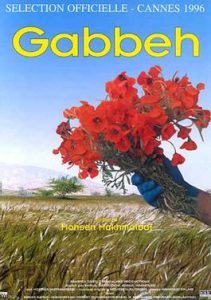
Gabbeh, the 1996 film, is a simple tale of a gipsy girl, her clan and the way their life goes on. Unfolding beautifully just like an artist painting a canvas, Gabbeh quietly touches the grand questions.
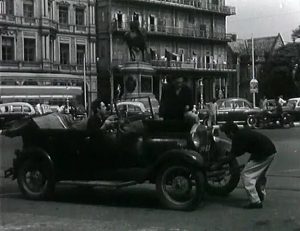
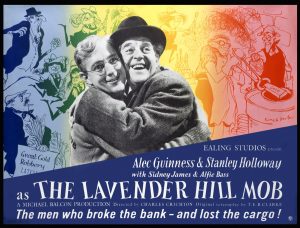
Ranked as one of the greatest British films of all time, The Lavender Hill Mob confides in the audience, letting them see, feel, laugh and think without tickling persuasively with a joke here and a punch-line there.
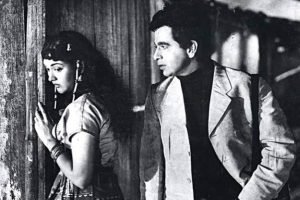
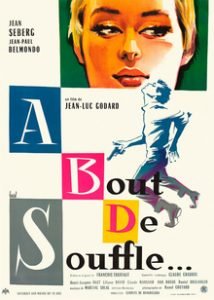
Godard… Breathless and Alive
A Tribute to Jean-Luc Godard, the Film Philologist who Reinvented Cinema.
Yes fly! For walking on the second track is dull and usual, but dreaming high, high, high requires tools. Tools like the right pair of shoes, a chirpy, gritty soul that eats butter-jam dreams, a soul that drinks milky-milky creams.
Silver cascade shimmering the night sky, music to the waves and surreal beauty to the eyes, the Moon loves the art of discipline.
It may be difficult to believe for the Moon’s splendour defies time, it stupefies the clock, it follows the path of a dreamer, but how could this be possible if the Moon knew not discipline?
In this moment, I am a little bit of this and a little bit of that, I am complete and incomplete, I am pleased and uncertain, I wish for nothing and I know I have to wait.
Because the distance covered reminds me of the hurdles I have crossed and the ones I could not, it reminds me of a throbbing past and a dreamy future and it reminds me of how much time is left.
Meredith and the Green Lake
Illimitable Splendour
A joy so complete without any rise or fall, so free without any time corners, so real without true being false, false being true.