Time

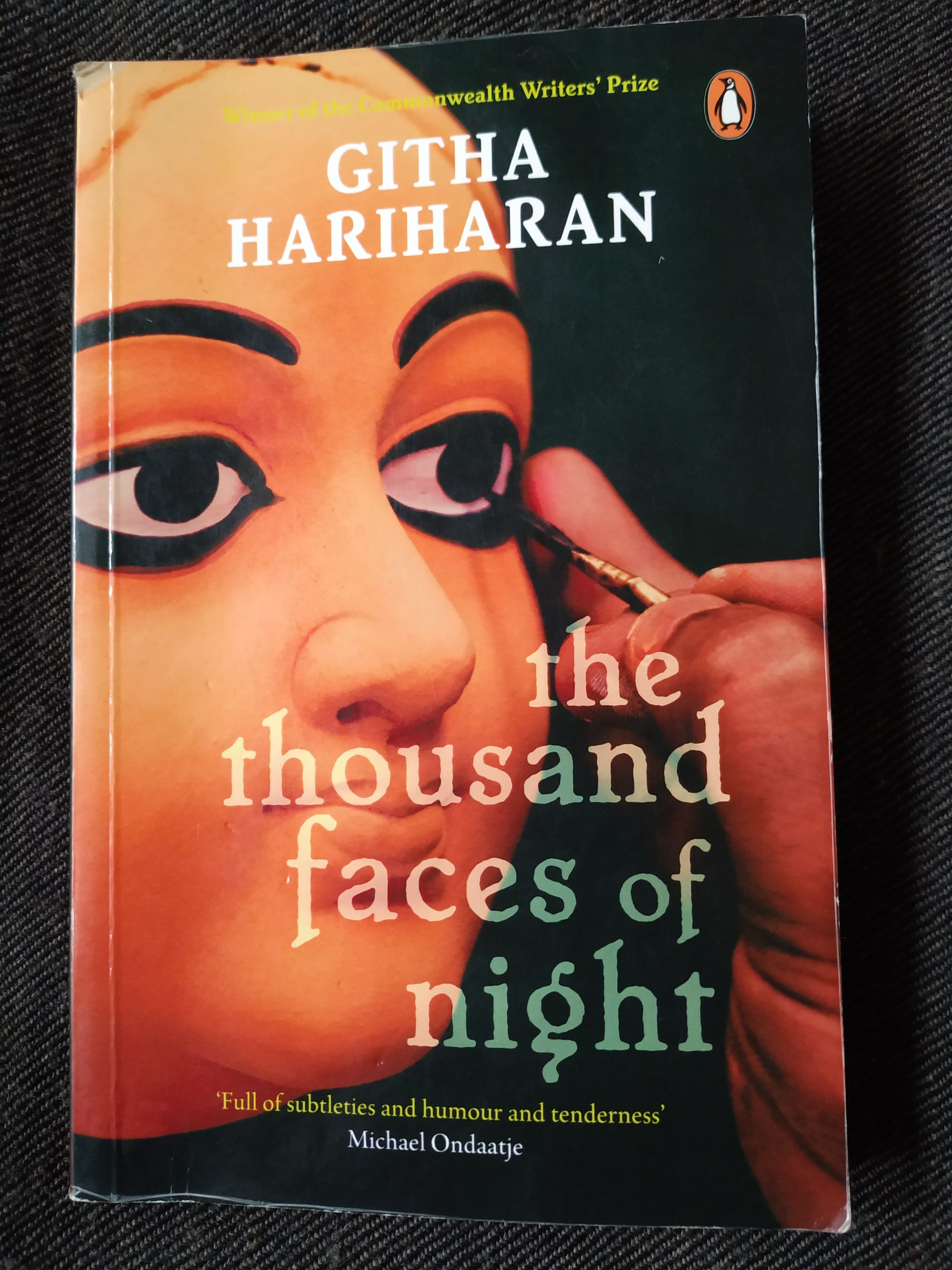
The Thousand Faces of Night – A Charcoal-Inked Raga

Book Review

The certainty of it being the night promises us of the erubescent dawn. It is an inky night, it has been for aeons and aeons… and, mind you, she uses charcoal-ink… for the stove is still burning, she never forgets to collect woods.

And so, with her inky fingers she writes messages, anecdotes, dead secrets and stolen dreams on the walls in the kitchen.

A custom followed since antiquity, now the charcoal-ink smells of these quiet cursive messages. It talks about the dark night and the breaking of the dawn.

Her inky fingers will turn red with the dawn.


But Sita needed all the strength she could muster to face the big trial awaiting her. After that, it was one straight path to a single goal, wifehood. The veena was a singularly jealous lover.

Then one morning, abruptly, without an inkling that the choice that was to change her life lurked so near, Sita gave up her love. She tore the strings off the wooden base, and let the blood dry on her fingers, to remind herself of her chosen path on the first difficult days of abstinence.

Githa Hariharan (Part Three; Chapter 1)

*

Painting of the Goddess Saraswati by Raja Ravi Varma.
[Source – Wikimedia Commons]

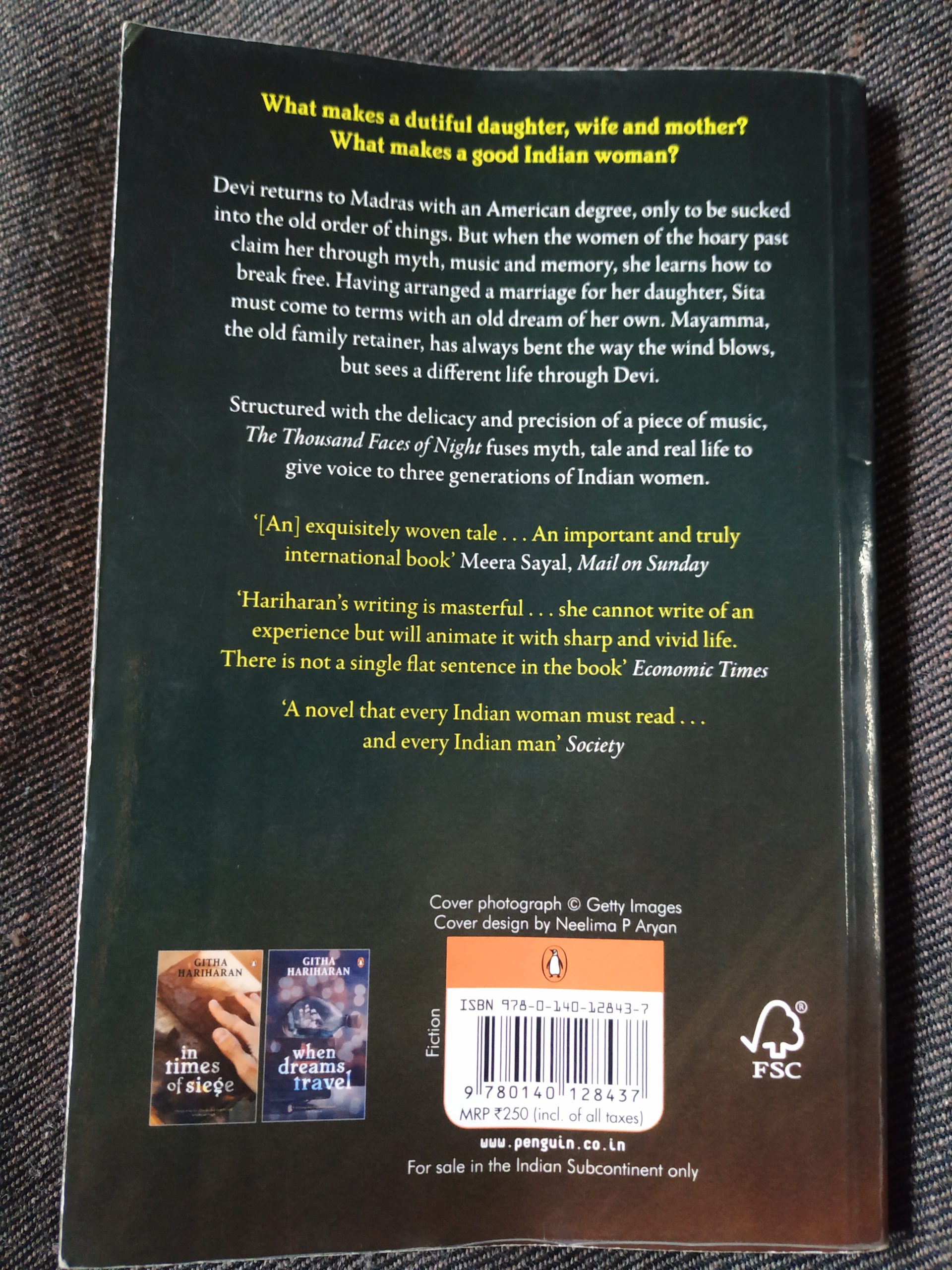
The Thousand Faces of Night (1992) is written by the astounding Githa Hariharan. The novel is a melody sung and composed at night that captures the thousand faces of the moonless, starless night.

It narrates the many tales of Indian women – the celebrated mythical ones and the limited editions – with such excellence that the novel takes the shape of a woman carrying a heavy potli bag full of tales.

The tales, entangled badly, still echo well and dramatise their essence. The tales are spicy and heart wrenching and true.

*

Earthenware… they hold intact their stories, cultures for centuries.
[Source – Pixabay]

Devi, Sita, Mayamma – daughter, mother, maid – kindle fire that burns time, others and themselves. And so powerful is this fire that life gathers around it to get some inspiration.

Delicate like earthenware, painted beautifully, allegedly breakable, they hold intact their stories, cultures for centuries; you must have seen the pieces of such earthenware dug out from archaeological sites, displayed in a museum safely.

Their resilience never fails them even if it means to walk alone, against the tide, the familiar sunshine. Devi, the present, dares to break away, in her agility, eager to explore, moving away from Mayamma and Sita, the past.

Posing in front of the patriarch, they contribute to his legacy/magnificence. After foolishly spending a long time and suffering from backaches, Sita straightens up and Devi dodges the mockery, while Mayamma continues.

The patriarch sees Mayamma and smiles, Mayamma bows and cusses silently. She prays for Devi.

*

The new raga.
[Source – Pixabay]

After etching their charcoal-inked messages on the kitchen walls, the three ladies change the notation of their melody slightly, making the raga, still sung at night, fresher.

*

I must have, as I grew older, begun to see the fine cracks in the bridge my grandmother built between the stories I loved, and the less self-contained, more sordid stories I saw unfolding around me. The cracks I now see are no longer fine, they gape as if the glue that held them together was counterfeit in the first place. But the gap I now see is also a debt: I have to repair it to vindicate my beloved storyteller.

Githa Hariharan (Part One; Chapter 3)

Weekly Newsletter

A weekly dose of stories! Get the posts from the Chiming Stories in your inbox and read it when you can. Subscribe now, it is free!

This field is required.

Recent Posts


Avicenna and the Turning Wheel

Spinning starry time wheel. [Image from Pixabay]

Thinking… the activity of using our mind to consider something; the process of using our mind to understand matters, make judgments and solve problems… that is what the dictionary says and says more and then sites many lovely examples:

“I had to do some quick thinking.”

“She explained the thinking behind the campaign.”

“Thinking, for me, is hard work!”

Our mind, coloured by a plethora of this and that, happy and sad, a sea of information, thinks in isolation, yet always a part of the collective unconscious. And how wonderful is it that this tinted mind, nevertheless, is fully capable to create something novel.

The thinking mind turns the wheel, knitting the society tighter. The juggernaut of sociocultural norms, in turn, fabricates the yarn for such a mind.


Avicenna or Ibn Sina (980 AD – 1037) was a physician, philosopher, astronomer, theologian, poet – a polymath – who greatly contributed to the Islamic Golden age. His book Al Qanun fi al Tibb or The Canon of Medicine, a medical encyclopedia, was studied as a textbook for medical education in many universities, also in Europe, up till the 17th Century.

*

1950 “Avicenna” stamp of Iran. [Source – Wikimedia Commons]

Philosophical encyclopedias like Kitab al Shifa or The Book Healing and Kitab al-Isharat wa al Tanbihat or The Book of Directive and Remarks presented Avicenna’s take on the Aristotelian and Platonian philosophy through the lens of an Islamic theologian.

*

Avicenna’s The Canon of Medicine, Latin translation, dated 1484 CE. [Source – Wikimedia Commons]

A well-known physician, Avicenna got support from most of the rulers of his time – some made him a vizir or an advisor in their court – and the opportunity to access the royal library. Highly influenced by Aristotle, Avicenna also disagreed with the Greek polymath on many points.

That the soul is not just ‘body’s form’ (Aristotle says that a soul is the actuality of a body that has life) but it has an existence, he came up with a thought experiment, famously known as the floating/ flying man thought experiment. He argues –

One of us must suppose that he was just created at a stroke, fully developed and perfectly formed but with his vision shrouded from perceiving all external objects – created floating in the air or in the space, not buffeted by any perceptible current of the air that supports him, his limbs separated and kept out of contact with one another, so that they do not feel each other. Then let the subject consider whether he would affirm the existence of his self. There is no doubt that he would affirm his own existence, although not affirming the reality of any of his limbs or inner organs, his bowels, or heart or brain or any external thing. Indeed he would affirm the existence of this self of his while not affirming that it had any length, breadth or depth. And if it were possible for him in such a state to imagine a hand or any other organ, he would not imagine it to be a part of himself or a condition of his existence.

Avicenna

While this blogger will definitely take a lot of time to grasp these theories in entirety, she would like to appreciate the art of thinking that moulds the world in such a steady and grandiose manner.

The art of thinking, in which we participate daily and, most importantly, in the times of despair, is running the show as we then stand face to face our true being and raise questions, refute the botched theory and create a new one.

Avicenna wrote the floating/ flying man argument when imprisoned for around four months as a result of a political debacle – an argument that was later termed weak by the other thinkers.

But this is how the thinking mind works, it continues to question, argue and turn the wheel.


Weekly Newsletter

A weekly dose of stories! Get the posts from the Chiming Stories in your inbox and read it when you can. Subscribe now, it is free!

This field is required.

Recent Posts


Jasmine-Rich Raga

Coverage

White Jasmines.
[Image from Pixabay]

Like flowers threaded to form a sheet, woven intricately, the free white petals settling in a designed pattern, accepting the arrangement with joy, like an endless beaded wave of fragrant flower-colours, the ragas also weave intricately musical framework that evokes fragrant feelings in a quiet listener’s mind.

Just like the perfection-loving flowers – the humble sepal, the vibrant petal, the ambitious anther – the ragas too know how to bloom to perfection. Capturing the exact mood that exudes the season’s essence perfectly, the ragas effortlessly scent time making it beautifully appreciable.

*

The scented time celebrates the raga – in Vilambit laya (slow tempo), Madhya laya (medium tempo), Drut laya (fast tempo) – accepting every melodic improvisation, evolving with each performance, never bothering with change, rather ushering it with consistent Riyaz (practice).

Overwhelming calculations keep the ragas free from vegetating and from the burden of the past that at times tries to confine its spirit, but almost always the spirit remembers to break free.

The many notations, the Swara, bring forth incessant improvisations, giving space to every emotional twist, forming an intricate, fragrant Mandala.

The ragas symbolise, like a flower threaded sheet, intricacies of life… and more.


Lat uljhi suljha ja balam

Piya more haath mein mehndi lagi hai

Lat uljhi suljha ja balam

Mathe ki bindiya bikhar rahi hai

Apne hi haath laga ja balam

Lat uljhi suljha ja balam

*

(Translation – Disentangle my hair, dear beloved/ I have applied henna on my hands/ So come and disentangle my hair, dear beloved/ The bindiya too is spreading on my forehead/ Correct it for me with your own hands, dear beloved/ Disentangle my hair, dear beloved)

This Bandish* in raga Bihag decorates time with a jasmine-rich fragrant emotion that vehemently values love and life.


*Bindiya – a colourful dot mark (of vermilion) worn between the eyebrows, especially by married Hindu women.

*Bandish – a composition in Hindustani classical music.


Listen to a melodious version of this bandish now.

*

A shorter version.

Complement this with another melodious post – Amir Khusrau and the Mustard Flowers


Weekly Newsletter

A weekly dose of stories! Get the posts from the Chiming Stories in your inbox and read it when you can. Subscribe now, it is free!

This field is required.

Recent Posts


Tick-Tock, Time For Treasure Hunt

Tick-tock-tick-tock…

Match clocks!
[Source – Booked for Life]

Is it the time for the fluttering bird to take a dip in the tiny cool puddle, and for the other one, that flame-throated bulbul, carrying a silky grass leaf to that topmost branch of that lush happy tree, to finish weaving its nest?

And is it the time for the Oo slithery snake, zigzagging like a threatening thought, to just be itself and rest in the sun, simply meditating, with its uncanny sense of smell taking in the jungle’s fragrance?

And… and is it the time for the slim sharp golden jackal, dancing a slow jazz twist otherwise, to sit under a tree with a full stomach, attentive ears and a cheerful beam?

And ohhh… is it the time then… for the lion-tailed macaques, frolicking as a rule, to alert-a-l-e-r-t-ALERT all in the jungle about the royal king’s visit?

Is it the time… I don’t know… there isn’t a clock in the jungle that tells time. Is there? Yes, there indeed is.

The animal and plant kingdom are joyful disciplined folks, every species, diurnal and nocturnal, breathe in the jungle’s air, finish all its chores on time, maintain a balanced diet, sip water leisurely and quietly rests zzz…

They keep following the clock that shines up in the sky – they follow the shadows and the white shimmery light at night and the rhythmical wind and the damp, dry, crumbly and chilly seasons.

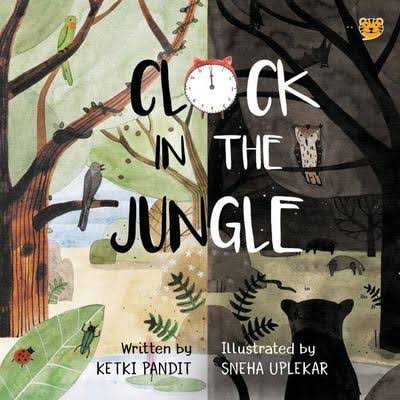
Clock in the Jungle (written by Ketki Pandit and illustrated by Sneha Uplekar) narrates in verse this saga of the punctual wildlife, revealing a powerful secret that every species adhere to by choice, the simple sweet habit of keeping the clock always running.


Tick-tock-tick-tock…                   

Listen to this another story that utters no word, that is as silent as a voiceless thought, behold its magic, it will enchant you, surprise you and remind you of the climate’s call.

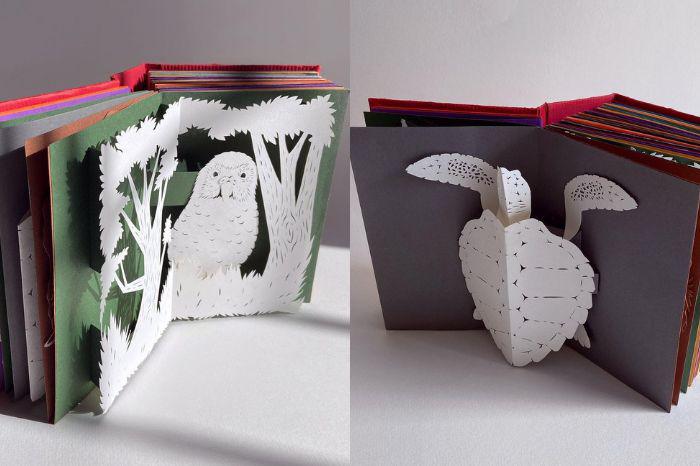
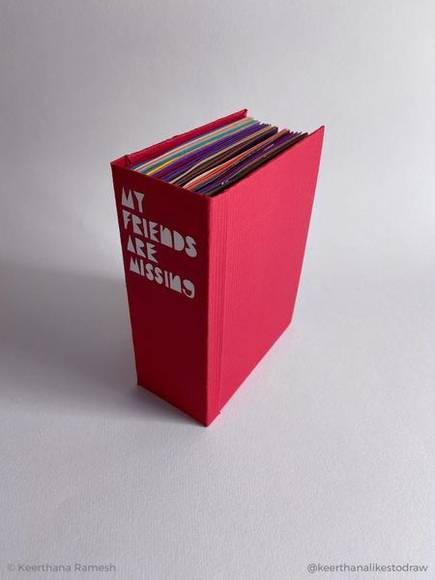
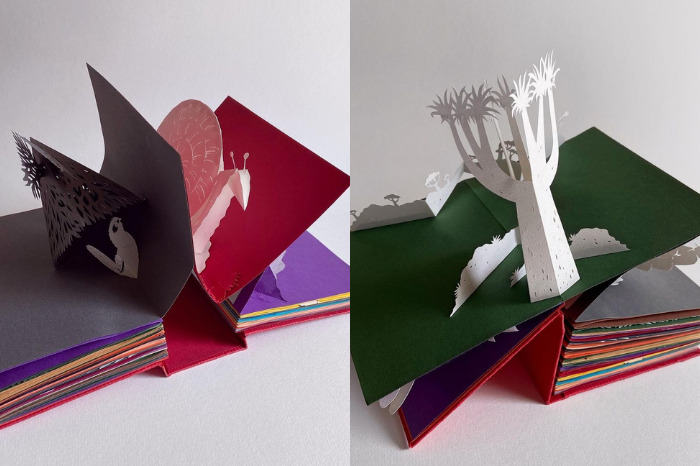
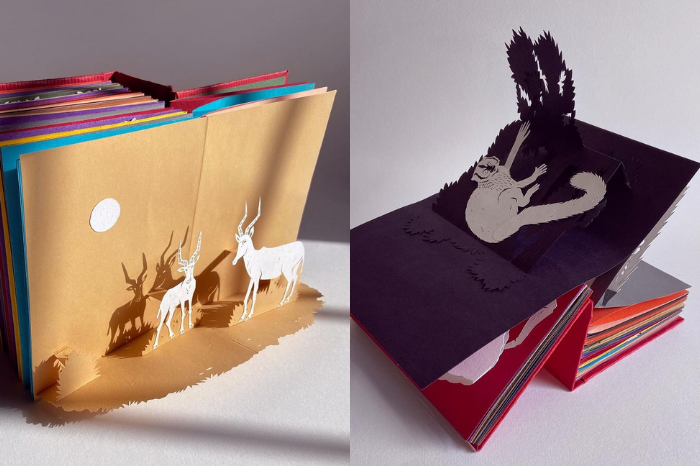
My Friends Are Missing (by paper artist Keerthana Ramesh) is a pop-up book that introduces us to thirty endangered species in the world, delicate, quiet and tolerant beings, that are battling the climate’s challenge, positioned at the forefront, they continue to face the impatient and greedy world’s madness.

Just like in the pop-up book, these species with a functioning clock and a devoted heart, step forward in the drastically changing world where their natural habitats are transformed into a smog-loving, power-hungry factory that clickety-clack runs in the anti-clock direction, challenging the earth’s circadian cycle.

“The damage is ours, the curse is ours, the solution won’t come from the aliens”, said a Kemp’s ridley sea turtle before taking a dip in the Gulf of Mexico.

And what the elusive bird, New Caledonian Owlet-Nightjar, commented in 1998 isn’t clear because it vanished before the reporter could pen-it-down and hasn’t been spotted since then.


Tick-tock-tick tock…

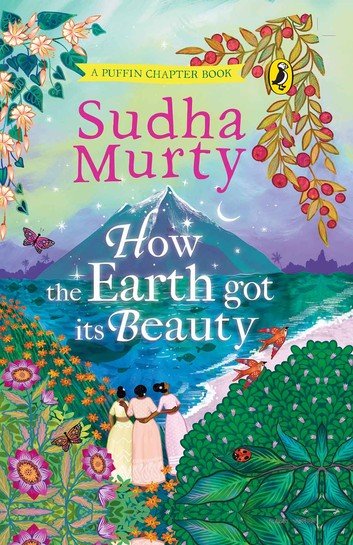
Our lovely home!
[Source – Kobo.com]

Only our blue-green planet knows where this elusive bird resides, but she won’t tell for she loves mysteries. Our lonely planet is not so lonely as so many hidden mysteries and stories unfolding simultaneously accompany it; our dear earth provides a home for all.

In How The Earth Got Its Beauty (written by Sudha Murty and illustrated by Priyanka Pachpande) Mother Earth, decades after the creation of the planet, disguised as a little girl meets three sisters – Sunaina, Shyama and Seeta – to find out if humans are living peacefully and she finds out that the three sisters desire for something else in their lives. Will Mother Earth grant their wishes?

The story emphasises values like patience, compassion and empathy, highlighting also the selflessness and power of Mother Earth; the author writes, “Whenever humans become selfish and uncaring towards Mother Earth, she makes her presence felt and restores the balance in the world.”

We, the forgetful ones, so often forget about our home, not the walled-well-lit-well-decorated-space, but the beautiful breathing planet that never forgets us even when it rotates ceaselessly, matching its clock with the burning star’s every aeon.


Tick-tock-tick tock…

It is time for a treasure hunt, go to the jungle and look for a clock, then walk in the direction its three hands (seconds, minutes and hours) point at, one day at a time, and look for the endangered species. Be patient and kind, focus on the treasure, the great grand treasure, value it, it is your home, your only home.


Grab these wonderful books now –

Clock In The Jungle by Ketki Pandit, Illustrated by Sneha Uplekar (click here);

How the Earth Got its Beauty written by Sudha Murty and illustrated by Priyanka Pachpande (click here).

And also flip through Keerthana Ramesh’s My Friends Are Missing

*

*


Weekly Newsletter

A weekly dose of stories! Get the posts from the Chiming Stories in your inbox and read it when you can. Subscribe now, it is free!

This field is required.

Recent Post


She, the Infinite

A Poem

She, in red!
[Image by Gil Dekel from Pixabay.]

*

For building a house, thought God,

What could be the strongest element to mix

In the foundation so that the house wins over Time?

What could be infinite in nature, powerful and rejuvenating

So that the house nurtures love, peace and joy,

So that the flames of birth and death doesn’t sicken or weaken

This house called the Universe?

*

“There is nothing as alive as the feminine part of me,

It is infinite, supreme and divine;

My lovely equilibrium, my alighted spirit,

Fulfil this task, rise-o-infinite!”

-Said God.

*

And so the house called the Universe was built with feminine power at its core.

*


Weekly Newsletter

A weekly dose of stories! Get the posts from the Chiming Stories in your inbox and read it when you can. Subscribe now, it is free!

This field is required.

Recent Posts


Nature

Green magic!
Image by Mabel Amber from Pixabay.

Wondrous are the ways of Nature

Capturing, hiding the sun in a leaf,

Revealing it in a colourful belief,

Fruits of absolute joy, a treasure.

*

Giving life to all lives,

Giving shelter to all tribes,

The Nature plays a rhythm divine,

Transforming the woods into a shrine.

*

Nature destroys the apathetic traders;

Blind, unforgiving, hitting with catastrophes,

Listening not to the heavens, the creators,

But to the Time that heals.

*

A dense forest or a tiny plant,

Both are Nature’s marvel;

Her ethereal hands are the mantle

That blesses our lonely planet.

*

Sublime nature!
Image by David Mark from Pixabay.

Weekly Newsletter

A weekly dose of stories! Get the posts from the Chiming Stories in your inbox and read it when you can. Subscribe now, it is free!

This field is required.

Recent Posts

कलाकार/ An Artist

The wheel is spinning.
Image – Pixabay.

*

कलाकार

सोमवार को दी एक पुकार

की जल्दी में क्यों हो सरकार

आना भी है, आकर जाना भी है….   

*

मिटटी गुंधे जो बैठा है कुम्हार

जशन से टशन से घुमाएगा पहिया वो

आदर और अदब से फूंकेगा वो

जब जान, तब बनेगा एक घड़ा जो

जल से भरेगा, तरेगा, करेगा शोर

की जल्दी में कयों हो सरकार

समय से कब बंधा है कलाकार?  

Translation –  An Artist  

I spoke to Monday once

That why was it in such a hurry

To come and in a hurry to go…  

*

The potter who has kneaded the soil

Will spin the wheel in his style

Carefully and respectfully he will instill

A life force and the soil will take the shape of a vessel.

In usage this vessel will make some noise and ask

That why is time in such a hurry,

When it can never bind an artist’s creativity?

*


Weekly Newspaper

A weekly dose of stories! Get the posts from the Chiming Stories in your inbox and read it when you can. Subscribe now, it is free!

This field is required.

Recent Posts

Sun – A Flambeau Hi-Fi

Short Commentary
Super close-up of the sun. [Source – BBC]

Brimming over with pure joy, spewing liquid gold, the sun transforms its energy and glows.

In our rawness, oh, we only see it as fire, blasting waves of bright power. Gathered around its warmth we live and grow and pray and surrender.

We cherish its radiance; we dance and sing always attuned somehow to it. I say somehow for we are cursed and blessed with a weak memory.

The sun is our time, a flambeau hi-fi and it is brimming over with pure joy, spewing liquid gold, the sun transforms its energy and glows.


Inspired by a BBC news report – Sun’s surface seen in remarkable new detail


Weekly Newsletter

A weekly dose of stories! Get the posts from the Chiming Stories in your inbox and read it when you can. Subscribe now, it is free!

This field is required.

Recent Posts


Unpack Your Destiny

The journey within…
[Image by Victoria Borodinova from Pixabay]

In a green velvety suitcase inside a wooden trunk she packed it nicely, neatly, firmly forever.  

“I want it to be safe.” While the world rises and falls without any knowledge of it, she feels positive and shielded; her destiny is properly packed and locked.

Sitting cross legged she awaits the change, for the destiny to operate from underneath her crisp, fine, obvious thoughts, packed and placed in a corner.  

“I keep in touch of course, why are you being so sarcastic?” She laughs loudly for she is confident of her victory and rightly so, what will stand in her way when she remembers to keep a check on the package, clean the dust off the wooden trunk and pray that the suitcase does not vanish away magically.  

“Yes I remember, it is my destiny, I know…” She knows it all, yet she is afraid and waits for others’ approval and appreciation. Calculating the possibilities, probabilities, time and years she takes a step forward.  

She did pack a piece of the truth in that suitcase, what is wrong in it?

She forgot to unpack it, she forgot that the truth evolves, our understanding evolves. What is destined for someone is destined and yet it changes, that is the rule.  

The truth, the destiny unfolds when a mind lets it.  


Weekly Newsletter

A weekly dose of stories! Get the posts from the Chiming Stories in your inbox and read it when you can. Subscribe now, it is free!

This field is required.

Recent Posts

Sahib Bibi Aur Ghulam – A tale of role-reversals and downfalls

Film Analysis

The beautiful Meena Kumari as Choti Bahu (Bibi). [Source – bollywoodirect.com]

In the game of cards, the roles of a King, Queen and Jack are determined, but in the real-life nothing is certain, in the real-life the roles often interchange, a King becomes a salve, a Queen a maid and a Jack a conqueror. Bimal Mitra’s Bengali novel, Saheb Bibi Golam (1952), narrates one such tale of a bygone era of flourishing feudalism that ultimately saw its ashen downfall.

The Hindi film Sahib Bibi aur Ghulam (1962), keeping the spirit of the novel alive, enriches its impact through the well-knitted, tight screenplay, realistic yet charismatic direction and spellbinding performances.


Adaptation

Literary adaptation to any other medium always changes the story; it inevitably enhances an aspect of it and ignores the other. The audio-visual medium of cinema chooses the part that ‘shows the story’ rather than that which ‘tells the story’. This film has very beautifully matched the tonality of a novel; scenes, transitions, songs and dialogues all combine to give it a mystical forgotten tale-like feel.

Let us see how the first scene is structured in the film:-

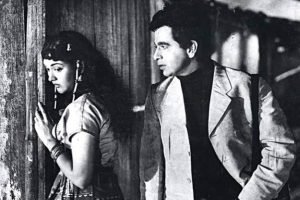
The first scene begins with someone flipping through the pages of Bimal Mitra’s novel that fuses into the image of a huge mansion that is now lying in a complete state of ruin; labourers are digging and clearing the place, pulling down the giant pillars; labourers who were once not allowed to enter the royal mansion are now seen shovelling its remains.

Then enters the Ghulam in suit-boot, grey haired and gazes at the ruin that was once a palace, a symbol of rich feudal lords; he does not need to say anything to the audience, his demeanour and troubled look reveal enough, there is a mystery and he is the only one who can narrate it. This is how the film begins, with a long flashback.

Just like a page-turner novel, the film hooks its audience right from the beginning. We know now that the Ghulam survived the downfall, but what about the Sahib and Bibi.


Plot & Characters

The Ghulam

Atulya Chakraborty aka Bhootnath, played by Guru Dutt, comes to the city of Calcutta, looking for a job. The protagonist is as ignorant as the audience about the drama that is yet to unfold and thus, is the best character to relate with.

Bhootnath’s brother-in-law, a teacher who lives in the quarters of the grand mansion, warns him to ignore the ‘bade log’ (big people) just as they ignore all their petty lodgers.

He gets a job in a factory that produces Mohini Sindhoor – vermilion that is supposed to have aphrodisiac properties. The factory owner’s daughter, Jaba, astounds him with her wit and Brahmo Samaji attitude.

Fantastically, the plot and the main character together move this story forward. Bhootnath’s love story begins when he meets Jaba and parallelly the plot reveals the glittering feudal world, seen through Bhootnath’s eyes, building a mysterious charm capturing both his and the audience’s attention – one night, when he hears a painful voice singing about her misfortunes, he wonders about her, who is she? Who is Choti Bahu?

Bibi

The great Meena Kumari played the role of Choti Bahu, the unlucky wife of the younger brother of the two Zamindars. The fact that she is called Choti Bahu by one and all, that no one, not even her husband, calls her by her first name, suggests a lot about her character. She is truly beautiful, elegant, a devoted wife, the youngest daughter-in-law in the family and this is her job.

It is expected from her that she will forever maintain this status and not complaint in any way. After all what is there to complain about? She has everything – silk saris, jewelry, servants and a palace to call her home. That is why when she requests her beloved husband to stay back for one night instead of visiting his mistress, the husband is shocked and reminds her that he is a feudal lord and this is not only his right, but this is how he can earn a good reputation amongst other lords, he even asks her what sort of a lord spends nights with his wife.

Choti Bahu meets Bhootnath and asks for his help; she wants him to get her a packet of Mohini Sindoor so that she can win her husband’s love back and to do it secretly because women of her status does not approve of such methods. At first Bhootnath is struck by Choti Bahu’s beauty, he stares at her speechless, only later to feel pity for her, struck by her helplessness.

As the story unfolds we see how tragic a life Choti Bahu is living, like a bird in the cage. This character is very well crafted. Choti Bahu’s predicament sheds light on the hidden and ugly aspect of not only the society, the women folk, but also the individual.

When Choti Bahu is nearing her end Bhootnath tries to stop her from drinking, he even holds her hand, taken aback by his guts, she says, ‘Main Choti Bahu hun’ (I am Choti Bahu), reminding him his place that of a ghulam. This scene also highlights how an individual creates an identity and then clings to it forever; whoever then challenges her/his identity becomes her/his enemy.

Everyone is a foe for Choti Bahu, everyone who does not understand how dedicated she is, how selfless she is. Though drinking starts to kill her, she, in a troubled and an incomplete way, stays happy thinking that she is following her husband’s order and thus, fulfilling the duty of a loyal wife.

Meena Kumari’s acting heightens the dramatic impact of each scene and every dialogue. The song ‘Na jao saiyan chuda k bainya, kasam tumhari main ro padungi… ro pdungi’ has become eponymous to her. After her track begins, all the scenes are more or less about her. Bhootnath worries for her, Jaba is jealous of her without even having an encounter with her and her husband, indifferent to Choti Bahu throughout, digs his and her grave foolishly with his own hands.

Sahib

Chhote Babu, played by Rehman and Majhle Babu, played by D.K. Sapru are the Zamindar brothers who stay busy in their own silly world – one busy attending the dancer’s performance every night and the other busy either enjoying his royal cat’s wedding or pumping up for a pigeon war with his neighbouring counterpart. Blinded by excess of everything both the brothers bring their own downfall.

Majhle Babu assuming that Choti Bahu and Bhootnath are having an affair takes a reckless step; he gets Bhootnath beaten up and abducts Choti Bahu, murdering her in the end. But it is not Majhle Babu’s arrogance or the social dogma alone that killed Choti Bahu, it is her husband’s doing as well.

It is Chote Babu who made his wife addicted to alcohol, not only by asking her to be like his dancer mistress, but also by not giving her the respect and love a wife deserves. By the time he accepts his fault, he is bed ridden and it is all too late. His misery ends with his death.

The portrayal of the Sahibs of this era facing the collapse of the Zamindari system is written and directed wonderfully in the film. The two brothers come across as truly pitiful characters.


Ending

The flashback gets over and Bhootnath is informed by one of the labourers that they have found a grave on the site. He rushes to the spot only to be completely shocked to see Choti Bahu’s gold bangles on the skeleton; he remembers what she had told him, that when she dies, she should be decked up properly, with vermillion in her head, so that everyone can say that ‘Sati Laxmi’ passed away. Imagining the beautiful Choti Bahu, Bhootnath with a heavy heart steps back from the site; he sits in the carriage next to his wife Jaba and leaves the place.

The ending surprises the audience once again; that Choti Bahu was murdered and buried in the mansion itself is not something that Bhootnath or the viewer would have expected. It also closes two chapters – one of Choti Bahu’s disappearance and the second, of Jaba and Bhootnath’s relationship. They both are shown as a married couple, contrary to the novel’s ending.


Conclusion

Sahib, Biwi aur Ghulam is an amazing adaption; it does justice to both the medium of the novel and cinema. Chosen as India’s official entry to the Oscars, it was soon rejected by the academy stating that they sternly forbid showing alcoholic women in their culture.

The concept, quite bold for that period, is actually much deeper than the mere portrayal of a woman as an alcoholic. It has captured that moment in time where the powerful and rich were falling down and the servants were free to do as they wished. It is striking that the suffering labour-class where equally surprised by this change as they too had adjusted well to the feudal system. Bansi, Chote Babu’s personal attendant, jobless after his master’s death, tells Bhootnath that he has started working in the train station and that no one lives in the mansion anymore.

Therefore, the film is not only an interesting watch to study its screenplay, but also for those who wish to write/ make an adaptation, those who wish to study how both plot and characters can drive the story forward and how an individual fits in the larger scheme of things.

In the game of cards and in the real life, every Sahib, Biwi and Ghulam can overthrow the other and win; it is all a matter of time.


[Originally written for the Screenwriters Association (SWA), you can check the same here.]


Weekly Newsletter

A weekly dose of stories! Get the posts from the Chiming Stories in your inbox and read it when you can. Subscribe now, it is free!

This field is required.

Recent Posts