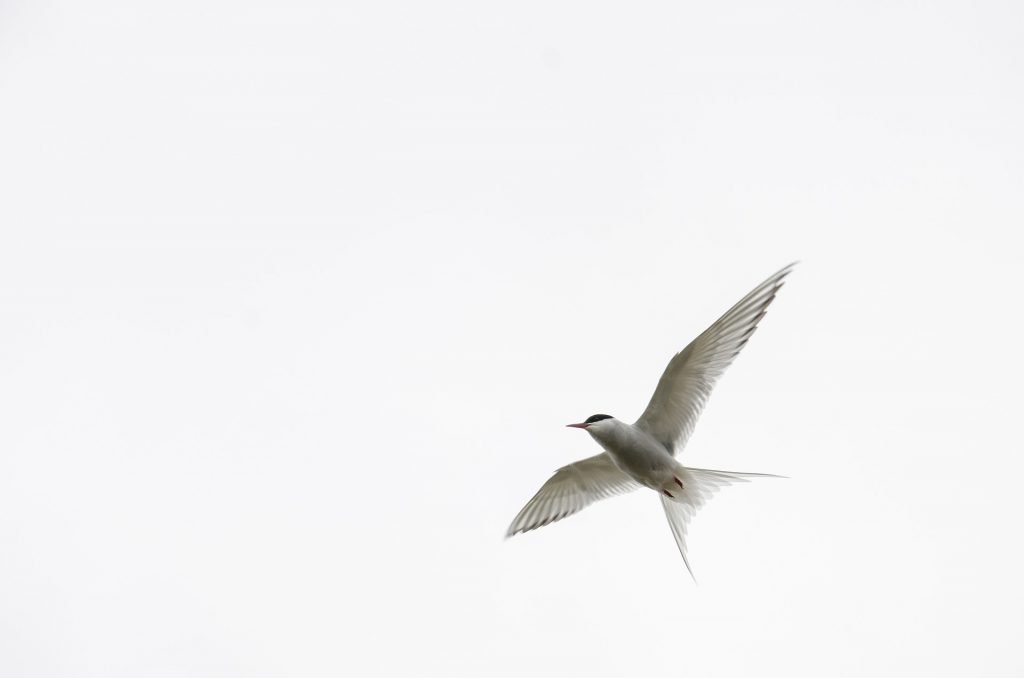
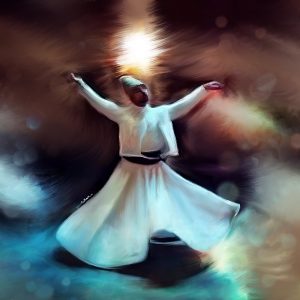
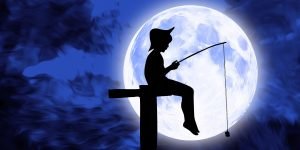
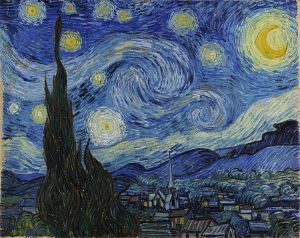
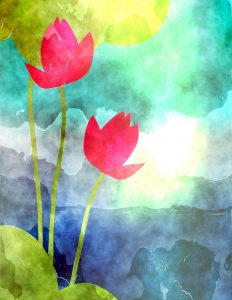
Now a clear dot… now hazy… mixing with the clouds through and through, then beaming alone gloriously. Splattering moony clay, then rubbing it, greasing with it the deep dark sky.
Mirroring all the romantics and dream-talkers, the moony clay moulds itself to fit into the beholder’s eyes and patient hearts. It listens, nods and registers its reply with the artist.
Moony clay – an assiduous storyteller, slowly moving away – happily builds the wavy waves and like a sand clock shows the slipping time its way.
Singing joyously, dancing leisurely, the moony clay creates and fills the heart with hope, lost in splendour.
See how it re-shapes, re-writes its journey, certain of uncertainty in knowing… in knowing it all.
The Hindi language is a treasury that stores precious jewels gained from different languages like the ancient Indian languages – Sanskrit, Prakrit, Pali, Apabhramsha and others like Dravidian, Turkish, Farsi, Arabic, Portuguese and English. Gathering from such enriching sources and reforming itself continuously, the Hindi language aimed both for simplicity and profundity, to be an easy guide for its user.
While every form of Hindi literature has only helped in fulfilling this goal, nothing matched the influence of Hindi Poetry. The word Hindi and/ or Hindavi, meaning Indian (the inhabitants of the Indus) in classical Persian, was understood to be the language of India and was taken up by many great poets like the Sufi poet and musician Amir Khusrow (1253 – 1325) for his poems.
Until the printing technique was invented, handwritten books and social gatherings were the only medium to spread literary and cultural ideas; it also meant that very few could afford handwritten books and reading was only for the scholars. Thus, it was poems that reached the masses in the form of songs, stories, folklore, fables and pure poetry; the most famous being the two epic poems of India – The Mahabharata and Ramayana.
The Hindi poems as well as other literary forms catered to and evolved with the time, changing styles and themes accordingly. With the records available, we find Hindi poems taking a firm position when the poets found patrons in the kings in the 11th to 14th Century, thus, beginning theVir-Gatha Kaal or the AdiKaal. As this period saw many invasions and battles, it influenced Hindi poetry immensely; the poems were mostly about the valiant warriors of the time, adding fictitious encounters to please the King.
With Hindi speaking majority being in the North, the poems of this era also came from this region – Delhi, Kannauj, Ajmer, ranging up to central India. Prithviraj Raso, an epic poem, dedicated to the ruler of Delhi and Ajmer, Prithviraj Chauhan, by his court poet, Chand Bardai, is considered to be the most famous work of this period; though not historically reliable, it gives insights into society under a Hindu ruler. The poem celebrates Prithviraj Chauhan as a ruler; the widely known part of the poem being the King’s love life – how he fell for Sanyogita, his enemy’s daughter, who too wanted to marry him as Prithviraj Chauhan’s success wasn’t a secret, and how he barged in with an army on the day of Sanyogita’s sawayamvar and eloped with her. It is majorly because of this epic poem, that even today we see Prithviraj Chauhan’s love story being enacted on different platforms.
Other works by royal poets include Naishdhiya Charitra by Harsha, Khuman Raso by Dalpativijay, Bisaldev Raso by Narpati Nalha and Parmal Raso by Jagnayak, most of these being a lively rendition of battles and their consequences. Unfortunately, many of these poems were destroyed by the army of Muhammad of Ghor, thus, only a few manuscripts are available today.
Other poetic works include devotional works of the Siddhas (belonged to Vajrayana – a Buddhist cult), Nathpanthis (yogis who practised the Hatha yoga) and Jains. Gorakhnath, a Nathpanthi poet, wrote in styles like Doha (couplet) and Chaupai (quartet) and on themes that laid emphasis on moral values and scorned racial favouritism.
In the Deccan region in South India, Dakkhini or Hindavi was used. It flourished under the Delhi Sultanate and later under the Nizams of Hyderabad. The first Deccan poet was Nizami, his most famous poetical work is Panj Ganj (Persian for – Five Treasures).
By the end of the 14th century devotional poems took the centre stage and maintained its hold till the 18thcentury and came to be known astheBhakti Kaal. New verse patterns like Doha, Sortha (Chhand/ verse), Chaupainya (four liners), Shringara Rasa, etc. were added to Hindi poetry styles. Also, fresh dialects like Avadhi, Brij Bhasha and Bundeli gave fervour to these new styles. The main works in Avadhi are Malik Muhammad Jayasi’s Padmavat and Tulsidas’s Ramacharitamanas and in Braj dialect are Tulsidas’s Vinaya Patrika and Surdas’s Sur Sagar.
Kabir, the great mystic poet and saint, is said to use a mixture of many dialects (especially Khaddi Boli) in his poetry and Dohas –
माला फेरत जुग भया, फिरा न मन का फेर, कर का मनका डार दे, मन का मनका फेर।
Translation – Kabir says, you spent your life turning the beads of a rosary, but could not turn/ change your own heart. Leave the rosary, try and change the evil in your heart.
In the Bhakti Kaal, two schools of thought were formed – Nirguna School (the believers of a formless God) and the Saguna school (the worshippers of Vishnu’s incarnations). Known as the Bhakti Movement, both these schools worked to transform the orthodox and biased ways of the society and offered every individual an alternative path to spirituality regardless of one’s caste or gender.
Kabir and Guru Nanak belonged to the Nirguna School; they were truly secular and thus, had a large number of followers irrespective of caste or religion; in fact, Guru Nanak became the founder of a monotheistic religion – Sikhism. The Saguna School was represented by mainly Vaishnava poets like Surdas, Tulsidas, Ramananda, Mira Bai, Tukaram and others.
This was also the age of tremendous integration between the Hindu and the Islamic elements in the Arts with the advent of many Muslim Bhakti poets like Abdul Rahim Khan-I-Khana who was a court poet to Mughal emperor Akbar and was a great devotee of Krishna.
जे गरीबपर हित करैं, हे रहीम बड़ लोग।
कहा सुदामा बापुरो, कृष्ण मिताई जोग॥
Translation – People who work for the poor are great ones. Poor Sudama says that Krishna’s friendship is like worshipping the supreme; Rahim means that one who helps the poor becomes worthy of getting divine love.
The 18th and 20th century saw the unfolding of Riti-Kavya Kaal, the age where the focus shifted from emotions to ‘riti’ which means procedure and to poetic theory and its elements like Alankrit Kaal, Shringar Kaal, Alankaar Kaal, Kala Kaal; euphoria, beauty, heroism and fancy became the major aspects of poetry in this era.
Riti Kaal’s poets lived in the shelter of kings and nobles. The literature written in such an environment was mostly decorative and artistic; thus, the poems also became distant from the general public.
Most of the Riti works were related to Krishna Bhakti, with emphasis mainly on the Rasic (joyful, passionate, playful) and Shringar (physical love and beauty) elements – Krishna Leela, his pranks with the Gopis in Braj, and the description of the physical beauty of Krishna and Radha (Krishna’s consort). The poems of Bihari (Bihari Satsai), Keshavdas (Rasikpriya), Chintamani (Pingal) and Matiram (Rasraj) are well-known works of this period; their poems were a collection of Dohas, dealing with Bhakti (devotion), Neeti (moral policies) and majorly Shringar (physical beauty).
The shift from Sanskrit to a simpler language, even for the royal courts, had long ushered the change that kept on evolving Hindi language and that finally resulted in the formation of Devanagari script in the end; the first two books in Devanagari script, the year 1795, were by Heera Lal, which was a treatise on Ain-i-Akbari and by Rewa Mharaja – a treatise on Kabir.
From the 19th century onwards, started the Adhunik Kaal (modern literature); with the British East India Company establishing a complete hold on the country, Hindi poetry became the catalyst for the chain of revolutions in India. This period is divided into four phases – Bharatendu Yug, Dwivedi Yug, Chhayavad Yug (1918–1937) and the Contemporary Period (1937–present).
Bhartendu Harishchandra(1850-1885), known as the father of modern Hindi literature as well as Hindi theatre, used new media like reports, publications, letters to the editor, translations and literary works to shape public opinion.
Writing under the pen name “Rasa”, Harishchandra represented the agonies of the people, the country’s poverty, dependency, inhuman exploitation, the unrest of the middle class and the urge for the progress of the country. He was an influential Hindu “traditionalist”, using Vaishnava “devotionalism” to define a coherent Hindu religion.
निज भाषा उन्नति अहै, सब उन्नति को मूल। बिन निज भाषा-ज्ञान के, मिटत न हिय को सूल।। विविध कला शिक्षा अमित, ज्ञान अनेक प्रकार। सब देसन से लै करहू, भाषा माहि प्रचार।।
Translation – Progress is made in one’s own language, as it is the foundation of all progress. Without the knowledge of the mother tongue, there is no cure for the pain of the heart.Knowledge is boundless, we should take new ideas from different cultures, but these new ideas should then be proliferated in our own language.
*
The freedom struggle and fighting with the mighty pen. [Image by Ashutosh Kaushik from Pixabay]
Mahavir Prasad Dwivedi (1864 – 1938) was a Hindi writer and editor who played a major role in establishing the modern Hindi language in poetry and broadening the acceptable subjects of Hindi poetry from the traditional ones of religion and romantic love; he encouraged poetry in Hindi dedicated to nationalism and social reform.
One of the most prominent poems of the period was Maithili Sharan Gupt’s Bharat-Bharati, which evokes the past glory of India. Shridhar Prathak’s Bharat-git is another renowned poem of the period.
Chhayavaadi Yugrefers to the era of Neo-romanticism in Hindi literature, particularly Hindi poetry, 1922–1938, and was marked by an upsurge of romantic and humanist content, by a renewed sense of the self and personal expression, visible in the writings of the time.
The great literary figures belonging to this school are known as Chhayavaadi poets –Jaishankar Prasad, Suryakant Tripathi ‘Nirala’, Mahadevi Varma and Sumitranandan Pant. These four representative poets of this era embody the best in Hindi Poetry. A unique feature of this period is the emotional (and sometimes active) attachment of poets with the national freedom struggle, their effort to understand and imbibe the vast spirit of a magnificent ancient culture and their towering genius which grossly overshadowed all the literary ‘talked about’ of next seven decades.
Himadri Tung Shring Se is a patriotic poem by Jaishankar Prasad; though a short one, the poem holds the capability of encouraging a whole generation and is often sung as an anthem –
हिमाद्रि तुंग श्रृंग से प्रबुद्ध शुद्ध भारती — स्वयं प्रभा समुज्ज्वला स्वतंत्रता पुकारती —
अमर्त्य वीरपुत्र हो, दृढ प्रतिज्ञ सोच लो, प्रशस्त पुण्य पंथ है — बढे चलो,बढे चलो
असंख्य कीर्ति-रश्मियाँ , विकीर्ण दिव्य दाह-सी सपूत मातृभूमि के — रुको न शूर साहसी
अराति सैन्य सिंधु में, सुवाड़वाग्नि-से जलो, प्रवीर हो जयी बनो — बढे चलो, बढे चलो !
[Translation – the poem tells every Indian to be as strong as the Himalayas, to be a gallant son of this land and to take a firm vow to continue walking on the path of virtue (i.e. to continue serving the country). Endless glories await the ones who are patriotic. Not to stop, but to burn like pure fire, to keep on walking ahead until you achieve your goal.]
The other prominent poets who also used Chayavaadi elements in their poetry include names like Ramdhari Singh ‘Dinkar’, Harivansh Rai Bachchan, Makhanlal Chaturvedi and Pandit Narendra Sharma.
After India’s independence, the core socio-economic, political and cultural aspect went through a whirlpool of changes and so did the Modern Hindi literature. It entered Pragativaad (progressivist-socialist), Prayogavaad (experimentalist) tendencies culminating in new poetry and further labels like contemporary poetry and reflective poetry.
Some of the famous poets of the Contemporary Period include – Bhawani Prasad Mishra (Buni Hui Rassi), Gulab Khandelwal (Usha, Alokvritt), Kedarnath Singh (Akaal Mein Saras), Nagarjun (Bādal kō Ghiratē Dēkhā hai), Sudama Pandey Dhoomil (Sansad se Sarak Tak), Padma Sachdev (Meri Kavita Mere Geet), Dharamvir Bharati (Toota Pahiya), Geet Chaturvedi (Ubhaychar).
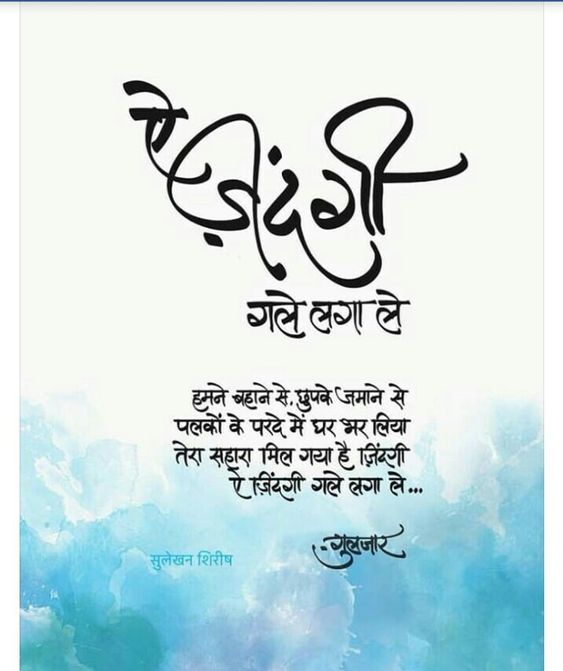
A section of poets also wrote for cinema and television; poets became lyricists and screenwriters, moulding this literary form further. Some of the known lyricists are – Anand Bakshi, Shailendra, Saroj Mohini Nayyar, Sahir Ludhianvi, Amrita Pritam, Gulzar, Javed Akhtar, Prasson Joshi, Jaideep Sahni and Irshad Kamil.
O life, embrace me… a song from the Hindi film Sadma (1983), lyrics by Gulzar. [Source – Pinterest, for English translation click here.]
It has been a long journey for the Hindi Poets, forever evolving along with the Hindi language. The ability of the Hindi language to sanction and its power to absorb new ideas has given Hindi literature a colourful past. While we compartmentalize the eras for it is then easier to approach the bulk of literature produced, it many times overshadow the individuality of a poet for poets are not of one era, they are of every era.
Poets, by nature of their profession, see what is beyond their times, see what is invisible to others, and this is what makes every honest poem unique. The 21st century Hindi poets, like their ancestors, present an image of the world around, and also give us a peek into a deeper world, the inner world.
Jubilant stream meandering modestly… Image by Layers from Pixabay
Gatherings under the giant Mahogany tree in the evenings, the jubilant stream meandering modestly and maybe also a talkative Koel’s parleys encouraged the wanderer… and the love stories, happy and incomplete ones, beaded in a melody and sung by folks for generations… it touched his soul.
Time failed to bind him as he travelled back and forth in the past and present to collect these melodies for posterity.
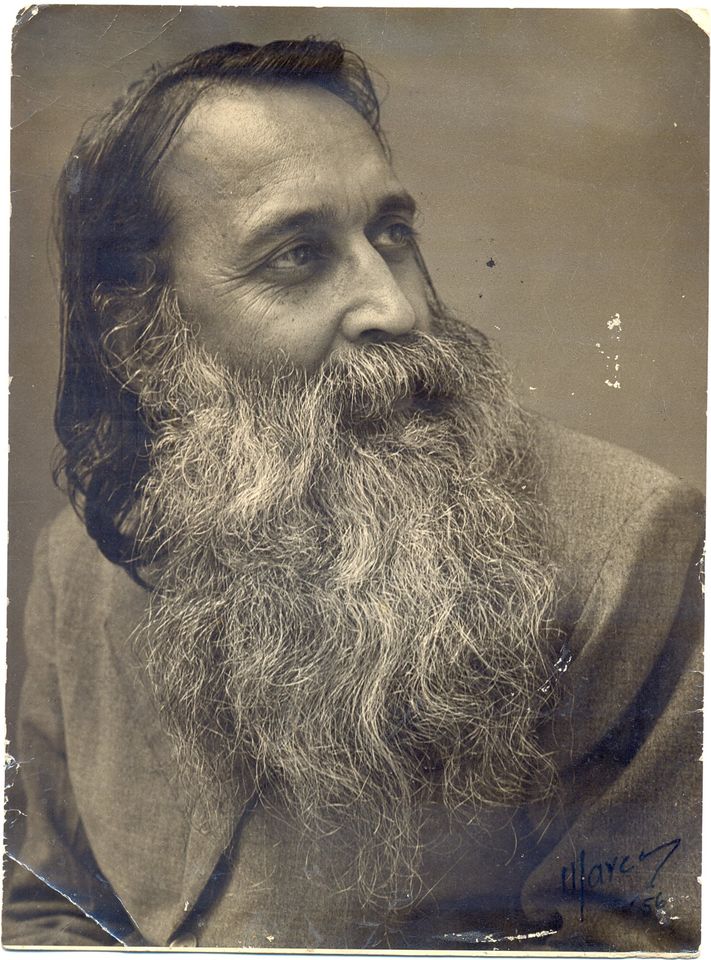
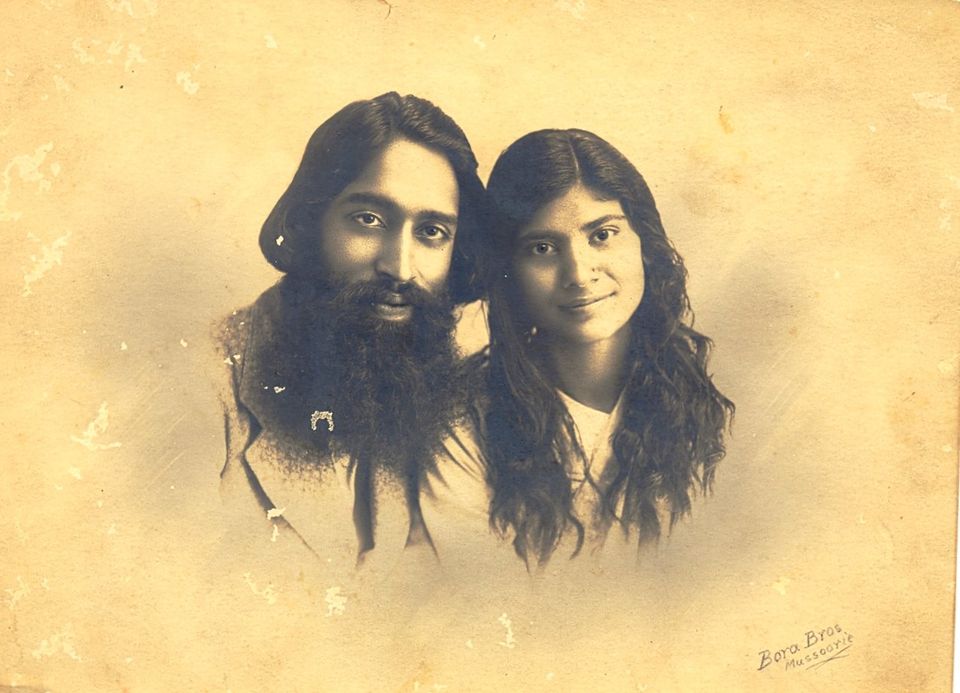
Nicknamed as Ghumakkad (wanderer) and Darvesh (saintly), Devendra Satyarthi (1908-2003) was a folklorist, poet, essayist, novelist and translator who wrote in Punjabi, Urdu, Hindi and English; he is famously known for his pioneering work, Giddha, an anthology of folk songs.
Travelling during the British Raj in an undivided India he met farmers, traders, tribals, mendicants and learnt from them their stories, listened to their songs and sang along.
Accumulating a treasure of around three thousand folk songs in fifty different languages, a beautiful feat in itself, he gifted it to the public for free; when All India Radio decided to pay him royalties for the folk songs, he refused it saying that the copyrights were vested in the motherland.
Rabindranath Tagore, who shared Devendra Satyarthi’s passion for folklores and folk songs, urged him to explore the world of folk literature throughout the country and also suggested him to write predominantly in his mother tongue i.e. Punjabi. Satyarthi obeyed him like a true disciple.
Folklores – the traditional beliefs, customs, and stories of a community, passed through the generations by word of mouth – certainly are a repository of knowledge that has an answer for the one who is astounded by life and its candour.
No doubt Devendra Satyarthi lived like a gipsy, he had to astound the norms so as to grasp our folklore heritage in a single lifetime.
*
‘मेरी प्रेयसी हीर नहीं है
न ही मैं रांझा
मैं पथिक पैर में चक्कर
मेरी प्रेयसी पथ की अभ्यस्त
चल पड़ती है उधर
जिधर मैं हो लेता हूं
न हंसकर, रोकर
नयनों में प्रिय नयन पिरोकर.’
(Translation – Neither is my beloved Heer*/ Nor am I Ranjha*/ I am a traveller/ And my beloved is habitual of the travelling life/ She walks along with me/ Wherever I leave for/ without a smile or tear/ with just love in her eyes.)
Living a life of a roamer, on the mercy of the others, travelling on almost no budget, this became impossible for Devendra Satyarthi’s wife after they had their first child.
Taking the responsibility of running the house, his wife started sewing work; for a while he too stayed back, working as an editor of a Hindi newspaper, but not for long.
His free-spirited folklorist’s soul made him embark on his next journey to different cities and villages.
“I confess that it was the sewing machine which saved the family, I just scribbled on paper,” Satyarthi said so as an old man. His poems, novels, short stories, essays, folk song anthologies, his contemporaries and the readers speak differently though; he continues to be a wanderer sage for them.
Hazari Prasad Dwivedi, the famous Hindi novelist, historian, critic and scholar, wrote a poem praising Devandra Satyarthi in which he compared Satyarthi’s loner lifestyle with that of the sun and the moon in the sky, as he too walked alone, spreading brightness through his words.
Devindra Satyarthi fought for independence with songs of freedom, love, devotion, brotherhood and unity.
He gathered this harmonious spirit and shared it with the countrymen; leaders like Sarojini Naidu, Jawaharlal Nehru appreciated his work and so did the father of the nation, Mahatma Gandhi.
“Many were foresighted in those times of the Raj and talked about the importance of recording the country’s cultural diversity, but few had the courage to step out of the cushioned life and do it. It required a lifetime, and Satyarthi dedicated his.”
Awarded with accolades like the Padma Shri, the fourth highest Indian civilian award, Devindra Satyarthi continued working in his late eighties and passed away at ninety four.
In his rigorous journey, it was his passion for folk songs and folk tales and the unflinching support of his wife that made him a jovial philosopher-poet.
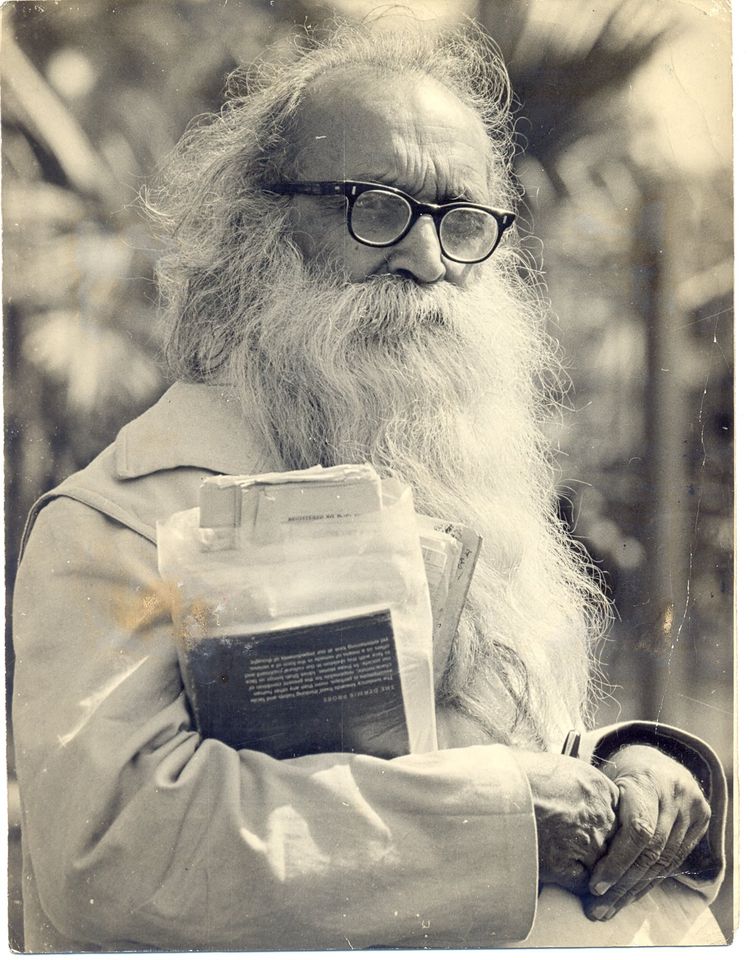
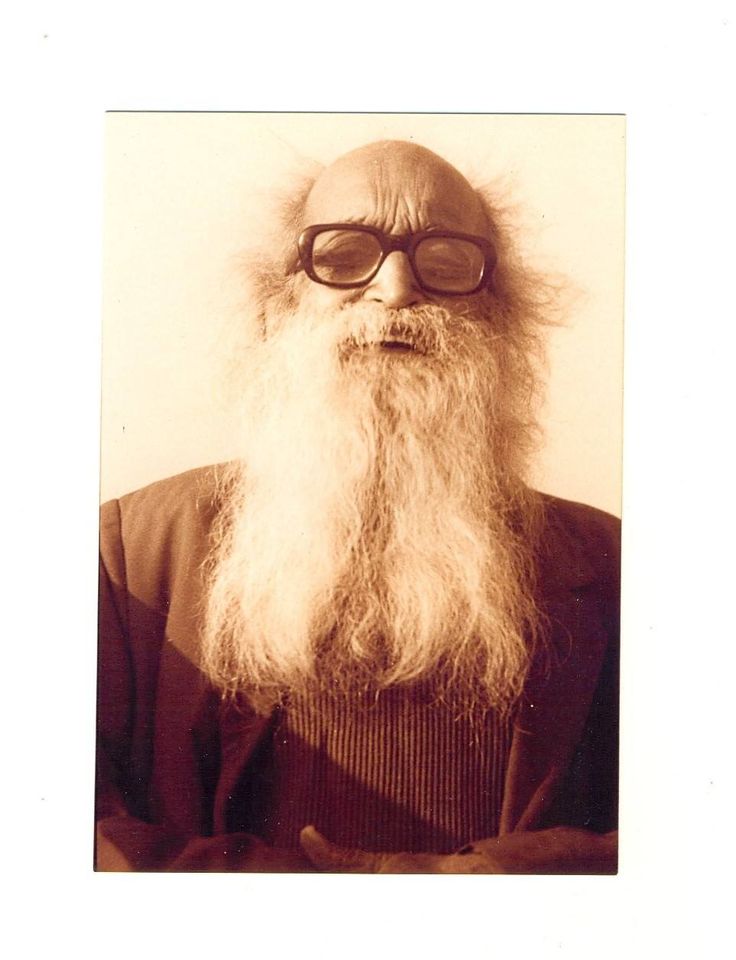
A khadi kurta-pyjama, long white beard and hair, thick spectacles, a rough jhola-bag and a few notebooks clenched close to the chest, one might have called Devindra Satyarthi a strange, poor old man, unaware about his legacy and treasures.
Jonathan Livingston Seagull and his students. Image from Pixabay.
Jonathan Livingston Seagull wanted to master the art of flying. Soaring up in the sky, above the white ocean of clouds, he felt truly free.
Though very unlikely of a seagull, Jonathan flew high ever so high, he practised and failed umpteenth times, but he never gave up.
An outcast, he lived alone and happily spent his time in his quest to achieve perfection.
On reaching a higher level of existence, he meets gulls like him who wanted to enhance their flying skills. It was not heaven for everyone there were learners.
Chiang, the guru of them all, teaches Jonathan how to let go of the concept of time and space so as to travel freely in the Universe.
“Begin by knowing that you have already arrived”, said Chiang.
Wondering if someone else, one who dares to question and take risks, needs guidance on Earth, he returns.
“Devil” for some and “angel” for others, Jonathan teaches a few eager ones. Practising, failing, practising again, Jonathan’s students rise above the Flock, the mundane.
Jonathan Livingston Seagull then continues his journey to guide other gulls who must have been waiting for him somewhere else in the Universe.
Richard Bach’s fable is soothingly clear, and thus, appears too simplistic to many. Just like flying looks simple only until we give it a try.
He equates perfection with freedom, emphasising on practising and a thirst for knowledge as the golden path to it; a path where you walk ahead passionately and not cumbersomely.
Every little bud in nature rises high, soaking in sun rays, moving towards it. Rising high, shedding the old self, stepping forward to explore the unknown, dwindling before making a firm stand is what life’s journey is all about.
Jonathan Livingston Seagull, “a one-in-a-million bird”, if appears to be too perfect and his ideas if sound too far-fetching then you should look at your on-going journey and answer these questions – what are you looking for in life – perfection in some form or maybe a balance?
And what is balance if not a proportion of perfect this and perfect that?
Even better, you should meet Shelley’s Skylark.
Hail to thee, blithe Spirit!
Bird thou never wert,
That from Heaven, or near it,
Pourest thy full heart
In profuse strains of unpremeditated art.
*
Higher still and higher
From the earth thou springest
Like a cloud of fire;
The blue deep thou wingest,
And singing still dost soar, and soaring ever singest.
‘Blithe Spirit’ calls Percy Bysshe Shelley a Skylark that is soaring up in the sky (or Heaven, or near it), singing beautifully and gloriously that to him it is nothing but unprecedented ‘unpremeditated art’.
The Skylark, invisible to his eyes, has such power in its voice that the poet likens it to ‘a cloud of fire’.
Shelley beseeches the Skylark to teach him what it knows; a divine secret it must be for nothing on earth could outshine it. Joy so true, Shelley calls it ‘a star of Heaven’.
Nature’s bounty, the golden glow worms, the rainbows, the playful wind, a young maiden’s love and a poet’s grand verses, Shelley says the Skylark’s song, that flows in a ‘crystal stream’, is above them all.
What thou art we know not;
What is most like thee?
From rainbow clouds there flow not
Drops so bright to see
As from thy presence showers a rain of melody.
*
Like a Poet hidden
In the light of thought,
Singing hymns unbidden,
Till the world is wrought
To sympathy with hopes and fears it heeded not:
*
Like a high-born maiden
In a palace-tower,
Soothing her love-laden
Soul in secret hour
With music sweet as love, which overflows her bower:
*
Like a glow-worm golden
In a dell of dew,
Scattering unbeholden
Its aëreal hue
Among the flowers and grass, which screen it from the view:
*
Like a rose embower’d
In its own green leaves,
By warm winds deflower’d,
Till the scent it gives
Makes faint with too much sweet those heavy-winged thieves:
*
Sound of vernal showers
On the twinkling grass,
Rain-awaken’d flowers,
All that ever was
Joyous, and clear, and fresh, thy music doth surpass.
The Skylark, above these mortal dilemmas, sings with pure love and delight. And in contrast we, humans, are locked in the past or the future.
We look before and after,
And pine for what is not:
Our sincerest laughter
With some pain is fraught;
Our sweetest songs are those that tell of saddest thought.
Shelley urges the Skylark to teach him just half of what it knows, this ‘harmonious madness’ so that he could capture it within and share it with the world.
The Skylark if not a gleaming reflection of perfection, then what is it? If its song is not a song of freedom, then why is the melody ‘a flood of rapture so divine’?
It must be that just like Jonathan Livingston Seagull, the Skylark returned to Earth, to guide and share its knowledge, to remind the poet that ‘freedom is the very nature of his being’.
Unlike a miracle, both took time to convey what little they knew of the truth. The Seagull stays to make his students practice and the Skylark sings till the chosen one – the poet in this case – hears its joyous voice.
Showing what doors can perseverance open and how patience leads to strength, the Seagull and the Skylark leave it up to the individual to unfold the story further.
Birth and death are timed then and a fully lived life, with all its imperfections, aims for a balance, for perfection that guides it to fly high and well.
And you will never know, I will never show, what I feel, what I need from you, no.
The salmon coloured light is bright in me and still, you cannot see. This colour is all over the space and at night the salmon coloured moon shines to tell you the same, but still, you cannot hear.
Oh no, I am not upset, I am saying it out loud for I know the story now. I love this story now.
Raphael took his bow and arrow that day and went to the jungle to hunt, like any other day. Raphael you saw that hare and you readied yourself, you shot and missed it.
What happened, why did you smile then? Ah, the hare was of salmon colour too, right? You smiled and ran your fingers through your hair, I know.
And you will never know, I will never show, what I feel, what I need from you, no.
Stop shying away… you from me and me from you. Cannot you feel the salmon coloured road on which we are walking? Miles apart and years away, destined to meet along the way.
The journey began long back, neither I nor you remember when. But it is sweeter that way, for there is a mystery and scope for the unexpected.
Raphael when the heart breaks, it takes not a moment to bring it all to an end. Raphael the tears only wish for love.
Fighting in the battle when you took a step ahead, so did I, struggling against the mean voices and terrible lies. The salmon coloured sky reached out to both of us then, I know because I believe in the story.
And you will never know, I will never show, what I feel, what I need from you, no.
We will hold hands and dance and clap and sing together, painting the walls around in salmon colour.
I am not afraid of forever, are you? Tell me this and more when we meet.
*
Post inspired by Imany’s beautiful, soulful song “You will never know.”
The violets, the lovely peaceful charming quiet perfect violets, helped me see the path that I had covered, the mountainous journey suddenly filled me with warmth and glow and I blushed.
I know not what lies ahead, but I am sure to see some violets.
Flowers are made of stories, every colour a different genre, every form a different journey.
A yellow flower lived high on a tree; it sang and danced along with the wind. One day the yellow flower fell on a passerby who looked up at the tree, then down at the flower, smiled and left. The passerby loved its story.
Flowers are the best storytellers, just a glance and the job is done, allowing the story to unfold, to bloom within the seeker slowly.
A lotus once told me an epic and a night jasmine a love story and a marigold a fairy-tale saga.
Flowers are made of stories which the mind forgets but the heart remembers.
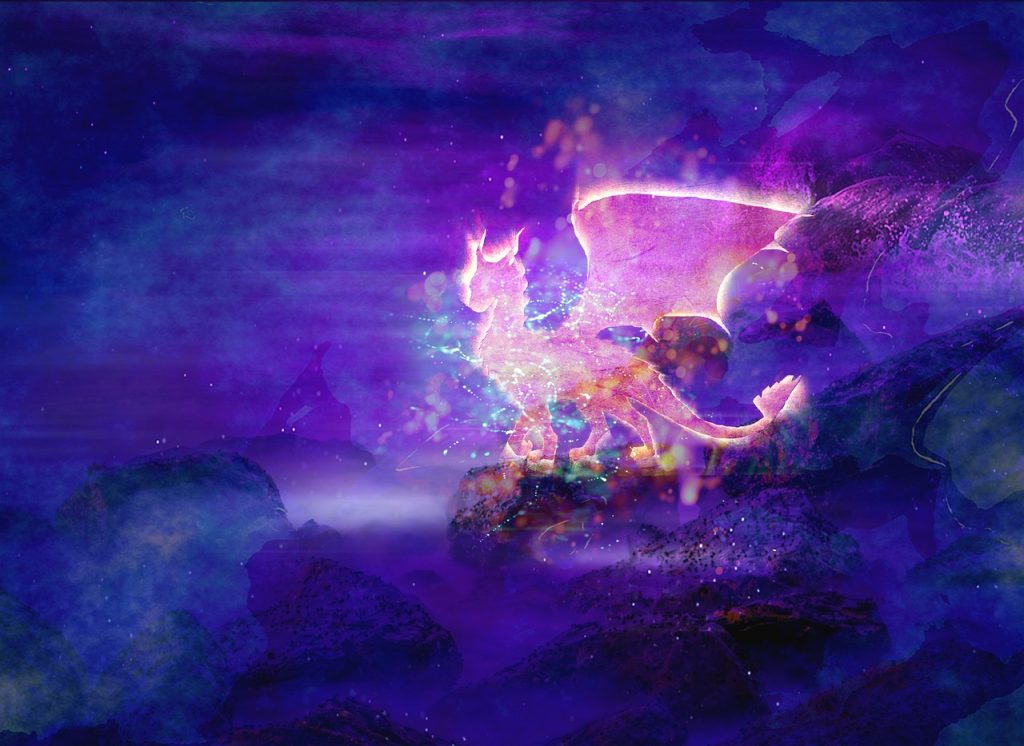
The dragon thought she was dreaming. Image by Lilawind from Pixabay
While walking through the green pastures, the valley of colourful flowers, the dragon suddenly found herself in the desert where the scorching sun stroked her, burnt the sand, splashed mirages everywhere…
… when a strong stroke of warm air tossed the dragon off the ground reminding her that she has wings, which she then fluttered, crossing a gush of gold dust, she closed her eyes for a wink of a second and the world around her changed…
… as she saw the sky-scraping waterfall in front of her, amazed she thought am I dreaming, but did not wait for the answer and plunged towards the waterfall, shouting in joy and adding to its rhythm.
Oh, dragon you are so lucky, here the winters never seem to end and when it does, it is followed by another winter.
Who is asking for the spring? It will be a blessing if I see autumn.
Oh, autumn! The ocean of orange leaves crumple and swirl in my mind all the time, but what I see is the dry hypnotised land, grey and white, and dark and mossy.
Why cannot I be the witness of a twist in my story?
The dragon soared into the air; neither the hail nor the lightening could stumble her once, and crossed the clouds, the drumming music muffled soon as the lush rainbow appeared in full gusto.
You have got wings dragon, probably that is why you can bring twists in your story.
Ah! I have been walking since that cloud burst forced me to leave my hideout and I am still walking. The path I took glistened with frost and I fell twice.
Rough stairs took me up the mountain and just where I stopped to rest, I saw some dandelions dancing, happy about something.
When I smiled with them I was reminded of a wish and at the same time, the rising wind whispered a message, overwhelmed I resumed my journey, my story.
*
Happy, dancing dandelions. Image by DaphoGo from Pixabay
I stopped then on the road, don’t know why exactly, my mind blank and my eyes fixed on the ground. I couldn’t move.
What was I hoping for? To see a rainbow? By looking down?
The wind swam past me and I heard it quickly whisper something, I didn’t get the message. Split seconds passed, then I finally looked up and straight.
Before I could realise, I had crossed the road and now was walking on an old worn out footpath. Grey surroundings didn’t overwhelm me, how could it? But a marigold did, how couldn’t it?
Marigold standing alone with yellow, orange, red coloured joys looked real. I became the part of the background and the marigold became the centre.
I was jealous, why did I take this journey?
The sun rays fell on the chosen one and the Marigold shone bright, beamed its joy. It communicated to me, but how… why?
I smiled for no reason. Marigold nodded at me and I foolishly raised my hand to say ‘hello’.
Fool I made of myself, and still I liked that feeling. In that shared moment I changed.
The dark old lady walks like lightening devouring the night sky, she is swift, she is fast. Her dusty feet, darker than the broken black slippers, know exactly where it is to lead and where it is to stop. Draped in a saree lungi style, her slender figure boasts of agility and strength.
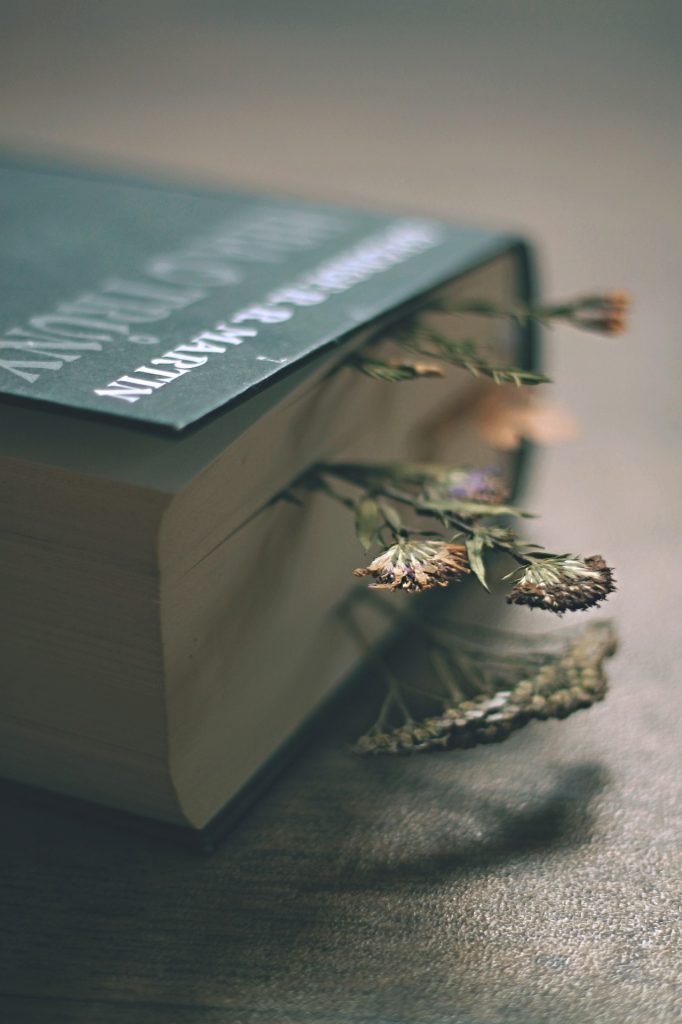
Amma, it is a cold tonight, and she covers her head, her ears with a towel. Does she look funny? Not at all, she looks as beautiful as that flower kept in that book. That flower, dark coloured, tells a story, pressed and noted neatly in that book, stored for a chance meeting.
Amma what time is it, nine thirty she says and at ten she has to go to a flat and clean the dishes, clear the kitchen counter, set the culinary world in order; often Amma plays music and her dear plates, cups and spoons dance on her tune. Amma beams then like she is beaming now – Amma’s toothless smile.
On her way back home, at night, embracing the darkness Amma moves briskly, but stops in front of a small house and asks Sunita bahin if she can get a water-can and take some fresh water; yes, at Amma’s place you won’t see a water-tap rather there are colourful canisters lined up – yellow, blue, faded red and dirty white.
Amma is stylish, her dark self knows what colours to wear – white and orange and green, mixture of all these and add some flowery designs, this completes her look. Do you also wear the colours of the road, the trees, the dark sky Amma? For you look as quiet and great as them.
And your eyes, that glance, killer! Amma your eyes are sharp, your eyes smile – your eyes are familiar with Time and that’s why you don’t mind, you don’t curse it, you don’t cherish it; you know how to live it. Whatever it may be, a raging tempest or a happy carnival or a visit to the temple, you get up the next day and leave for work on time.
I wonder if you have not spoken with everyone until now. Because you are alive, you know Time, you know the society, you know poverty and you smile with your eyes.
Amma cheers to your journey. The dark old lady waved a goodbye.
I am joy running free/
freely flying, fluttering, soaring in a valley/
Of joy am running free.
Greetings!
A storyteller, following the ancient tradition of cave chroniclers, standing in vrikshasana (the tree pose) on a hill top (it is sunny, but windy), breathing in and out stories (relishing it all, but at times overwhelmed), declares animatedly that she will continue to – tell stories, share rare story gems, and connect with the pacy universe while also keeping the website ad-free.
Big thanks to my readers. Stay tuned!
Also, a humble request to the new subscribers to check the spam folder after subscribing. Silly (but necessary) confirmation emails often land there instead of the bright inboxes. Merci!
Ya-hoy!
Chiming Stories (formerly Home Chimes)
P.S – Supporting a storyteller is good for the world’s health (and undoubtedly, for the storyteller’s health as well). Shower some love by sharing, commenting and subscribing to the Weekly Newsletter.
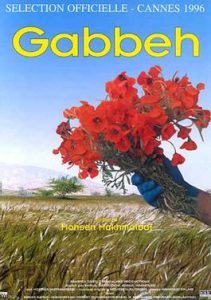
Gabbeh, the 1996 film, is a simple tale of a gipsy girl, her clan and the way their life goes on. Unfolding beautifully just like an artist painting a canvas, Gabbeh quietly touches the grand questions.
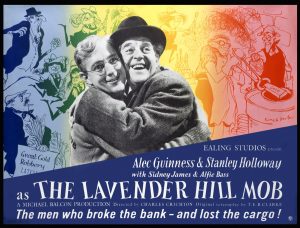
Ranked as one of the greatest British films of all time, The Lavender Hill Mob confides in the audience, letting them see, feel, laugh and think without tickling persuasively with a joke here and a punch-line there.
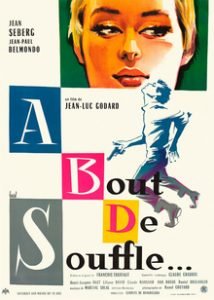
Godard… Breathless and Alive
A Tribute to Jean-Luc Godard, the Film Philologist who Reinvented Cinema.
Yes fly! For walking on the second track is dull and usual, but dreaming high, high, high requires tools. Tools like the right pair of shoes, a chirpy, gritty soul that eats butter-jam dreams, a soul that drinks milky-milky creams.
Silver cascade shimmering the night sky, music to the waves and surreal beauty to the eyes, the Moon loves the art of discipline.
It may be difficult to believe for the Moon’s splendour defies time, it stupefies the clock, it follows the path of a dreamer, but how could this be possible if the Moon knew not discipline?
In this moment, I am a little bit of this and a little bit of that, I am complete and incomplete, I am pleased and uncertain, I wish for nothing and I know I have to wait.
Because the distance covered reminds me of the hurdles I have crossed and the ones I could not, it reminds me of a throbbing past and a dreamy future and it reminds me of how much time is left.
Meredith and the Green Lake
Illimitable Splendour
A joy so complete without any rise or fall, so free without any time corners, so real without true being false, false being true.