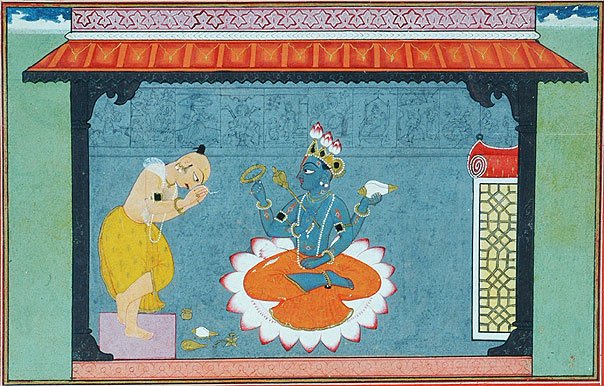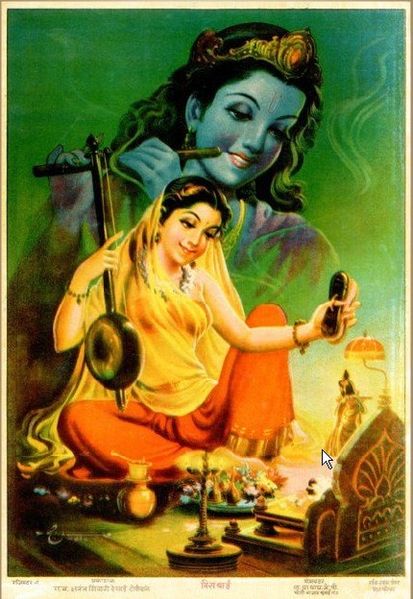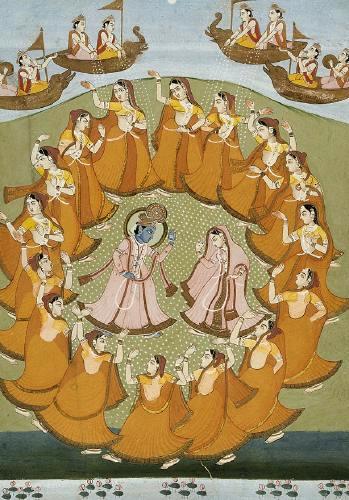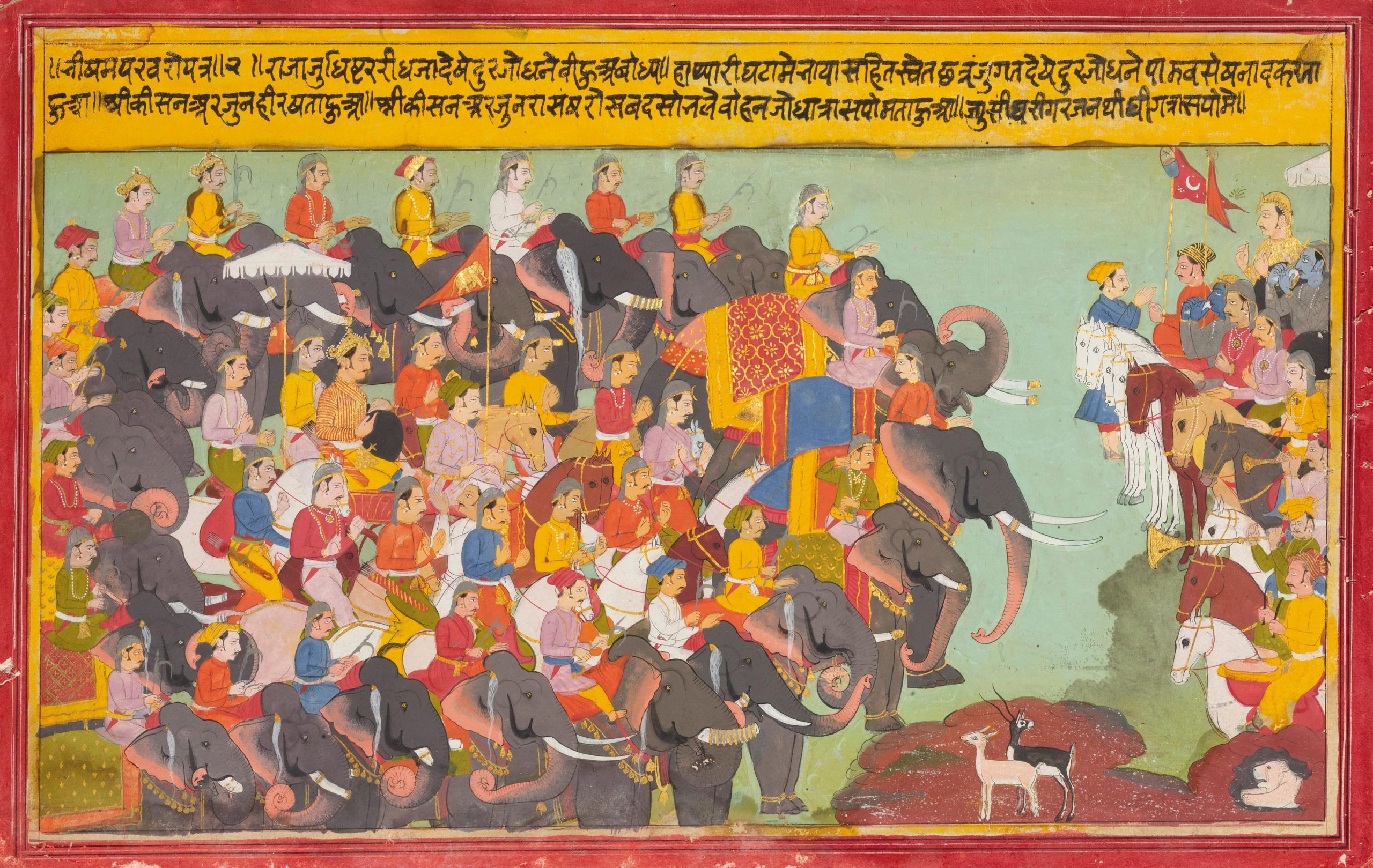
A manuscript illustration of the Battle of Kurukshetra, fought between the Kauravas and the Pandavas, recorded in the Mahabharata Epic. [Source – Wikipedia]
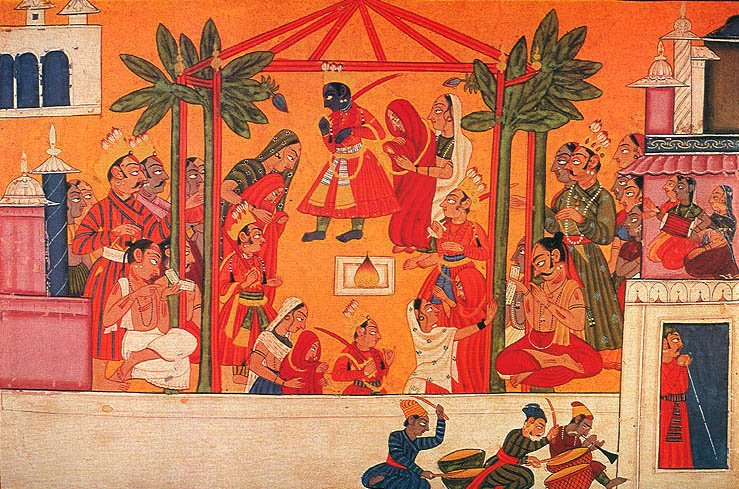
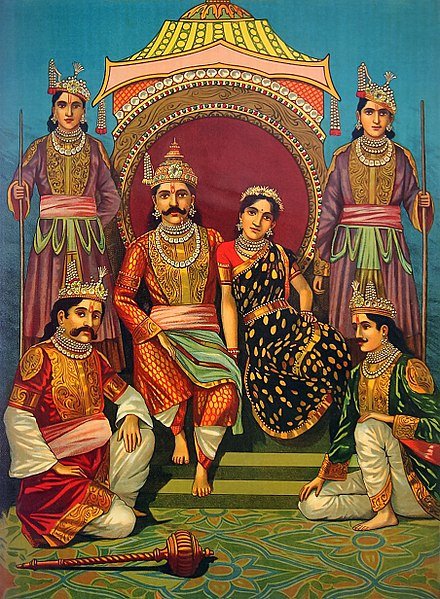
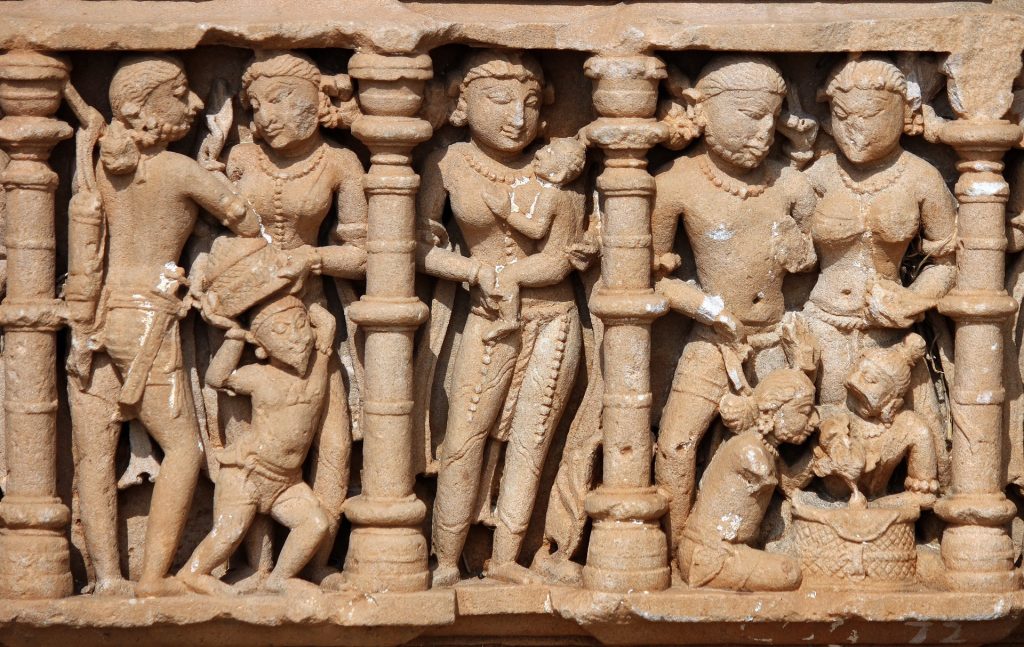
The marriage of the four sons of Dasharatha with the four daughters of Siradhvaja and Kushadhvaja Janakas. Rama and Sita, Laskhmana and Urmila, Bharata and Mandavi and Shatrughna and Shrutakirti are the four couples. [Source – Wikipedia Commons]
“Yada yada hi dharmasya
glanir bhavati bharata
abhyutthanam adharmasya
tadatmanam srjamy aham”
(Bhagwat Gita: Chapter 4 verse 7)
“Sri Krishna said: Whenever righteousness declines, O descendant of Bharata, and unrighteousness prevails, I manifest Myself.”
*
These profound words are etched in every Indian’s heart and soul, no matter which century she is born in, to which caste or creed, everyone knows these words of Lord Krishna; words that have a philosophical meaning, words that talk about a divine scheme of things which might be hard for some of us to contemplate, but no one can deny its power for these words still influence us all.
And so does the story of a great king who brought an end to the evil, giving every Indian across the world the festival of lights – Diwali.
Such is the reach of the great epics of India, such is the magnificence of epic poems – The Ramayana and The Mahabharata – that both the texts are still very much alive, guiding through, warning about and presenting life as it is.
These extensive ancient epic poems, The Ramayana with 24,000 verses in Sanskrit, credited to the sage Valmiki and The Mahabharata with an overwhelming 200,000 verse lines and long prose passages in Sanskrit, making it the longest epic poem in the world, credited to the sage Vyasa, are astoundingly both simple and complex, meaning that, while a little school kid can narrate its storyline in one go, a scholar might find it hard to encapsulate its essence in even hundred pages.
These two epics of India present us with a whole new world of characters, tales, ideas, powers, fears and also a mirror that holds an answer for every individual.
The Ramayana and The Mahabharata came long after The Vedas. The Vedic literature is vast; it contains the highest spiritual thoughts of our Rishis (sages). But the language and the complexity of the thoughts barred it from being accessed by the commoners as the people found it hard to study, to understand the depth of The Vedas, Upanishads and Aranyakas.
Thus, the Rishis, the seers, shaped the philosophical texts in the form of a story, so that the core message could spread amongst one and all. And so it did, in the form of the legendary story of Lord Rama and the epic war fought inKurukshetra.
Ramayana – The Story
*
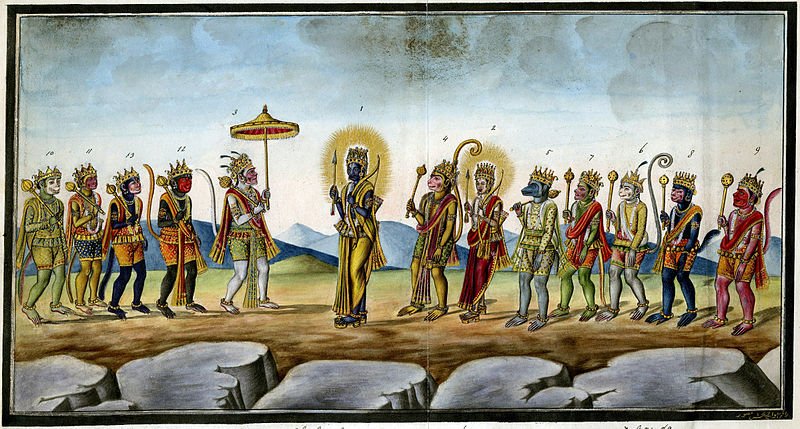
Rāmacandra standing in a rocky landscape with Laksmana and the bear and monkey chiefs of his army. [Source – Wikimedia Commons]
Rama was the eldest son of the king of Ayodhya, Dashratha and queen Kaushalya. Rama was the epitome of magnificence and great virtue. After his tutelage under the great sage Vishvamitra, Rama got married to the sublime Sita, but only after bending God Shiva’s mighty bow at her Swayamvar.
When the old King Dashratha expressed his desire of crowning Rama as his successor, his second queen Kaikeyi, provoked by her maid Manthara, reminded the king of the two boons he had promised her in exchange for saving his life once. Kaikeyi thus demanded to send Rama to exile for 14 years and to make Bharat, her own son, the new king of Ayodhya.
After Rama is banished, he retreats to the forest with Sita and his favourite half-brother, Lakshmana, to spend 14 years in exile. A shocked Bharat goes to the forest and pleads with Rama to return to Ayodhya, but on Rama’s refusal, he takes his foot-wear to place on the throne and to rule the country on behalf of his elder brother.
The epic explicitly narrates the journey of Rama, Sita and Lakshmana in exile; the hardships they face, the various people they encounter and several lessons learnt. There Sita is abducted by the king of Rakshasas, Ravana, while her two protectors are busy pursuing a golden deer sent to the forest to mislead them.
*
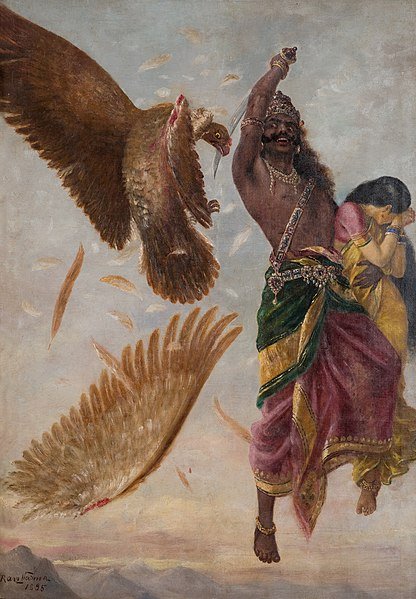
Jatayu Vadham (Ravana abducting Sita); painting by Raja Ravi Varma. [Source – Wikipedia]
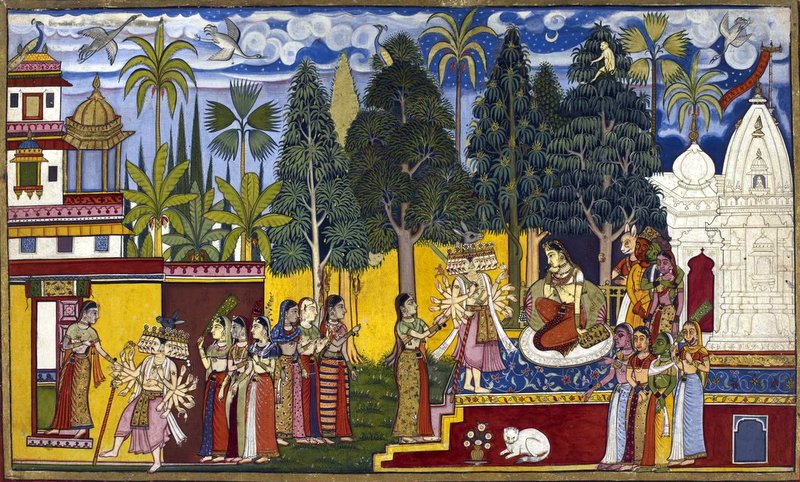
Ravana is meeting Sita at Ashokavana. Hanuman is seen on the tree. [Source – Wikipedia]
In Lanka, Sita resolutely rejects Ravana’s attentions, and Rama and his brother set out to rescue her. After several adventures, they enter into alliance with Sugriva, king of the monkeys, and, with the assistance of the monkey-general Hanuman and later Ravana’s own brother, Vibhishana, they attack Lanka.
Rama slays Ravana and rescues Sita, who undergoes an ordeal by fire to clear herself of suspicions of infidelity. When they return to Ayodhya, however, Rama learns that the people still question the queen’s chastity, and he banishes a pregnant Sita to the forest. There she meets the sage Valmiki and at his hermitage gives birth to Rama’s two sons – Lava and Kusha.
The family is reunited when the sons come of age, but Sita, after again protesting her innocence, plunges into the earth – her mother – who receives her and swallows her up.
The kings and generals of the Lunar Dynasty – Shantanu, Bichitrabirya and Bhishma – successfully ruled a place called Hastinapur. King Bichitrabirya had two sons –Dhritarashtra and Pandu. Since the elder Dhritarashtra was blind, his younger brother Pandu ascended the throne after the death of their father.
Pandu had five sons named as Yudhisthir, Bhima, Arjuna, Nakula and Sahadev. They were known as the Pandavas and a hundred sons of Dhritarashtra were known as the Kauravas. Duryodhan was the first among the sons of Dhritarashtra.
After the death of king Pandu, his five sons were given one portion of the kingdom to rule where the Pandavas built their capital and named it Indraprastha. Envious of their success, the Kauravas invited the Pandava brothers to play the game of Dice with them with a bet over victory or defeat. Playing with a trick, the Kauravas defeated the Pandava king Yudhisthira again and again.
According to the bet, the defeated brothers agreed to live the life of exiles in forests for twelve years, and thereafter to spend one more year in disguise to escape detection.
During this period the five brothers end up marrying Draupadi due to their mother’s misunderstanding – one of the rare examples of polyandry in Sanskrit literature.
*
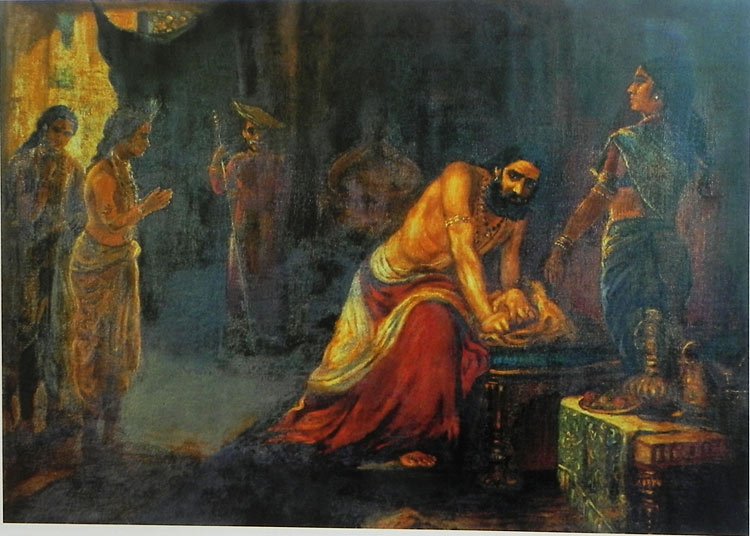
Krishna pleads with Dhritarashtra to avoid war; painting by Raja Ravi Varma. [Source – Wikipedia]
The Pandava and Kaurava armies face each other. [Source – Wikipedia]
After thirteen years the Pandava brothers returned and asked the Kauravas for their kingdom, but the Kaurava king Duryodhan refused to give back their territory. Because of this injustice, a fierce battle was fought between the Pandavas and Kauravas in the field of Kurukshetra.
With Krishna on their side, the Pandavas won the war. All the Kauravas are annihilated, and, on the victorious side, only the five Pandava brothers and Krishna survived.
The Pandavas got the whole kingdom and Yudhisthira became king. But, in deep repentance over the death of his kith and kin, Yudhisthira left the throne in the hands of Parikshita, the son of dead Abhimanyu, and left for the Himalayas with his four brothers and wife, Draupadi.
One by one they fall on the way, and Yudhisthira alone reaches the gate of heaven. After further tests of his faithfulness and constancy, he is finally reunited with his brothers and wife, as well as with his enemies, the Kauravas, to enjoy perpetual bliss.
Influence on the Society
Ramayana, also considered to be the Adi-Kavya (first poem), was written for the masses with the purpose to show mankind a virtuous path. Hence, this epic has inspired and regulated the Indian way of life like a social and moral constitution. Ramayana depicts the values of truthfulness, morality and nobility as supreme ideals of life; it emphasises on the duties of relationships, portraying ideal characters like the ideal father, the ideal servant, the ideal brother, the ideal husband and the ideal king.
Rama, Sita, Lakshmana, Bharat, Hanuman, Shatrughna, Vibhishan and Ravana are characters vital not only to the cultural consciousness of India but also Nepal, Sri Lanka and south-east Asian countries such as Thailand, Cambodia, Malaysia and Indonesia.
Thus, we find many versions of the Ramayana within India, besides Buddhist, Sikh and Jain adaptations; there are also Cambodian, Indonesian, Filipino, Thai, Lao, Burmese and Malaysian versions of the tale.
The Mahabharata, which is more complex and realistic with polity, caste, gender roles and the problems of how to act in a particular situation, is aptly called sometimes the Fifth Veda. Like Ramayana, it also aims to guide the public to live an honest and diligent life, to follow the path of Dharma.
With this central theme, Vyasa added many legends, traditions, Puranic episodes, accounts of other royal dynasties, as well as descriptions of prevailing socio-religious systems, customs and manners, moral values, political conditions, traditions of war and diplomacy, and faiths and beliefs of the people.
The Mahabharata described the virtues of vigour for worldly existence as well as of the higher ideals of life like truthfulness and righteousness. At several places, Vyasa included deeper philosophies and spiritual thoughts to create awareness about man’s divine existence.
A short section of Mahabharata adds to its magnificence, it is the famous Bhagawat Gita – the song of the god – containing the essence of Upanishads, which is considered as the core of the highest knowledge for mankind. On the battlefield of Kurukshetra, commander of the Pandava forces, Arjuna, after seeing his own family lined up against him, realises that war is futile and will lead only to bloodshed. Thus, Arjuna declares to Krishna, his charioteer that he won’t fight.
It is in this crucial situation that Krishna, the Supreme Being in human form, utters the words of wisdom, concerning the creation and existence, the inner purpose of life and the value of duty, as well as the true awareness regarding the reality and the unreality. Krishna’s spiritual utterance on Karma, Gyana and Bhakti-Work, Wisdom and Devotion reveals to Arjuna the real meaning of life.
He realized the truth that while he was doing a deed, he was not the ‘DOER’ himself – he was only an instrument of the Divine Will to uphold a sacred cause for sacred truth and justice. Work without attachment or desire for the result will lead to true knowledge which ultimately will lead man to a stage of devotion for a selfless, detached and peaceful life.
The Holy Gita is regarded as the sacred-most scripture of the Hindus and a unique contribution to mankind’s spiritual consciousness.
*
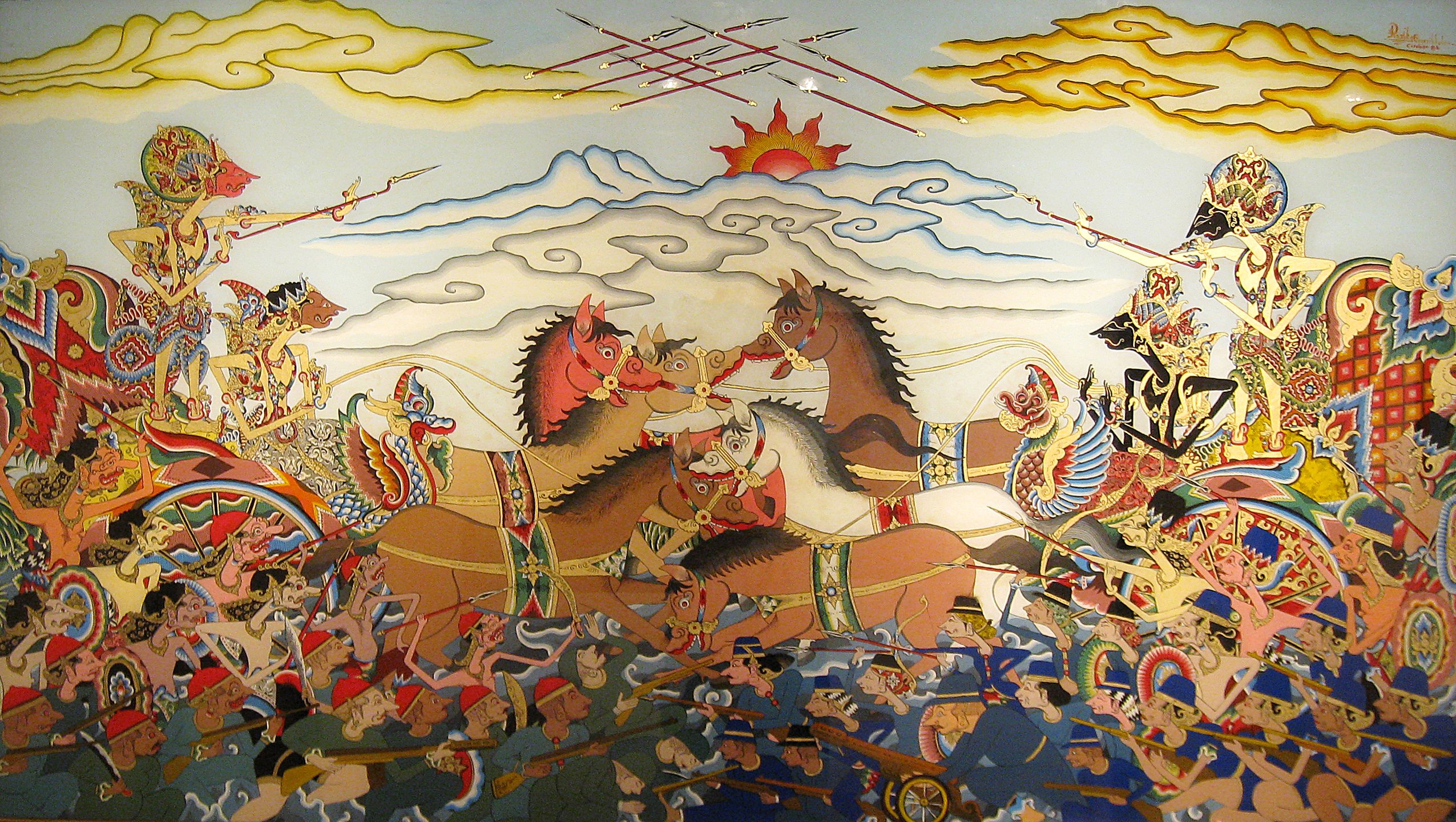
On the left Karna with Salya as chariot driver versus Arjuna with Krishna on the right, Cirebon wayang glass painting, Java, Indonesia. [Source – Wikipedia]
Return of heroes slain in war following chanting by Vyasa. [Source – Wikipedia]
Both Mahabharata and Ramayana together form the Hindu Itihas (history) and though the archaeological facts do not support these detailed tales, people have wholeheartedly accepted it as the truth.
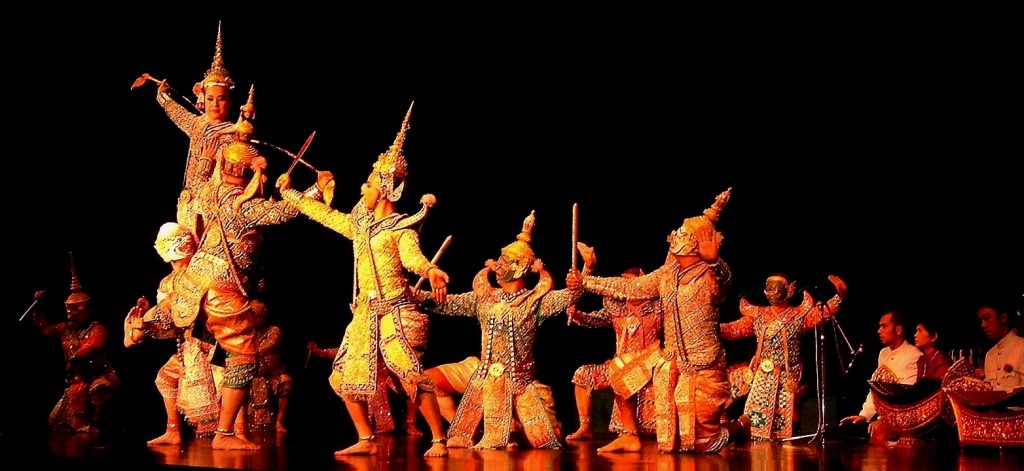
The impact on Indian literature, art and culture has been so deep and profound that even today we see books are being written to analyse one or the other aspect of these epics; apart from TV serials, theatre plays, films and the famous Ram-Leela (enactment of Ramayana), simplified versions of these texts with illustrations are created for children, and hence, this knowledge, through the technique of storytelling is being passed on and on.
Mahabharata teaches the truths of the tricky world and also takes us to the root of our being so that we first fight the battle within and then partake in the battle in the outer world. And the idealistic world of Ramayana, where good and evil take firm stands against each other, reminds us that even if evil is all-powerful and wise, the virtuous always wins in the end.
Rama’s journey to win over the sinful is relatable to the journey an individual takes to fight her own weaknesses; the individual has to banish her desires and struggle for her purpose in life, and with ‘Rama like focus’, one can become victorious in all the battles.
Such individual battles are what we see vividly in Mahabharata, for example – all the five Pandavas fought for a different reason – Yudhishtira fought for the war was inevitable, Arjuna fought for Krishna showed him the ultimate truth, Bheema fought for the sake of Draupadi, Nakul and Sehdev fought for it was what their elders wanted.
This is what makes these epic poems timeless, unique and so relatable. There is righteousness, honesty, duty, spirituality and metaphysics in both the epic poems, but the fact that both reach out to the individual and both give emphasis to individuality, makes it stand apart from the other epic works in the world.
Neither the society, the family nor the beloved is responsible for your decisions, it is you alone who is responsible. Thus, it is all up to you, your thoughts, your actions – the true power is in your own hands.
Charles Lamb, the romantic essayist of the 19th century, under the pseudonym Elia wrote informal, lyrical and personal essays – witty, humorous, funny – he wrote so that his heart won’t explode – and left the essays open-ended, putting the reader quietly in quandary, asking them to look for a definite answer, to construct the story circle complete and finish what he so melodiously had started.
And to finish this wistful melody the reader has to stay with Lamb’s thoughts for a while. What a victory for a writer!
Born in the year 1775, Charles Lamb’s ‘thinking heart’ wrote about his desires and imaginations, resentments and failures, the world he observed and the quaint world he read about, the sweet past and sweet melancholy, the civilised unsatisfied industrialised society, the forgetful lots and the few compassionate souls.
His evocative language interacted with the readers, urging them to participate and respond, digressing from the topic so often just like friends do while sharing an anecdote.
A friend to all, sharing his secrets honestly – for he thinks himself to be the only object he knows intimately – Lamb lived a lonely, troublesome life. He took care of his sister Marry Lamb – with whom he co-authored The Tales of Shakespeare (1807) for children – who suffered from mental illness and in a fit of madness had even killed their mother.
Standing by her side all his life, Charles Lamb continued to write.
His unrequited love story featured in many of his essays; Charles Lamb never stopped loving Ann Simmons. In his essay, Dream Children – A reverie, his two children sit next to him, eager to listen to stories of their ancestors, great uncles and aunts, people whom they will never meet and yet they would know so dearly via their tales.
He shares with them the stories of their great grandmother Mrs Field, the grand house where she lived as a caretaker, about their uncle John Lamb, his childhood days and the “idle diversions” (like watching little fish darting to and fro in the pond on a sunny winter day), and gently brings in the topic of death – how his brother passed away and how much he misses him, suddenly sad, the children ask him to tell them about their late mother (a reflection of Ann Simmons) – and just before he could look at his children a bit more, they fade away.
Awoke, Lamb finds himself sitting in his armchair, too far from the sweet-bitter-warm dream.
In a dream-like style, the essay catches that vague emotion of joy/loss/regret/fulfilment/affection/ loneliness all in one, that sweet emotion that colours the cheeks red, that makes one teary-eyed, that leads to a sigh, that reminds one of life…
Though Greek and Roman philosophers like Theophrastus and Plutarch, Cicero and Seneca wrote essays (when this genre was not yet coined), it was in the early 16th century that the French philosopher Michel de Montaigne popularised the essay as a literary genre.
Charles Lamb chose to follow Montaigne’s lead instead of following the well-known English essayists who predated Lamb like Francis Bacon, Addison, Steele, and Samuel Johnson.
Lamb’s essays, though personal in tone, never hesitated to critique the apathetic side of the society; not serious and didactic as Bacon, Lamb paid attention to creating an authentic picture of life.
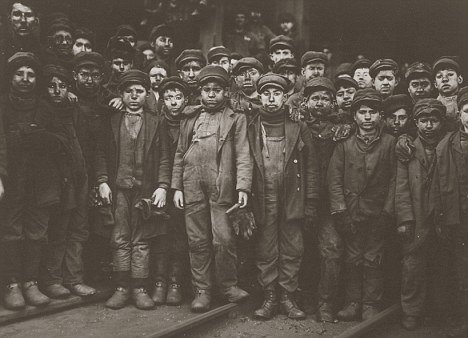
In his essay, The Praise of Chimney Sweepers Lamb talks about the little kids who were made to work as chimney sweepers across London – snatching their childhood so brazenly.
*
A group of apprentice Chimney Sweeps. [Source – Caveat Bettor]
He shares anecdotes that paint the harsh reality in a straightforward manner – a tale within a tale – like how a soot-covered boy had laughed when Lamb tumbled down on a street one day, seeing his twinkling eyes made him smile too, how he describes the tea-like beverage that the chimney sweepers found appetizing, a cheap beverage that was made from the sweet wood of the sassafras tree, how his late friend James White used to throw a feast for the chimney sweepers at a local fair, offering them food and entertainment…
Without attacking the privileged class directly Charles Lamb presents an image that cannot be brushed off as easily as sometimes moral talks are brushed.
These imaginative, conversational style essays may not guide the reader like a classical essayist’s essays, it may not teach us the form, but what it does is nothing short of brilliance, it balms and befriends our aching heart and tells us frankly that it is alright, we are all in the same boat…
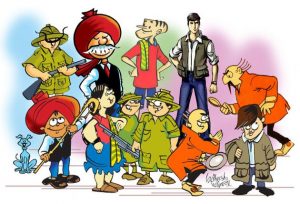
Sneak peek into the world of Indian comics. [Source – kanigas.com]
Powerful animated images, quick words locked in speech balloons, bold sound effects ‘Pow’ ‘Boom’ ‘Zap’, an amalgamation of drama and comedy, so much and more presented in a small booklet makes a single copy of a comic book.
The popularity of comics is such that you will easily find fans of Suppandi, Doga, Shikari Shambhu, Super Commando Dhruv, Rajan Iqbal and Bahadur and most definitely every Indian is a fan of Chacha Chaudhary, Nagraj, Biloo and Pinky.
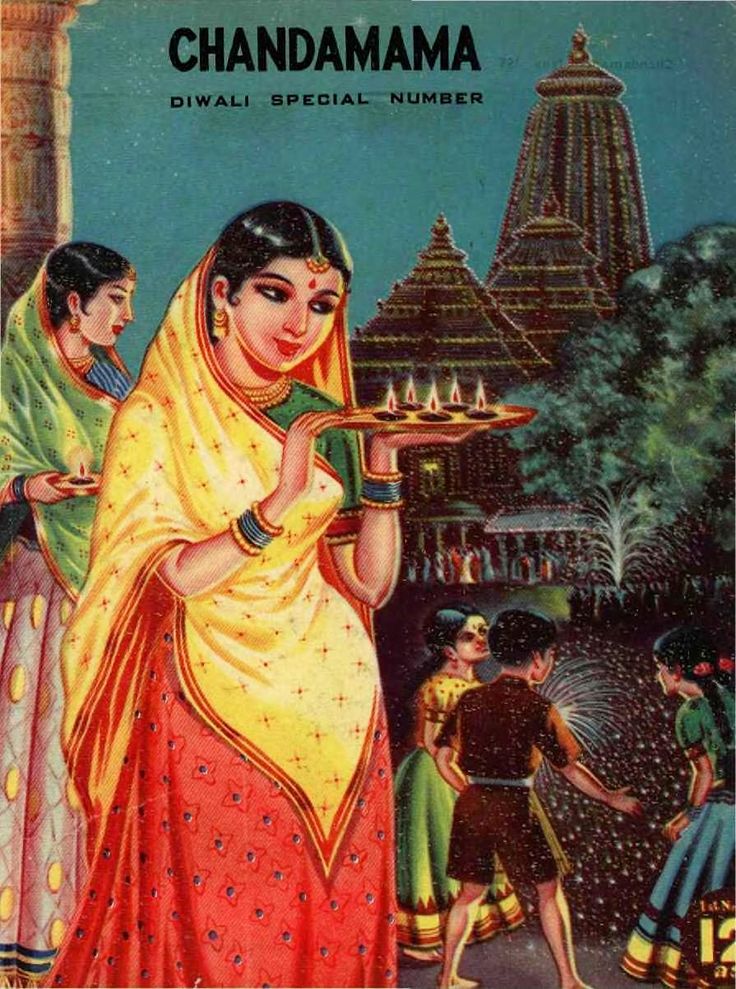
While India boasts of its timeless rich literature, music and other art forms, the beginning of comic books took its time to establish successfully. Magazines like Baalak and Honhar started in the year 1926 and Chandamama began in 1947, but these were simple works with illustrations and not an out-and-out comic.
The fact that Baalak ran for decades, from 1926 to 1986, and Chandamama’s last issue was released in 2013, proves that the storytelling techniques of Indian writers are impactful; it won’t be wrong to say that we might soon see these magazines in the digital platform.
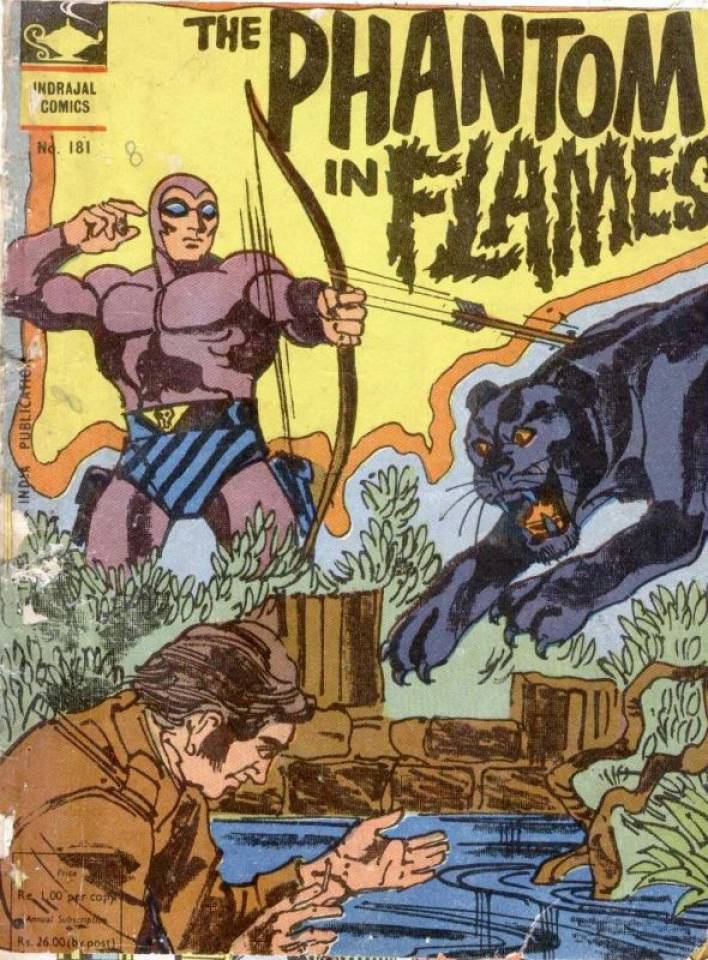
Syndicated comics from the West first entered the lives of readers; international strips like The Phantom, Mandrake, Rip Kirby, Flash Gordon and many others found a loyal audience in our country. Illustrated Weekly of India, the magazine, that ran over a century in India, started giving space to the comic books, though only the international ones as yet.
But not for long as Uncle Pai (Anant Pai, the pioneer of Indian comics) in 1967 was ready with Indrajal Comics to present a country full of epics and folklores, the ‘comic book world’ of its own.
Inspirations were taken from the West, which had a flourishing comic industry by then, and thus, Deewana Magazine came into being that followed in the lines of the world-famous American magazine – MAD. This magazine had illustrations and jokes, but the themes were serious and political, it meant to be sarcastic and mock the folly of the power-hungry.
*
[Source – daily.social]
Chacha Chaudhary [Source – daily.social]
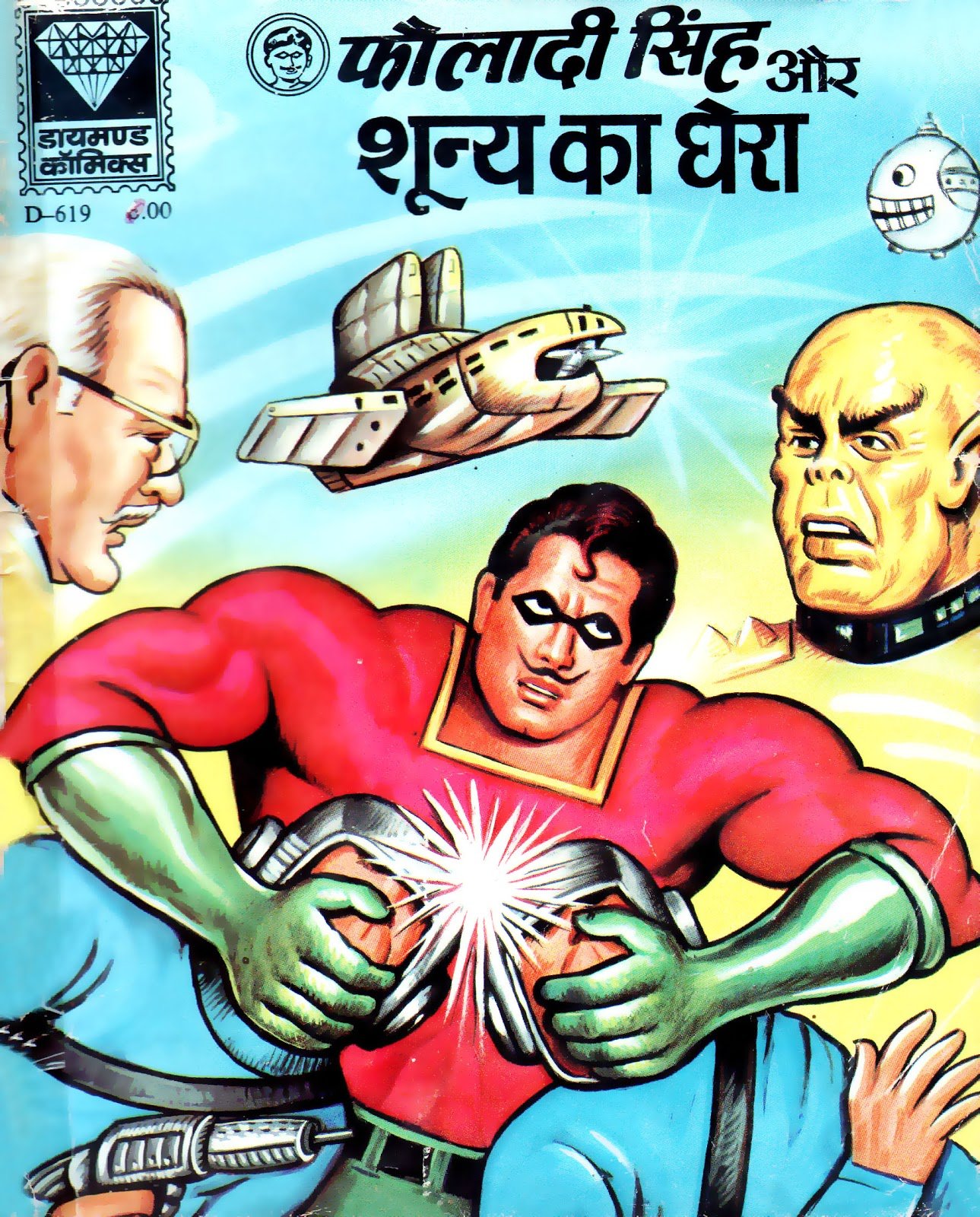
Pholadi Singh [Source – daily.social]
[Source – daily.social]
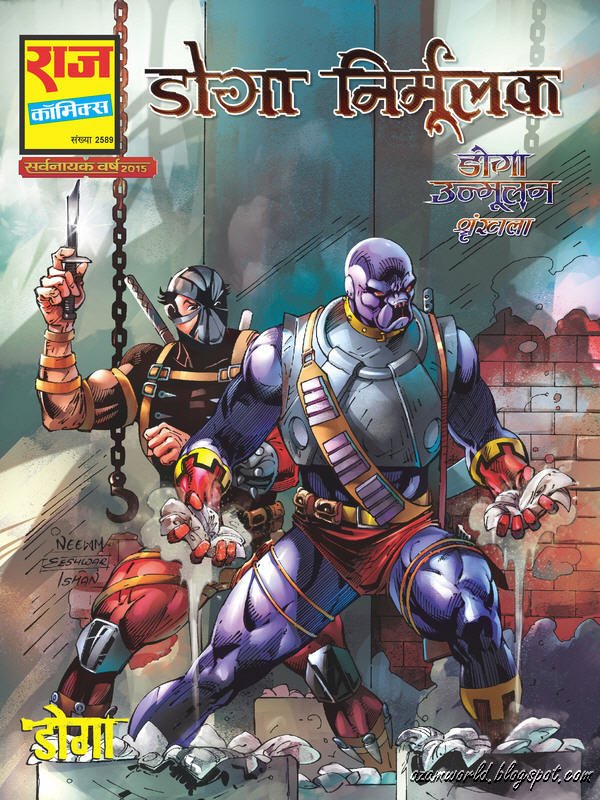
Doga [Source – daily.social]
[Source – daily.social]
*
It was Anant Pai who began the Amar Chitra Katha comic book series (and later on Tinkle) which started with Western fairytales like Little Red Riding Hood and Pinocchio, but then soon switched to Indian mythology, epics, history, literature and folklore.
The Ramayana, Sati and Shiva, Karna, Ravana, Shakuntala, Panchatantra, Birbal, Tenali Raman, Rana Pratap, Raja Raja Chola, The Mughal Court, Valiant Sikhs, Great Indian Emperor, Brave Rajputs, The Kuru Clan, Great Rulers of India and many such comics took over the stores all over India and people started eagerly waiting for the next issues.
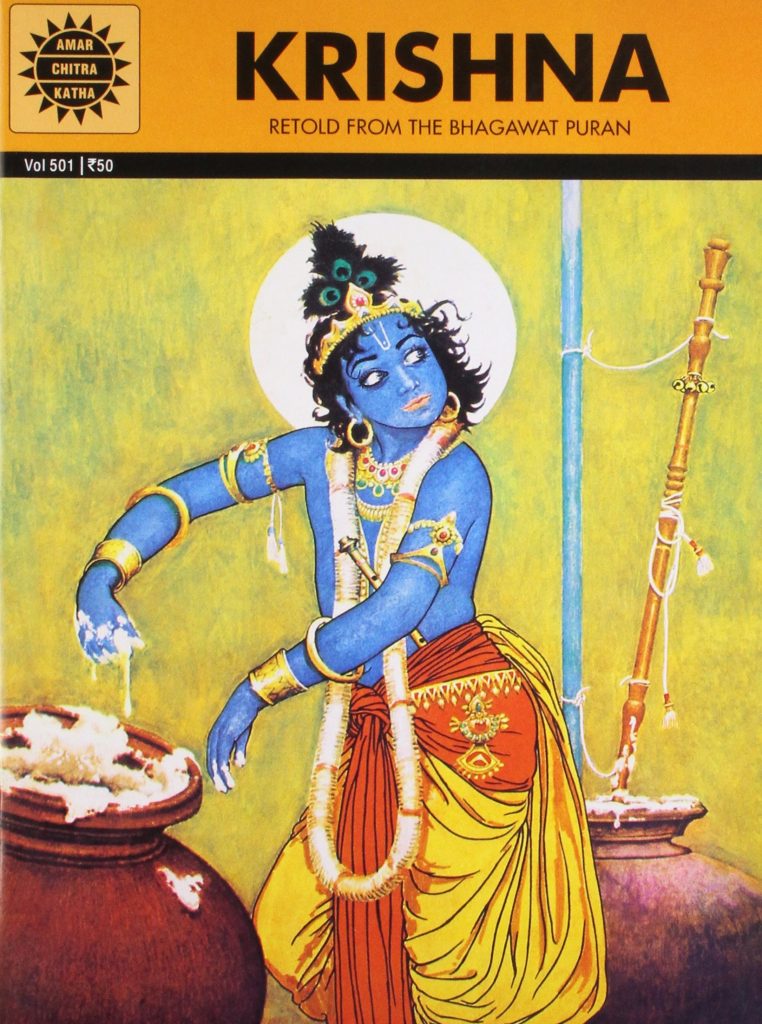
It was Amar Chitra Katha’s comic book based on the adventures of Krishna that became the biggest hit; more than 5 million copies have been sold till date and it remains one of their best-selling comic book series.
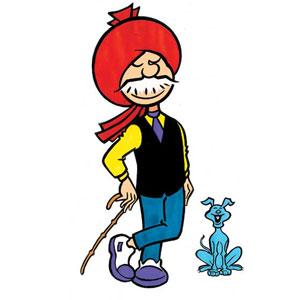
In 1969, a brilliant comic character was born who was in contrast to the macho heroes of the West – an old, frail man with a white moustache and white Paghari (turban), whose brain worked faster than a computer – it was Pran Kumar Sharma’s creation Chacha Chaudhary. Undoubtedly, India’s most popular character, Chacha Chaudhary enchanted the minds of the children and adults alike, the entire nation welcomed this loving and wise character.
Published in the Hindi magazine Lotpot, Chacha Chaudhary’s stories were translated into over ten different languages and it sold more than 10 million copies.
Such was the appeal of this simple yet witty, old but brainy character that this comic book also got made into a television series in 2001, starring Raghuvir Yadav as Chacha Chaudhary. Rocket, Chacha Chaudhary’s faithful dog and Sabu, his strong friend, an alien from Jupiter, also became famous. Everyone enjoyed and learned from Chacha Chaudhary’s anecdotes, making him the entire nation’s Chacha (Uncle).
*
Chacha Chaudhary and his pet dog Rocket. [Source – Wikipedia]
*
With the advent of a new era, the ‘70s, many publishing houses started taking comics seriously. Indrajal Comics to give competition to Amar Chitra Katha started new series based on Indian mythologies and epics.
Focusing on the problems of dacoits, which was prevalent in those days, Aabid Surti gave the readers of Indrajal a new hero – Bahadur – strong, smart and stylishly dressed in Kurta with a pair of jeans; this progressive Indian hero became an idol for many.
Several publishers had a stint in this field, like the Goyal Comics, Madhu Muskan, Champak, Lotpot and the Manoj Comics, while some publishers were there to make a mark and begin the golden age of comic books in India, these were Diamond Comics (started in 1978), Tinkle Magazine (founded in 1980) and Raj Comics (founded in 1986). Thus, by the mid-1980s, Indian comics had reached its golden age, with more than twenty publishers publishing a vivid range of comics.
Diamond Comics successfully brought new characters like Fauladi Singh (India’s first sci-fi superhero), Rajan Iqbal (kid duo detectives), Lambu Motu in the comic world and invited Chacha Chaudhary to guest in some of its series. They knew what the audience wanted and they were ready to change with the changing times; these reasons make Diamond Comics one of the longest-lasting indigenous comic publishing houses in the country.
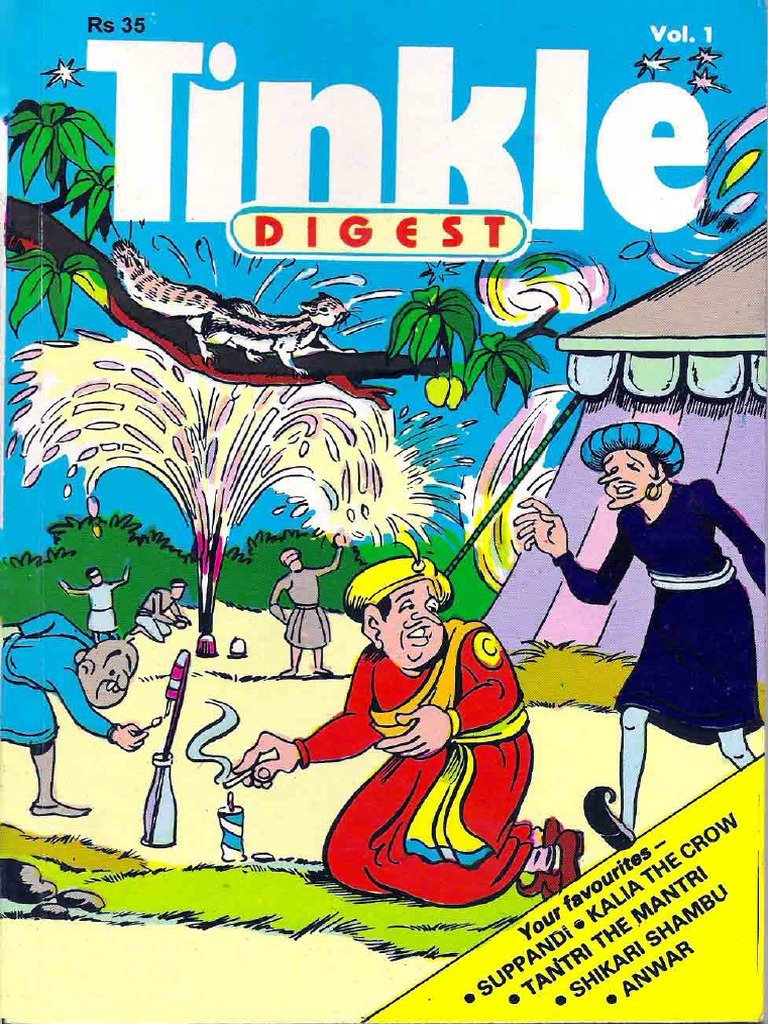
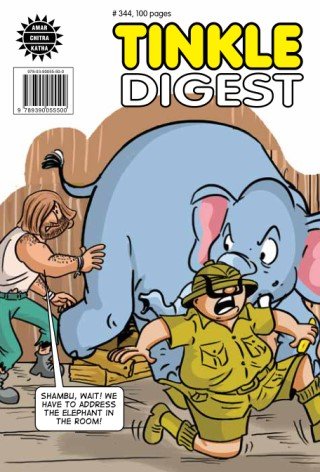
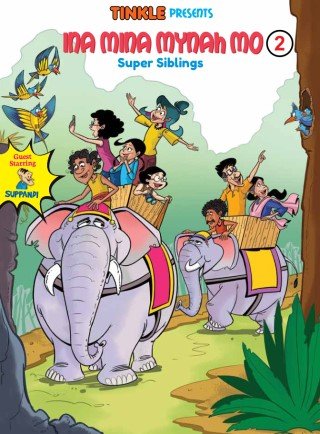
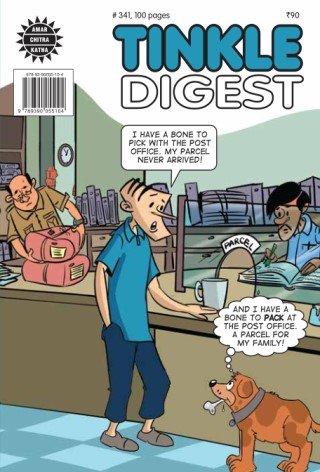
Tinkle, a fortnightly magazine, brought another treat for the comic book lovers; it started offering puzzles, quizzes and contests usually for school children making it extremely popular in no time. Suppandi, Shikari Shambu, Ramu & Shamu, Ina-Mina-Mynah-Mo got nationwide success.
Suppandi was created by legendary artist Ram Waaerkar, who illustrated for the Amar Chitra Katha as well; a large chunk of other characters was created by pioneers of Indian comic book space like Anant Pai and Margie Sastry. Such is its fascination that Tinkle is very much active in the 21st century and also has an active official website.
*
Suppandi [Source – digital.tinkle.in]
Shikari Shambu [Source – digital.tinkle.in]
Ina-Mina-Mynah-Mo [Source – digital.tinkle.in]
Suppandi [Source – digital.tinkle.in]
*
Raj Comics, the longest-lasting Indian publishing house for comics along with Diamond Comics, gave to the masses a strong lineup of fantastic Indian superhero characters, a category in comics that wasn’t yet truly explored in India.
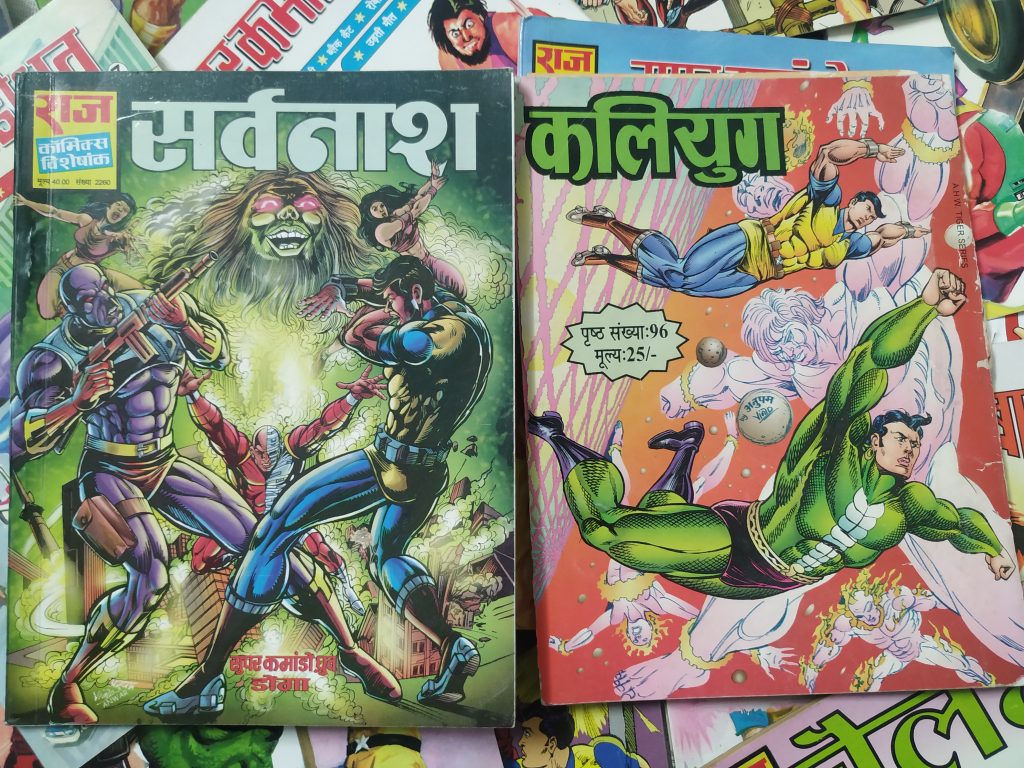
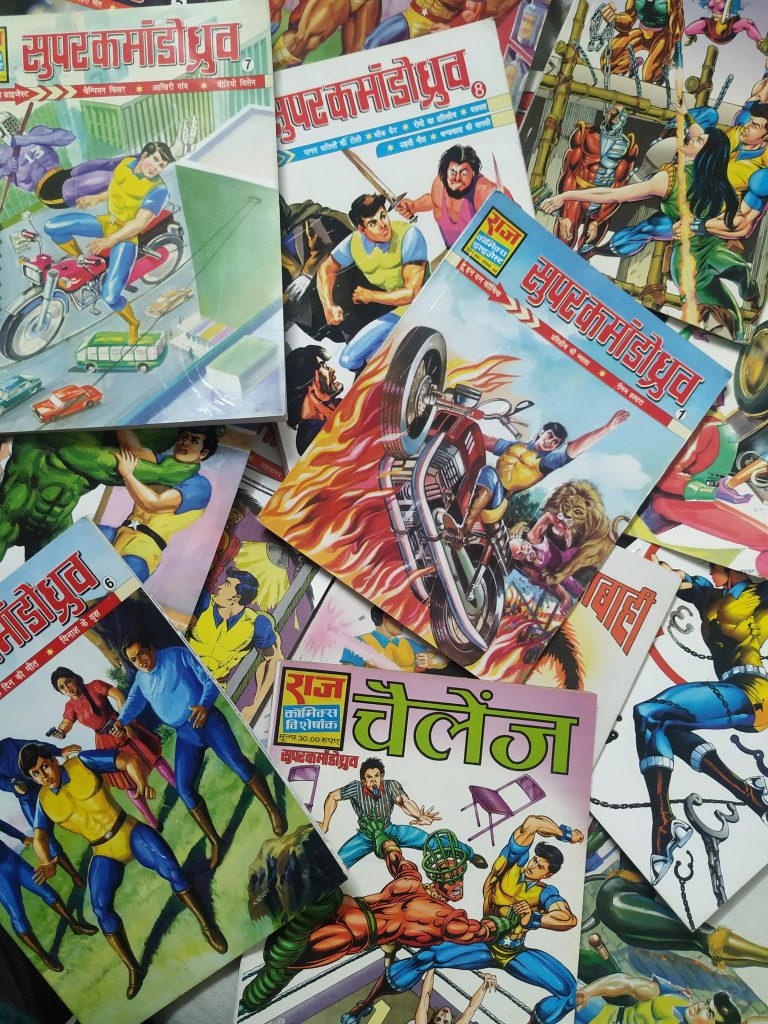
Anupam Sinha’s character, Super Commando Dhruv became young boys’ favourite hero, the striking feature being that Super Commando Dhruv had no superpower, he fought bad guys using his intellect, ability to talk to almost every kind of animal, scientific knowledge, martial art and acrobatic skills, unparalleled willpower and a determination to eliminate evil from this world.
Other popular Raj Comics’ heroes include – Parmanu, a hero with superpowers like the ability to fire atomic rays from his wrist and chest, to teleport and fly; Bheriya, the cursed wolf-human hybrid, who is a skilled warrior, who lives in and protects the jungles of Assam; Bhokal, a winged warrior prince who fights with the mystical sword that can cut through any matter.
The Doga series too had a huge readership; Doga, a ruthless, fearsome vigilante who wears the mask of a dog and believes in uprooting the problem rather than solving it, has no superpowers, except that he can talk to dogs and take their help in finding goons.
Doga is a dark character, an antihero who roams in the sewers of Mumbai and shows no mercy to any criminal. The fan base of Doga series is so strong that there have been talks of making it into a feature film.
But there was another comic book published by Raj Comics that surpassed the success of all these superhero comics, it was the Nagraj series. Nagraj was created by Sanjay Gupta, he was an unmatched superhero with many powers like to release micro snakes from his body, shapeshift, read minds, he had superhuman strengths etc.
With terrorism becoming a reality in the late ‘80s, Raj Comics presented the reader with Nagraj who fought terrorists and aimed to bring peace for the public. Dressed in a striking green skin-tight suit, with a cool hairstyle, Nagraj became a trendsetter.
Nagraj aur Bughaku, a double-sized comic book starring Raj Comics’ flagship characters Nagraj and Super Commando Dhruvpublished in 1991, sold more than 900,000 copies within the first three months of its release, a record that remains unmatched.
*
Super Commando Dhruva, Doga and Nagraj. Photo by Jagriti Rumi; Aditya Thakur’s comics collection.
Photo by Jagriti Rumi
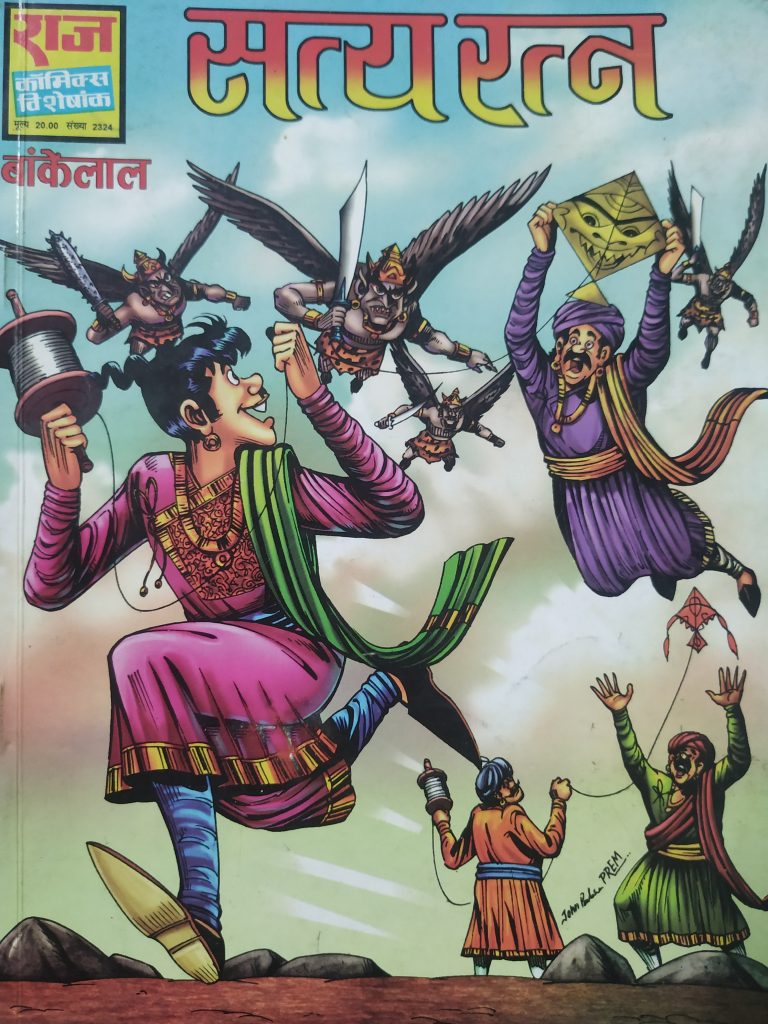
Bankelal Photo by Jagriti Rumi
*
Characters like Bankelal, Gamraj, Fighter Toads (Raj Comics), Detective Moochwala, Gardabh Das (Target Magazine) also became popular in the ‘90s. Manoj Comics published more than 365 comics within a year in the ‘90s, thereby implying that there was a time in the era when readers had one new comic book to read every single day.
Fascinatingly, before the advent of the millennium, the first two graphic novels of India were published, one in the year 1992 – Bharat Negi’s ‘Kissa Ek Karod Ka’, a politicized work based on the Harshad Mehta scam and the second in 1994 – Orijit Sen’s River Of Stories, that talked about environmental, social and political aspects of the controversial construction of the Narmada Dam.
Seeing the success and reach of Indian comics, a US-based company – Gotham Comics, was established in 1997 and with them they brought the publishing rights of DC, Marvel, Dark Horse and MAD Magazine for the Indian subcontinent, to the gladness of the readers.
But to the bad luck of the publishers, the dawn of the 21st century brought the video games, television boom, internet and other major technological leaps that affected the interests and lifestyles of the majority; this caused the decline in the sales of comic books and thus, ended the golden decade of Indian comic books.
The downfall of comic books in India didn’t make this art form extinct. Many Indian artists along with some international publishing houses kept trying to bring back the comic book industry to its glorifying days.
In 2002, San Jose, California-based company published ‘Bombaby The Screen Goddess’, created by Antony Mazzotta; the story revolves around a typical Bombayite who finds that she has powers of the Goddess Mumbadevi and thus, has new responsibilities to handle.
Marvel also launched its Spider-Man: India Project, which went on to become the first major release by a comic book company in India. Understanding the Indian readership, the Liquid Comics and Gotham Comics of India collaborated and together they created epic series on Indian mythology and ancient history; some of their most popular titles include– Sadhu, Devi, Snake Woman and Ramayana 3392 AD.
*
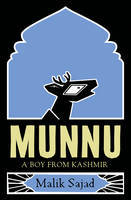
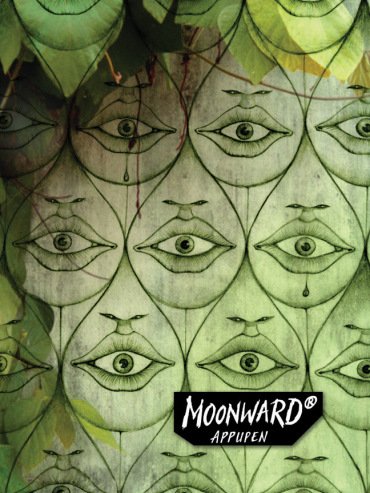
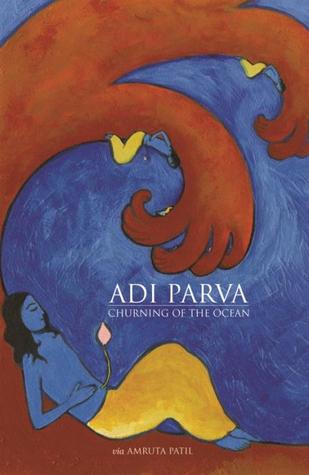
Graphic novels by Indian artists. [Source – goodreads.com]
*
In the new era, the ever-changing and still unstable comic book industry has adopted unconventional ideas and unique methods to lure the public’s interest.
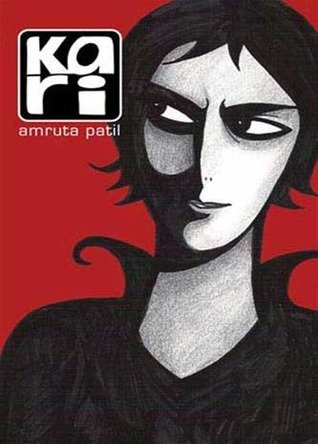
Graphic novels are here and are presenting the adult audience a mirror, not shying away from the grey realities; the drama is real in novels like Kari by Amruta Patil (2008, also the first by a female graphic novelist), Moonward: Stories from Halahala by Appupen (2009), An Itch You Can’t Scratch by Sumit Kumar (2010), Holy Cow Entertainment by Vivek Goel (2011), Sudershan (Chimpanzee) by Rajesh Devraj and MerenImchen (2012), Krishna- A Journey Within by Abhishek Singh (2013), Nirmala and Normala by Niveditha Subramaniam and Sowmya Rajendran (2014), Munnu: A Boy From Kashmir by Malik Sajad (2015).
In today’s fast world, where life has become both advance and complex, artists with their different mediums try to study this advancement, this complexity. Their poems, paintings, novels, comics are like a laboratory of emotional ailments, successes and failures. So for every busy being, what better way to reach this laboratory than through a comic book?
Comic books in any form – print or digital – are here to stay as this storytelling medium is a very powerful one. Whether the sales record approves of it or not, a rich source that offers stories won’t disappear, because humankind cannot do without stories.
We are social animals, we are meant to bond, work together and grow as a society, and thus, nothing can act as a perfect guide as the art of storytelling, not even the advancement in science. This is because science deals with the outer world and the biology of everything, while stories deal with the universal soul and the human soul.
As long as humans thrive, so will the stories, as long as there is imagination, the comic books will keep the readers engaged.
More than a century later Mandarin D again visited the Tinsukia district of Assam with a colourful cryptic message for all.
The transformed world looked the same everywhere and yet Mandarin D observed it buoyantly. Ripples borrowed orange, purple, green and the floating plants, transfixed, only swayed when Mandarin D swam elegantly.
That change is constant, O believer, do not lose hope, that every action counts, O dreamer, do not stop walking, that life is living in the present, O dear, have faith in yourself… Mandarin D read some lines from the message.
But I know, it is up to us to decipher the tone of the message; I picked the fantastical, the awe-inspiring, and folk-tale-like tone for my message – one that promises to surprise, play mystical rhymes and make the impossible possible – and felt elated.
‘That is beautiful, that is indeed the message for you’, said Mandarin D and left suddenly without bidding adieu.
I wonder which tone you will pick for your message.
How well crafted this story of ours is, we get to share motivations that encourage, no matter, even if it arrives a century later.
Epics, narrative grand poems that celebrate the feats of a hero, and Sagas, narrative prose that deals with social histories and legends, bring forth the magnificent magical miraculous in stories to remind us of the distant charming dream we so often dream; the dream where we always win the battle.
Such heroic stories colour our humdrum thoughts, cheering the spirit’s faith in wonders.
Believing in wonders is vital for it steers us to explore life more keenly and sanguinely; our cherished wonders, packed neatly in stories, passed from generation to generation, create our mythologies.
Mythology is psychology, misread as cosmology, history, and biography.” — The Flight of the Wild Gander (1951)
by Joseph Campbell
The heroic stories, the epics and sagas, the mythologies continue to bridge the gap between the normal and the astonishing, to collect various truths sans embellishments, to fuel the burning time and to mentor the individual who approaches it.
Approaching the epics and sagas via an audiovisual means is not an offence; rather it is advantageous for all those who believe in it.
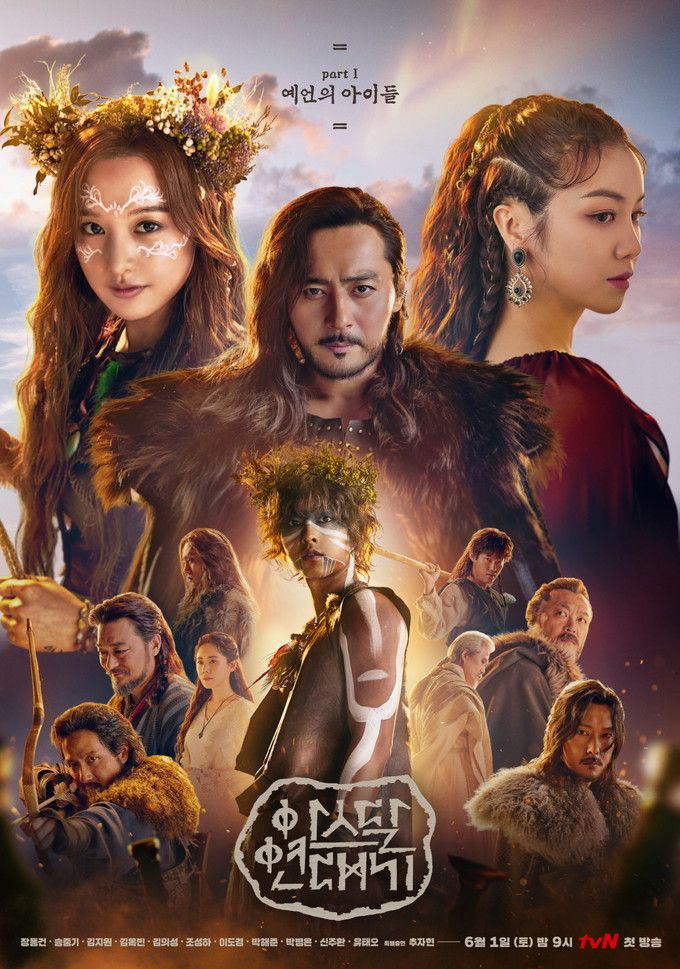
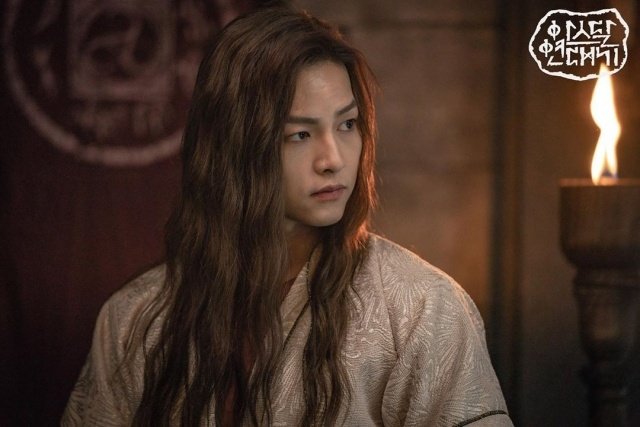
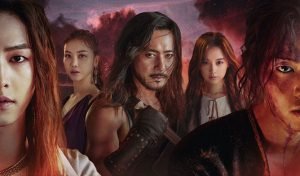
Arthdal Chronicles is an epic saga that has attempted to present Act I of mankind’s complicated story, a thoroughly entertaining and gripping version of how the journey began.
Arthdal Chronicles is a South Korean fantasy drama TV series that takes us back to the Bronze Age in a mythical land named Arth, where different human species and tribes struggle to be on the top of the power pyramid. The tribes which are technically advanced win over the ones which are not; fear of gods and goddesses help in ruling over the masses. In the chaos of battles and betrayals, the hero, as foretold by the seers, rises amongst the so-called barbarians to win his love and tribe back.
What is fascinating is the fact that in Arthdal Chronicles the writers have given every single one of the main characters, not one but many archetypal characteristics making them grey in the purest sense. These characters drive the already-active plot making it an engaging watch.
Meet the five main characters of the series –
(Spoiler Alert – if you do not wish to know the secrets in advance then please watch the show first, though I assure you that this analysis will not tarnish your experience of watching the series.)
The Warrior/ The King/ The Dictator/ The Intellectual/ The Lover
Ta-gon is an excellent warrior; his war tactics bring victory for the Sarem tribe making them more powerful. His secret, that he is an Igutu (mixed blood species), is his strength and weakness. The king, his father, repents not killing him as a child – a traumatic moment that shapes Ta-gon’s persona. His father stations him always on the battlefield, keeping him occupied fighting and winning endless battles, taking over more and more land, getting more salves in return.
Aware of his father’s scheme, Ta-gon plays the game of politics shrewdly and with the help of his loyal Daekan warriors overthrows his father and becomes the King of the entire kingdom. Unafraid to do the blasphemous, the terrible, Ta-gon kills his father and framers an outsider – Eun-Seom.
Ta-gon makes sure no voice rises against him. He becomes the king and very soon a dictator – for he still has a major opponent to defeat – the religious guru Aasa Ron – against whom he could not declare an open war (not unless he has secured his position).
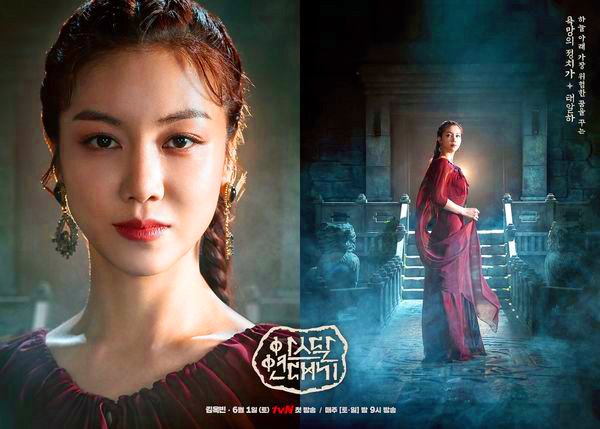
An atypical lover, Ta-gon promises his love, Tae Al-ha, that whatever happens, they will never sacrifice themselves for each other; both tired of acting as pawns for the men in power, they decide to free themselves from this bonded life. Tae Al-ha plays a very important role in Ta-gon’s victories as she understands the political game only too well.
While maintaining his outer image as an indomitable King, Ta-gon prefers to compromise rather than quit. He is an intellectual, a wise man who knows when to recede and when to attack.
When such a complex character is situated in a volatile scenario, explosions are bound to happen. The character growth that we witness in Ta-gon – from a warrior to a king to a dictator to a fallen hero yet not fully defeated – makes him a real, three-dimensional character.
The Queen/ The Femme Fatale/ The Backstabber/ The Lover/ The Protector
One of the strongest characters in this series is Tae Al-ha, daughter of Mehol (whose tribe has the authority over all the technical advancements), Ta-gon’s love interest whom the King i.e. Ta-gon’s father, also proposes for marriage.
She is intelligent, courageous and calculative. A natural leader, she is a perfect contender to be a Queen.
Tae Al-ha desires to win the entire Arthdal Kingdom and rule it along with Tagon. For this she manipulates, tricks and kills; at times like a Femme Fatale she spies for her father and brings all the information that he wants to know about Ta-gon and his father; playing the game all along, revealing only that what must be revealed.
Until the time when his father’s plan does not hold any threat for Ta-gon, she like an obedient servant works assiduously for him, but when her father tells her that to maintain his camaraderie with the ruler, their next step would involve Ta-gon’s sacrifice, Tae Al-ha backstabs her father and takes Ta-gon’s side.
She tells her father that she has chosen a path for herself and that path will take her and Ta-gon to the throne.
As the story progresses, her and Ta-gon’s love story also progresses; she knows all his secrets; she is the one who brought up his child (the Igutu child he had found abandoned in the jungle); she is a true lover and protector as she saves Ta-gon from every threat, albeit her strong personality, her clever solutions to the problems and shrewdness keep us guessing if she is actually on anyone’s side.
Later in this series, Tae Al-ha fights the soldiers who are sent by Asa Ron (the religious leader) to kill Ta-gon; she gets badly injured but does not quit until she finishes each one of them.
Ta-gon and Tae Al-ha fall and rise together, determined throughout to win the kingdom of Arthdal.
The Hero/ The Messiah/ The Punisher/ The Protector/ The Innocent/ The Star-crossed Lover
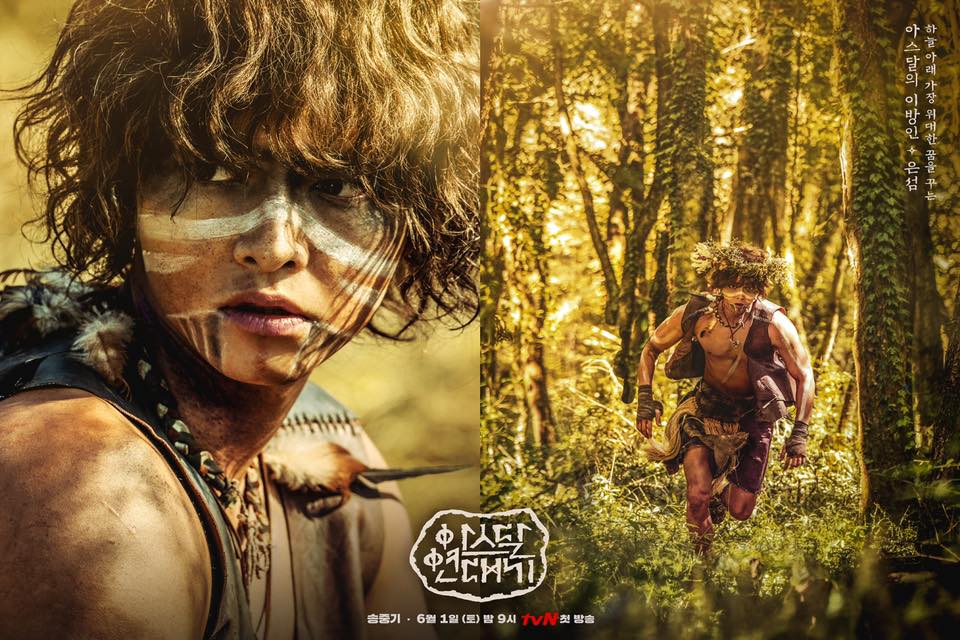
Eun-Seom is very much like the classic mythological hero –at times like Krishna & at times like Christ- born in tumultuous times, is raised away from his home town, brought up by outsiders, different from the normal kids of his age, capable of doing the impossible, righteous and smart, who grows up to be the saviour of not only his tribe but all the suffering souls.
Here, Eun-seom is on a ‘Hero’s Journey’ where his adventure has begun and he is facing crisis back to back; death threatens and revives him; after undergoing an internal transformation he continues with his journey.
Slave trade is prevalent in this world and Eun-seom, betrayed by one of his own, is sold as a salve. Trapped in a mine, digging day and night, collecting precious stones, Eun-seom, feeling cheated and lonely, slowly regains his strength and rises back to fight and frees not only his friends but the rest of the slaves as well.
He like a Messiah saves the victims and like a Punisher destroys the evil-doers. It is Eun-seom who asks the warring tribes to unite if they wish to stand against the powerful lords.
In the series, he is often hailed as Aramun Haseulla – the great god who first came on Arth and settled the first tribe, while later he is called Inaishingi – the leader who, 1000 years ago, united all the warring tribes as one.
Initially, Eun-seom is also a simpleton, an innocent person, who restrains from killing anyone, he hesitates to use his power (as being an Igutu he is more powerful than Homo Sapiens), but when he sees the ways of this new world, and how the weak are suffering, he changes and accepts that he cannot win from the technically advanced race without bloodshed; he understands there is just one sin in the world and that is to show weakness. Thus, he becomes the Protector for all those who join his cause and for them he fights and kills without flinching.
Eun-seom’s character grows, he learns how corrupt this world is, a complete opposite of Iark (the place where he has grown-up); while he is in search of his true identity, his main focus remains the same –to save Tan-ya, his love. The promise that he made to Tan-ya, helps him to survive every danger, the hope of meeting and rescuing Tan-ya fuels his spirit.
Both Tan-ya and Eun-seom were born on the same day, the day Azure Comet shined brightly in the sky; their destiny was sealed that day and thus, even when apart, their heartbeats for each other. They are star-crossed lovers who are destined to change the world forever.
The Female Messiah/ The Punisher/ The Star-crossed Lover/ The Scapegoat
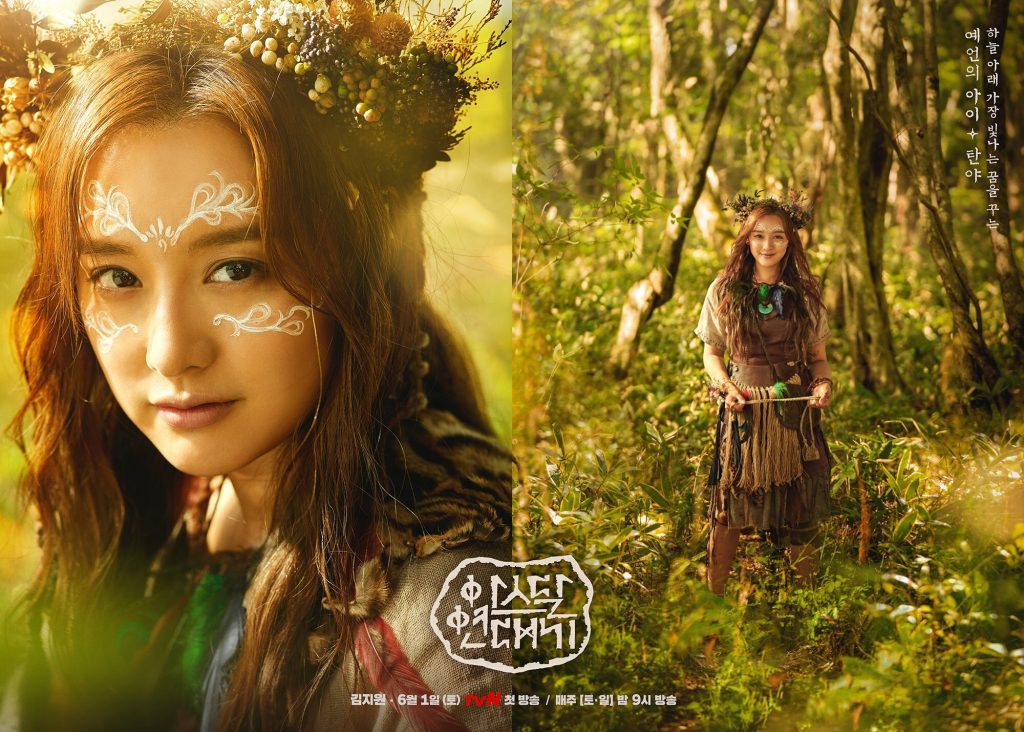
Tan-ya, the next Great Mother of Wahan Tribe, is also destined for great things, though initially, she does not picture herself doing anything of importance.
Her character arc develops quickly as soon her tribe is thrown in jeopardy, many die including her mother and thus, she takes the responsibility as the tribe’s Great Mother. She becomes the Female Messiah as she is the one who frees the remaining members of her tribe, including her father. She is forgiving but does not hesitate in punishing the evil-minded.
She is a nature lover and does not like living in Arthdal; she misses the simple lifestyle of Iark. She stands for her causes, loves her tribe and is willing to fight for them.
Often she and the other Wahan tribe members are used as the scapegoat in the series; when Ta-gon frames Eun-seom for his father’s murder, the public ostracises and attacks Tan-ya and her tribe. Until she becomes the high priest, she stays continuously under threat – Ta-gon, Tae Al-ha and Saya –all try to use her to achieve their ulterior motives. But Tan-ya is a fast learner, she starts understanding the structure of the power pyramid and outplays them all. She can no longer be used as a scapegoat or as a pawn.
Just as Eun-seom, Tan-ya is always thinking about him; she is worried if he will be able to survive in this new world; when Saya tells her that Eun-seom and other Wahan tribe members died in an uproar caused between salves and their lords, Tan-ya breaks down; she then decides not to give up and instead gain power to save the rest of her tribe and apologises Eun-Seom for not ending her life.
She and Eun-seom are a perfect example of the star crossed lover archetype, once separated, they do not get to meet in the first season, while they ceaselessly yearn for each other. Tan-ya before getting captured gives Eun-seom a name – dream – she tells him that he is her and her tribe’s dream, a dream that is meant to come true and so he will have to win.
The Fool/ The Lover/ The Outcast/ The Intellectual
Saya is Eun-seom’s twin brother who was adopted by Ta-gon; he was brought up by Tae Al-ha and spent his childhood life trapped inside a tower. He is truly unpredictable as an individual – the Intellectual when he uses his knowledge (he is very well-read) and tricks Ta-gon and Tae Al-ha and helps Tan-ya to become the high priest, the Fool when he acts instinctively and makes mistakes (by declaring overtly that he is Ta-gon’s son) and a Lover when he for the first time does something, not for his personal but for Tan-ya’s interest.
Though he falls for Tan-ya, he repeatedly tells her lies (like Eun-seom is dead).
Saya is made to live the life of an Outcast; the fact that he is an Igutu and lives in the royal palace equals a serious crime. Ta-gon makes sure that he is locked up all the while; he wishes to use Saya as an Igutu loyal servant.
Full of mysteries, Saya acts as a devoted son, he fears Ta-gon and follows his instructions sincerely, but at times he reveals his anger and frustration and hatred towards Ta-gon and Tae Al-ha. He wants to break away and rule as the King. He can sense Tan-ya’s free spirit and wishes to be with her always.
By the end of the series, the world gets to know about his identity – that he is Ta-gon’s son – and his position becomes stronger as he and Tan-ya (the high priest) appear as a couple to the public. Though it is still not clear as to which side he truly belongs and what new plan he is hatching.
According to a prophecy, three powers that united and later will destroy the Arthdal kingdom are – a Sword (to slay the wicked), a Bell (to echo the Word of God) and a Mirror (to illuminate the world with truth) – Eun-seom, Tan-ya and Saya represent these three powers.
In season one, we cheer for these three characters (especially Eun-seom and Tan-ya) and thus, it will be interesting to see them as the destroyers, facing Ta-gon, Tae –Al-ha and the entire Arthdal kingdom.
*
Watch Arthdal Chronicles to witness the unfolding of an epic saga.
What a wonderful, serene scene this is… I love mountains.
[Dev breathes in the cool air, then walks ahead and clicks pictures using his new camera; the funky-funny-machine-like clicking repeated sound is in sharp contrast to the peaceful silence present.]
Hmm… Hey, Mr Tambourine Man, play a song for me/ I’m not sleepy and there is no place I’m going to/ Hey, Mr Tambourine Man, play a song for me/ In the jingle jangle morning I’ll come following you…
[Dev walks ahead; his rough shoes making imprints on the kind earth; he continues humming and the wind plays the tune; he then stops and clicks another photograph.]
Who’s that? Does not look like a tourist… she is… why is she standing… on the edge of the cliff?
“Excuse me, you are standing on the edge… the cliff is quite steep… just, just be careful.”
[The girl does not pay much attention to him; she is looking at the grand mountains and the evening sky.]
What is with this girl… she is clearly… oh!
[Dev suddenly starts running; camera in one hand, he rushes, gazing like an eagle at the girl.]
“Hey! Wait! What… what are you doing?”
“Calm down, it is alright”, said the girl curtly.
[Dev halts; panting he takes a step forward and then looks up in the sky; he then presses his forehead with two fingers and sets his hairstyle before looking at the girl again.]
“I thought… I… I thought you are about to jump… sorry!”
[The girl smiles and goes back to looking at the picturesque scene. Dev feeling embarrassed hits his head gently and starts walking away.]
“Will you click a photograph for me? Such a peaceful place this is”, said the girl mesmerised by the view.
“Oh, yeah, sure”, said Dev.
Should I take her photograph or just the mountains…? Oh, she is looking at me and smiling, definitely posing for the camera.
“One moment, please”, said Dev.
[He changes the settings on his Canon DSLR and then gets ready to click the photo.]
Hmm… she is beautiful…
[As Dev sets the frame with the girl to the left side and the mountains in the centre, the girl takes a step backwards and jumps. The camera slips from Dev’s hand and he rushes towards the edge.]
Oh, no, oh, no!
[Dev gulps dry air and peeks down the cliff, he cannot see her anywhere. His heart beats madly and his head starts to spin.]
[Dev again looks down, a gush of wind hits him, this time it is playing another melody. Dev fails to recognise this tune. Dev steps back from the edge of the cliff, takes out his cell phone and turns; he dials the emergency helpline number and looks up. The girl is standing with his camera in her hands.]
“The enjoyment of art is an act of recreation, or rather of creation in the reverse direction, towards the source of intuition, i.e., an act of absorption, in which we lose our small self in the creative experience of a greater universe.”
Anagarika B. Govinda
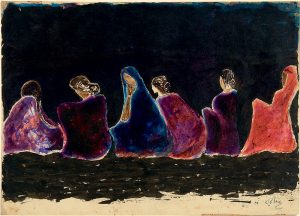
I happen to have a small sweet book titled Art & Meditation (actually a few years back I took it from my brother), written by Lama Anagarika B. Govinda – an artist, a Buddhist monk, traveller and writer.
Sharing his paintings, poems and thoughts with us, he talks about the ineffaceable, elusive yet real, sublimely beautiful link between art and meditation; how true art merges with true religion and vice-versa.
It is not digressive or sluggishly cumbersome, this thought, rather it is stimulating for the one who is not in a hurry.
The author wishes his essays and artwork to serve as koans i.e. ‘meditative problems’ for his readers that churn our thoughts and act as an impetus for continuing the search.
Photos by Jagriti Rumi.
I have gone through this insightful book twice now. What struck me this time was its size, how come Lama Anagarika Govinda’s lectures on art and meditation along with his artwork were capsuled in such a tiny book?
Of course, there must be other collections of his essays and pictures, surely in not-so-tiny a book.
But here I would intentionally turn this coincidence into a grand undertaking and happily say something ambitious.
This beautiful book holds, yes-yes it does, the secret to enlightenment and simply because of its humble, calm and forgiving nature, affordable price, elucidations of the artwork and colour schemes given and the profound ideas shared.
With these balmy thoughts, I will read this book again in the near future for then it will reveal a new secret to me.
Leaving you with an edifying thought –
“Art in itself is a sort of a paradox, a Koan in the deepest sense of the word, and that is why the followers of Zen prefer it to all other mediums of expression. For only the paradox escapes the dilemma of logical limitation, of partiality and one-sidedness. It cannot be bound down to principles or conceptual definitions, because it exaggerates or abstracts intentionally in such a way that it is impossible to take it literally: its meaning is beyond the incongruity of the words.”
Anagarika B. Govinda
Enlightenment, Pocketed- Calm mind beams Together with the heart.
I am joy running free/
freely flying, fluttering, soaring in a valley/
Of joy am running free.
Greetings!
A storyteller, following the ancient tradition of cave chroniclers, standing in vrikshasana (the tree pose) on a hill top (it is sunny, but windy), breathing in and out stories (relishing it all, but at times overwhelmed), declares animatedly that she will continue to – tell stories, share rare story gems, and connect with the pacy universe while also keeping the website ad-free.
Big thanks to my readers. Stay tuned!
Also, a humble request to the new subscribers to check the spam folder after subscribing. Silly (but necessary) confirmation emails often land there instead of the bright inboxes. Merci!
Ya-hoy!
Chiming Stories (formerly Home Chimes)
P.S – Supporting a storyteller is good for the world’s health (and undoubtedly, for the storyteller’s health as well). Shower some love by sharing, commenting and subscribing to the Weekly Newsletter.
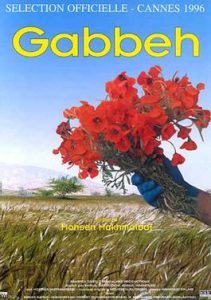
Gabbeh, the 1996 film, is a simple tale of a gipsy girl, her clan and the way their life goes on. Unfolding beautifully just like an artist painting a canvas, Gabbeh quietly touches the grand questions.
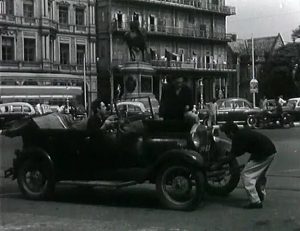
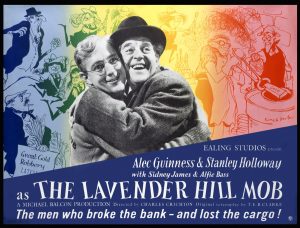
Ranked as one of the greatest British films of all time, The Lavender Hill Mob confides in the audience, letting them see, feel, laugh and think without tickling persuasively with a joke here and a punch-line there.
Godard… Breathless and Alive
A Tribute to Jean-Luc Godard, the Film Philologist who Reinvented Cinema.
Yes fly! For walking on the second track is dull and usual, but dreaming high, high, high requires tools. Tools like the right pair of shoes, a chirpy, gritty soul that eats butter-jam dreams, a soul that drinks milky-milky creams.
Silver cascade shimmering the night sky, music to the waves and surreal beauty to the eyes, the Moon loves the art of discipline.
It may be difficult to believe for the Moon’s splendour defies time, it stupefies the clock, it follows the path of a dreamer, but how could this be possible if the Moon knew not discipline?
In this moment, I am a little bit of this and a little bit of that, I am complete and incomplete, I am pleased and uncertain, I wish for nothing and I know I have to wait.
Because the distance covered reminds me of the hurdles I have crossed and the ones I could not, it reminds me of a throbbing past and a dreamy future and it reminds me of how much time is left.
Meredith and the Green Lake
Illimitable Splendour
A joy so complete without any rise or fall, so free without any time corners, so real without true being false, false being true.