Writer

Mother India – Epic tale of an ordinary woman

Film Analysis

Nargis as Mother India. [Source – BollySpice]

Mother India (1957), a benchmark in Hindi film industry, glorifies our country, which had then seen just 10 years of independence; it celebrates the Indian women – a daughter, sister, lover, wife, mother, an individual and the goddess; and in the most dramatic, impactful manner it presents the magic of cinema.

This epic film is written by Wajahat Mirza (who also wrote the dialogues for Mughal-e-Azam), S. Ali Raza (who wrote films like Aan and Andaz) and Mehboob Khan (the director). It was a remake of Mehboob Khan’s film titled Aurat (1940), based on the story by Babubhai Mehta, to which he profusely added a strong sense of nationalism – like in the song ‘Dukh Bhare Din Beete Re’ we see an outline map of India literally drawn on the land using haystacks, with people inside, waving joyously and Radha, along with her two sons, standing at the centre on a pedestal, with sickles in hands.

Though 172 minutes long, with a total of 12 songs (by Naushad; lyrics by Shakeel Badayuni), Mother India has a very well written, crisp screenplay. It begins with the protagonist, Radha, an old lady, considered as the mother of the entire village, taking the audience into a flashback, as if saying, ‘come, listen to my story’.

We see now a younger, beautiful Radha who marries Shamu. At first, she comes across as a shy and subservient bride, her husband being her lord, but wait until Radha hears about the loan that Shamu’s mother took from the devious moneylender, Sukhi Lala, right then Radha confidently offers her jewellery, her gold bangles to pay off this debt.

The tussle between a family in debt and a corrupt loan shark, between Radha’s values and absolute degradation of every moral standard, only intensifies as the story moves ahead. Radha’s family grows, their needs increases, but so does Sukhi Lala’s interference and with Panchayat’s support he declares his right on Shamu’s farm and its produce.

Birju, Radha’s second son, is a rebel right from the beginning – he wants his farm and Radha’s gold bangles back at any cost. Foreshadowing this, Birju troubles Sukhi Lala as a kid, not ready to give him the harvest, calling him a thief and grows up to become Sukhi Lala’s doom.

The tight plot doesn’t give respite to the viewer for Radha has not one but many battles to win; Shamu’s arms are crushed in an accident, humiliated by Sukhi Lala for living on his wife’s mercy, he leaves Radha and their four kids forever; after passing away of her mother-in-law, Radha faces natural disasters – flood and storm hits her land and takes away her two youngest kids.

With only Ramu and Birju as her family now, defeated, she goes to Sukhi Lala and begs him for a morsel of bread. In this highly dramatic sequence, Radha, who had decided to compromise, eventually doesn’t allow Sukhi Lala to violate her; she has a dialogue with the goddess Laxmi –

“Devi, Radha k roop mein aate hue laaj na aayi… mere roop mein aayi ho to apni laaj lut-te hue bhi dekh lo… hanso nahi… hanso nahi… sansar ka bhaar utha logi Devi, mamta ka bojh na uthaya jayega… Maa bankar dekho, tumhare panv bhi dadmaga jayenge…”

(Translation – Goddess now that you have come in my avatar, witness how you are dishonoured. Don’t laugh! It is easy to nurture the whole world and truly difficult to be a mother, try being one, even you’ll falter.)

Radha looks weak at first – like the mother who is expected to sacrifice and is thusly, worshipped – but after talking to the goddess within her, she remembers her individual self; Radha stands up, crushes the evil and soars like a phoenix.

She raises her kids into fine young men; she gets Ramu, a man of principle, married, but worries for Birju, the stubborn son. Once again foreshadowing is used here – Radha warns Birju not to trouble any girl or else she won’t spare him, in fact, after the Holi sequence when Birju tries to get Radha’s bangles back from Rupa (Sukhi Lala’s only daughter) and the whole village beat up Birju for being so insolent, then Radha promises the entire village to punish Birju herself, kill him if need be.

Bloodthirsty, Birju joins some dacoits, kills Sukhi Lala and abducts Rupa. When Radha tries to stop him, with a rifle in her hands, Birju doesn’t listen, sure that his mother can’t harm him; Radha shoots him down – Birju dies in Radha’s arms after giving her the gold bangles.

Here the flashback ends; Radha opens the gate of the irrigation canal, allowing the muddy reddish water to flow in the fields, symbolizing bloodshed that she and the whole nation had witnessed for freedom.

Every scene, every dialogue, every song makes this film nothing less than an epic poem. The three love stories, in its limited space, bloom beautifully – Ramu and Champa represent ‘love’ that triumphs; Birju and Chandra, both opposite in nature, represent unfulfilled love; Radha and Shamu, unite to face separation forever, represent ‘love’ that sacrifices.

Throughout the film, the characters stick to their traits and yet, each character grows. Ramu fights Birju to protect Rupa in the end; Sukhi Lala begs Radha to save his daughter, but still doesn’t say a word about the debt; Birju leaves the village to become a dacoit, hitting his mother when she tries to stop him; and Radha, a mother becomes Radha, a woman and sacrifices her son for a girl’s honour. That is why these characters are still remembered, they repeat their traits, their flaws, just like we all do.

A 21st-century screenwriter could be reluctant to accept Mother India’s melodramatic approach, but what cannot be resisted is its great storyline, life-like characters and true representation of Hindi cinema.


  *[Originally written for the Screenwriters Association (SWA), you can check the same here.]


Weekly Newsletter

A weekly dose of stories! Get the posts from the Chiming Stories in your inbox and read it when you can. Subscribe now, it is free!

This field is required.

Recent Posts

That Flower, Dark Coloured

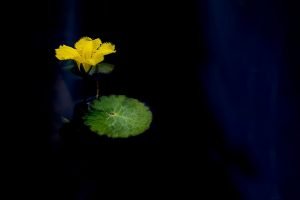
Bloomed in darkness.
[Image by Michael Gaida from Pixabay]

The dark old lady walks like lightening devouring the night sky, she is swift, she is fast. Her dusty feet, darker than the broken black slippers, know exactly where it is to lead and where it is to stop. Draped in a saree lungi style, her slender figure boasts of agility and strength.  

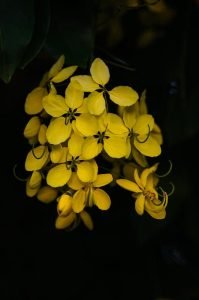
Amma, it is a cold tonight, and she covers her head, her ears with a towel. Does she look funny? Not at all, she looks as beautiful as that flower kept in that book. That flower, dark coloured, tells a story, pressed and noted neatly in that book, stored for a chance meeting. 

*

Waiting for a chance meeting.
[Image by Petra Šolajová from Pixabay]

Amma what time is it, nine thirty she says and at ten she has to go to a flat and clean the dishes, clear the kitchen counter, set the culinary world in order; often Amma plays music and her dear plates, cups and spoons dance on her tune. Amma beams then like she is beaming now – Amma’s toothless smile.  

On her way back home, at night, embracing the darkness Amma moves briskly, but stops in front of a small house and asks Sunita bahin if she can get a water-can and take some fresh water; yes, at Amma’s place you won’t see a water-tap rather there are colourful canisters lined up – yellow, blue, faded red and dirty white.

*

Risen in style.
[Image by dendoktoor from Pixabay]

Amma is stylish, her dark self knows what colours to wear – white and orange and green, mixture of all these and add some flowery designs, this completes her look. Do you also wear the colours of the road, the trees, the dark sky Amma? For you look as quiet and great as them.

And your eyes, that glance, killer! Amma your eyes are sharp, your eyes smile – your eyes are familiar with Time and that’s why you don’t mind, you don’t curse it, you don’t cherish it; you know how to live it. Whatever it may be, a raging tempest or a happy carnival or a visit to the temple, you get up the next day and leave for work on time.  

I wonder if you have not spoken with everyone until now. Because you are alive, you know Time, you know the society, you know poverty and you smile with your eyes.  

Amma cheers to your journey. The dark old lady waved a goodbye.

*


Weekly Newsletter

A weekly dose of stories! Get the posts from the Chiming Stories in your inbox and read it when you can. Subscribe now, it is free!

This field is required.

Recent Posts

Read It Happily

[Source – Pixabay]

In that wonderful valley, some children are playing hide-and-seek. Their laughter, their complaints, their chit-chats echo. The Deodar trees and the wind, the birds and the flying-foxes give the background score. Joy is the dominant colour of this valley, even the passing clouds are pacing down to collect some.

Ah!

That is her memory, just a memory of the past days. The compact city life, the tick-tock march to the town centre, the race to the platform got sidelined somehow, and she took a memory, opened it up, read it happily.

She felt good, memories don’t truly fade. You can always read them. Always!


Weekly Newsletter

A weekly dose of stories! Get the posts from the Chiming Stories in your inbox and read it when you can. Subscribe now, it is free!

This field is required.

Recent Posts

Lord Jagannath’s Eyes

Lord Jagannath by Vrindavan Das.
[Source – fineartamerica.com]

One eye says that the play is on.

The wheel of Time moves ceasing for none, winning over oceans, mountains, the sky, the wind and the fire.

People crowd to clench forms and beliefs, together they build and destroy. They wait to gauge for more and what is better.

Look now, how they shine, bright like fireflies, honest to the core; look now, how they lure, how they trick the tricksters, how they slay a man’s soul.

Speak not, for they are at work, cross-legged monks, meditating on what is less; speak not, for you will fail to express how chaotic is the chaos.

Rising high is the music of unity and harmony; falling face down is the corrupt, fake cry of every rigid mind.

Knowing the beginning, waiting for the end, it walks, it lingers, we walk, and we linger.  

Tala Pattachitra, Palm Leaf Painting – Odisha’s ancient art form.
[Source –
ethnicpaintings.com]

Second eye says that it is all absolute bliss.

There is no Space or Time and it binds none; the ultimate end and the ultimate start merges with the absolute existence.

Flowing in a silent music, dancing always, the ripple reaches the centre.

The Brahman breathes; formless, it is of the colour peace.    

Lord Jagannath’s eyes are the universe we see and the universe we can’t see. The happy devotee who bows, who worships, who sings, who gazes gets mesmerized by one of the universes, and by Lord Jagannath’s smile.

Our million eyes find a million revelations in Lord Jagannath’s eyes.

*

Lord Jagannath, Lord of the Universe.
[Source – harekrsna.de]

Weekly Newsletter

A weekly dose of stories! Get the posts from the Chiming Stories in your inbox and read it when you can. Subscribe now, it is free!

This field is required.

Recent Posts


Ode to the Elements

Short Poem

Twinkling eyes, twinkling elements.
[Source – Pixabay]

It begins and ends, life does,

In nothing but elements,

It shines and multiplies, life does

With nothing but elements.


An atom when quiet and alone

Holds secrets and miracles,

Once it unites, once it tones,

Once the harmony writes a lyrical,

Planets and stars are born.


A star twinkled, its elements

Present in a child’s eyes,

Such a magic never dies

For it is made of elements.

*


Weekly Newsletter

A weekly dose of stories! Get the posts from the Chiming Stories in your inbox and read it when you can. Subscribe now, it is free!

This field is required.

Recent Posts


Red Stories

Red stones, red walls, red stories started it all. A simple drawing spoke about Time. Whispers passed the tale further, expressing and mixing their own self in it. Even when the tale got complex, even when the sound differed, the story kept flowing.
 
It trickled once to form a rivulet, never imagined of becoming an ocean… an ocean that defies gravity.
 
The story about a drawing in a cave, about a lost civilisation, about the pyramids, about the iron idols, about the farms and wheels, about smoke engines and machines, about the moon and the first man… a never-ending saga that teaches and preaches and reveals and warns to remember it all.
 
Every day begins an untold story and every day ends an old story.
 
Red stories, you are moulding and folding time beautifully… and I am listening.

Red stones, red walls, red stories started it all.
San rock paintings from the Western Cape in South Africa. [Source – Wikipedia Commons]
Cave painting at the Tassili n’Ajjer UNESCO World Heritage Site in southeast Algeria. [Source – Wikipedia Commons]

Weekly Newsletter

A weekly dose of stories! Get the posts from the Chiming Stories in your inbox and read it when you can. Subscribe now, it is free!

This field is required.

The Broken Nest and Other Stories by Rabindranath Tagore

Coverage

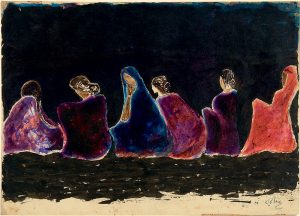
A painting by Rabindranath Tagore.
[Source- V&A Museum]

The Broken Nest  

Charu and Amal didn’t understand their heart’s secret, but how could it be that their own heart hid something from them, well it did. Maybe, Charu’s binoculars didn’t work properly.

And Mr. Bhupati, a lost editor, busy sketching the details of a busy world, had no time for keeping secrets.

Why did they give their secrets to Time for safekeeping?

Time always travels light, thus, it naturally left their secrets behind, visible for them all to see, casting a spell. The spell didn’t kill, it broke hearts.  


The Ghat’s Tale  

Vasant… Grishm… Varsha… Sharad… Hemant… Shishir…   Six seasons talked to the Ghat near the Ganga River. The seasons brought green moss at times and dry leaves at others, dipping the Ghat into sunlight and rain shower with love, the seasons spoke less, but heard sincerely.

What did the Ghat tell them? It shared stories… yours and mine.  


Notebook  

Let her be, why torment her, why read her notebook without her consent? She is little, just a girl, a child bride, she has left her world behind, she has carried some in her notebook.  


Postmaster  

Love is all-powerful and yet it blooms slowly in every soul, taking time for the realisation to sink in and sync with it completely.

A shade of love wrote a letter to the Postmaster who, tricked by mind, read it too late. Oh! That feeling…  


A happy poet.
[Source- Poetry Foundation]

The Broken Nest is a novella, while the other three are short stories; each one holds a complete universe and touches you deeply.

Rabindranath Tagore beautifully writes in the language of love, his characters always express something which stays usually hidden within a heart, sidelined by the talkative world.

Every story of his is like a time machine, it unfolds the past keeping it alive and magical at the same time.

The birds sing sweetest of songs in his stories, the earth dances the best to his tunes, the colour red blushes flamboyantly in his paintings and tears take time to dry up when he narrates.

Know his work and you will know.


Weekly Newsletter

A weekly dose of stories! Get the posts from the Chiming Stories in your inbox and read it when you can. Subscribe now, it is free!

This field is required.

Recent Posts


Leela Remembers

Life means movement and life means change where time is determined to achieve its aim.
Image from Pixabay.

With the intense, ceaseless process of contemplating it all, fitting it into an invisible box, Leela stayed both certain and uncertain. This was no secret to her and yet it was.  

Leela smiled, she played the game and enjoyed the Ferris Wheel ride. Leela preferred coffee to tea when she felt blue.  

Life means movement and life means change where time is determined to achieve its aim. And so in the ocean of life, Leela sailed to the horizon and back to the shore.  

One day when Leela sat down at the shore, sure of not going anywhere, sure about not waiting, partially quiet and calm, she realised that moment’s magic and thought ‘it is alright’. That is it, that is what she thought.  

It is alright, the pace, the degree, the twists and turns, the faults and failures, the tiny victories, the awesomeness and overpowering nature of life is just alright.  

This acceptance, this vision has often helped Leela to fly and touch the sky, and on those gloomy days, it has helped her to be herself.

All she does is to remember that it is alright.


Weekly Newsletter

A weekly dose of stories! Get the posts from the Chiming Stories in your inbox and read it when you can. Subscribe now, it is free!

This field is required.

Recent Posts

The Little Prince

Dedication
Prince with his friend, Fox.
Image from Pixabay.

*

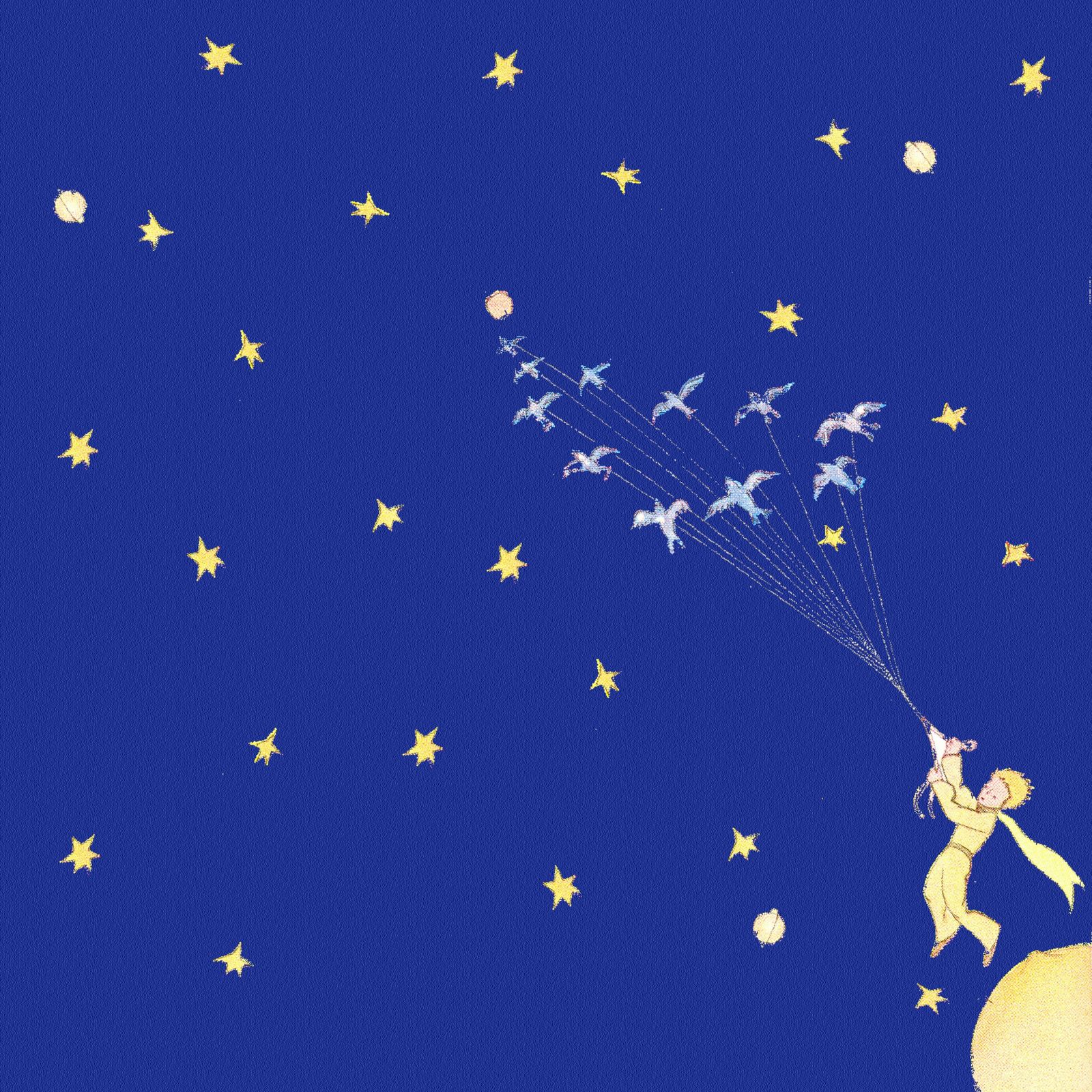
After crossing the vast desert, sailing through the green ocean, the Little Prince reached another desert. Golden sand waves welcomed him or so he thought.  

The Little Prince walked alone. And the narrator’s voice followed him, sometimes foretelling and sometimes sharing.  

“But this is not possible, for I cannot hear this voice”, says the Little Prince.

“Still, you can feel it”, replies the narrator.

The Little Prince inquires, “Feel the voice?”

“Yes, you can feel what the voice says, the emotions, the connections, the ideas, the realisations… this, you can surely feel”, says the narrator.  

The Little Prince sat on the sand cross-legged and pondered over this thought. The desert wind tried to disturb him, but he stayed still, allowing the wind to settle in his golden hair.  

“Yes, I surely feel… and I am glad I do… then what you speak is true”, says the Little Prince as if reciting a haiku.

“True for you and true for me… true for those who can hear me”, replies the narrator in a cheerful tone.  

This made the Little Prince laugh loudly. The narrator and the desert wind joined him.  

“Hey voice, yours is a pleasant sound… keep following me, keep foretelling and sharing, for I am on a long journey”, standing up says the Little Prince.

“I will, I will… for every journey needs a narrator”, says the narrator.  

The Little Prince nodded and started walking, allowing his feet to sink a little and then rise, allowing the wind to tease him, holding his gaze up at the sky, waiting for the stars to show up.

For he knew a star that would lead him to his destination, he felt it deep in his heart. He felt it!  

*

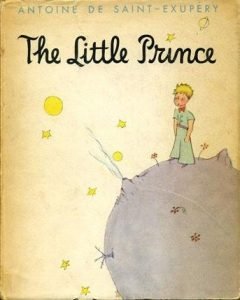
[Source – Wikipedia]

(This post is dedicated to Antoine de Saint-Exupery, author of the novella The Little Prince.) 


Weekly Newsletter

A weekly dose of stories! Get the posts from the Chiming Stories in your inbox and read it when you can. Subscribe now, it is free!

This field is required.

Recent Posts

Trance

Silken!
[Source – Pixabay]

Eyes could see that the mind was dreaming, yet it stayed attuned. The soft, glowing place might be the reason. And colours, crayon colours, water colours flowing smoothly. Glory ruled the place.

Such were the wonderfully true sights that my eyes beamed with pleasure. I then was beyond time and space, happy in the present.

Breathing deeply, quietly, I knew it all and I knew nothing. Bliss!


I woke up and with a quick, strong rush, lively sounds reached me all at once. It was time to live another true dream… it was time to be.

Ah life!


Weekly Newsletter

A weekly dose of stories! Get the posts from the Chiming Stories in your inbox and read it when you can. Subscribe now, it is free!
This field is required.

Recent Posts