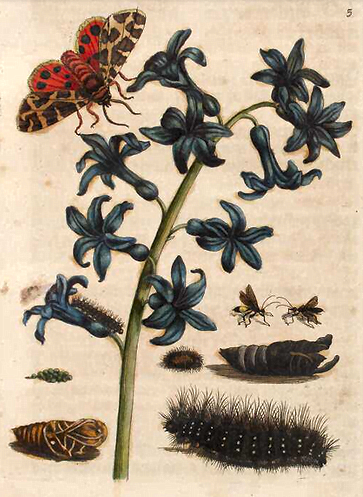
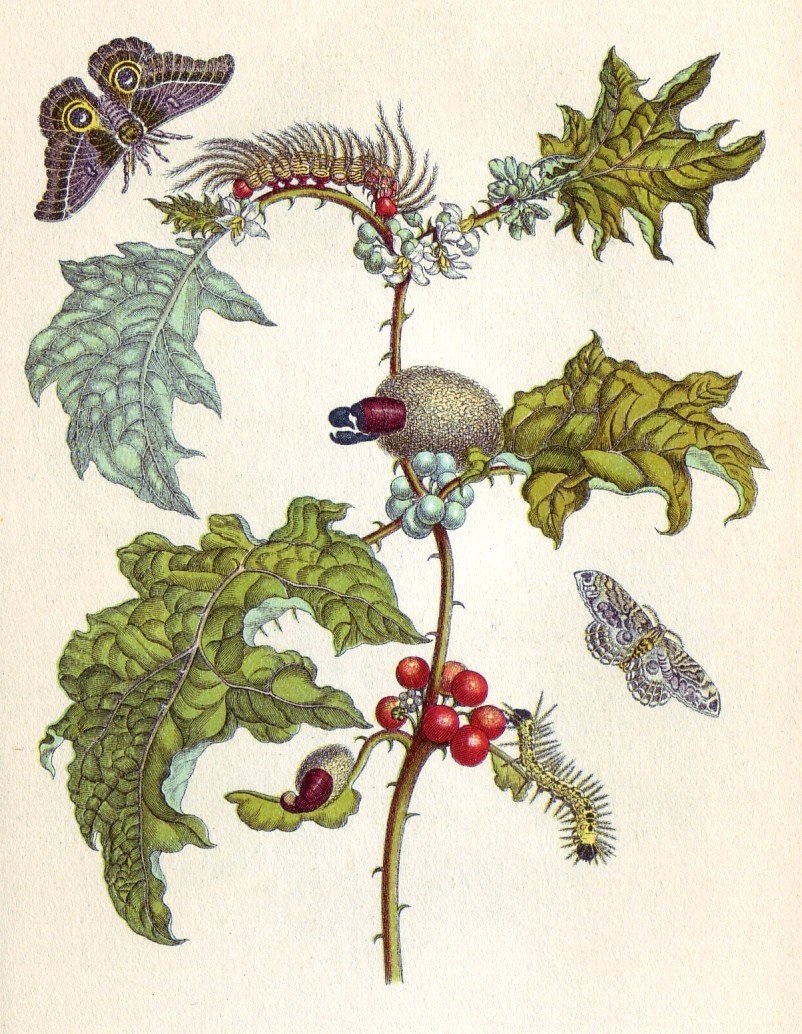
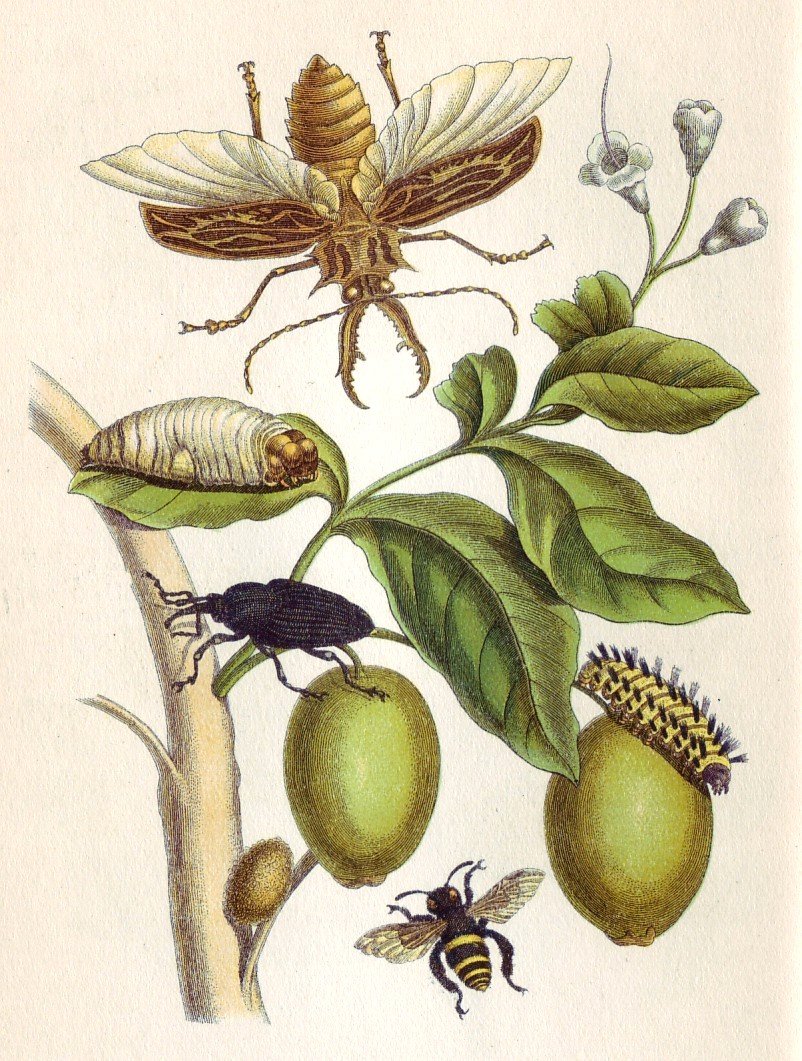
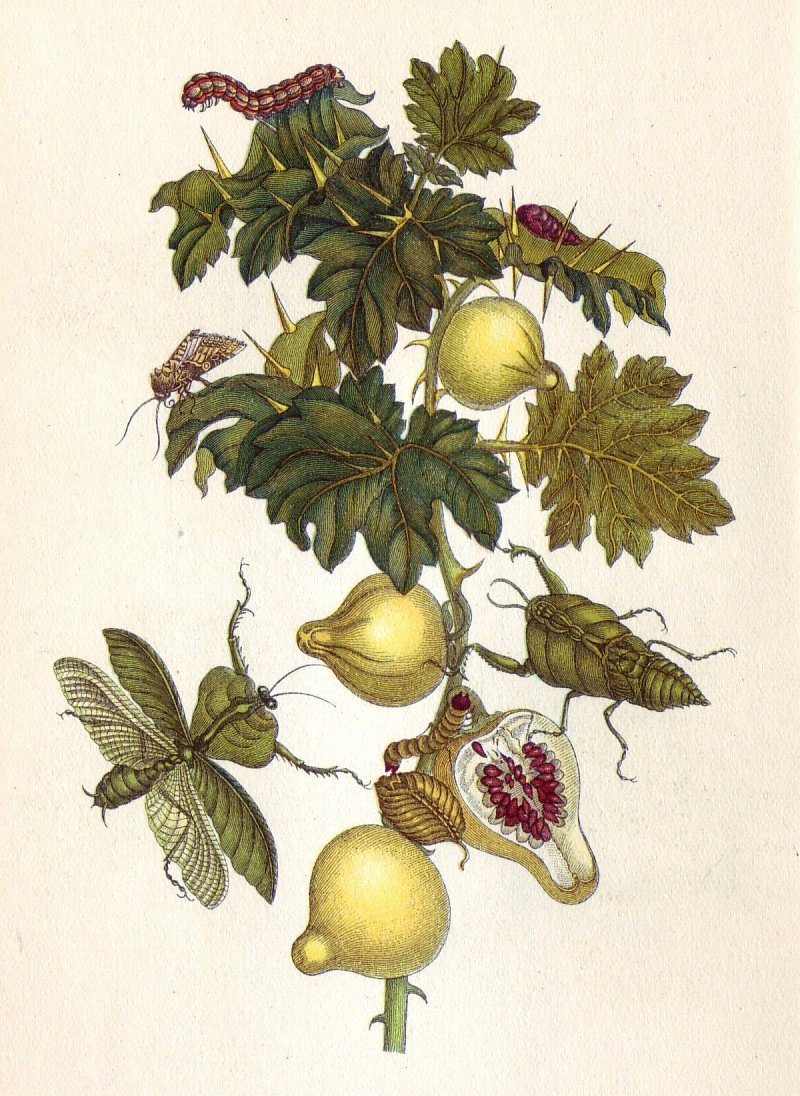
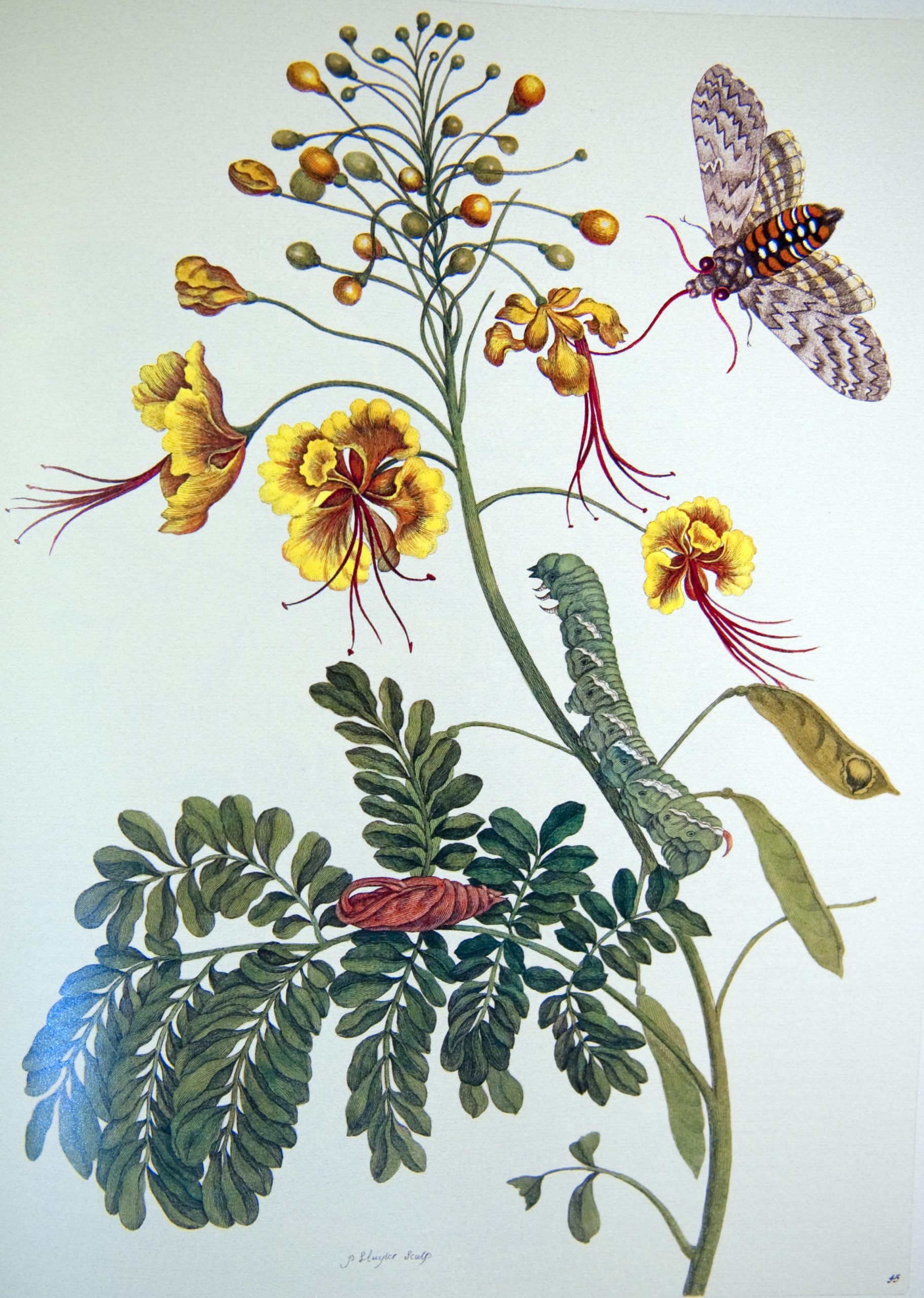
An illustration by Maria Merian. Plate 5 of Caterpillars vol 1, depicting the metamorphosis of the garden tiger moth, its plant host, and parasitic wasps. [Source – Wikipedia]
*
Little Maria loved drawing. Drawing something beautiful, beautiful like an insect, a small being living in a jar, brimming with life, ready to burst, ready, delicate wings, ready to fly, fly-fly-fly, finding that plant, that flower, that fruit, which becomes its new home, where it rests and lay eggs for the cycle to continue blooming, for life to rise in a tiny form, a beautiful form, in sync with the movement, the grand movement, grand yet subtle, that speaks with the sun, the stars, the galaxies, all light and bright, such colours in the dark, brimming with life, bursting, moving in waves, gently touching all life, gently letting the wind lift the tiny insect which flies looking for that plant, that flower, that fruit, which becomes its new home.
*
Title page of The Caterpillars’ Marvellous Transformation and Strange Floral Food, first volume, published 1679 – Wikipedia
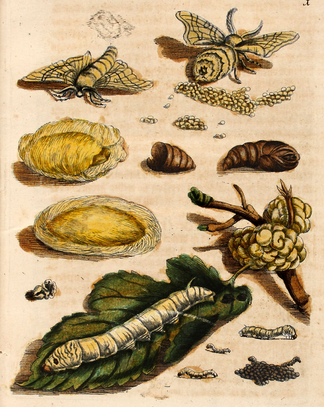
Plate I of Caterpillars vol 1, entitled “Maulbeerbaum samt Frucht”. It depicts the fruit and leave of a mulberry tree and the eggs and larvae of the silkworm moth. – Wikipedia
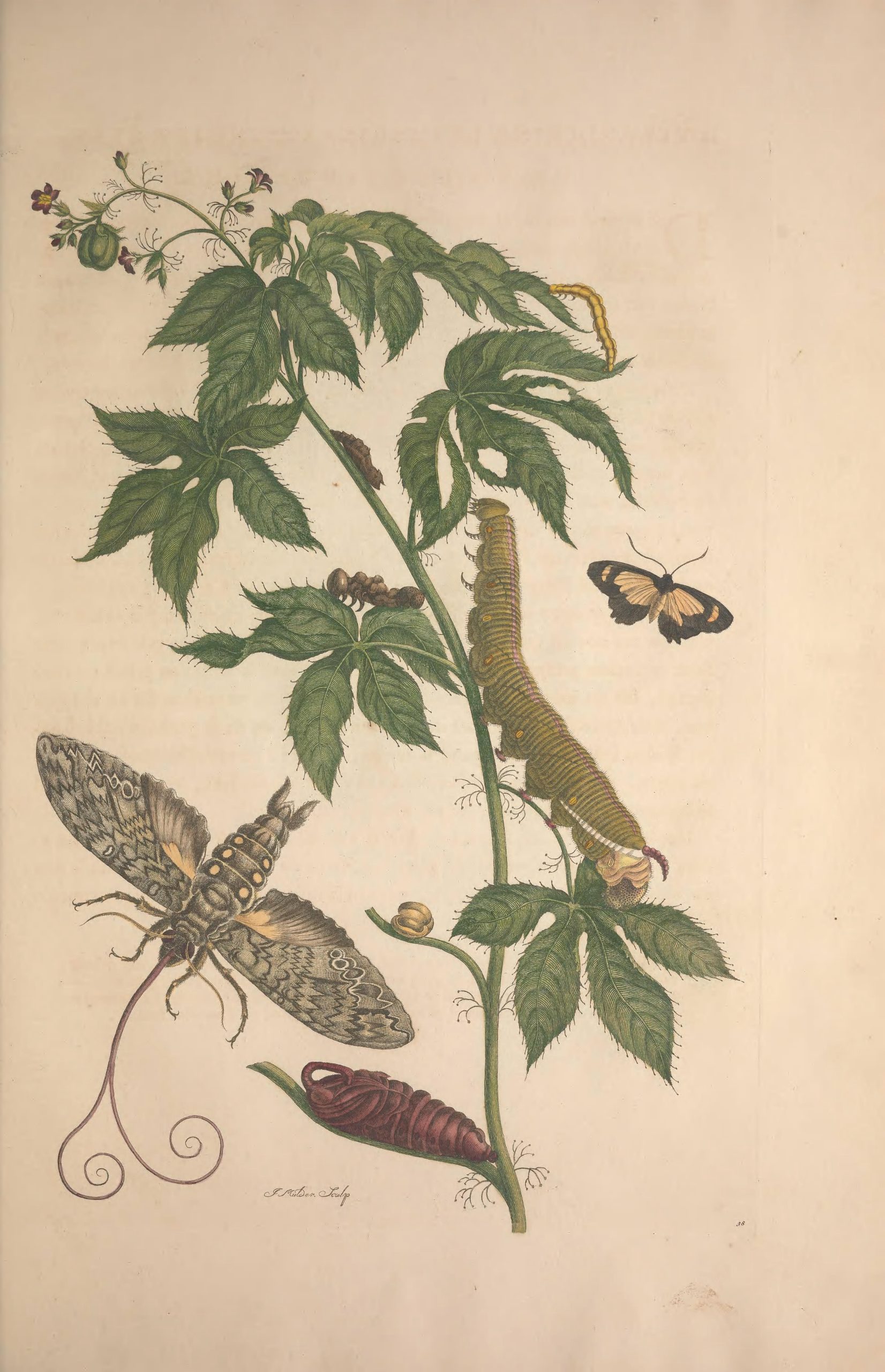
Plate showing the stages of the Cocytius antaeus from Metamorphosis insectorum Surinamensium. – Wikipedia
Coloured copper engraving from Metamorphosis, “Spiders, ants and hummingbird on a branch of a guava”. The spider in the bottom left corner is eating a bird. – Wikipedia
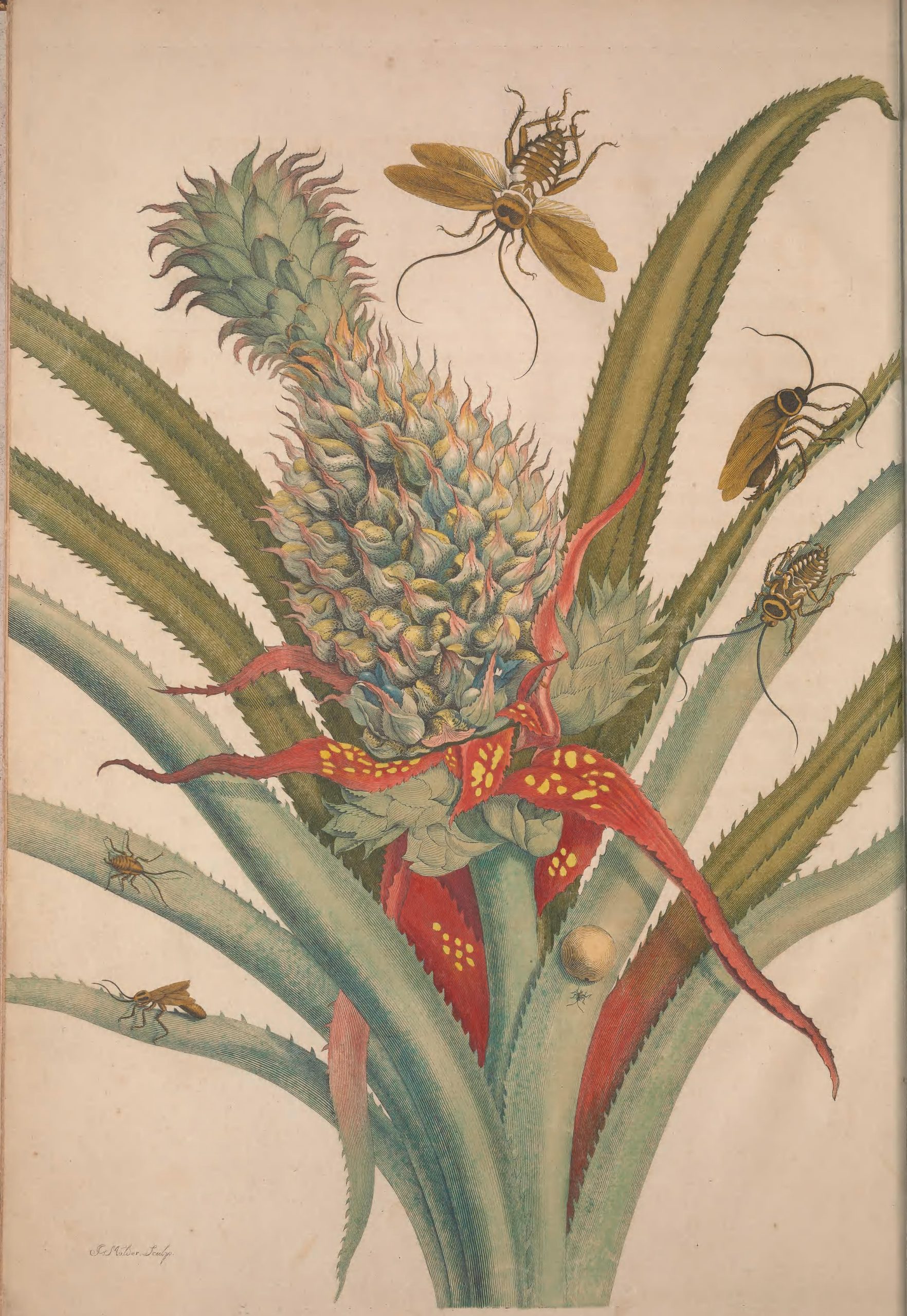
Plate 1 of Metamorphosis, showing a pineapple and cockroaches. – Wikipedia
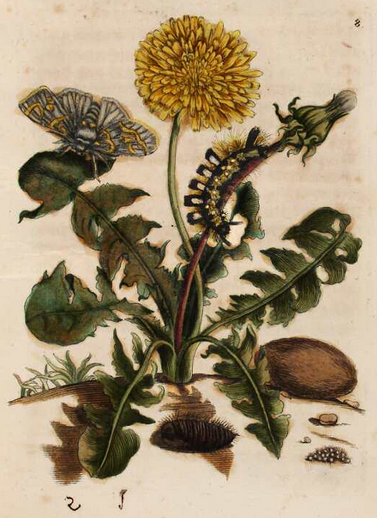
Plate 8 of Caterpillars, first volume. Depicting a dandelion Taraxacum, with Dicallomera fascelina, the dark tussock moth. The Dutch common name for the moth Meriansborstel is named for Merian. – Wikipedia
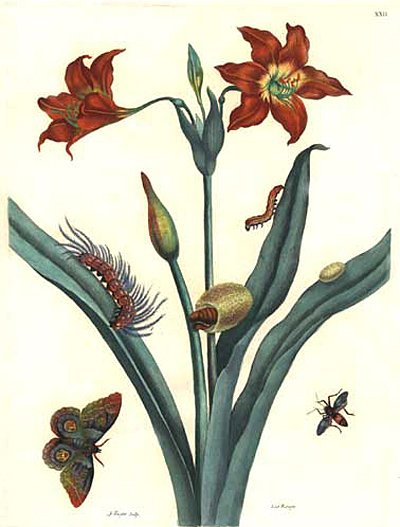
Illuminated Copper engraving from Metamorphosis insectorum Surinamensium, Plate XXII. – Wikipedia
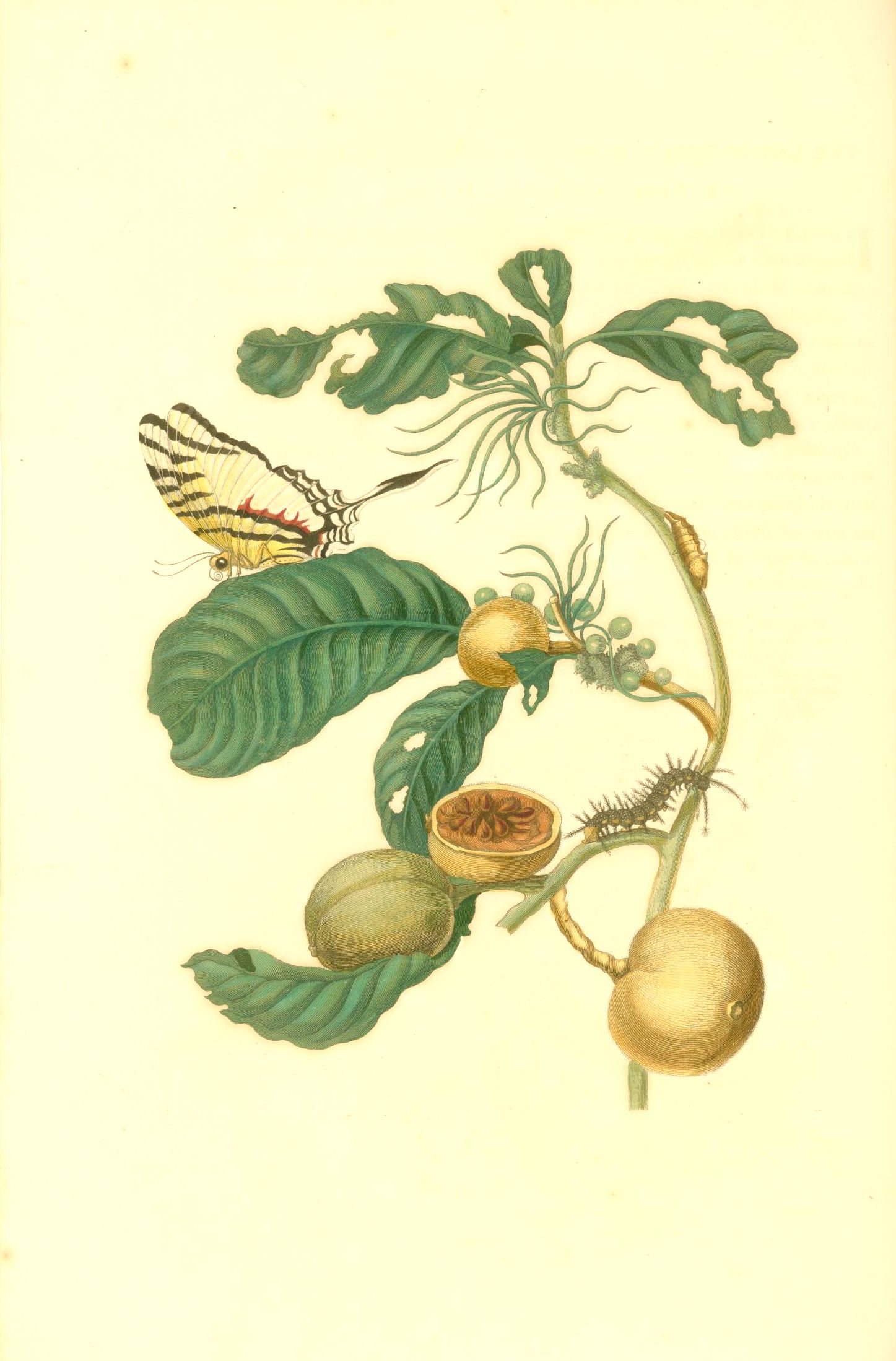
Duroia sp. and assorted insects – Wikipedia
Illuminated Copper engraving from Metamorphosis insectorum Surinamensium, Plate IX. Maria Sibylla Merian, 1705 – Wikipedia
Illuminated Copper-engraving from Metamorphosis insectorum Surinamensium, Plate VI. 1705) – Wikipedia
From Metamorphosis insectorum Surinamensium, Plate XIII. (Spondias purpurea) – Wikipedia
Illuminated Copper-engraving from Metamorphosis insectorum Surinamensium, Plate XLVIII. 1705 – Wikipedia
Illuminated Copper-engraving from Metamorphosis insectorum Surinamensium, Plate XXVII. Musa paradisiaca, 1705 – Wikipedia
Illuminated copper engraving from Metamorphosis insectorum Surinamensium, Plate XLV. 1705 – Wikipedia
Maria Sibylla Merian was a German entomologist, naturalist and scientific illustrator whose work led to the advance of entomology in 17th and 18th centuries. Her first book of natural illustrations was published in 1675. In 1679, she published a two-volume series on caterpillars and in 1705, she published Metamorphosis Insectorum Surinamensium (“The Metamorphosis of the Insects of Suriname”).
Arguably the most important work of her career, it included some 60 engravings illustrating the different stages of development that she had observed in Suriname’s insects. Similar to her caterpillar book, Metamorphosis depicted the insects on and around their host plants and included text describing each stage of development. The book was one of the first illustrated accounts of the natural history of Suriname. – Britannica
Her detailed work contributed in understanding the life cycles of an insect, dispelling the two millennia old scientific theory of ‘spontaneous generation’ according to which insects were thought to be ‘born of mud’, that living creatures could arise from non-living matter.
*
Watch this short video now to know more about the awesome Maria Sybilla Merian and her work –
Thematic Analysis of the film The Silence of the Lambs
A classic, critically and commercially acclaimed, and one of the few films to have won Academy Awards in all the top five categories i.e., Best Picture, Best Director, Best Actor, Best Actress, and Best Adapted Screenplay, The Silence of the Lambs (1991) undoubtedly is a masterpiece.
This psychological thriller is adapted from Thomas Harris’ novel; the screenplay is by Ted Telly and it is directed by Jonathan Demme.
The story revolves around a young ambitious FBI trainee, Clarice Starling, who is interviewing a serial killer now in prison, Dr Hannibal Lecter or famously known as Hannibal the Cannibal, to get his help in finding another serial killer – Buffalo Bill.
An astute psychiatrist, Dr Lecter, agrees to cooperate only if he is transferred to a prison of his choice.
The situation aggravates when Buffalo Bill kidnaps a senator’s only daughter so as to finish his ‘woman-suit’ made from real women’s skin. Clarice knows only Dr Lecter can help her, but when he escapes from the custody she is left with unclear anagrams and a few hours to save the senator’s daughter.
Thematic Thread Runs the Story
What is that which helps weave the plot, the characters, the motivations, and the milieu in a story as one? What is that which subtly runs the story? It is the theme/ the central idea/ the core of a story. The plot builds on and the characters reflect the theme, solidifying the thought behind the tale.
In The Silence of the Lambs too it is the theme that gives enough space and opportunities to the screenwriter and the makers to explore the story cinematically.
Adapting a novel into a film script is not that easy a task, one needs to fix the storyline, make it crisp and compact, shuffle and alter it without disturbing its soul, rewrite it using the cinematic language.
The Silence of the Lambs is a great study to understand film adaptation; not even a second of the screen-time is wasted, with every scene we get closer to catching the serial killer and yet, the suspense continues.
Main Themes in the Film
Metamorphosis
Clarice Starling, Dr Hannibal Lecter and Buffalo Bill – the protagonist, the pivotal character and the antagonist – all want to bring a change in their lives; they instigate, obstruct and fight not fearing the consequences.
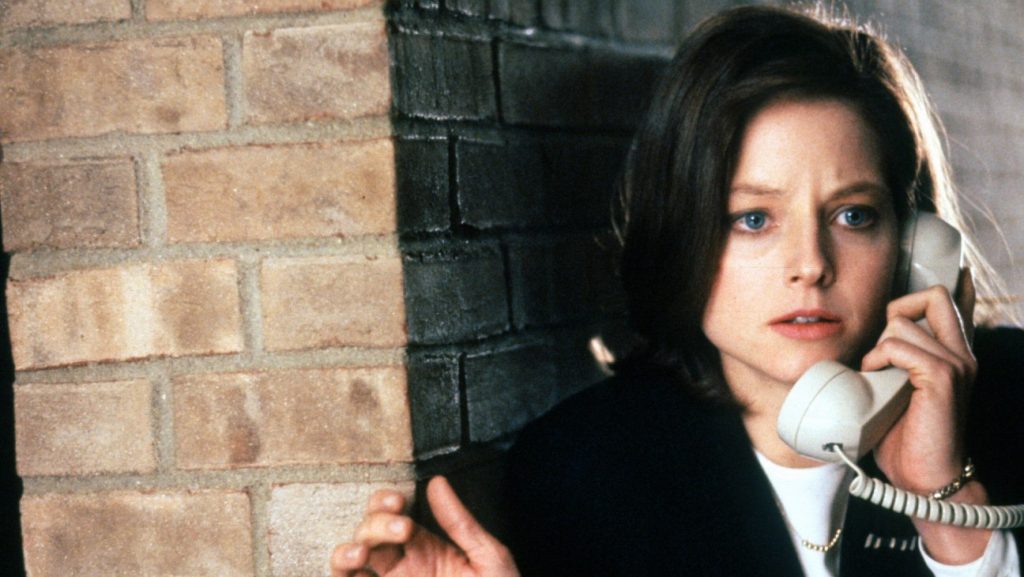
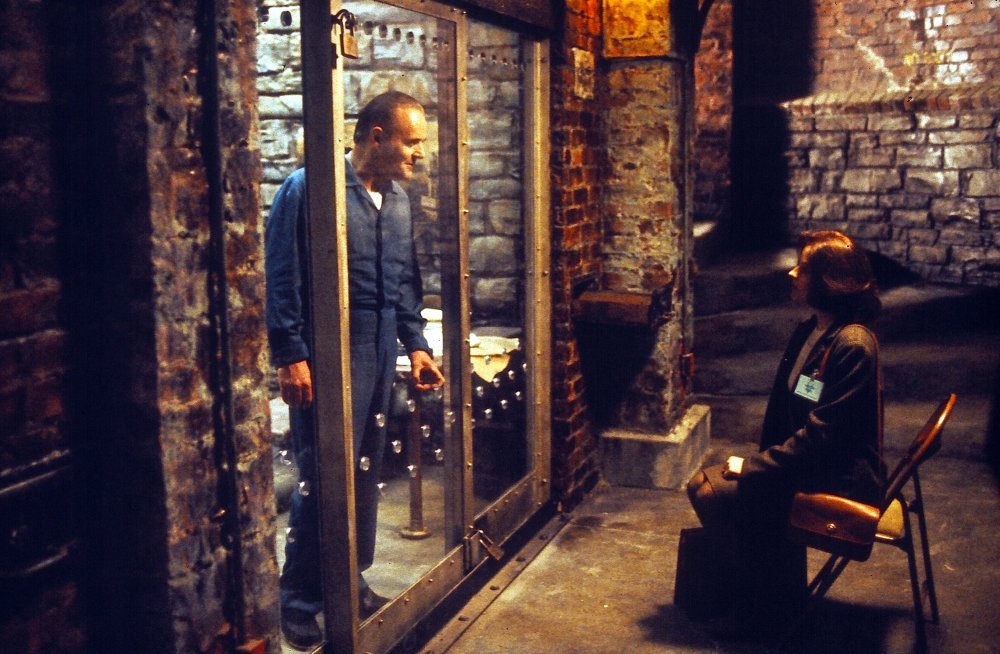
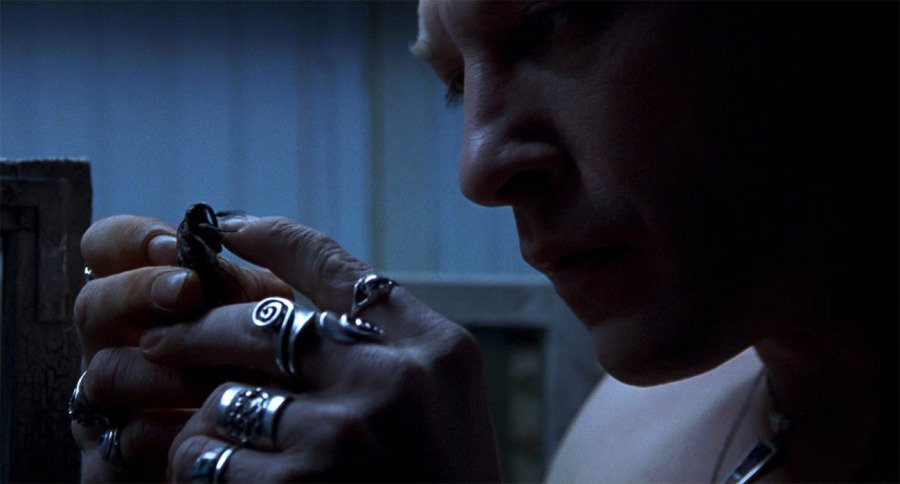
“Lecter – Was it a butterfly?
Clarice – Yes. A moth. Just like the one we found in Benjamin Raspail’s head an hour ago. Why does he place them there, Doctor?
Lecter – The significance of the moth is change. Caterpillar into chrysalis, or pupa, and from thence into beauty. Our Billy wants to change, too.”
Clarice’s first meeting with Dr Lecter.[Source – The BFI]
Stifled by his real identity, Buffalo Bill wants to become a transsexual, and after failed attempts to achieve it via sex reassignment at selected few hospitals, he decides to stitch a woman suit; he kills women and skins them for it. Accepting this gruesome act as his destined journey from being a caterpillar to a butterfly, he treats his victims as mere objects.
He calls Catherine Martin, the senator’s daughter, ‘it’ and refuses to take her as a person.
“Bill – It rubs the lotion on its skin. It does this whenever it’s told.
Catherine – Mister, my family’ll pay cash. Whatever ransom you’re asking for, they’ll pay it.
Bill – It rubs the lotion on its skin or else it gets the hose again. Yes, it will, Precious. It will get the hose.”
Though we meet Bill rather late in the film, his deeds speak for him from the very beginning. It is Buffalo Bill’s case that Jack Crawford (from the Behavioral Science Department, FBI) is unable to decode and thus, sends Clarice to meet Dr Lecter in the hope of getting his help.
Dr Lecter sees through Jack Crawford’s plan, but nevertheless decides to play along, one, because this could be his only opportunity to get out of Dr Chilton’s custody and two because he enjoys talking to Clarice, she is like an interesting subject for him.
In his first encounter with Clarice, he understands how desperate she is to get to the bottom of this case, how badly she wishes to catch Buffalo Bill. He astonishes and scares her at the same time; appreciating Clarice’s genuine desire to do well as a detective, he gives her the first hint.
A change of scene, another place where he could be closer to nature is what he wants in return. Quote –
“What I want is a view. I want a window where I can see a tree or even water.”
And through Clarice lies the way. Playing a game of ‘Quid Pro Quo’, Clarice tells Dr Lecter about the worst day of her life – the day when she tried to save a lamb from getting butchered but failed, allowing Dr Lecter to manipulate her, hoping to gain his trust, determined to know more about Buffalo Bill.
Then, like in the game of chess, Dr Lector moves to check-mate the asylum’s warden Dr Chilton; aware that the abduction of a senator’s daughter by Buffalo Bill could probably be his only chance to escape the life of a prisoner, Dr Lector overtakes both Jack Crawford and Clarice and sides with his ‘nemesis’ Dr Chilton and works out a deal. As demanded he is transferred to the state prison and in exchange he shares his old patient Louis Friend aka Buffalo Bill’s information with the senator.
Confident about breaking away from the makeshift prison at the Courthouse, in his last meeting with Clarice, he, like a teacher, guides a troubled Clarice step by step to understand how Buffalo Bill’s mind works. He asks her to focus on ‘simplicity’ and gives back the case file saying that everything that she needs to know about Buffalo Bill is already in the case file.
Later, he executes his horrifying plan – kills the guards, makes a face mask from one of the guard’s face to fool other officers and once in the ambulance, he kills the medical crew and runs away.
Clarice Starling also wants to bring a change in her life. Her sincere desire to succeed as an FBI trainee is actually, as Dr Lecter psychoanalyse her and reveals, an honest wish for the lambs in her dreams to stop screaming, she wants to save at least one innocent life from getting butchered, she wants to be redeemed. As a child, orphaned after her father was killed, she was helpless and this crippling state of helplessness is what she wants to change forever.
To achieve their set goals, Buffalo Bill and Dr Lecter move forward without any fear, eager to grasp transformation/ freedom, but clever enough to be cautious, while Clarice Starling, vulnerable, anxious yet brave, collects clues, discovers the truth and ultimately meets the butcher before he could make his next kill and ends his journey.
The Strong Feminist Voice
The Silence of the Lambs is a fantastically strong feminist film. It talks about, shows and breaks the “male gaze” beautifully. Clarice Starling is not even close to being a damsel in distress; she is a confident independent individual. Her persona, her fighting spirit breaks the stereotypes we all are usually too lazy, slow and comfy to react to.
Still a student, Clarice Starling is called to be a part of an on-going investigation, but Jack Crawford does not reveal his plan outright. He places her forward as a pawn and waits for Dr Lecter to react, not sure if he will agree to play.
When Clarice confronts him about the same, Jack Crawford says that he did it so as to help her win Dr Lecter’s trust as he would have otherwise simply refused to comply.
Working in a field with a male majority, Clarice does not hesitate to raise her voice or correct her seniors. Jack Crawford tells the Sheriff while examining another Buffalo Bill victim, to discuss ‘this type of sex crime’ in private indicating that doing so in a young woman’s presence might be inappropriate; when tries to clarify it later he gets a blunt reply from Clarice – quote –
“Jack – Starling, when I told that sheriff we shouldn’t talk in front of a woman, that really burned you, didn’t it? It was just smoke, Starling. I had to get rid of him.
Clarice – It matters, Mr Crawford. Cops look at you to see how to act. It matters.
Jack – Point taken.”
To discern what “male gaze” actually is, we, the audience, are placed in Clarice’s position almost every time when Jack Crawford, Dr Chilton, Dr Lecter and Buffalo Bill address her, they see directly in the camera while Clarice looks slightly off the camera, their searing, manipulative gaze falls directly on the viewers.
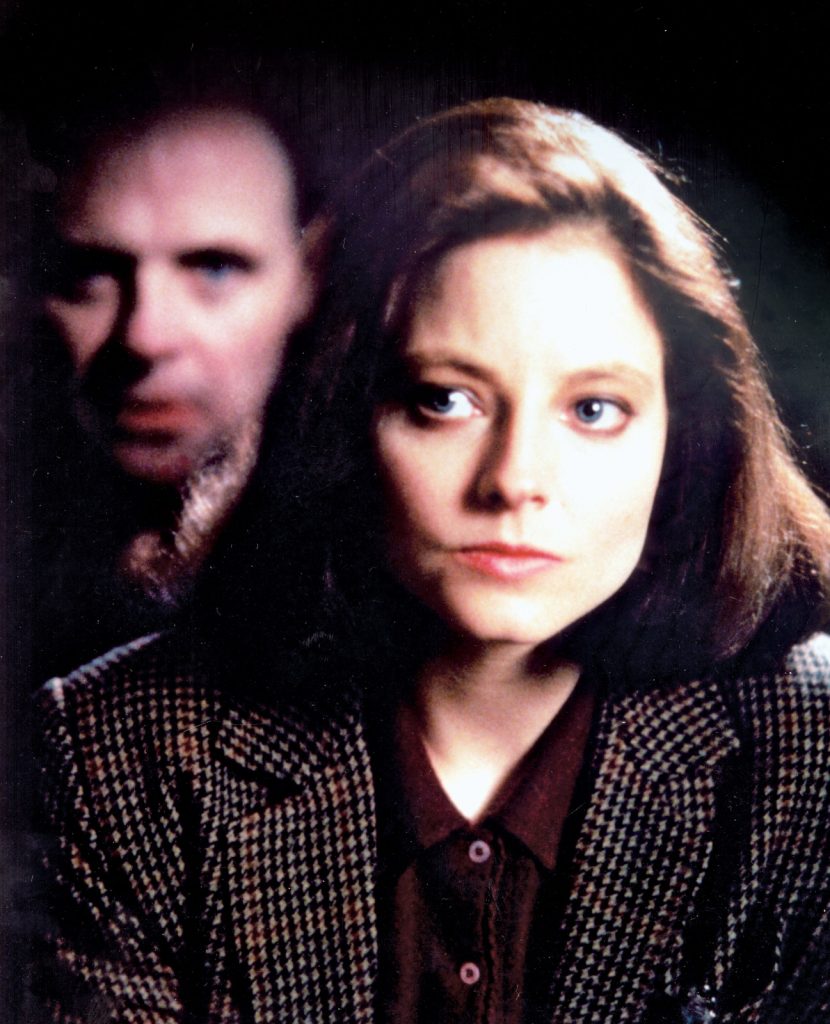
Anthony Hopkins as Dr Hannibal Lecter.[Source – Cinema Blend]
Then there are striking scenes like when Clarice takes the lift at the FBI academy and is the only woman amongst the men who stare at her, also when she tells Sheriff and his men to vacate the room so that she and the FBI team could finish the investigation, every one of them looks straight at her/ the audience, confused seeing a young woman asking them to leave and let her work.
This ‘experiencing’ rather than ‘showing’ of what Clarice goes through in her day to day life, subtly and firmly makes one aware about the disturbing presence of the “male gaze” in our working culture.
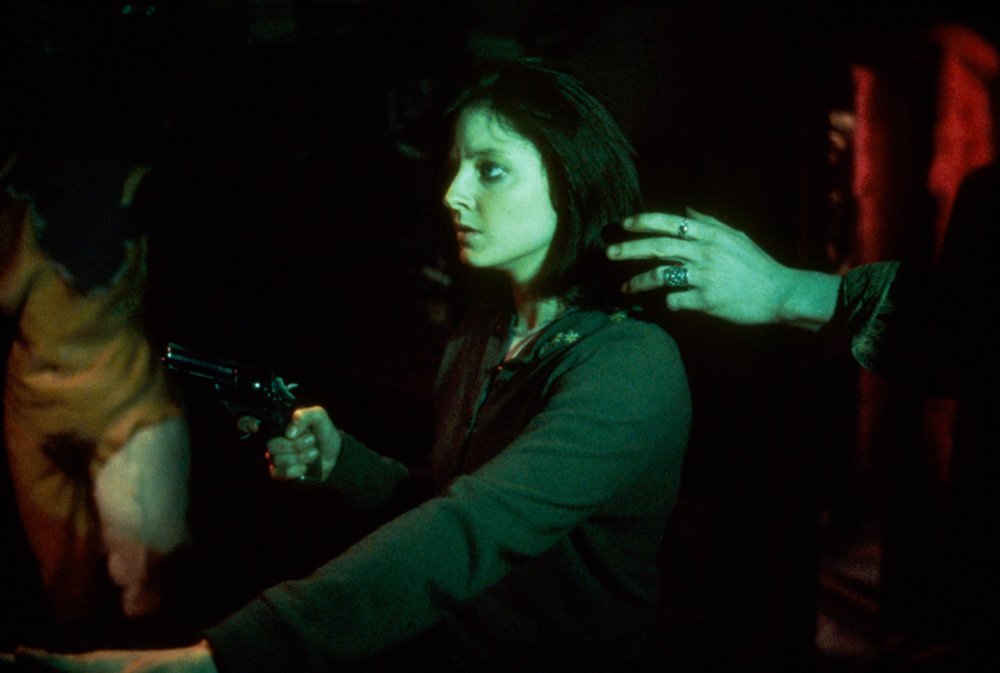
But here, effortlessly, Clarice Starling becomes the change she and we all wish to see around us. And she does so by simply not giving up – the horrifying experience at Dr Lecter’s cell, the way she is moved in and out of the Buffalo Bill case does not deter her spirit – and when finally she cracks the case and alone faces the mad serial killer, she stands her ground, fighting her way through the darkness, unaware about Buffalo Bill’s night-vision-goggled-eyes following her and fully alert, she fires on hearing him cock his gun. She fires again and again, the dark glass window shatters and light pours in the damp room.
The transformation process concludes here and is in favour of Clarice Starling.
Symbols and Metaphors –
Symbols and metaphors always assist in developing the theme, plot and characters in a story. In movies, it becomes imperative to utilize every bit of screen space to understand the underlying concepts and motifs that cannot always be explained via dialogues.
Death’s-head moth is a symbol of transformation and also of impending doom in the film. In two of the Buffalo Bill’s victims, moth cocoons were found; not his calling card, but it is rather a ritual for him as he killed them in the hope to transform, to break-open his cocoon and sooner or later emerge as a beautiful butterfly.
But as he had to pay for his grisly, despicable acts, in the end, Clarice recognises Jame Gumb as Buffalo Bill when in his house a Death’s-head moth flies by her side and rests silently on a thread roll; she chases him in the labyrinth of a basement and shoots him down.
Ted Levine as Jame “Buffalo Bill” Gumb.[Source – Onthisdayinfilm]
Throughout the film, lambs are used as a metaphor for one who is innocent but is still suffering, for a troubled soul wanting redemption. Clarice Starling’s father, a Town Marshal, was killed by two burglars, and an orphan at ten, she could not do anything but watch.
She grew into a brave individual, but still carries that grief, that state of helplessness within and aims to redeem herself by fighting crime. Dr Lecter understands this; he also sketches the profile of Clarice holding a lamb, showing his growing interest in her.
“Have the lambs stopped screaming”, asks Dr Lecter over the phone on Clarice’s graduation day, leaving her surprised. No longer a prisoner, he assures her that he will not come after her and hopes that she will extend the same courtesy towards him. Clarice does not promise him anything.
With this, a well-knitted story comes to a closure where Clarice sleeps peacefully, in the silence of the lambs, but only in the novel. In the film, Dr Lecter leaves Clarice guessing where he could be and hangs up to follow Dr Chilton in the crowd in the Bahamas. Thus, here Clarice’s journey does not end.
Conclusion
Sound clarity is a must when exploring the thematic range of a story. Clarice Starling’s past and present moves parallelly, an aspiring FBI agent she agrees to be psychologically manipulated by Dr Lecter, not only to be a good detective and win praises from Jack Crawford but to truly help rescue Buffalo Bill’s next victim.
Here, it is the theme that builds the plot, structure and moves the characters; it is the theme that writes the screenplay.
The Silence of the Lambs was the first psychological thriller since Rebecca (1940) to win the Academy Award for best picture. A compelling and clever script, tight direction and impeccable acting both by Jodie Foster and Anthony Hopkins make this film an unmissable classic.
With themes like metamorphosis, good versus evil, feminism, male chauvinism and redemption interwoven into the story, the film transcends the single genre of a psychological thriller.
It raises questions for the individual as well as the society for what is nurtured is what comes out of the cocoon, both a butterfly and a death’s-head moth.
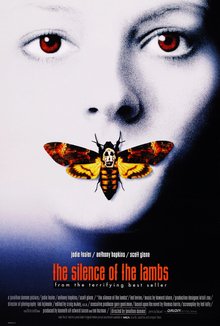
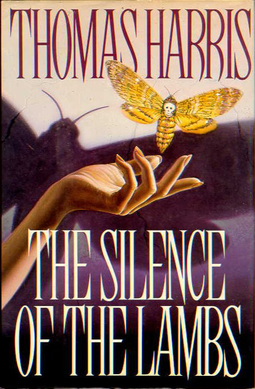
The front cover art for the book The Silence of the Lambs written by Thomas Harris.[Source – Wikipedia]
Eddy told me, spiritedly, after watching a documentary on how the cells function in our body, that he has found his long lost faith in life.
I could sense his words were imbued with this newly found faith.
Great, I thought. Just then he saw my socks and before I could utter a single word to appreciate his metamorphosis, he politely questioned and shockingly answered, “three holes in this pair of your socks?!”
Eddy went back to his room; I wonder how many months will he take this time to recuperate fully.
Anyway, so I checked my socks and somehow the holes in it made me believe that if this can work, anything can.
Dears, today I am working with this positivity in life. Thanks to the pair of socks with three holes in it.
Who, Eddy? Oh! No, he is still in the room. But that’s life.
Cheers!
Only one hole, not my pair of socks. :-) Image – Pixabay.
I am joy running free/
freely flying, fluttering, soaring in a valley/
Of joy am running free.
Greetings!
A storyteller, following the ancient tradition of cave chroniclers, standing in vrikshasana (the tree pose) on a hill top (it is sunny, but windy), breathing in and out stories (relishing it all, but at times overwhelmed), declares animatedly that she will continue to – tell stories, share rare story gems, and connect with the pacy universe while also keeping the website ad-free.
Big thanks to my readers. Stay tuned!
Also, a humble request to the new subscribers to check the spam folder after subscribing. Silly (but necessary) confirmation emails often land there instead of the bright inboxes. Merci!
Ya-hoy!
Chiming Stories (formerly Home Chimes)
P.S – Supporting a storyteller is good for the world’s health (and undoubtedly, for the storyteller’s health as well). Shower some love by sharing, commenting and subscribing to the Weekly Newsletter.
Gabbeh, the 1996 film, is a simple tale of a gipsy girl, her clan and the way their life goes on. Unfolding beautifully just like an artist painting a canvas, Gabbeh quietly touches the grand questions.
Ranked as one of the greatest British films of all time, The Lavender Hill Mob confides in the audience, letting them see, feel, laugh and think without tickling persuasively with a joke here and a punch-line there.
Godard… Breathless and Alive
A Tribute to Jean-Luc Godard, the Film Philologist who Reinvented Cinema.
Yes fly! For walking on the second track is dull and usual, but dreaming high, high, high requires tools. Tools like the right pair of shoes, a chirpy, gritty soul that eats butter-jam dreams, a soul that drinks milky-milky creams.
Silver cascade shimmering the night sky, music to the waves and surreal beauty to the eyes, the Moon loves the art of discipline.
It may be difficult to believe for the Moon’s splendour defies time, it stupefies the clock, it follows the path of a dreamer, but how could this be possible if the Moon knew not discipline?
In this moment, I am a little bit of this and a little bit of that, I am complete and incomplete, I am pleased and uncertain, I wish for nothing and I know I have to wait.
Because the distance covered reminds me of the hurdles I have crossed and the ones I could not, it reminds me of a throbbing past and a dreamy future and it reminds me of how much time is left.
Meredith and the Green Lake
Illimitable Splendour
A joy so complete without any rise or fall, so free without any time corners, so real without true being false, false being true.