I dare you to forget not. Forget what not? Try to remember… remember that day when…
… for the first time you crawled… you struggled to walk… you hopped all along… you won a race… you tap danced with grace… you came in style… you left wearing a smile… you befriended the walking stick… you crawled for the second time…
… for the first time you were loved… you were pampered… you were jealous… you were told to share… you were lonely… you made a friend… you believed in dreams… you knew true joy… you hurt yourself… you stood up… you worshipped time… you quietly realised… you happily understood… you loved them back…
… for the first time you felt you knew absolutely nothing… you followed their path… you managed to survive… you built a new track… you knew right is right and wrong, wrong… you travelled in time… you accepted the change… you thoroughly read writings in brief… you said of course… you said not at all… you repented and laughed at the mistake… you cheered your take… you declared that you still knew absolutely nothing…
Everything is forgotten on the way, but the journey goes on… the journey that is unforgettably yours.
*
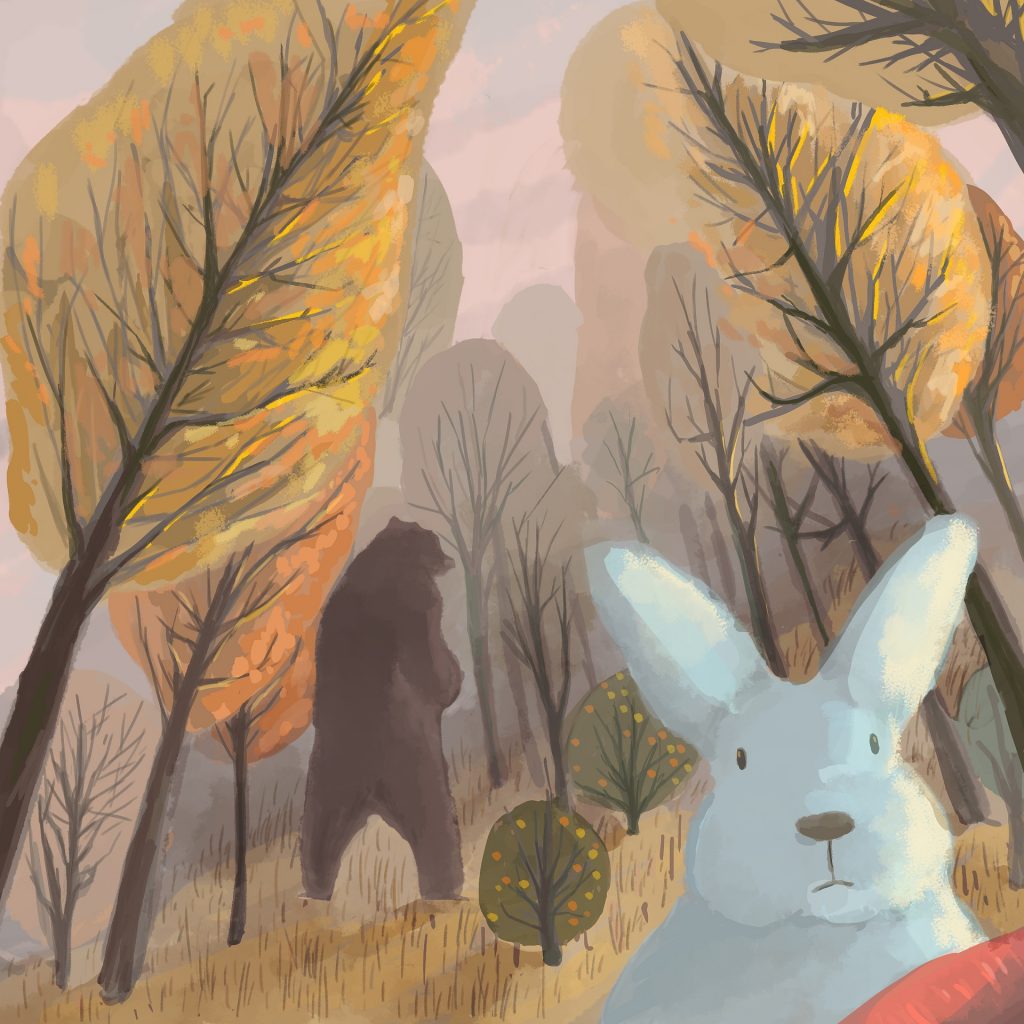
“Don’t forget now, alright? Go, leave, carry on!” [Image by Lin Tong from Pixabay]
Let go of it all. For once let it go. Your progress, your failures, your ideas, your hopes, your desires, your expectations, your beliefs, your treasures and those measures, consciously forget about it all. Keep yourself and your personality aside, make notions about nothing, pack the mistakes and parcel the troubles… to no one in particular, to no place known… after the mind finishes this task, say a happy goodbye to your mind. Be no one… no one you know, no one you dream of… just be… all this for a few minutes, right before you go off to sleep. Empty your mind and leave the body and sleep.
With time you’ll see how you can detach yourself from the game of opposites. You can be in a place above this and that. So let go, let go of fears and delights alike and know.
So to believe that the journey shouldn’t be stopped, that it can’t be stopped… to believe that it is all knowable, understandable… to believe that slow or fast pace doesn’t matter… to believe that the one within is always, always listening… to believe that with patience comes the answer… to believe that the self is in making… to believe that laughter reaches out… to believe that everyone is rising… to believe that it is not just a mere idea, a dream, a happy wish or the mind’s trick… and to believe that everything happening is true, is true?
The contents of the collective unconscious are archetypes, primordial images that reflect basic patterns that are common to us all, and which have existed universally since the dawn of time.
– Carl Jung’s concept of the collective unconscious
*
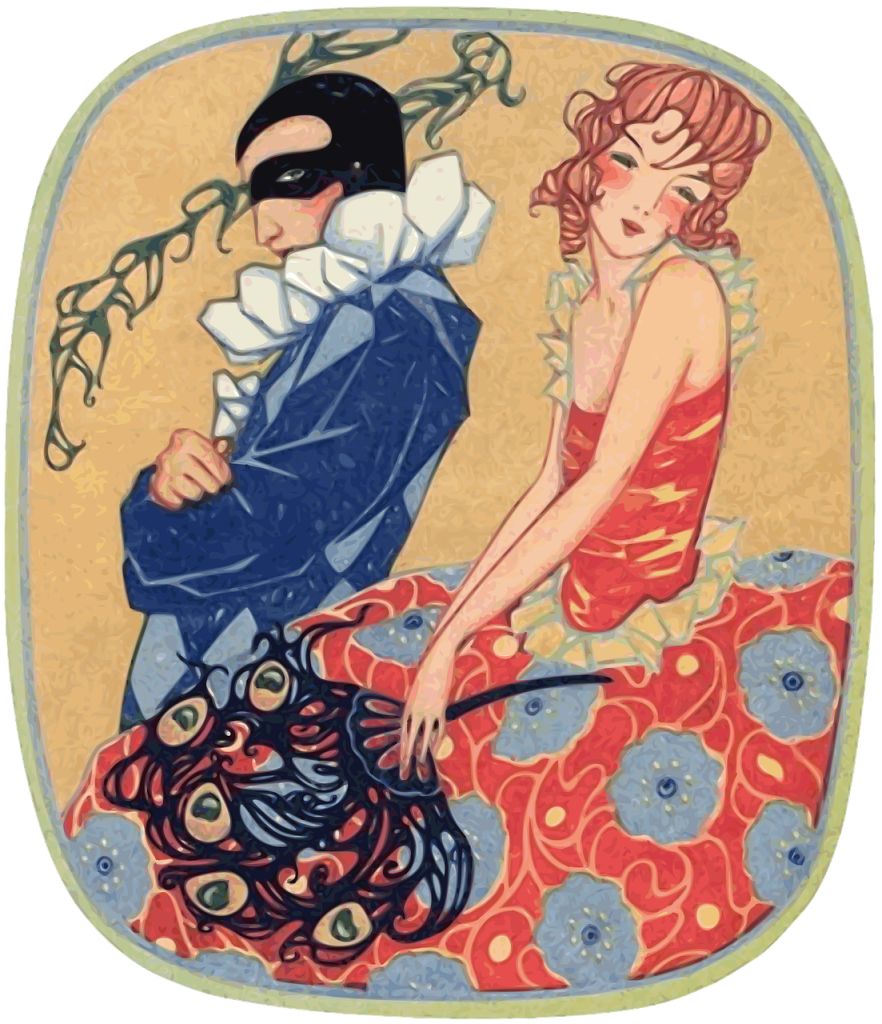
Lovers, on their way to meet the jester. [Image by Jo Justino from Pixabay]
*
It is an archetypal journey. The action, the beckoning, the characteristic, the defined, the empowering, the foolish, the grand, the hierarchical, the idealistic, the justified, the karmic, the love-blind, the materialistic, the nurturing, the ordinary, the perilous, the quark-shaped, the resisting, the surviving, the tempestuous, the utopian, the visible, the wanderers, the X-catchers, the Y-believers, the zealous.
Collectively it is all done. But still the individual holds the absolute power to create… to create once again, to retell, to relive. And together we witness.
If you find the process as a slow one, then let the jester hit you with paradoxes. Understand, later you will, that every cell is wholly participating and it isn’t slow or fast, but magnificently beautiful.
This elemental connection when subtly enters the conscious, baffles and simultaneously glorifies us.
Nearing the known, reaching the unknown; beginning with a fear, ending triumphantly or vice-versa; thinking that it doesn’t matter, feeling that it does… each journey has a homeland.
Well, the map in my possession is incomplete, I still have to collect many missing jigsaw pieces- Ponyo, Porco Rosso, Pom Poko, and more. I am all AGOG!
Dominant colours– green, blue, white, yellow, and red – on the map, endless stretches of farmlands, mountains, rivers, sunny days, foggy evenings, starry nights, and cottony skies are fulfilling.
Colours reinstate the quiet you, making you sensitively aware. Wide EYES!
The map warmly takes you to different worlds; worlds you will strongly start to believe you belong in, you always did. Yes, each world on the map has that charm, each world is linked through MAGIC.
Magical creatures, seen for the first time as you follow the map, will become your close friends, the closest ones. Tell them your secrets to make them yours forever.
The map took me to the magnificent majestic world of Princess Mononoke. I confess I was afraid, threatened for my familiarity with and my memories of this life-journey disowned me and left.
Alone I walked, met many Kodamas and I walked ahead. Alone and FASCINATED!
This world merges evil and good, rights and wrongs, anarchy, and peace… thoughts and feelings of being in the centre, with a grand forest and a grand iron fortress, converging. I will return to this world, for I have to.
Do you know what Prince Ashitaka said to Lady Eboshi when she asked him what was he there for? Prince Ashitaka said, ‘To see with eyes unclouded by hate.’ GRAND!
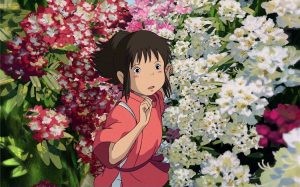
In the world called Spirited Away, I was with Chihiro all the while even when she became Sen… or was I? She kept swinging on the threshold, meeting and understanding the spirits and their realm.
With Chihiro, I crossed the tunnel in the end, we turned together with a measure of hope, wanting, trust, and belief.
We left and the threshold disappeared, but the feeling stayed. The feeling is ALIVE.
The map will take you, to your utter pleasure, both in the future and the past, in the known and the unknown, in their story and your story.
Gladly I followed the dirt road and reached the world of Totoro, My Neighbour Totoro. All I did there was dancing, under the huge tree in the Tsukamori forest along with Satsuki, Mei, Totoro, and two small Totoros.
Listen to the track we all danced to –
*
*
Déjà vu, dreams, and fantasy fused together in this world and promised. A promise so DEEP, one never made before.
Oh how the dreams never end, how we build on and on… maybe for the dreams speak to us honestly without any guilt, without shying from LOVE.
I have been on Howl’s Moving Castle, what a wonderful world.
But I warn you, it is like being in a dream, a lengthy dream, one which tackles evil and disgust and the power game; where love and compassion dimly shine and darkness shakes you from within, leaving you weak.
If you hold on, Howl the wizard fights back and casts a spell to restore harmony and balance.
How well a spell can work? For how long will it preserve? Corruption spreads, how will it all end? Howl’s Flying Castle a dreamlike reality…
I left this world after learning how to make a castle fly – apart from Calcifer’s (the fire-demon) help, you need to nurture freedom within. VOILA!
And so the map showed me another beautiful world which was all about flying, The Wind Rises it was called. Know that ‘flying and magic’ is a must in life. Abide by for there is magic WITHIN.
If you happen to forget yourself, truly forget yourself, may you be reminded as the wind rises, that you must LIVE.
Live to fulfil, to cherish, to create, to inspire, to love, to remember, to let go, to smile, to embrace the truth as it all ENDS.
I will continue to make the map to Miyazaki as slowly it is being revealed to me how the dreams are unfolded, how the stories are made, what it takes to truly believe in it all, and what a treasure living is.
P.S- My friend Tashi gave me the first piece of this map, the one that took me to the world of Princess Mononoke; this is the tradition, I now pass it on to you.
A joy so complete without any rise or fall, so free without any time corners, so real without true being false, false being true.
Witnessing the colours dance by, I swayed along to see I am nowhere around.
Light’s brightness pierced through and through with love and warmth, permeating the space and beyond. Embracing it, I started to radiate but didn’t see myself around.
The whole enchilada gathered momentum, passing and reaching the whole enchilada.
I gazed and found the beginning and the destination to be the same, but I didn’t reveal it for I was happy and still, not present there.
Rhythm flowed through the grand wadis, deeply and rapidly it flowed to form a vortex. Whirling merrily in rhythm I followed without any wish for more or less, when I realised I am missing.
The sea of quietness fulfilled itself and the sound of stars falling enhanced it beautifully. I saw it in double wonderment because it was sublime and my presence there was a lie.
If not the gust of wind, what was so strong there, if not the heat of fire, what then burned majestically there, if not the heavens of this, that and all the worlds, what made it truly blissful there?
I do not know the answer, for I was undeniably not there.
I could never reach there, no ‘I’ ever did. One with the One, alive and in absolute existence, surpassing the limitations, one in Union is the one with the answer.
And once you get the answer you choose to forget it right before entering the door to illimitable splendour.
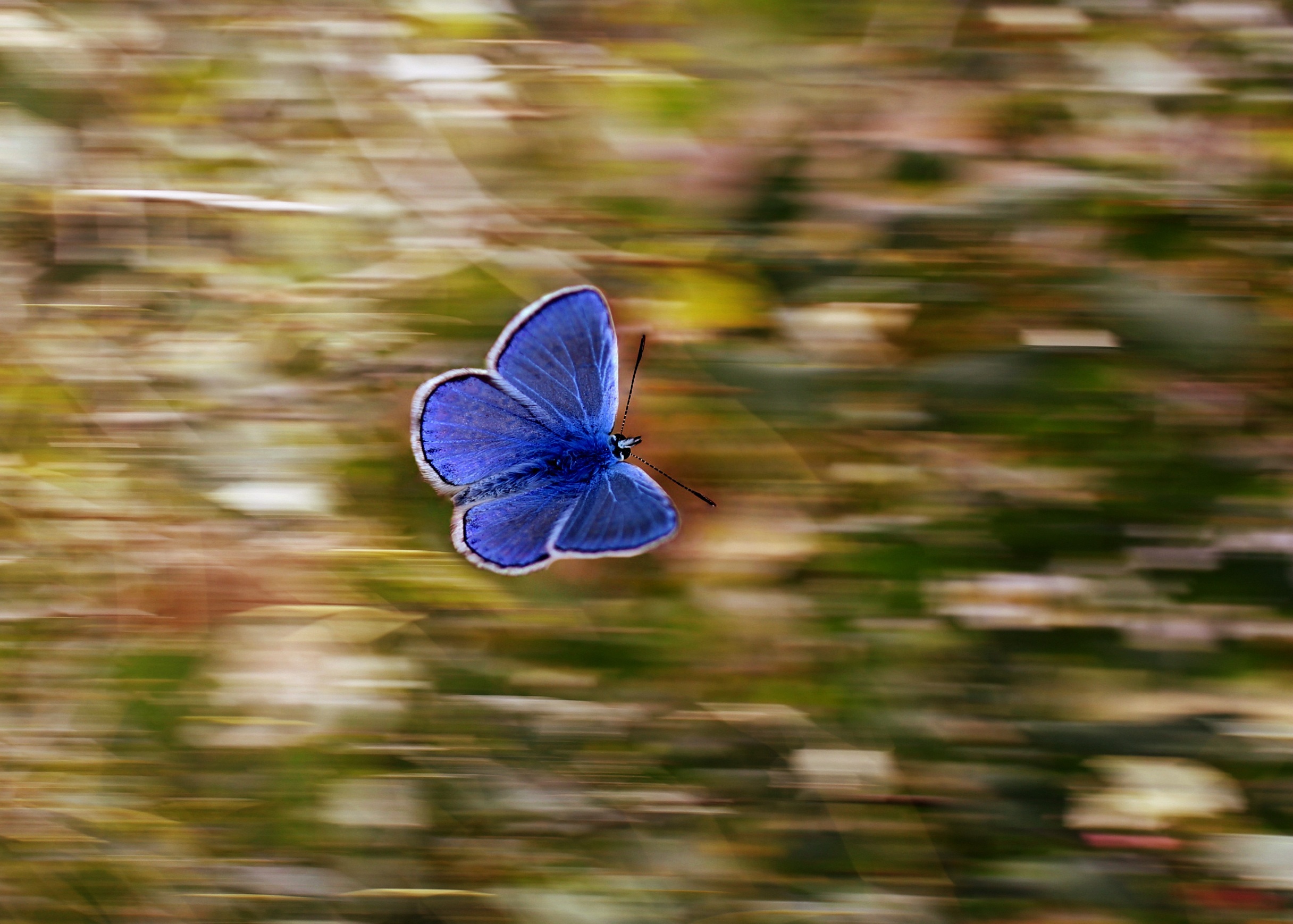
Notorious mind to THE MIND. [Image by IRINA from Pixabay]
*
Minding the mind
It is kind of, sort of looking amazed and all it has done is talking… talking to itself. If thoughts wear colours then this mind is making rainbows after rainbows.
Mind’s petty issues
Whether a smoothie is meant to be always cold? If instead of right we had turned round and round? Why am I scared to say, ‘I said so’?
Mind’s grand tales
Oh, endless journey don’t you end… don’t you end before I set the hat right and check the change within and without with a smile. Don’t you end or change or stop or move or be false. Be happy.
Mind, when at peace
Waves, lights, colours ocean up and down for seconds, until the old stories return. Back and forth between peace and everything else.
Mind talks
And with enough repetitions dear mind, one is ought to remember it all.
Mind makes
The one standing under the shed, waiting or not waiting, unsure whether to wear the spectacles or not, is being made and unmade at that very moment.
Loitering mind
It rests quietly when one sleeps, but only to run wild and free in the dreams.
*
Sooner or later usher the mind beyond what it tells. Then have a laugh. A real laugh.
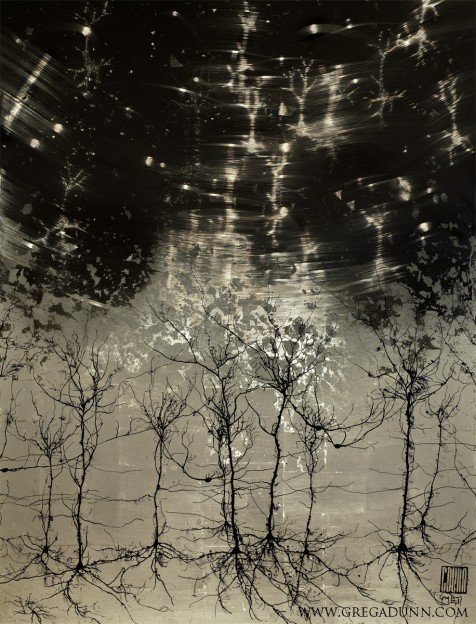
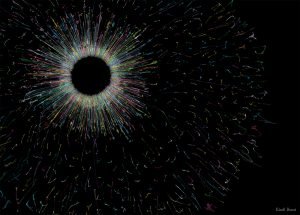
This painting was commissioned by The Center for the Neural Basis of Cognition to commemorate Carnegie Award recipient Dr. Leslie Ungerleider’s substantial contribution to the field of vision science. Her work in delineating the dorsal and ventral visual processing pathways led to the discovery that the ventral pathway predominantly processes information related to how we recognize objects (what), whereas the dorsal pathway interprets how objects are related to one another in space (where). The painting is designed to reflect this dichotomy in its layout and conceptual content.
It is still writing. This writing won’t change. Or it will, if growth is synonymous to change, if evolving is change, if awakening is change, if change is truly blissful. It has bundle full of memories stored sincerely, memories that glisten when talked about. New vistas, old memories, feelings usurp, and the writing continues.
Yes, it continues, even though realisations slow down with time. Amazingly, just in a déjà vu second it speeds up, collecting all shades and colours of memories, infinite times faster than before. And what do memories do? Memories create, elaborate humbly, resolve, express, spread warmth and love. Pure, true love!
It in the making of itself uses the eternal ink of faith. Sometimes it believes and sometimes it smirks, cheats, forgets, sinks and turns away. But it nevertheless keeps writing, always. Either with a heavy heart or a feathery lightness. And when in the end it listens to its heart’s beating, the heaviness vanishes.
It in the making of itself? Whence did it all began? Listening to its memories it gets to know whence. A tough journey gets no support, but a rough straight answer. Accept or ignore the answer, toss it away or idolize it, the answer stays.
Incredulously, observably it lives in its own truth, the truth, the only one for it. While walking in every direction, on every day, in every moment, it distils the world through its sieve, adding and subtracting memories at its true whim.
Lightly, o lightly, it writes forgivingly, gaily, o gaily, it enshrines its memories, softly, o softly it speaks of the truth, deeply, o deeply, it sinks to reach the end, bravely, o bravely it passes on the pen. And the writing continues.
Haiku
I am joy running free/
freely flying, fluttering, soaring in a valley/
Of joy am running free.
Greetings!
A storyteller, following the ancient tradition of cave chroniclers, standing in vrikshasana (the tree pose) on a hill top (it is sunny, but windy), breathing in and out stories (relishing it all, but at times overwhelmed), declares animatedly that she will continue to – tell stories, share rare story gems, and connect with the pacy universe while also keeping the website ad-free.
Big thanks to my readers. Stay tuned!
Also, a humble request to the new subscribers to check the spam folder after subscribing. Silly (but necessary) confirmation emails often land there instead of the bright inboxes. Merci!
Ya-hoy!
Chiming Stories (formerly Home Chimes)
P.S – Supporting a storyteller is good for the world’s health (and undoubtedly, for the storyteller’s health as well). Shower some love by sharing, commenting and subscribing to the Weekly Newsletter.
Gabbeh, the 1996 film, is a simple tale of a gipsy girl, her clan and the way their life goes on. Unfolding beautifully just like an artist painting a canvas, Gabbeh quietly touches the grand questions.
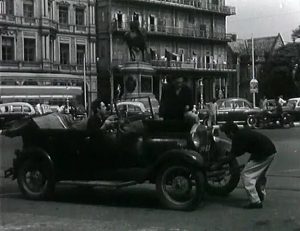
Ranked as one of the greatest British films of all time, The Lavender Hill Mob confides in the audience, letting them see, feel, laugh and think without tickling persuasively with a joke here and a punch-line there.
Godard… Breathless and Alive
A Tribute to Jean-Luc Godard, the Film Philologist who Reinvented Cinema.
Yes fly! For walking on the second track is dull and usual, but dreaming high, high, high requires tools. Tools like the right pair of shoes, a chirpy, gritty soul that eats butter-jam dreams, a soul that drinks milky-milky creams.
Silver cascade shimmering the night sky, music to the waves and surreal beauty to the eyes, the Moon loves the art of discipline.
It may be difficult to believe for the Moon’s splendour defies time, it stupefies the clock, it follows the path of a dreamer, but how could this be possible if the Moon knew not discipline?
In this moment, I am a little bit of this and a little bit of that, I am complete and incomplete, I am pleased and uncertain, I wish for nothing and I know I have to wait.
Because the distance covered reminds me of the hurdles I have crossed and the ones I could not, it reminds me of a throbbing past and a dreamy future and it reminds me of how much time is left.
Meredith and the Green Lake
Illimitable Splendour
A joy so complete without any rise or fall, so free without any time corners, so real without true being false, false being true.